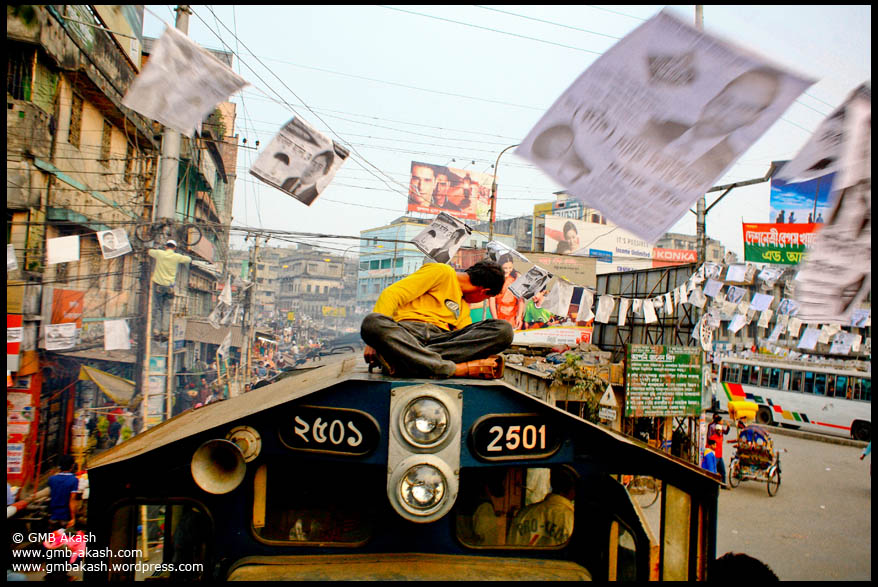
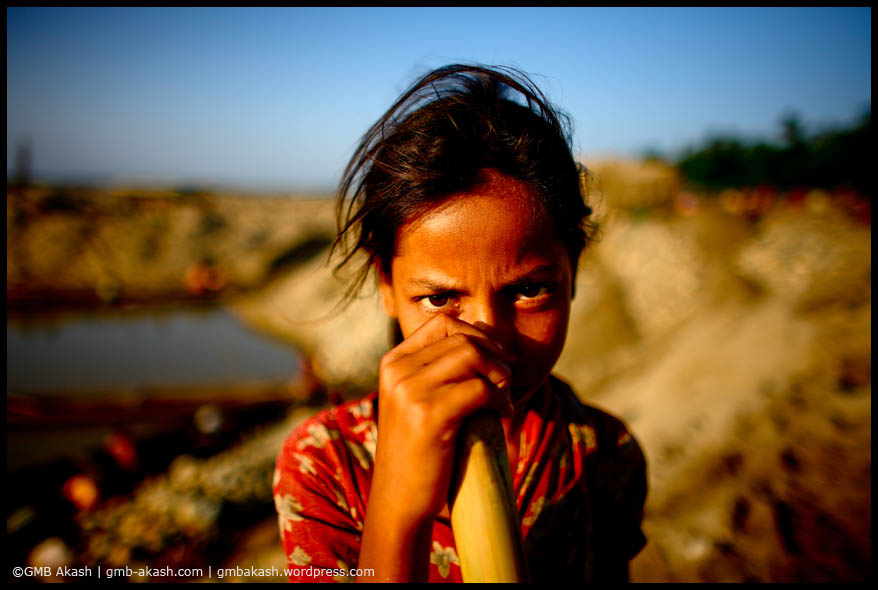
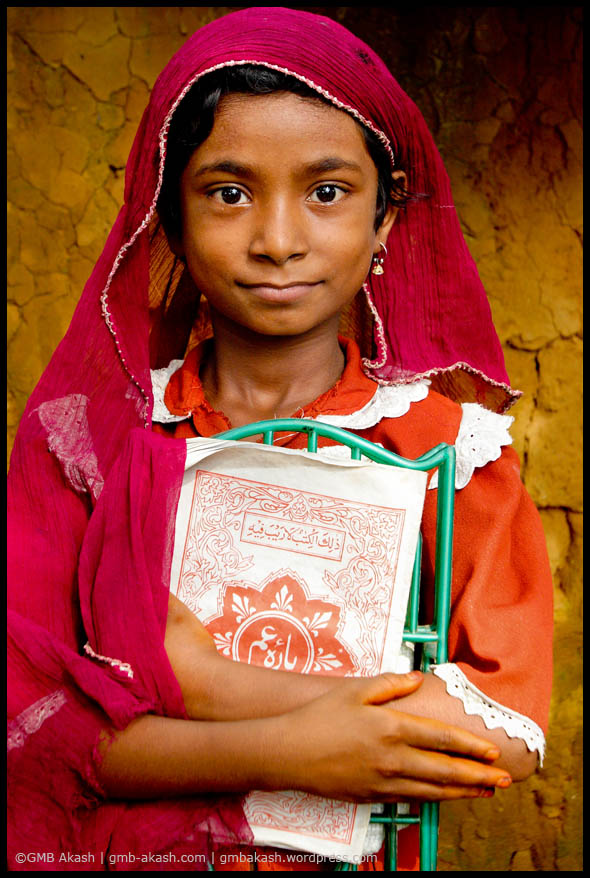
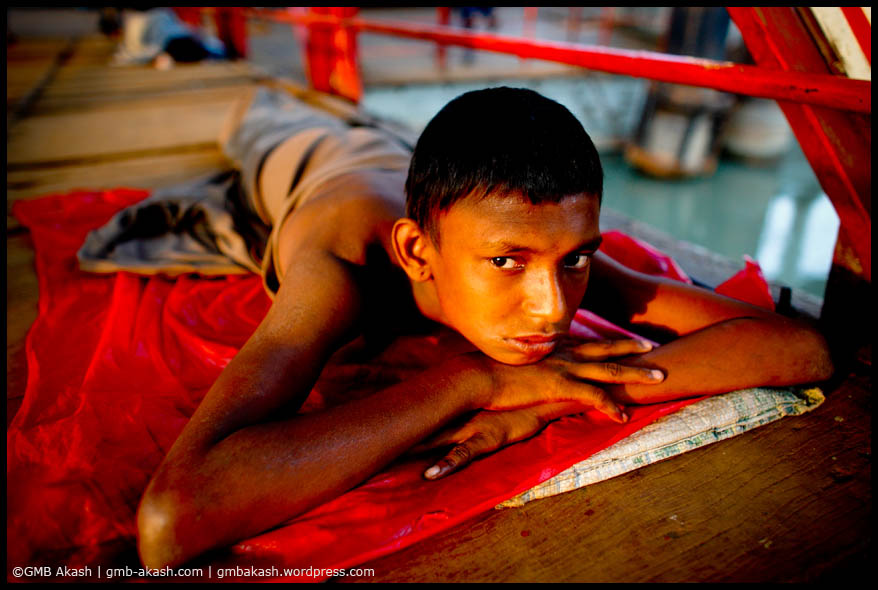
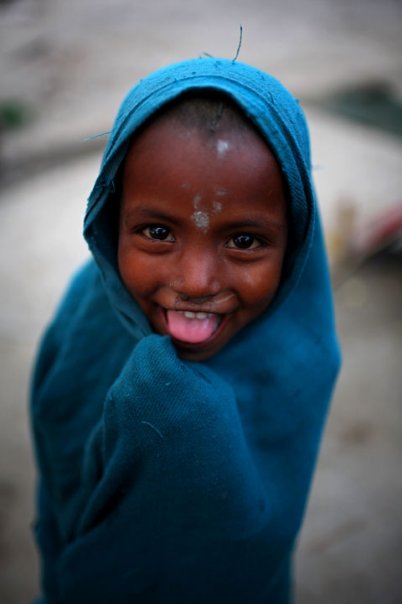
‘Street Boy’s Dream’

I am nobody and I have nothing. A simplistic human being stated as photographer who continued to question around his world. I conjure traveling in the different layers of myself and host an activist inside me by innate attributes. Yes, neither I am an industrialist nor do I hold a lion’s share of a company. For me CSR or charity is fancy word. But the passage I walked 15 years smiled melancholic to me. I marvel and interpret it to the world believing for a change. But the verb ‘Change’ itself very ‘dearly-won’. I found 18 years old drug users dyeing abandoned before I take him in my shoulder, I know how a sex worker cut off veins and her bleeding marks keep me awakening nights. I know how cold and deep an old lonely mother’s breathe can be in an elderly home. In the dormitories of injustice of the world I uphold to believe in ‘Miracles’.

street boys dream (9)

 street boys dream (8)

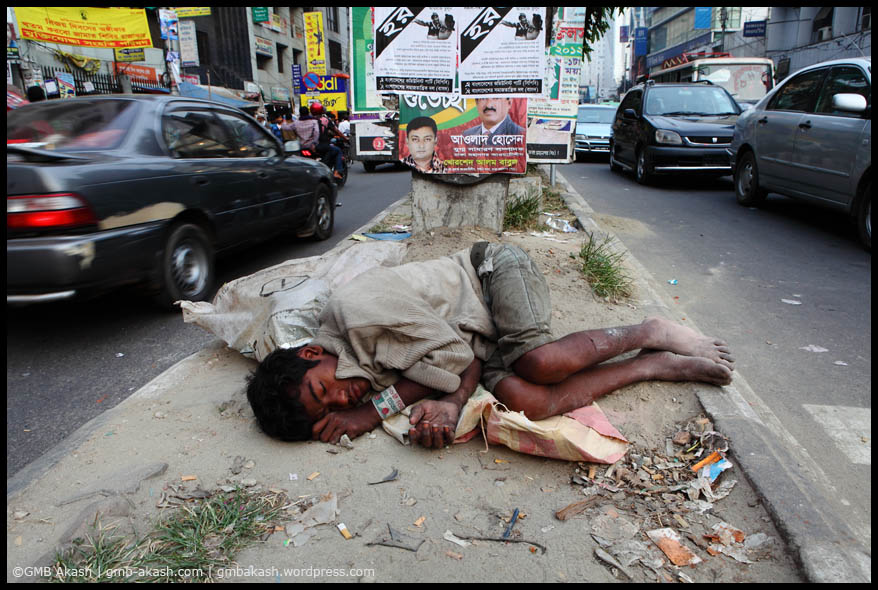
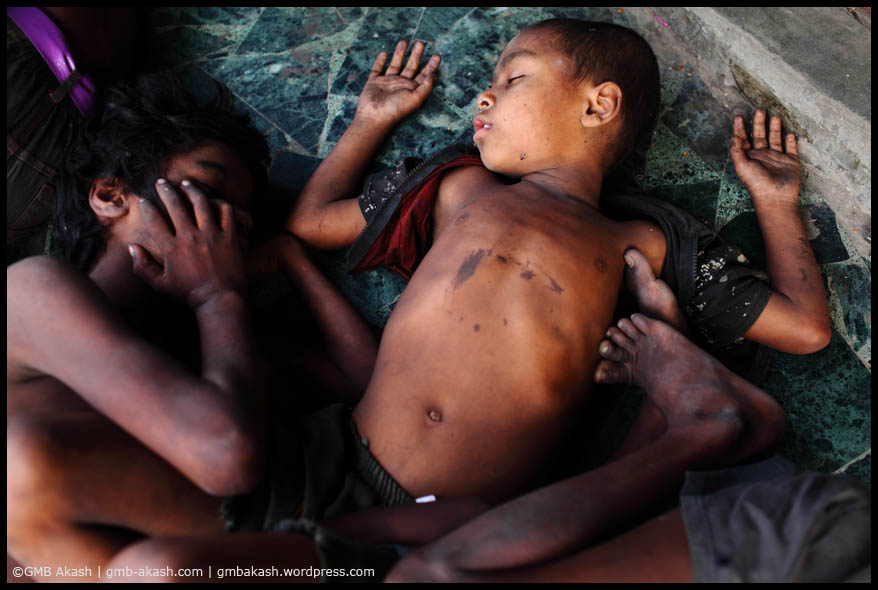
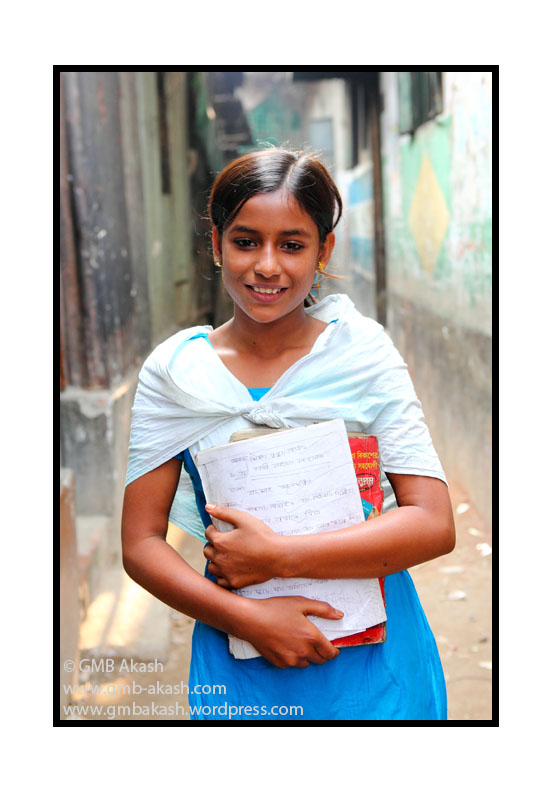
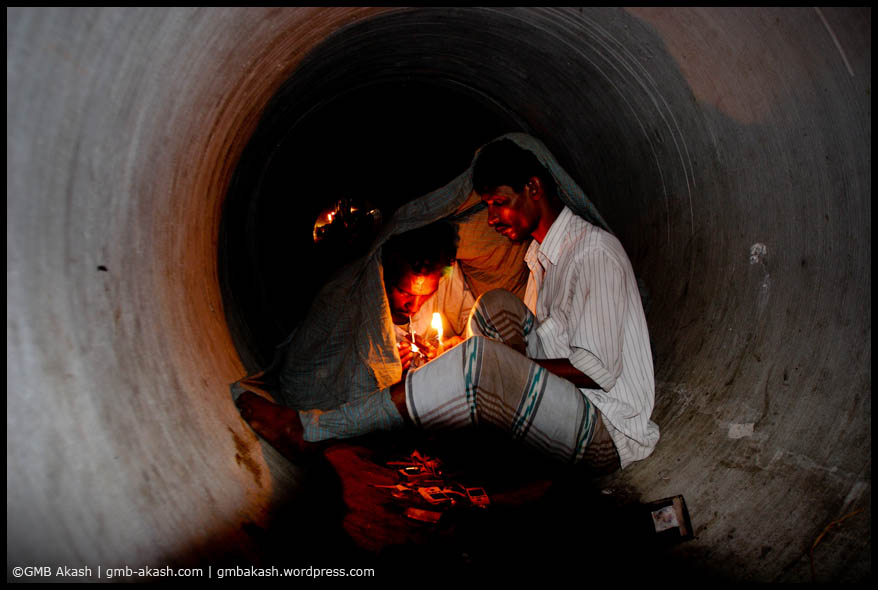
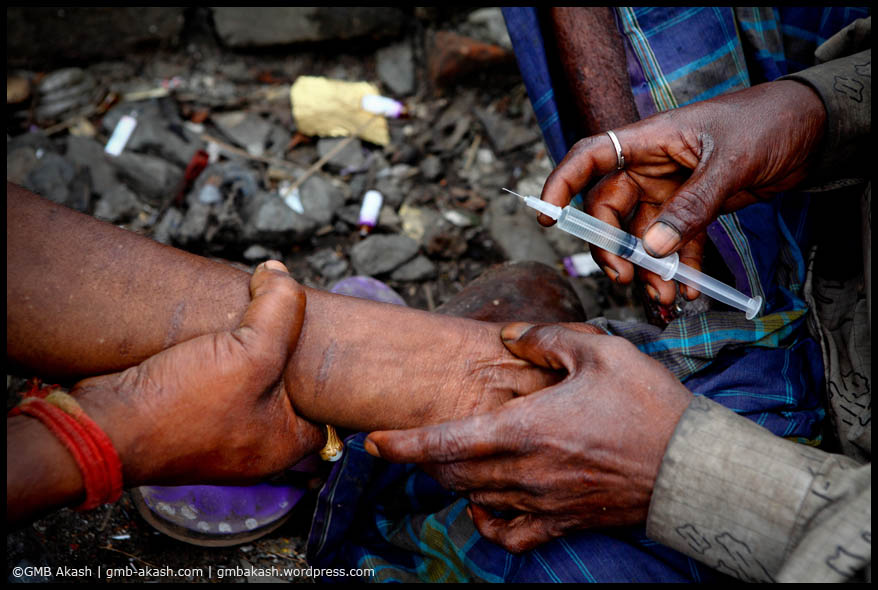
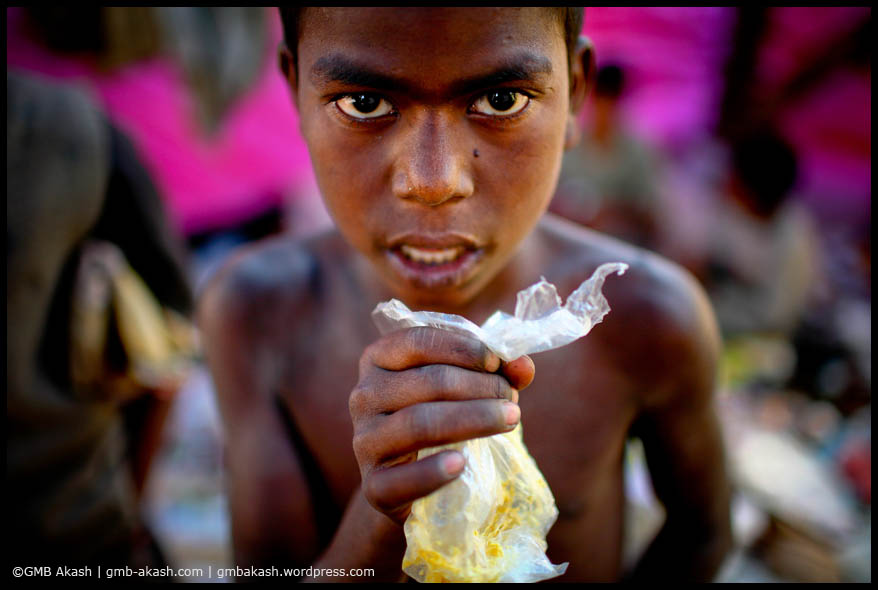
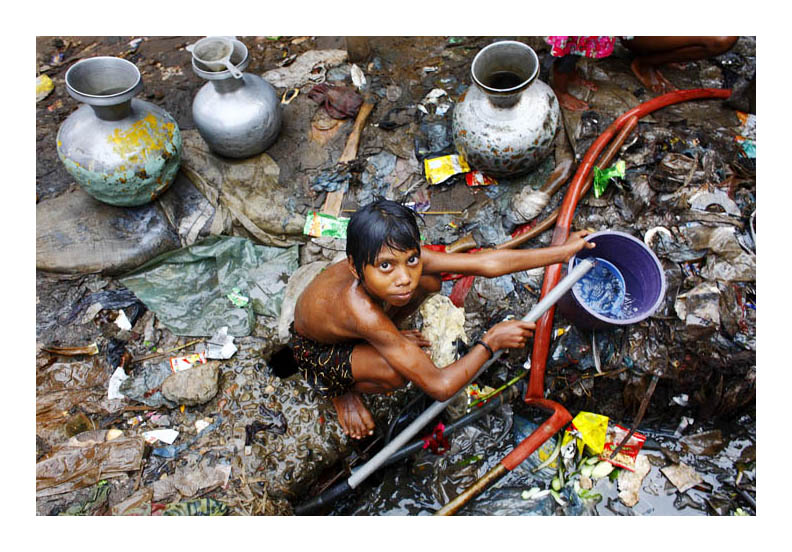
Roton a 12 years old street child once said me. “You rich people just talk, talk and talk! You are nonsense, all of you are nonsense. Children of my age goes to school, plays at park, their mother clean their skin, force them to get shower. Look at my hand, my hair, my skin no one tells me to take shower. I run to carry baggage of passengers, they throw me money like I am piece of shit, police beat me, and goons take my money. No one care, nobody. I sniff shoe glue, I want to lost, and I want to delete my memory. I curse you, I curse government, I curse my unknown parents, I curse everyone of this cruel world”.

street boys dream (7)

Roton’s voice echoing all the time and I can’t rest in peace with my eminence. This is the story of me and the people I care for. I feel it to tell it to you as I want you to love someone, to give tinniest love of your heart to the abandoned. Try to discover your image in the light of their eyes with love and hope. So sharing a small episode of my continual journey and once more telling you I am one of you, a person having no wealth at all but a heart to give away whatever I have. If my single word, small phase of explanation inspires you, please merge in.

You’re given this life as gift; make yourself a gift to life.

street boys dream (6)

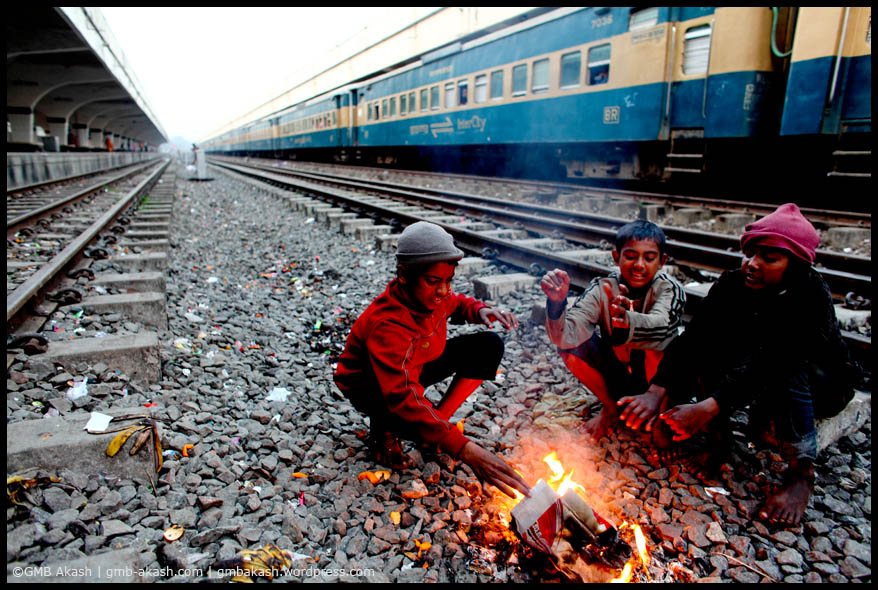
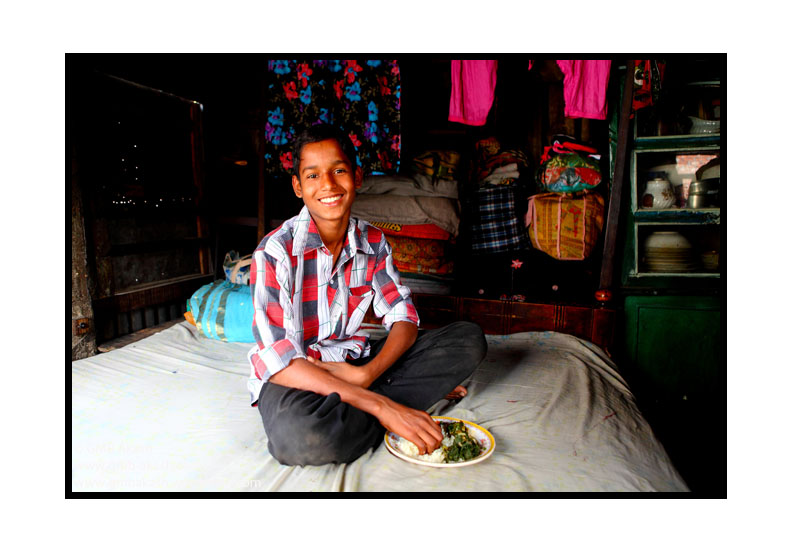
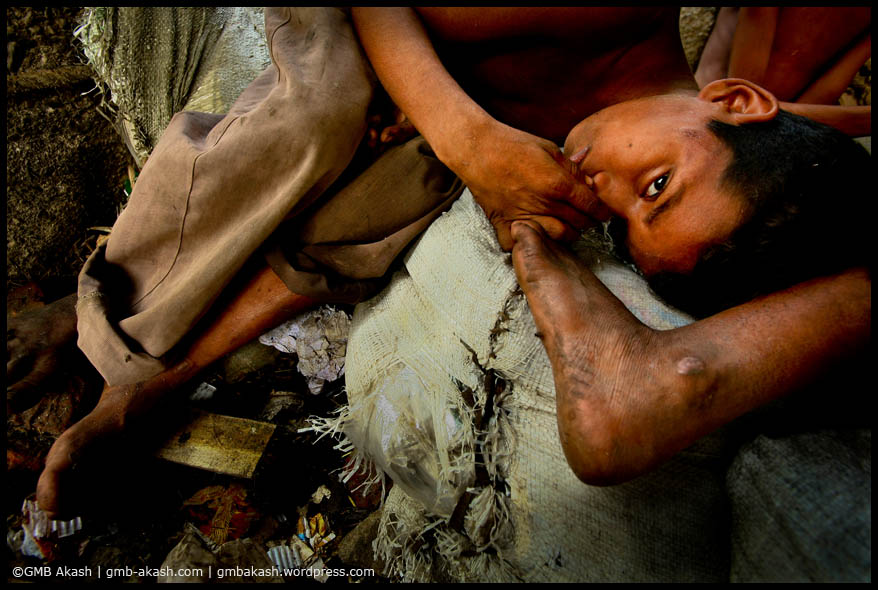
‘By wiping off tears with corner of his shirt a Teenage boy was walking through rail line. The world seems ugly with eyes pour water. A weird anger runs in his vein which is unexplainable to him even. When he takes a seat under the lazy evening light, he started feeling the pain of his chest. His father beat him by clutching with mango tree. His step mother was literally happy and didn’t give him his lunch. His crime was to fall asleep in the field with cattle. Hungry Shuvo (13) started missing his dead mother, who may never allow him to go away from home without having lunch. In the station and in such a warm day who care about an oversensitive boy and his empty stomach. Anger, depression, misery everything mock at Shuvo. Two days, three nights Shuvo had only leftover from restaurants. When he jumped into a running train, he didn’t calculate about upcoming calamities of his life, only he heard the roar of his angry heart. When he started seeing around him, he saw many of other children reluctantly sleeping in the floor of station’s platform. In the time Shuvo feels he is not alone. Unknown faces become familiar and more affectionate. He sleeps with serenity after three nights of sleeplessness. From the day Shuvo is bohemian.

street boys dream (10)

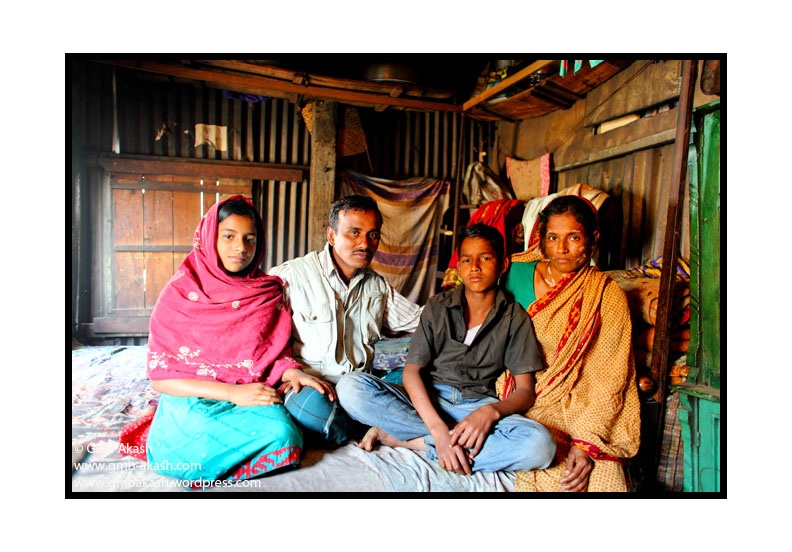
When Shuvo tell me his tale, Raihan (11) laughs loud and say ‘Police first day take me and beaten up a lot. They thought I take drug. I don’t even know what Dandi (a drug street child takes) is’. All of their daily earning is 60-80 Tk by carrying baggage of passengers. Sharif (14) remained silent. Neither he wants to share his story nor listen to others. Depression is in his skin, in everywhere of his belongings. When I smiled at him, he smiles back too, then whisper, “Do you think I can do it ?” I replied “YES! Three of you can!’

street boys dream (16)

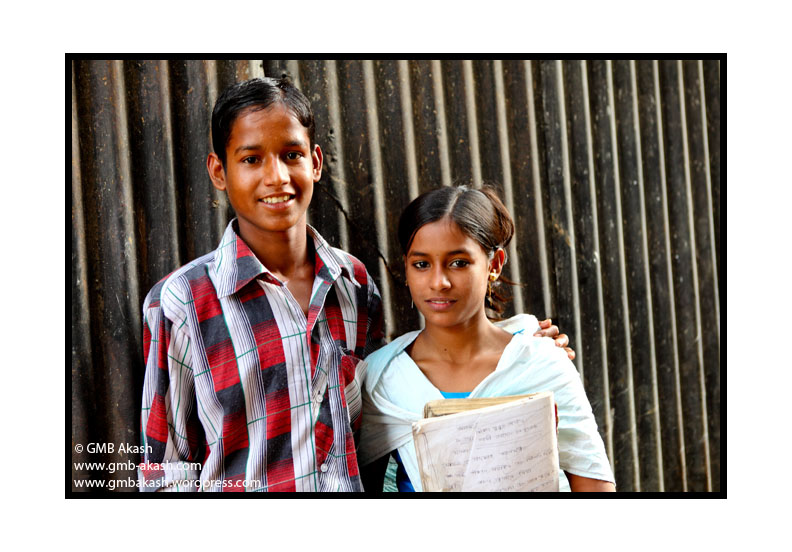
Their curies eyes, hope on me, their trust making me nervous inside. What I can do further? In a scorching afternoon I can lend my hands to them and show affection but what about their wound which is as fresh as their age! It’s been already months I seat with children show movies, counseling with them, taken them into lunch BUT THEN? One, two, Three thus hundred children and their dreams! Am I capable to hold them all! But I stop myself questioning. I started doing something. With my nameless family our journey begins. Shuvo, Sharif and Raihan are three members of my family.

street boys dream (11)

‘Can’t sleep last night Bhai, I pushed Sharif many times and ask him when the sun will rise and you will come’ – It was Raihan speaking to me in the final day. Three of them were wearing two paints and two-three shirts at a time. They don’t want to lose their precious dirty cloths so they wear it all the time. Returning from a long assignment and was on the way when I received call at 6 am from Shuvo asking when I will come. I change my mind and by hanging the bag I started towards them skipping home. I was 10 minutes late but as soon as I appear to the place three of them running to me like kitties. Besides them many of others were wondering with curiosity.  I heard a loud voice of Paglu (self-named) ‘Bhai, if they become good boys I will join you too. I swear my Mojnu (a street dog) that I will never take drug again.’ Paglu is along them with whom I pass a day monthly, show them my images and discuss topics needed to share.

street boys dream (1)

When I walked with my three boys I realize they didn’t eat anything yesterday. So first we went to have our breakfast and had it full. They listen to my each word carefully and we planned what we will do in coming three months. Already I taught them small calculation weeks ago. Then I went to buy clothes for them. Raihan is the youngest and started demanding many things while Sharif scolds him for his behavior. When again I ask them, is that they can remember their address/home and I can take them back like Masud, then their faces become cloudy. After a long period of silence Sharif said ‘After I become succeed in life I will return back. Then you can take me home’. I realize their mental condition and don’t force any more.

street boys dream (2)

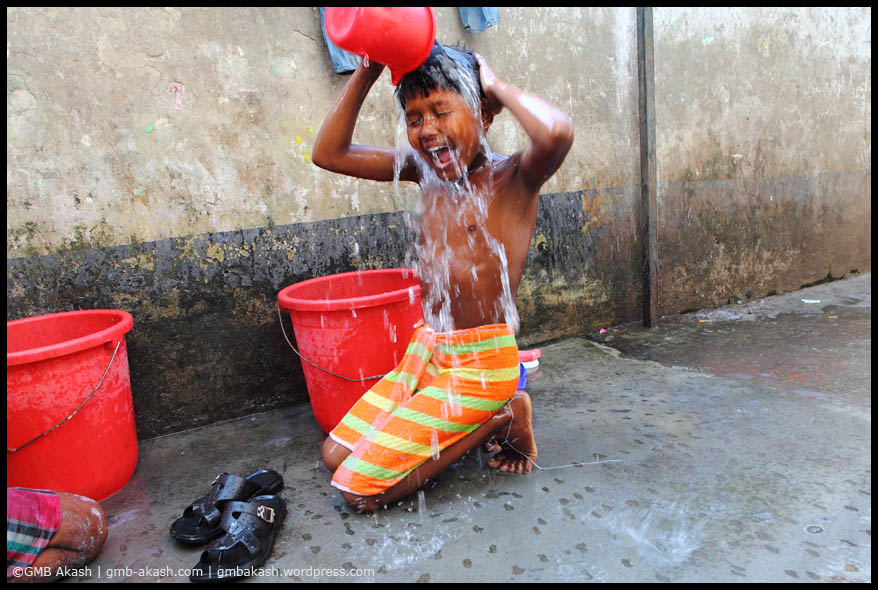
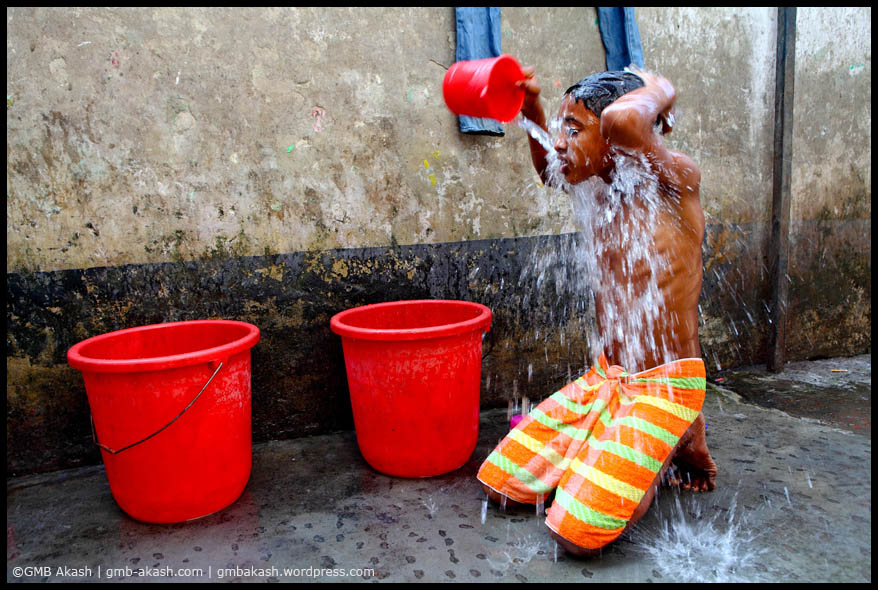
In the shopping mall they started selecting their desired cloths in the time of bargaining I shared sharing their small story with curious people though none of the shopkeepers sacrifice a penny of profit for the sake of these boys. I don’t wonder because I know ‘responsibility’ term only referred to ‘family’ in our society. & we cannot change until we realize from ourselves. After buying cloths, we buy sandals, combs, mirror, oil, everything they needed to live a children life properly. I took them to cut their hairs and nails. Then I took them to a place for shower.

street boys dream (12)

street boys dream (3)

When I stood beside them with soap they were the world’s happiest children in that moment. I can’t control to capture the moment with my camera. Crowd of people were following us, few of them thanks me and few of them make me annoyed. After having full packed lunch we moved to our working place.

street boys dream (13)

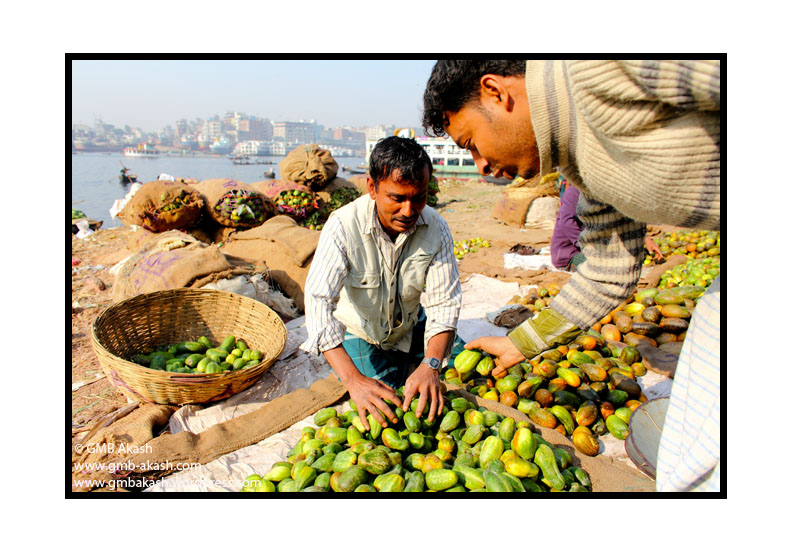
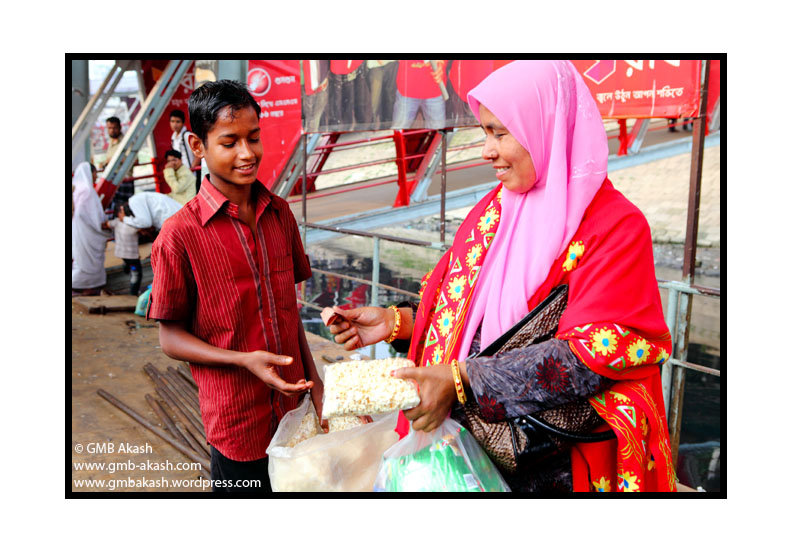
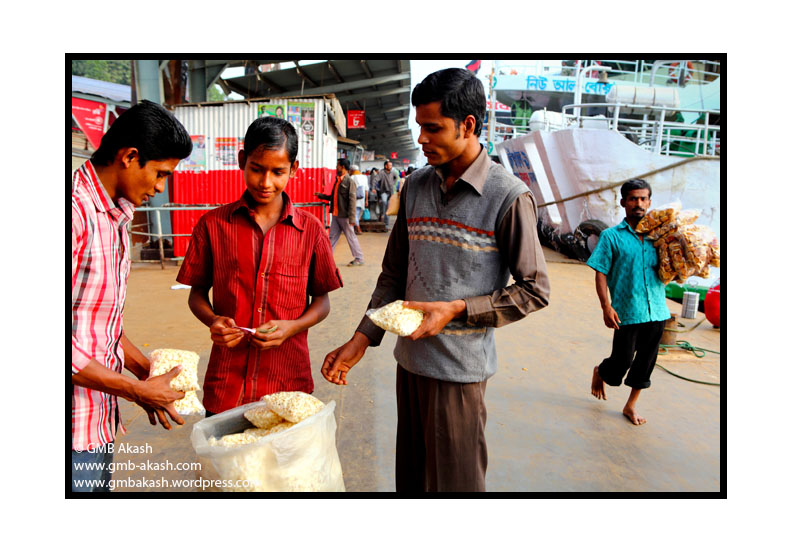
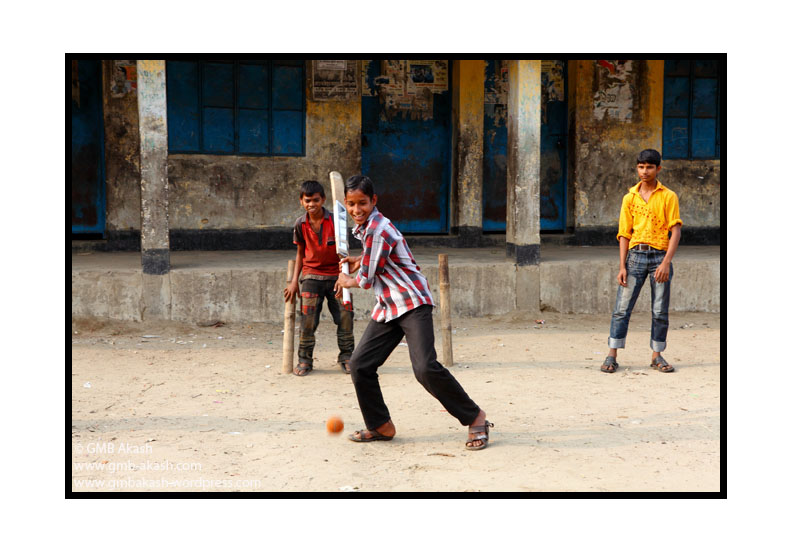
I gift them small opportunity of work and connect them with business under a mentor. MD. Melon has a popcorn business who alliance with us and agreed to be their supervisor. I gift them the capital for popcorn business for three months. At first day of their work I myself sell popcorn in the road with them to inspire them by standing next to them full time. We calculated profit and they put it in their own piggy bank as saving of their first day job. They were amazed to see that together they made a good profit and still had enough for food. Thus their story starts, every day after finishing school they come to their Supervisor and take products and go for selling. At evening they return back calculate prices and pass free time by playing. It’s been three months and they make their capital double. The name of their business is ‘Street Boy’s Dream’. Now they are planning to shift their business for selling Ladies accessories and cosmetics.

street boys dream (5)

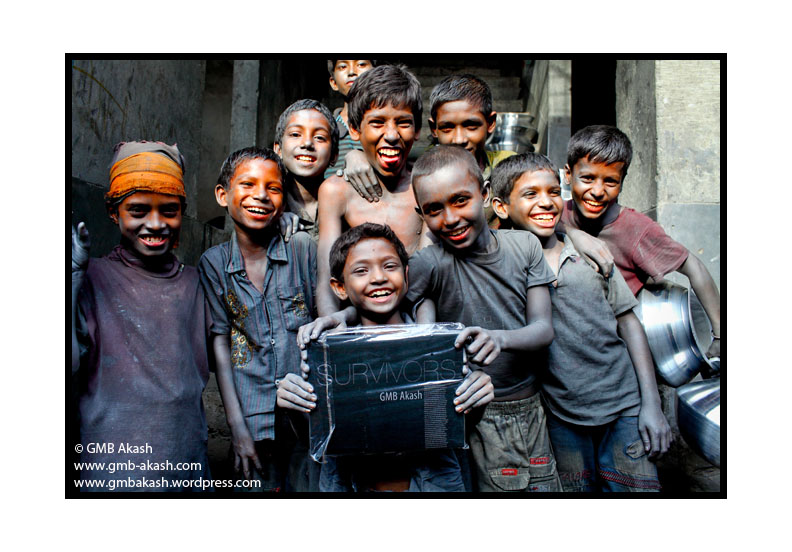
Beside them other groups of children are doing different kind of small businesses by my gift which comes from my book ‘Survivors’. It is bless to share that ‘First Light Institute of Photography’, the photo school, I am going to launch in this August will be their institution and support center. I dream to go along with street boy’s dream. Their small steps are gift for my life, reincarnation of my soul. Their affection has filled my heart with utmost peacefulness. I believe, we cannot afford to lose hope, for we are all part of making some small and large changes, each day, each moment. We all can make a deposit into someone’s life. The best part of this form of giving is that it is LIMITLESS. By which we can make an incredible difference in their world.


street boys dream (4)

‘Inside the Cage’


Mental Hospital (24) Mental Hospital (2)

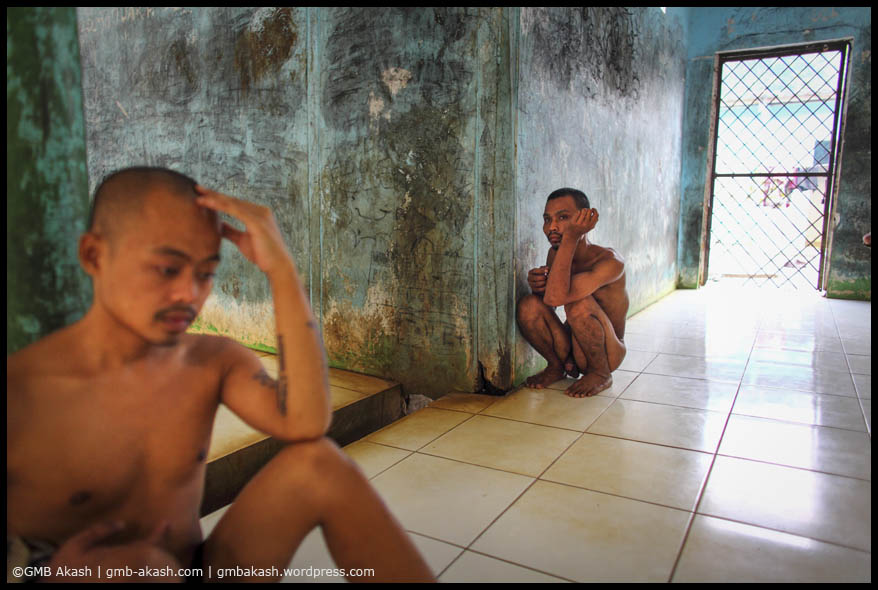
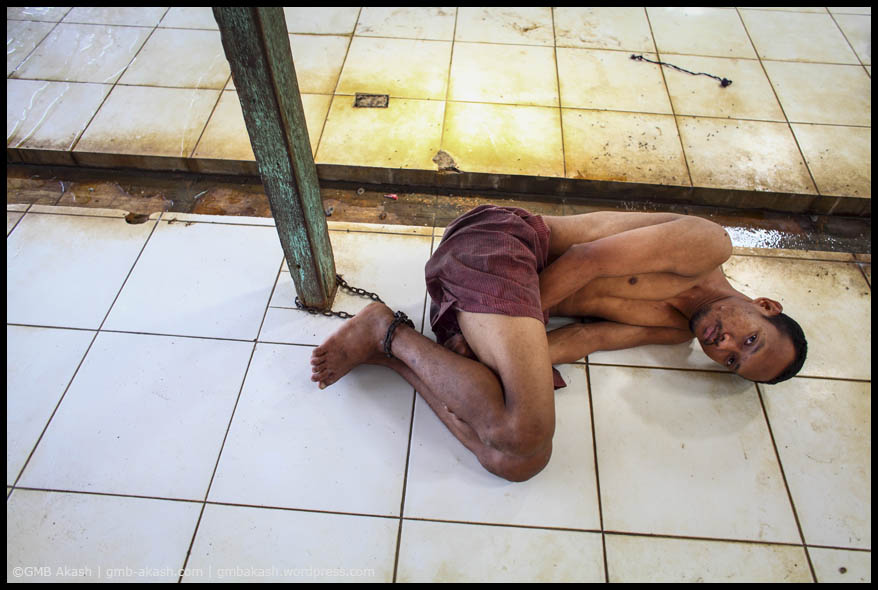
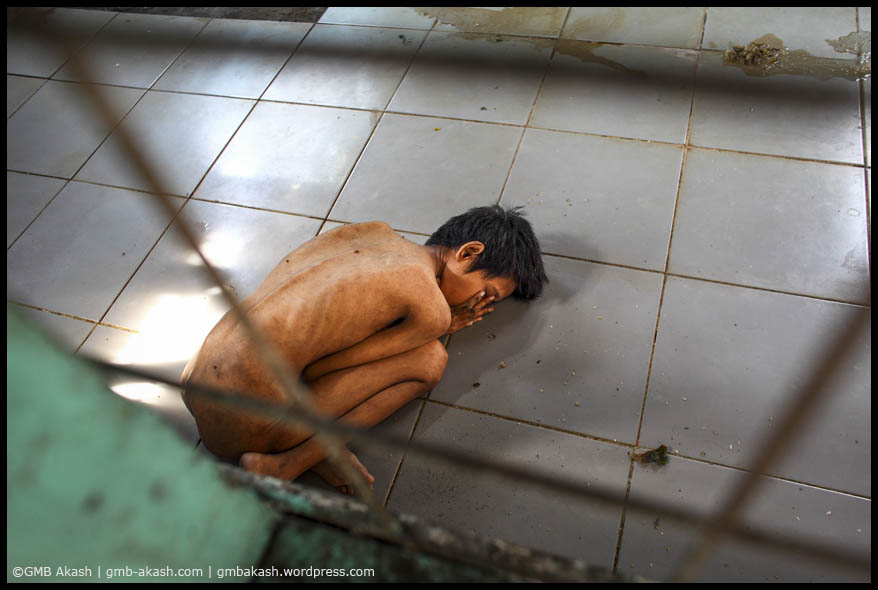
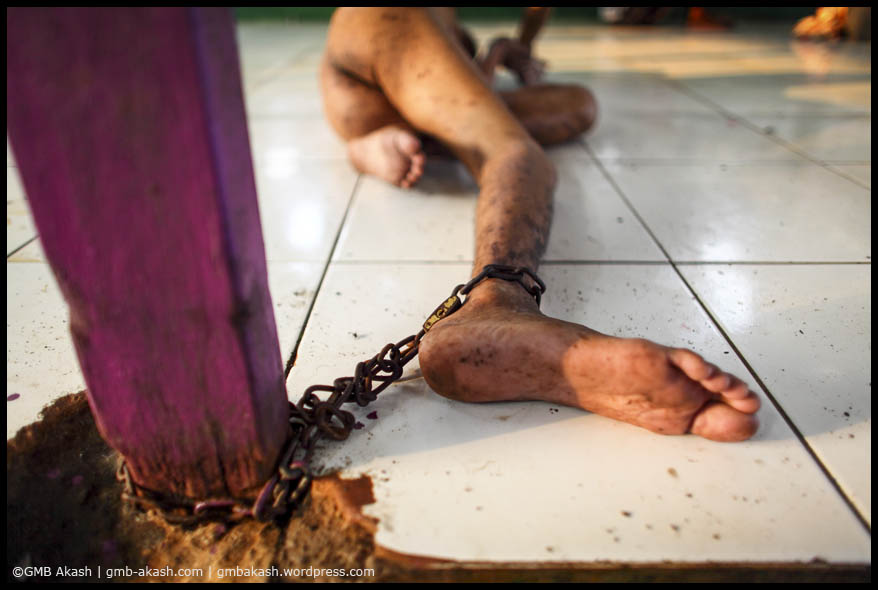
I inspect them with wondering mind. Standing in the middle of a place that is difficult to describe with adjective is impossible. The guard opens the door and bumped me in. Before I realize the guard was disappeared and I found myself in the cage.  A whistle breaks my nervousness and I eyed over a young face. He mocked at me and as soon as I take my first step he vanished with sound of his chain fitted in his leg. In a meter distance from me a naked man seating beside the drain. A few meters away some contorting their emaciated bodies as much as the shackles will allow. Others are setting comatose. The 1,000-square-meter center is divided into two iron-fenced dormitories — one for men and one for women. Confined by the length of their chain, the wooden stock in which they are trapped, or the makeshift cage in which they are imprisoned, they are forced to eat, sleep and defecate in the same spot.

Mental Hospital (12)

Mental Hospital (16)

Mental Hospital (34)

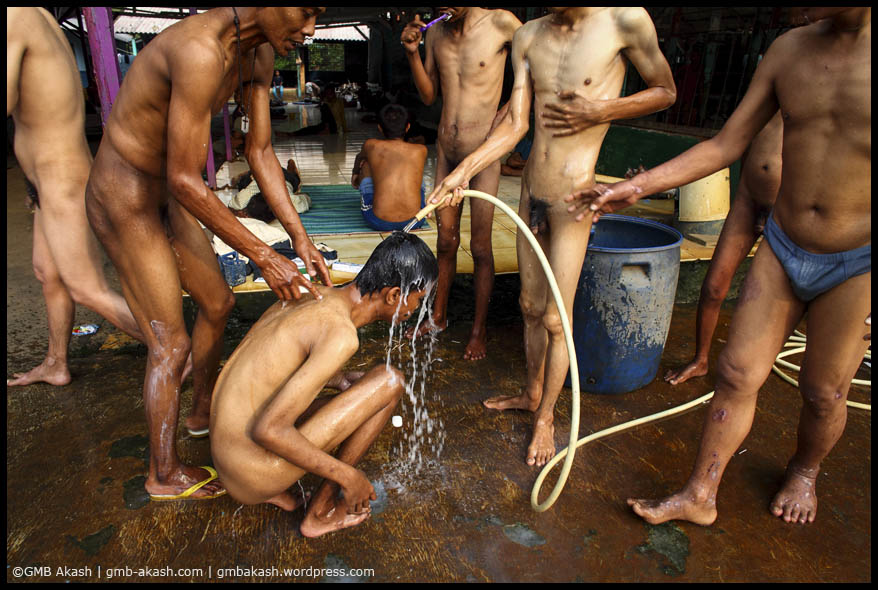
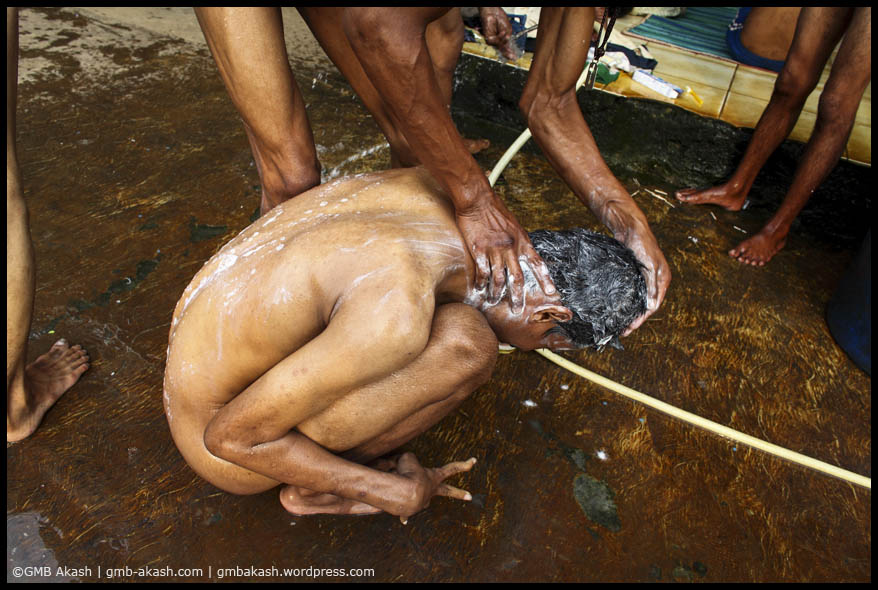
I found the boy mocked me at the door again in water area. A naked boy, thin with protruding ribs, turns his head down as he is sprayed with a water hose and getting bath by the help of center’s stuffs. But this time he didn’t even notice me.

Mental Hospital (21)

Mental Hospital (22)

I continue motivating myself not to lose my mind. As a human being it is intolerable to look into faces which have no more past, no more future in fact no more present even. It’s seems odd to see how patients are living in iron-fenced dormitory and how many are chained but this is somehow logical when the centre’s assistant make me understand later. They do it for patient’s attacking behaviors. Many of them hurt others as well themselves by hitting head in the floor or wood. In the beginning when their treatment starts with the chain they slowly become clam and it helps later for their treatment.

Mental Hospital (14)

Mental Hospital (7)

Mental Hospital (31)

A man suddenly appears in front of me pointing his finger he is calling me ‘Hello Mr. Teddy Smith, how are you?’ for a second I feel he is completely fine, a normal person like me. Then I saw his chain. His words were echoing in my ears. With another turn I noticed, I am wearing a T-shirt with a print in it “Teddy Smith”.  

Mental Hospital (6)

Mental Hospital (18)

Mental Hospital (29)

Mental Hospital (25)

Mental Hospital (26)

I keep looking at patients lying in the floors. Confined by the length of the chain a patient is lying comatose. Most of the patients have brought by police or NGO’s as they were spending their lives in on the streets for lack of ignorance family to the lack of psychiatric services for the poor. In lunch time most of the patients eats boiled rice and usually there is not much chatter between them. They need at least 3 tons of rice a month and tons of vegetables, but the center hardly can manage the food for enough funds.

Mental Hospital (8)

Mental Hospital (9)

Mental Hospital (10)

Mental Hospital (15)

My visiting time ends but the guard forgets about me. I shivered in fear for a moment that how I will pass more hours in these iron-fenced dormitories. I keep listening someone is crying quietly, someone is reciting Quran’s one phase repeatedly; someone is singing a song with an unusual tune. I waited and imagine how life has taken them in such cage. How every day the battle of living gives birth of insanity. There is a small portion of psyche living inside all of us. The difference is people who lost themselves fully only treated as psychiatric patients.

While I was fighting inside, I heard footsteps of the guard. I hurried to go out and listened ‘Mr. Teddy Smith, Bye, Bye’.

Mental Hospital (35)

Mental Hospital (30)

Mental Hospital (28)

Mental Hospital (19)

The overwhelming stink will welcome visitors in the entrance of Yasan Galuh rehabilitation centre for the mentally ill, outside Jakarta. Created in 1994, The Yayasan Galuh rehabilitation center is a foundation that cares for mentally-ill individuals who have been debarred from the Indonesian society and who have no access to medical care due to their limited financial resources. In Yayasan Galuh, more than 260 patients spend their days on hard tiled floors hooped by open sewers. Patients are often chained, caged, and naked. The screaming and weeping is constant. Despite the awful conditions, here facility staffs see themselves as healers giving patients – many who have been left at Yayasan Galuh by family members – ancient and effective therapies. Most of Yayasan Galuh’s 260 current patients were referred to them by the police, NGOs or the patients’ families. Tens of thousands of mentally ill Indonesians bear an unimaginable torment, left to battle the demons of severe psychiatric disorders while chained and shackled for years on end. The 1,000-square-meter center is divided into two iron-fenced dormitories — one for men and one for women. There are hundreds of mentally ill people shackled for years, even decades, by poor and clueless families who believe they have no alternative. Indonesia has a population of 240 million, and only 500 psychiatrists. The resulting treatment gap leads many to rely on traditional herbal treatments and prayer to alleviate mental illness commonly thought to be caused by dark spirits. Almost 750,000 Indonesians with mental illness get no medical treatment throughout the country.

Mental Hospital (17)

“Factories of Death”

garments (5)

garments (1)

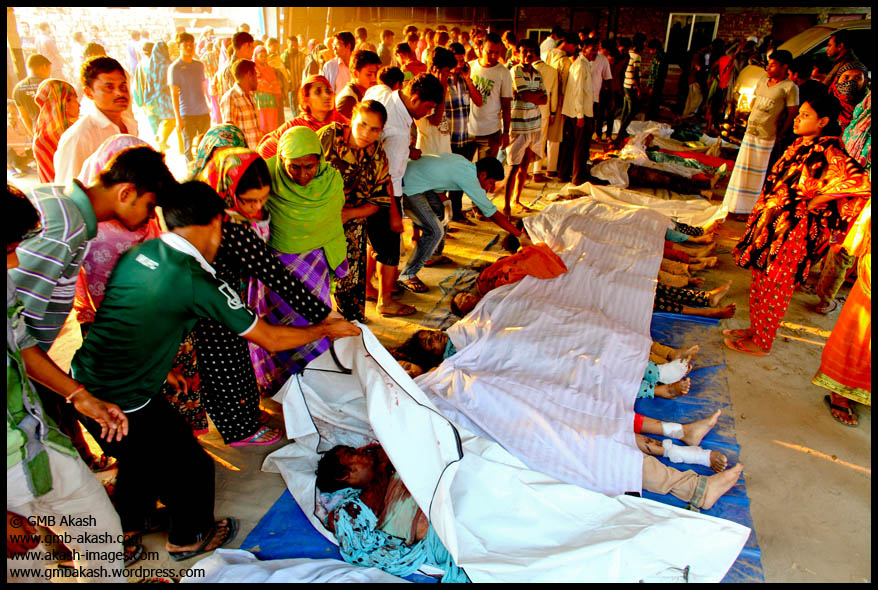
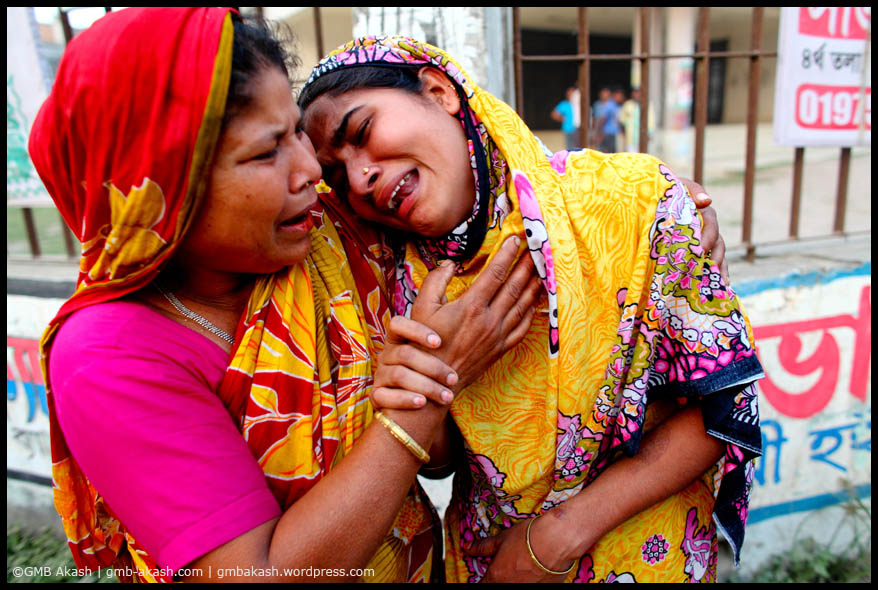
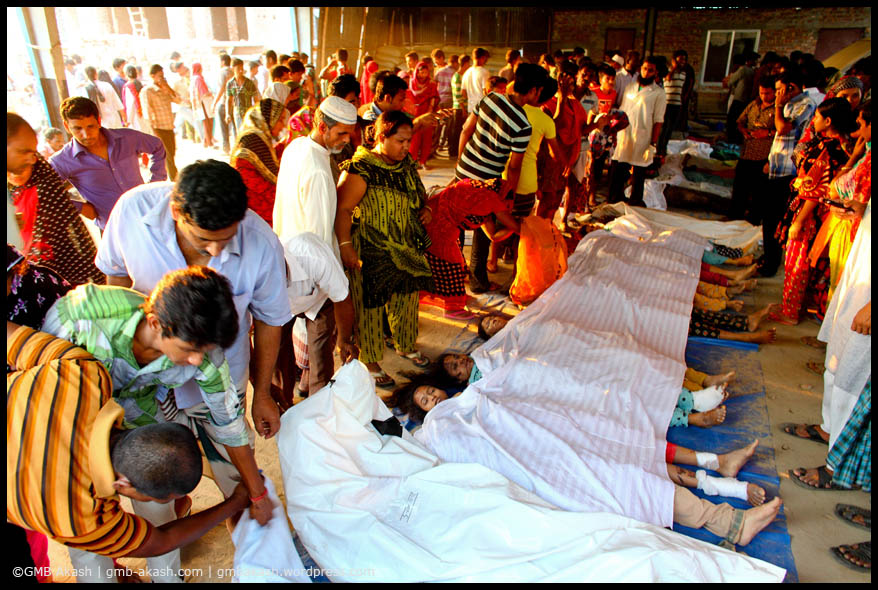
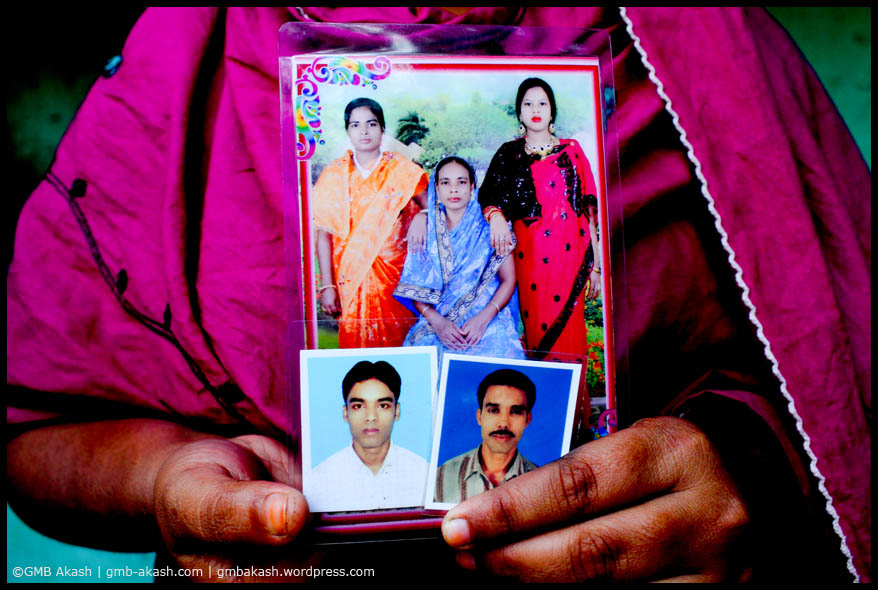
“Drinking tears now is a daily menu to the people whose life collapsed with the building Rana plaza. In a stormy day when I arrived at hospital door I pulsed by the melancholy I encounter. No rain was not the reason, it was the pain in ever face which will haunt everybody long. Following continual screaming of a young girl I found her requesting mother to a reluctant nurse. As soon as my camera clicks the doctor arrived swiftly, not sure seeing camera or may be reminding patients call! Looking at hundred wounded bodies and hearing their screams it was hard to stand in the middle. But it is more important to share a bit of their unbelievable suffering in a small form. Thus my camera take place and I share their pain among you all”- GMB Akash

.

garments (11)

Khadeza (18) was a kind of girl who laughed more than she talked. Her mother used to beat her for excess laughing. Now everyday her mother asks Khadeza to smile for a while but Khadeza only wipe off. Doctor prescribes her not to do any hard work at least for next six months. She will not be able to do any hard job in future. Her mother is not sure how long it will take to recover. She is one of the survivors of Rana plaza.

garments (16)

It will take three more months to get physical recovery and six months she will not be allowed to do any hard work. Eighteen years old Shapla was working in textile factory for three years. She was in third floor while rescuer rescued her. Her one hand cut off while she was inside. Living with Several scars in all over her body, she sometime cannot recall her name. Her Husband Mehedul was inside the building for 72 hours but he came out harmless.

garments (2)

Rebeka (20) been rescued after two nights of the incident. Dead body of her colleague was stumbled on her shoulder for a night. People threw water from the only hole and she sip water from the floor. Doctors cut her one leg and another leg is badly injured. Still she screamed full night in imagining the hospital building is falling on her. Her husband is beside her but helpless. Her mother and grandmother who worked in the same floor are missing and she is unaware of the news.

garments (12)

garments (13)

Seeing them in the bed of hospital, no one can recognize that these workers – once upon a time used to work 7 am to 12am of the night. Life has treated them bitterest. Pains are unbearable to make anyone understand of it. Stepping out from the hospital I heard a woman telling that these workers will be much benefited. They will get 5 lac tk so this comes good for them. I can not stop myself and turn around, told her, can you cut off your hand if I give you 5 lac? I wonder how heartless some people can be!

garments (3)

My journey continues so as the rain. When I stepped in the residential area of Rana plaza’s garments workers, I met Isa Mia, a boy who lost his brother in the incident. Her mother was crying in the door and after 20 days of the incident she can not eat anything properly. Isa himself a survivors but not depending much he taken me to meet Marium, the single mother who lost her hand. One after another I meet with all. I have dedicated my fees to them which come from published textile stories in different publication of mine. I encounter the pain. the urge, the pathetic emotions which words can never justify. I want to believe one day will come when these people will see their life in the ray of a sweet dream. & then I realize this is non sense. The reality is they will suffer and this is destiny. But I will run to them again and again, until I can take in some of their tears.

garments (9)

After losing her right hand Textile worker Marium (27) lost in despair. Single mother Marium never spends two tk for buying a hair band as she knows her two children’s future is in her hands. Disable Marium shouts at night afraid of feeling dead bodies of workers friends are circling her. She spent one night and two days in the 6th floor of the collapsed building while her right hand injured under pillar. She started her job four years ago in that time she received 1200 tk monthly, now she lastly get 4500 tk monthly wage in New Wave star Ltd. a factory which was in 6th floor of Rana plaza. She lost her stability to think about her future. Still after near one month of the incident she did not receive any compensation from anyone instead of her last month salary.

garments (8)

Blue is Aleya’s favorite color. In the morning she wore her new blue dress and told her young sister if she die who will wear the dress! Aleya’s (18) family was fully dependent on her income. She wants to educate her younger sister and alert her mother not to send her in textile factory. Heart patient father and kidney problem of mother forces Aleya to start work in her early age. Her mother asks her to married off soon but she reluctantly said straggle of her life will never come to an end. There was no money at home and she told her mother instead of dying in hunger it’s better to work in a cracked factory. She was sure God has given them enough sorrow and nothing will happen to her. Her believe proved wrong. Her family cannot even find her dead body parts after 17 days of searching everywhere. Neither have they received her salary nor compensation.

garments (15)

A room call home is never a place of relaxation for textile workers. Often a room shared by 5/6 workers offer them the untidy floor to sleep. Their salary won’t make them able to go in a better place still after 5-6 years of their job straggles.

garments (6)

garments (7)


“Even after losing one leg in the terrible incident the worker is begging for a sewing machine. She said, “Still I have two hands. & my children are hungry”. Alike her thousands workers keeps their dreams alive in their heart and goes to work on time. In spite of everything they are straggling happily to get a dream future knowing dream is a dream. But they never imagine nightmares will replace their dream and they obviously fall in concrete mattress. Incidents of Tazrin/ Rana plaza might wake up them from their dream. But still they say, hunger is ugly than death”

– GMB Akash

garments (14)

‘Low-priced Slaves’

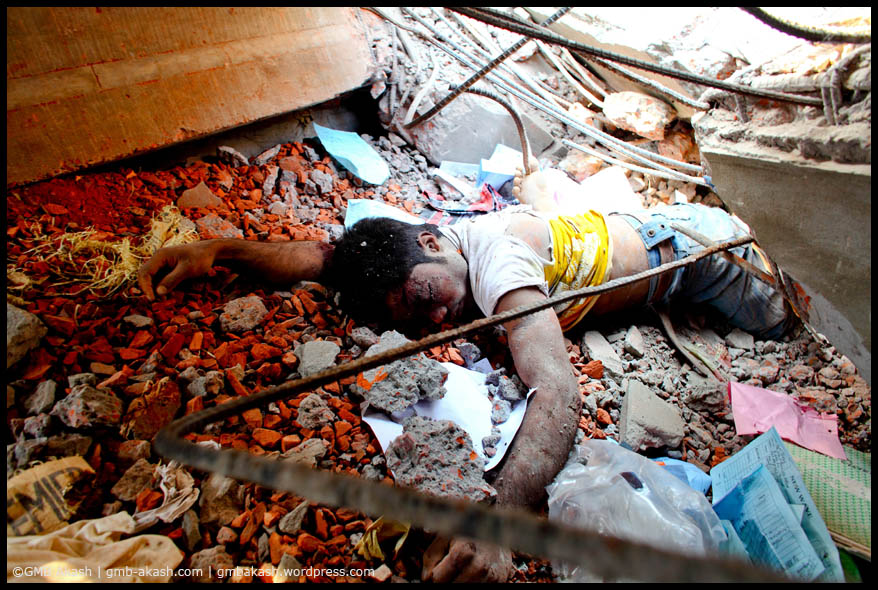
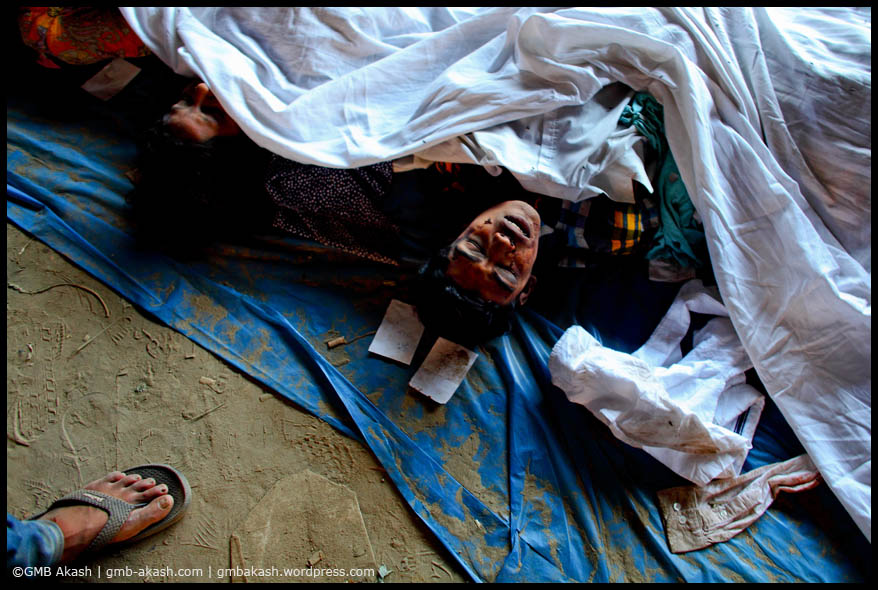
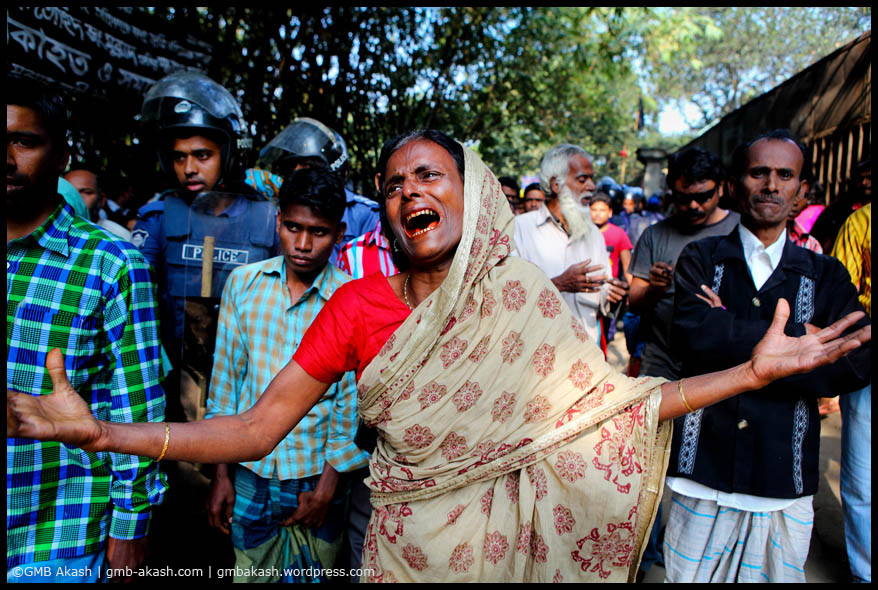
Nargis fainted three times while she could not find her mother in the derbies of nine storied building. It’s been a day and a night she is frantically checking around hospital, in each corner of destructed building and hundreds smashed dead bodies. But where is Nargis mother’s existence? Hundreds of weeping mother, father, sister, brother, husband, wife and children were like mad for searching their beloved faces. The population who are the backbone of the family, of the country their bones cracked under wretched concrete. Knowing still hundreds people are breathing inside the dreadful collapsed building helpless thousands mass people came out with their humanity. Rescuing living being or carrying out dead bodies but nothing evaporates tears of people who experienced such frightening circumstances. The deadly trap eat out lives of thousands workers who never might thought of loosing life as prey of capitalism greed. Many workers leave their breathe waiting to hear a call of rescuer. Many female worker’s hand or leg trapped under stone while they are still alive and asking rescuer to cut their hand and take off. What to do and how to do? The traumatized nation has no word in mind to speak. Sharif after finding cracked half body parts of his 21 years younger brother screamed “My brother never do any harm to any body. Why Allah punishes him, why? Because we are poor, we are useless to Allah, we are useless to riches, and because we are bloody workers”.

Rana plaza (1)

Rana plaza (11)

Some 3,500 people were in the Rana Plaza building in Savar, some 30km (20 miles) outside Dhaka, when it collapsed suddenly on Wednesday morning 24th April. The first three floors of the building, located in the Dhaka suburb of Savar, contained around 300 shops. At least four garment factories — New Wave Bottoms, Phantom Apparels, Phantom Tack and Ethar Textile — occupied higher levels, employing around 3,500 people. Building showed cracks on Tuesday, but all garments workers forced to go to work on Wednesday threatening to cut off salaries. & the devastating accident happened

Rana plaza (6)

Rana plaza (8)

Rana plaza (4)

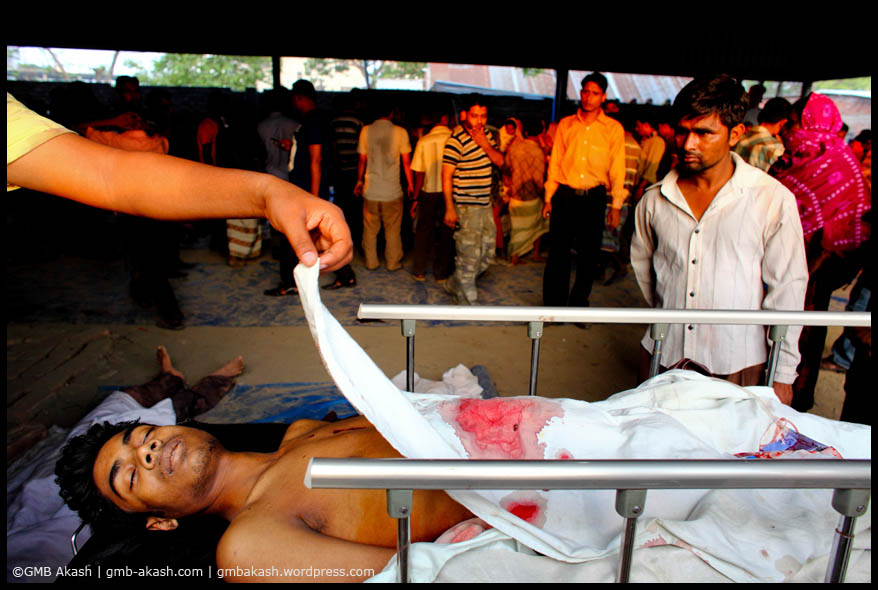
Local hospitals were overwhelmed with the arrival of more than 2,000 injured Textile workers. Victims were still calling for help from among the piles of shattered concrete slabs, according to rescue workers and volunteers, as hope began to fade for hundreds still trapped.  And the death toll had reached 400. After putting the conclusion that no more workers can be alive rescuer workers are now using heavy equipment to clear the site and officials expect the number of casualties to rise as hundreds of people remain missing.

Rana plaza (5)

Rana plaza (13)

Rana plaza (12)

Around 4 million people are employed in Bangladesh’s 4,500 textile factories. The industry generates 80% of the country’s $24 billion annual exports — making Bangladesh the world’s second largest clothing exporter after China — yet wages remain as low as $37 per month for workers spending 15-hour shifts in sweatshop conditions.

Rana plaza (3)

Rana plaza (9)

“What to describe and what to write! All I could see were dead bodies all surround me. A silent anger, unbearable pain and helplessness had frozen my finger to click. Besets dead bodies and their each drop of blood asking me to tape their vulnerable death memoir to show the people around the world, how painfully they left the world. And I can not rest until I can spread their pains of deaths. Shouts slaughtered under concrete. How many times we will remain mute and hollow out graves! Why world’s most innocent souls has to be always trapped as vulnerable victims! Their souls will never rest in peace until we know how dreadfully they died without telling their last wish”

– GMB Akash

Rana plaza (10)

Rana plaza (14)


“Exhibition ‘Water’ By GAETANO PLASMATI & GMB AKASH”

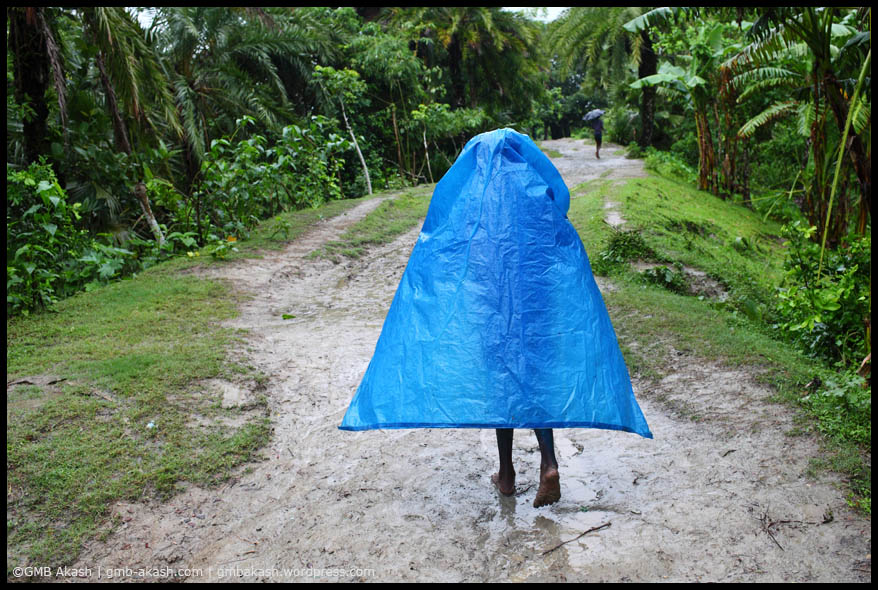
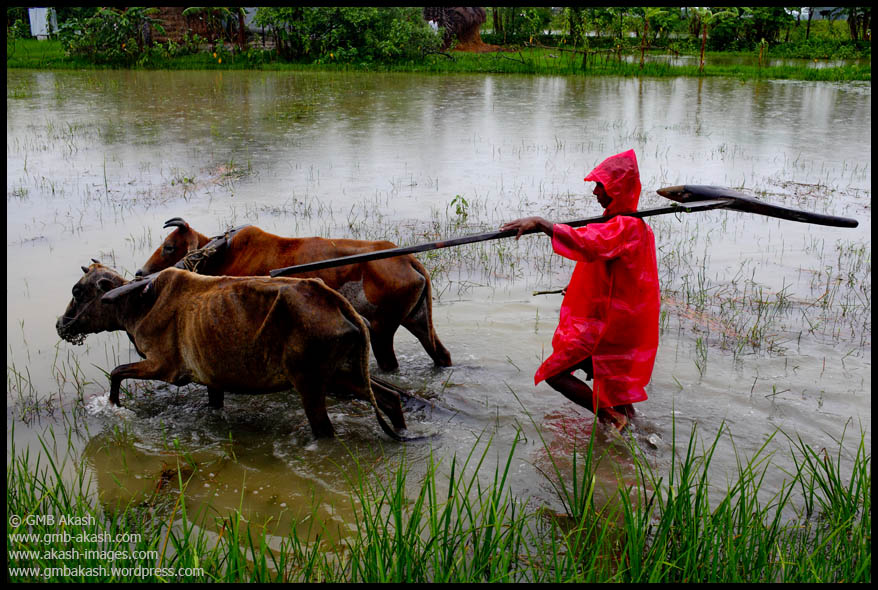
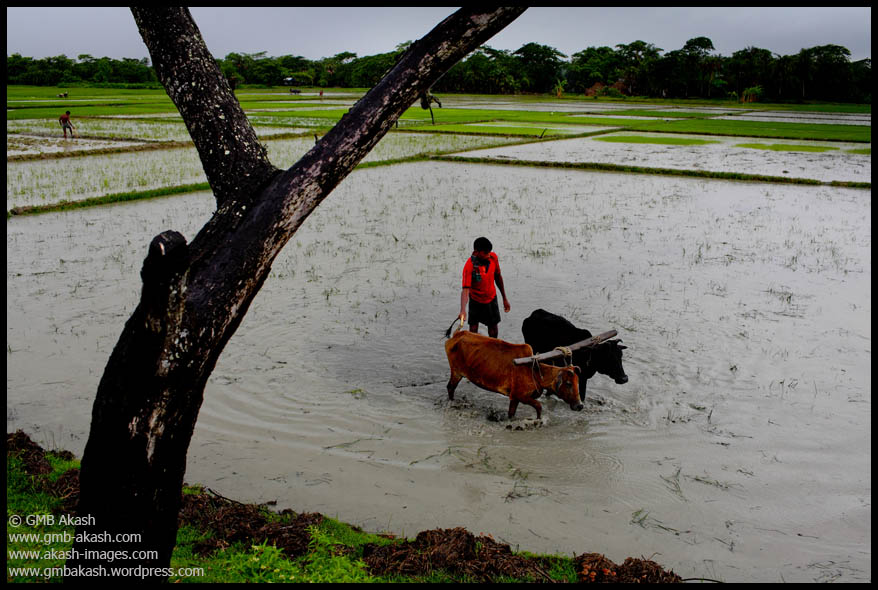
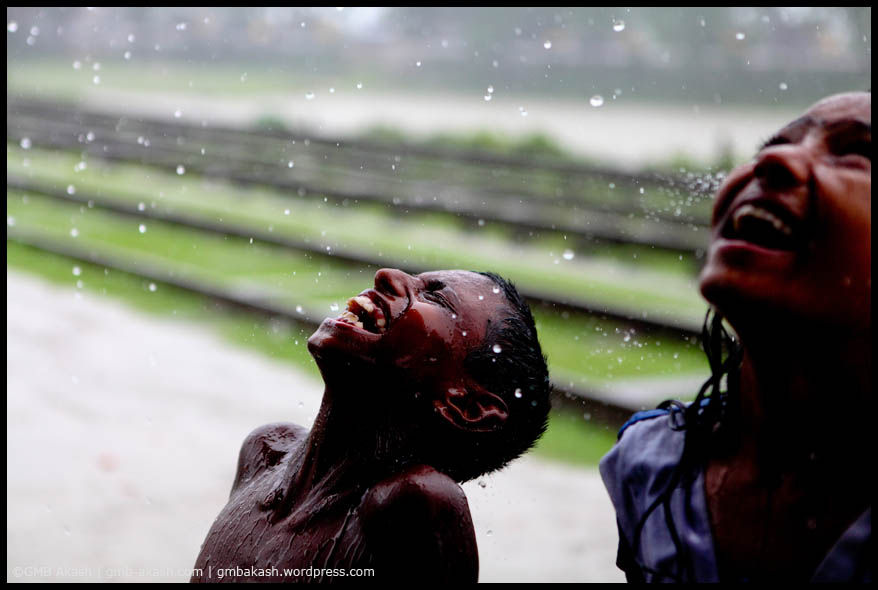
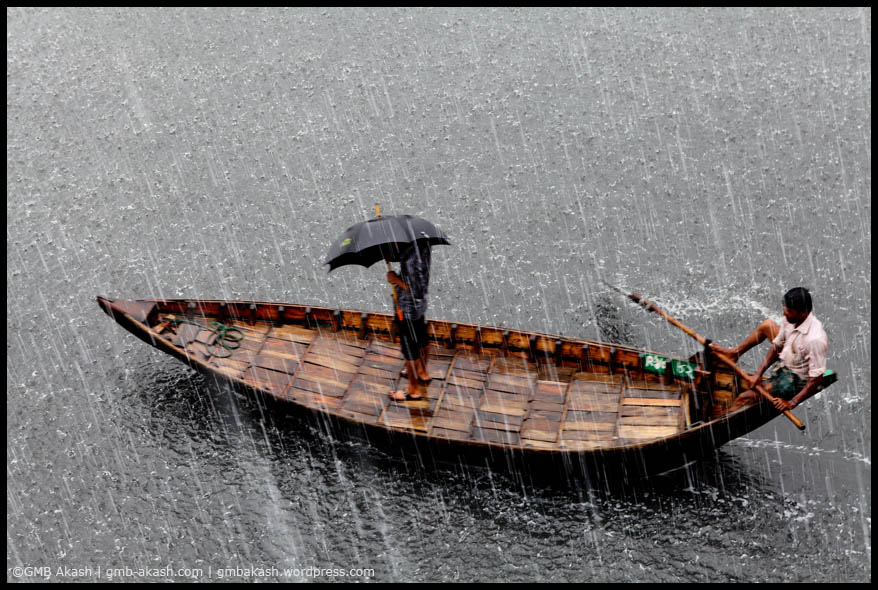
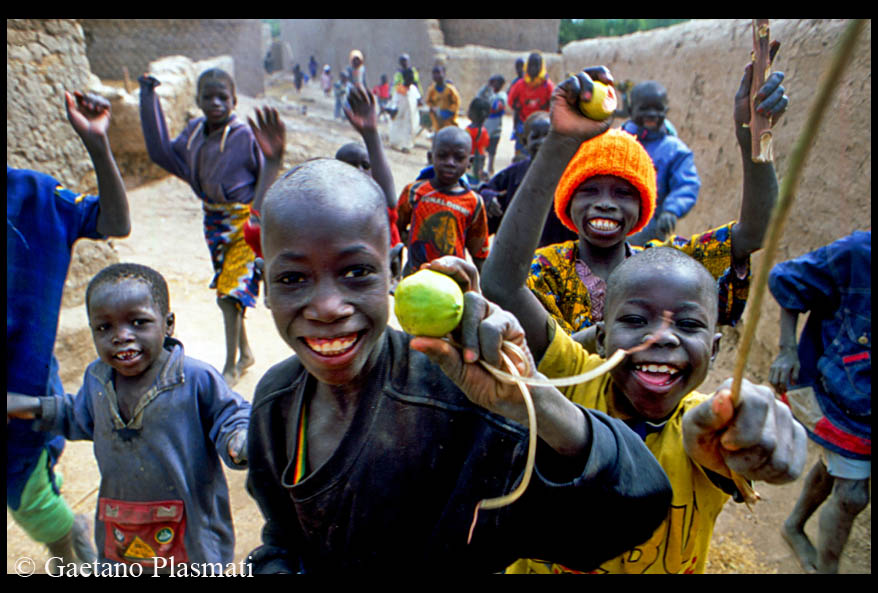
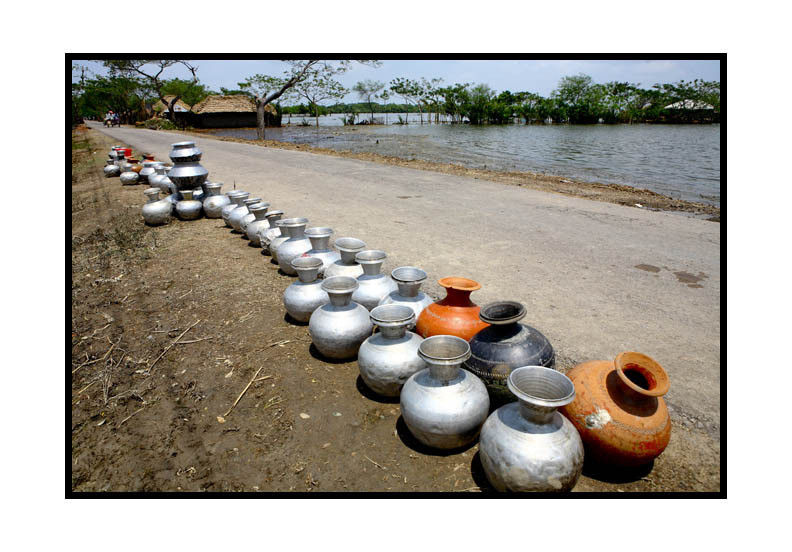
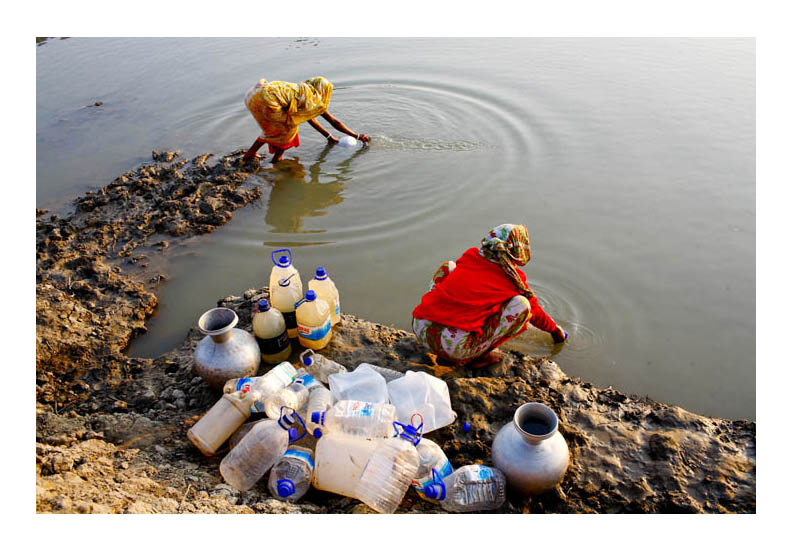
“This exhibition is a prism of callous realities and haunting metaphors of issues of climate change. Photographs of the exhibition will reveal the bare bones of climate disaster which causes human life to suffer for eternity. Either it is flood or desertification worst is these had severe effect on human life. Desertification is already causing changes in the social environment of certain areas of the African Sahel. Agriculture, livestock, and over-population have been the primary reasons that this previously stable dry-land ecosystem has been turning into desert. At the same time as these physical changes have been occurring, social destabilization and migration also have been, leading to food insecurity, disease outbreaks, and increasing levels of cultural extremism. more than 42 million people were displaced in Asia and the Pacific during 2010 and 2011. This figure includes those displaced by storms, floods, and heat and cold waves. Still others were displaced by drought and sea-level rise. Most of those compelled to leave their homes eventually returned when conditions improved, but an undetermined number became migrants, usually within their country, but also across national borders”

gaetano (1)

water from akash (27)

Gaetano Plasmati:

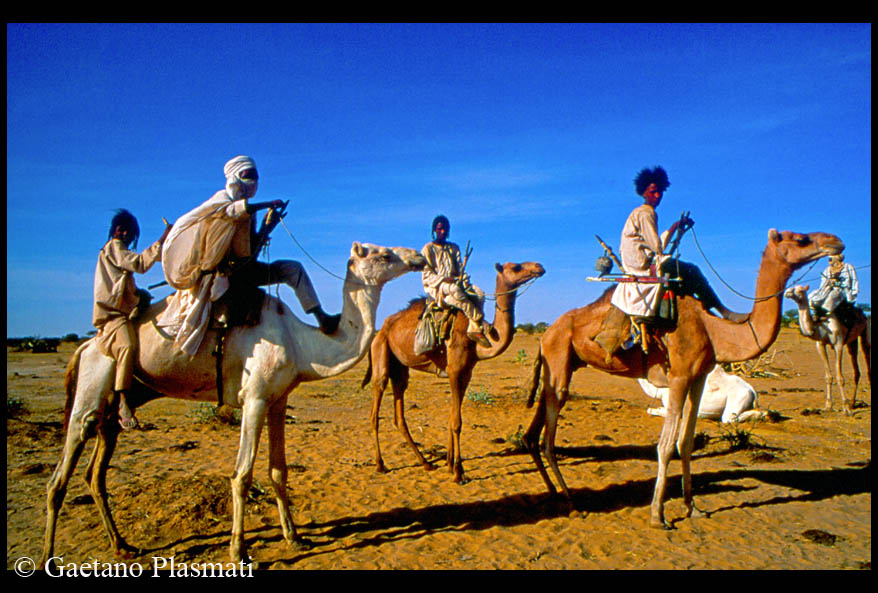
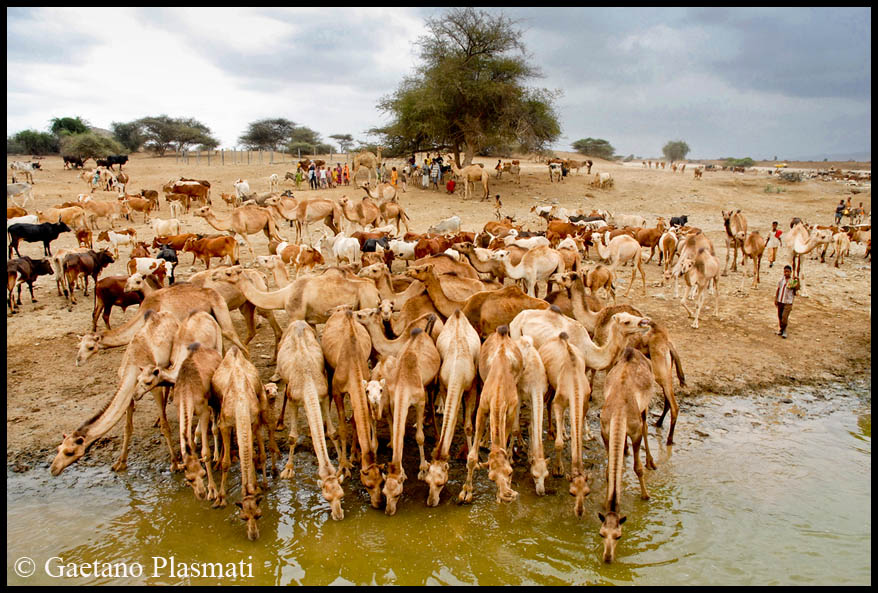
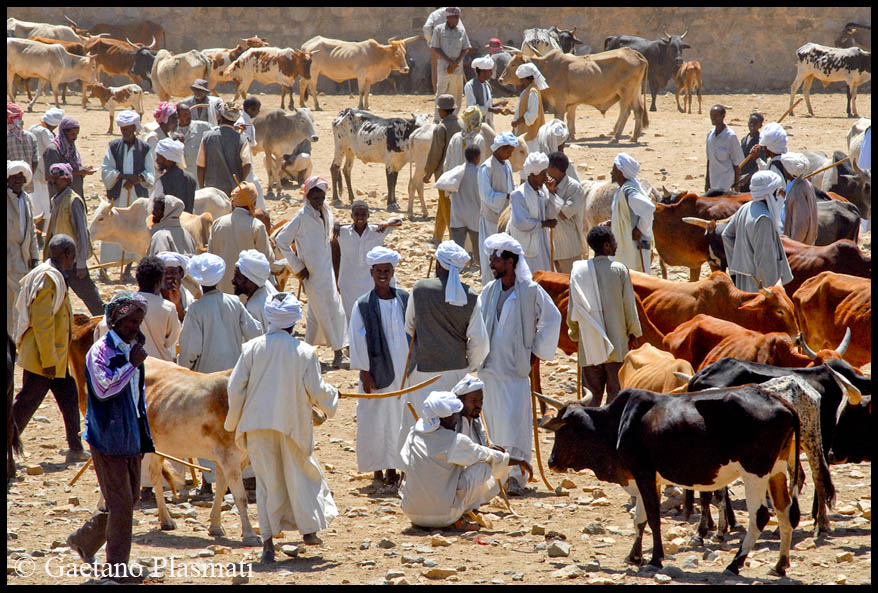
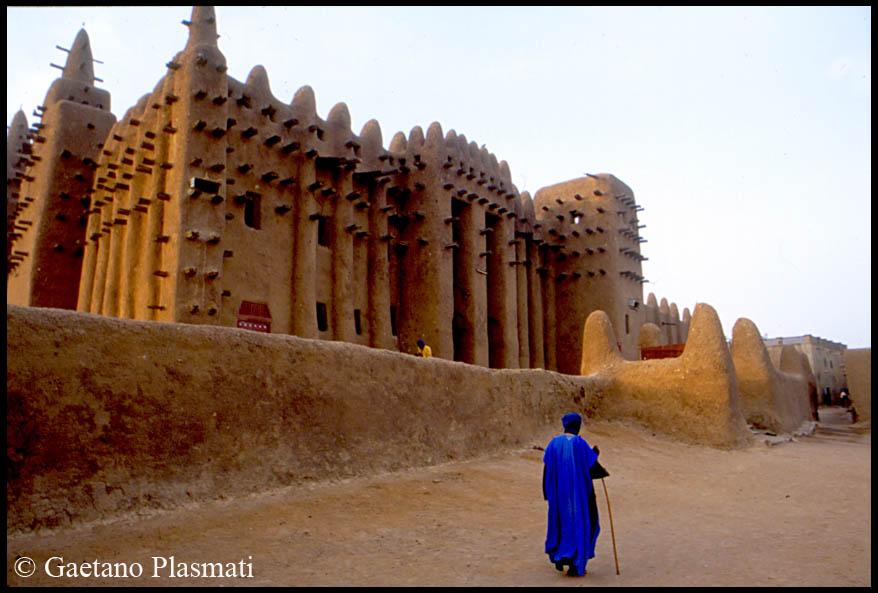
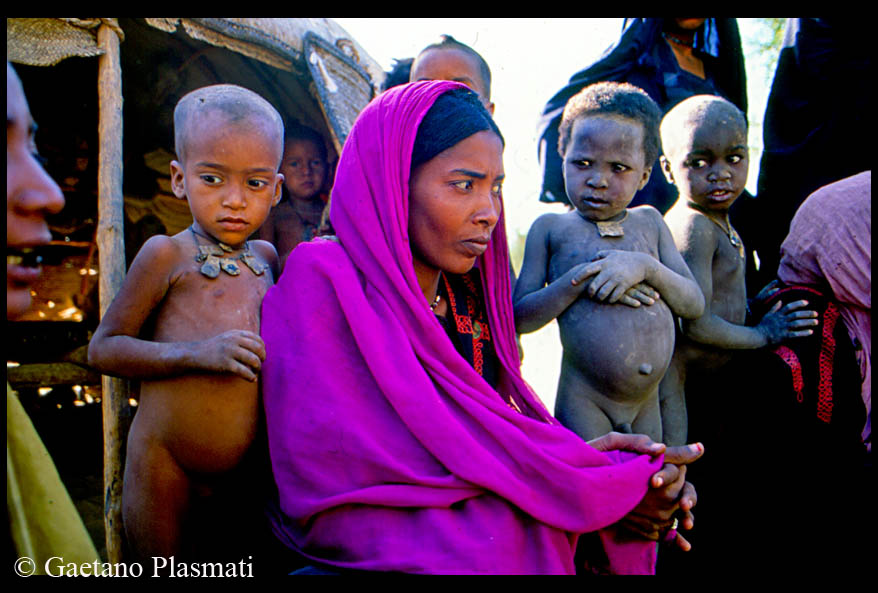
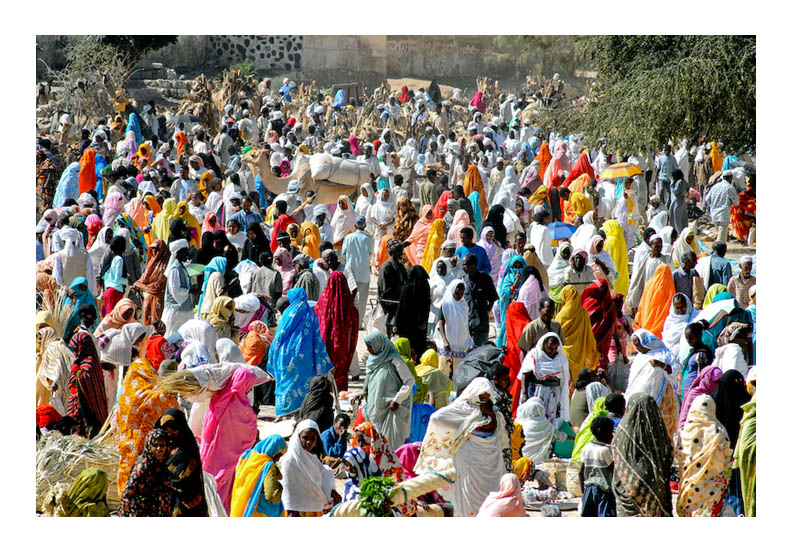
The project of Gaetano Plasmati is the result of a journey that lasted 15 years and has developed over a series of trips to Algeria, Libya, Tunisia, Morocco, Mali, Niger and Eritrea. The beautiful shots by Gaetano Plasmati describe a journey in search of people who live the drama of desertification, such as the Wodaabe, the Dogon, the Tuareg. Plasmati has followed the slow and inexorable retreat of the nomadic’s territories which become less and less comfortable for traditional economic activities that sustain them.
Desertification is a danger to almost 50% of the land and puts at risk more than 100 countries with approximately one billion inhabitants. The continent most affected is undoubtedly Africa: here over two-thirds of the cultivated lands are at risk. The path of Gaetano Plasmati winds through the dunes and the rock paintings of the Acacus and Tassili N’Ajjer in Algeria, the great Sahara, the markets of the mythical town caravan Timbuktu, Djenne, Agadez, Niamey and Djanet. Plasmati has portrayed hostile landscapes and people tempered by the roughness of nature, dunes vivid colors and rocks that are museums, suks and caravans in a succession of faces and landscapes which give rise to the extreme dignity and composure with which the “nomads of water” live their atavistic discomfort.

gaetano (5)

gaetano (4)

gaetano (6)

gaetano (3)

gaetano (2)

gaetano (8)

gaetano (9)

gaetano (7)

GMB AKASH:

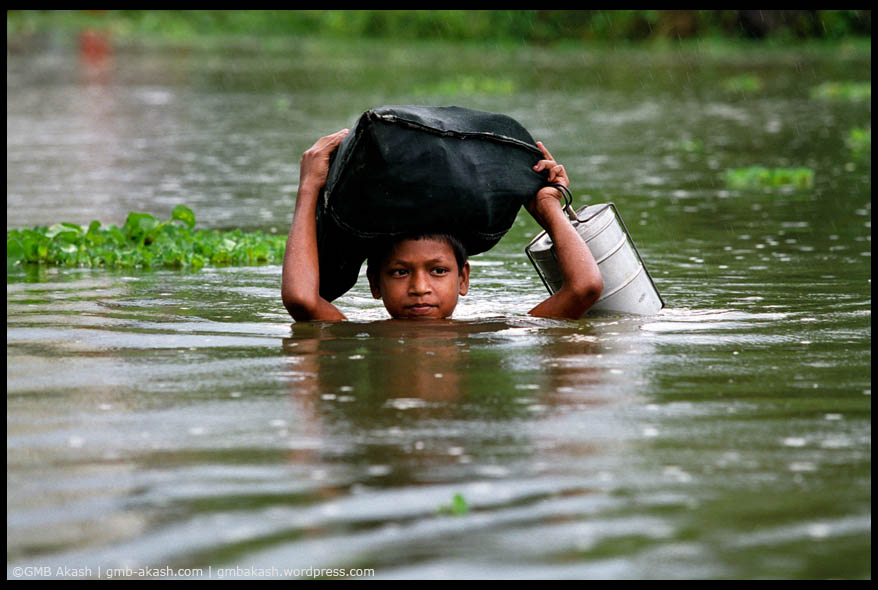
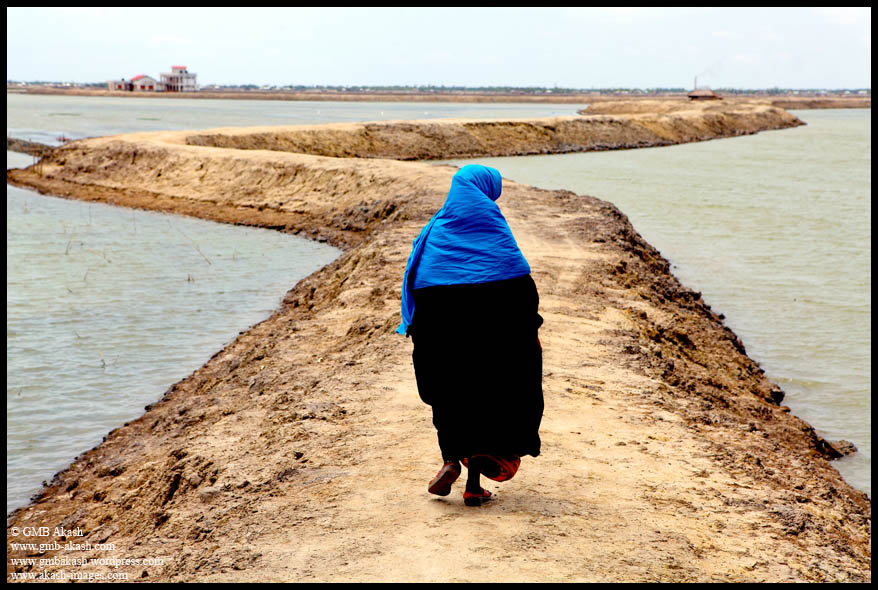
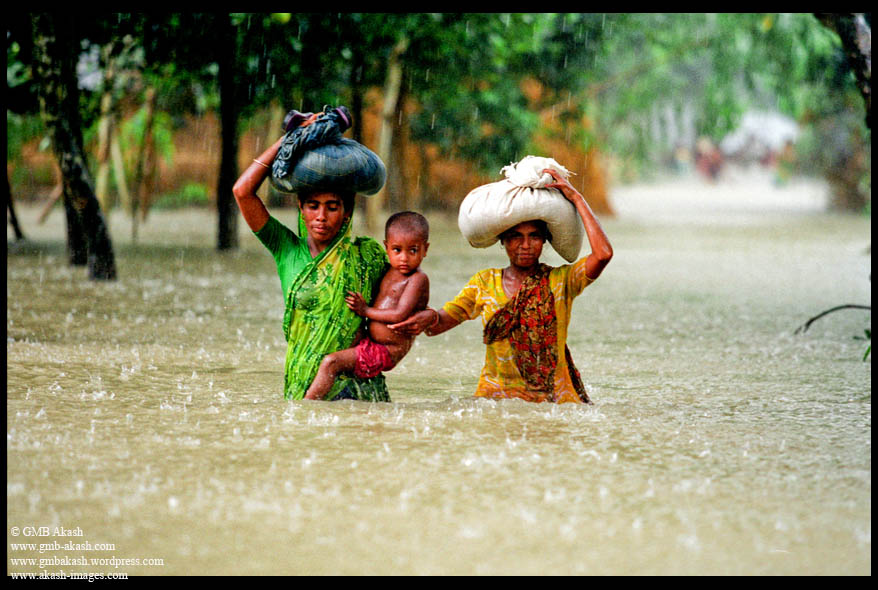
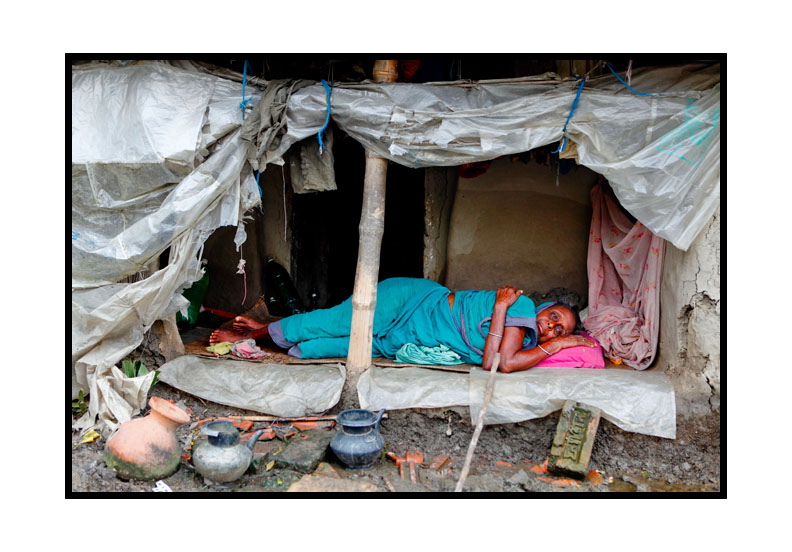
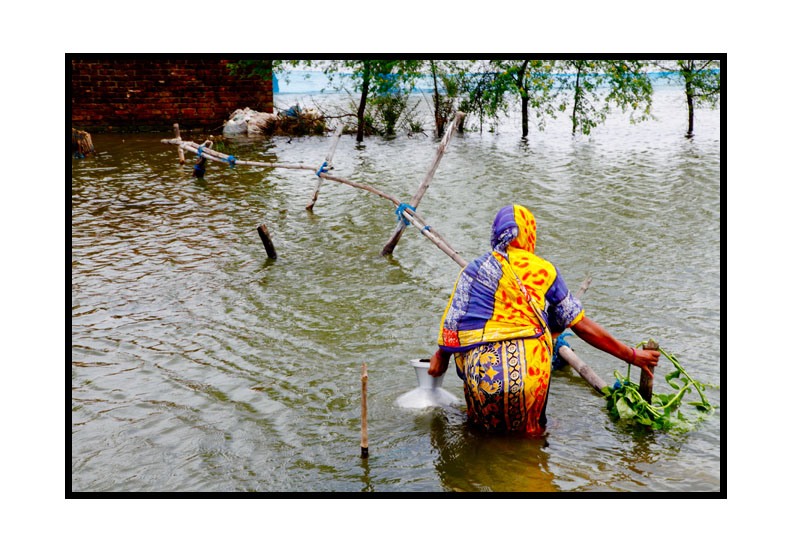
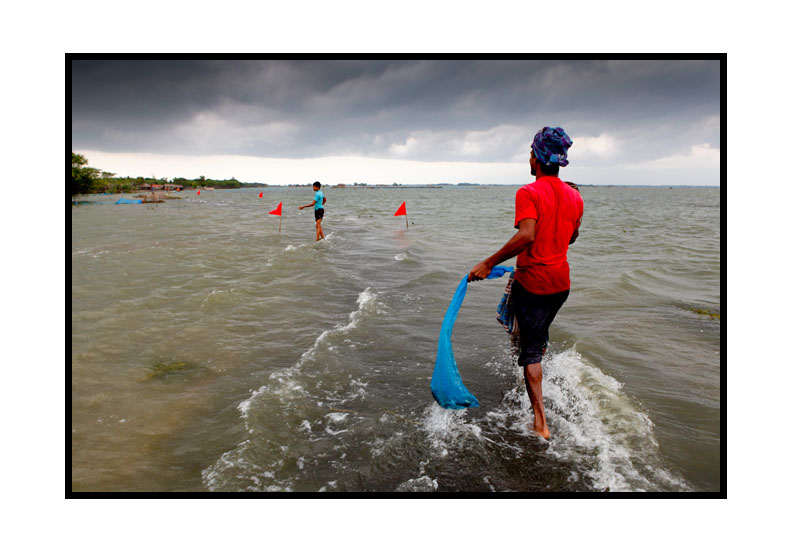
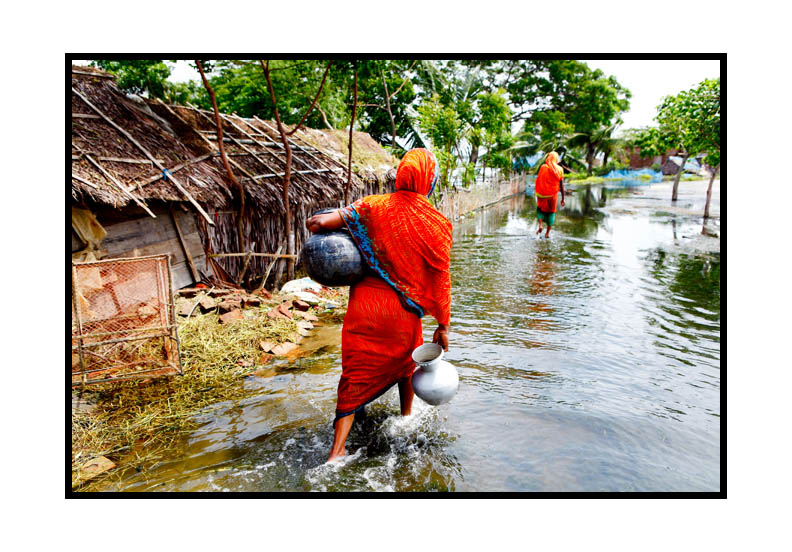
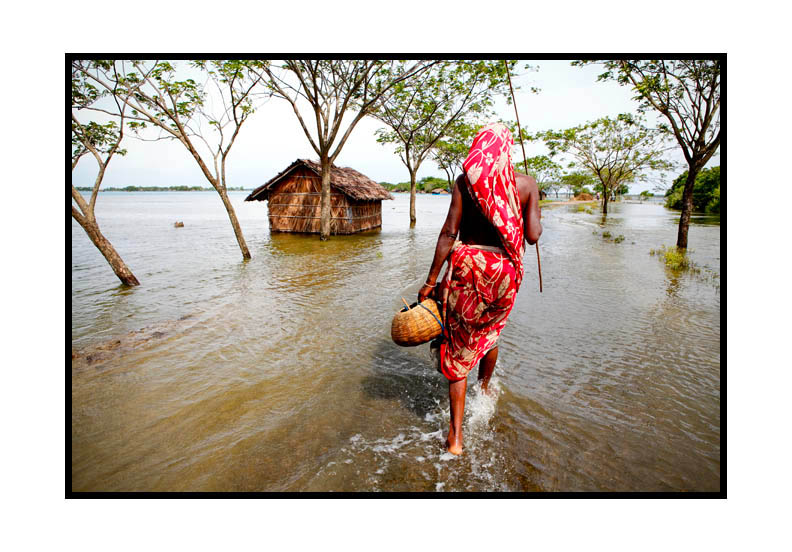
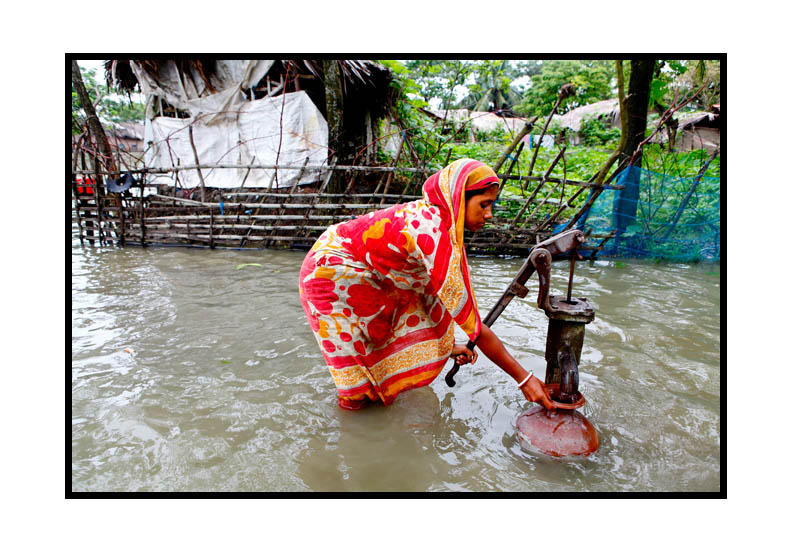
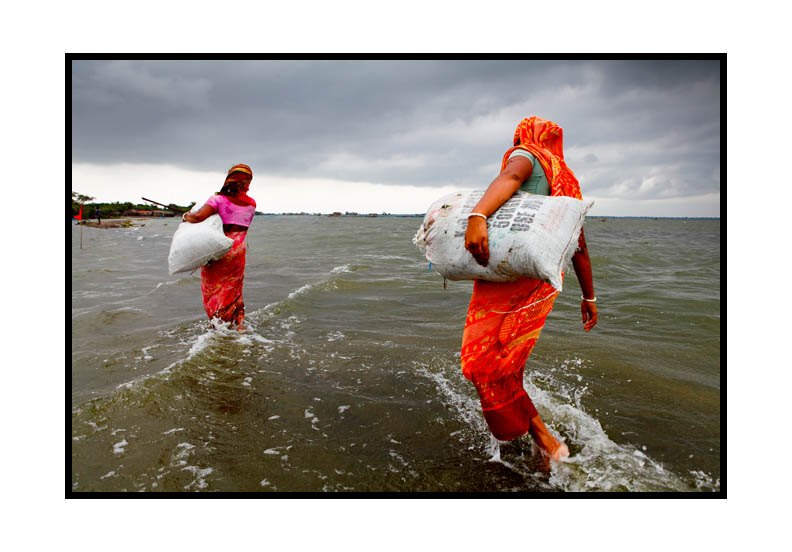
“I have framed how every year flood causes people suffer miserably in Bangladesh. I experienced how with the drowning sun villages go under water. How People sheltered in roofs of their houses and lost their lives. Moaning of old people & shouts of children of the miserable atmosphere can only describe small bits of devastating sufferings of flood. After facing devastating flood every year, people still fights to live apart loosing shelter for existence. Still they fight to live. They collect all destroyed pieces of house to shed their head. Women go for fishing, children dry their damp books, and men rebuild homes. In flood I spend days, nights and months in flood affected areas past 12 years. Throughout the journey, the rotten water wrapped me by leaving a restless feeling. Every day, I encounter a new tragedy by finding people who have no way to escape from rising water, who can only surrender everything to the mighty nature. Several times I have been severely injured or illnesses have torn me down. Nevertheless I continue working because of my strong belief that my pictures can make a difference.” – GMB Akash

People in Bangladesh live precariously close to the risks of cyclones, floods and droughts and more than 100 million people live in rural areas. Two-thirds of the country is less than 5 meters above sea level and in an average year, a quarter of the country is inundated. Bangladesh has experienced severe floods every 4 to 5 years that may cover more than 60 percent of the country, resulting in significant losses. United Nations’ Intergovernmental Panel on Climate Change predicted that rising sea levels could submerge 17 per cent of Bangladesh by 2050, creating 20 million “environmental refugees”.

water from akash (4)

water from akash (5)

water from akash (6)

water from akash (26)

water from akash (25)

water from akash (28)

water from akash (7)

water from akash (18)

This exhibition intend to speak about harsh reality of many who are displaced from their homes and living in exile in another country, and/or from issues to become victims of natural disasters and internally displaced in their own countries. The displacement, and migration, of very large numbers of people, will be one of the most significant effects that climate change will have on humans. Often times these displaced populations will have nowhere to go except to regions that are already densely inhabited. Many of which, will likely already be having trouble supporting their own population. We are cordially inviting you to visit how water impacted life. If you are in Matera in 14th of April 2013 do visit the exhibition and those who are far away from the exhibition Gallery, this post will give you a trailer of the show. We hope that while you are in Matera, Italy, you will take a moment to visit the exhibition.

Exhibition: WATER

Gallery: Galleria di porta pepice present

Exhibition Date: 14 April 2013

 Gallery address: Via delle beccherie 55, Matera, Italy

cartolina acqua 2013 con caratteri piccola


‘Life for Rent’

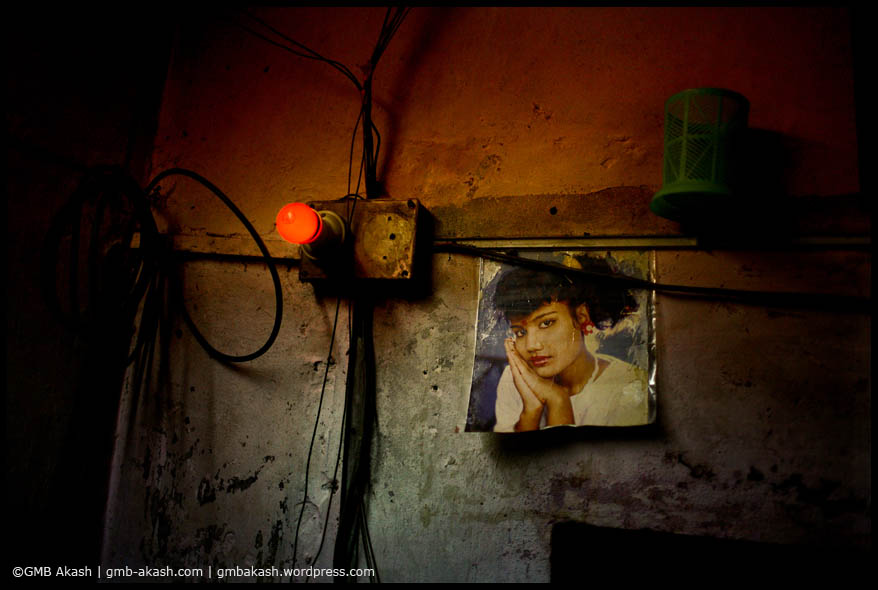
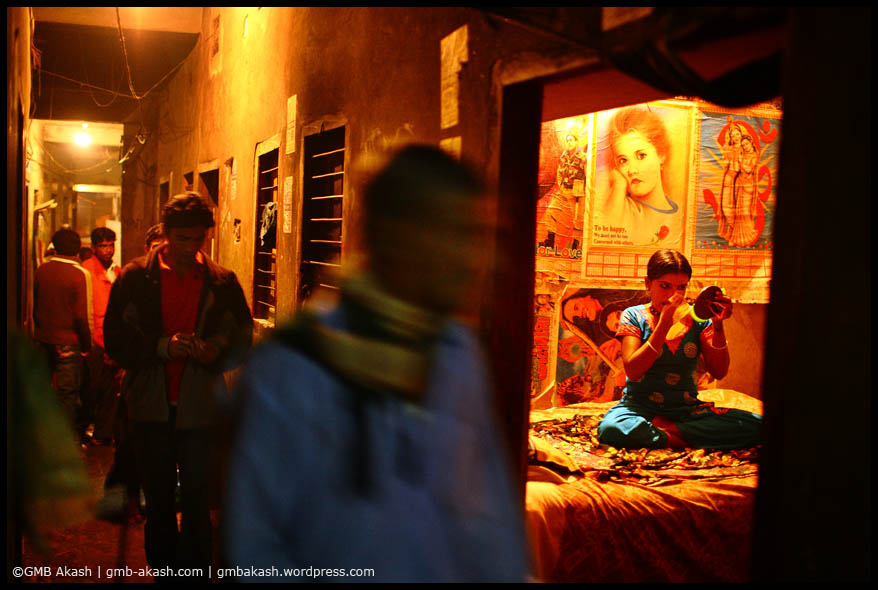
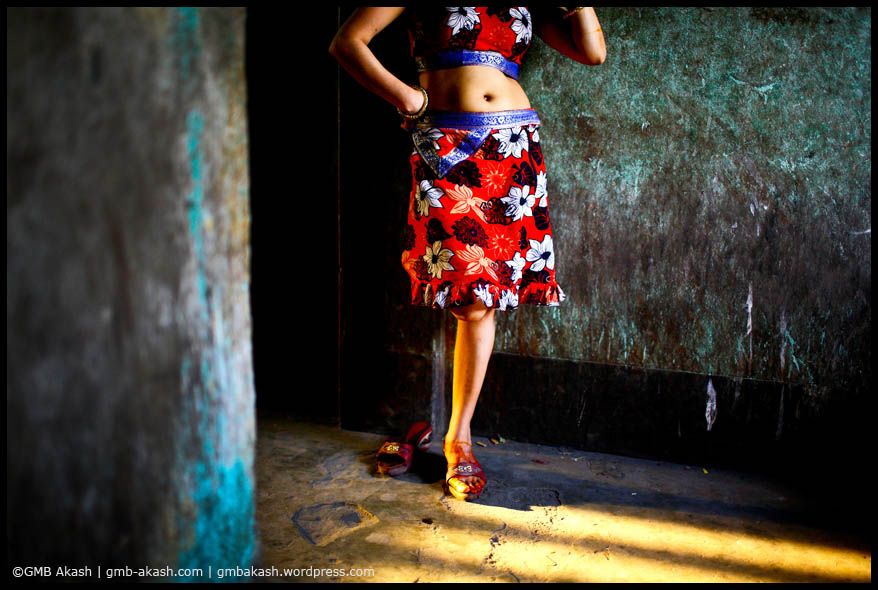
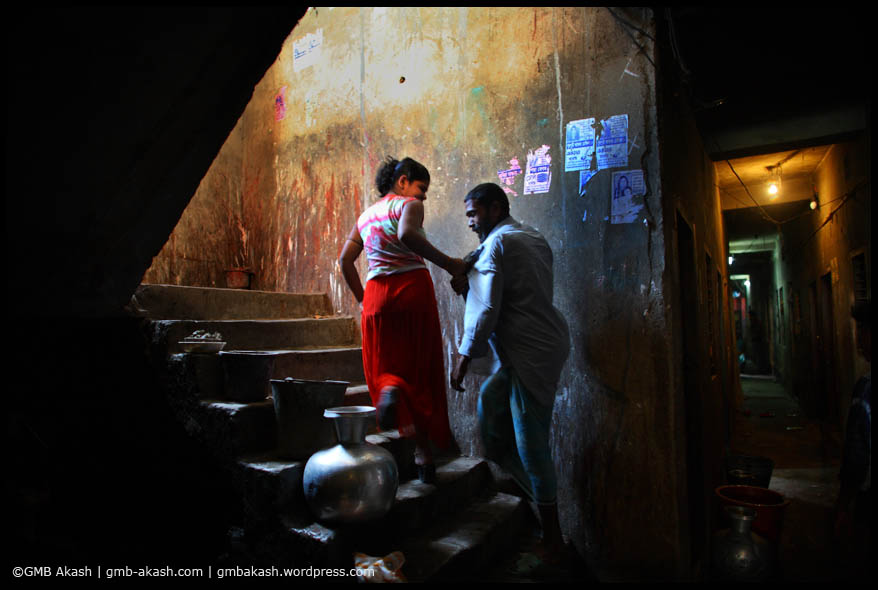
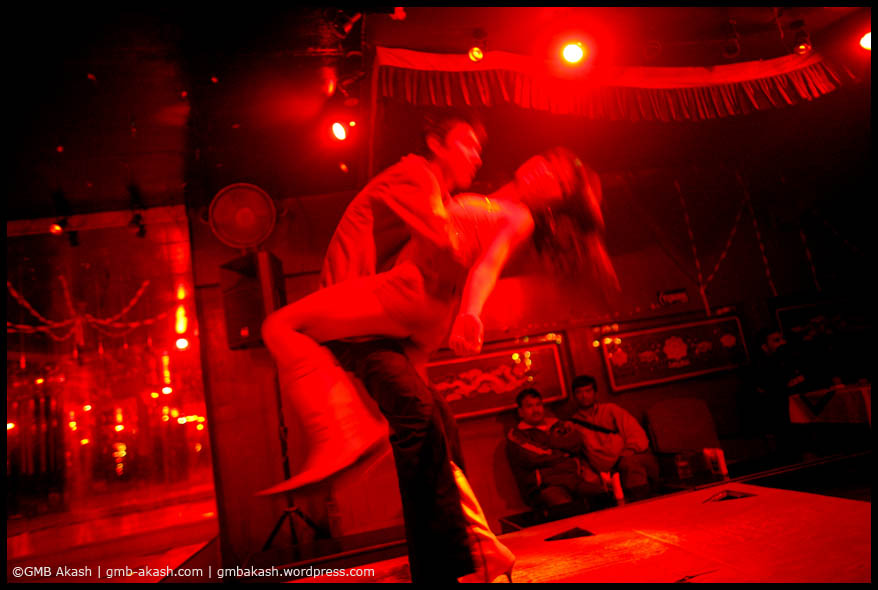
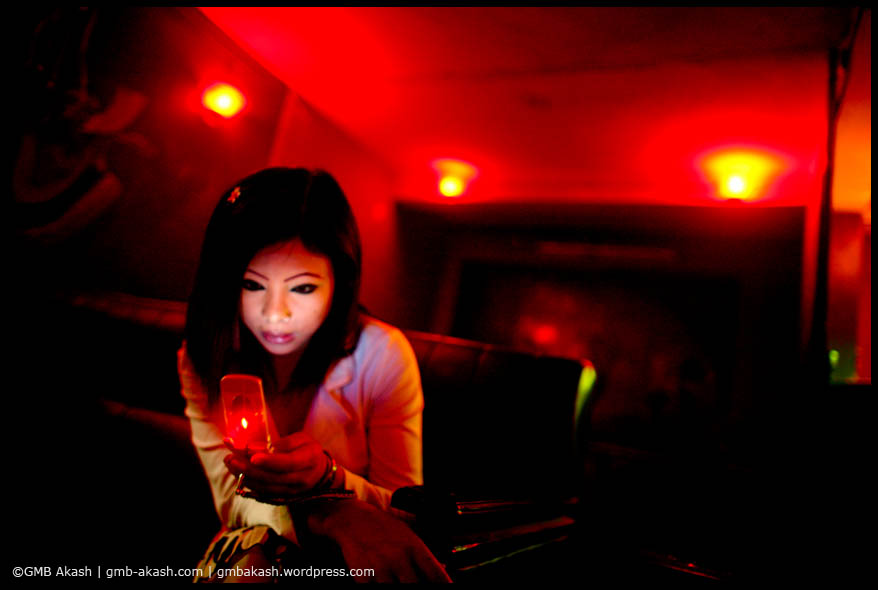
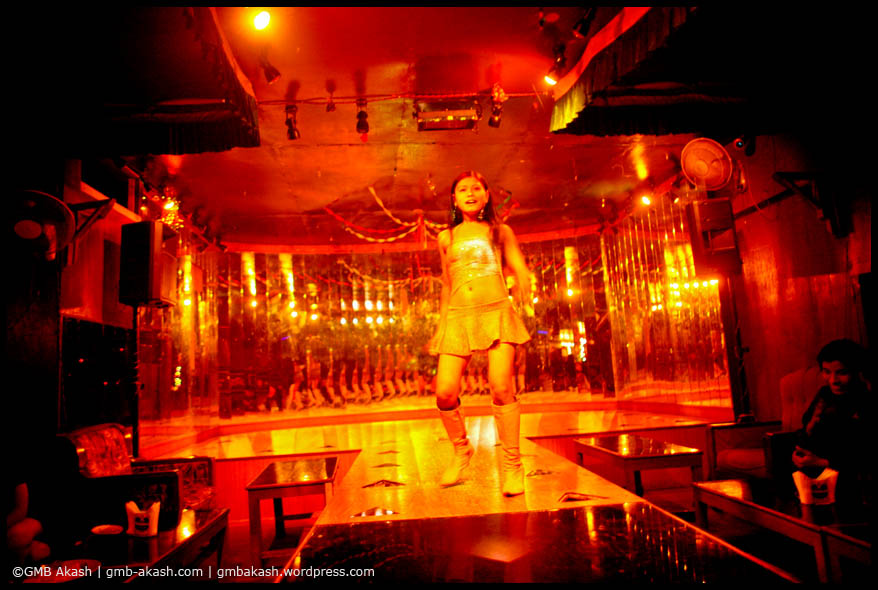
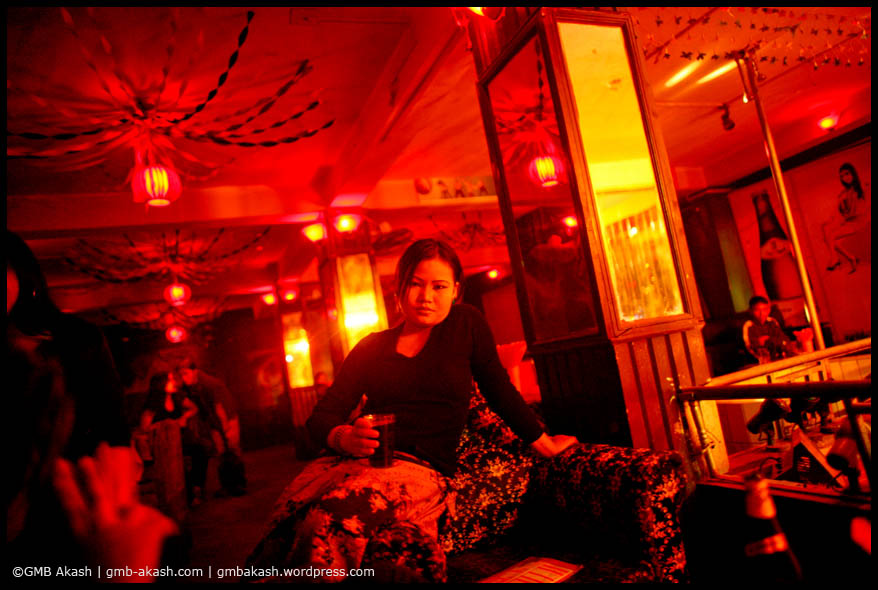
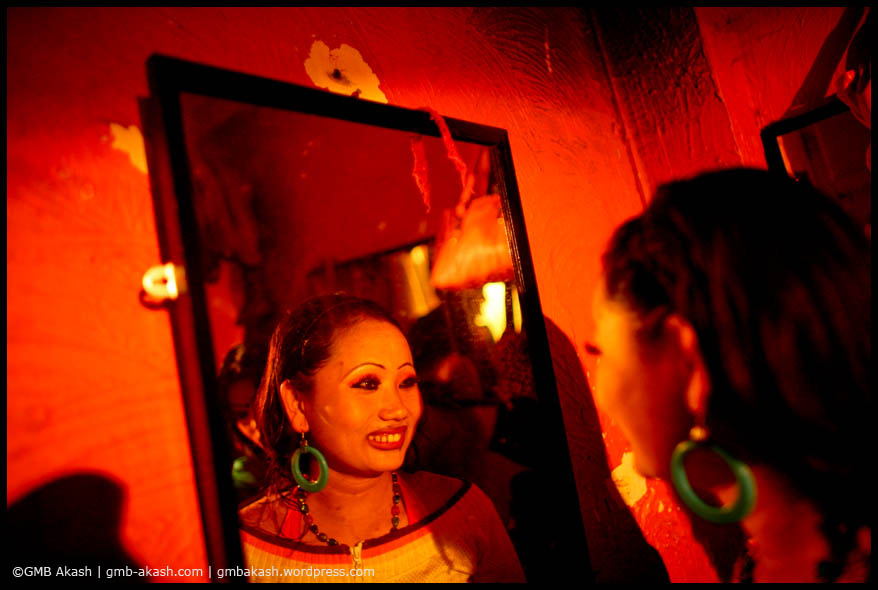
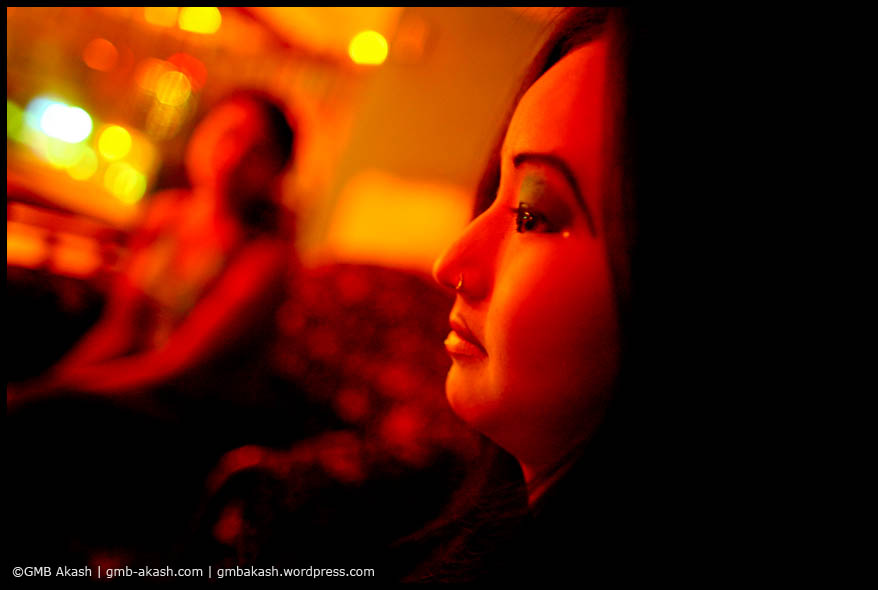
Night is the meaning of life here. Don’t dare to feel I am talking about moonlit night. It’s about a place where fluorescent bulbs hesitate to light up the great darkness.  You have to go step by step by listening giggles and following Hindi songs. Cheap aroma or local fragrance continually defeated to hide smells of stinks. At this place, dreams never can lose its paths even by mistakes. But it certainly can turn into the ideal background for a horror blockbuster by following nearly naked heroine’s poster or staring into a photographs where a lady wearing red lipstick with her innocent eyes hanging over fungus wall.

life for rent (3)

life for rent (1)

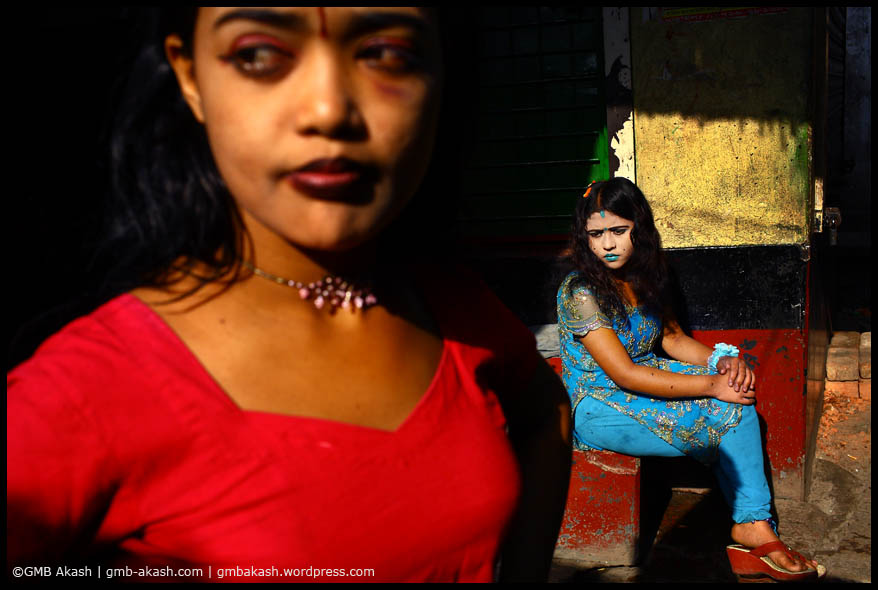
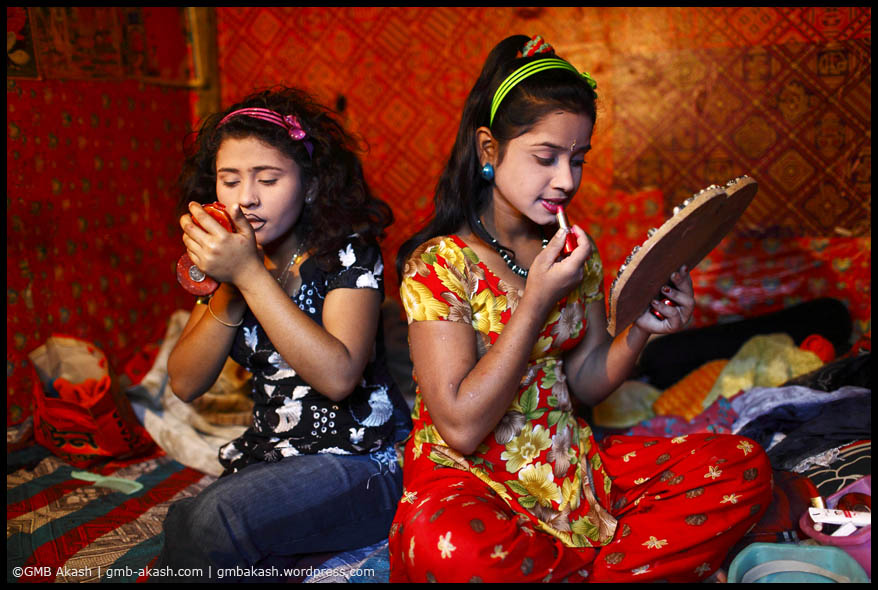
Four storied building’s busy staircases are lively by steps of clients. Girls for converting themselves as women putting all make up from her dearest make up box and keeps doubling lighten up their cheeks with cheap blusher. For killing hunger each moment they have drunk tears and fighting with each other to get same client for a night. Excess make up, vulgar cloths and even by showing off most of the female fascinated body parts these girls can not satisfied their MADAMs.

life for rent (13)

life for rent (26)

life for rent (2)

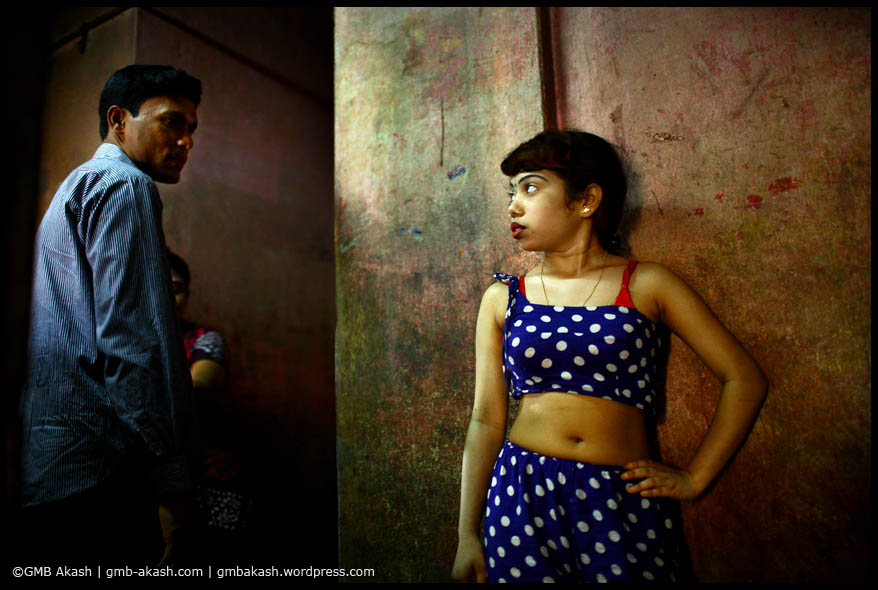
In the race by standing full day beside the door dressed like this they have to show their madam their extra talent for hunting a client. While few of them get tired of being waiting and being rejected, lastly they may get one/two clients at the last moment of their very tiring publicity. Then the bargaining starts. It’s the bargaining of beauty, the outer shell. Minimum 100 Tk – to maximum 500 Tk depends on the job’s creativity and longevity.  Either a client comes for an hour, for a night or for several nights they never bother to enter into the corridor of these beautiful doll’s heart. They rather treated her as a toy of entertainment.

life for rent (19)

life for rent (20)

life for rent (11)

As like being used for years after years these girls started feeling themselves as product. Product of modern day slavery. In the middle of these professionals there is also few girls common who uselessly try to hide their body with their small cloths, who will not look at any one’s eyes either for sorrow or for shame. These girls are new to the place, they been bought by madam one or two days ago. Betrayal boyfriend, step parents or their closest one play with their innocence and sold them in the castle for Tk 4000- 20000. Before realizing what had happened in her life her innocent soul has been captured by brothel’s reality. In between them there are girls who has been gang raped and our civilized society refused to accept her, so she finds her MADAM as mother and releasing all bitters of her life by the profession of sex worker.

life for rent (23)

life for rent (22)

life for rent (25)

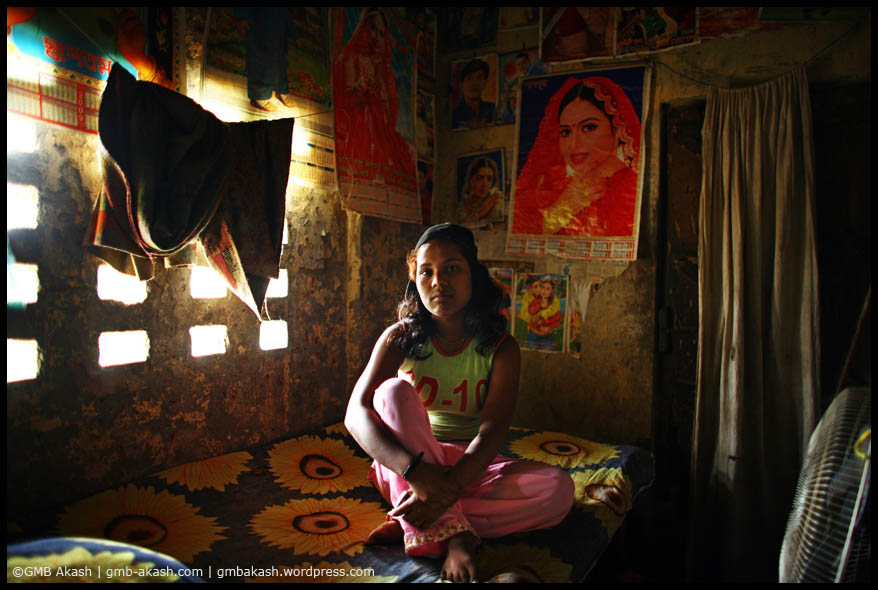
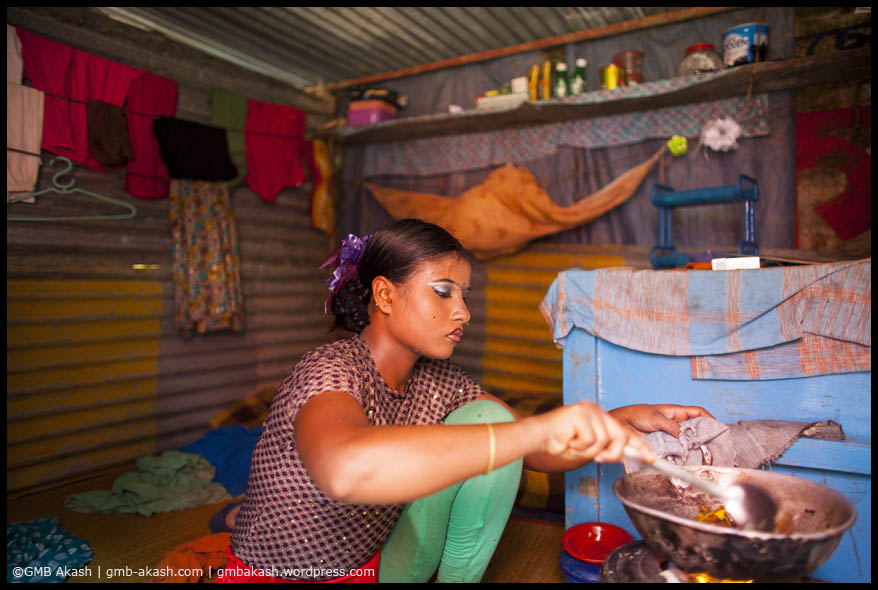
Fighting over getting men at night does not change relationship between themselves on the day. An unknown bonding for each other has tied them up and takes care of them in dear need. That’s why, when a girl out of frustration cut her full hand with blade just to torture herself, her roommate wipe it off and put medicine on it. A six feet by six feet room is world for 3-4 girls, so when customer leave they decorate the bed with flowery bed sheet or place artificial flower for adding beauty of it. Knowing a home never will come in their life still they care for their small room as like their house.

life for rent (5)

life for rent (16)

life for rent (8)

By remaining in the strict guidance of Guards for several years these birds stop weaving their wings and thus they forgot how to fly. After earning 100 Tk per client 3-4 years passed thus but loans and buying money of madam does not meet up as these fates less girls can’t even calculate. If their luck is good enough few of them get little better madam who let them free after three to four years to do their business independently.

IMG_7776

life for rent (18)

life for rent (17)

life for rent (24)

The story does not change here. Again after doing free business the girl do same mistake by giving heart to a client. Then one day come when the trusted man flew with her all money, gold and faith. All the tiny battles she had within inside that do nothing but shape her emotions, make her able to drink her tears of blood. Stories of a brothel have many shapes. Many girls do not miss their Fazar prayer; many girls learn to recite Quran. Many girls penned their parents and send money monthly putting fake address in the envelope. Many girls forced to take a drug designed to fatten cattle for market name Oradexon.

IMG_7566

The Bitterest Pill - A new danger for child sex workers in Bangl

Their day passes by. One day visibly wrinkles can no longer hide by their heavy make up, then they started losing clients, then one night come when they had no one, and they become nanny of younger sex worker. Finally after death their bodies can be buried in a cemetery, though still in a separate one. But better than having their remains floating in the river covered by a sheet which previously practiced as ritual. Their existence remains in their tank which preserve full of their life memories, which lastly kept by their dear one if someone still have time to recall a sex worker.

IMG_3819 (2)

life for rent (8)

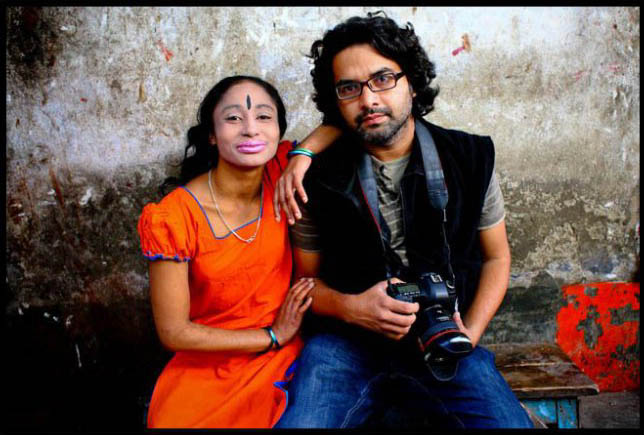
“Its been 12 years I am familiar to them. Not only as a photographer but also as a brother. In the photograph, I am seating with my one of the sister from Tangail brothel. Whenever I go there, she runs towards me by calling “Akash Bhai”, she brings sweet, tea and speaks and talked lot about her dreams. These girls are weak for affection as I once treated her as sister now she granted me as her brother. No one knows the story of those faceless girls who are sold by their boyfriend, husband or parents. This is one way journey to brothel a place that is everything to them. By documenting on them I would like to spread their story of pains which are only locked into their own madam’s castle. I can also recall about one girl from those uncountable faces. Unsurprisingly – and despite her name – Asha isn’t very hopeful for her own future. ‘I don’t think I’ll ever get married or have children,’ she says. ‘No one will marry me. If they did they’d only keep me for two or three days, and then they’d sell me back.’ She is more streetwise than some of the other girls here, many of whom share a tragic dream that one day a knight in shining Armour will arrive, to carry them off; then they will marry him, have his babies and love him forever. I wish there would be a knight in shining Armour will surly arrive, to carry them off from this living hell! I wish and I really wish!” – GMB Akash

428368_296961003701994_683763109_n

Embark on the Journey

“The moment I wake up, right away, I smile…. I am aware that a life is offering me twenty-four brand new hours to live, and that’s the most precious of gifts I received, while living every second of my life for a new day, for a new hope, for a new destination. I am traveler, won’t mind to be called gypsy. Hanging my bag, holding my camera, eying over everything, I keep walking. I discover a part of me in my journey. I mostly save each penny comes from my work for traveling. Simplicity is my luxury. Visiting my maples world is pretty sweating but I don’t mind to wait. Travel brings power and love back into our life. Sometimes we plan a trip to one place, but something takes us to another. Whatever purifies it is the correct road. Thus I stepped to Istanbul with an open eye in road to be lost” 

– GMB Akash

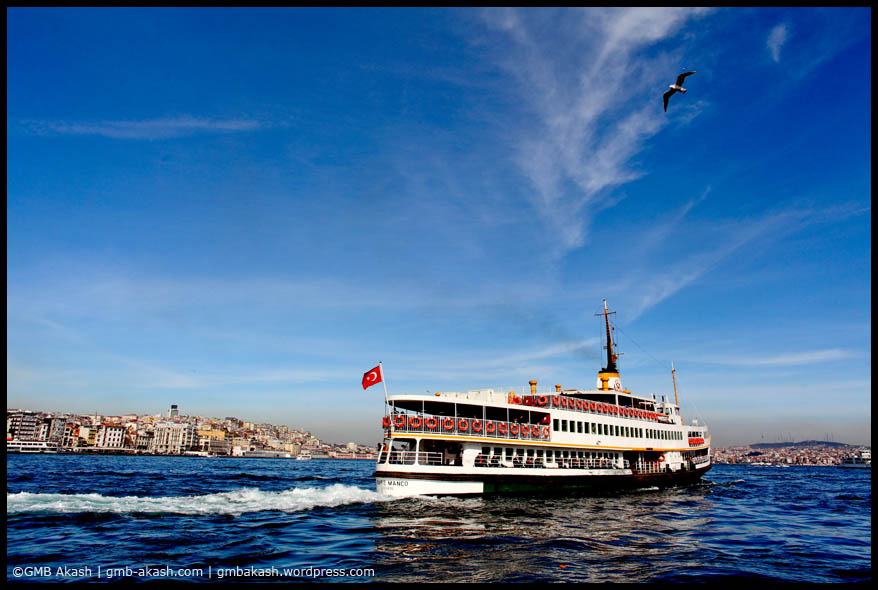
Muslims are praying inside Mosques of Istanbul, Turkey.

Women are resting beside ferry station.

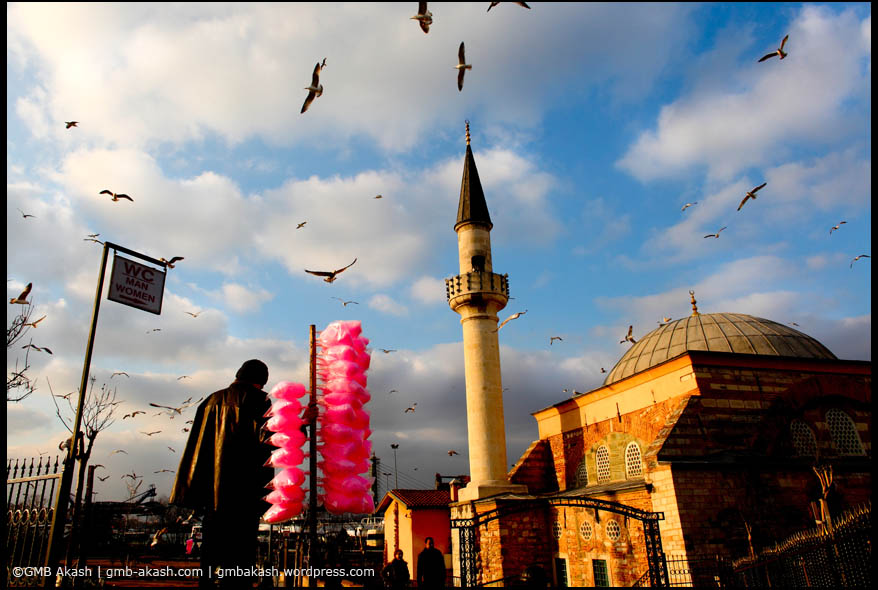
Muslims are gathering in and outside of mosque during prayer time.

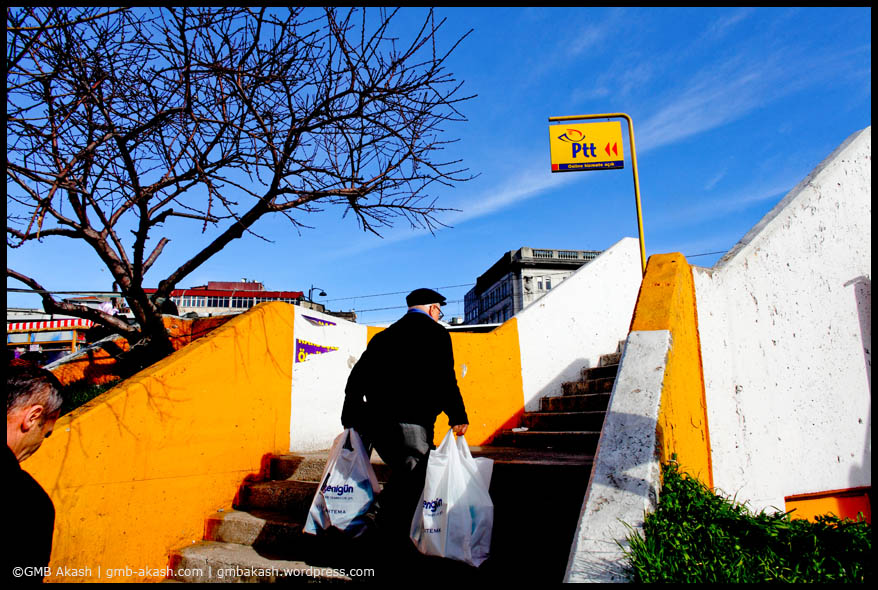
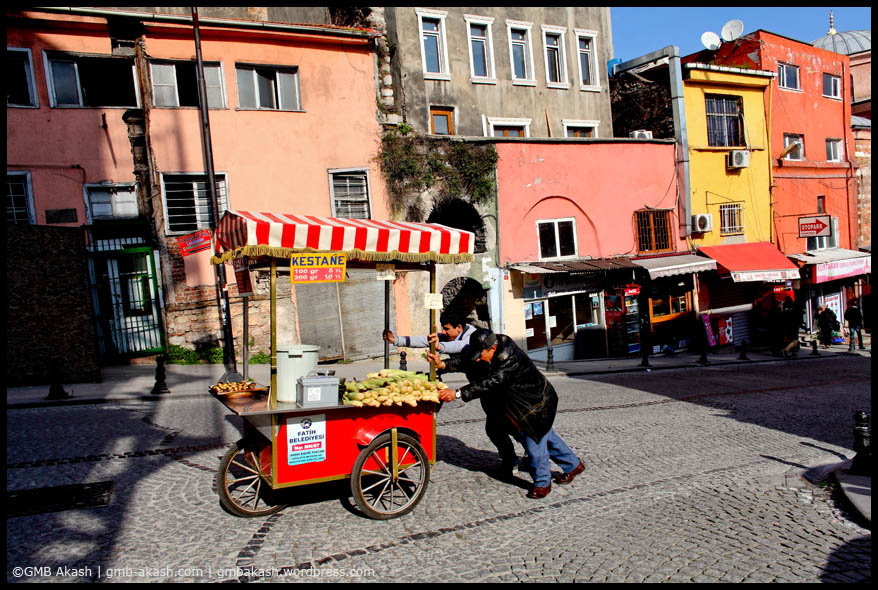
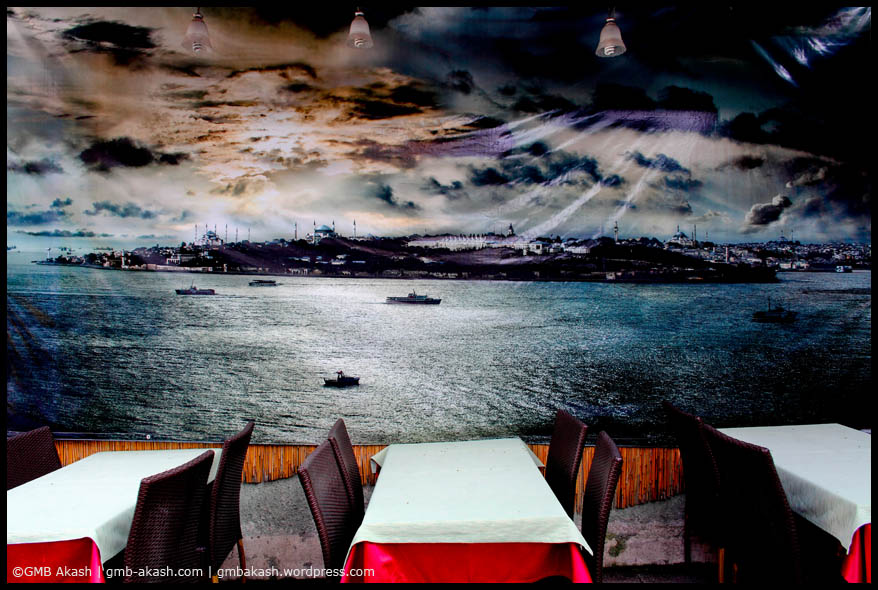
There are a handful of cities around the world that draw me back again and again. In my list Istanbul was a most desirable place to visit. I got my chance and landed for a quick tour. In Istanbul It is difficult to be in quiet places in a city of 13 million, which was best for me. I was attracted to the city for its rich history—it was the capital of three empires and it’s the only major city in the world that straddles two continents. Navigating Istanbul can be difficult for tourists. There are so many forms of transportation—trams, trolleys, ferries, taxis, metro—and so many ways to get to a place.

A muslim man is preparing himself for his prayer

Three friend are passing time near ferry station.

istanbul 13 (4)

As a travel photographer I love all options. While I keep clicking my camera, a short, wiry Turk goes past, carrying a dozen folded carpets balanced on his head. The weight of the load seems to be greater than that of the carrier. Women wearing veil, only showing their eyes, gold bangles and chains reminding women of my Old Dhaka’s. Several groups of photographer’s rooming around like me with cameras on shoulders and heads almost mechanically swiveling from side to side in an endeavor to miss nothing. The famous Blue Mosque was just near my hotel, I was stunned by seeing one of the most famous and most stunning Mosques in the world.  Istanbul is a city for those who can still enjoy a sense of providence: a sense of discovery and a sense of marvel.  

istanbul 13 (77)

Istanbul (6)

A person is walking through street and going to the destination

Continually after walking almost ten hours it was not tiring to me. As a travel photographer one must quality is to be brave. Brave to face anything and everything on the journey. I travel alone and learn to enjoy entertaining myself. It is quite fun to explore a strange place and don’t get bored in loneliness. I love to watch people, introduce with new rituals and knowing different form of life. I keep images of memory in my travel folder. Photographs are not only holding my memories, but emotions and my interpretation of an untold journey.

 Istanbul (9)

Inside a local restaurant of Istanbul

istanbul 13 (29)

A woman is stepping towards stairs of mosque

Wherever I go, I keep trying to match my country with the place I am visiting. Often I started missing my country. In Istanbul I was finding my bond, hearing Azaan in mosques was weaving images of my place, my Dhaka. There is an universal language in the world, the language of love. We human being are always try to name our emotion, level our feelings so as I keep trying to write in my dairy. My days ended so quickly, with my mixed emotions I was leaving the city, Istanbul. I headed to catch another flight for another place with the imaginary in my mind ‘Splendid Istanbul’

Istanbul (3)

Muslims are gathering in and outside of mosque during prayer time.

istanbul 13 (61)

“I am not only burning myself in these journeys, I am shaping my molecules, the discovery nor ended up here, either do I go home. I will pack my bag by holding my camera, & another mystic road will open its arm for me, and I very well known, miracles dwell in invisible. I – a lost soul will walk step by step, hearing entire in silence. When I keep learning the art to fly, I keep discovering till my universe dissolves”

– GMB Akash

Istanbul (11)

A person is walking through street and going to the destination

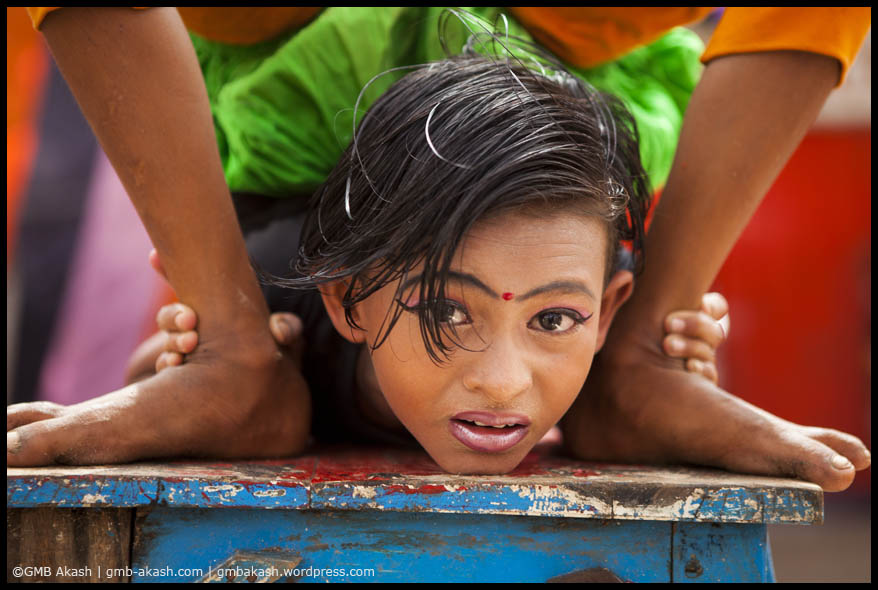
‘Life is a Circus’

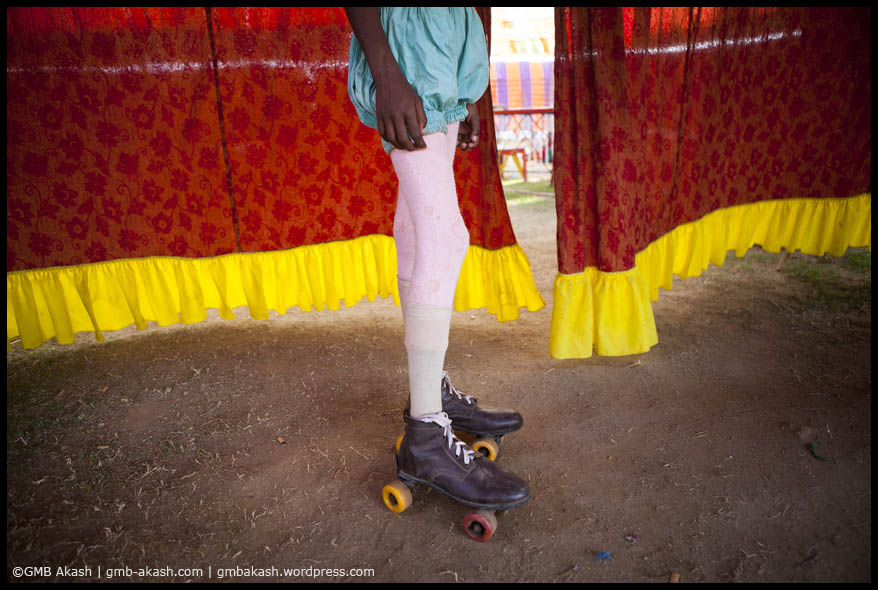
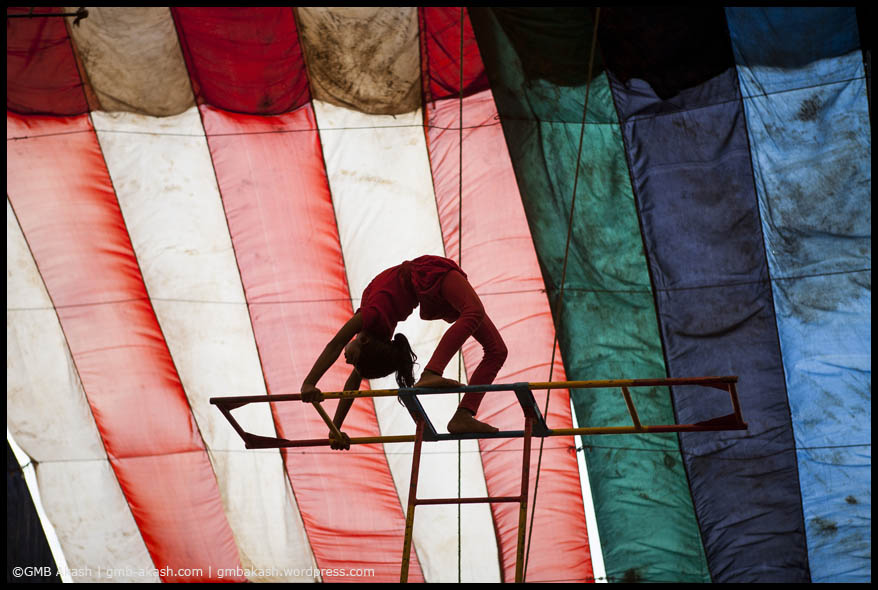
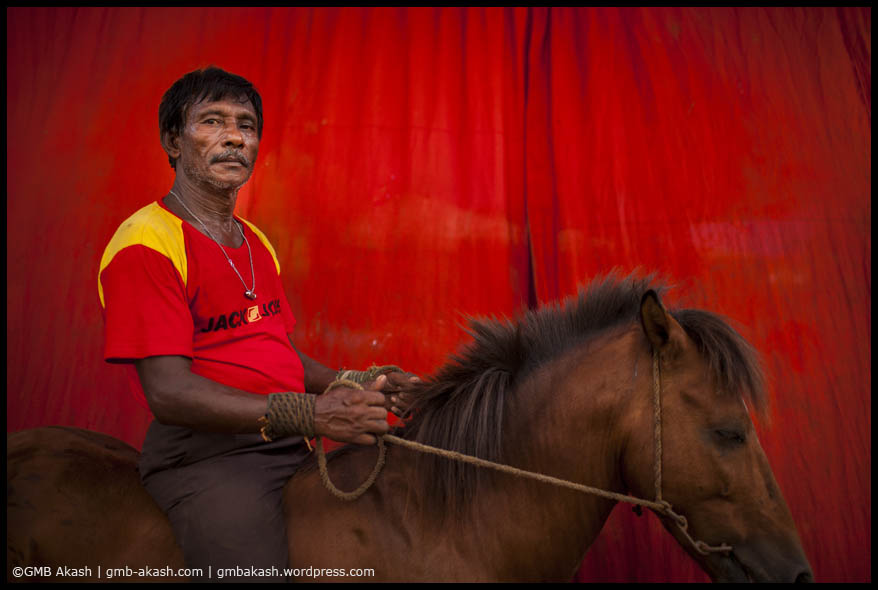
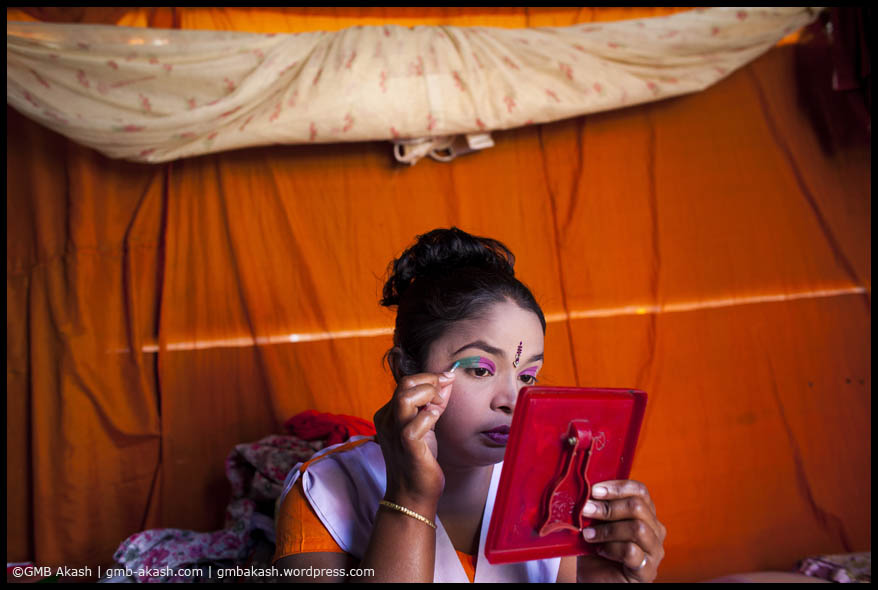
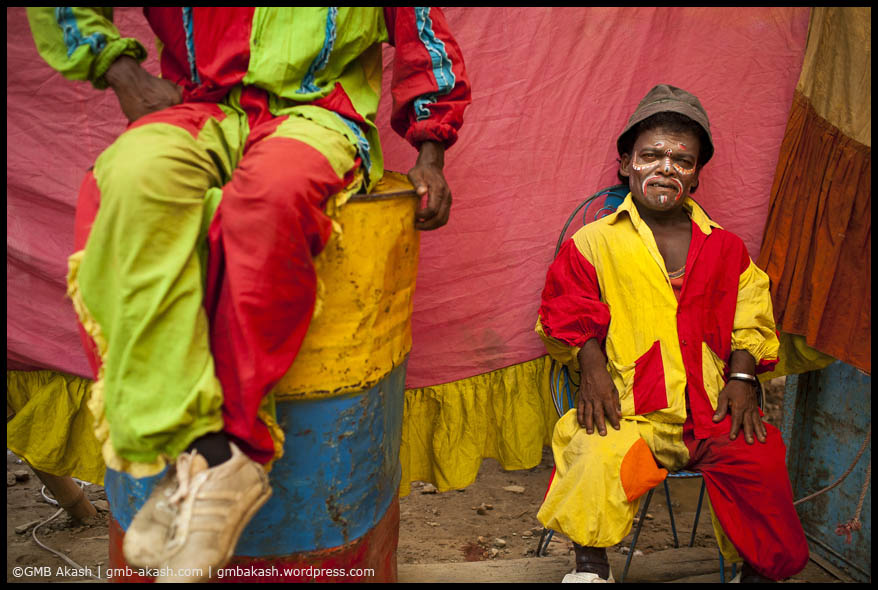
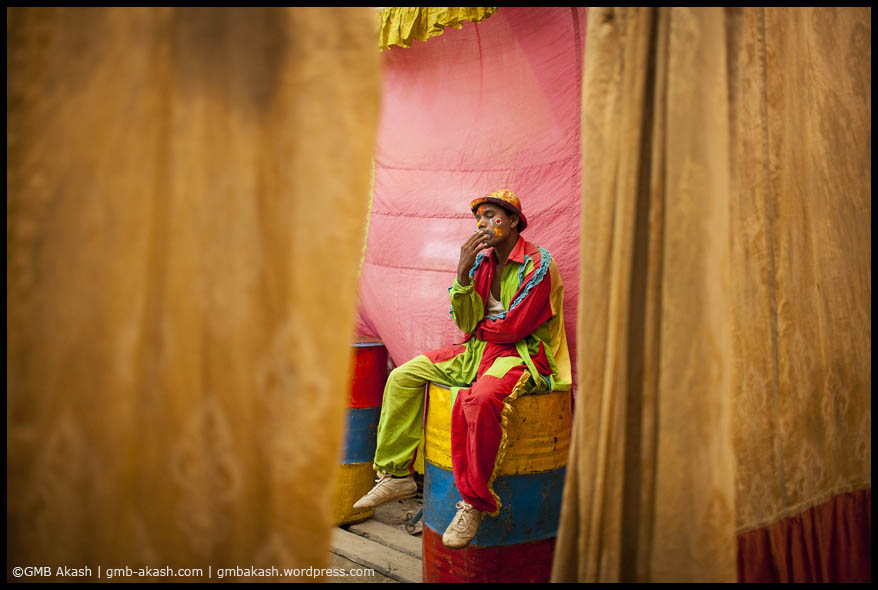
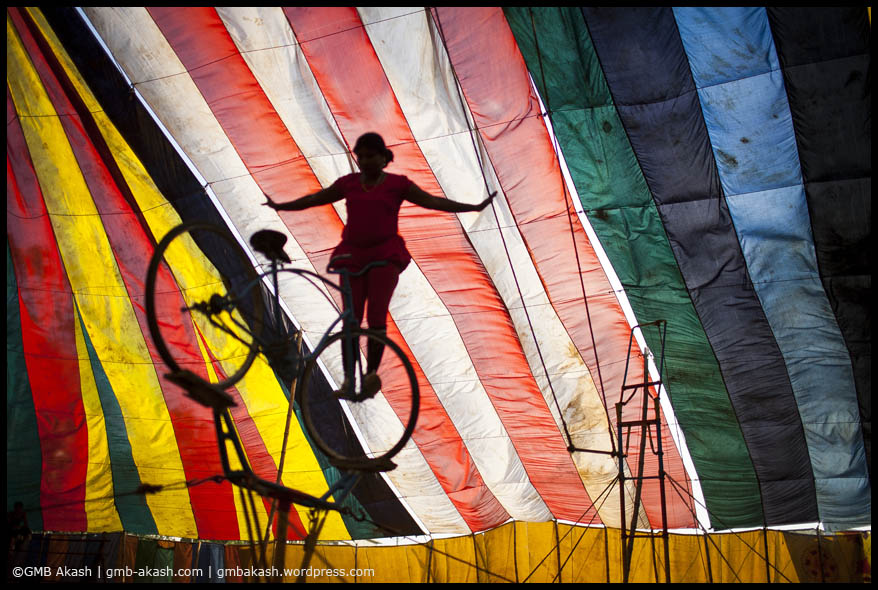
“Behind the curtain there is a different world, a world of people who are living far from the crowd, the people who serve entertainment daily artists. Circus people’s lives is a mystery and their performance never can define their mysticism. A Group of shining artists are surviving in the world of circus by facing continual adversity of entertainment in small corners of Bangladesh. Major audiences showed them negligence already but still they are moving hard with their glorious history. These nomad performers move monthly from place to place, their dreams take new shape as their house move i new place every month. By their hands they demolish their own house for shifting it in another territory. Still they only think about their performance. Nor money neither fame touches their feet. To them life is a circus, they are performer of life’s stage.”

– GMB Akash

circus (56)

circus (36)

In front of the close circus gate, curious crowd of slum children remain permanent who hardly get chance to enter. Circus get a place that is usually a large space as atleast 60-100 people has to accommodate in their temporary residence and the stage has to build within that space too.  So the circus is big, vibrant and take a place in  empty spaces which are mostly far from the city. 

circus (12)

circus (25)

A teenage performer Sharmin (13) was locating her makeup box in the tiny room of her that has been separated by a curtain as in the other side her parents use to sleep. She said, ‘The sad thing is my mirror broke while my father demolished our previous house. It takes one day to build this new house. Now this is my new home for next one month’. Sharmin was just three years old while she performed first time with her mother. Her mother and grandmother both are passing their lives in circus. Sharmin has 15 different dresses for performing in stage. She has her instructor who taught her different plays, while answering she giggled, ‘My Guru beaten me more than our donkey. Circus donkey and I attend same class and perform same time. I fall down many times and got hurt but you know, an artist has to suffer lot, my guru told me so, that’s why I never bother. One day I will be the best performer.’ Sharmin gets 2000 tk monthly. She along her four family members all are occupied in circus.

circus (57)

circus (32)

These artist works for eleven months and they get vacation for one month . Company hire them for one year, after one year their contract renew by condition. The company is responsible for two-time food of all artists. For six days food are lentil, rice and smash potato, rest one day fish and vegetable. For moving from one place to another company send their track, performer break their own house and move for new place. In the new place they build their house again by themselves.

circus (77)

circus (34)

circus (35)

Sharmin’s mother Shilpi shared ‘I born in circus. Circus is my family and so my blood belongs to it. Three of my daughters are in circus. What else we can do? Sometimes I feel to know the world behind the gate, but then I feel that world is not for us. I belong to circus, circus has  given a life to my creativity and I will one day die like my mother by giving birth of my best performance’. Just nearby Sharmin’s tent another lady Shipra loadly says, ‘What are you looking for? The makeup is my veil. Before starting the music we are one kind of person and after hearing the announcement of the show we are far different from the person you are interviewing now.’

circus (64)

circus (2)

Bijon can shallow 20-25 fishes and can bring them out alive from his body, he says ‘For mentoring cricketer, footballer, dancer, singer government brings many persons from aboard, but here in Opera or for Circus no one bring any mentor. We only create our games, we only show ourselves, and we only stand by ourselves. For us nobody cares.’

circus (50)

While Selina was wearing her makeup she whisper and says, ‘I am no longer an ordinary girl. Now I will fly over everyone’. Coming back from the stage after her ten min performance, Selina recklessly said, ‘Sometime audiences pass bad comments on us. I do not bother and no other girl bother here. Stop letting other people influence your attitude, your hope, your potential to do something great. Stop worrying and start doing.’

circus (11)

Heena (38) is singing song loudly while sewing her traditional blanket with her fresh make up. ‘Its my daily life, we do not mix with outside men, I like no one from my circus team, so I am still single and happily living my life” Announcer announced her name and she swiftly keep her blanket in a bench then after touching the platform of circus with respect, within a second she goes in the top of the pang and scrolled slide down her head, with a jump she come down by catching another rope. Screaming of audiences seems no reaction on Heena’s face. She came back, seat in her bench, started sewing the blanket and reply “What else you want to ask? We are human just like you, as like your sister or as like your mother, won’t we? “

circus (15)

circus (30)

At the ending day Lilliputian Shre Anil Chandra (50) was packing his things. A lone man has nothing much than gifts from different villages. The man who made jokes throughout plays is very reserve in back stage. He talk less, share less. His bed and his trunk is his property. “World is round. We move from place to place. Women of circus sometimes cry but men never. I wait to go to a new place to see new audiences. I enjoy my gypsy life’.

circus (52)

circus (41)

circus (17)

“This is not the ending. Circus will rise in another place, in another village. Children of that village will run to the gate of circus again. Vendors will take a place to attract customers again. Circus artists will avail their charismatic techniques for another jaw dropping performance.  Audiences from far and near will encircle the area. Heena might finish her sewing by that time; Sharmin might get a new mirror from her mother. Never ends, never be lost – Life is a Circus”

– GMB Akash

circus (84)

circus (70)

Inescapable Jungle

“Every day living in the terror of death is enough to sabotage ones life. Behind the beautiful jungle there are stories which has mentally paralyzed 3,000 ‘tiger widows lives’ in the universe of Sundarbans. People living surrounded by the jungle are living in the fence of fear. Fear of losing their own life or their family in any day or night. Sons after losing their parents, grandparents in tiger attack has again walked in the same path to feed rest of the family, knowing their life may end any day, any moment by a second’s ignorance. Their bravery of fighting with a small knife with the ferocious tiger is heroic only if they can fight and win, if not the flesh of the hero will dry and might disappear in salty water of the sea. From there no one can get anything than the blooded cloths. The story of surviving hunts them every moment in their life. As the beautiful jungle is the reason of their life and reason of their death too. They and their breathe belong to the mighty inescapable jungle” – GMB Akash

Marium Begum’s Husband Abdul Hamid went for fishing in Hatdabra canal in the Sundarban along with two fellow fishermen after Azaan. While they were fishing a tiger swooped on him and dragged him into the deep forest while his fellow fishermen escaped unhurt. Later, forest guards recovered the bruised body from the deep forest.  Marium is just one of about 3,000 “tiger widows” in the Sundarbans.

Killer Tiger (15)

Marium is bearing the wound of losing her husband. She describe the day with a painful tune , “The day remains nightmare for me. Noisy birds were circling my hut. There were bad omens everywhere. And my heart was beating in rush. I told him not to go but there was no food to eat so he has to leave and never come again” – Marium

Killer Tiger (10)

75 year old Momresh Sekh lost his left eye to an attack by a tiger in 1969. He was accompanied by his uncle who hit the tiger with the branch of a tree. A jagged scar runs from his head to the back of his skull. Lumps of flesh were torn from his chest and thigh. He is blind in his left eye.

Killer Tiger (11)

Forty-five-year-old Emem Ali poses with his daughter. In 2008, Emem was the target of a tiger attack. Grabbed by the arm, he was dragged into the forest, but abandoned by the predator at last. Found and brought to safety by a companion, he lives to tell the tale. Now he is living by selling fish in the local market. He is hoping to get a shop for surviving.

Killer Tiger (4)

tiger (14)

It was a small life saving knife as this only tool saved Shofiqul Islam’s (42) life from the men eater tiger which was snatching him to the jungle. Hurts kept marks in his body though honey collector Shofiqul lived form hand to mouth for four months by avoiding the path of jungle. But after four months of his attack while again he was entering into the jungle, he said ‘Either I have to earn my food or I will become food for the prey.’

Killer Tiger (13)

This shirt bears the horrific memory but it is an icon for Shofiqul (42) too. The shirt reminds him the roars of the attacking tiger, its unbearable snatch to his backbone and his spirit to fight back to it with nothing but a small knife.

Shofiqul said “You no longer have to go deep into the forest to be attacked. They wait at the banks. I have never seen that before. We believe that even to use the word tiger risks summoning one”

The Sundarbans is made up of hundreds of islands of mangrove forests and mudflats. This is one of the most beautiful but most dangerous places in the world, a place of tigers and crocodiles and dangerous seas and canals. The region is home to approximately 500 Bengal tigers, one of the largest single populations of tigers in one area. These tigers are well-known for the substantial number of people they kill; estimates range from 50-250 people per year. Because of rising sea levels and shrinking forest, humans and tigers are fighting for space. The farmers are forced into the forest to hunt for honey, fish, or collect crabs, putting them at risk for a tiger attack.  Poverty forces people into the forest, into the tigers’ natural habitat. And the animals are hungry, with hunting and newly introduced diseases steadily reducing the populations of wild boars, deer and monkeys in the Sundarbans. Hindus and Muslims alike believe that only the Goddess Bon Bibi can offer protection from the big cats. There are several statues of the forest goddess scattered throughout the jungle.

Killer Tiger (2)

Killer Tiger (3)

45 year old Shaidul has stitches put into his chin in Shemnagar Hospital. He was badly injured by a tiger while he was out fishing. He said , “I thought it was a large dog. I pushed it away and heard a splash within the time its hits me”

Killer Tiger (14)

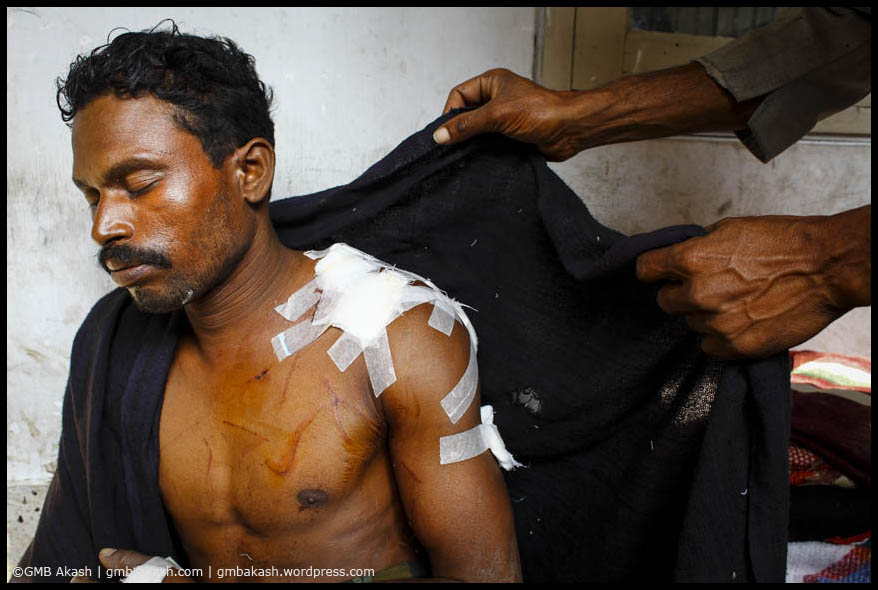
45 year old Abu Taleb lies motionless outside his home. He was attacked by a tiger whilst fishing and has now lost the use of his arm and leg. He is unable to walk without the help of his wife. He spent seven days on the floor of Satkhira Hospital with severe injuries to his head, back and neck. After a year of bed rest he has still not recovered from his injuries and his wife has been forced to become a day labourer and beg house to house.

tiger (8)

In 1995, the attack was on his first day out fishing. He was sleeping in the boat when the tiger attacked. Though he survived it, the damage to his face was such that no one from his village would come near him. His parents forced a girl to marry him. At the initial days of his marital life, he would not allow his wife to look at him.

Killer Tiger (9)

tiger (6)

Beside men tiger attacked many women of the village too. Faizun is showing her scars which are permanent mark in her head. Tigers are coming closer to villages in search of food. They smartly attacking villagers and standing near the bank. Faizun was collecting woods from near her home beside the bank of the river, while tiger attack she thought it is a big dog while realizing she remember nothing. She believes forest’s goddess saved her. Somehow she manages to escape and after the attack, she fled to her hut and collapsed.

Killer Tiger (16)

Killer Tiger (7)

42 year old Atiar Rahman was attacked by a tiger whilst out fishing. He lost his sight in his right eye, the ability to hear, as well as severe injuries to his back, neck and face. He spent six months in hospital at the cost of 9,000 Taka (80 GBP) and is now completely bed-ridden. His wife works to support their large family by working as a day labourer. She earns 50 Taka (0.4 GBP) a day.

Killer Tiger (1)

Because of rising sea levels and shrinking forest, humans and tigers are fighting for space. The farmers are forced into the forest to hunt for honey, fish, or collect crabs, putting them at risk for a tiger attack. 

Killer Tiger (17)

The boat is the small vehicle which is use to go for fishing in the deep forest of sundarban. And often while they stay at the boat in night tiger attack fisherman and they have to fight back.

“Inside the Sundarban there is ‘silence’ everywhere, a fear runs in veins with the fragrance of incense, standing in the village of frequently visited by Man Eater Tigers, listening villagers rhythmic chanting and prayers and feeling the urge to get back to safety all these made it helpless for urban, educated, technologically advanced people. This jungle is only understandable for the people who are made from it, the people live by jungle can’t leave the place even knowing how risky to live within. Thus they will face the hungry tiger habitually either to live or to die.”

– GMB Akash

Killer Tiger (12)


‘Ship-Creators of Mighty Bangladesh’

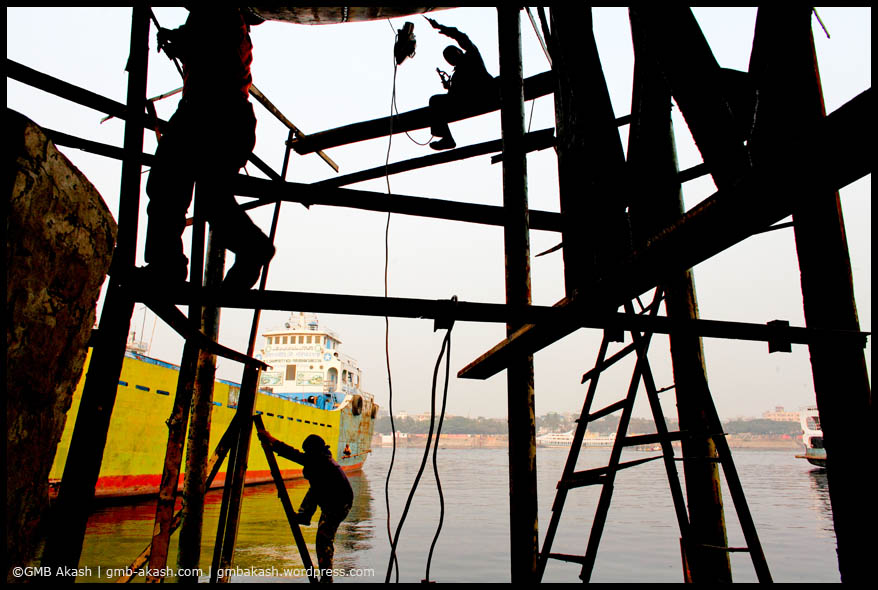
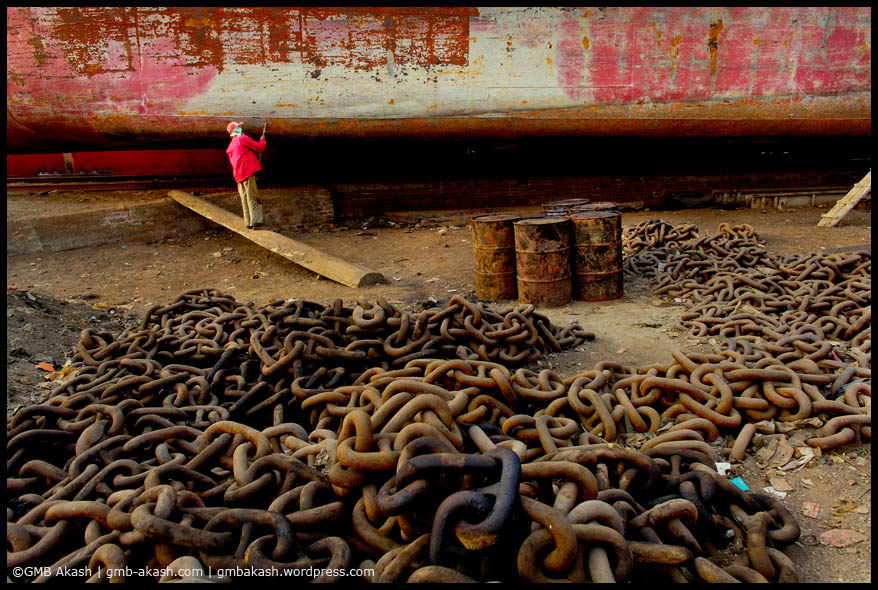
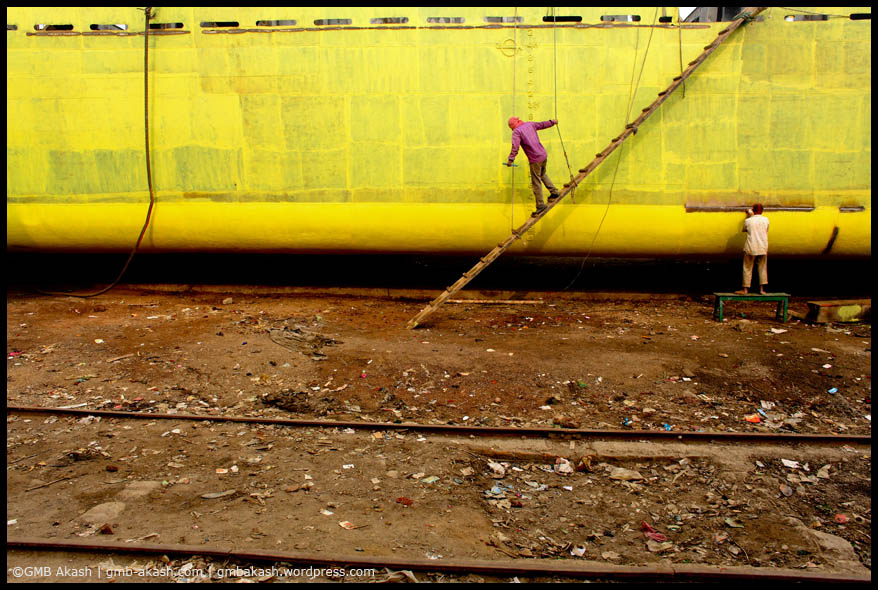
“Steeping into the muddy shiphub my eyes stumble on barefooted children playing ‘Akka Dokka’. By following their queries giggles I smiled to the little-girl next to me asking ‘What to your father do’?  With a wide smile showing her recently missing baby teeth’s, she whispered ‘My father builds big big ships’. The place is familiar to me so as these children but I rejoice these moments every day when I jump from my boat and my day start with ‘big big ships’.  I walk towards to Ship Creators, to the people that the world knows little about. Step to them, who are building ships on a daily basis with their expertise, power, energy and who dream to make something big, bigger than their life, bigger than their identity, bigger than their credits without much expectation. ”

– GMB AKASH

ships making (10)

ships making (26)

ships making (15)

ships making (5)

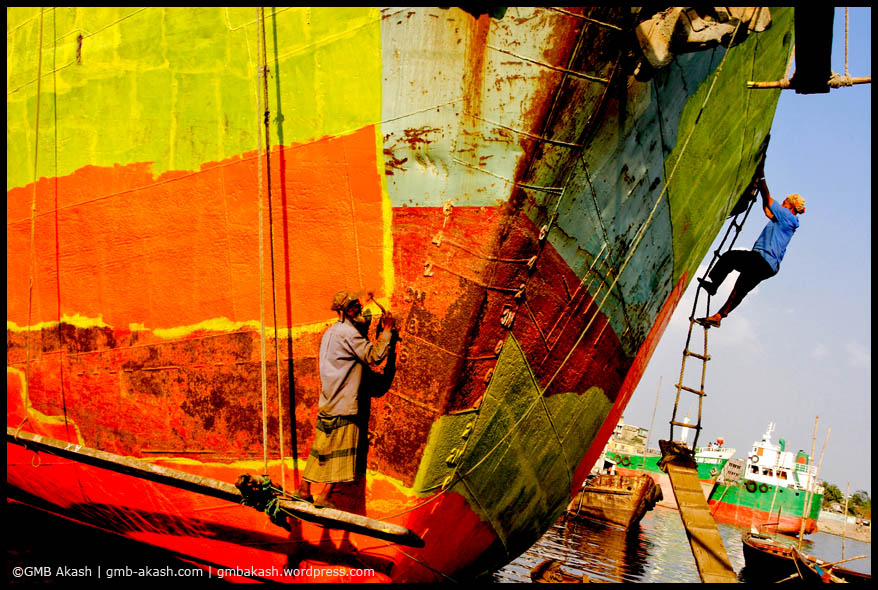
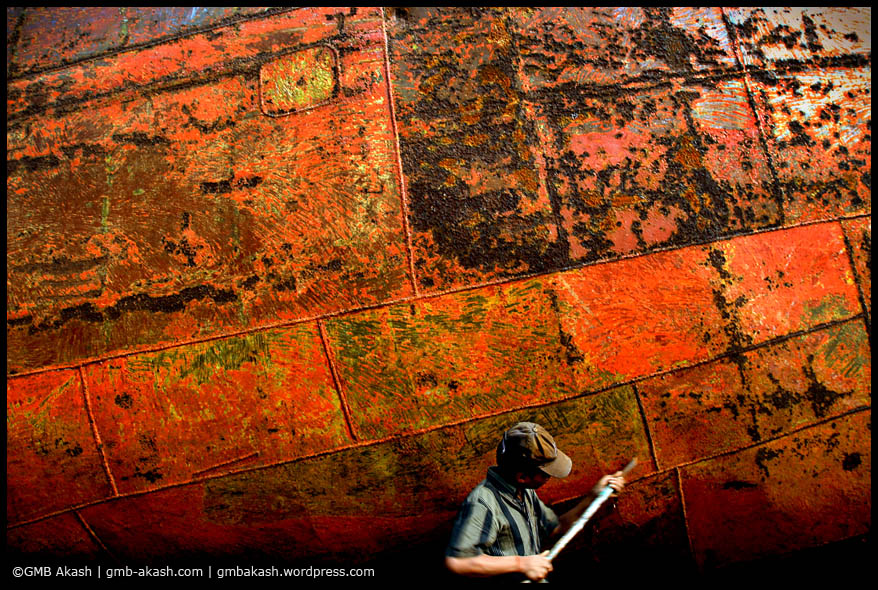
In the shipyard every worker is full of activity, no one have any time to talk. Constant work with flame, sound and dust may seem intolerable. Especially the constant ‘Dhang-Dhang-Dhang’ sounds of steel and hammer will auto upgrade any ones heart beat. But to the workers it’s their daily doze.  These Ship-craft-masters never get tired often handle everything in spite of getting any structural design keep building ships on their own effort with their basic genetic talent without any break. Frequently without goggles, risking serious injury or blindness, they all climb tall rope ladders to the ships’ highest points to retrieve items, risking death if they slip but yet happily they keep working in the pleasure of building the ship

ships making (4)

ships making (18)

A laborer is standing in the ship which just arrived for renovation

ships making (24)

Bangladesh is set to emerge as a new export leader for building small ships after cutting deals worth over $ 250 million last year alone. More than 250,000 skilled and semi-skilled workers are employed in the shipbuilding industry Bangladesh. All inland and coastal ships are constructed and repaired locally in these Bangladeshi shipyards. Bangladesh has all the ingredients to turn itself into a hub of export oriented shipbuilding for small and medium-sized vessels. The full utilization of the opportunities that are now present in the global shipbuilding market can turn this sector into a billion dollar industry within a decade. In recent times, a dozen shipyards are expanding their capacity for building ocean-going ships to enter the international market.

ships making (8)

ships making (11)

ships making (6)

** (There are more than one hundred shipyards and workshops in Bangladesh, most of them are privately owned shipyards. Out of these shipyards, approximately 70 per cent are located in and around Dhaka and Narayanganj along the side of the river bank of Buriganga, Shitalakha and Meghna. About 20 per cent shipyards of Chittagong division are located along the side of the Karnapuli river and six per cent are located along the bank of the Poshur River in Khulna division while the remaining for per cent are located in Barisal division)

ships making (20)

ships making (25)

ships making (17)

Availability of cheap human input is the main strength of the country and this is one of the main determinants in allowing this labour intensive industry to flourish. Also, easily trainable workers can provide this country with a decisive edge over other prospective countries. Bangladesh is in very much an advantageous position in this respect as labour cost is the cheapest among other shipbuilding countries around the world. But it alleys not that only for livelihood these ship-creators give their labour to this industry. Their dream, their hope ties with it and it’s in their gene to build ships.  But the work is sporadic, and after paying the rent on the family’s tiny bamboo shack, workers has barely forty cents left to feed each of the family members. With no other options, workers usually sat their eldest son down in the work. An armature’s job would add $2.20 to the family’s daily budget. Still they build their hopes, build their ships with or without expectation.

ships making (1)

ships making (9)

ships making (19)

Mishir Mia and his 25 member’s team seat silently beside the shipyard. After working two long years their team builds a world class ship. It will sail within short time. No one was answering my repeated questions. After a long break Mishir Mia said “Let me bring my son sir. I will show him the ship. He will become a marine engineer one day; then he will bravely share with friends that without any degree his father once built big big ships. Let me go Sir. I will answer you later.”  Team of 25 labours is sign of victory. It’s our victory. It’s Tribute to their bravery, their silent involvement in the economy. Aren’t we seeing a mighty Bangladesh?

– GMB Akash

ships making (12)

ships making (13)

ships making (23)

ships making (7)

ships making (22)

“Survivors” Part I

blog (01)

blog (3)

blog (5)

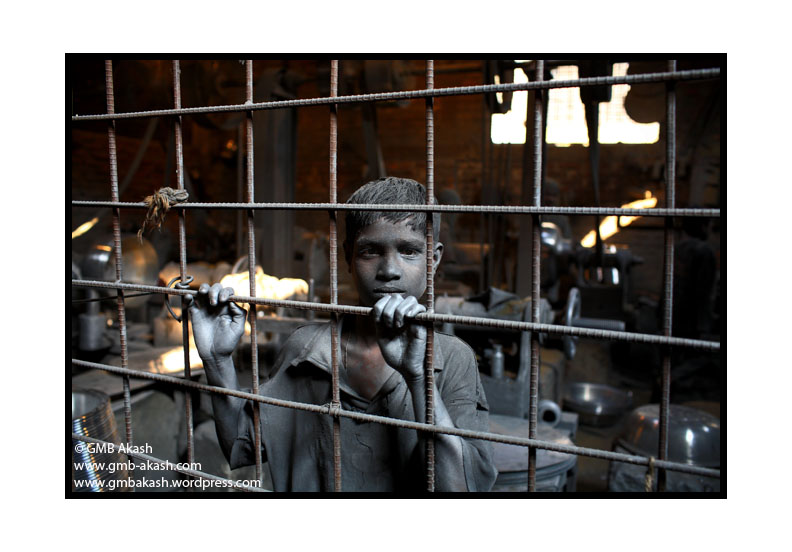
“It seems like a lost world, where standing in a quivering dark, where there is nothing but darkness, a place where you stand alone and shiver in fear. I experienced the same. Children who are inhaling pains within themselves every second make me feel small, their sweating smile flashes their innocent identity, touches of their dirt-oily little fingers interpret their presence in my life, their spoken or unspoken life stories makes me unrest. Since then, I am upholding them inside of me. A simple and small photograph’s emotions might inconceivable to you if still now you do not know any of such children who straggle each day to make a living from nothing. Till the day, I know I had to do and I have to do my bit, may be it could be major, may be it could be minor but that was the day, I open the door of my heart and take them in. I vow to fulfill their lost smile by refilling it in their innocent lips. The creation I am crafting in 10 years never give me such feeling , but then first I felt the tender of giving birth of the creation by dedicating it to the angles of hell, at least my first endeavor to bring them up from the darkest hell.   I celebrate my rebirth by expanding my arms, placing as more children as I can and thus my voyage begins.”- GMB AKASH

blog (21)

IMG_4359 (3)

I cannot remain mute about the oppression that divides human beings — which is one of the reasons I commenced photography and it’s been 14 years I am doing.  And it is my duty as a photographer and artist to point with my pictures at every aspect of existence in the society and world I live in, to show what can be shown, to go deep into every milieu and also into every aspect of poverty, deprivation and hardship that I encounter – because the only sin for a photographer is to turn his head and look away. After 14 years, acquiring tons of awards and gaining access to all major media frankly I experience NO CHANGE in the life of people I photographed.

Despite knowing a photographer duty only tilted for showing and investigating reality but this simple rule does not bring peace to my heart. Once an 8-year old balloon maker told me, “I took some damaged balloons for my little sister; I have no time to play. I have only time to support my parents,” I realized at that point I should turn my lens on lives like them.

IMG_0408-1

IMG_0739

I decided to dedicate whatever fund I left after make a living of mine to give to these ‘Survivors’. First I decide, I will gift them opportunity which will come from my personal earnings, portion of print sells or selling portion from my book ‘Survivors’. In the industry I am a straggler yet my pursuits provoke me to make my first experiment before I publish my book ‘Survivors’. I started searching faces inside the book and outside the book, which I photographed and found in vulnerable situation. One year I compromise my time, my photography, my assignment and my daily life to search these faces, I started living with them, understanding them and keep finding what I can do to make them able to earn a better life together. My idea is, working with them within the circumstances, gifting them the opportunity which will come as advantage in their life, advocate them as an assistant, monitoring their changes in life in one word to do everything that I will do to change my fate if I were them. Searching a face which I shoot 10 years ago is not an easy job, a face can be invisible in a crowd but I am fortunate to find many of them and building trust on me. 10 successful families consisting of ave 60 members make my dream come true. I ensure their life better, much better than they were living. & this gives me faith to publish my book ‘Survivors’ which is and will be the source of finance and gifting business/opportunity/education/chance to these ‘Survivors’ whom I photographed past 10 years. It was the day when I finally face my eyes to these children and touches their hand knowing I can at least rescue few of them from their daily hell. I become one of them, I become their hope, I become their asset and thus I started valuing myself and understand the significance and purpose of my rebirth.

IMG_1492-1

survivors (7)-15

It was just one year ago when I again found out Munna, whom I photographed at 2006. ‘Integrity with innocence’ this is the concrete of Munna’s character portrayal. Five years ago I first met Munna. Five years have passed fates of Munna & his father brings no change in their lives. At 2011, only difference was, with his five years experience Munna was getting 1600 taka ($1=72taka) per month. Moreover 12 years old Munna was running his younger sister education with his extra income of Friday overtime.

blog (17)

blog (13)

Munna’s father Alamgir was a cobber. Their family is consisting of five members who receive continuous negligence from their community as he works as cobber. Munna & his sister ashamed to say that his father is cobber and his little income cannot give education to his younger daughter Shathi and hunger forced Alamgir to send his little son to the factory which produces rickshaw particles. Alamgir elder daughter has to get married at early age because of poverty. They managed to eat hand to mouth, but without depending on Munna’s income their foods cannot be assured. Munna’s younger sister appeared to her class one final exam by borrowing pencils from neighbors, she had nothing without will for education. Munna works in a factory which produces intolerable noise during work. His 9am-7pm works ruined his childhood. His overtime income never allowed him to play. In fact he lost his interest for playing. A shy, unspoken boy whose whole body was covered with dust and permanent scratch on skins dull his brightness in an extent that he seems belong to the darken factory.  During working with him in his work time, I never saw his smile. He had no ambition, no dream and surprisingly had nothing to share with anyone.

blog (16)

blog (12)

I aim to help Munna & his family. & my journey with them begins.

After seating several sessions with Munna’s family, we come to a decision that Munna’s father is the person who can be the financial in-charge of the full family and setting him in a business that he is capable to do will be helpful for the full family. After our market survey, by understanding the business chains he decided and I agreed with him to let him do business of cucumber. My logic is not to give money at their hand. I went with him and prepare everything; in short I assist him in every way to do the business. After one month of successful business Alamgir take out Munna from the factory. Their family started having three times food and able to provide rent of the house in proper time. He manages to make his capital triple in three months.

blog (11)

blog (10)

Munna’s younger sister running her school and did top in result. She will be in class four next year. Munna’s only one dream is to support his sister in education and fulfilling his family’s loans which are liabilities of their bad time. Still he wants to support his father by at least doing something. Within two months Alamgir tried to admit Munna at school but Munna told him in his spare time he will go to night school to get same age students like him and at day time he wants to do something he likes. As well Alamgir was afraid as they are living in slum and children who have nothing to do mostly get mixed with people who supplies drugs/engage in bad works. Again after seating with them, Munna expressed to me he wants to do popcorn business and he wants to establish himself independently. I realized I cannot take out him from the situation; I have to assist them to get a better life in their present situation. So I agreed with him and go to see first what will be his changes in life if he sells popcorn near his home at sadarghat.

blog (6)

blog (9)

Now every day, Munna willingly wake up early morning after brushing his teeth he seats with his sister to learn from her. Then he goes to ghat and buys popcorn from vendor later he sells popcorn till afternoon in ghat and finishing his work at 1pm he came at home. Now within months his appearance has changes a lot, his face, hands, and legs, fingers scars are recovering and mostly vanishes. The best thing is that now he laughs, he is making friends in evening field, he is proud that he is doing his own selling and helping his family beside education. Munna who lost most of his childhood in blocked, dull factory now loves to spend time with people by selling popcorn. He becomes vocal and ambitious. He keeps savings from his selling profit of popcorn. Munna’s sister Sathi dreams to become doctor. With the income of Munna’s father and Munna they are happily dreaming for their future.

blog (15)

blog (7)

Every evening Munna plays cricket with friends. Within Nine months Munna is recovering his forgotten happiness. His few hours works, playtime, quality family time and private education changes his life visibly. A family who hardly once managed one time food now can ensure nutritious foods for their children. A pessimistic Munna is now very much optimistic about his life and future. His family is earning happiness by putting out of their mind about their past bad days. I dream to get hundreds of Munna in my journey and to refill their lost smile. I am happy that at least there are many munnas with me and I am able to make them a part of my life. I will share these stories of my life with you one by one. It’s my belief that if a single hand comes to hold a child miracle in their life can happen.

blog (8)

blog (14)

“I am a story teller, nothing but I steal emotions, this link me to those lives which wrapped me in sentiment. I am a simple human being; I do mistake and learn from it. But I like to do experiment and I hate to be defeated. I try and keep trying until I achieve. I will keep contributing magic in lives I face with my camera. I will do my part, I will do my bit. A quote from Helen Keller inspires my journey.

“I am only one, but still I am one. I cannot do everything, but still I can do something; and because I cannot do everything, I will not refuse to do something that I can do.”

If your heart is moved to do something do not make it complex, plan it, do it & do it right now. Stop dreaming in expectation of Superman. Within you there is a vast chance of opportunity spread your wings & bring humanity.” – GMB AKASH

blog (20)

Ashes of Souls

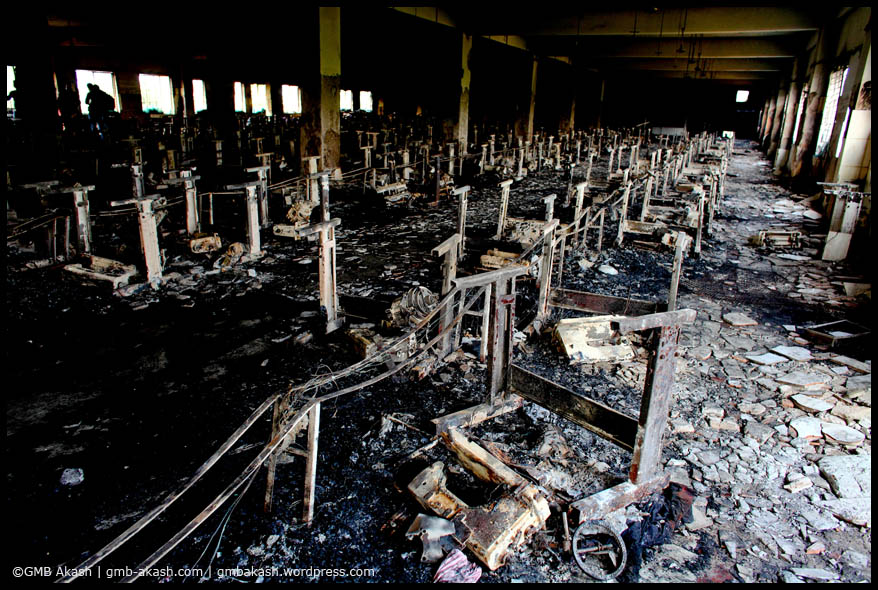
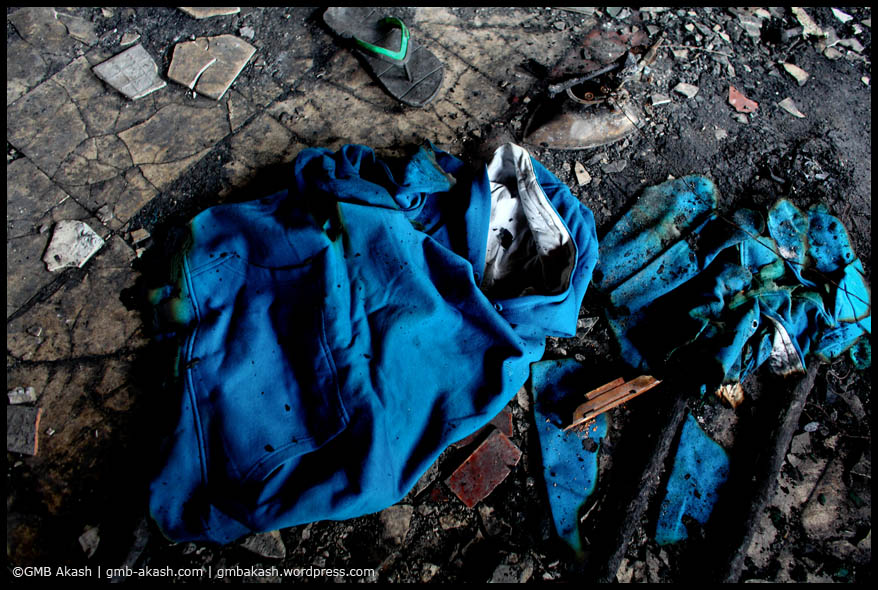
“A silent burial ground, where may be the ashes of wounded souls are still encircling. Broken pieces of brunt smashed tiles with countless busted glasses can tell the tale how staircases could not save hundreds of scorched living beings. Imagining myself at the place of these unfortunate garments workers who burnt alive, I felt vulnerable. Shoes, bangles or an unfinished ironed cloth in the stand or the half eaten evening tiffin are standing witness, how workers died helplessly. Pieces of glass bangles all over the floor, as mostly female workers had faced the tragedy, were witness of a violent disaster those no one of them even seen in nightmares. & thus by facing fire they lost their existence in burning blaze” – GMB Akash

textile (1)

textile (11)textile (9)

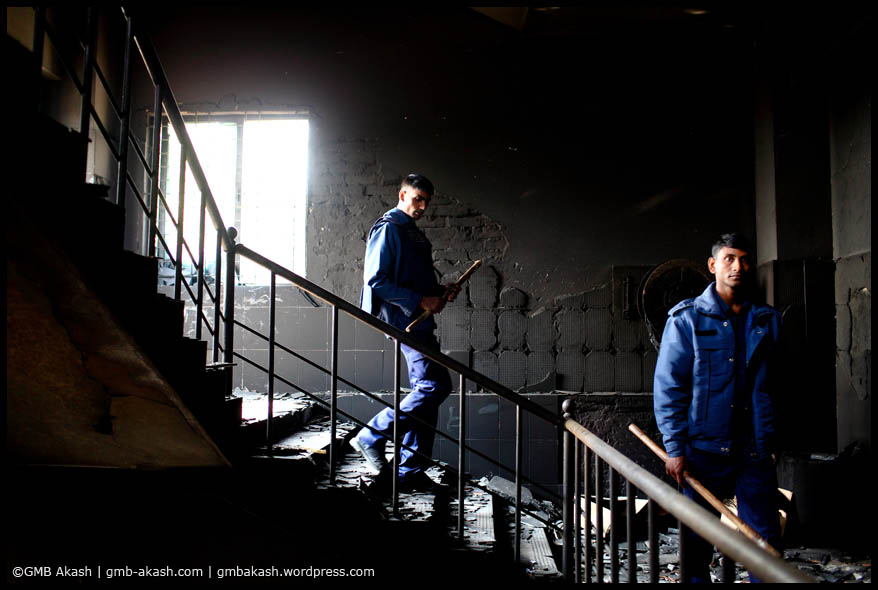
Tazreen Fashions, located in a rural area of Ashulia occupies a nine-storied building. The ground floor, which stored the factory’s raw materials, had the only entrance to the factory, with three staircases leading to other floors. The fire at the eight-story building of the apparel factory started on the first floor, quickly cutting off all three exits from the building. Survivors stated that at least one exit was locked while no emergency exits existed in the building whatsoever. Some workers tried to escape the fire by jumping out of the windows of upper floors – many of them died. Others choked to death in the thick smoke of burning fabrics. Many of the bodies the firefighters found in the ruins were burnt beyond recognition. Later it was estimated that more than 1,000 people could have been inside the building when the fire started. But survivors claims more. Even it takes more than two hours for fire fighters to arrive at the factory. Firefighters trying to reach the blaze were slowed because the narrow road leading to the factory made it difficult to get to the site and there was no source of water nearby. It took firefighters over 17 hours to douse the blaze at the factory, after it started on Saturday evening November 24. The fire at Tazreen Fashions Ltd, lead to the death of reportedly 111 workers, but witnesses and survivors alleged that the real number dead is possibly much higher.

textile (7)

textile (10)

textile (19)

textile (6)

textile (12)

Raziv is one of the Survivors of the tragic incident; he worked at fourth floor along 300 other workers that evening.  He said, “I smelt smoke and ran downstairs at third floor and found that the place was already full with black fumes and I cannot breathe properly. With the sound of crying women the electricity went off within 5 minutes and most of the female workers had no mobile phone atleast to see though the phone light. I accompanied by my three friends & went at the small room of the third floor where I was atleast 200 woman were standing & crying helplessly. With another worker, I broke the window of the room and give the place to female workers to go out but most of them was so afraid and cannot do anything. I cannot be selfish to fly alone and helped them to jump through. But as soon as the fire was increasing I run to the biggest exhaust fan of the floor, many women workers seated at prayer and many started losing sense. Only by hand, I broke out the fan but cannot jump. The fire was so scary that I lost my power, I called and cried to my brother, he just said ‘Jump!Jump! Then I jumped to the roof of a shed next to the factory and found myself injured at the ground! I survived but I had no money for my treatment and no one asked me to help, even after five days of the incident I am searching for my coworkers and had not get any money for my treatment. I come to the factory for my four months due wages, no expectation from these rich bosses.” Along Raziv, Few more fire survivors said, that most victims died of suffocation as the blaze started on the ground floor warehouse, trapping the night-shift staff.

textile (20)

In hospitals cases are alike. Injured workers hardly save themselves form fire, some lost their memory, some are in trauma, poor families has nothing to give them better treatment. Amongst huge numbers of injured, few are receiving treatment and rests of the survivors are not fortunate to get treatment except lying at home for money crisis. A survivor Kushi stated that, after jumping from the third floor she broke her legs and cried at least one hour for help but no one was there and eventually she lost her sense.

textile (16)

textile (17)

textile (15)

Inside the living zone of these garments workers are not rosy. Jhilpar Slum is accommodating at least 20000-30000 textile workers and alike this slums garments workers living throughout all industrial hubs with daily straggles. Rooms of 10 feet by 10 feet accommodate minimum four women workers which monthly rent is 3000 tk. One toilet and one kitchen are definite for ten families of the slum. But still after having this trouble, passing through narrow life lines women garments workers are appreciating their lives as an independent being but incident like fire in Tazreen fashions has break out all hidden frustrations of them.

textile (2)

textile (8)

textile (3)
Accompanying workers in the fight for their deserved salaries I also faced problems with police officers. They tried to stop me for taking photos and said many times that I am ruining my country’s reputation. Even in many cases the injured, victim’s families and workers faced continual negligence by police, local authority even after so much pressure from national and international media and having consolation from all over the world they had to fight for their due salaries. End of the day they knows they have to fight for their right after losing their dears ones and even facing fire may be easier than earning rights and justice.

textile (23)

textile (5)

textile (24)

Nilufar lost four members of her family. While she received call from her brother, she heard only shout, ‘Save us!” ‘Help Us’! The phone was on the line for 20 minutes & she helplessly heard the sound of wounded peoples and their mourning. She passed the whole night in front of the factory gate along her two little brothers. While rescuers had lined up all the recovered bodies on the grounds of a nearby school, Nilufar unzipped bag after bag, searching her mother, father, brother and sister-in-law. She said the charred human remains looked like chunks of coal, but no where she found any dead bodies of her lost dear faces. Police wants ID cards of these four members then she replied, “I cannot found their burnt bodies after running three days, where the hell I would find ID cards!’ The tragedy does not end here; they have a long future to bear the wound with them with a tragic memory in mind.

textile (14)

“While leaving the place I heard, a mother exclaims that her son’s blood demand Justice. We all know their sweats, their bloods asking answers. No, we can’t stands at more loss. No Space for Further burials. Each drop of blood, each drop of worker’s sweat asks JUSTICE. Nothing more, nothing less” – GMB Akash

textile (21)

textile (13)

textile (22)


Angel in Hell – Part II

“Welcome you again in another season of Hell. Down in these dumps the name called childhood get matured for a few at the age of five. Their silent cry echoes from wall to wall of every hell which is considered as blessed place for them to earn bread.  Their compact workstation, fiery factories or even the dusty brick lands are the place where they brought up independently” – GMB AKASH

child labour (3)

child labour (2)

Telling about the working environment of these children is a heart breaking job. Factory machines usually produce an intolerable degree of echo in the working place of these children. For adding more strain on them excessive heat works as miserable factor. Textile factory workers start their day at 8am and finishes at 8pm. During these working hours they managed to heal the pain of sound and heat by earning 1200 tk per month($1=83tk). In the brick field scenarios are not different. In brick fields every day work starts at 6 am, carring head-loads of eight bricks from the furnace to the supply pile. Each trip back and forth is allotted a little over a minute. For a twelve-hour workday for each 1,000 bricks child at a brick factory in carry, they earn 80 tk (<$1) after meeting expenses. Other hand, on the construction sites, children must sweat and slog through the intense heat of the sun, working long hours for scant reward. Moreover same obscurity and hardship in balloon factory, rickshaw factory, tannery, dump yards, motor parts factory, mirror making factory, coal and cigarettes factory. There is no such a single risky job where a child labour cannot be found.  For many of them Jeans paint with a torn shirt is their everyday wear.  And banana with bread is delicious meal.

child labour (18)

child labour (1)

They are sincerely doing their job because of their family either to support them or for their helplessness. I admit human power is the incredible above all. Their spirit overcomes all difficulties to feed them and their family by any hardship.

child labour (4)

child labour (19)


Factory owners straightly said, ‘If we do not employ these children they will be one of the street-addict children. Can you give them three times food, education and a home? Few of these children are helping their mother to survive. Few of them are helping educating of their younger. We are assisting them at least to survive in life with this working training.’  This is the most common answer I received from the majority of factory owner who assigned children to their factory. 

child labour (12)

child labour (9)

Children can be a source of income, this insane thought still practicing among many part of the lower class group which leads them to give birth more children. Many families are dependent fully on the income of their 5-12 age children. But for many the stories are different.

child labour (7)

child labour (11)

I come to know these heart touching stories which are worthy to share. Many children are running their sisters education on their own income, many children efficiently managing three times food for their sick parents and many children still manages to spend one hour to study in night school. Many children touched me by saying they dream to have a factory with their savings! Even with this limited income! They are soulful and they have dignity which we should not let die. So I realize family is the root by which there must be a way to improve at least few of these children’s life. Helplessness of a family forces their children to work in a hazardous condition.

child labour (8)

child labour (5)

child labour (4)


“Escaping from a situation where 7.4 million children are standing to you for a solution is pretty shivering. I believe it’s a sin for me as a human and as a photographer to turn my head and look away.  I attach my life with them and thus the story starts” – GMB AKASH

To be continue…

child labour (14)

child labour (17)

child labour (16)

Angel in Hell – Part I

“If my images bring to life the haunting realities that millions of children face each day then this is fulfillment of my work. And if mine is the hand that blocks the scorching sun from their eyes – bringing shade for just a single minute, then there’s value in the work I do. I am talking about 7.4 million children who are risking their life each second to rescue themselves from hunger and poverty, a tale of those for whom we rarely care about. I keep asking:

Who is there to bring them in the light from their working- living-hell? Who will save these innocent hearts which will decline with time! Is there any one? ”

                                                                  – GMB Akash  

Angel in hell (17)

Angel in hell (12)

I have traveled extensively in all developing countries including mine to document the use of child labor in factories. Years after years I have to wait to get entries to some of those hells which are only built to burn childhood in secret zone. I waited hours and hours beside the factory gates to get seldom permission to meet up those fateless kids. They never allow anyone to keep any documents or proof bearing things, but I did it by convincing factory owner. All time the heartless scenario, danger to get caught, inner emptiness frozen my finger to click. But when those children give a look with all the sorrow in expression God give me instant power to overcome anything of the world. & then my clicks never took a break.

Angel in hell (19)

Angel in hell (11)

The factories as too dangerous for children. They are “gloomy, unhygienic, smoky” and are fading away the children’s lives.  I talk to the children in the factories and they tell me their stories, adventures and sacrifices. Their innocent smile can break your heart into enormous pieces if you stand in front of where they work/ live. My photos show the terrible environment they work in.  Wherever I go I find great insecurity of lives. No protection, no appreciation, no opportunity. Their treatment varies child to child. There is no specific rule of behavior towards worker nether any of the factory maintain any core of conduct. Generally teenagers get bit generous treatment compare to children. But here experience never adds up any extra benefit for them. All are struggling in their own way.

* According to UNICEF, more than 7.4 million children are engaged in economic activity in Bangladesh. Many of them work in very poor conditions; some even risk their lives. Factory owners pay them about 400 to 700 taka (6 to 10 US dollars) a month, while an adult worker earns up to 5,000 taka per month.

Angel in hell (15)

Angel in hell (14)

Angel in hell (13)

My intention is not just to depict the children as victims of exploitation. I want to show the complexity of the situation: the parents who send their little boy to work in a factory because they are poor; the child who has to work to earn a living for the family; the boss of the factory who engage children also helping them otherwise, as if these children stay in the road they might take drugs or might become thief. I think it is impossible to abolish child labour completely in Bangladesh in the short term, but I do think it is possible to improve working conditions and to bring more children from factories into schools. I have been profoundly affected both emotionally and psychologically after seeing the repulsive evils of child labor.  I feel guilty when I eat good food, and I feel haunted by the children in my photographs. I hope to achieve justice through documenting these conditions and making people aware of what is going on in these factories.

Angel in hell (18)

Angel in hell (21)

It’s positive when after seeing these photos people take a step, even realizing their situation can help. I believe many of us definitely indebted to them who are working for us in such condition. One day one by one we will all gather against such crime. Children will go to schools instead of factories. Yes, I am taking & I will until voices raise & hands come out.

Angel in hell (1)

“Can you exchange a day with your own child in the place of these children? Can you deposit your children’s labor in such a place for a day in return of $1. If you can’t, can you please do something for these children? “Wishing to help” is an excuse. Shame is a mild word to what we are overlooking. May our spirit wake up.”

– GMB Akash

Angel in hell (16)

Angel in hell (20)

‘Quest for Justice – Vigilantes in Pink’

“In the time of articulating the story ‘Vigilantes in Pink’ I apprehend that Woman has the supreme power of the supreme Being. She can be the one who eliminates sufferings; she symbolizes her mastery over all qualities which society never admitted characteristically. In their sadistic world – Gulabi gang never lost their hope, fighting against the injustice they are cleaning themselves a bit. Yes, I learn from them, each day we will not get a chance to save somebody’s life, but each day of our lives offers us an opportunity to affect one”

– GMB Akash

pink gang (19)

“My real strength is not in the stick, it is in my capacity my goddess gave me to give lessons to those abusive men” – Malti, from gulabi gang

pink gang (11)

Dressed in poignant pink saris, the all-female gang shames abusive husbands and corrupt officials.The several hundred vigilante women of India’s northern Uttar Pradesh state’s Banda area proudly call themselves the “gulabi gang” (pink gang), striking fear in the hearts of wrongdoers and earning the grudging respect of officials. Fed up with abusive husbands and corrupt officials, India’s poorest women are banding together, taking up arms, and fighting back. Their quest for justice is actually working. “Pink Gang” fights for the rights of women and other marginalized people in rural India.

pink gang (18)

Banda is one of the poorest parts of one of India’s most populous states. It is among the poorest 200 districts in India. Over 20% of its 1.6 million people living in 600 villages are lower castes or untouchables. Drought has parched its already arid, single-crop lands. To make matters worse, women bear the brunt of poverty and discrimination in Banda’s highly caste-ridden, feudalistic and male dominated society. Dowry demands and domestic and sexual violence are common.

pink gang (20)

pink gang (1)


Sampat Pal Devi who was married off when she was nine, wife of an ice cream vendor, mother of five children, and a former government health worker who set up and leads the “pink gang”. She utters,

“We are a gang for justice.”

pink gang (7)

Everyday many cases come to the gang from the village and villages from nearby. A mother brings in her weeping daughter who has been thrown out by her husband demanding 10,000 rupees from her parents. Sampat Devi tells her “gang” that they will soon march to the girl’s in law house and demand an explanation from the husband. “If they don’t take her back and keep her well, we will resort to other measures”. The pink sorority is not exactly a group of male-bashing feminists – they claim they have returned 11 girls who were thrown out of their homes to their spouses. They are against injustice just not against males.

pink gang (22)

pink gang (23)

pink gang (9)


Even Pal’s group gained dishonor in early days for beating up men who abused their wives. If they heard a husband was being violent, they would show up at his door with sticks – the same wielded by local cops when patrolling their beat—and demand he change his ways. Of the many cases that Pal handles every day, the majority are related to domestic violence, dowry demands, and abusive in-laws.

pink gang (16)

pink gang (2)

pink gang (6)

At first it was just five women, all old friends. But in a span of five years, the group has grown into a powerful brigade of more than 40,000 women, including 10 district commanders, who run the gang’s outposts across the district of Bundelkhand—an area that spans 36,000 square miles. These local Pink Gang stations operate in the same way as Pal’s own home does: They are meeting places for women to discuss their problems and, like Pal’s own home, the doors are always open.

pink gang (14)

pink gang (13)

” Gulabi Gang proves that unity can be an answer to protest against the wrong stream. Why should we live our lives in constant fear of failure? While we can throw out all nonsense of our life alone! We ought to win the losing battle of life by fatal struggle. It’s not fair only to live in the line of survival. Surely we have got to make something more well than what we have got.” – GMB Akash

pink gang (10)

pink gang (8)

pink gang (12)

“Midnight Girls”

“It was a cold and rainy evening and I naturally found myself craving coffee in a coffee-lounge of Nepal. I was shaping my mind for documenting on ‘Night Girls in Nepal’. While I was completely engaged in thought, laughter broke my attention. By the first bit of drum night girls were in hurry to enter into clubs just near my coffee-lounge. Music, light and entertainer all are ready – and the night has begun. Inside these 1000 bars, girls from poverty-stricken corners of Nepal dance away, hoping to fulfill their simple dreams some day. Is it possible to depict the agony of a night girl being sold and/or compromised in club/bar/hotels? Can my photography breathe their voices? Is it possible to take picture of what I want to describe? Answer is NO. But by keeping alive the roots of awakening is a key duty of a photographer like me. So I am here to tell you the story through my third eye.” – GMB AKASH

night girls (10)

night girls (3)


Strippers and dancers of the popular night scene in Nepal. Located mostly in the tourist area Thamel, hundreds of clubs host both local and tourists to strip shows, dances, and drinks. Each club has on average 30 to 40 girls working for them. There are the dancers, the waitresses, and some call the “date for a night” women. The dancers are young—many of them told me they are 19-22, but to me most of them looked like 16 or younger. At the change of each song (which were mostly Nepali and Hindi pop), usually a new dancer would come out on stage. Some of them danced in a tight t-shirt and short shorts, some in a tiny wrap around her waist and a bikini top, others in long glittery skirts and heels. Their faces were covered with heavy makeup, and they all kept adjusting their hair during their dances. There are also 2 showers on each side of the stage with a little porcelain bath dug out. Apparently “dance with shower” is a big thing in Kathmandu now.

night girls (18)

night girls (8)


When not dancing, the women came out into the crowd fully dressed to flirt with customers. One girl, named Pari (Most of them has a fake name) said: she is 16, illiterate, has no phone, and makes 7500 Rs per month (about $100) working at the restaurant. She was not drinking alcohol, but seemed a little spacey, so maybe was on some type of drug. She was one of the few dancers, who were not afraid to remove all of her clothes, and she would often touch herself while on stage or dancing on tables and she is an example of many other girls who are willingly working in the restaurant.

night girls (9)

night girls (14)


Reetu one of the dancers of Thamel dance club said “More than half the money is spent on room rent, makeup, grocery and other necessary items. The rest goes into my education and to my parents. I hardly save anything.”

night girls (1)

night girls (5)

Fifteen-year-old Rani wants to be a doctor. But to fulfill her dream, she performs at a dance bar every evening – even if it means gyrating around a pole, stripping and giving company to strangers at night. Though dance bars are not illegal in Nepal, stripping is. But in a nation where 30 percent of the 30 million population is below the poverty line, few seem to care. Employment agents went to villages, offering poor Nepali girls like Shanti jobs in Kathmandu as waitresses. Though families are warned of the possibilities of prostitution they often choose to turn a blind eye.

night girls (16)

night girls (13)


“One month’s money for a waitress can be a whole year’s income for a rural farmer”, states Mahima, waitress of a local club, whose father is a farmer. 80% cases are enforced Women for Prostitution in various circumstances.  Many of these poor Nepali girls eventually accept their fate and fall into prostitution. These poor Nepali girls will earn £ 80 per month as a dancer, tips can double this and sex for a night brings rewards of between £30 and £100 per night depending on the desirability of these Nepali girls. Regulating dance and cabin restaurants is a problem. No system is in place to properly monitor the activities that go on inside. It is the poor Nepali girl who working as waitresses are alienated and trapped, unable to re-enter mainstream Nepali culture.

night girls (19)

© GMB Akash

night girls (4)


I felt an overabundance of emotions ranging from guilt to despair for not doing enough whenever I faced myself into these situation for documenting lives of these girls – who cannot do more struggle against oppression, cannot protest for inequality and injustice, of lost with their dreams. I do believe, may be one day The Sun will rise to wipe off tears of these Midnight Girls”

– GMB Akash

night girls (6)


night girls (7)

Dark Alleys

“These disorders — schizophrenia, Alzheimer’s, depression, addiction — they not only steal our time to live, they change who we are. In the time period of working with drug addict, I encounter tremendous shiver in thought of helplessness that how they are silently dying in these dark alleys and there is no dark Knight to hold them straight only we are here to celebrate the funeral of these fallen stars”

–  GMB Akash

drug users (5)

A drug user is showing his drug pethedrine

drug users (7)

drug-final-61-6

Drug addiction is a major social evil in Bangladesh, affecting thousands of young people and their families. There are thousands of addicted people in Bangladesh and most of them are young, between the ages of 18 and 30 from all walks of life. Drug addiction in young Bangladeshis is mainly seen because of reasons like depression. People try to remove depression using drugs as a tool. And this is how they become addicts.

drug users (8)

drug users (11)

drug users (9)

Drug users are taking drugs by sharing same needle with each other. Injecting drug users have few places to turn, and they are one of the groups most at risk of contracting and spreading HIV. Heroin is mostly smoked within aluminum foil or cigarette paper, but in Bangladesh this is injected. Injections through infected needles can cause diseases of the liver, brain, heart, lungs and spinal cord. Estimates of the number of people living with HIV/AIDS in Bangladesh range from 2,500 to 15,000 most of them are affected while taking drugs. A Heroin addict may need about Taka 500 worth of the drug a day. They neglects the needs of the family, and those are non-earning may sell off family assets. They also go out on the streets for mugging and dacoity.

drug users (10)

drug users (4)drug users (6)

drug users (16)

“Rickshaw driver Mohammad Bashir has been addicted to heroin for most of the last 13 years. His habit cost him his job and put an enormous strain on his family. Like most addicts, he often uses shared needles. Police has caught him in the spot, members of his addict team has managed to fly. But police caught him, while he is continually requesting police to leave him in the word of his promise that he will not inject him any more with drugs”

drug-final-07-1

Drug usuers(11)

Drug usuers(15)

Drug addiction is increasing among the street children who live without a family, love and care. Bangladeshi youth are ‘huffing’ shoe glue, a drug locally called ‘Danti’, which is seriously harmful to mental and physical health. Up to 17 percent of street children in capital Dhaka are addicted to drugs. Children as young as 10 years old are also experimenting with alcohol, phensidyl, Heroin, Baba, Ganja, pethedrine, and other forms of available drugs. For managing the money for drags these children spends all their earnings on drugs. Some time they beg whole day in the street and end of the day spends everything on drugs.

drug users (14)

drug users (3)drug users (17)

IMG_9355-3

drug users (12)

“Bitter experiences are there too. I visit all danger territory where these addicted people living senselessly. Few of them try to beat me sometime, few of them tied me with their arms and cried and cried, few of them burst out in depression and few of them wants to end their sufferings. But this is cycle of unbearable torment which has no end. In a world with chaos and hunger, everything becomes a guerrilla struggle. It becomes almost impossible to save lives or grow dreams sometime. But yet these lives deserve our affection, attention and sympathy. No medicine is as effective as love to them. “– GMB Akash

Drug usuers(5)

drug users (15)

drug users (13)

Life and Death in Pashupati

“Here and there they are seating in the courtyard and on the shrine platform with absorbed in detailed memories of a distant happiness. Or it is a place where elderly people are left by their families to die? Thousands question will haunt you but there is no one to answer you but only your inner realm of emotion. They submits to being fed, here, in a old home, It’s the same every day, every day…..I understand, when you get here you don’t worry about the future. Then, I mesmerize, May God bless and give them solace.” – GMB Akash

elderly home (4)

elderly home (9)

elderly home (19)

Once you enter the premises of the Briddhasram at Pashupathinath you can’t help but feel like you are transcended time back at least half a century or more, to a place where the world moves very slowly.

elderly home (7)

elderly home (6)

Looking at the bed side a damped photo of a grandchild while a grandma smiles and say she didn’t see her last 10 years yet she sleeps with a same photo in her mind. They were like reciting their homelessness to me. I have to capture their souls to keep their image from disappearing out of sight.

elderly home (11)

elderly home (17)

There, you can see all grey haired elderly citizens doing nothing but spending lazy moments for hours in the courtyard and on the shrine platform. Some curious eyes follow you as you walk pass the welfare gate. If any of them is busy praying than other is trying hard to bend and dust off his cloths. A place, all you hear is the steady sound of the wheeled metallic support of an elderly with crippled feet or a faint sound of a broken radio which is playing Nepali song or news.

elderly home (15)

elderly home (16)

(Social Welfare Centre Briddhashram is the only Elderly’s Home operated by His Majesty’s Government in the Kingdom Nepal. At present it is being operated by the name of Social Welfare Centre Elderly’s Home, Pashupati since 1977 A. D. The total sheltering capacity of this Elderly Home is 240 persons. These residents suffer from many illnesses associated with old age; including paralysis, failing eyesight and deterioration of mental faculties)

elderly home (13)

For some it is a depressing scene to see people at the end of life, away from family, living in the Briddhasram. But for many, this is a place where they seek refuge from an ever speeding life and feel satisfied enough simply helping and sharing talk with the older citizens. The residents of the home don’t talk much to each other, which gives you an aura of wilderness where no word is spoken; but they really live for each other closely for rest of their life. This home for the elderly fills one with hope. What gives hope is that although they have lost families and possessions, the residents still care, they care for each other and they retain a deep sense of humanity.

elderly home (5)

elderly home (8)

Many people believe that they must help and protect their parents, when they become old. I personally believe that this is a moral obligation that every child should have towards their parents, whichever the way they choose to do so but they should never let them break apart alone.

elderly home (12)

elderly home (18)

elderly home (2)

“Through my lens I try to listen to their silent voices, in absolute solitude and silence,for I am sure I shall be able to hear about their unbearable wounds in which they stumbled upon alone years after year. So I take out my camera, go inside the place and merged with their pain”

– GMB Akash

elderly home (1)

elderly home (10)

elderly home (14)

Decaying Earth

The overall global environment is declining fast and for Bangladesh it has been doing so more rapidly during the last few decades because of many obvious reasons. But we are still not surprised. We, all of us, pollute our own cities with trashes. So how can we claim owners of these factories, with hardly any education be conscious about the environment, feel the need to protect the environment? We need to count ourselves first to protect our own ecosystem to survive in an earth which will be a gift for our next generation – ONLY IF WE CARE

“Pollution is an immense crisis that is slowly destroying the world that we live in. It is crucial for every individual to do what he or she can to clean up the environment. Whether it is in the home or on a management level, or within us, every person is important and has the ability to make a difference and can help to stop pollution”

– GMB Akash

pollution (1)

pollution (5)

The mighty river Buriganga is now so polluted that all fish have died, and increasing filth and human waste have turned it like a black gel. Even rowing across the river is now difficult for it smells so badly.

pollution (2)

Bangladesh has about 230 small and large rivers, and a large chunk of the country’s 140 million people depend on them for a living and for transportation. But experts say many of them are drying up or are choked because of pollution and encroachment. A World Bank study said four major rivers near Dhaka — the Buriganga, Shitalakhya, Turag and Balu — receive 1.5 million cubic metres of waste water every day from 7,000 industrial units in surrounding areas and another 0.5 million cubic meters from other sources. There is no fish or aquatic life in this river apart from zero oxygen survival kind of organisms. Bangladesh enacted a law in 1995 making it compulsory for all industrial units to use effluent treatment plants in a bid to save river waters from pollution, but industry owners often flout the rule.pollution (3)

 pollution (6)

pollution (4)

Dhaka city alone generates about 3500 to 4000 m tons of solid wastes per day. The amount increases with the increase of population every year. The domestic, commercial, street sweeping, combustible and non-combustible wastes include discarded food, grass, plants, paper, cardboard, textiles, plastics, polythene materials, glass, metals, and construction debris.

pollution (13)

pollution (8)

pollution (12)

Industries and factories have been polluting the water bodies in and around Dhaka city for the longest time. There are about 1000 small and large industries in Dhaka city producing a large amount of toxic and hazardous wastes contributing significantly to environmental degradation. The emission of various greenhouse gases such as CO2, CH4, among others from various industries, increases the overall temperature of the earth, resulting in global warming and making the area unsuitable for human habitation, animals and plant species.In the Hazaribag area of Dhaka there are 149 tannery units daily producing about 18,000 litres of liquid wastes and 115 m tons of solid wastes; nearly all of these are dumped in the Buriganga river, and a part is thrown into nearby drains and sewers. These wastes contain sulphuric acid, chromium, ammonium chloride, ammonium sulphate, calcium oxides etc. These may seep into the ground causing ground water pollution. Also, the intense, unpleasant odour affects the health of the people of the surrounding area. tannery wastes have a very serious and negative effect on the ecosystem.

pollution (17)

pollution (19)

pollution (9)

‘It is very easy for every single person to help stop pollution and stop destructing the earth. It can take little effort, but can be something that makes a huge difference. Start by evaluating how you can make small changes. Even the smallest changes in your own life can have a massive impact.’

– GMB Akash

pollution (15)

pollution (21)

pollution (11)

Leftover from History

This is not just a story of poverty and despair. Poverty is not all that holds them back. Every day, they are willfully denied an education, opportunities, a future, and an identity. This is the story of a people whose lot it is to only exist as numbers in ration cards, relief programmes and slum-arson stories. This is the story of the Biharis of Geneva Camp. A community of over 160,000 people who have lived like animals for the last 40 years and will likely live and die as animals in congested ghettoes at makeshift camps and shanties all over Bangladesh. This is the narrative of the Biharis of Geneva Camp.”

– Gmb Akash

A Documentary by Gmb Akash

© GMB Akash/ www.akashimages.com

‘Geneva Camp’ is just one of the 70 camps all over Bangladesh set up immediately after the Liberation War of 1971. In 1971, the Biharis were a torn community. The tragedy of the Bihari community unfolds as far back as 1946 — the year communal riots in Bihar tore irreparable divisions through India — with thousands of Muslims massacred in an organised pogrom that added momentum to the movement for the partition of India. This resulted in a separate homeland for the region’s beleaguered Muslims. Between 1947 and 1952, families by the thousands left their ancestral lands to take refuge in the erstwhile East Pakistan.

© GMB Akash/ www.gmb-akash.com

© GMB Akash/ www.gmb-akash.com

During the Liberation war in Bangladesh in 1971, the Pakistan army, sensing this divide, recruited some Biharis to fight the rebellious Bengalis. Whether they supported the Pakistan army or not, many Biharis remained neutral in 1971, shy of taking sides with their local brethren. Thus the division widened in those tumultuous years leading to the sub-human “ghettoisation” of the wretched children of a lesser God. After the war in 1971, the International Community for the Red Cross intervened and found out that most Biharis wanted to migrate to the truncated Pakistan. Over half a million registered “Urdu-speaking” Pakistanis found a voice at the high level Simla pact of July 1972 and later an agreement was reached in 1973 between Pakistan, India and Bangladesh on this issue. As per the agreement, the Bengali prisoners were released and sent to Bangladesh. However, not all Urdu-speaking Pakistanis were repatriated to Pakistan. Even today, hundreds of thousands live in Bangladesh in camps as non-citizens.

© GMB Akash/ www.gmb-akash.com

© GMB Akash/ www.gmb-akash.com

People are calling them in so many names. Bihari’, ‘Maura’, ‘Muhajir’, ‘Non-Bangalee’, ‘Marwari’, ‘Urdu-speaker’, ‘Refugee’, and ‘Stranded Pakistani’. But they only want one identity that is: human.

© GMB Akash/ www.gmb-akash.com

© GMB Akash/ www.gmb-akash.com

Here, the rituals of life, death, triumph, hope and misery of each family, packed into 8 x 8 little boxes. There are only 270 toilets for a population of 25,000 and the numbers increase daily. The living environment of the camp is very deplorable. It is unhealthy, dirty, damp and unhygienic. This condition exists in other camps throughout the country. The municipalities/city cleaners never enter the camps to clear the garbage. The Bihari camps have almost no educational facilities. Throughout the country, only 275 of the 19,000 children in camps go to school. Only six of the 77 camps have a school. Most of the people make handicrafts or repair cars to make a living. Into the filthy rooms – homes and workshops rolled into one – women and men were busy working on brightly coloured saris. From about 1,600,000, only 60,000 are thought to register in the voting system in 2008, but in reality, those in the camp are denied the right of applying for a national ID card. Without citizenship, they cannot even obtain legal housing, so most live in 66 camps packed with people and livestock scattered across the country, including Geneva Camp.

© GMB Akash/ www.gmb-akash.com© GMB Akash/ www.gmb-akash.com

© GMB Akash/ www.gmb-akash.com

Geneva Camp was built in 1974 by the Red Cross to help assist the new generation of stateless people.  The older generation complains more than the younger ones, who are better integrated and bilingual. Free of the baggage, the younger generations are far more ready to become Bangladeshis: 70% of the people want to stay in Bangladesh, 17% want to go back to Pakistan. Despite recent progress in voter and ID registration, however, 37 years of being unrecognized have left the Biharis living in abject poverty and vulnerable to discrimination.


© GMB Akash/ www.gmb-akash.com

© GMB Akash/ www.gmb-akash.com

“Geneva Camp turned out to be a bordered little inferno located next to fairly well-to-do neighborhoods and commercial areas. Human spirit, however, knows how to counter the forces of nature and history. Inside the camp, little Bihars had been recreated with the memories and longings that the migrants are well known for.  Still the government does not know how to handle it. No one does. The government has not picked it up. Civil society has not picked it up. These people have been left to fend for themselves.”

– Gmb Akash

© GMB Akash/ www.gmb-akash.com

© GMB Akash/ www.gmb-akash.com

Invincible Faces

“I am fascinated to some faces, some characters who are incredibly important to me as a photographer or as an admirer. Many of these faces are invisible but their spirits for living life makes them invincible. Journey of portraying these invincible characters starts long ago when I find out there are certain people who are icons of heroism and enthusiasms. Over and over again I go back to them, find them out and by portraying them able to keep a part of these victors with me.” – Gmb Akash

© GMB Akash / www.akash-images.com

© GMB Akash / www.akash-images.com

Often get inspired by these faces I go to isolated group/people who are ordinary or I can say by having an urge to go to these people is my practice for understanding them. As an individual they are available around us, living life in troubled climate every day. But their willingness to over come difficulties titled them Invincible. My characters are raw, picked from a sticky street or from an isolated brothel or even from a dumped factory. Every face is passing a message of anticipation. I have learned to run my photography equipments; I have studied to learn to take portraits or getting a best environmental portrait. But when I concentrate beyond technical things, these characters become icons to me. I looked into them through the lens and I tried to pick the message of anticipation into the photograph. This is the biggest challenge which has no rules, which can never be taught, which can be only a self taught rule of getting invincible faces into photograph.

© GMB Akash / www.akash-images.com

© GMB Akash / www.akash-images.com

I emphasize the character. I want to present them vividly.  I go to very close to my characters. Apart everything, I focused them. In spite of taking environmental portrait, often I try to present the environment differently. When the characters become focused, my concerns packed to represent these faces as a representative of their own environment. I would like to make imagine the audience – where these faces are come form, where they live in, what they do. Inviting questions can be way of portraying significant things which we mostly over look.


© GMB Akash / www.akash-images.com

© GMB Akash / www.akash-images.com

Most of the time, I have to work in very compact situation. Often I been located, where life is put in a box of measured 8 feet by 8 feet room or in a distressed noisy factory or even in an abandoned colony where I have to pass by three feet narrow road. I need to be patience and keep trying to work in these compact situations. Often I hardly get changes to use lot of lens. I am comfortable with 24mm and besides habituated I believe it is good to work with one kind to work fast and flexibly. For taking portrait I use 70mm. I do not like lot of distraction. My image should be clear and focused.

 © GMB Akash / www.akash-images.com

© GMB Akash / www.akash-images.com

For taking environmental portrait, placement of the character is hard thing. I keep in mind environment should not disturb the character, I am taking in. It has to be supportive to each other. But I prefer to believe in my photos, character is presenting the environment; environment is not presenting the character.

© GMB Akash / www.akash-images.com

 © GMB Akash / www.akash-images.com

– I always use natural light. No flush gun and no manipulation. Even in a bad light day I tried to use the available light into the character little differently so that it creates a different mood.

 – Simplicity and be straight is my rule. Be focused, use simple background, experiment with color and get closer to the character.

– However near or far is my character, however intimate or distant the gaze my camera directs, I always keep in mind the elements of composition and the technique that will best help me to communicate what I am trying to say.

© GMB Akash / www.akash-images.com

© GMB Akash / www.akash-images.com

– I prefer to intimate with the character I am going to portrait. Relation and building trust is important. Many times people refused me to take photos, but I never gave up, I always make them understand what I am doing, telling the effectiveness of the shot. And if I failed I do not force but I never fail to try.

– It is helpful to get environmental portraits by finding out where they spend their time, what the rhythm of their life is like and observing their personality.

© GMB Akash / www.akash-images.com

© GMB Akash / www.akash-images.com

“I think the art of photography is to observe and document in your own personal way. On my way I found these invincible faces which are inspiring to keep my searches on. These insignificant characters are inspirations to win over all chances of life. Connecting these invincible souls in photograph has no rules. Besides photography, I learnt from them, we need never be hopeless, because we can never be irreparably broken. We should think that we are invincible because we are.”

– Gmb Akash

© GMB Akash / www.akash-images.com

© GMB Akash / www.akash-images.com


‘Travel Junction – Part I’

“God is too busy, Can I help you?” stepping into the City of Italy, I first saw this hanging poster in a coffee shop. This is the ever lasting impression on me about the country. People are so charming, lively and enjoying every second of life.  After arrival, by dropping my luggage, I lost myself with a tiny bag and my camera to explore the city which is new to me in every visit. My destinations were Rome and Venice. Where, Rome is a romantic city where couples are passionately showing their feelings of love that couldn’t be contained. The art and culture of the city has been admired worldwide for centuries. From Rome and Venice I took all the images which hit my mind to store these treasures in frame” 

– Gmb Akash

  Welcome in the city of illusions, and the city of yearning. Welcome to Rome, a place with so much art, so much history and so much beauty.

© GMB Akash /www.akash-images.com

© GMB Akash /www.akash-images.com

© GMB Akash /www.akash-images.com

© GMB Akash /www.akash-images.com

I discover Rome, as a silent and shiny heritage. Strolling in Rome means capturing its soul, amongst age-old buildings, splendid monuments and numerous churches that bear witness to an incomparable millenary history that will charms me.  But for me as a photographer, wherever I go I try to see closely only people. So, I move from places to places and captured some human souls into my camera.

© GMB Akash /www.akash-images.com

© GMB Akash /www.akash-images.com

Walk the cobbled streets between centuries-old ruins, drink too much coffee, browse heritage markets and grand museums, and all together I passed time by eating too much gelato. I stopped by where I saw homeless people, who were tirelessly moving places from places. My heart poured with sadness to feel that in the advent world of Europe some people are still missing the minimum thing from this one of the best cities of the world.

© GMB Akash /www.akash-images.com

© GMB Akash /www.akash-images.com

© GMB Akash /www.akash-images.com

Venice is an extraordinarily beautiful city. When I came to Venice, that was a totally free day to revisit sites, shop or just sit in the square enjoying a Strega and watching the people and pigeons. I meet lot of Bangladeshi in Rome and Venice. People are doing different kind of business to survive here. By looking people all around me, my camera was not taking rest but even though I fill I didn’t take enough images. It seems as if at each step I encountered some aspect of the city worth admiring. 

© GMB Akash /www.akash-images.com

© GMB Akash /www.akash-images.com

© GMB Akash /www.akash-images.com

© GMB Akash /www.akash-images.com

While I was taking few minutes break I met an old lady passing time with her dog. She was taking pictures of the dog and talking with her. The old lady and her companion leave a lonely feeling on me.

© GMB Akash /www.akash-images.com

© GMB Akash /www.akash-images.com

© GMB Akash /www.akash-images.com

© GMB Akash /www.akash-images.com

I treasured all these moments with me. I am a passionate traveler. Traveled has availed to understand depth of life. From this travel Junction I put a note in my dairy that: Do not take a single day for granted. Life is precious!

-GMB AKASH

© GMB Akash /www.akash-images.com

© GMB Akash /www.akash-images.com


Ships’ Graveyard

“This is an emblematic depiction of the agony of hard labor. For saving themselves from hunger they breathe in asbestos dust and toxic waste. Thus they are risking their lives everyday. On the verge of death they risk their lives in order to endure themselves. They are passing their days on one of the world‘s most unregulated and hazardous industries, leaving a trail of debris, disability and death in its wake. I spend 10 days in the Gaddani ship-breaking yard north of Karachi in 2005.  I witnessed workers dismantling large ships, piece by piece using no protection, in absence of tools, where one wrong move could result in death, but they were continually depending in their bare hands. In a city of dying ships flames with smoke rising, tormented with ship body parts, metal residue, asbestos, and oil spills. Barefooted workers with little access to necessary tools are vanishing ships on the rusty sand of Gaddani and break down these steel giants coming from all the harbours of the world.”

– Gmb Akash

ship breaking (19)

ship breaking (18)

ship breaking (1)

ship breaking (15)

The beach of Gaddani, 50 miles north of Karachi in Pakistan, has become one of the two world biggest cemeteries of super tankers, cargoes and other vessels in the world. Thousands of men, mostly Pashto migrants, toil over the ships. They are seasonal workers, a large number of native and immigrant workers returning to their homeland near the Afghan border at harvest time. The group consists of perhaps from Afghanistan. They pen for their beloved, whom they get to see only during the year ends. For around USD 1.20 a day, thousands of workers labour to dismantle dozens of ships each year at the ship-breaking yard in Gaddani.

ship breaking (2)

ship breaking (9)

ship breaking (13)

Rashed, a labourer at the Gaddani ship-breaking yard has worked for five years dismantling ships. He said: “Had we had any other way of earning bread, we would not have come here.” Workers are always under high risk of accident, though they hardly care to secure themselves. Under hitting rains of sparks, blowtorches split through the thick steel skin of a ship. As they are cut lose, the pieces of metal plummet to the ground with a roar. I saw workers, toiling ceaselessly, as though banished forever to an underworld.

ship breaking (11)

ship breaking (6)

ship breaking (16)

Many workers operate in tight spaces where the air is thin, and in high temperatures caused by hot welding, which is widely used, not to mention that they are constantly exposed to flammable liquids like paints and solvents. The work carried well into the night shipyard in Gaddani, Pakistan. This is the ship graveyard that serves as the final destination for a significant part of the world’s fleet.

ship breaking (3)

“Barefooted workers would take apart, bit by bit, the dying ships with their bare hands, shipyard in Gaddani, Pakistan.  On their shoulders, workers bore great metal plates to their destination. People complain about their crappy lives working in an air conditioned work place, imagine having this as your only option in life.”

– Gmb Akash

ship breaking (7)

ship breaking (5)

ship breaking (17)

“The creator has strangled me with his own hands.”

“It was 1999, when I first realize I need to focus stories on a helpless community. For that feeling, there was a story behind. As a child, I was a frequent visitor at my uncle’s house at Narayangonj, somewhat 25 kilometers north of Dhaka. My uncle had a hermaphrodite locally called as Hijra, whose name was “Khushi”-meaning happiness, but that is what she very much lacked in her life. During these visits I often saw my cousins with their friends taunting and making fun of Khushi, often even worse happened as when they were drunk they forced and made her to strip naked and dance in the tunes of common Hindi film songs. Since Khushi had no place to runaway to and had no means to save her from this humiliation, she gave in to the insults and harassment’s silently. Images of Khushi gyrating and quietly exposing her underdeveloped sex organs left a lasting impression that haunted me ever since.” –

Gmb Akash

Men or women (15)

© GMB Akash / www.gmb-akash.com

Men or women (1)

© GMB Akash / www.gmb-akash.com

Men or women (2)

© GMB Akash / www.gmb-akash.com

The Hijras live in-groups far away from a regular world. As for them living in normal family becomes an unending series of taunts from the society so the circumstances lead them to leave their regular family. They come to general people but live a life far different and painful in the dark allies, in isolation.

Men or women (4)

© GMB Akash / www.gmb-akash.com

Men or women (5)

© GMB Akash / www.gmb-akash.com

Men or women (6)

© GMB Akash / www.gmb-akash.com

Hijras live in their groups; each one has a leader often called “mother” or “Guru”. Members of a group do not take part in any activities without the permission of “mother”. Even the trimming of hair requires mother’s permission. Failure to get such permission results in a fine ranging from 250 Taka (US$5) to 5000 Taka (US$90).

The norm is, for a Hijra to leave home and join a community of Hijras. This happens mainly because living in the normal heterosexual surroundings becomes is unbearable due to constant taunts, insults as well as neglect. Hence joining other Hijras is normally the most logical thing to do. However, it often happens that the other Hijras will claim any Hijra child on the basis that it is a member of their society and should therefore live with them. Stories of the Hijra community accepting a Hijra baby as a gift, trying to buy it, or even stealing it are not necessarily untrue.

Men or women (8)

© GMB Akash / www.gmb-akash.com

Men or women (9)

© GMB Akash / www.gmb-akash.com

Krisna and Robin performing at a wedding. A small portion of their income comes from singing and dancing at birthday parties and weddings.

Men or women (11)

© GMB Akash / www.gmb-akash.com

Like in the case of Najma, the occurrence was regular that in the case of any other Hijra. Najma grew up in a well to do family in Barisal, a river port town. When she was 13, a group of Hijra from Narayanganj went to her parents, but failed to persuade them to give Najma away to the group, but later due to the increasing adverse social environment she herself joined the group of Hijra latter in life making her home about 300 kilometers. Away from the parents home in Narayangonj.

Men or women (12)

© GMB Akash / www.gmb-akash.com

Men or women (13)

© GMB Akash / www.gmb-akash.com

Men or women (14)

© GMB Akash / www.gmb-akash.com

 Najma is now the leader of a seven-member Hijra group that I studied is bringing up two young Hijra children. Rubi and Chanda are now 14 years old. Najma told me that: ” I cannot be a mother in my life .so It gives me great pleasure to hear them call me “ma”-mother. They will inherit everything whatever I have”.  In order to get Rubi; Najma told me that she had to pay 5 000 taka (US$90) to Rubi’s impoverished parents.

Men or women (16)

© GMB Akash / www.gmb-akash.com

 Men or women (17)

© GMB Akash / www.gmb-akash.com

Because of their socially prescribed role as performers and spiritual healers, the Hijra appear to live their lives in merriment. In their own homes, Hijras prefer to live in a colorful manner. Their houses are almost always well organized and elaborately decorated. The same goes for their garments and ornaments. Since the Hijra believe they are women, they dress in saris and have ears and nose rings. Most of those I often met also had false breasts made with padding and often with the help of some oral contraceptive are thought to give growth on the form of breast. The hair is kept very long. But the voice and facial features are distinctly masculine, which they try to eliminate endlessly. They are physically strong and very well built. Generally the Hijras have two names one from their family when the were born and the other from the Hijra groups he joins, but often death their tombstone bears the male name that was given by the parents.

Men or women (18)

© GMB Akash / www.gmb-akash.com

Men or women (19)

© GMB Akash / www.gmb-akash.com

They are not only striped from their basic rights but are also made to feel ashamed of themselves. Hijras get a mixed reception from the people; the middle class thinks them as bad omen even the sight of a Hijra in the morning is regarded as the same and believed can spoil the whole day. Where as among the lower class they are believe to posses spiritual powers as they are deprived of the joys of a normal life, their prayers are believed to be answered. They sustain themselves through their performance of singing and dancing at various ceremonies, paying them is regarded as an act of piety but even then getting the events and ceremonies are becoming scare. I saw them as somebody not different from myself and want to clear the common misunderstandings that circle them, the common idea about them is very vague and negative and their never ending pain and struggle is never brought to the book. My efforts will be to do the entire undo and uplift the images of these hapless groups of people called Hijras.

Men or women (20)

© GMB Akash / www.gmb-akash.com

Men or women (21)

“One day they sang to me a song written in light of their painful life. One of the lines that stand out goes: “The creator has strangled me with his own hands.” Yet they dream— repressing in their hearts, these strong sentiments and emotions they bear towards the Creator — a dream of their own independent community. As one of them told me – “You know Akash, if we had a great amount of money then we would have brought a four stored building and all ‘Hijras’ like us would have lived there. Then no one would have dared to neglect us.” And holding on to this dream in their hearts they aim for a normal beautiful life. So even in such a state of negligence some are continuing school and colleges; in the hope that after studying they will get a job like a normal person and will be recognized and condemned in the society not as ‘Hijras’ but as any other ordinary individual.” – Gmb Akash

Men or women (22) 

© GMB Akash / www.gmb-akash.com

Men or women (7)

© GMB Akash / www.gmb-akash.com

Men or women (3)

Unseen Existence

“Environs can explain much. You can feel the existence without presence. & sometimes absence is required to feel this presence more intensely. I started believing these things while I captured few moments of nonexistence. Yet these moments profound very much in exist of living being. I have taken these moments from various part of my world, however they are all alike. These are like footprints of a missing thing; you can assume the missing focus through edges. Welcome you in the puzzle. Fill in the gaps by your thought” – Gmb Akash

In the middle of the field, crops are baking by sun. These harvested crops are waiting to be carried to home. The field is reflecting efforts of an unknown farmer. © GMB Akash / www.gmb-akash.com

Rofiq ( 28 ) is a daily labor in his dream city ‘Dhaka’, Dreams pushed him here & reality left his identity far in a village, where his wife, children Shohel and Shaila & their parrot counting days & nights for him. In every six months reality let him go to where he left his heart. In Dhaka city, wall of a room of a slum is whispering his silent pains. In the walls he draws his feelings with the scratch of reality. He, his wife, their children & the parrot a family, all accommodated in the brick of lonely wall. © GMB Akash / www.gmb-akash.com

Bended trees remain to tell the tale of a nightmare of Cyclone. Aila hit the top of these trees & gave the mark of an unseen ferocity. The silence of the place is claimed by broken trees, miles after miles.  © GMB Akash / www.gmb-akash.com

Circus gradually loses its heritage for convergent entertainments. Still empty chairs of Circus are hoping to accommodate the vast missing audiences. Thus these refers the lost crowd & as well state for the hope of gaining back. © GMB Akash / www.gmb-akash.com

In every week slum dweller waits eagerly to take the taste of chicken. Fortune gives them the chance. In Rayerbazar- shop keepers sold chickens to restaurants & they left the head of those chickens for those waited people. Slum dwellers buy those chicken head once in a week. Fortune gives them a chance to take the taste of chicken by having these chicken head. Dhaka. © GMB Akash / www.gmb-akash.com

In the bank, the boat is waiting to sail. A family of eight members is dependent on this boat. The boat is stand for the arrival of the fisherman. A family exist behind this single boat. © GMB Akash / www.gmb-akash.com

This cassette player is a very dear thing for its slum dwellers. They have no space for placing this. So they hang from the top to manage space. Behind this cassette player, hundreds of slum dwellers entertainment awaits. © GMB Akash / www.gmb-akash.com

An old car standing at door step of its owner.  Manila, Philippines © GMB Akash / www.gmb-akash.com

Under the severe water crisis, inhabitants of shatkhira stand are line at mid night. Their water pots represent their standing in the queue. © GMB Akash / www.gmb-akash.com

Cyclone Aila ruined the house & the lives of inhabitants just before three days. People of this house have to leave their home. Aila force them to live on embankment. They family still tried to dry their children books on the roof of the house. After the devastating calamity they could not totally leave the hope to live in their house. © GMB Akash / www.gmb-akash.com

Day laborers of Philippine are drying their cloths outside their living place. © GMB Akash / www.gmb-akash.com

This is the living space of a rickshaw puller’s family. They bought the old TV from a second hand shop. At evening along neighbors, they happily straggled with the old TV to watch.   © GMB Akash / www.gmb-akash.com

“Life – a one way journey….We should not regret any moment which make us smile…We should make our self happy with all little pleasure of our life ….even if we have everything, we haven’t had tomorrow…Lets fill our all gaps by our presence of love, appreciations & thoughtfulness. We may leave forever, & then our environs might tell our tale ceaselessly. Let the light lit our absence.” – Gmb Akash

A World Full of Hungry Apes

“Photography has taken me to discover many unexpected territory as all time I wanted to see the sights of unseen & unforgiving incidents of reality. I was engaged in one of my personal project’s work on ‘sex workers’ for which I went to Madaripur. I have been working on ‘sex workers’ last 7 years & my works demand me to investigate their situation all over the country. Last year, in the month of August when I arrived at Madaripur it was afternoon. Shockingly I have seen thousands of apes are in street, running here & there. It was an unexpected thing of my life to see thousands of ill monkeys are moaning alone. I was traumatized, unspoken & felt awful when I understand all these thousands monkeys stand in front of me are HUNGRY. I always concern to cover stories of situation which need concentration for helping out by the assessment of the world. So I take out my camera & run to middle of them”

– Gmb Akash

© GMB Akash / http://www.gmb-akash.com

© GMB Akash / http://www.gmb-akash.com

© GMB Akash / http://www.gmb-akash.com

© GMB Akash / http://www.gmb-akash.com

In char Muguria area, Madaripur around 2,500 monkeys are facing severe food crisis. Due to acute food crisis many mother monkeys, passing days starved or half-starved, are even unable to breast feed their babies. Quite a few monkeys have already died in this serious situation. Concerned over the pitiable life of the monkeys, locals and visitors have urged immediate arrangement of food for the monkeys. Though the local communities are already poor to feed themselves but the heartbreaking scenarios of monkeys influence them to share their own food with them. Despite keeping distance with human the unable monkeys are taking foods from people’s hands. The hungry monkeys were competing for the inadequate foods like peanut or biscuit given by the visitors. They were also trying to eat whatever they got — grass, garbage, polythene etc. Baby monkeys are suffering badly in malnutrition. Even the water crisis made their lives more pitiful. Local community sought allocation for food for the monkeys but the higher authorities are yet to give any response in this regard.

© GMB Akash / http://www.gmb-akash.com

© GMB Akash / http://www.gmb-akash.com

© GMB Akash / http://www.gmb-akash.com

© GMB Akash / http://www.gmb-akash.com

“A mother monkey by carrying its dead child was passing from trees to trees. When it came in front of me & begged foods I realized the monkey did not identify its child is already dead. This pitiable situation made me terrified. These apes, whose residents are jungle, came out for food & begging to feed themselves. These climate victims are more alike my working project of  ‘Sex workers’. Human & animal all are helpless in front of starvation & need. They are survivors of dreadful situation which many of us over looked or never know”- Gmb Akash

© GMB Akash / http://www.gmb-akash.com

© GMB Akash / http://www.gmb-akash.com

© GMB Akash / http://www.gmb-akash.com

Life Indulges In Colour

I usually take a picture of a person and then afwerward when I close my eyes for recalling what I have taken – the first thing that hits my mind is – Colour. After observing a person if we try to recall, then unconsciously colours comes first in our mind. The texture of the skin, colour of hair, colours of cloths and over all colour gives us an impression about the mood of the sight. Colour is a strong element to illustrate a person’s traits. I believe every person cover a mood of colour.

From beginning of my career I am working for those people who are living in the edge of the society.While I started working with these people I surprisingly discover – life has taken all colours from them but still they are cherishing every moment of their life with colour. Colour is their courage; colour creates enthusiasm on them to fight to live for another day. Person, who has nothing, has colour in life. In beginning of my career I took all black & white photographs of those who are colourful.  I found out poverty, sorrows and depressions become vivid if I skip colour from their life.

To present – ‘the present’ I start working on colour. A street child, laborer of a road or even a homeless lady all of them has colour. People who are fighting everyday to live life are heroes to me and these heroes represent colour. Their skin tone, dresses, living places all are colourful and powerful. They are deprived from all happiness of life but yet they treating themselves with colour. While I discover the truth I learned to capture the mood of colour on them.

color (20)

color (10)

   “…I realize I have no power to deny the colour of these colourful people who are straggling in a colourless, hopeless world, nevertheless they live and smile. So I can not ignore the yellow balloon of a homeless child or even a red bowl of a beggar of the street. This inspiration inspires me to work with colour. Ans I continued my journey in the path of a colourless world to meet with all these colourful souls…”- Gmb Akash

color (17)

color (8)

cernival in cologne, germany. february 2007

Colour arouses my work for getting the depth of the sight. I got colour in different mood in the different part of the world. But I discover people who are fighting endlessly for surviving are more colourful than any part of the world. Because of this colour is more challenging to me. I take this challenge to explore the unrevealed spirit through every capture of mine.

color (18)

color (14)

color (7)

I have a special affection for red. I like to take picture in the early morning and late afternoon. Unpredictably red comes to my way often. People who are living in lower rang affectionate about the colour – Red. It is important to take a red shoot carefully. Contrast might made the capture disturbing, while too much red can destroy the attention for the subject. A good composition and balancing of colour can create an outstanding shot. Apart of all it is important to discover the right mood of colour in the right temperament of an individual.

color (19)

color (21)

color (22)

I go to country to country to explore colour differently. I have found out different colour in different cast. You will find people of power through colour. Your experiences & observations with colour will help you to reveal certain attribute of a community through colour.

color (5)

color (2)

   –    I prefer to use natural light which allows me to capture the originality of the moment of colour.

   –   I try to find out a natural background which suits the subject’s colour instinctively perhaps my entire colour photos are – found situation. So I believe to observe more & more while traveling frequently.

  – Working with a single colour allows me to appreciate more intricate details within the       subject itself.

  –  I travel to discover for getting the unexpected shot yet carrying the note in mind that I am searching thing which I have seen several times but never been noticed. Searching without clue for a known thing helps me to get a good colour shot.

–    I only pick colour which has meaning to the subject.

color (15)

color (1)

“While I am taking photos of these colourful souls I am learning to live in colour. By capturing these colour moments I have learned – few hints of red, blue & yellow has inspirations in our life. People who are fighting without anything in this world are healing their pains by indulging in colour”

– Gmb Akash

color (12)

color (16)

color (9)

‘Nothing to hold on to’

“When the train starts your feet will shake and you will automatically try to hold something, but there is nothing to hold on to. From 2005 I went up the train. Sitting or lying on the corroded metal roof of a train moving at 40 kilometers/hour is dangerous. By knowing that any time accident can happen you obvious to be nervous. It gives you an insecurity and makes it more risky. In that time there was no one who can tell me the rule of hanging in a running train, there was no example of photograph by which I can inspire myself to capture moments in camera. But I did not think twice to step into the slippery train and attempted to make a new series on the bravery of some insignificant heroic lives.”

Gmb Akash

Train new (3)

 © GMB Akash / www.gmb-akash.com

Seven years ago I had to travel many times by train to come to the city. During traveling I noticed low income people were traveling in the roof of the train and even in between joining line of the train. Most of them were low wage working class and traveled with high risk of severe accident. I was surprised to the fact when I discovered few of them traveled many times of the day with life risk. For knowing the reason my interest had taken me to the root. I pick my camera and leave my seat. Thus my journey starts in the running train. I had a basic curiosity to know about people whom I intend to photograph. From beginning of my journey I work for those people who are fighting endlessly to survive without anything but a smile. For taking photo of them I blended myself into the same conditions which help me to get the insight of the story. This inquisitiveness leads me in the top of the train. And I become one of the free passenger of regular running train. Thus I got familiar with the scary situation of the fearful journey; discover people and above all I took pictures.Train new (14)

© GMB Akash / www.gmb-akash.com

Train new (1)

© GMB Akash / www.gmb-akash.com

Train new (8)

© GMB Akash / www.gmb-akash.com

Uncountable times, I went to the roof of the train. Often traveling made me familiar with scariness of a running train. People become well-known to me. I find out so many different stories of people and their determination of surviving. When I manage myself to step straight then I pick my camera and start capturing my feelings. No one travel to risk their life to get pleasure. All were unable to manage travel cost as they were living under the margin. Many of those travelers work as day laborer, many of them goes for selling fishes in city which they collect from their villages. All of them have to return also. These travel costs can not manage by them so they risk their life in the top of the train.

Train new (6)

© GMB Akash / www.gmb-akash.com

Train new (16)


© GMB Akash / www.gmb-akash.com


This traveling is very addictive. When you will discover people who have power on them, who were bravely setting without caring anything the something will happen to you too. These people inspire you to live life without getting frustrated. They have nothing with them only have bravery to fight against all odds of life. So this journey put power inside me to fight in rest of my life with bravery and inspire to take any risk to live a life.

Train new (10)

© GMB Akash / www.gmb-akash.com

Train new (7)

© GMB Akash / www.gmb-akash.com

Train new (9)

© GMB Akash / www.gmb-akash.com

In winter surface of the train get slippery, once I stepped without been concern and attempted to fall. It is difficult to take picture in opposite of the direction of the running train. Along other passengers I have faced terrible winter, unwanted rains and continual heat in the top of the train. Many times wires hit me, every time I thought I should not go more. But again I can not resist myself. Getting a good picture is toughest thing while you need to spend days and months for the right moment and for the right click. I won travel photographer of the year title in 2009 on the series. Besides all I am fortunate to be able to stand in this fearful journey which will continually give me power for rest of my life.

Train new (11)

© GMB Akash / www.gmb-akash.com

Train new (15)

© GMB Akash / www.gmb-akash.com

“I recall all these journeys repeatedly. My achievement is that I established this series as one of favorite topic for photographers. I feel happy when I see photographers come from around the world to get a free ride in the top of the train and takes pictures. All these make me happy. I collect all these treasured moment and I am working for publishing a book soon on this series. I have to say, I am fortunate by killing fears of me to become able to go to the top of the train. There is nothing to hold on to, only your fearlessness”

– Gmb Akash

Train new (4)

© GMB Akash / www.gmb-akash.com

Train new (13)

Faces Tell Stories

“Among all – Human faces are most attractive to me. Every face has a story. We as photographers reveal that undiscovered story through our lens. Faces tell stories, tell the situation of the person, and tell the story of the place the person lives in. Wherever I go somewhere I always come across to faces those are different and eventually try to find characteristic of the community; every place has its own perception, story of smell, a person bears these things in his/her appeal. I search for story behind the face, so faces are incredible to me. Through out searching the portrait we could find strange stories of lives of people from different places that we never recognize before. I am going to share my experiences  during the journey of finding unnoticed faces

– Gmb Akash

portrait (23)

portrait (9)

portrait (28)

portrait (27)

I search for getting an interesting character, a face that is unusual. I search such face in the middle of crowd. My first prior attention is the selection of the person, choosing the right character. Before I take any portrait I try to be familiar with the person. I talk to him/her and try to build a relationship with the person I will photograph. I give them time to be normal in front of my camera. I introduce myself to them. When the person gives his/her most natural expression to me, I take out my camera then start shooting. I believe it is the strongest factor which I practice so far to get a close snap of a human soul.

portrait (17)

portrait (22)portrait (14)

For me light is the most important element for getting an excellent portrait. I try to use different type of light; I try to shoot in different time of the day to get different colour and mode of light. Every light has its own appeal for creating different portraits of an individual.

portrait (5)

portrait (24)

Technically I use 35mm (f 1.4), 24-70 mm (2.8) lenses. But I take portrait with all kind of lens I have. Truly to say I do not care about my equipments much. For me the most important is – the person. Some times I also use very open aperture like 1.4 to get very low depth of field. So my eyes only go to my subject. As in some cases the surrounding environment is very important, so in that time I use aperture 8 to get all the elements in focus. But I do not like using very wide angel lens and I do not like a lot of distortion on the photo. I saw many people use wide angel lens for most of their works. If you use very wide thing, the picture look interesting because of the distortion. But in my opinion then the picture looks like it has taken by the wide angel lens not by a photographer. So I don’t use too much wide angle. And thus I try to make my images clean and direct.

portrait (25)

portrait (15)

portrait (3)

I have strong affection for color. I am a color photographer and I believe color photography is more challenging so as complicated. When I can meet the challenge I feel relieved. I am always very careful for using light and color. I love shooting in the early morning and late afternoon. But while I take portrait in the mid day I try to shoot them in the shadow, indoor or under flat light. It creates mystical environment.

portrait (26)

portrait (2)

portrait (12)

portrait (8)

I try to use very simple background while I am taking close up portrait, so that the background might not disturb the subject and I try to use lot of – window soft light. Eyes have significance to me. One of the most important things in my images is eyes of the person. Eyes tell the story of that person. Eyes tell the unseen background of the person which I always hunt to discover.

portrait (13)

portrait (7)

– For me the most prior factor is the character of my portrait. The light, color, eyes & the person must have to be blend with me. I align four factors together for taking a special portrait they are – the person, the light, eyes & color.

– Attention is the most hidden factor to get a good portrait. The person need to be familiar with you and the camera, it will be your prior duty to make the person natural as well comfortable for getting a best shot.

– Several rules applied by photographers for getting experimental portraits. Every photographer has his/her own style of taking portrait. Often the most remarkable portraits are those that break all the rules, so it’s important to create your own rules to get a master copy which might never done by some one before.

–  Expression indicating the direction of the person’s eyes which can impact an image astonishingly. For me it’s important to observe the right moment of the direction of eyes.

– For creating interesting images you need to give trial, for creating interesting placement of your subject. After Creative thinking, creative placement can sometimes create out of the ordinary images.

– There are almost unlimited possibilities when it comes to use light in portraits. Input of light could make a portrait more or less powerful, as well side lighting, back lighting, silhouetting can spot specific features.

– Never fail to align your mind, eyes & lens together to find the inner beauty of the portrait.

portrait (1)


portrait (4)

portrait (11)

“Any Book or text or any experience sharing can not demonstrate “Portraits” practically. Pick your camera explores faces to get a good portrait. And you are welcome if my single practical example or feedback could uphold your knowledge”

 – Gmb Akash


Reckless Calamity washed out lives

After Aila attack it has been two years Khadeza Begum sold her cattle & everything to rebuild her only shelter. Now it is another nightmare for her to stay under her destroyed house after facing another devastating flood. She has no idea how she will manage to pay back all her loans, besides passing nights in this smashed house with her husband.

Kadeza Begum said:

We have nothing left, but we have to survive, so we’ve had to build our house again, twice in two year”.

Like Kadiza Begum It takes one year to Nobab Ali for building his house after Aila attack. Again flood hits on his all effort & left him in the flooded street. After all these devastation still he is trying to get some materials from the ruined house for covering his head in the road.

Alike them all inhabitants of Shamnagar are suffering like prisoner of devastating water kingdom. Helplessness & shouts are not getting into ears of rest of the people around the world & surroundings. In all places water & the destruction of water could experience in flood affected areas of Shatkhira. Inhabitants are collecting water after walking 3 Km. as all tube well are under water & badly affected by salt.

Amina begum told:

“Here water in everywhere, even in my house there is no sign of house only water. But we are such cursed that we have no water for drinking”

After facing devastating flood every year, they are fighting to live apart loosing shelter for existing. Still they are fighting to live. They are collecting all destroyed pieces of house to shed their head. Women go for fishing. They are healing pain of each other set aside from the remaining world.

I headed to the flood affected area of Shatkhira when all those villages are under water within three days & was out of communication. Evidentially when I reached to Shamnagar sun was setting down. I was surviving in a boat & could not see surface to stand a while. With the drowning sun the village was drowning under water. People were sheltered above in roofs of their houses. Moaning of old people & shouts of children were making the atmosphere miserable.

The southern part of the country is mostly affected by rain-fed disaster. There was heavy rain all over Bangladesh but flood has affected 14 of the 64 districts in Bangladesh. In Satkhira Kobodak, Betna, Shalta and Morichhap rivers swelled abnormally over the last seven days overflowing their banks inundating 160 villages in dozens of unions in Tala, Kalarowa, Ashashuni and Sadar upazilas. Over four lakh people of 160 villages were marooned. Crops on several thousand acres land; thousands of dwelling houses, schools, mosques, markets and ponds were inundated. Over 2,000 shrimp enclosures were washed away. Families lost everything & staying night without roofs in wild weather. Incessant rain coupled with high tide triggered by depression in Bay in the last few days caused river water rising engulfing villages on their banks. No humanitarian support has been provided to the people in the most affected districts by the government, local, national and international NGOs even after 10days of water blockage. People are suffering like prisoner of devastating water kingdom. There helplessness & shouts are not getting into ear of rest of the people around the world & surroundings.

After the flood in Shatkhira, all ladies are moving for dry places by carrying their belongings. Families lost everything, passing nights without roofs in wild weather. In such a situation open air in field of water can not accommodate them for healing pains. Leaving behind everything they are moving to the city. . Hunger, helplessness & calamity force these climate refugees to the city. City welcomes them to face the uncertainty of living for their entire life time. Rootless people suffer here & there. Their tears evaporated by thirsty street of Dhaka, the capital of Bangladesh.

Bangladesh is the most vulnerable country in the world, the frontline state of climate change. Mostly to say Bangladesh seems the leader of climate change. With 140 million people, Bangladesh is one of the world’s densest nations and also one of the most vulnerable to the impacts of climate change. Like much of the delta region, it floods each every year, but the flooding has been getting worse, the waters are staying longer, and contaminating the fields and the wells with salt. People in Bangladesh live precariously close to the risks of cyclones, floods and droughts and more than 100 million people live in rural areas. Two-thirds of the country is less than 5 meters above sea level and in an average year, a quarter of the country is inundated. Bangladesh has experienced severe floods every 4 to 5 years that may cover more than 60 percent of the country, resulting in significant losses. United Nations’ Intergovernmental Panel on Climate Change predicted that rising sea levels could submerge 17 per cent of Bangladesh by 2050, creating 20 million “environmental refugees”.

Here is a short film on this concern – how people are facing the calamity by living their normal life behind:

Still images of this devastating flood could reveal people’s straggle & endless helplessness.

In 2009 Aila attacked Shatkhira, after two years when that pain has not healed this place again faced the ferocious attack of flood. While in these two years affected people managed to build their destroyed home but again flood has taken last hope from them. Over four lakh people of 160 villages were marooned. Crops on several thousand acres land; thousands of dwelling houses, schools, mosques, markets and ponds were inundated. © GMB Akash / www.gmb-akash.com

After Aila attack it has been two years Khadeza Begum sold her cattle & everything to rebuild her only shelter. Now it is another nightmare for her to stay under this destroyed house. She has no idea how she will manage to pay back all her loans, besides passing nights in this smashed house with her husband. © GMB Akash / www.gmb-akash.com

The flooding continues by washing away many homes and fields, the ill-fated flood victims Like Jhanu Begum remain living on the damaged embankments, surviving the rainy season in huts made of plastic sheets and bamboo.© GMB Akash / www.gmb-akash.com


 The lady is going inside her house. The flood has broken all her hope to pass a single night in serenity. After facing devastating flood every year, they are fighting to live apart loosing shelter for existing.

© GMB Akash / www.gmb-akash.com

People are fighting alone against every odd of their lives & with regular calamity. People are using medicine in their feet as they are living in water long time. These people do not know when they will get relief from flood water. © GMB Akash / www.gmb-akash.com

Flood has taken everything from inhabitants of Shatkhira. Every day straggle for getting water & food become another calamity for their life. All tube well goes under water & already badly affected by salt. Sufferers have no way to get rid rather then suffer in crisis.  © GMB Akash / www.gmb-akash.com

Besides Khadeza begum has to pay back all her loans of rebuilding the house after Aila attack, but again she lost every piece of it in this flood. She has no idea how long the village & she can survive. She is trying to collect all wasted material of her house in hope to get a shed by road side.© GMB Akash / www.gmb-akash.com


It takes one year to Nobab Ali for building his house after Aila attack. Again flood hits on his all effort & left him in the flooded street. After all these devastation he is trying to get some materials from the ruined house for covering his head in the road. © GMB Akash / www.gmb-akash.com

Nobab Ali has no idea how long he can survive surrounded by flood water which has proven curse to him. In his last dates he is fighting every year for building a house to shed his head. After the devastating flood attack again he is searching, below in water in hope to get his lost belongings.© GMB Akash / www.gmb-akash.com

After the flood in Shatkhira, all ladies are moving for dry places by carrying their belongings. Families lost everything, passing nights without roofs in wild weather. In such a situation open air in field of water can not accommodate them for healing pains.© GMB Akash / www.gmb-akash.com


The violent flood abandons lives of Shamnagar inhabitants. With all fields under salt water, no shrimp farming or other activities can be restarted, and people have no way to earn a livelihood. Instead they try to fish in the nearby rivers even in floated roads. © GMB Akash / www.gmb-akash.com

People are moving to the city by vans even all roads went under water because of devastating flood in Shatkhira area. In 2009 Aila attacked Shatkhira, after two years when the pain has not forgotten this place again faced the ferocious attack of flood. Leaving behind everything they are moving to the city. © GMB Akash / www.gmb-akash.com


In the Alley of Disaster

“I headed to the flood affected area of Shatkhira when all those villages were under water within three days & out of communication. Evidentially when I reached to Shamnagar sun was setting down. I was surviving in a boat & could not see surface to stand a while. With the drowning sun the village was drowning under water. People were sheltered above in roofs of their houses. Moaning of old people & shouts of children were making the atmosphere miserable. When I reached to the house of Khadeza Begum I closed my eyes. It took two years to rebuild the house of Khadeza after selling all her cattle as well taking huge loans after Aila attack in 2009. I was standing in front of her ruined house. The house which has been rebuilt these two years by the bravery of Khadeza. I could not answer when she was hitting me by asking why I come to take photo of her ruined house again after Aila. No one come to ask them ever how they are fighting against the will of nature. She cursed all those happy people who seat silent after hearing their news”

– Gmb Akash

In all places water & the destruction of water could experience in flood affected areas of Shatkhira. Inhabitants are collecting water after walking 3 Km. as all tube well are under water & badly affected by salt. After facing devastating flood every year, they are fighting to live apart loosing shelter for existing. © GMB Akash / www.gmb-akash.com

After Aila attack it has been two years Khadeza Begum sold her cattle & everything to rebuild her only shelter. Now it is another nightmare for her to stay under this destroyed house. She has no idea how she will manage to pay back all her loans, besides passing nights in this smashed house with her husband. © GMB Akash / www.gmb-akash.com

In 2009 Aila attacked Shatkhira area, after two years when that pain has not forgotten this place again faced the ferocious attack of flood. While in these two years affected people managed to build their destroyed home but again flood has taken last hope from them. Over four lakh people of 160 villages were marooned after the striking of flood in this 2011. Crops on several thousand acres land; thousands of dwelling houses, schools, mosques, markets and ponds were inundated. Shrimps in over 2,000 shrimp enclosures were washed away. Families lost everything & staying night without roofs in wild weather. No humanitarian support has been provided to the people in the most affected districts within the affected time of  13 days.

People are helpless after five days water blockage. The lady is going for fishing. While in these two years Aila affected people managed to rebuild their destroyed home , again this flood has taken every hope from them. © GMB Akash / www.gmb-akash.com

It takes one year to Nobab Ali for building his house after Aila attack. Again flood hits on his all effort & left him in the flooded street. After all these devastation he is trying to get some materials from the ruined house for covering his head in the road. © GMB Akash / www.gmb-akash.com

People were suffering like prisoner of devastating water kingdom.Helplessness & shouts  are not getting into ears of rest of the people around the world & surroundings. Still they were fighting to live. They were collecting all destroyed pieces of house to shed their head. Women went to water for fishing. They were healing pain of each other set aside from the remaining world.

All tubewell of villages goes under water. Everywhere there is only water but there is no water for drinking. Still inhabitants are trying to get salt water for drinking. © GMB Akash / www.gmb-akash.com

After the flood in Shatkhira, all ladies are moving for dry places by carrying their belongings. Families lost everything, passing nights without roofs in wild weather. In such a situation open air in field of water can not accommodate them for healing pains. © GMB Akash / www.gmb-akash.com

People are moving to the city by vans even all roads went under water because of devastating flood in Shatkhira area. In 2009 Aila attacked Shatkhira, after two years when the pain has not forgotten this place again faced the ferocious attack of flood. Leaving behind everything they are moving to the city. © GMB Akash / www.gmb-akash.com

The lady is going inside her house. The flood has broken all her hope to pass a single night in serenity . © GMB Akash / www.gmb-akash.com

Hunger, helplessness & calamity force them to the city. City welcomes them to face the uncertainty of living for their entire life time. Rootless people suffer here & there. Their tears evaporated by thirsty street of Dhaka. 

Climate forces Jahangir to move to the city with his family. Now this Mirpur slum is his identity. Water crisis as well accommodation problem hitting their everyday life . His wife like him are suffering everyday for taking bath in this nearly open bathroom by sharing  with more than 300 slum dwellers. © GMB Akash / www.gmb-akash.com

Hosna comes with her two children from Jamalpur. Her husband left his family after loosing everything in devastating flood. She came in this plastic shelter three years ago. This street houses does not provide any toilet. By not having any window she manages to placed everything of her family in six feet by six residences. In these three years she managed to gather many things which she packed in bags. With all these things she dreams to go back to her village one day. © GMB Akash / www.gmb-akash.com

After discovering the insanity of nature & bravery of these sufferers I realize these people are stronger to rule their own live. If these brave people could get support of a shoulder to cry, rest of us could claim us as “Human”. I recall the statement from Helen Keller & focus my lens to capture some brave moment.

 “I am only one, but still I am one. I cannot do everything, but still I can do something, and because I cannot do everything I will not refuse to do the something that I can do”- Helen Keller

Homeless people float near in the street of the city. By few road sides families are allowed to build their homes. Still climate refugees can not gather enough wasted digital prints, papers & bamboo for making plastic houses. Those who can not manage helplessly sleeps in open air by not letting the place empty. Everyday they collect papers for dwelling beside street.

© GMB Akash / www.gmb-akash.com

Water crisis Myth & Reality

Dhaka, the capital of Bangladesh is one of the most densely populated cities of the South-Asian countries. Due to rapid urbanization process, the city is emerging as a mega-city and this trend generates numerous economic and social externalities and social cost such as deterioration of environmental quality, increased pollution and congestion. 30 to 50 percent of total Dhaka residents are Slums dwellers. Slums of Dhaka city are beset with a number of socio-environmental problems specially ‘water’ crisis.


“In slums from early morning hours passed & water pot gathered gradually. Queues of water pots & lines of people are regular scenario of the slum. Government van comes once in a day with drinking water. They have no idea exact when the van will come, so they line up their water jars & sit beside. Most of the inhabitants of these slums are climate refugees. Most of the slum dwellers stand in lines before the sun rises. After passing the long queue, knowing that this impure water causes sickness, they feel that they are fortunate. Their consolation is that at least they don’t have to leave with empty pots” – Gmb Akash

Apparently the place seems like garbage, though this is the most desired place of the inhabitants of Mirpur slum in Dhaka city. For water, in this thirsty zone queue stars near midnight. After an immense time of patience they got quiet impure water which often makes them sick. In spite of all they give a cheerful smile when they touch the water after passing the long queue. No dirty water can kill their hope & smile.

© GMB Akash / www.gmb-akash.com

In slums straggling for water starts before the sun rises. A boy collects water for his family near mid night for avoiding the long queue.

© GMB Akash / www.gmb-akash.com

In Mirpur slum, slum dwellers have to waits hours & hours in queue for water. Children use to drink water whenever they got chance to get the pipe. Slum dwellers of Mirpur hardly get drinkable water. Bad smell & impure wastage made the water high-risk. Dhaka. Bangladesh

 © GMB Akash / www.gmb-akash.com

A woman is fighting for water. Children & ladies stand up in queue before the sun rises. Slum dwellers of Mirpur hardly get drinkable water. Bad smell & impure wastage made the water high-risk.

        © GMB Akash / www.gmb-akash.com

Rohingans living in Burmese refugee’s camp has no facilities for drinking water. A Rohingan woman is collecting drinking water from rain source. Water fall of mountain is the only source of water for them. Else they have to travel 2kilomiter for collecting that impure water.

© GMB Akash / www.gmb-akash.com

Women have to spend several hours & travels long everyday for collecting drinking water. In Shatkhira, they have to go long distance, they usually collects water from ponds. After boiling water hardly removes salts & thus they make the water drinkable.

© GMB Akash / www.gmb-akash.com

© GMB Akash / www.gmb-akash.com

Children & women have to spend several hours & travels long everyday for collecting drinking water. In Shatkhira, they have to go another part of the river for collecting water. After boiling water hardly removes salts & thus they make the water drinkable.

© GMB Akash / www.gmb-akash.com

Satkhira District is in the southwest coastal area of Bangladesh. Cyclone Aila hits 14 districts on the south-west coast of Bangladesh on the 25th May 2009. The cyclone caused 190 immediate deaths, injuries to 7,103 people, damage to 6,000 kilometers of roads, more than 1,700 kilometers of embankments to collapse, more than 500,000 people to become homeless. Because of this calamity all fields got salted & farmers become helpless. As well in Shatkhira people are not getting clean drinking water, as the water is salt affected.


© GMB Akash / www.gmb-akash.com

Children & women have to spend several hours & travels long everyday for collecting drinking water. In Shatkhira, they have to go another part of the river for collecting water. After boiling water hardly removes salts & thus they make the water drinkable. Farmers can not produce crops because of salinity. In such a situation inhabitants lives become itself a calamity living by every day’s straggle.

© GMB Akash / www.gmb-akash.com

© GMB Akash / www.gmb-akash.com

The woman is going to collect water from a Tube well, which is the only tube well for seven villages. The inhabitant of char in Noyakhali has to travel 3-4 kilometers by walking to collect drinking water.

 © GMB Akash / www.gmb-akash.com

“In this corner of the world people are fighting to get a pot of drinkable water. Their lives have collapsed in need of getting a pot of fresh water. People are experiencing severe thirst which may never come to an end if “Water”- could not save by Human” Gmb Akash


Gaetano Plasmati – Inspire to create dream of imagination

“The Italian photographer Gaetano Plasmati is an enthusiastic photographer who inspires to create the dream of imagination by self power. His versatility as a photographer &\and  unique initiatives remind me the famous quote: “Do not follow where the path may lead. Go instead where there is no path and leave a trail”

This photographer &\and adventurous traveler appealed more as South Asian rather than his Italian origin because of his continual work on Asia. He is a photographer who believes that all people of the world are his community, who focuses diverse topic with the same passion effortlessly. In working time I found him in the middle of street children while he happily gives his camera to those slum children by granting them taking picture. After traveling in 43 counties and  passing 20 years in his photography career he is still the same passionate adventurer whose friendly nature and respect to others are his dignity’-

Gmb Akash

Gaetano Plasmati, photojournalist, curator and publisher, Italy


With the identity of professional photographer Gaetano is curator of the Porta Pepice Gallery in Matera, Italy, and publisher & editor of Intransit Magazine. He lives and works in Matera, where he was born in 1965. Left electronic and music studies, he tried in his heart a strong passion for voyages and for reportages photos. He has done photography reportages in almost all corners of the world: Greek, Turkey, Albania, Thailand, Birmany, Cambodia, Malaysia, Singapore, Indonesia, Morocco, Tunis, Alger, Libya, Niger, Kenya, Madagascar, Mexico, Guatemala, Honduras, Belize, Peru, India,Cuba, Maldives, Mali, Namibia, and Jordan. Traditions, popular celebrations and cultural manifestation became his documentation goals. Gaetano is also a theatre, jazz music and classic and advertising photographer.

Gmb Akash: Please introduce yourself. Where and when did you get your start in photography? Do you have any formal training?

Gaetano Plasmati: My name is Gaetano Plasmati. I come from southern Italy, the city of Matera. I began to photograph more than 25 years ago. My interest in travelling has turned my passion into a profession. I am a self-taught photographer. I have done everything by myself: bought my first camera, set up a photo gallery and my magazine. For building these medium was upon the aim to promote more photographer & photography through me. I am consistently thinking & maintaining good relationship with rest of the photographer of the world. I believe the straggle I have faced to reach so far would help me to stand by other photographers who started their journey with nothing. Also I have always been thinking that it is important for the place where I was born and live and I believe in freedom and dignity of my profession. My land, southern Italy, has a strong impact on the way I see the world of photography.

Gmb Akash: You had a strong passion for voyages and for reportages photos. So you have done photography reportages in almost all corners of the world: Greek, Turkey, Albania, Thailand, Birmany, Cambodia, Malaysia, Singapore, Indonesia, Morocco, Tunis, Alger, Libya, Niger, Kenya, Madagascar, Mexico, Guatemala, Honduras, Belize, Peru, India,Cuba, Maldives, Mali, Namibia, and Jordan. Please tell us how this travelling influences you to understand the culture of people & facilitates you to become a powerful photographer?

Gaetano Plasmati: My profession and my passion is travel reportage. I think travelling is my nature. I follow my curiosity on traditions, other cultures, political outlooks and other events in the world. Today we live in the Internet era, but for my first trips I took inspiration from books and documentary movie. The world of books opens my imagination for inventing new stories. Today the Internet helps me in researching but sometimes it takes away the charm of the imagination. Becoming a good travel photographer means having a good education starting from school, read a lot, learn languages, be very attentive and sensitive to the world outside and many other things…

Gmb Akash: You went for six times to India, to end the anthropological-spiritual recognition, presented during the end of 2002, with extension “Mother India” for Emergency. Please share us your experience how you start the project & your accomplishments regarding it. 

Gaetano Plasmati: I love India and I returned there several times, sometimes as a tour leader. I was 21 years old when I visited India for the first time and it was unforgettable experience!I felt I fell in love with incredible country and its people and I’ve been keeping this feeling in my heart for many years. I think it was a real start of my project devoted to India. I called it “Mother India” because I have grown professionally and personally as a man. This country helped me to reveal my potential, my energy, raised my spirit and stimulated my senses. I felt and still feel myself as one of the son of this amazing land. Every time I arrived to India I was surprised, amazed, scared or excited, but never had I remained indifferent. I decided complete my journeys with a photo exhibition in favour of Emergency, an Italian independent and neutral organization, founded to provide high quality and free of charge health care to the war and poverty victims. Also I tried to collect money for Emergency selling my photo calendar.

Few times I organized workshops for children in Dharavi (Mumbai), in one of the largest slums in the world. Photography for me is not only a profession or vocation also it is a kind of joke. I spent a great time there with a few hundreds of children teaching them to take pictures, talking, joking and just making fun! After, we had an exhibition of photographs that were taken by little friends.

Right now I think I have to give back to this country all my love and gratitude in return.


Gmb Akash: Traditions, popular celebrations, cultural manifestation became your documentation goals. Also you are theatre, jazz music and classic and adverting photographer. How could you as a photographer work on such versatility to easily focus on different topic with your project? What influence you for selecting topic for your project?

Gaetano Plasmati: I’ve studied at a music school for many years. It gave me an education in classical music, jazz, and other genres. Travelling revealed to me a magic of world music. For many of my photographic stories I use music as a theme. The latest are “Buena Vista Social Club” in Cuba, dances and music of Woodabe in Niger or the Dogon in Mali, The Theatre of Kathakali in India. Many of my photographs were used for CD covers for local theatres and musicians.

I always pay attention to all kind of news and events not only in my land, but also in all Italy and in the world. I read a lot, watch many movies, meet with people and this helps me to imagine new stories.

It is not easy to work in many genres and to focus on many subjects, but I manage to do this, because I’m very persistent and curious for everything new. I’m an open-minded person and I’m always looking for new opportunities and subjects for my projects. But always I work in reportage style both for travel photography and for wedding photos. I like to take spontaneous images, catch the moment.


Gmb Akash: Share your experiences on Wedding photography. Besides doing reportage on many significant social/cultural issues you are an outstanding wedding photographer. Why you are doing wedding photography & how you are keeping yourself special by creating wedding photographs as informative & thematic. 

Gaetano Plasmati: I started taking wedding photographs for some friends. I did not have any special skills in this style of photography. I’ve been always thinking it was a very static work, too many portraits in one day with many emotions. I thought that the reportage style in wedding photography could be an easy solution for enjoyment of this unique day. I just follow my style and my passion; never have I looked what others do. I try to show human emotions and reflect those special moments in my photos. It is a little bit difficult to explain people the “language” of photography. Some of them don’t like to see their relatives crying or sad on the photos. More and more people try to escape from daily life problems and bad sensations and ask me to take photos of happy faces only or don’t take b&w images. And I try to explain that the reportage style in wedding photography gives more emotions for the photo; make it more natural and therefore unique. I feel myself very happy if I see my clients emotive when they look at the wedding photos and experience that moments of joy again and again.

Gmb Akash: You are the curator of the Porta Pepice Gallery in Matera, Italy, and publisher and editor of Intransit Magazine. Give us some background information on how & what influence you to start your magazine “Intransit magazine”?

Gaetano Plasmati: I decided to open a photo gallery because I wanted to give a proper value to photography and photographers, to raise the culture of visual perception for the people. I was tired of showing my photos in some local restaurants and other unsuitable places. It is difficult in a city where there aren’t photo galleries to build everything alone. It takes time and much energy … and of course finances. I always imagined a place where you can talk about photography, travels, books, images of the photographers; arrange meetings of travellers, exchange experiences. I think that sharing experience with others is a way to improve ourselves. After some time passed I considered the idea of setting up of a photo magazine to develop all these photo stories. It is called “Intransit”, a quarterly editorial project about travelling and photo reportages. Again, to be a photographer today and especially in the places where the professional culture is undervalued is not easy. A bad policy does not work on quality. The photo magazine with the help of the Internet today is also available online. Now I’m thinking over idea of creating a small editorial staff for the Intransit.

Gmb Akash: For creating new project or series what priorities a photographer need to keep in mind to survive with his project in the competitive field of photography?

Gaetano Plasmati: Being a photographer is one of the best and most interesting profession, but also one of the most difficult. First of all, follow your own nature. Being a photographer means to go outside, to see people and places, to travel, sometimes far away from home, learn languages​​, invent  fascinating stories and study all the time and improve oneself. But nobody teaches how to survive in daily and professional life.

Everyone talks about workshops, awards, exhibitions, but no one tells you how difficult it is to remain a competitive photographer. Invent stories, involving the readers, have your website up to date, follow the new media, try to test your limits, don’t ask, be curious and creative. Always believe in yourself and in your ideas. There are always many features for a good photographer. In the end, perhaps, little lucks. I am currently working on the problems of desertification in the Sahara and on other environmental problems after disaster in Japan and planning many other projects. We must also admit that it’s hard to travel and have so many projects. Magazines and agencies are suffering with online news. People buy paper less, all information is available on the web sites in Internet. We need to change quickly, be more versatile and flexible in the work.

Gmb Akash: A brief paragraph on “One day Journey with photographer Gaetano Plasmati”? 

Gaetano Plasmati: I always recommend lightweight camera equipment, but my bag is always more heavier. J I use Nikon D700 and a few Nikon lenses: 24 mm f/ 2.8, 37-70/2.8, 50mm f/1.8 D, Zoom-Nikkor 80-200 mm F/2.8, 105mm f/2.8. I prefer to use the flash very little. In the past I was an athlete and this allows me to have a good resistance and good adaptation to any situation. I think I have a good ability easily becoming friends with unknown people, it is our nature as southern Italians.

If I travel in some places like Sahara desert, Mali, Tibet usually I hire a local guide who shows me the right way and helps to communicate with locals. Also it is important to remember about many restrictions and rules before you are going to visit any country, because in some of them it is forbidden to take pictures or visit some places.

Very often I take wedding photos in different unknown places so before photo-shoot I study the area and venue. I prefer to work alone and I don’t use any additional equipment only my camera and lenses, sometimes a flash. And I like the natural lighting.

I’m not a good businessman and I never took a photo if that could damage the person in front of me.

Gmb Akash: In your opinion how could a photographer continually create his works to survive in the competitive field of photography & can manage to keep himself/herself into the focus of his concentration area.

 Gaetano Plasmati: Keeping your own style and satisfy the customers is a difficult challenge, but not impossible. Today the advent of digital equipment creates a lot of competition for everyone even for non-professionals and it is also very confusing. Everyone knows everything. But this also applies to any field of our life. Creating your own style, ideas and making your customers feel themselves satisfied all the time is a real secret. It takes many years to make a career, after it becomes much easier. Also some compromises must be found as well.

A master rule is – to keep the passion for work inside and trust in you.

Gmb Akash: We request you to give message for photographers, shortly we want to receive few of your secret that you want to pass.

Gaetano Plasmati: The secret is that we always should believe in our dreams. May it sound like a phrase from a book. Reaching a goal every day is the easiest thing. Constantly, without pause, having patience and being humble. Look back after a while and you will see how far it has moved.

I like the words of Herman Hesse: “One can be happy when he finds his dream, but every dream has to be followed by a new one and you can’t capture any of them forever”.

Gaetano Plasmati is continually focusing more work of art & photography in his Gallery & Magazine. You can discover more of Geotano’s work on his personal website: www.gaetanoplasmati.com,

www.galleriaportapepice.com & in his magazine www.intransit.it

Gaetano Plasmati a photographer who can explore his passion in form of creating different photographs by focusing on different topic. His all photographs creates new dimension to pursue. In the competitive creative world of photography his simple rules could make paths of opportunities to discover & create arts in new form. His inspiration as footsteps remain striking to follow

Gmb Akash

‘The Vanished Native’

 ‘The Vanished Native’ – Existence of Rohingya refugees in Bangladesh is tale of those people who lost their freedom of living and identity now just tagged as refugees. For living decades here we still the same plastic rapping shelter that has uncountable holes. They everyday travel miles to drink mud water. Those people are struggling  to get back their honour as human not as any nation. They are considered as most unwanted people in both of the zone. Still their way of living is a  message that they are just suffering well – Gmb Akash

Rohingya refugees (7)

An old Rohingya lady is taking nap in her shelter. They are not allowed to do work outside or move freely. Old people like her are struggling hard for passing their last days by doing nothing.

Rohingya refugees (6)

Decades refugee families are suffering well having only a plastic shelter. If the refugees manage to get outside the camp, they are then vulnerable to harassment by the residents of the villages surrounding the camps.

In the early 1990s, more than 250,000 people belonging to the mostly Muslim Rohingya minority escaped persecution in Myanmar by fleeing across land and river borders into Bangladesh, where most were housed in 20 camps. Their living conditions are sub-standard and they are uncertain about their future. They are living without freedom of movement, permission to work or basic human rights.

Rohingya refugees (17)

A Rohingya mother seating idle with her child. Most of the new born and children suffered from massive Malnutrition.

Rohingya refugees (13)

The experiences of violence and coercion over the years have inevitably fostered a climate of fear and distress among the refugees. They are not permitted to work. They have nothing to do to live their lives. They have no money, their husband or wives are not allowed to do any work. They are like prisoner of an open field of limited activity.

Rohingya refugees (12)

Rohingya refugees (21)

The girl belongs to the refugee group who are living without freedom of movement, permission to work or basic human rights. Besides she dreams to study, go regularly for taking part in Madrassa.

Rohingya refugees (19)

 Children study the Koran (Qu’ran) in a makeshift Madrassa (Islamic school) in the Dum Dum Meah refugee camp.

The living place displays the most unprotected residence for living as human. The rapping plastic sheet which have uncountable holes surround them generation after generation. In a small place where hardly two people can live, ironically they are living more than eight people.

Rohingya refugees (5)

Two young men are making a new house in the Dum Dum Meah refugee camp. There is no change in their accommodation scenario instead of getting only holes in every rainy season.

Rohingya refugees (22)

Rohingya refugee families have to depend fully on ration. The refugees are totally dependent on the weekly distribution of food. For many, food is the only source of income, as employment is prohibited.

Rohingya refugees (10)

Rohingya refugees (15)
A Child in the Dum Dum Meah refugee camp. Here everlasting hunger, heightened vulnerability to disease, and hampered growth will only be overcome if the Rohingya refugees get enough to eat everyday. But still it is a dream to these refugees.

Rohingya refugees (11)

“Sometimes I bathe only two to three times per month because I have to save water for other member of my family”- A woman of seven member of the family were telling about the water condition.

Rohingya refugees (1)

There is just one toilet between every 10 families. Teenagers hardly go to toilet in day time. As the toilet is visible from outside because of broken doors & holes is plastic rapping areas.

“Through the damaged door everything is visible when we go to toilet. In spite of danger we young girls go to toilet when it is dark that no one could see us”- young girl of the camp named Mya

Rohingya refugees (8)

Rohingya refugees (24)

Water fall of mountain is the source of water near the Burmese refugee’s camp for Rohingyas. Rohingya families are collecting water from mountain as there is no facility of water in their camp. After 2 kilometers walking they can collect drinking water however they got sick often by this impure water source.

Besides them thousands wait, unregistered, and unsure of what their future holds. People are stateless and  hopeless. They have nothing in their hands.

Rohingya refugees (25)

Rohingya families have to totally depend on ration supplies. This generates an endless cycle of food shortage as no food enters instead of only rations for them.

Rohingya refugees (14)

The boy representing the third generation of one Rohingya refugee family. They do not have any identity as nation. Despite losing everything they are fighting to get the honour as human.

Rohingya refugees (2)

Rohingya refugees (3)

“Many lives have begun in these camps in the last decades. Many will end here, too, without a birth or death certificate to prove that they ever existed. There straggle will convey message to all people who are unknown to the fact of living no where, belongs to no nation and not aware of searching identity everyday” – Gmb Akash

Interview with David Bathgate – A leading photographer who guides to achieve.

David Bathgate is one of my best teachers I had in my life, who always teaches me to be simple, be honest and to respect others. He has a deep sense of responsibility as a photographer and as a mentor to keep no secret for own purpose rather to spread all his knowledge to others. This behavior leads him to become a great photographer and earn respect by everyone. His words, his works, his working style easily could uphold a photographer’s perspective in terms of  being able to become a good human and an outstanding photographer together” Gmb Akash

© David Bathgate

© David Bathgate

David Bathgate studied anthropology and journalism at the Pennsylvania State University in the U.S., earning a doctorate and master’s degree, respectively, in those two disciplines. Subsequently, university teaching and visual journalism followed as parallel career pursuits. First photographing and writing for local magazines and newspapers, David eventually took his co-careers to Australia and worked on photographic projects in Indonesia and Southeast Asia. In 1993 he closed the door on academia to become a full-time visual storyteller, covering social and environmental topics, worldwide.

Today, David is represented by Corbis Images and works regularly in Asia and the Middle East, as well as in Europe, for publications such as Time, Newsweek, The New York Times, Geo, Stern, Spiegel, Focus and The London Sunday Times Magazine.

Gmb Akash: Please introduce yourself. How did your journey in photography begin?

David Bathgate: My name is David Bathgate.  I’m an American photographer, living in Germany and represented by Corbis Images.  My earliest interest in photography came simply through enjoying the wonderful pages of National Geographic Magazine, when I was a kid.  It wasn’t until high school and my involvement with the school newspaper, that I began making photos myself – with a 35mm camera and 50mm, owned by the school.

I worked as both a writer and a shooter at the paper and when I entered university; I studied journalism/photojournalism and combined this with anthropology, to satisfy my interest in other cultures and peoples.  This combination placed me on the path I still follow today.

© David Bathgate

© David Bathgate

Gmb Akash: You are known for your outstanding works on Asia and the Middle East, can you please share your experience in the lands of Afghanistan? By mentioning adversity & opportunity for creating “Afghanistan-the country”


David Bathgate: My way to Afghanistan was a bit convoluted.  It actually has connections to Bangladesh and teaching at Pathshala – South Asian Institute for Photography.  It was through teaching workshops at Pathshala that I met National Geographic photographer, Reza Deghati.

Following the ousting of the Taliban from Kabul in late 2001, Reza and his brother Manoocher were setting up an institute in that city for training young Afghans – men and women – to become photojournalists and to tell their own visual stories about life in their country.  Having an interest in this project, I contacted the brothers and shortly thereafter, found myself in Kabul as a photojournalism instructor at “Aina” (meaning “Mirror” in the Afghan language, Dari).

From there, my personal work has focused on both military action and civilian life. I’ve been embedded with U.S. Army troops and marines a total of 13 times in the last 10 years.  Always on these embeds, I try to focus on both sides of the issue, capturing the daily lives of normal Afghan people, caught up in the struggles of conflict.  It is my hope that such coverage will, to some degree, contribute to mutual understanding and eventual stability of Afghanistan as a democratic land.

© David Bathgate

Gmb Akash:  You have had an influence on a number of photographers. You are one of my most favorite mentor & to so many others. Did you ever think of yourself as a teacher in the beginning?

David Bathgate: Yes, in some ways I did.  I’ve never been one to keep information and experiences to myself.  I like to pass it all on – to give others a glimpse of where I’ve been, what I’ve been through and what I’ve learned from it.  Photography is in large part a solitary venture.  We work most times alone.  But the end product of our work as photographers – as photojournalists, is to “communicate” to a broader audience. This is my aim as a photographer and by teaching others the process – by extension, that audience grows ever larger.

© David Bathgate

Gmb Akash: We would like to request you to introduce “The compelling Image” to our Asian photographers. What extra facilities could a student get from virtual classroom from any of the course of TCI to bring out a promising photographer from them?

David Bathgate: There are lots of great “on location” photo workshops – worldwide.  And many of these are taught by accomplished and inspiring instructors. But not everyone can afford the time and money to benefit from such venues.  This is where online-interactive courses can be of great value to aspiring photographers.

The Compelling Image (TCI) courses and workshops, taught online and interactively by world-renowned photographers, bring that valuable learning experience to you – wherever you live – and at a fraction of “on location” workshop cost.

Key to TCI design is the “Virtual Classroom” learning experience, whereby students upload weekly assignments that can be done wherever they live and within their own busy time schedules.  Within classes, all students can view each others’ work and instructor comments associated with it.  From here, constructive and educational discussion follows from all sides, with the result being that students learn not just from one person, but from the insights, perspectives and experiences of all students on the course.  It’s a dynamic way of learning photography and video production and a practical alternative to costly workshops held half-way around the world.

  © David Bathgate

Gmb Akash: As a photographer what is the most complicated issue you experienced & how you overcome?


David Bathgate: This undoubtedly has to do with conflict zones – such as Afghanistan – and being two to three weeks in the midst of all that a military combat unit experiences.  First challenge is gaining the acceptance of young soldiers for whom I’m an unknown outsider.  I deal with this through friendliness, “transparency” and doing what I can outside my role as a photographer.  I fill sandbags like they do, help clean up the spaces we occupy, like they do.  I generally “hang out with the troops,” as much as possible.  It usually takes a few days, but eventually I fall into conversations an acceptance. I become just another member of the unit – for a brief period and albeit armed with only a camera.

The hardest part of it all, however, is when someone in the unit becomes injured in combat – or worse.  This is when making photos becomes a delicate and ethical affair.  These are the most difficult parts of the job for me – doing my work objectively and still maintaining a feeling of being human.


© David Bathgate

Gmb Akash: For creating new project or series what priories a photographer (all-purpose) need to keep in mind?

David Bathgate: I’m a news “junkie” – constantly following BBC, CNN, Al Jazeera. I follow news items and features in the internet, magazines and newspapers.  I take notes on things and people that would be of interest to me, photographically.  This is a good first step for any photographer looking for projects or starting one already in mind.  Fact-gathering and establishing contacts – through Facebook, Lightstalkers and other social media is the way I approach projects. And the internet has made all this easier to accomplish, in very short time.

Photographers need to be business people today, too.  So when planning a new series or project, take serious notes and keep accurate accounts of the budget you’re setting for your project – “money-wise” and “time-wise.”

Once you have this in place, outline your plan in as much detail as possible.  Where do you need to be?  What kinds of shots should be included?  Who do you need to contact and how will you gain access all that is needed for your coverage?

Manage your project well, too.  This means paying strict attention to your work-flow, once you start making pictures.  And filing your material promptly and orderly as soon as your work starts to accumulate, should be top-of-the-list.

Much of this has always been associated with being a successful photographer, but with the advent of evermore sophisticated digital capture and filing systems, the need for disciplined organization is most critical – even before that first photo is made.

© David Bathgate

Gmb Akash: Give your opinion on Photography as profession.

David Bathgate: Photography, for me, is a way of life – and a fantastic one.  And if it is a “way of life” for you, you are passionate about it every moment of the day – and often in your dreams, as well.  That’s what it is for me – and more.

This is the creative side to the profession of photography.  There’s the pragmatic side, too.  Grow as a visual artist, but ground your profession in solid business practices – marketing, record keeping and making sure you earn what you are worth as a creator of distinctive and valuable photographs.

As for the “market place,” some people are saying that this is drying up for photographers.  Fewer magazines and newspapers – all victims of changing times and economies.  I don’t see it this way, though.  There are ever-expanding opportunities for photographers publishing in the internet and this will continue to increase.  The next stage – and it’s already begun – is “pay-for-content” publications on-line, which will boost earning potential for photographers who may never have seen publication of their work in paper form. I believe the future for photographers in the internet to be a bright one.

© David Bathgate

Gmb Akash: A brief paragraph on “One day Journey with photographer David Bathgate”?


David Bathgate: Bottom line – I like simplicity. I keep equipment and anything I must carry – and sometimes run with – to a bare minimum.  I usually carry one camera body – a Canon 5D II with a 24-70mm 2.8 lens.  In a jacket pocket (or pouch clipped to my belt), I have a 24mm, 1.4 prime lens. If the country / situation is previously unknown to me, or I need an interpreter, I’ll hire a knowledgeable local for the work.  With a general daily plan in mind (discussed with my “fixer” / guide-interpreter), I set out early with the mind-set that all will go well.  And fortunately, it usually does.  Flexibility and adaptability are the key when it doesn’t, though.

  © David Bathgate

Gmb Akash: We request you to give message for our raising photographers & we want to receive few of your secret that you want to pass.

David Bathgate: If you want to take your photography to the professional level, you must work hard at it.  There’s a lot of competition out there and you must feel driven to make photographs in a way that reflects your vision of the world and your’s alone.  Know your camera craft and work in a unique way. Look at the work of others, analyze it and learn from it.  Work on projects that interest you the most and don’t settle for the superficial shots – those first photos that anyone and everyone makes.  Dig deeper to capture the emotion involved and communicate it clearly to the viewer.  This is what will get you recognized for your abilities – your special talent as the one behind the camera.

The only “secret” I’m aware of, is that there is no secret to success as a photographer.  Just about everyone has a different story as to “how they got there.”  And don’t think that “formal” education in photography is always required.  Most professional photographers took workshops and courses along the way, but studied something broader during their school days.  Photography is really one of those professions for which no specific diploma or degree is necessary to reach the top.  You basically just go out and do it – but with everything you’ve got to offer – and full gas!  Practice, complete self-assignments and establish beneficial contacts with editors and others that have gone before you, in order to place yourself where you want to be in photography.

© David Bathgate

David Bathgate is spreading his knowledge & experiences without borders.  Thanks to him for giving us time & help us by sharing immense knowledge on different topics. You can view more of David’s work on his personal website: www.davidbathgate.com

In addition, he regularly conducts workshops and seminars on photography, photojournalism and visual communication in places like Dharamshala, India and Ladakh and at institutions like, Pathshala – South Asian Institute of Photography, in Dhaka, Bangladesh, AINA in Kabul, Afghanistan, the Foundry Photojournalism Workshops and interactively-online–at www.thecompellingimage.com He is the founder of The compelling image.  I am fortunate by getting him as my mentor and learning work from him closely – Gmb Akash

Born to work – A Battle of a “Survivor”

“Survivors” depicts the invincibility of the human spirit to survive against all odds. People who live on the edges of society have had a big impact on me and have been a great inspiration to me as a person and in my career. The existing social hierarchies have made me realize that those who live at the lowest rank on the economic ladder are the true survivors. These people are deprived of even the basic necessities of life, yet they manage to live each day with a smile on their faces. As a photographer I feel it is my task to show the world those unseen realities and to shed light on what most of us never see with our own eyes.

I have been doing my project “Survivors” for the last 10 years. In these years I tried to bring changes in some lives. But now, I moves to work on it highly by bringing the project “Survivors” in light. & lend hands to some miserable souls. Munna is one of them. Here I am revealing life & straggle of Munna – which many of you may never seen but heard many times, which many of you may imagine but never feel. Welcome to the world of a – little soldier ‘Munna’

“Born to work – A Battle of a Survivor”, First video made by me & a documentation on ‘Munna’ from the project ‘Survivors’.

‘Integrity with innocence’ this is the concrete of Munna’s character portrayal. Five years ago I first met Munna, he was same like now. He was a seven years old shy boy who never complains to anyone. At the age of five he comes to the factory. Two years he did nothing & got no money. At the age of seven, he learns & starts working. When I took his first picture his hands remarks his experiences.

© GMB Akash / www.gmb-akash.com

Five years have passed fates of Munna & his father brings no change in their lives. Only difference is, with his five years experience Munna is getting 1600 taka ($1=72taka) per month. Moreover 12 years old Munna is running his younger sister education with his extra income of Friday overtime. His dreams confine to get more experience of hard work & made a big factory. He dreams to give good food to his family, he dreams to take them in a better place. The boy speak too less, stand always like a shadow. Whenever I took picture of him, he tried to clean his torn cloths as well hide torn areas. These little doings, little words earn respect.

© GMB Akash / www.gmb-akash.com

20 years ago Munna’s family had come to Dhaka for better living. Time never brings any happiness in their lives. By a little donation Munna’s father bought shoe sewing materials & now he is working as cobbler. They pray that rainy season may never come. As people does not come to do shoe polish in rain time. Munna & his family are surviving in the race of life.

© GMB Akash / www.gmb-akash.com

Like Munna around 7 million children are straggling in our country. May be it is difficult but not impossible to give hope to these 7 million children. If only every capable person lend their hands for one family.

My project “Survivors” aims to help Munna & his family. This project designed to help ten families from ten backgrounds. By little collection – a fund will hand over to Munna & his father. Munna’s father will utilize it for lifting their fates. 25% of the selling price of my book “Survivors” will give to these kinds of 10 selected families. You all are invited to stand beside Munna. Won’t you lend your hands? If your heart is moved to do so please visit “Survivors” by Gmb Akash at : http://emphas.is

“Our little help, little words, little recommendations could bring light in some dark places of this earth. ” Gmb Akash

An interview with “Master of Black & white- Cole Thompson”

Cole Thompson. A photographer discovered by the world as an artist. Over the years I have had admiration for his creations, mostly the way he approached the fine arts. This photographer, Cole Thompson, is an award-winning black and white photographer who has been creating some of the most amazing and brilliant BW images that I know over the years.  His art has been published in many leading photography magazines and has received multiple international awards. Through this interview he shares the journey of a photographer who became an artist by gaining his own internal success, which inspires me most” Gmb Akash

Gmb Akash: Please introduce yourself with a brief summary on how you become a photographer?

Cole Thompson: My name is Cole Thompson and I love black and white photography.  I discovered photography when I was 14 years old and would spend countless hours looking at the work of the great black and white masters: Ansel Adams, Edward Weston, Paul Caponigro, Paul Strand, Wynn Bullock, Imogen Cunningham and others.  There was something about these b&w images that drew me in and would give me chills down my back.

I fell in love with photography and for 10 years I did nothing but study, photograph and work in the darkroom.  It was my entire life.

I am self taught, I learned photography by reading, experimenting and making mistakes.  My brother and I took over the family bathroom and turned it into a darkroom, and I worked to earn money to purchase used cameras and darkroom supplies.  As the years progressed I became technically proficient but found myself simply copying the work and style of others.  I was an imitator.

In 2004 I started working in digital and it was this new technology that helped transform me from a photographer and into an artist.  Much discussion was going on about Photoshop and what a photographer should and shouldn’t do to an image.  It got me to thinking about how everything we do as photographers changes the image including how we frame the shot, the focal length we choose, how we expose the image and how we process it.  After a lot of thinking and struggling, I concluded that what I really wanted to do was create images, not capture photographs.  I wanted to change the image and bring into compliance with how I saw it in my head.  This is what I call my vision.

So after much hard work, and with a change in my thinking, I transformed myself into an artist.

Gmb Akash: By observing your art world only in black & white, the question arise – why have you made this particular affection & how?


Cole Thompson: “Why only black and white?”  I don’t really know for sure, it has just always touched me and drawn me in.  Perhaps it’s because of the era that I was raised in, the 1950’s.  Here is a thought from my artist statement:

I am often asked, “Why black and white?” I think it’s because I grew up in a black-and-white world.

Television, movies and the news were all in black and white.

My heroes were in black and white and even the nation was still segregated into black and white.

Perhaps my images are an extension of the world in which I grew up.

For me color records the image, but black and white captures the feelings that lie beneath the surface.  People ask if I’ve ever worked in color, and the answer is no; I only see things in black and white.

Gmb Akash: What are your prior attentions for creating continual variety on your work? If we discuss about The Harbinger series, the Lone Man or the Ghosts of Auschwitz – to establish any of your works how you choose any theme/subject for making interesting series?

Cole Thompson: Early on in my career people would tell me to pick just one thing, focus on it and become known for it.  Some suggested that I should choose landscapes and stick with that.  However that advice never rang true for me, I did not want choose one thing and I believe that you must do what you love or you’ll never be successful.

I have continued to explore many different subjects and styles as my vision constantly changes.  I have done landscapes, but I’ve also done many other things including people, objects, long exposures, portrait work and a variety of other things.  To me this is stimulating and exciting, and I’m so lucky because people pay me to do it!
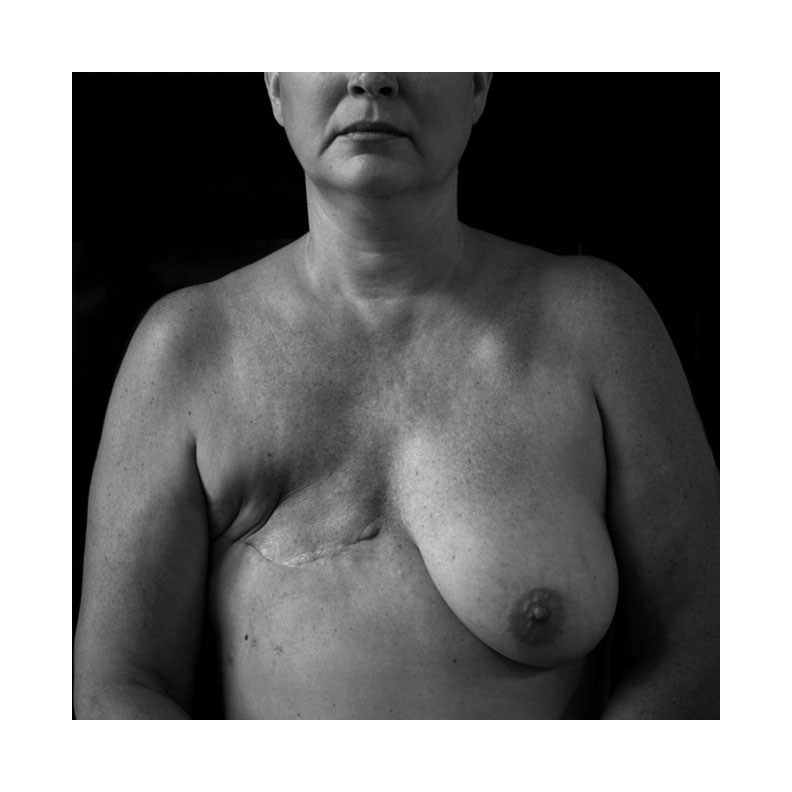
I’ve just been finishing up on my project called “The Fountainhead” in which I combine the first two loves in my life: architecture and photography.  In this series I’ve created distorted images of buildings by photographing their reflection off of a flexible mirror.  I twist the mirror to create sleek and fluid images from ordinary square buildings.  This work was inspired by the novel The Fountainhead which tells the story of an architect that refused to bow to the social pressures of his day.  The book is all about achieving success on one’s own terms, a concept that I believe in and love.  So this series is really a tribute to the book.

Another idea that just struck me was Ceiling Lamps.  I was standing in line at a hotel when I looked up and saw a ceiling lamp from below.  It intrigued me because it looked so different when I stood directly below it.  That was the start of my Ceiling Lamp series which I think is a bit light hearted.

The Lone Man came about quite by accident.  I was shooting long exposures at the beach when a man moved into my field of view, and instead of just waiting for him to leave I decided to make a test exposure.  As I looked at the image I noticed that he stood still for the entire 30 second exposure, and his body language said he was doing some deep thinking.  I began to notice this behavior in other people as well, as they stood at the edge of the world and looked out to sea they seemed to be contemplating things much greater than themselves.  Here is what I say about this in my artist statement:
Something unusual happens when a person stands on the edge of the world and stares outward.  They become very still and you can almost see their thoughts as they ponder something much greater than themselves:

Where did I come from?

What is my purpose?

What does it all mean?

What is beyond, the beyond?

Do I make a difference?

Is there more?

At that moment they are The Lone Man, alone with their thoughts about matters much greater than themselves.  People are affected by this time of meditation and they often vow to make changes in their lives.  But these commitments are usually short lived as such weighty matters are replaced with more immediate concerns:  Should I eat at McDonalds or Burger King and should I try that new green milkshake?

Another spontaneously project was The Ghosts of Auschwitz-Birkenau.  I was on a tour of the death camps when the idea suddenly hit me to portray the camps as a place where the spirits of the dead still walked.  My problem was that the bus was leaving in less than one hour.  Inspired I ran from location to location, working feverishly to create this body of work.

I pursue new projects when the inspiration hits me and I fall in love with the idea.  I long ago learned that it’s a waste of time to pursue a project that you’re not in love with, because it will be a constant struggle and the work will lack passion.  Better to be patient and wait for something that inspires you comes along.  Many people tell me about their projects and their struggles to get motivated, I have some advice for them; YOU HAVE THE WRONG PROJECT!  When you have the right project you will be energized, excited and impatient to work on it.

Gmb Akash: As a photographer what is the most complicated issue you experienced & how you overcome?

Cole Thompson: My biggest challenge is fighting the desire please others and to meet other people’s expectations.  Since we are human it’s natural to want to please, to have our work liked and to be thought well of.  But when this desire overcomes our individuality, our sense of self and our desire to please self, then we are headed for failure or at best an unfulfilling success.  Most of us are too quick to accept society’s definition of success; fame and fortune.  We forget to stop and ask ourselves what would make “me” happy, what do “I” want to achieve with my art, how do “I” define success?  My experience has been that purposely seeking fame and fortune is the least likely way to achieve success.

I’ve recently changed my resume to express how I feel about success:

My art has appeared in hundreds of exhibitions, numerous publications and has received many awards.  And yet my resume does not list those accomplishments, why?

In the past I’ve considered those accolades as the evidence of my success, but I now think differently.  My success is no longer measured by the length of my resume, but rather by how I feel about the art that I create.  While I do enjoy exhibiting, seeing my work published and meeting people who appreciate my art, this is an extra benefit of creating, but this is not success itself.

I believe that the best success is achieved internally, not externally.

Your definition of success may be different, but I always suggest that artists begin their journey by defining what success is to them.  Otherwise they may find themselves going down a path that is ultimately not fulfilling.

Gmb Akash: A brief paragraph on “One day Journey with photographer Cole Thomson”? 

Cole Thompson: I like to focus on my subject and my vision, not on my equipment or the processes.  So I shoot simple and light, carrying just what I need which consists of my camera, 3 lenses, a set of ND filters, a polarizer, cable release and tripod.

If I’m working on a portfolio then I go out with a purpose, but if I’m between projects I just go out and wander.  In either case, I do not pre-plan and I just have faith that in any situation, in any weather or with any lighting, I will find some wonderful opportunities.  I shoot by my gut feelings and do not follow the “rules” (there should be no rules in art).  I do not analyze my images but instinctively know what I want and what I like.  I like to experiment and so I shoot a lot of exposures when I’m out, because the last thing I want to do is get home and find out that I missed an opportunity.

I work alone, I cannot relax if someone is with me and I feel like I’m holding them up, even other photographers or my family!  And I must not have any other commitments for that day because I do not want to feel rushed or have to quite at a certain time.  I cannot be creative if there are any distractions or constraints on me.

My best work is produced when I have several days to wander about.  For example each year I go to Bandon, Oregon and spend 10 days photographing the coast.  I have gone there for several years now and it always gives me something new to photograph.  I also go to Death Valley every January and just wander about for a week, it’s a wonderful feeling to have just one thing to focus on.

Many people ask me how many images I take before I get a good one, and I’m guessing it’s around 250.  Some people think this is a bad way to work; they prefer to plan everything out, sit for days waiting for the perfect shot, and then come home with one great image.  Maybe that works for some people, but not for me.  I like to explore my surroundings and my subject, shooting at many different angles and times of day.  While it is true that most of my images get thrown away, I don’t consider that a failure, but success because it helped me find that one great image!

Gmb Akash: Tell us something about your likings in post processing of your photograph. How you combine your creativity with technical practice?

 Cole Thompson: As I mentioned, I like to keep things simple and that includes my post-processing.  I use an absolute minimum of tools and programs, using only a copy of Photoshop and a Wacom graphics tablet.  I do not use b&w conversion programs, Photoshop plug-in’s, monitor calibrators, printer RIP’s, special inksets or anything else.  And I use Photoshop in the simplest of ways; I don’t use layers, levels or 98% of the features it has to offer.  Instead I rely on my darkroom training and do extensive dodging and burning with a Wacom graphics tablet.  My Photoshop skills are so simple and primitive that Popular Photography branded me the “Photoshop Heretic” saying that “Cole Thompson breaks every rule in the book, but he makes digital black-and-white prints that will take your breath away.”

My emphasis is not on equipment or processes, but instead on the image and my vision of it.  Equipment and processes are just the tools that help me bring the captured image into alignment with my vision.  My first priority is the creative element and I only focus on the technical when my vision exceeds my technical skills.  Fortunately technical skills are easily learned; the creative ones are much harder to master.

The Angel Gabriel

This is the Angel Gabriel.  I met him on the Newport Beach pier as he was eating French Fries out of a trash can.

He was homeless and hungry.  I asked him if he would help me with a photograph and in return, I would buy him lunch.

The pier was very crowded and I wanted to take a 30 second exposure so that everyone would disappear except Gabriel.

We tried a few shots and then Gabriel suggested that he hold his bible in the next image.  This is the image that worked and the only people you can see besides Gabriel are those “ghosts” who lingered long enough for the camera.

Gabriel and I then went into a restaurant to share a meal; he ordered steak with mushrooms and onions.  When it came, he ate it with his hands.  I discovered he was Romanian and so am I, so we talked about Romania.  He was simple, kind and a pleasure to talk with.  I asked Gabriel how I might contact him, in case I sold some of the photographs and wanted to share the money with him.  He said I should give the money to someone who could really use it; that he had everything that he needed.

Then the Angel Gabriel walked away, content and carrying his only two possessions: a Bible and a bed roll.

Gmb Akash: Do you have any photographers/ artists who inspire you consistently? Please share few of your favorite artist/photographer whose work could encourage for creating an art.

Cole Thompson: My first photographic hero was Ansel Adams and I still very much admire his work.  Another early hero was Edward Weston, initially I just loved his art but over the years I’ve come to more appreciate his attitude and philosophies.  I continuously read his “Day Books” for inspiration, especially right before I go out to create new images.

A modern influence has been the Russian photographer Alexy Titarenko, it was his series of long exposures of dreary Russian cityscapes that inspired me to pursue the long exposure.   (http://www.alexeytitarenko.com/index.html)  It was because of his influence that I created The Ghosts of Auschwitz-Birkenau, which I consider my most important body of work.

Gmb Akash: Please mention one of your unfinished/dream works you want to proceed in future.

 Cole Thompson: I have a number of ideas, but I don’t know if I’ll ever pursue them simply because every project that I’ve done so far has come about spontaneously and was not pre-planned.  There is something about planning a series that takes the spontaneity out of it for me.  But regardless if the idea comes spontaneously or is planned, if I don’t feel a burning passion for the project, I will not pursue it.


Gmb Akash: We request you to give a message for B/W photographer to live in this passion like you & we want to receive few of your secret that you want to pass.

Cole Thompson: I always hesitate to give other people advice, because we are all different and at different stages in our creative lives.  But, here is what I believe and share with you:

1.  Ignore the rules, and better yet, never learn them!  They are restrictive and will only lead you to mediocre work that will look like the work of everyone else who follows the rules.

2.  Develop your own vision and style and resist copying others.  I don’t want to be an imitator, but a creator!  Someone just told me that when you try to copy someone else’s image, you produce a “photo-copy” instead of a photograph.

3.  Find projects that you have a burning passion for.  If you don’t feel that way about your current project, change it!

4. Define for yourself what success is and then purposely pursue it.

5.  Seek only to please yourself, because pleasing others is never success and is unfulfilling.

6.  Be a good person, this will help you be a good artist.

“Undoubtedly readers will love to hear the interview from the Master of Black & White ‘Cole Thompson’.  Thanks to him for giving us immense knowledge about his works. Please visit him at www.colethompsonphotography.com or visit his very informative blog at www.photographyblackwhite.com              Gmb Akash”

‘A Hope to See’

Stepping inside the Geta Eye hospital automatically you will close your eyes. Blind people all around you will be circling everywhere, all gathered here with only a hope – Hope to see! Moaning of blind people who are resting in fields will take you in the city of blinds. Then when you will enter in the main building of the hospital you will see a tireless world of doctors and their patience of serving, to give their best to give back patient’s sight. I spent seven days in Geta eye hospital and experience the soreness of being unable to see. I discover the happiness to seeing again. I understand the value of belief!

getaeye (3)

getaeye (10)

Before setting in these benches these cataract patients have passed days and nights in the open air of hospital field. After traveling far distant, getting accommodated in the field and having went though all obstacles they keep their hope alive till the final operation. Today they are waiting for the doctor’s call to open their bandages and hoping to see the world again. Nepal © GMB Akash / www.gmb-akash.com

getaeye (6)

Every day a long queue and big crowd engage doctors of Geta eye hospital. Dr. Bidya examined patient eyes who admitted for cataract operation. Nepal © GMB Akash / www.gmb-akash.com

Cataract and trachoma have emerged as prominent among eye diseases in Nepal and India. Cataract is the main cause of blindness in Nepal and India. In many parts of the country, lack of awareness and ignorance about any eye disease is still widespread where people take it as a curse of god or sin of previous birth, and very often, they turn to local spiritual healers for cure in such a situation instead of getting timely medical treatment in the hospital.

getaeye (9)

All cataract patients wait for days and nights in the hope for a call  from doctor. Doctors can never relax here within the  crowd of patients and for the hope to return their eye sight. Every day hundreds of patients making queue and enter into the hospital. Sometimes it seems like a big crowd is going to attend a picnic where the truth is those are gathering of blind people in hope for their eye sight.


getaeye (8)

Nepal © GMB Akash / www.gmb-akash.com

36,000 new cases every year are being added to the number while over three hundred thousand people are found to have suffered from eye diseases of one or the other sort. Ninety percent of eye patients in Nepal live in rural areas where people still do not go to hospital for treatment on time whenever something goes wrong with their eyes.  As most of the people in rural areas are farmers by profession, they are quite exposed to the risk of getting their eyes pierced or hurt any time.

getaeye (7)

The patient getting the treatment on the hospital bed came from Uttar prodesh. Cheaper and reliable treatment gives them hope to gain back the power of eye sight. Nepal © GMB Akash / www.gmb-akash.com

getaeye (4)

Nepal © GMB Akash / www.gmb-akash.com

getaeye (1)

A cataract patient is lying under the tree outside the hospital. Hospital can not accommodate all the patients, so lot of patients have to sleep under open sky in the cold winter. Nepal © GMB Akash / www.gmb-akash.com

Every year thousand of Cataract patients come to Nepal from India. Purpose is eye surgery. Most of the patients are coming from Uttar Pradesh India. They have to travel 24 hours to arrive in the Geta eye hospital. Only for the cheap and reliable treatment they stayed in the open field sometimes even one week. The whole day and night patients are coming from India. When the weather permits the patients to travel over 400 cataracts patients enter into the door per day from all over India and Nepal

getaeye (11)

Ram Lal (45) is one the cataract patient from Uttar Prodesh, India. He said in India eye treatment is expensive and not proper enough. He has traveled seven days, collected money last one year to get treatment from Geta eye Hospital, Nepal. All he did to get back light of his eyes. Nepal © GMB Akash / www.gmb-akash.com

getaeye (5)

To see the light she traveled five days from her villages and after spending three days outside in the hospital the young girl got the bed. She already overcomes distance, crowd of patients & many other barriers to get the seat in this bed. Nepal © GMB Akash / www.gmb-akash.com

getaeye (15)

When I was interviewing patients they happily replied that they do not think this as trouble to reach to the hospital. They only believe miracles happens here, they will leave Nepal with power of seeing. Patients who came from Uttar Pradesh India have traveled by bus and train. They have crossed the bridge over the border river – and then to squeeze into a Nepalese minibus. In a forest outside the town of Dhangadhi in Nepal to reach to Geta eye hospital.

getaeye (16)

This old lady had her operation. She have traveled long and came from uttar prodesh, India. After sleeping in the open field and after passing painful days now she is waiting eagerly for opening the bandage. All these pains & sufferings are little in front of the eagerness to open the final bandage. Nepal © GMB Akash / www.gmb-akash.com

getaeye (17)

A cataract patient lying on the ground comes back from the operation theater. She is basking in the sun. Long time waiting, lying in open air & many other obstacles were not their concern. All of them want to see light in the minimum cost even if they have to come to another country after conquering all obstacles. Nepal © GMB Akash / www.gmb-akash.com

getaeye (13)

In these seven days of working I experienced the joy of people when they get back their eye sight. I saw hundred blinds and severely visually impaired people every day drifting through a large white painted gate. The place is the same in a forest area near by the Nepali-Indian border.  Few see a bit on one eye, others do not see at all. They were stepping cautiously and were lead – by a spouse, a son, a grandson. After the operation magically they walk out again, without help. And leave the hospital with a wide smile on their faces.

getaeye (14)

getaeye (12)


“Stranger in a paradise”
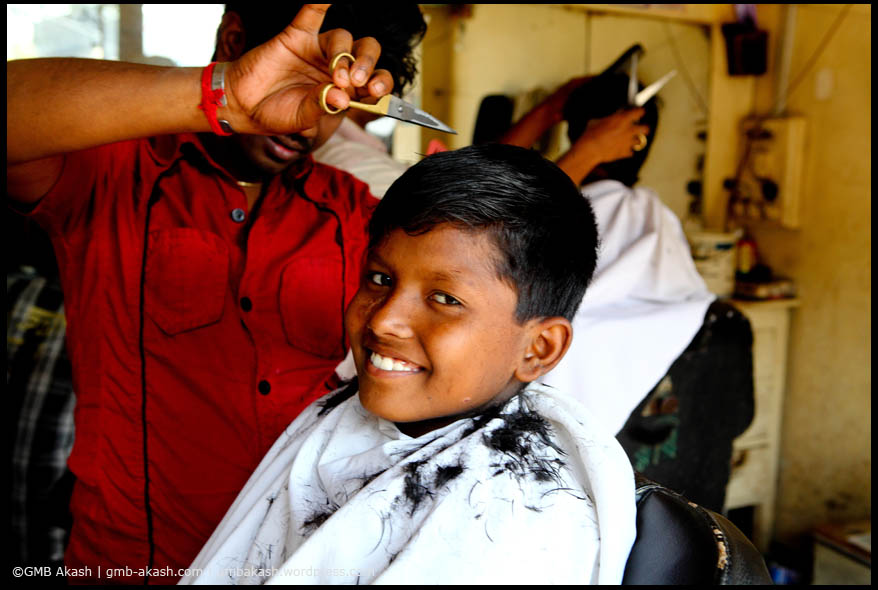
“Oh! My friend! You are a stranger & welcome to our paradise”

This was the welcome note from my friend in Philippines.

I travel to meet with people, to introduce with them & to see all unseen. My second visit to Philippines brings me close to understand this paradise newly.

Joe (23yr) eyes are restless for keep watching guest’s cars of the restaurants. His job is to help in parking & watch on the cars. Car owners give him 2peso-10pesowhen they leave the restaurant. Katipunan. Philippines

© GMB Akash / www.gmb-akash.com

When discovering one of the few secrets about people of Philippines, I discover myself newly. I found a place of joy; I found people of Philippines are so simple, lovely and charming.

Workers are busy for cleaning the sea side in Subic. Philippines © GMB Akash / www.gmb-akash.com

I found all restaurants filled with smiley faces. None of them were looking upset. Girls were entering alone into coffee shop late night and they were secure. I have seen charm of happiness everywhere. When you will pass by a gate the gatekeeper will smile at you by asking “Can I help you, sir?”

In a church of Katipunan people are preparing for taking part in prayers. Philippines © GMB Akash / www.gmb-akash.com

During a rainy day the old women was selling Jackfruit in Quipo. Philippines © GMB Akash / www.gmb-akash.com

In a busy street of Quipo a women selling fruits. Philippines © GMB Akash / www.gmb-akash.com

In slums people were straggling with smile in their faces. Many people were sleeping in the street.

In the mean time of a break these day laborer are taking nap. Quipo, Philippines, © GMB Akash / www.gmb-akash.com

Five family members living in a 6 fit by 6 fit room, did not take out their smile from their faces.

A pizza deliver guy was taking rest after delivering pizza in a office of Katipunan, © GMB Akash / www.gmb-akash.com

An old man was setting idle & taking rest in the busy street of Quipo. Philippines, © GMB Akash / www.gmb-akash.com

I started believing the place is really a paradise. It is a Man-made paradise. When people can learn to live lives with its all possible joys no one can defeat them.In time of return I whisper to myself “go as far as you can! Be a stranger in a strange land” Gmb Akash

“Untold Stories” Part II

Habitually I take my camera, leave my place and lost for long time. These unpredictable journeys never tire me. In searching of stories I traveled miles after miles, I reached many unexpected places by unplanned ways.

Location was India, a mountain near a coal mine. I was not even thinking another terrible accident was waiting for me.

Jharkand, India. One of the largest coal mines in Asia.

© GMB Akash / www.gmb-akash.com

My main focus was low-income people; I find out these poor people who were going back to the coal mine early in the morning. They went for stealing coal & later sell in local market. Next morning I followed them quietly. I experienced they carried these heavy basket full of coals  3 to 4 kilometers from mountain. They were bare foot most were children/female from poorest families.

Jharkand, India. One of the largest coal mines in Asia.

© GMB Akash / www.gmb-akash.com

When I reached to the top of the mountain I could not miss the chance to take photos of those workers, who were working in coal mine. One of my friend was just beside me and poked me to skip from there. Just after few minutes suddenly three men came in the place. Then hold me & my camera tightly, caught my friend as well.

Jharkand, India. One of the largest coal mines in Asia.

© GMB Akash / www.gmb-akash.com

Jharkand, India. One of the largest coal mines in Asia.

© GMB Akash / www.gmb-akash.com

Those men were trying to throw me from the mountain, was scratching me to take the camera but I hold it tightly. I was literally scared but asked them to take me to their boss. They dragged me down, tore my shirt into two parts, hit my shoulders and kicked in my knee. They were dragging me to their boos which is around one & half kilometer. In the meantime of their kicks, I have changed my memory card of the images.

Jharkand, India. One of the largest coal mines in Asia.

© GMB Akash / www.gmb-akash.com

Jharkand, India. One of the largest coal mines in Asia.

© GMB Akash / www.gmb-akash.com

When I meet their angry boss, I managed to tell him that I am a tourist. My hobby is photography, I took picture as in Bangladesh there is no coal mine like this. He took out my cf card and threw to a drain. I said sorry to him, bribe some money and he let me free. I was so scared, their people followed me long. When I returned to the hotel I got sick for few days. But you can not blame a photographer’s blood. I go back again in my next tour and be careful to take pictures that time.

Jharkand, India. One of the largest coal mines in Asia.

© GMB Akash / www.gmb-akash.com

These images are stories of my own experiences. I am writing tours of my life. These journeys invite me in territories I never dream evem. Sometimes I run to save myself, sometimes I take ride in the top of the roof of the train, or I sleep in the flooded floor of village hut, I swim, I hang on, and above all I meet those souls. These adventures invites dangers. But after reaching to those people, getting permission to enter to their private door all my hard work and  risks become worthy.

No dream too big/No distance too long

Destination was Bhutan. It was long hours of days and nights but I keep working. I went to finish “Survivors” Bhutan’s last part. Every country has its own smell, so has its own depth to make any stranger curious. However I meet differences between every country of the world, except “Survivors”, that is indifferent. They are geometrically located in long distance but precisely living a same  life as each other. Here a short sharing to discover “Survivors” in Bhutan.

The girl belongs to the area the kala Bazar slum where most of the cleaner’s families are living. These peoples are living with garages here & there, else they made the country Bhutan a beautiful & neat city for others.

Bhutan © GMB Akash / www.gmb-akash.com

An old day laborer, whose main occupation is work as day laborer in other’s fields Bhutan © GMB Akash / www.gmb-akash.com

Bhutan has long been a mysterious and elusive country for the world. It is small and under populated. The economy is based on agriculture. The majority of Bhutanese are not skilled labor workers. Last time when I was in Bhutan I feel the same force to take out the right moment to capture. But as always you could never be sure either to peak the moment or let it evaporate before you understand to grab it.

The old woman was sitting in a Buddhist monastery for her prayers. Many of old women in Bhutan passes their last days near these monastery.

Bhutan © GMB Akash / www.gmb-akash.com

In Lagjophakha, most of the working class people lives. The woman living in the working class slum was stand in the window.

Bhutan © GMB Akash / www.gmb-akash.com


In early morning, the streets of Thimphu are cleaned by male & female cleaners’ everyday. Most of them live in Kala Bazar slum. Inadequate living things & continual deprivation has pause their life, not even to express their sufferings.

Bhutan © GMB Akash / www.gmb-akash.com

Near the kala Bazar slum an old man seating in a tea stall. Here low income people living their life in sacrificing their basic needs.

Bhutan © GMB Akash / www.gmb-akash.com

“I was leaving Bhutan, head was full of their straggle stories & their clam sufferings which I hardly understand. Right moment, my project “Survivors” was up is emphas.is. When I was in dilemma either I could ever be able to give back these “Survivors” loves & fulfill my liabilities at that moment I saw a board written:

 “ No Dream Too Big

             No Distance Too Long ”

 I got my inspiration back, I stand straight . These fate less fighters  inspires me to fight for them….” Gmb Akash

“Untold Stories” Part I

My identity is my photography. From the crowd of photographers, I am one who determine to dedicate everything in photography. I could never think a day will come when photography will be only reason to live my life! In my surroundings & the place I brought up no one can ever thought a boy can devote him for photography. In my environs and in the space I was brought up in no one ever thought a boy can dedicate himself for photography. Throughout my childhood I did not have access to photographers, their work, or even a camera. Photography did not exist for me in theory or in practice. I held my father’s old camera and started taking pictures unconsciously in 1997. Since then I have not stopped clicking for a single day. Every day, in every angle, in every corner of my world I keep capturing those miserable souls and kept them in heart of my camera.

© GMB Akash

© GMB Akash

“Bravery” is the most unexpected power of these children. They work 1 0hrs and more having no protection, no appreciation, no admiration but with a wide smile in their faces. In the resting time, when I took photos I asked them what they will become in future. They randomly said they want to be Doctor, engineer, pilot! I lost my words! They do not even know, the work they are doing will never take them in any of these designation they are dreaming for. One boy from them look at me and said, ‘I will be a photographer like you, will take picture when my boss beats my friend’. I use to close my eyes often in between the conversation.

© GMB Akash

When I was leaving the working place of children, I ask them what they want to eat. For them bread is the most delicious food. When I back from the place my soul left heavy. After I got Vevey International photography grants in 2010, with some money I bought new dresses and went to them. Happy faces of 65 children, their shouts, their joys, their hugs I even can feel now when I am writing. I could not resist tears for giving them these simple cloths and after receiving their unconditional love makes me so much small.

© GMB Akash

18 months old Khadeja was suffering from diarrhea in Rayer Bazar slum. Her parents kept her under the sun to ironically cure her. Her condition was bad & malnutrition made it worst. Her parents were no where found near to ask the explanation.

© GMB Akash

Women protect themselves from the rain at a tea plantation where they work near the village of Elkaduwa. Tea is one of the country’s main export crops. sri lanka, Matale District

“It was rainy season. Female workers of Srilanka were rushing to their work place. I was rushing with them. These ladies were bare foots, clothes were thin. I was wondering how whole day they will work. Suddenly I felt something beating near my knee. I ignored and keep clicking. When I could not bear any more I hurried back to my hotel. I found louse beating. It was bleeding, and  I got sick. When I was suffering from pain I recall those ladies who were bare foots & thus they works everyday!”

© GMB Akash

My friends started calling me “Hijra” Undoubtedly it was shocking for me but I didn’t stop working on trans-genders. It was way too distance to reach as nobody worked before me on this community. It took years to get entry to their door. I patiently keep trying. Mixed with them, talked to them, took gift for them. I tried to understand the basics of their lives. Their ways of life makes them strange characters and granted as alien in the society. Instead of getting warmth from the society, they receive hatred and contempt. Few among them were forced to leave school because of their classmates’ negative attitude towards their feminine behaviors. Their lack of education has so far deprived them of information and any scope of communication with trans-genders all over the world. So they confine themselves to their own small community. They engage themselves in merriment, singing, dancing and thereby hiding their struggles and worries in laughter. After several years of working, I go to the depth of their lives. People laugh at me, make fun of me. But when I meet with them their warmth of admiration give me the courage to depict them in my frame.

© GMB Akash

In district hospital Accham every day people come to get treatment for HIV. To reach in this remote hospital I have to travel several days. Even people who come for treatment walk two days or more. In those villages you can hardly find male member of the family. In every family some one died in this disease. They have no work there, so they go to India for long time. They bring HIV unconsciously when they come back. Even some ladies come to know that they are HIV positive after  of their husband’s death. Their painful stories of surviving could hardly reach to the top.

© GMB Akash

15 year old Masura Begum at the Fistula Treatment Centre in the Dhaka Medical College Hospital. Masura developed a fistula after an unsuccessful abortion operation was carried out after she was raped. Over 71,000 women live with fistula in Bangladesh, with the World Health Organisation estimating over 2.5 million cases worldwide. The UNFPA have trained 45 doctors and 30 nurses to treat the disability at the centre in Dhaka. Obstetric fistula, which can occur after days of obstructed labour, is both treatable and preventable, yet it carries with it a huge stigma, and can have devastating consequences, usually killing the baby and leaving the woman with chronic incontinence. Dhaka

© GMB Akash

Liza is an old sex worker in Tangail brothel. In early childhood her step mother sold her to the brothel. She forgot their name, faces & even where she born. She admire when some one took her photo. When I was taking her photo & listen to her story, this hard hearted lady broke out in tears. She lost her young age, clients hardly come to her. She has no one, without this brothel she has no place to go. Now she works as maid for other sex workers. She was crying in thought of why god punishes her this way. She lost her childhood, she never got love in her life now in old age she has to rotten in this brothel. That time first I thought of buying sewing machines for these kinds of old sex workers. At least they could find a self respect at the end of their lives!

© GMB Akash


“I am working on old home past many years. “Kontinente” a German magazine published my work on Nepal old home. That old home even did not have sources to give two times food to those old inhabitants. After knowing the fact many people come forward to help them. We raised sufficient fund through mother Teresa Home. When a mother said “I waits for you my child as just like I waits for my son” I feel little. We still keep working for all those great hearts”

“I am in an endless journey towards an infinite route, only to find a real world of humanity. This thirst is eternal. I will keep walking, touching every face I meet by my lens. I will show the world – those unknown stories of sufferings. If a single hand comes to give them a shade then that is the real honor of my sweat” – Gmb Akash

Born to work

“I see the beauty of people and the human soul in the pictures I take. And though the circumstances of some of the people I portray may be grim, back-breaking, depraved, the people themselves are always remarkable characters and souls” Gmb Akash

Child working in a silver cooking pot factory.© GMB Akash

17.5 percent of all children aged between 5-15 are engaged in economic activities. The average child labourer earns between 400 to 700 taka (1 USD = 70 taka) per month


Child working at a silver cooking pot factory. The child labourers earn about 200 taka ($1=70tk) per week and they work about 10 hours a day. Dhaka, Bangladesh.© GMB Akash

© GMB Akash

© GMB Akash

  “He laughs, he run & his eyes sparks like any other kids we see around us. When they spend hours after hours under pressure to become one of capable member of their family, they start to diminish. Poor families have to send their child to face the cruel world by sending them in factories, streets instead of school. Little children start to know the world by sleeping in the street, breaking bricks or carrying sands”  Gmb Akash

© GMB Akash

Shilu works separating sand and stone. At least 10,000 people, including 2,500 women and over 1,000 children, are engaged in stone and sand collection from the Bhollar Ghat on the banks of the Piyain River. Building materials such as stone and sand, and the cement which is made from it, are in short supply in Bangladesh, and commands a high price from building contractors. The average income is around 150 taka (less than 2 USD) a day. Jaflong, Sylhet


Rahman (12) is beating by the owner of the textile factory. His job is sewing children t-shirt. In the mean time of work he was slow to deliver, that’s why he hit by the owner. He earns $1 by ten hrs of work in a day. Dhaka. Bangladesh

© GMB Akash

13 years old Fatema is getting older with the experience of carrying brick for construction sites. She has to take materials for construction firms & moves up to sixth floor with all those heavy materials all day long. She got 1500 tk per month for carrying countless buckets from morning to noon. Surprisingly, this 13 years girl represents herself way too older than her real age. Dual shade of her face, displaying the lost child in the reality of surviving. Dhaka. Bangladesh

© GMB Akash

© GMB Akash

© GMB Akash

Tired Motalib (12) was taking rest in the sand field of Jaflong, Sylhet. Before sun shine he starts to collect stones in his basket. In sunset when the contractor counts stones & fix money in order, he gets some time to relax. He can take 35-40 tk when he leaves the field. While he looked into the camera his sweat & sand covered body defeated by his curious eyes & innocent smile.


© GMB Akash


Nine years old Shakil’s job is to make balloons. In the time of making these colorful toys, he himself mixes by those powder ingredients. His has done his works usually after the sunset. If any balloon is not fit to sell then the seller gives it to him. He keeps it for his young sister because he usually didn’t get any time to play. He gets 700 tk for a whole month of working, Dhaka.

© GMB Akash

© GMB Akash

“Their innocent smile can break your heart into enormous pieces if you stand in front of where they work [and] live.”

© GMB Akash

“I want to deliver their voices to all of you & their hidden pain & cries. If any of you spend one second in a thought to help or even a prayer for them is the reward of all hard work”  Gmb Akash


© GMB Akash

“All the time the heartless scenario, people sufferings & my inner emptiness had frozen my finger to click. But with all those sorrows in expression accompanied by smile when they give a look, they push me to overcome anything. & then my clicks never take a break”  Gmb Akash


© GMB Akash

These are the hands of Alamin, 11 years old brick field worker who starts work from 5am. Smoke & ashes covers Alamin’s whole body but works never cover a smile in his face. He carries brick from the field to kiln. He usually carries 4 bricks at a time top of his head. per brick is almost 2.5 kg in weight. For 1000 bricks the workers get 80 Tk. Alamin covered with smoke & ashes, at the same time he carries 400 bricks a day in cost of his fadedness. His family comes from Kishorgonj with their three children and all of them are selling their childhood costing per day nearly 80Tk.

© GMB Akash

“No one has the time to listen them, they are mostly unseen human. I tell their stories, depicts their emotions, steal their sorrows in my frame…if these stories ever touch your heart please feel free to share ….your sole help can even awaken people to bring their hands to these lost souls..” Gmb Akash