Dhaka’s Shipyard – Where Steel Meets Survival!

By GMB Akash

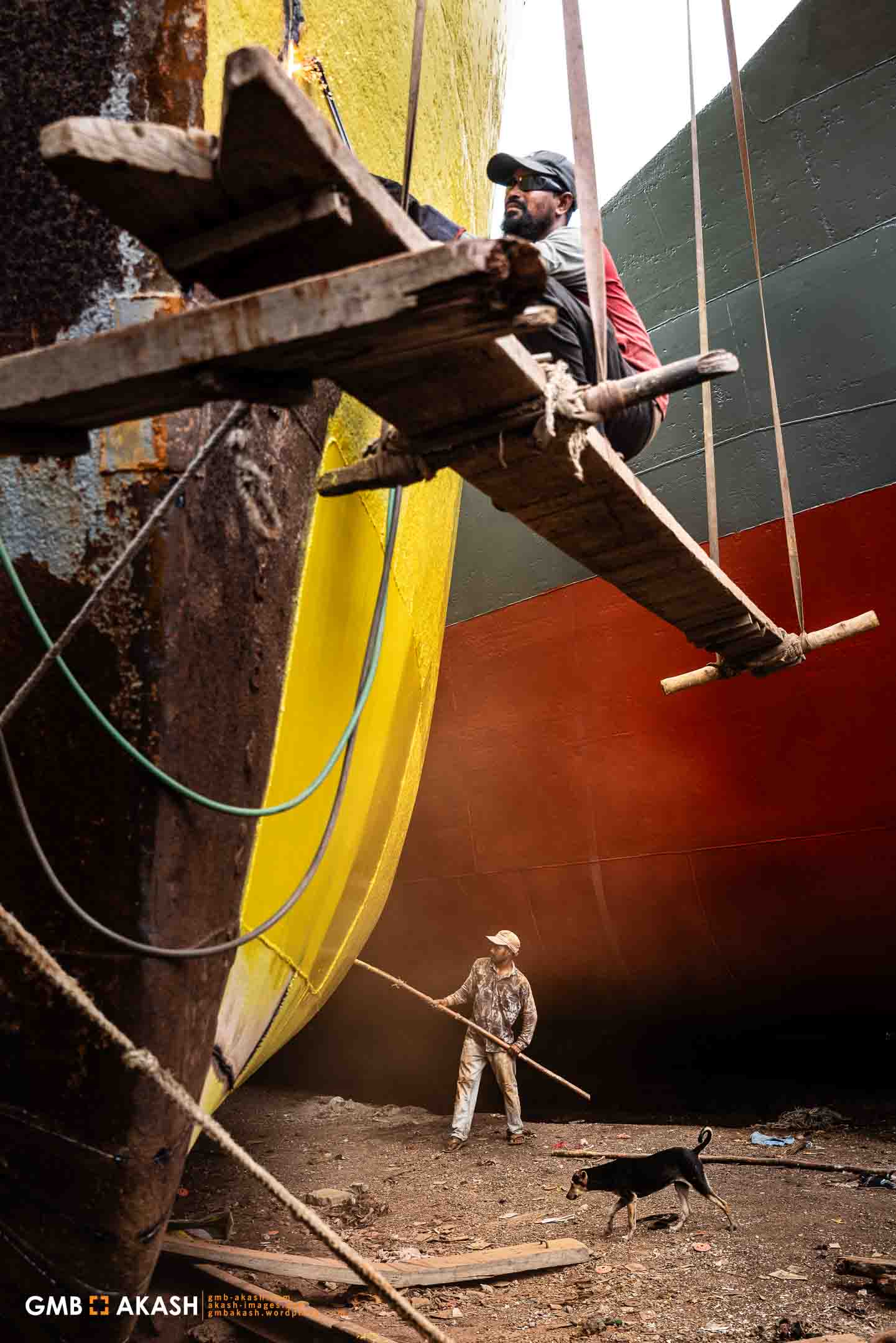
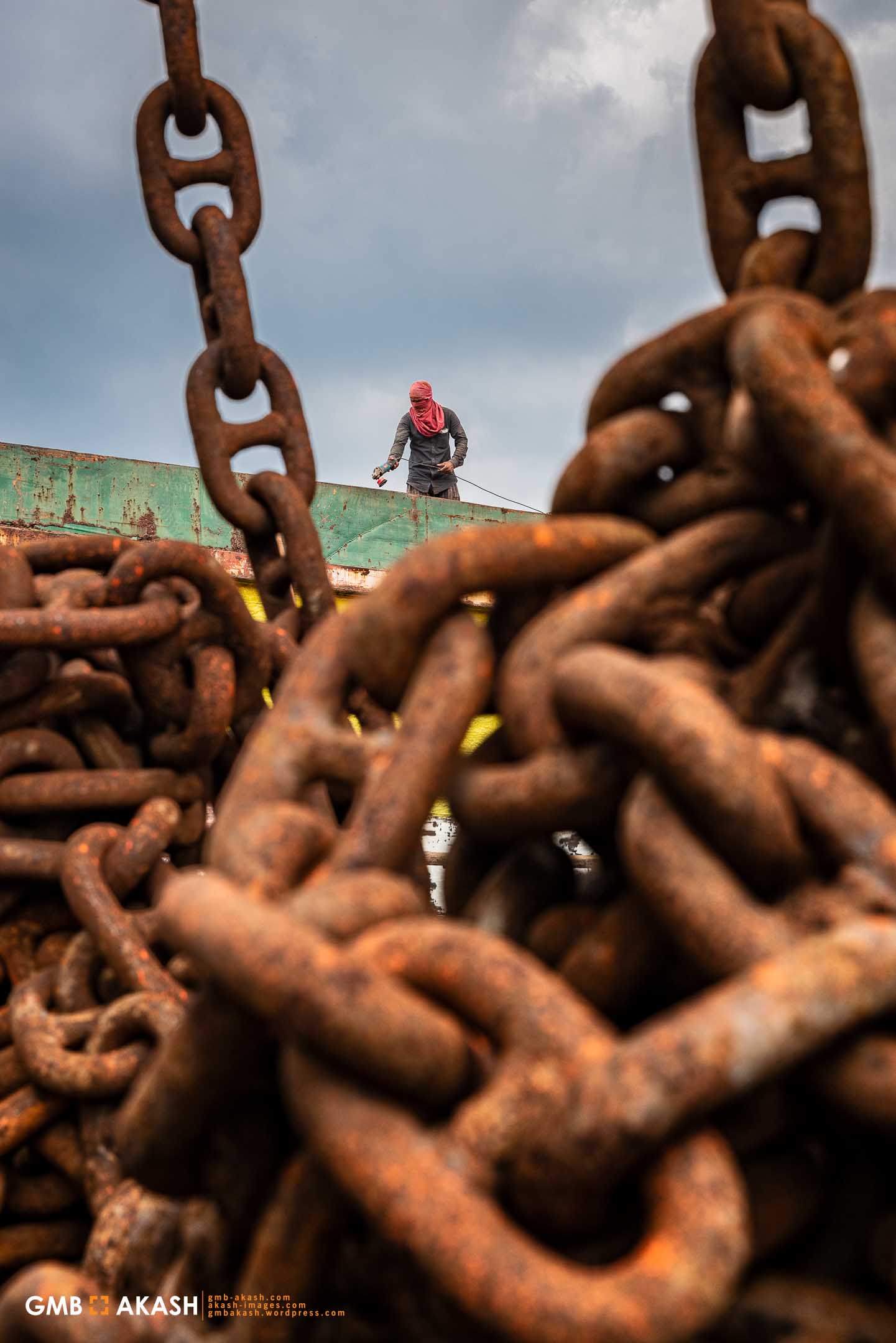
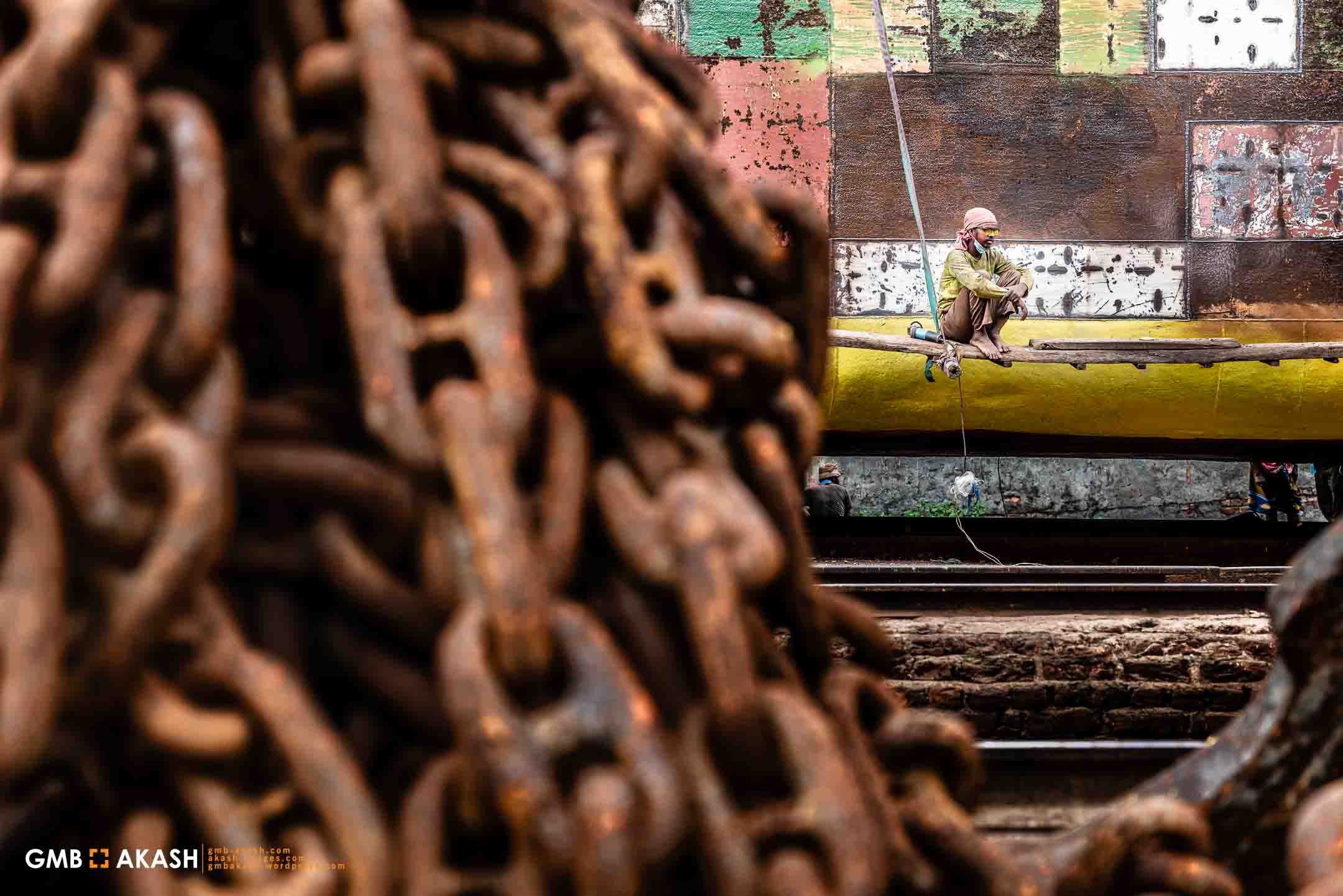
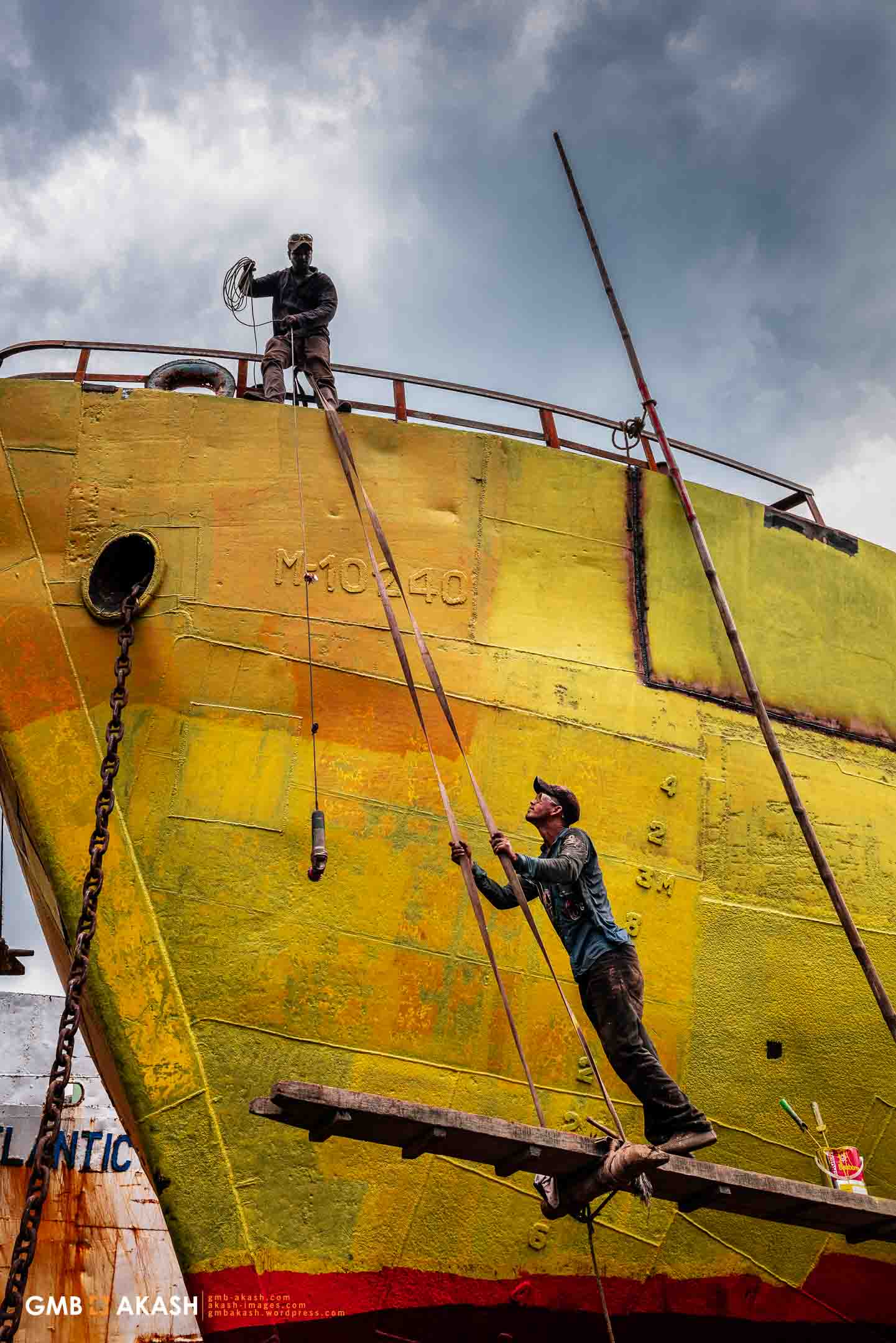
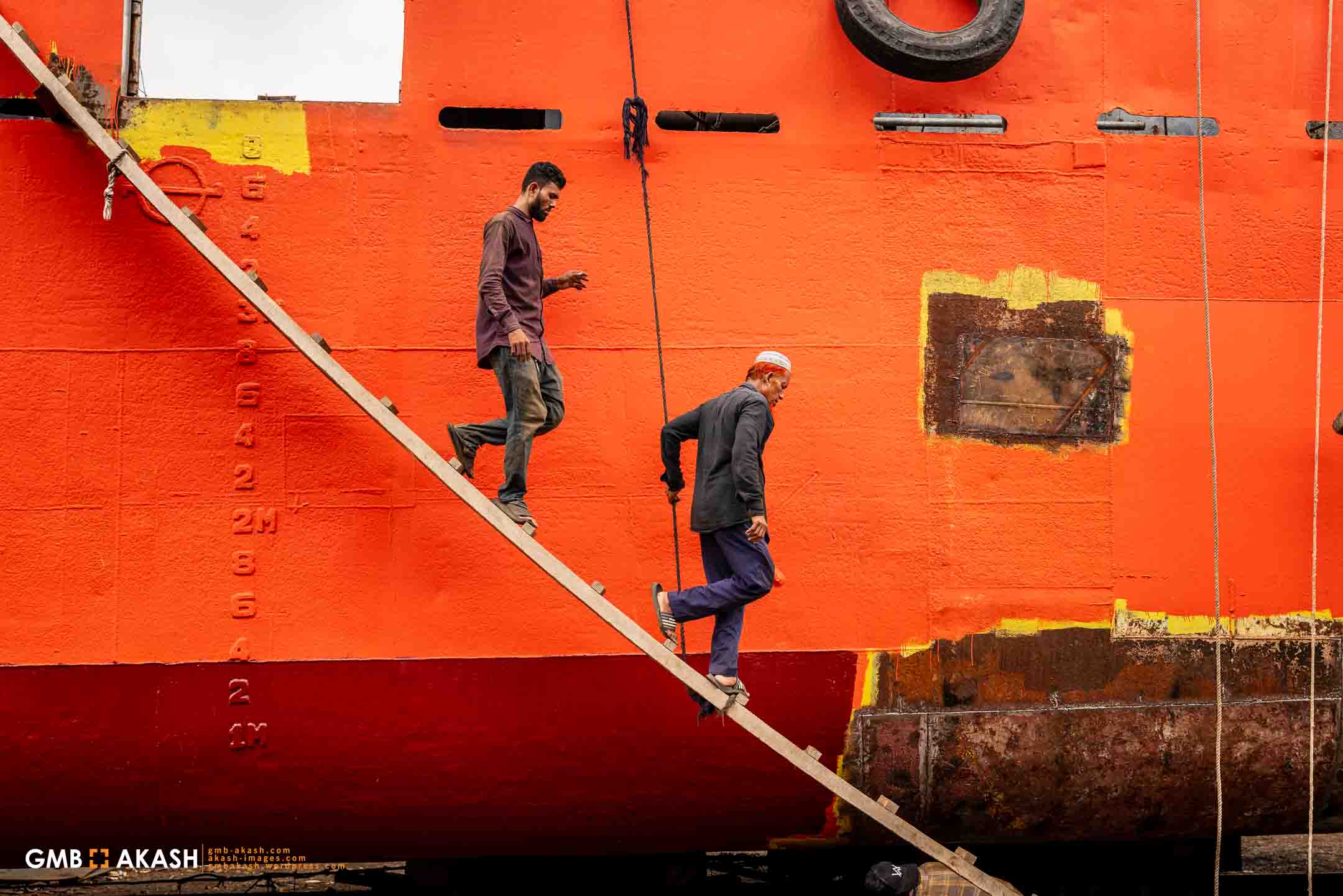
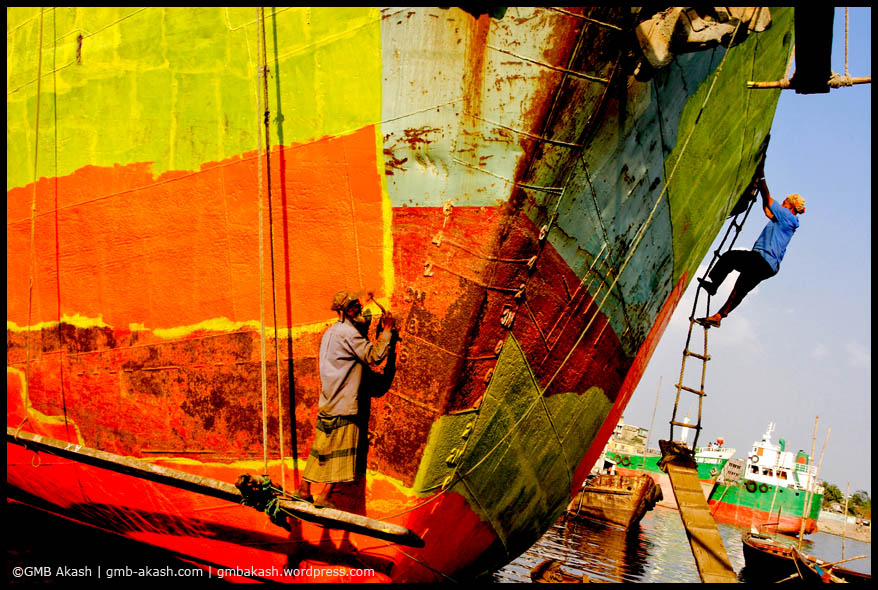
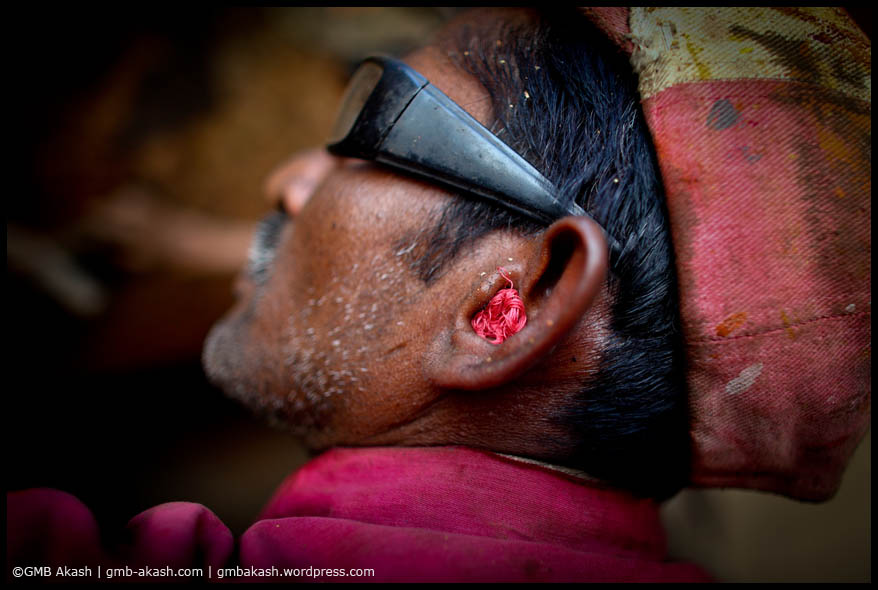
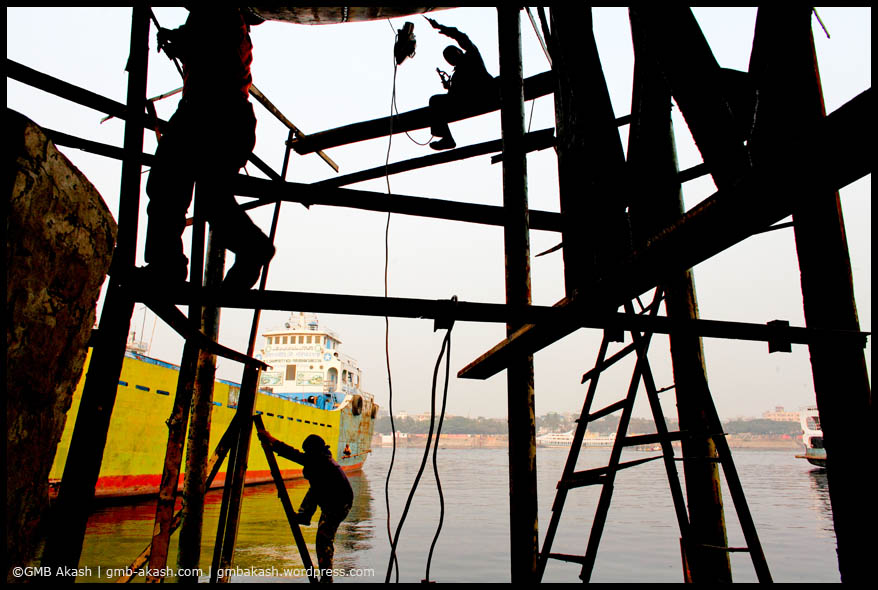
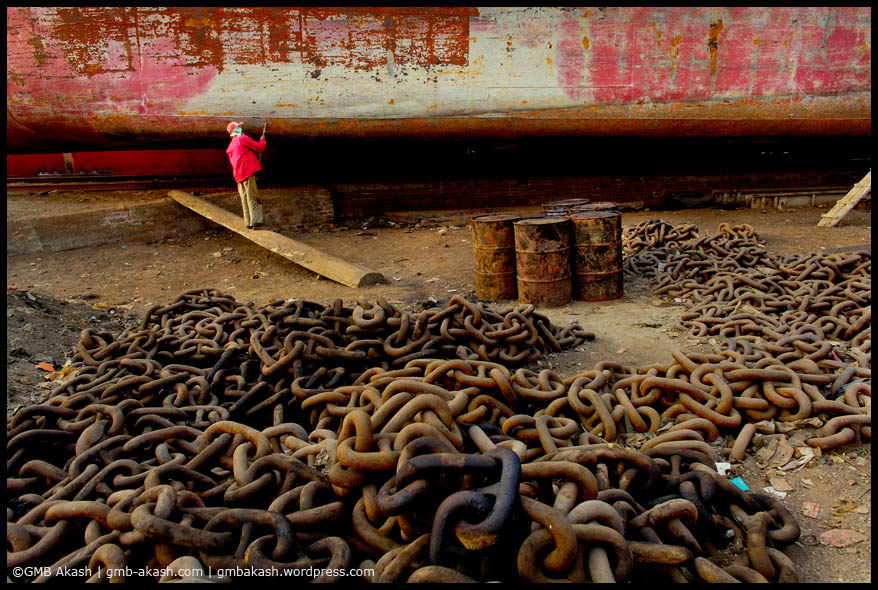
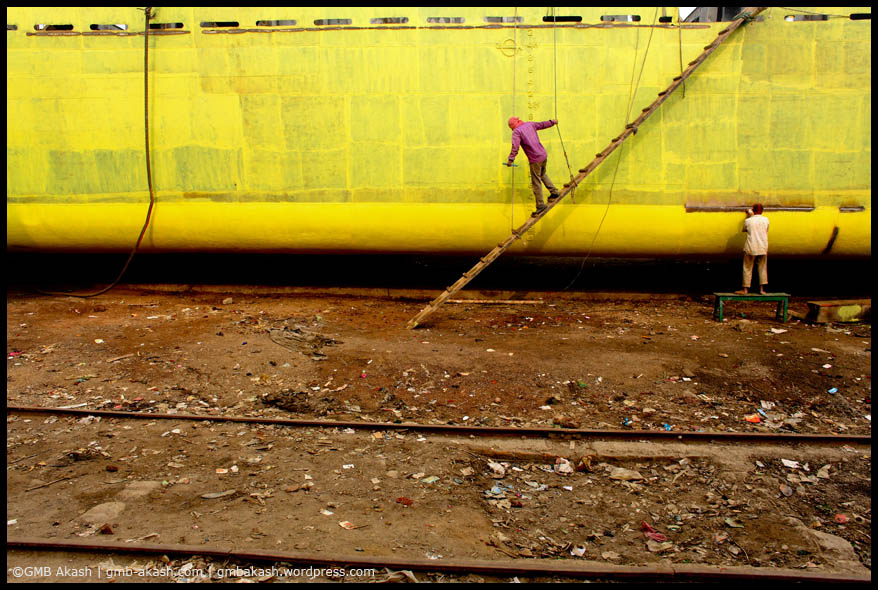
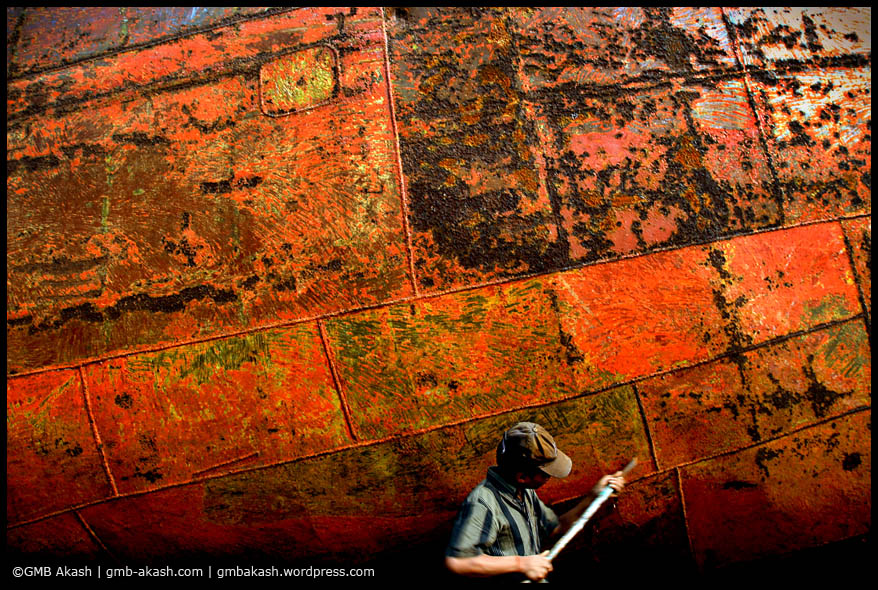
Along the Buriganga River in Dhaka, giant ships are repaired and rebuilt—not by machines, but by men with bare hands and unbreakable spirits. The shipyard is a world of fire, metal, and endless noise, where thousands of laborers work without safety gear, earning just enough to survive.

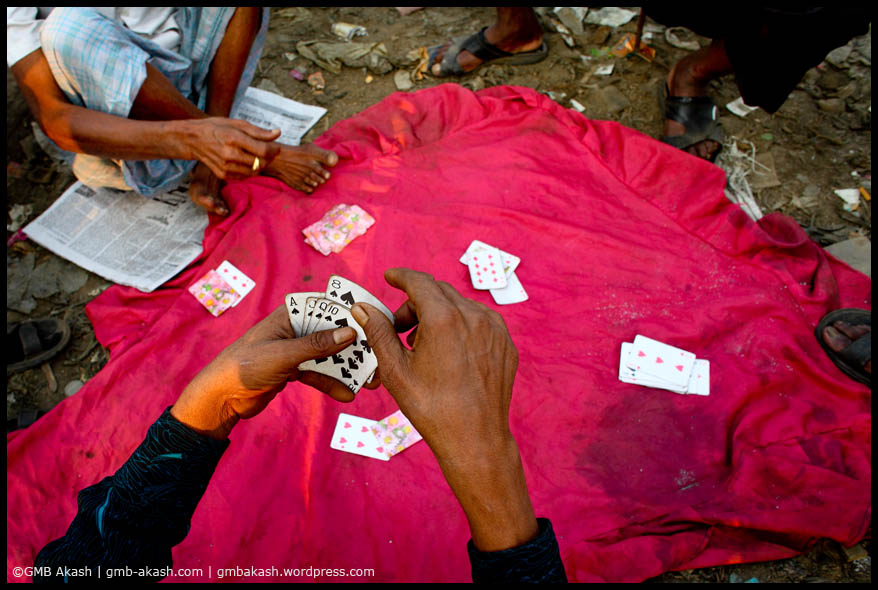
Most come from distant villages, chasing a better life. They sleep beside the ships they mend, risking everything each day. Over 200 ships are repaired here every year—fueling our economy, but costing these men their youth, health, and often, their dreams.

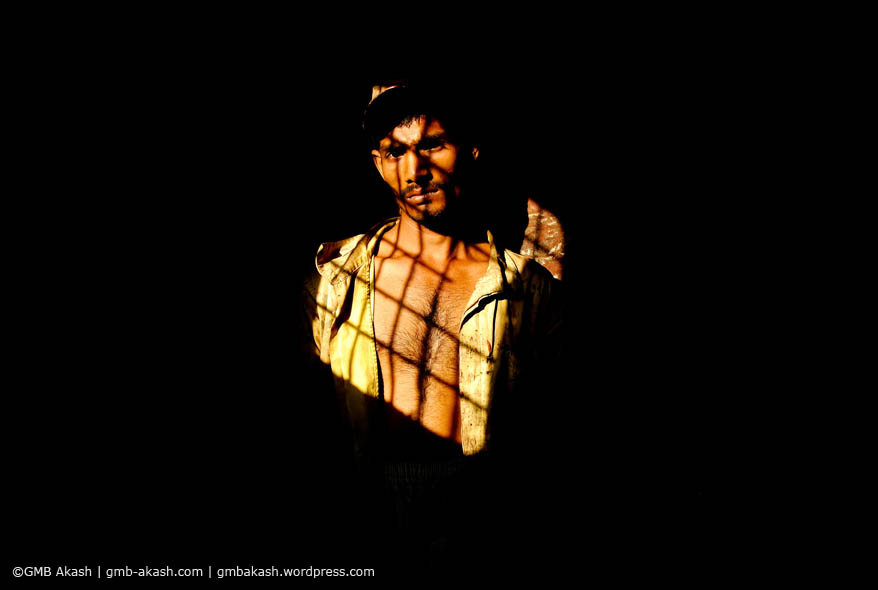
In their silent struggle, I see courage. In their worn faces, I find stories the world needs to know.

‘Ship-Creators of Mighty Bangladesh’

“Steeping into the muddy shiphub my eyes stumble on barefooted children playing ‘Akka Dokka’. By following their queries giggles I smiled to the little-girl next to me asking ‘What to your father do’?  With a wide smile showing her recently missing baby teeth’s, she whispered ‘My father builds big big ships’. The place is familiar to me so as these children but I rejoice these moments every day when I jump from my boat and my day start with ‘big big ships’.  I walk towards to Ship Creators, to the people that the world knows little about. Step to them, who are building ships on a daily basis with their expertise, power, energy and who dream to make something big, bigger than their life, bigger than their identity, bigger than their credits without much expectation. ”

– GMB AKASH

ships making (10)

ships making (26)

ships making (15)

ships making (5)

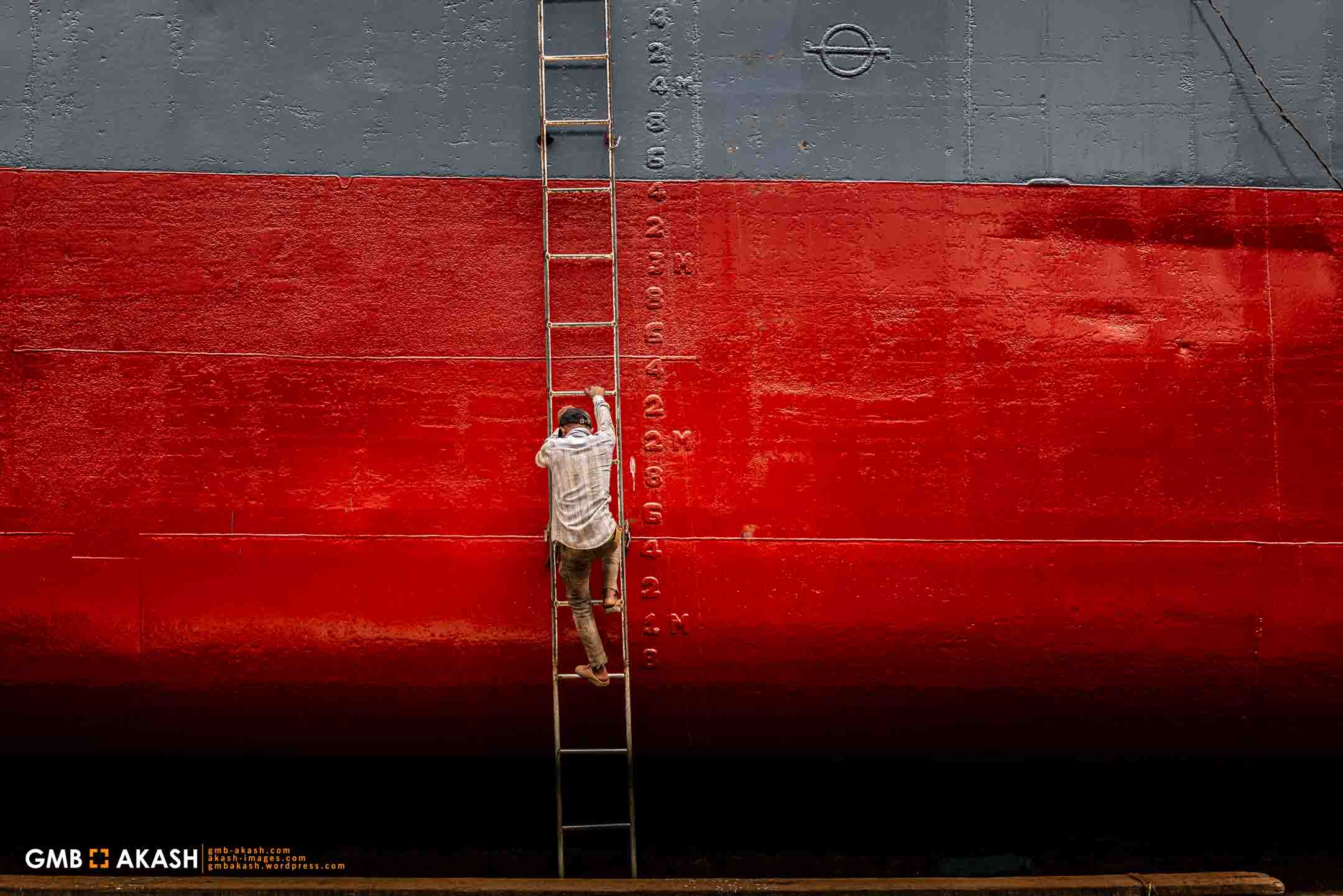
In the shipyard every worker is full of activity, no one have any time to talk. Constant work with flame, sound and dust may seem intolerable. Especially the constant ‘Dhang-Dhang-Dhang’ sounds of steel and hammer will auto upgrade any ones heart beat. But to the workers it’s their daily doze.  These Ship-craft-masters never get tired often handle everything in spite of getting any structural design keep building ships on their own effort with their basic genetic talent without any break. Frequently without goggles, risking serious injury or blindness, they all climb tall rope ladders to the ships’ highest points to retrieve items, risking death if they slip but yet happily they keep working in the pleasure of building the ship

ships making (4)

ships making (18)

A laborer is standing in the ship which just arrived for renovation

ships making (24)

Bangladesh is set to emerge as a new export leader for building small ships after cutting deals worth over $ 250 million last year alone. More than 250,000 skilled and semi-skilled workers are employed in the shipbuilding industry Bangladesh. All inland and coastal ships are constructed and repaired locally in these Bangladeshi shipyards. Bangladesh has all the ingredients to turn itself into a hub of export oriented shipbuilding for small and medium-sized vessels. The full utilization of the opportunities that are now present in the global shipbuilding market can turn this sector into a billion dollar industry within a decade. In recent times, a dozen shipyards are expanding their capacity for building ocean-going ships to enter the international market.

ships making (8)

ships making (11)

ships making (6)

** (There are more than one hundred shipyards and workshops in Bangladesh, most of them are privately owned shipyards. Out of these shipyards, approximately 70 per cent are located in and around Dhaka and Narayanganj along the side of the river bank of Buriganga, Shitalakha and Meghna. About 20 per cent shipyards of Chittagong division are located along the side of the Karnapuli river and six per cent are located along the bank of the Poshur River in Khulna division while the remaining for per cent are located in Barisal division)

ships making (20)

ships making (25)

ships making (17)

Availability of cheap human input is the main strength of the country and this is one of the main determinants in allowing this labour intensive industry to flourish. Also, easily trainable workers can provide this country with a decisive edge over other prospective countries. Bangladesh is in very much an advantageous position in this respect as labour cost is the cheapest among other shipbuilding countries around the world. But it alleys not that only for livelihood these ship-creators give their labour to this industry. Their dream, their hope ties with it and it’s in their gene to build ships.  But the work is sporadic, and after paying the rent on the family’s tiny bamboo shack, workers has barely forty cents left to feed each of the family members. With no other options, workers usually sat their eldest son down in the work. An armature’s job would add $2.20 to the family’s daily budget. Still they build their hopes, build their ships with or without expectation.

ships making (1)

ships making (9)

ships making (19)

Mishir Mia and his 25 member’s team seat silently beside the shipyard. After working two long years their team builds a world class ship. It will sail within short time. No one was answering my repeated questions. After a long break Mishir Mia said “Let me bring my son sir. I will show him the ship. He will become a marine engineer one day; then he will bravely share with friends that without any degree his father once built big big ships. Let me go Sir. I will answer you later.”  Team of 25 labours is sign of victory. It’s our victory. It’s Tribute to their bravery, their silent involvement in the economy. Aren’t we seeing a mighty Bangladesh?

– GMB Akash

ships making (12)

ships making (13)

ships making (23)

ships making (7)

ships making (22)

Ships’ Graveyard

“This is an emblematic depiction of the agony of hard labor. For saving themselves from hunger they breathe in asbestos dust and toxic waste. Thus they are risking their lives everyday. On the verge of death they risk their lives in order to endure themselves. They are passing their days on one of the world‘s most unregulated and hazardous industries, leaving a trail of debris, disability and death in its wake. I spend 10 days in the Gaddani ship-breaking yard north of Karachi in 2005.  I witnessed workers dismantling large ships, piece by piece using no protection, in absence of tools, where one wrong move could result in death, but they were continually depending in their bare hands. In a city of dying ships flames with smoke rising, tormented with ship body parts, metal residue, asbestos, and oil spills. Barefooted workers with little access to necessary tools are vanishing ships on the rusty sand of Gaddani and break down these steel giants coming from all the harbours of the world.”

– Gmb Akash

ship breaking (19)

ship breaking (18)

ship breaking (1)

ship breaking (15)

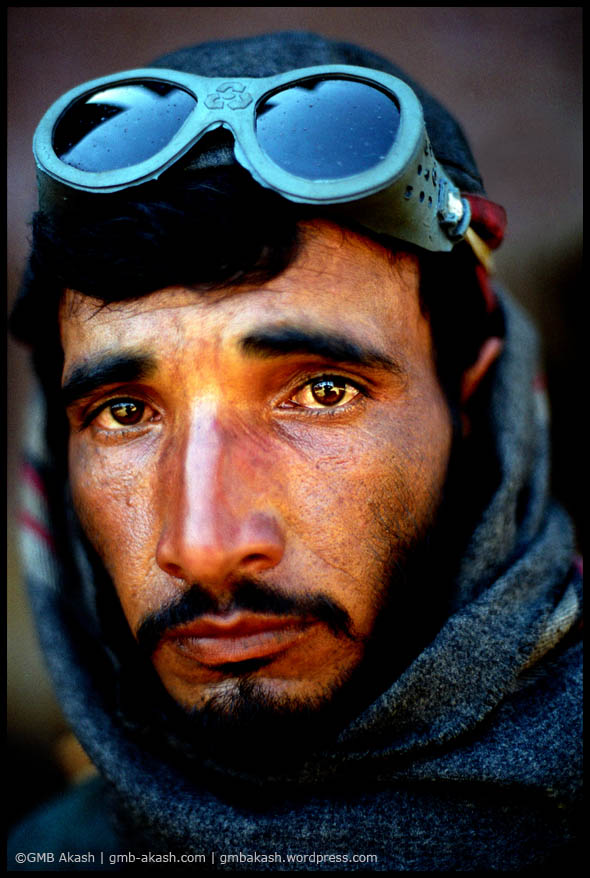
The beach of Gaddani, 50 miles north of Karachi in Pakistan, has become one of the two world biggest cemeteries of super tankers, cargoes and other vessels in the world. Thousands of men, mostly Pashto migrants, toil over the ships. They are seasonal workers, a large number of native and immigrant workers returning to their homeland near the Afghan border at harvest time. The group consists of perhaps from Afghanistan. They pen for their beloved, whom they get to see only during the year ends. For around USD 1.20 a day, thousands of workers labour to dismantle dozens of ships each year at the ship-breaking yard in Gaddani.

ship breaking (2)

ship breaking (9)

ship breaking (13)

Rashed, a labourer at the Gaddani ship-breaking yard has worked for five years dismantling ships. He said: “Had we had any other way of earning bread, we would not have come here.” Workers are always under high risk of accident, though they hardly care to secure themselves. Under hitting rains of sparks, blowtorches split through the thick steel skin of a ship. As they are cut lose, the pieces of metal plummet to the ground with a roar. I saw workers, toiling ceaselessly, as though banished forever to an underworld.
ship breaking (11)

ship breaking (6)

ship breaking (16)

Many workers operate in tight spaces where the air is thin, and in high temperatures caused by hot welding, which is widely used, not to mention that they are constantly exposed to flammable liquids like paints and solvents. The work carried well into the night shipyard in Gaddani, Pakistan. This is the ship graveyard that serves as the final destination for a significant part of the world’s fleet.

ship breaking (3)

“Barefooted workers would take apart, bit by bit, the dying ships with their bare hands, shipyard in Gaddani, Pakistan.  On their shoulders, workers bore great metal plates to their destination. People complain about their crappy lives working in an air conditioned work place, imagine having this as your only option in life.”

– Gmb Akash

ship breaking (7)

ship breaking (5)

ship breaking (17)