Dark Alleys

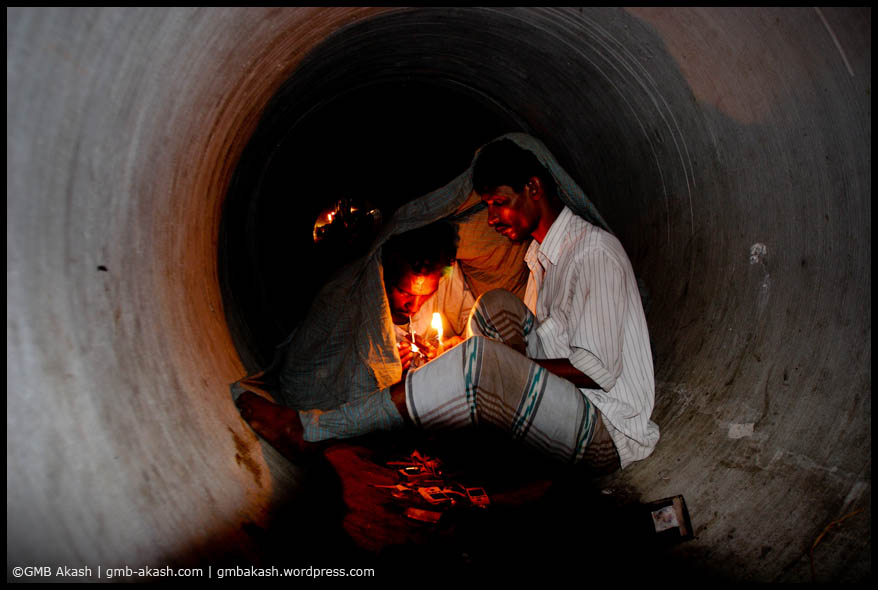
“These disorders — schizophrenia, Alzheimer’s, depression, addiction — they not only steal our time to live, they change who we are. In the time period of working with drug addict, I encounter tremendous shiver in thought of helplessness that how they are silently dying in these dark alleys and there is no dark Knight to hold them straight only we are here to celebrate the funeral of these fallen stars”

–  GMB Akash

drug users (5)

A drug user is showing his drug pethedrine

drug users (7)

drug-final-61-6

Drug addiction is a major social evil in Bangladesh, affecting thousands of young people and their families. There are thousands of addicted people in Bangladesh and most of them are young, between the ages of 18 and 30 from all walks of life. Drug addiction in young Bangladeshis is mainly seen because of reasons like depression. People try to remove depression using drugs as a tool. And this is how they become addicts.

drug users (8)

drug users (11)

drug users (9)

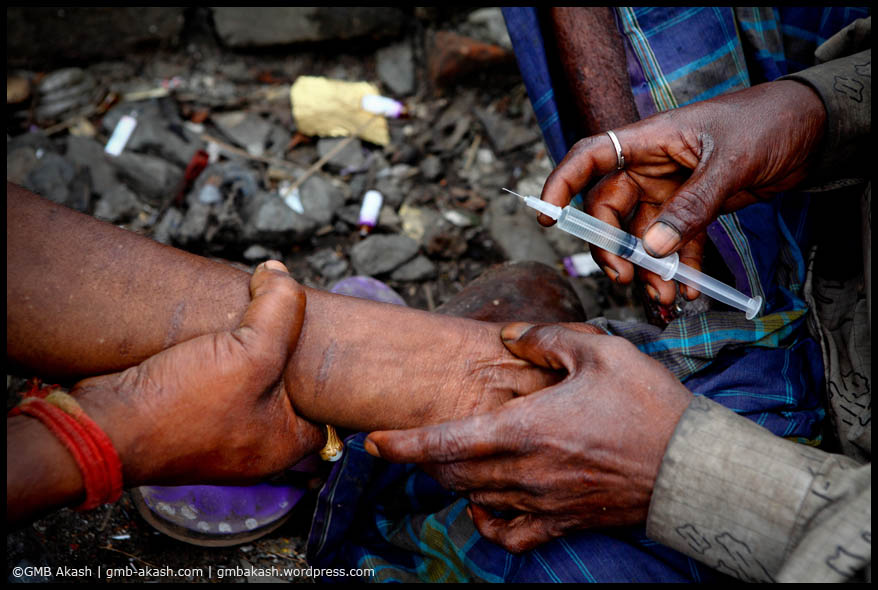
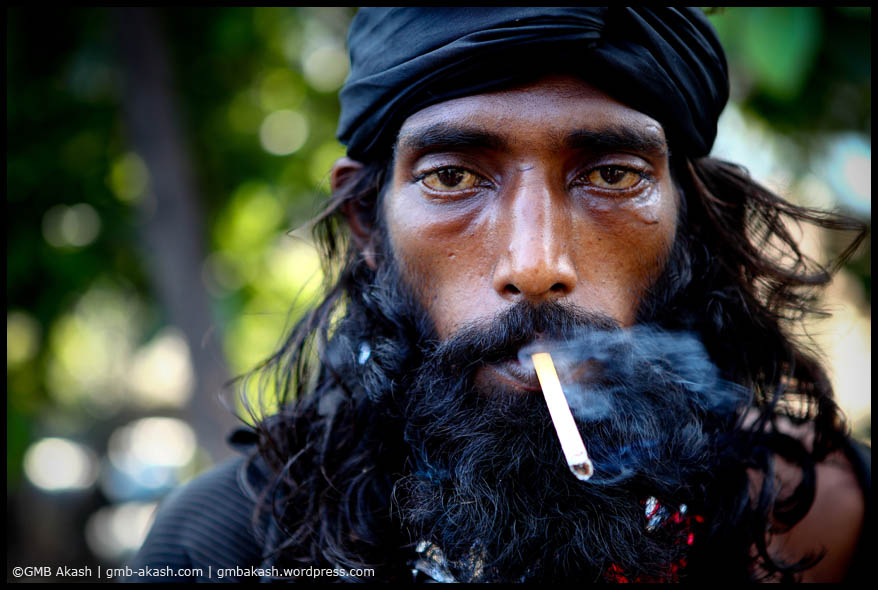
Drug users are taking drugs by sharing same needle with each other. Injecting drug users have few places to turn, and they are one of the groups most at risk of contracting and spreading HIV. Heroin is mostly smoked within aluminum foil or cigarette paper, but in Bangladesh this is injected. Injections through infected needles can cause diseases of the liver, brain, heart, lungs and spinal cord. Estimates of the number of people living with HIV/AIDS in Bangladesh range from 2,500 to 15,000 most of them are affected while taking drugs. A Heroin addict may need about Taka 500 worth of the drug a day. They neglects the needs of the family, and those are non-earning may sell off family assets. They also go out on the streets for mugging and dacoity.

drug users (10)

drug users (4)drug users (6)

drug users (16)

“Rickshaw driver Mohammad Bashir has been addicted to heroin for most of the last 13 years. His habit cost him his job and put an enormous strain on his family. Like most addicts, he often uses shared needles. Police has caught him in the spot, members of his addict team has managed to fly. But police caught him, while he is continually requesting police to leave him in the word of his promise that he will not inject him any more with drugs”

drug-final-07-1

Drug usuers(11)

Drug usuers(15)

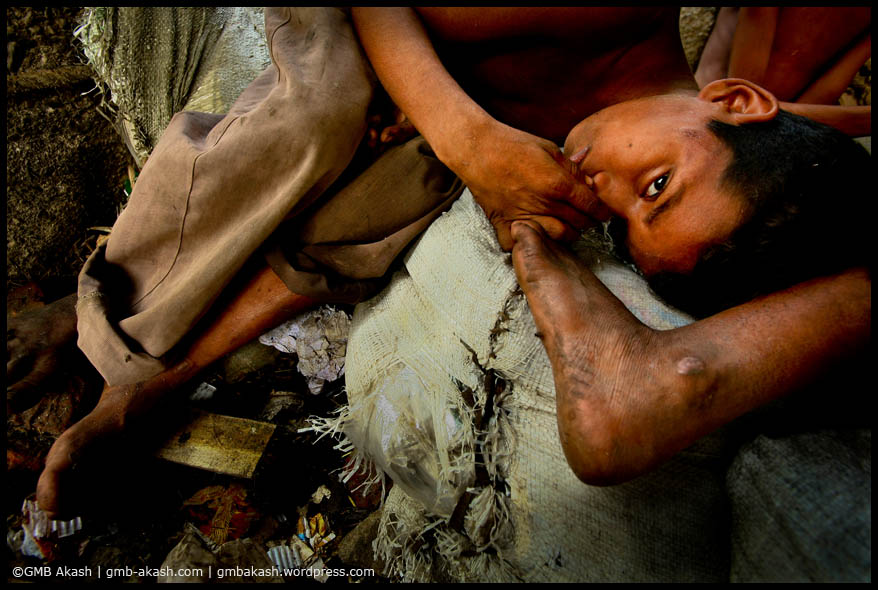
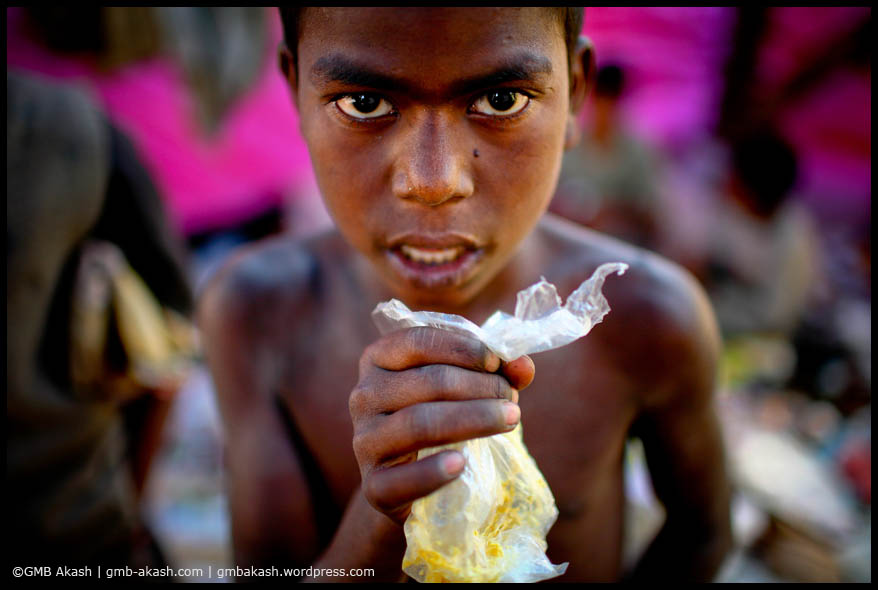
Drug addiction is increasing among the street children who live without a family, love and care. Bangladeshi youth are ‘huffing’ shoe glue, a drug locally called ‘Danti’, which is seriously harmful to mental and physical health. Up to 17 percent of street children in capital Dhaka are addicted to drugs. Children as young as 10 years old are also experimenting with alcohol, phensidyl, Heroin, Baba, Ganja, pethedrine, and other forms of available drugs. For managing the money for drags these children spends all their earnings on drugs. Some time they beg whole day in the street and end of the day spends everything on drugs.
drug users (14)

drug users (3)drug users (17)

IMG_9355-3

drug users (12)

“Bitter experiences are there too. I visit all danger territory where these addicted people living senselessly. Few of them try to beat me sometime, few of them tied me with their arms and cried and cried, few of them burst out in depression and few of them wants to end their sufferings. But this is cycle of unbearable torment which has no end. In a world with chaos and hunger, everything becomes a guerrilla struggle. It becomes almost impossible to save lives or grow dreams sometime. But yet these lives deserve our affection, attention and sympathy. No medicine is as effective as love to them. “– GMB Akash

Drug usuers(5)

drug users (15)

drug users (13)

Leftover from History

This is not just a story of poverty and despair. Poverty is not all that holds them back. Every day, they are willfully denied an education, opportunities, a future, and an identity. This is the story of a people whose lot it is to only exist as numbers in ration cards, relief programmes and slum-arson stories. This is the story of the Biharis of Geneva Camp. A community of over 160,000 people who have lived like animals for the last 40 years and will likely live and die as animals in congested ghettoes at makeshift camps and shanties all over Bangladesh. This is the narrative of the Biharis of Geneva Camp.”

– Gmb Akash

A Documentary by Gmb Akash

© GMB Akash/ www.akashimages.com

‘Geneva Camp’ is just one of the 70 camps all over Bangladesh set up immediately after the Liberation War of 1971. In 1971, the Biharis were a torn community. The tragedy of the Bihari community unfolds as far back as 1946 — the year communal riots in Bihar tore irreparable divisions through India — with thousands of Muslims massacred in an organised pogrom that added momentum to the movement for the partition of India. This resulted in a separate homeland for the region’s beleaguered Muslims. Between 1947 and 1952, families by the thousands left their ancestral lands to take refuge in the erstwhile East Pakistan.

© GMB Akash/ www.gmb-akash.com

© GMB Akash/ www.gmb-akash.com

During the Liberation war in Bangladesh in 1971, the Pakistan army, sensing this divide, recruited some Biharis to fight the rebellious Bengalis. Whether they supported the Pakistan army or not, many Biharis remained neutral in 1971, shy of taking sides with their local brethren. Thus the division widened in those tumultuous years leading to the sub-human “ghettoisation” of the wretched children of a lesser God. After the war in 1971, the International Community for the Red Cross intervened and found out that most Biharis wanted to migrate to the truncated Pakistan. Over half a million registered “Urdu-speaking” Pakistanis found a voice at the high level Simla pact of July 1972 and later an agreement was reached in 1973 between Pakistan, India and Bangladesh on this issue. As per the agreement, the Bengali prisoners were released and sent to Bangladesh. However, not all Urdu-speaking Pakistanis were repatriated to Pakistan. Even today, hundreds of thousands live in Bangladesh in camps as non-citizens.

© GMB Akash/ www.gmb-akash.com

© GMB Akash/ www.gmb-akash.com

People are calling them in so many names. Bihari’, ‘Maura’, ‘Muhajir’, ‘Non-Bangalee’, ‘Marwari’, ‘Urdu-speaker’, ‘Refugee’, and ‘Stranded Pakistani’. But they only want one identity that is: human.

© GMB Akash/ www.gmb-akash.com

© GMB Akash/ www.gmb-akash.com

Here, the rituals of life, death, triumph, hope and misery of each family, packed into 8 x 8 little boxes. There are only 270 toilets for a population of 25,000 and the numbers increase daily. The living environment of the camp is very deplorable. It is unhealthy, dirty, damp and unhygienic. This condition exists in other camps throughout the country. The municipalities/city cleaners never enter the camps to clear the garbage. The Bihari camps have almost no educational facilities. Throughout the country, only 275 of the 19,000 children in camps go to school. Only six of the 77 camps have a school. Most of the people make handicrafts or repair cars to make a living. Into the filthy rooms – homes and workshops rolled into one – women and men were busy working on brightly coloured saris. From about 1,600,000, only 60,000 are thought to register in the voting system in 2008, but in reality, those in the camp are denied the right of applying for a national ID card. Without citizenship, they cannot even obtain legal housing, so most live in 66 camps packed with people and livestock scattered across the country, including Geneva Camp.

© GMB Akash/ www.gmb-akash.com© GMB Akash/ www.gmb-akash.com

© GMB Akash/ www.gmb-akash.com

Geneva Camp was built in 1974 by the Red Cross to help assist the new generation of stateless people.  The older generation complains more than the younger ones, who are better integrated and bilingual. Free of the baggage, the younger generations are far more ready to become Bangladeshis: 70% of the people want to stay in Bangladesh, 17% want to go back to Pakistan. Despite recent progress in voter and ID registration, however, 37 years of being unrecognized have left the Biharis living in abject poverty and vulnerable to discrimination.


© GMB Akash/ www.gmb-akash.com

© GMB Akash/ www.gmb-akash.com

“Geneva Camp turned out to be a bordered little inferno located next to fairly well-to-do neighborhoods and commercial areas. Human spirit, however, knows how to counter the forces of nature and history. Inside the camp, little Bihars had been recreated with the memories and longings that the migrants are well known for.  Still the government does not know how to handle it. No one does. The government has not picked it up. Civil society has not picked it up. These people have been left to fend for themselves.”

– Gmb Akash

© GMB Akash/ www.gmb-akash.com

© GMB Akash/ www.gmb-akash.com

‘Travel Junction – Part I’

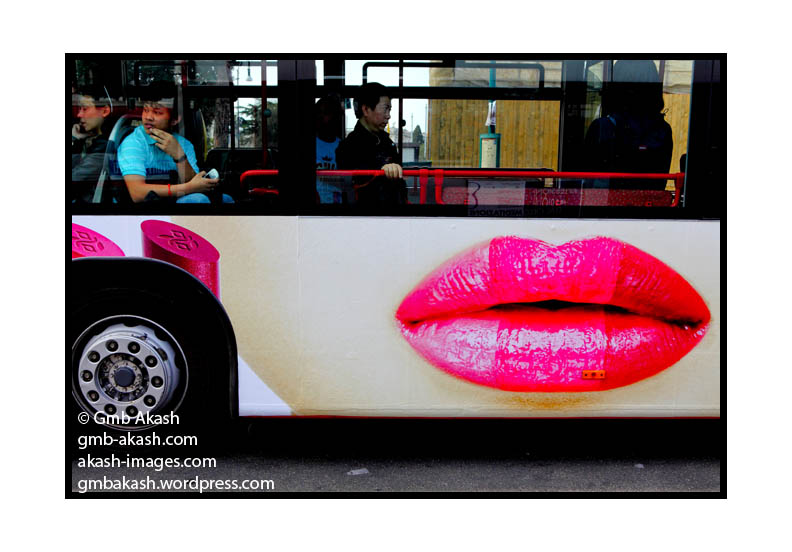
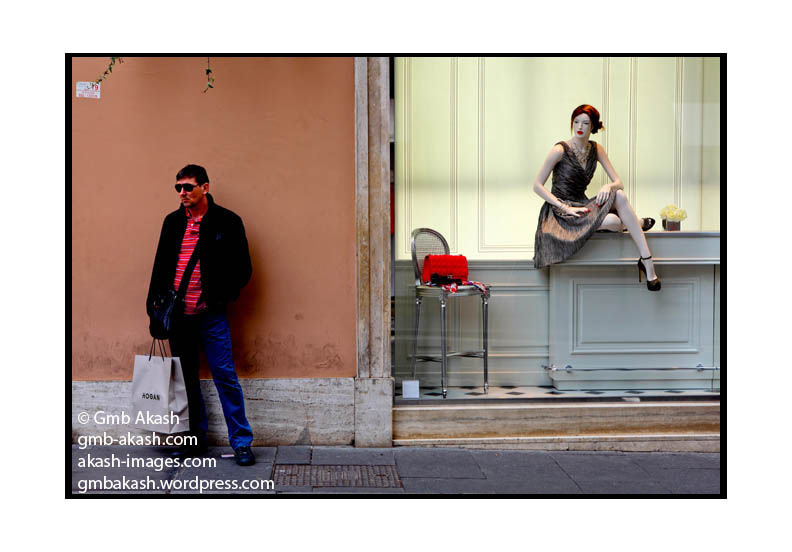
“God is too busy, Can I help you?” stepping into the City of Italy, I first saw this hanging poster in a coffee shop. This is the ever lasting impression on me about the country. People are so charming, lively and enjoying every second of life.  After arrival, by dropping my luggage, I lost myself with a tiny bag and my camera to explore the city which is new to me in every visit. My destinations were Rome and Venice. Where, Rome is a romantic city where couples are passionately showing their feelings of love that couldn’t be contained. The art and culture of the city has been admired worldwide for centuries. From Rome and Venice I took all the images which hit my mind to store these treasures in frame” 

– Gmb Akash

  Welcome in the city of illusions, and the city of yearning. Welcome to Rome, a place with so much art, so much history and so much beauty.

© GMB Akash /www.akash-images.com

© GMB Akash /www.akash-images.com
© GMB Akash /www.akash-images.com

© GMB Akash /www.akash-images.com
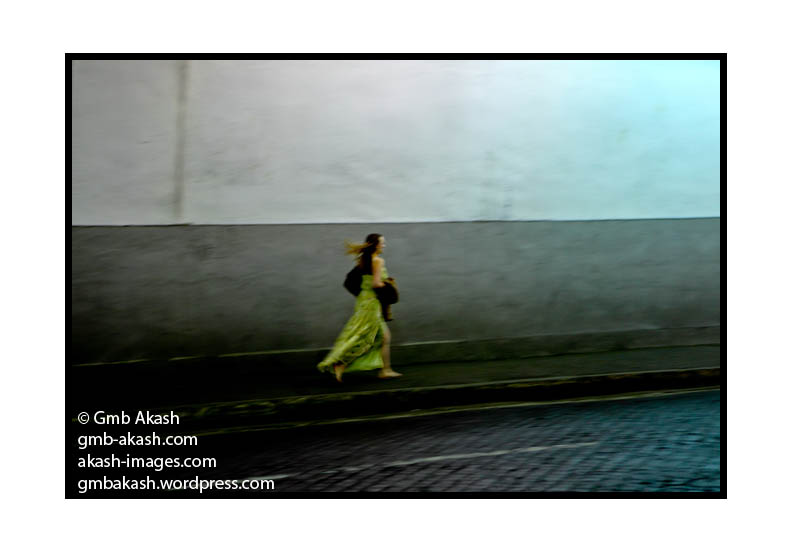
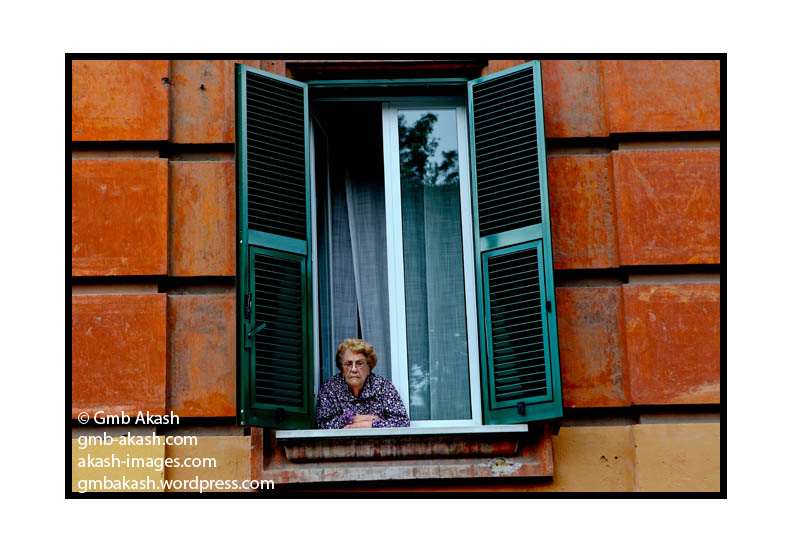
I discover Rome, as a silent and shiny heritage. Strolling in Rome means capturing its soul, amongst age-old buildings, splendid monuments and numerous churches that bear witness to an incomparable millenary history that will charms me.  But for me as a photographer, wherever I go I try to see closely only people. So, I move from places to places and captured some human souls into my camera.

© GMB Akash /www.akash-images.com

© GMB Akash /www.akash-images.com

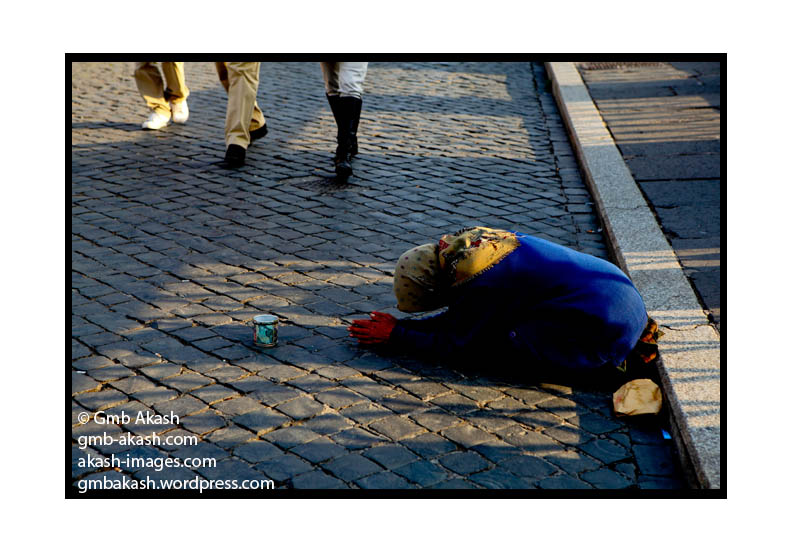
Walk the cobbled streets between centuries-old ruins, drink too much coffee, browse heritage markets and grand museums, and all together I passed time by eating too much gelato. I stopped by where I saw homeless people, who were tirelessly moving places from places. My heart poured with sadness to feel that in the advent world of Europe some people are still missing the minimum thing from this one of the best cities of the world.

© GMB Akash /www.akash-images.com

© GMB Akash /www.akash-images.com

© GMB Akash /www.akash-images.com

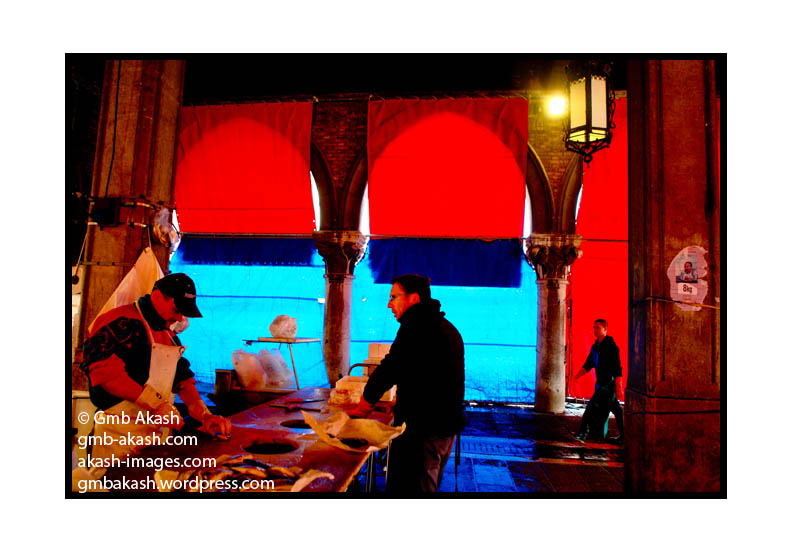
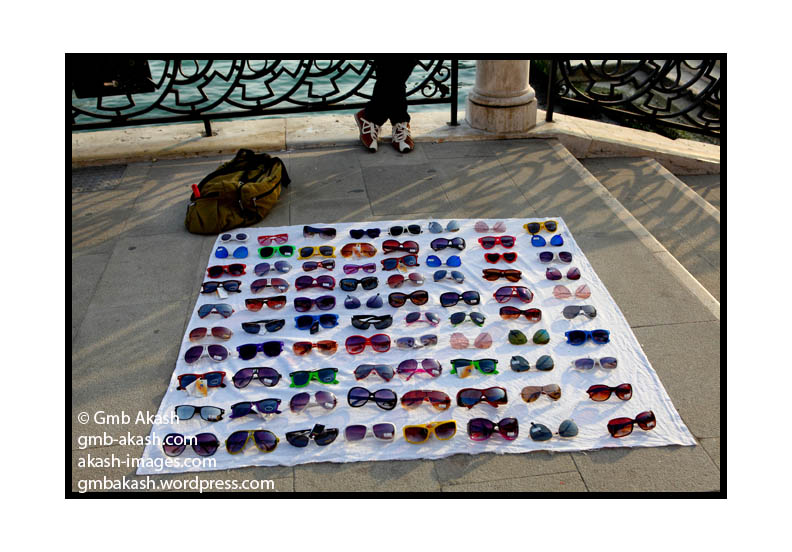
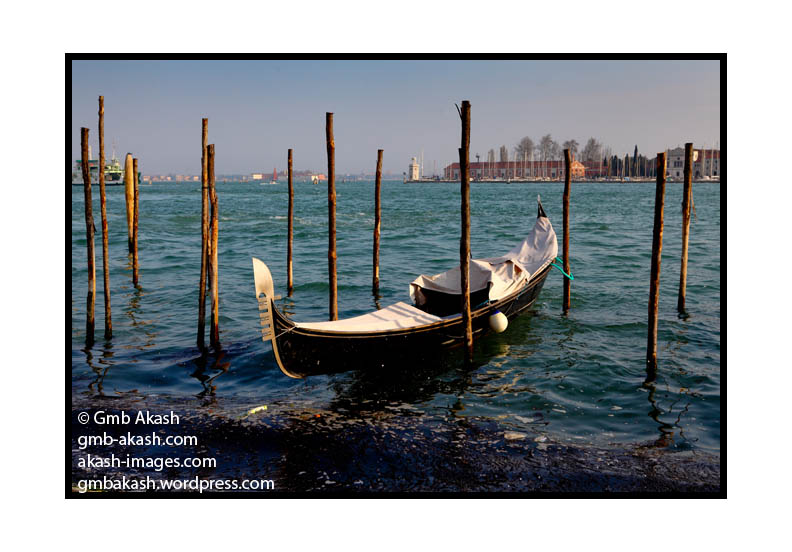
Venice is an extraordinarily beautiful city. When I came to Venice, that was a totally free day to revisit sites, shop or just sit in the square enjoying a Strega and watching the people and pigeons. I meet lot of Bangladeshi in Rome and Venice. People are doing different kind of business to survive here. By looking people all around me, my camera was not taking rest but even though I fill I didn’t take enough images. It seems as if at each step I encountered some aspect of the city worth admiring. 

© GMB Akash /www.akash-images.com

© GMB Akash /www.akash-images.com

© GMB Akash /www.akash-images.com

© GMB Akash /www.akash-images.com

While I was taking few minutes break I met an old lady passing time with her dog. She was taking pictures of the dog and talking with her. The old lady and her companion leave a lonely feeling on me.

© GMB Akash /www.akash-images.com

© GMB Akash /www.akash-images.com

© GMB Akash /www.akash-images.com

© GMB Akash /www.akash-images.com

I treasured all these moments with me. I am a passionate traveler. Traveled has availed to understand depth of life. From this travel Junction I put a note in my dairy that: Do not take a single day for granted. Life is precious!

-GMB AKASH

© GMB Akash /www.akash-images.com

© GMB Akash /www.akash-images.com