Smoke and Ashes

Rozina counts every day for six months running. Her family starts working long before the sun rises even when her small kids are remaining in the deepest sleep. She feels bad about calling them for work but like every day she cruelly has to do it. Everyone comes to have breakfast when the rice is still in the process of cooking. She rapidly waves her hand and lets the fire rise. During this time she quietly thinks about their time in the village that is far far away from this isolated brick field. She recalls her abandoned home and acutely feels a need to see the village sooner. But her urge quickly vanishes when she also remembers those days of starvation. Jalil sleeps in the bed that is made by gathering brick after brick. Rozina tried to hide those bricks by a flowery bed cover. Razina and Jalil have been married for ten years. Along with their five-year daughter and six year old son her family comes to work in this brick filed for six months in every year. 
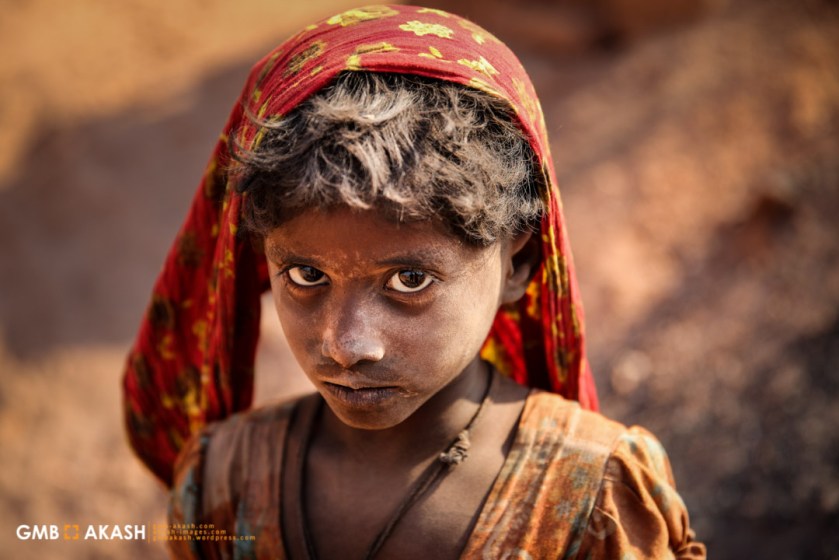
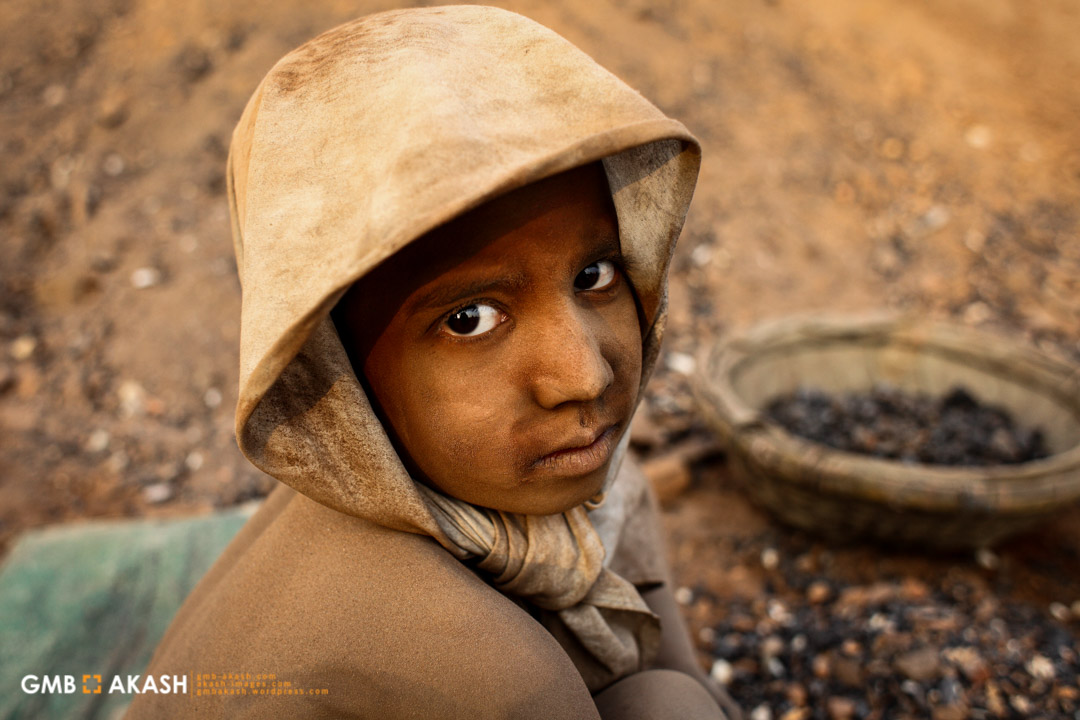
Five years old Sadia is working in the brick field for first time. Along her, seven members of the family are serving in the brick field to repay their loan. Sadia’s job is to dry 5000 bricks every day. For such seven days work she weekly gets 250 taka ($3). Sadia who once used to be naughty now hardly talk. She only smiles when after working she finishes collecting coal for her family.

akash (2)

akash (6)The houses that have been built by brick field owners are home to 100 brick field workers’ families. Just like Rozina they are living in hope of returning to their village one day. No one decorates their house. If a family buys any new item it goes into a box and it remain there until they get a final call to go back to their real home in the village. Rozina’s red bangles, her daughter’s new shoes, boy’ toy; everything goes into the trunk. She also keeps some precious things of her mother-in-law who dies last year from tuberculosis. Everyone says her mother-in-law died because she worked in the brick filed. Rozina does not believe it. Once the whole family strived for three days and no one died that time. Death is written by fate. This brick field is a way for them to survive; a way to feed themselves and their children.

akash (3)

akash (10)

akash (11)

akash (5)

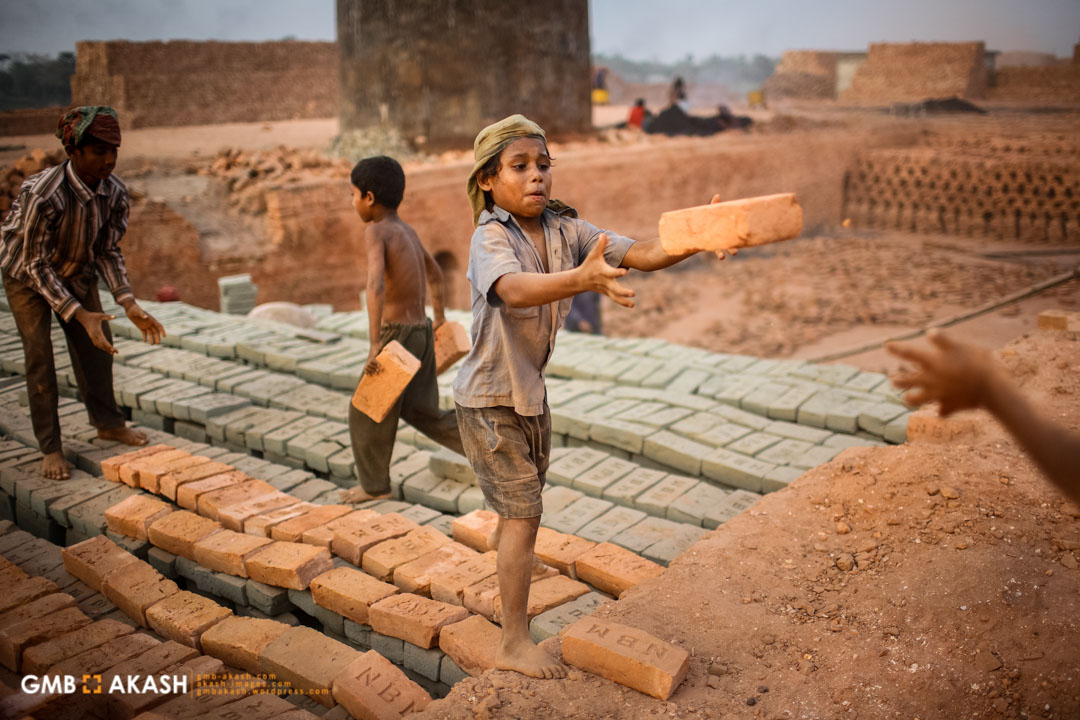
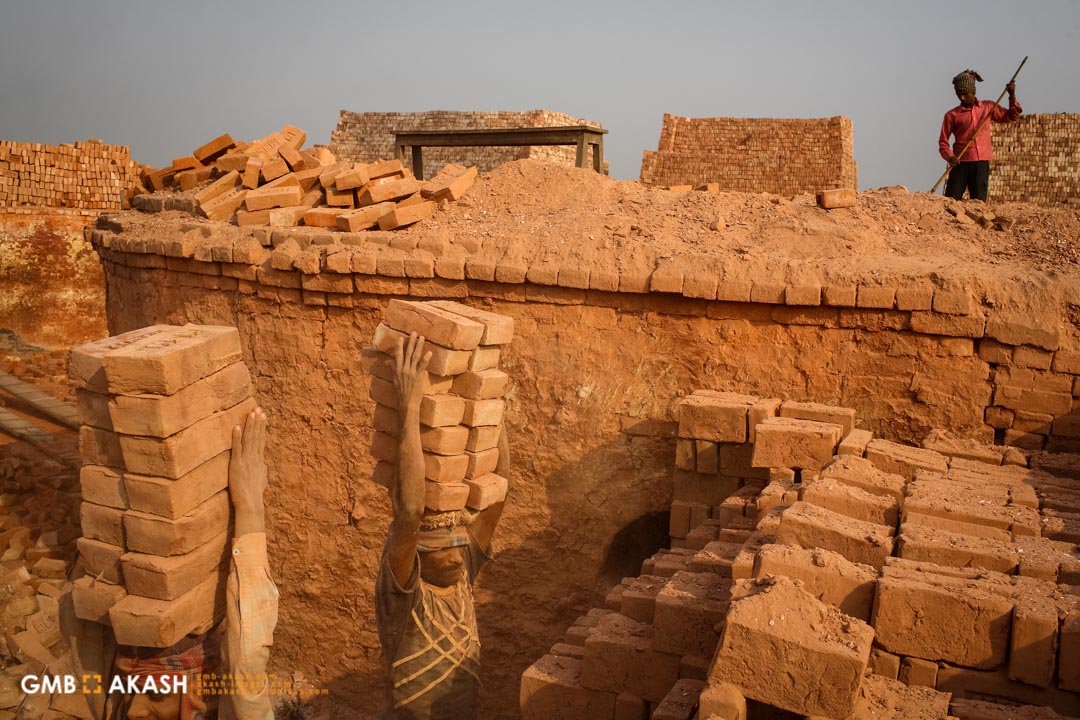
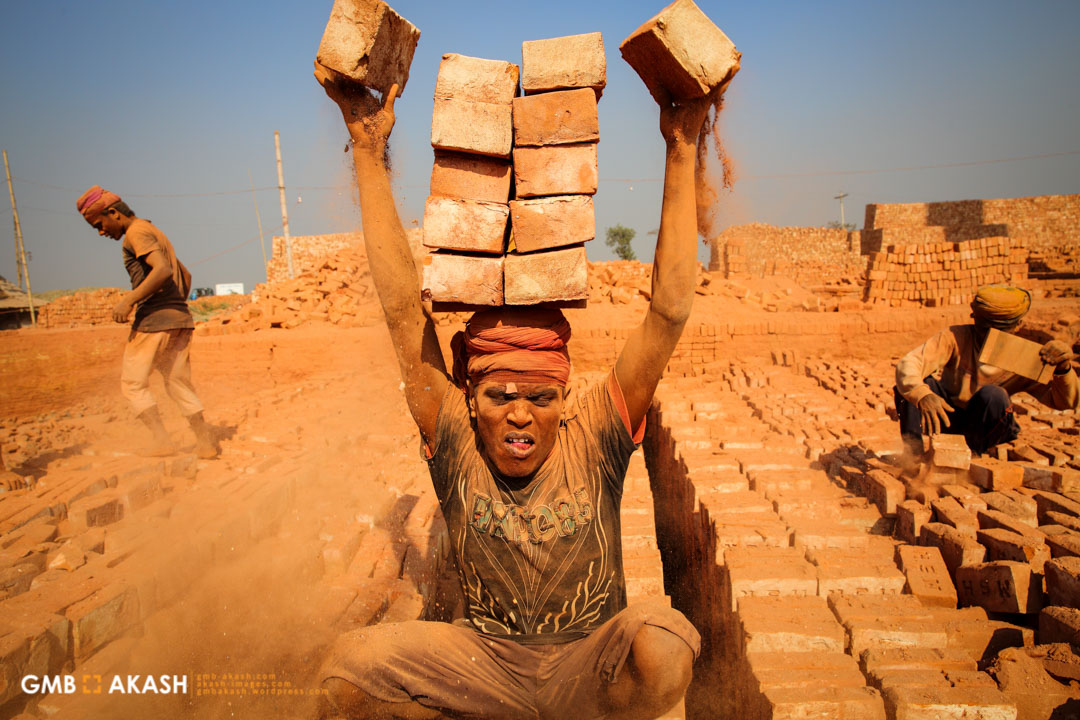
The sound of songs awakens the brick field locality. The brick field workers start working. They are used to listening to songs from their mobile phones. The rhythm of the songs motivates them to work. Rahmat Miah has been working in brick field for seventeen years. The day he started understanding life he found himself in the brick field. During childhood he used to help his father for transferring bricks or lining the piles. Till today he does not do any work other than working in brick field. After carrying 5000 bricks he can manage to earn 200 taka for doing the bazaar shopping for his family. Sometimes he could save a little amount after cutting all costs. But his body does not help him much. Every month he has to take leave for 4-5 days because of illness then he has to spend out of that precious savings for food or medicine.
akash (8)

akash (9)

akash (13)

akash (12)

Men, women and children everyone remains busy in the brick field. Sometimes when the sun goes up in the overhead a few older men or women fall to the ground. Then they get an hour break. They have to carry or shift or line up 5000-10000 bricks every day. However they loudly chat in a half an hour break. They smoke and talk about the economy and the politics. Women generally rest in silence and sometimes go to their quarters to do quick house chores. Children work continuously. It seems that working is some kind of important game. Small Minara who is just four years old collects coal from the brick field. Why does she collect coal? After a long silence she replies boldly, ‘This is my job’.

akash (7)

akash (20)

akash (23)

akash (15)

During the one hour lunch break they eat a lot. Three plates of rice and lentil is their daily lunch menu. Men who are living with their families eat with them; those who came alone to the brick field eat in groups of men. A few go to take a quick nap. This is a kind of moment when they will not speak or hear a single word. All are tired, very very tired. Life goes on; work starts again after break.

akash (28)

akash (16)

akash (29)

akash (14)

akash (26)

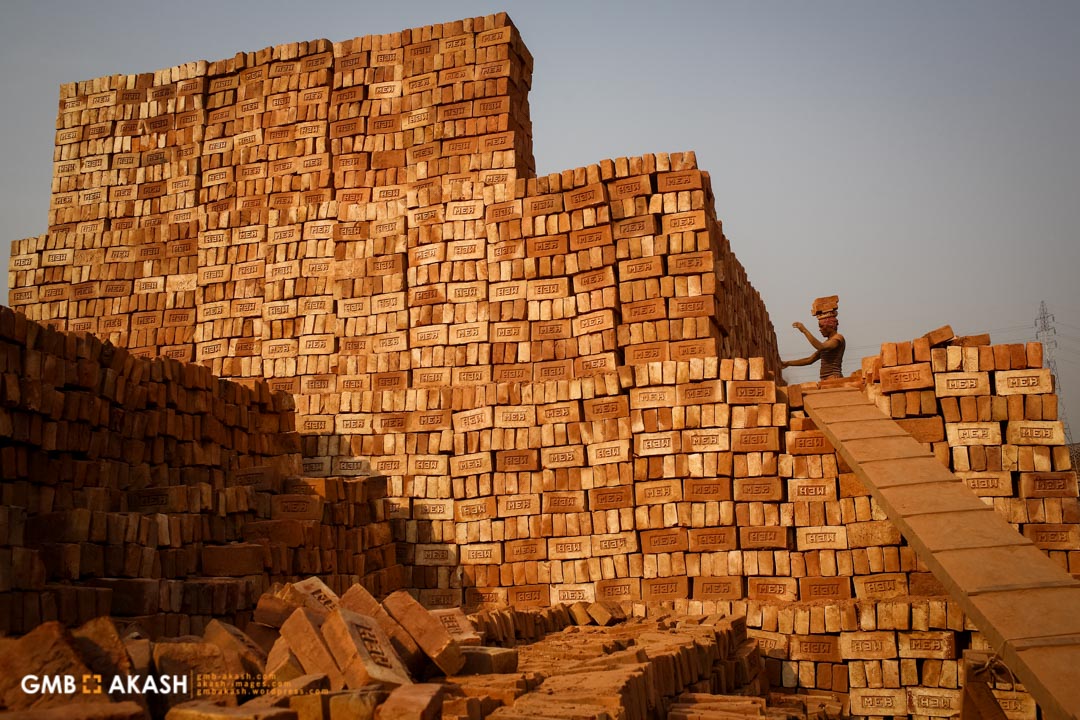
Smoke and ashes blow everywhere. Workers’ bodies turn black in smoke and ashes and their feet turn black like coal. Still they continue to work in a dreamless brick field. In the middle of this Rozina dreams to go back to her village. Rahmat tries hard to save a few pennies, the children continue to collect coal. Very Far from the town the workers of the brick field continue to work to build our urban world.

akash (27)

akash (22)

akash (24)

“Factories of Death”

garments (5)

garments (1)

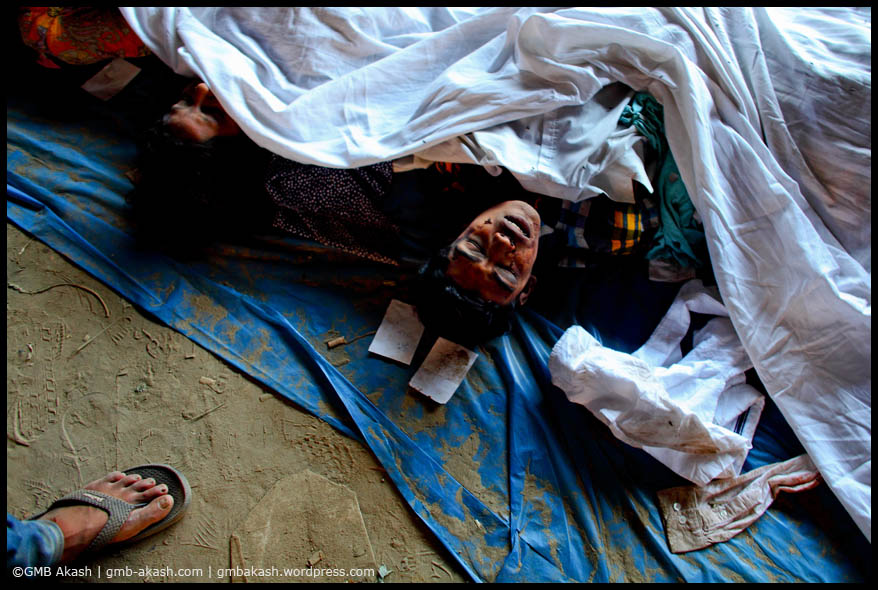
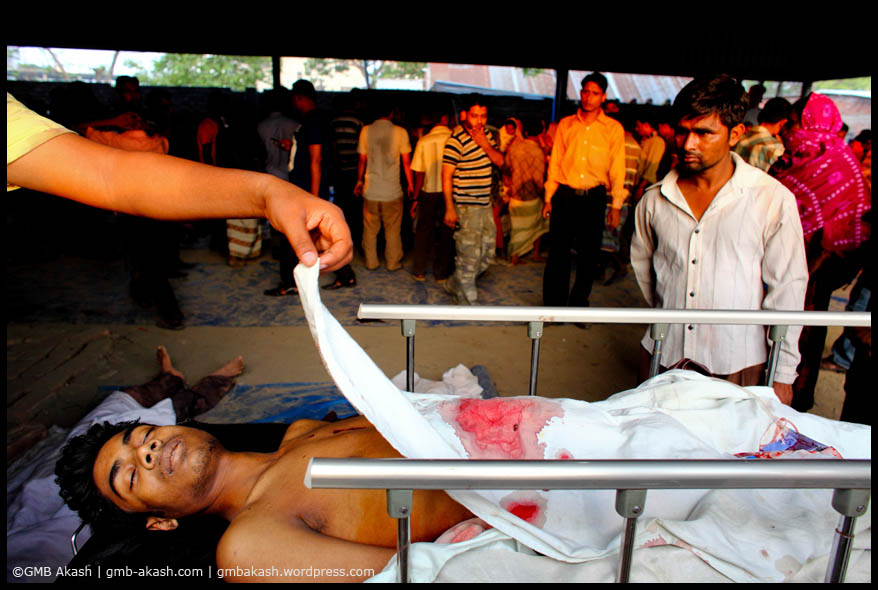
“Drinking tears now is a daily menu to the people whose life collapsed with the building Rana plaza. In a stormy day when I arrived at hospital door I pulsed by the melancholy I encounter. No rain was not the reason, it was the pain in ever face which will haunt everybody long. Following continual screaming of a young girl I found her requesting mother to a reluctant nurse. As soon as my camera clicks the doctor arrived swiftly, not sure seeing camera or may be reminding patients call! Looking at hundred wounded bodies and hearing their screams it was hard to stand in the middle. But it is more important to share a bit of their unbelievable suffering in a small form. Thus my camera take place and I share their pain among you all”- GMB Akash

.

garments (11)

Khadeza (18) was a kind of girl who laughed more than she talked. Her mother used to beat her for excess laughing. Now everyday her mother asks Khadeza to smile for a while but Khadeza only wipe off. Doctor prescribes her not to do any hard work at least for next six months. She will not be able to do any hard job in future. Her mother is not sure how long it will take to recover. She is one of the survivors of Rana plaza.

garments (16)

It will take three more months to get physical recovery and six months she will not be allowed to do any hard work. Eighteen years old Shapla was working in textile factory for three years. She was in third floor while rescuer rescued her. Her one hand cut off while she was inside. Living with Several scars in all over her body, she sometime cannot recall her name. Her Husband Mehedul was inside the building for 72 hours but he came out harmless.

garments (2)

Rebeka (20) been rescued after two nights of the incident. Dead body of her colleague was stumbled on her shoulder for a night. People threw water from the only hole and she sip water from the floor. Doctors cut her one leg and another leg is badly injured. Still she screamed full night in imagining the hospital building is falling on her. Her husband is beside her but helpless. Her mother and grandmother who worked in the same floor are missing and she is unaware of the news.

garments (12)

garments (13)

Seeing them in the bed of hospital, no one can recognize that these workers – once upon a time used to work 7 am to 12am of the night. Life has treated them bitterest. Pains are unbearable to make anyone understand of it. Stepping out from the hospital I heard a woman telling that these workers will be much benefited. They will get 5 lac tk so this comes good for them. I can not stop myself and turn around, told her, can you cut off your hand if I give you 5 lac? I wonder how heartless some people can be!

garments (3)

My journey continues so as the rain. When I stepped in the residential area of Rana plaza’s garments workers, I met Isa Mia, a boy who lost his brother in the incident. Her mother was crying in the door and after 20 days of the incident she can not eat anything properly. Isa himself a survivors but not depending much he taken me to meet Marium, the single mother who lost her hand. One after another I meet with all. I have dedicated my fees to them which come from published textile stories in different publication of mine. I encounter the pain. the urge, the pathetic emotions which words can never justify. I want to believe one day will come when these people will see their life in the ray of a sweet dream. & then I realize this is non sense. The reality is they will suffer and this is destiny. But I will run to them again and again, until I can take in some of their tears.

garments (9)

After losing her right hand Textile worker Marium (27) lost in despair. Single mother Marium never spends two tk for buying a hair band as she knows her two children’s future is in her hands. Disable Marium shouts at night afraid of feeling dead bodies of workers friends are circling her. She spent one night and two days in the 6th floor of the collapsed building while her right hand injured under pillar. She started her job four years ago in that time she received 1200 tk monthly, now she lastly get 4500 tk monthly wage in New Wave star Ltd. a factory which was in 6th floor of Rana plaza. She lost her stability to think about her future. Still after near one month of the incident she did not receive any compensation from anyone instead of her last month salary.

garments (8)

Blue is Aleya’s favorite color. In the morning she wore her new blue dress and told her young sister if she die who will wear the dress! Aleya’s (18) family was fully dependent on her income. She wants to educate her younger sister and alert her mother not to send her in textile factory. Heart patient father and kidney problem of mother forces Aleya to start work in her early age. Her mother asks her to married off soon but she reluctantly said straggle of her life will never come to an end. There was no money at home and she told her mother instead of dying in hunger it’s better to work in a cracked factory. She was sure God has given them enough sorrow and nothing will happen to her. Her believe proved wrong. Her family cannot even find her dead body parts after 17 days of searching everywhere. Neither have they received her salary nor compensation.

garments (15)

A room call home is never a place of relaxation for textile workers. Often a room shared by 5/6 workers offer them the untidy floor to sleep. Their salary won’t make them able to go in a better place still after 5-6 years of their job straggles.

garments (6)

garments (7)


“Even after losing one leg in the terrible incident the worker is begging for a sewing machine. She said, “Still I have two hands. & my children are hungry”. Alike her thousands workers keeps their dreams alive in their heart and goes to work on time. In spite of everything they are straggling happily to get a dream future knowing dream is a dream. But they never imagine nightmares will replace their dream and they obviously fall in concrete mattress. Incidents of Tazrin/ Rana plaza might wake up them from their dream. But still they say, hunger is ugly than death”

– GMB Akash

garments (14)

‘Low-priced Slaves’

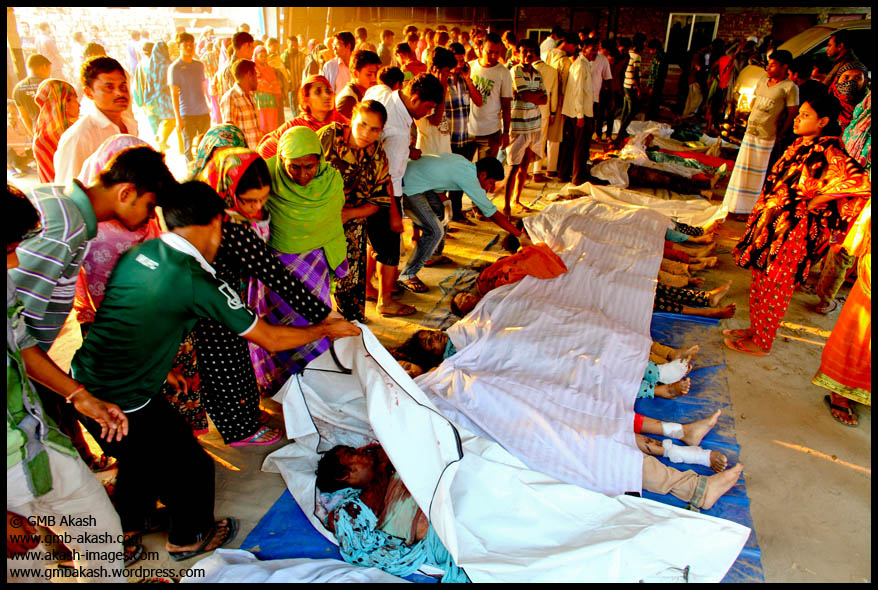
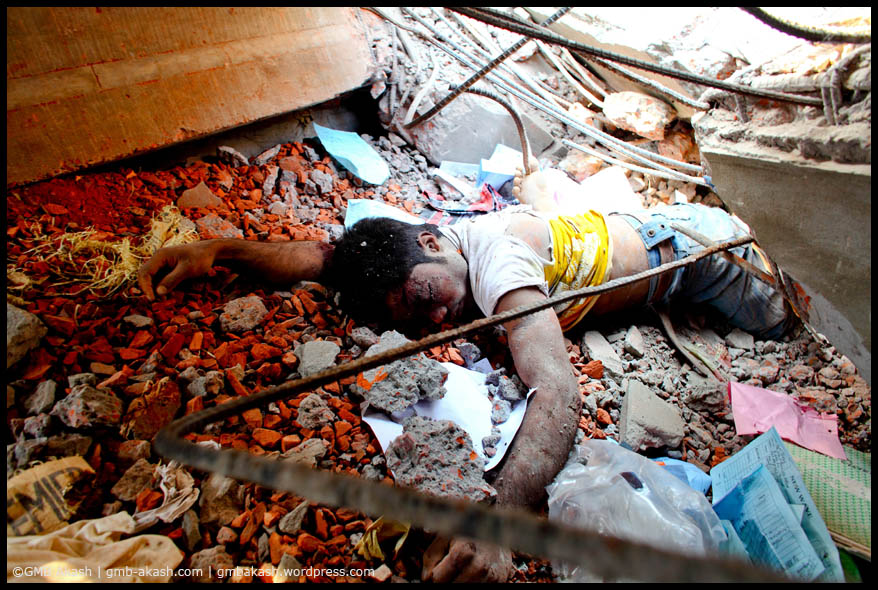
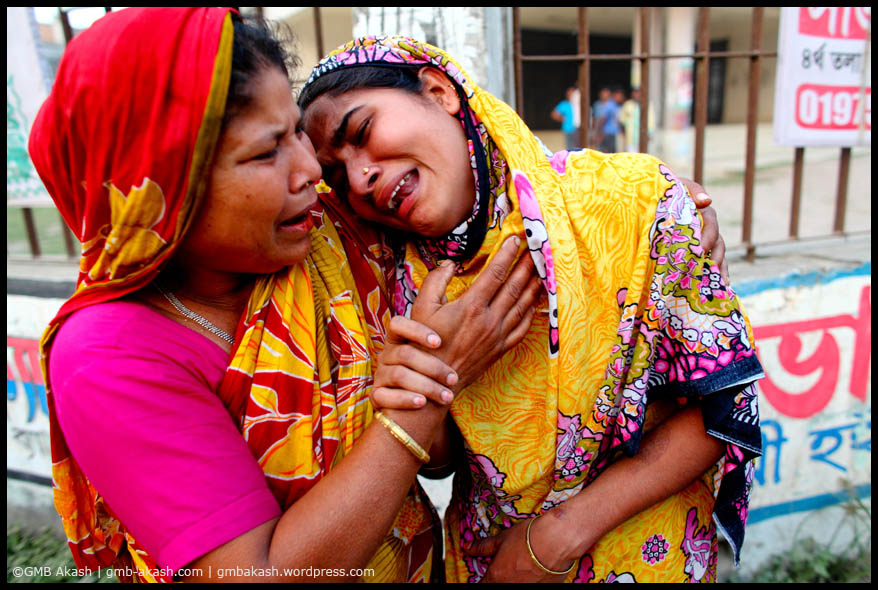
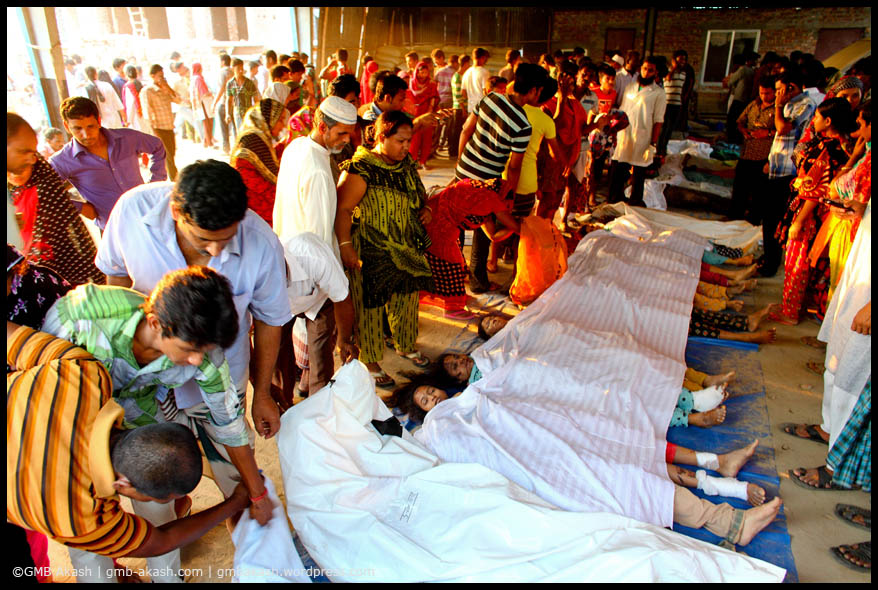
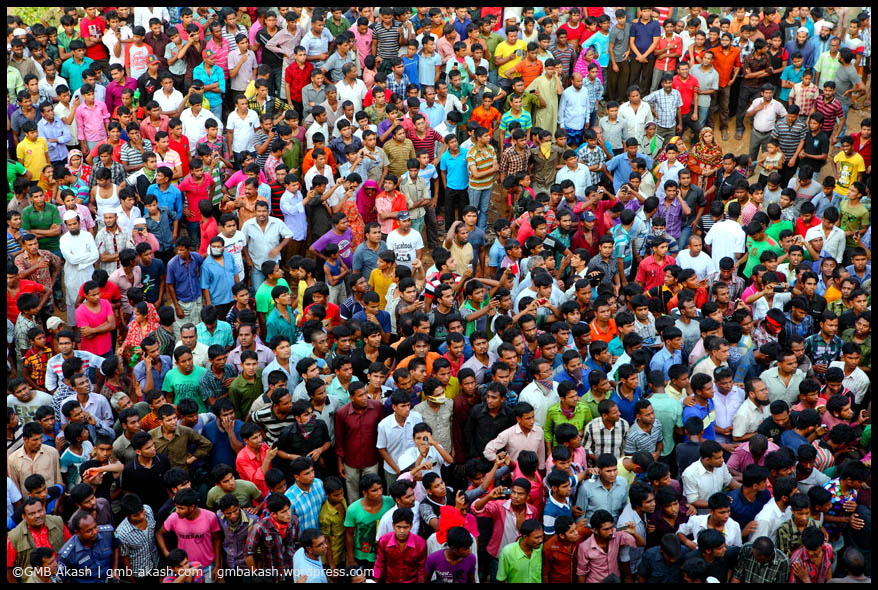
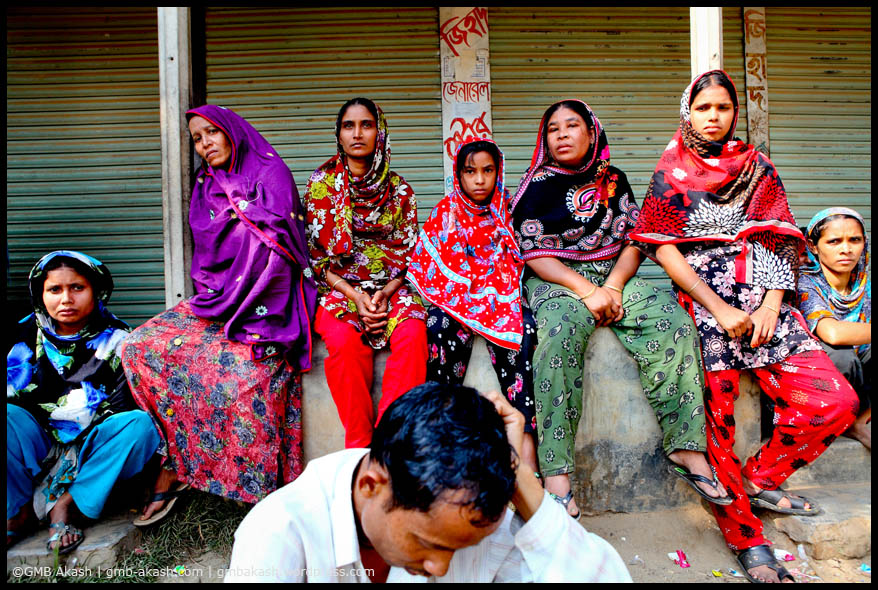
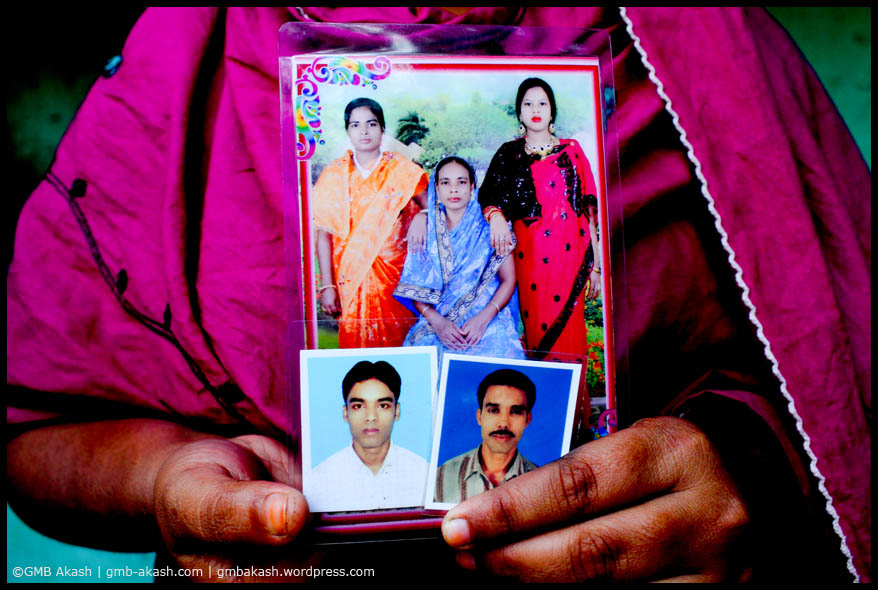
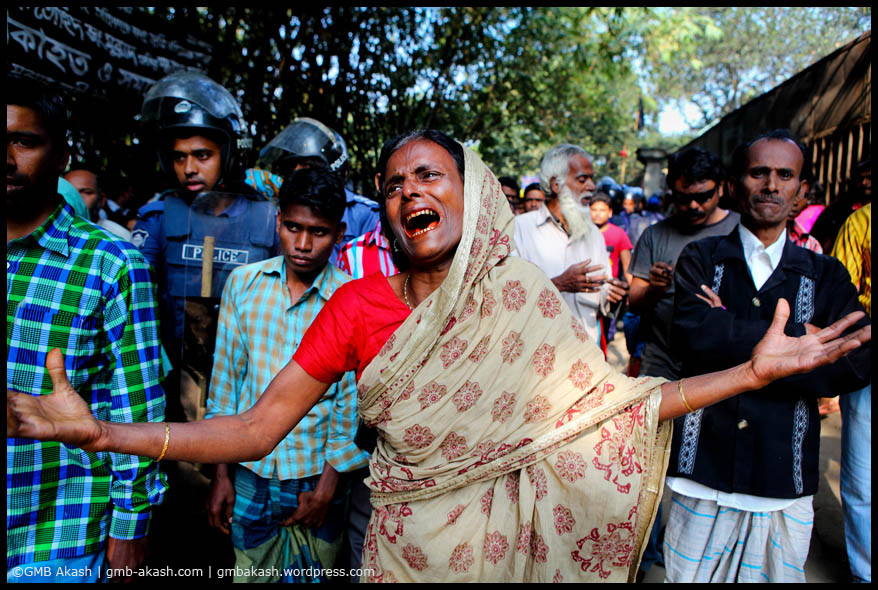
Nargis fainted three times while she could not find her mother in the derbies of nine storied building. It’s been a day and a night she is frantically checking around hospital, in each corner of destructed building and hundreds smashed dead bodies. But where is Nargis mother’s existence? Hundreds of weeping mother, father, sister, brother, husband, wife and children were like mad for searching their beloved faces. The population who are the backbone of the family, of the country their bones cracked under wretched concrete. Knowing still hundreds people are breathing inside the dreadful collapsed building helpless thousands mass people came out with their humanity. Rescuing living being or carrying out dead bodies but nothing evaporates tears of people who experienced such frightening circumstances. The deadly trap eat out lives of thousands workers who never might thought of loosing life as prey of capitalism greed. Many workers leave their breathe waiting to hear a call of rescuer. Many female worker’s hand or leg trapped under stone while they are still alive and asking rescuer to cut their hand and take off. What to do and how to do? The traumatized nation has no word in mind to speak. Sharif after finding cracked half body parts of his 21 years younger brother screamed “My brother never do any harm to any body. Why Allah punishes him, why? Because we are poor, we are useless to Allah, we are useless to riches, and because we are bloody workers”.

Rana plaza (1)

Rana plaza (11)

Some 3,500 people were in the Rana Plaza building in Savar, some 30km (20 miles) outside Dhaka, when it collapsed suddenly on Wednesday morning 24th April. The first three floors of the building, located in the Dhaka suburb of Savar, contained around 300 shops. At least four garment factories — New Wave Bottoms, Phantom Apparels, Phantom Tack and Ethar Textile — occupied higher levels, employing around 3,500 people. Building showed cracks on Tuesday, but all garments workers forced to go to work on Wednesday threatening to cut off salaries. & the devastating accident happened

Rana plaza (6)

Rana plaza (8)

Rana plaza (4)

Local hospitals were overwhelmed with the arrival of more than 2,000 injured Textile workers. Victims were still calling for help from among the piles of shattered concrete slabs, according to rescue workers and volunteers, as hope began to fade for hundreds still trapped.  And the death toll had reached 400. After putting the conclusion that no more workers can be alive rescuer workers are now using heavy equipment to clear the site and officials expect the number of casualties to rise as hundreds of people remain missing.

Rana plaza (5)

Rana plaza (13)

Rana plaza (12)

Around 4 million people are employed in Bangladesh’s 4,500 textile factories. The industry generates 80% of the country’s $24 billion annual exports — making Bangladesh the world’s second largest clothing exporter after China — yet wages remain as low as $37 per month for workers spending 15-hour shifts in sweatshop conditions.

Rana plaza (3)

Rana plaza (9)

“What to describe and what to write! All I could see were dead bodies all surround me. A silent anger, unbearable pain and helplessness had frozen my finger to click. Besets dead bodies and their each drop of blood asking me to tape their vulnerable death memoir to show the people around the world, how painfully they left the world. And I can not rest until I can spread their pains of deaths. Shouts slaughtered under concrete. How many times we will remain mute and hollow out graves! Why world’s most innocent souls has to be always trapped as vulnerable victims! Their souls will never rest in peace until we know how dreadfully they died without telling their last wish”

– GMB Akash

Rana plaza (10)

Rana plaza (14)


Ashes of Souls

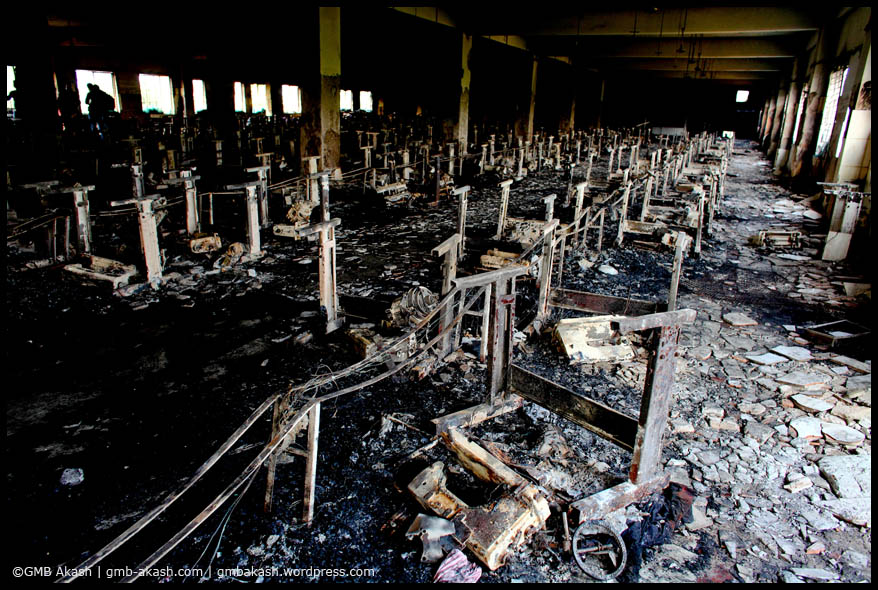
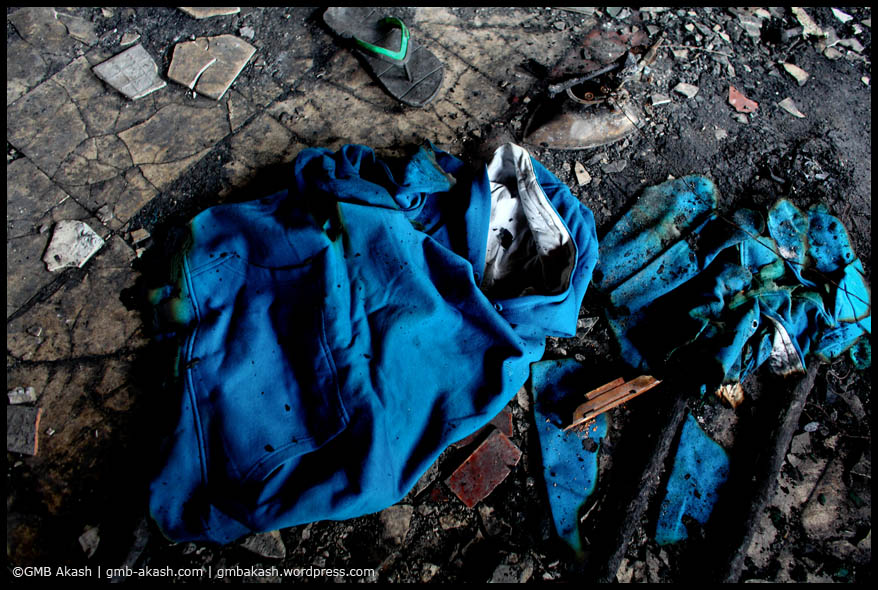
“A silent burial ground, where may be the ashes of wounded souls are still encircling. Broken pieces of brunt smashed tiles with countless busted glasses can tell the tale how staircases could not save hundreds of scorched living beings. Imagining myself at the place of these unfortunate garments workers who burnt alive, I felt vulnerable. Shoes, bangles or an unfinished ironed cloth in the stand or the half eaten evening tiffin are standing witness, how workers died helplessly. Pieces of glass bangles all over the floor, as mostly female workers had faced the tragedy, were witness of a violent disaster those no one of them even seen in nightmares. & thus by facing fire they lost their existence in burning blaze” – GMB Akash

textile (1)

textile (11)textile (9)

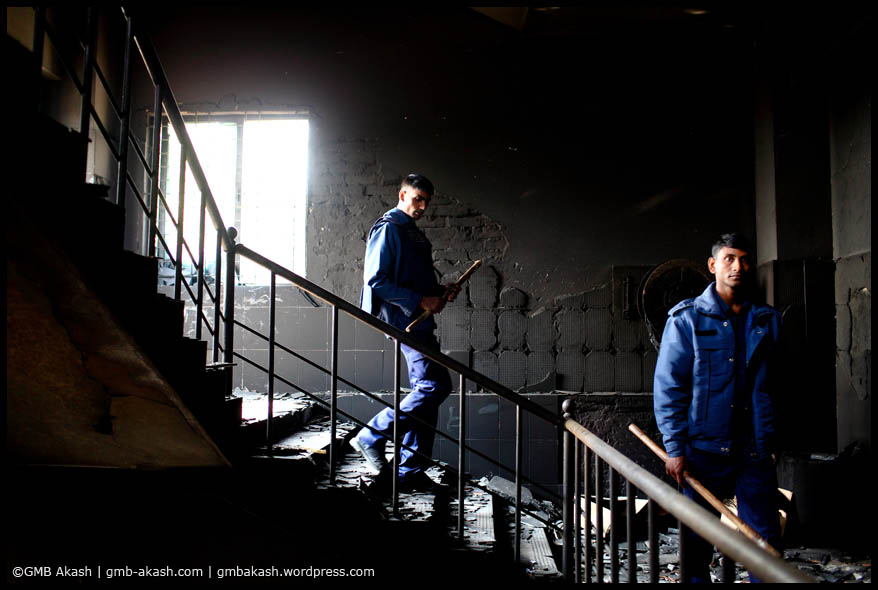
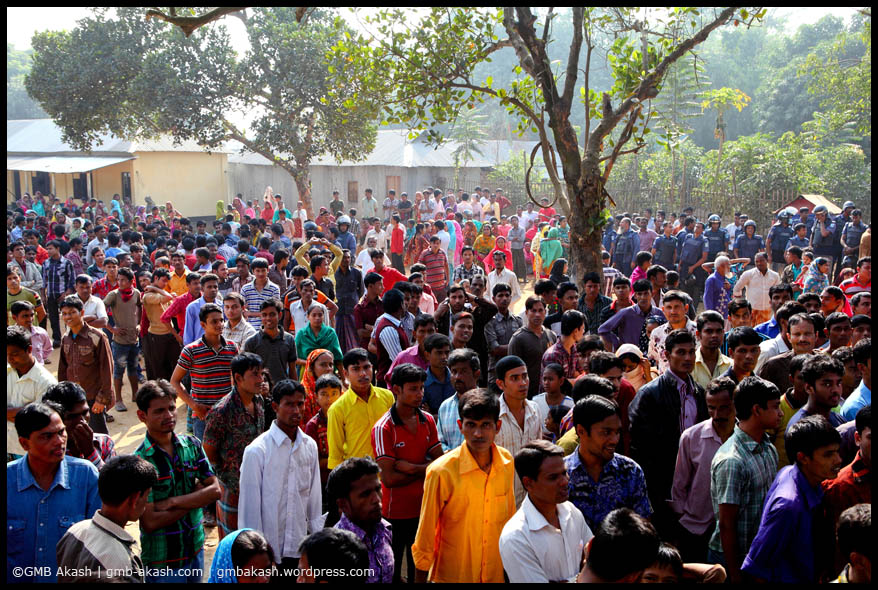
Tazreen Fashions, located in a rural area of Ashulia occupies a nine-storied building. The ground floor, which stored the factory’s raw materials, had the only entrance to the factory, with three staircases leading to other floors. The fire at the eight-story building of the apparel factory started on the first floor, quickly cutting off all three exits from the building. Survivors stated that at least one exit was locked while no emergency exits existed in the building whatsoever. Some workers tried to escape the fire by jumping out of the windows of upper floors – many of them died. Others choked to death in the thick smoke of burning fabrics. Many of the bodies the firefighters found in the ruins were burnt beyond recognition. Later it was estimated that more than 1,000 people could have been inside the building when the fire started. But survivors claims more. Even it takes more than two hours for fire fighters to arrive at the factory. Firefighters trying to reach the blaze were slowed because the narrow road leading to the factory made it difficult to get to the site and there was no source of water nearby. It took firefighters over 17 hours to douse the blaze at the factory, after it started on Saturday evening November 24. The fire at Tazreen Fashions Ltd, lead to the death of reportedly 111 workers, but witnesses and survivors alleged that the real number dead is possibly much higher.

textile (7)

textile (10)

textile (19)

textile (6)

textile (12)

Raziv is one of the Survivors of the tragic incident; he worked at fourth floor along 300 other workers that evening.  He said, “I smelt smoke and ran downstairs at third floor and found that the place was already full with black fumes and I cannot breathe properly. With the sound of crying women the electricity went off within 5 minutes and most of the female workers had no mobile phone atleast to see though the phone light. I accompanied by my three friends & went at the small room of the third floor where I was atleast 200 woman were standing & crying helplessly. With another worker, I broke the window of the room and give the place to female workers to go out but most of them was so afraid and cannot do anything. I cannot be selfish to fly alone and helped them to jump through. But as soon as the fire was increasing I run to the biggest exhaust fan of the floor, many women workers seated at prayer and many started losing sense. Only by hand, I broke out the fan but cannot jump. The fire was so scary that I lost my power, I called and cried to my brother, he just said ‘Jump!Jump! Then I jumped to the roof of a shed next to the factory and found myself injured at the ground! I survived but I had no money for my treatment and no one asked me to help, even after five days of the incident I am searching for my coworkers and had not get any money for my treatment. I come to the factory for my four months due wages, no expectation from these rich bosses.” Along Raziv, Few more fire survivors said, that most victims died of suffocation as the blaze started on the ground floor warehouse, trapping the night-shift staff.

textile (20)

In hospitals cases are alike. Injured workers hardly save themselves form fire, some lost their memory, some are in trauma, poor families has nothing to give them better treatment. Amongst huge numbers of injured, few are receiving treatment and rests of the survivors are not fortunate to get treatment except lying at home for money crisis. A survivor Kushi stated that, after jumping from the third floor she broke her legs and cried at least one hour for help but no one was there and eventually she lost her sense.

textile (16)

textile (17)

textile (15)

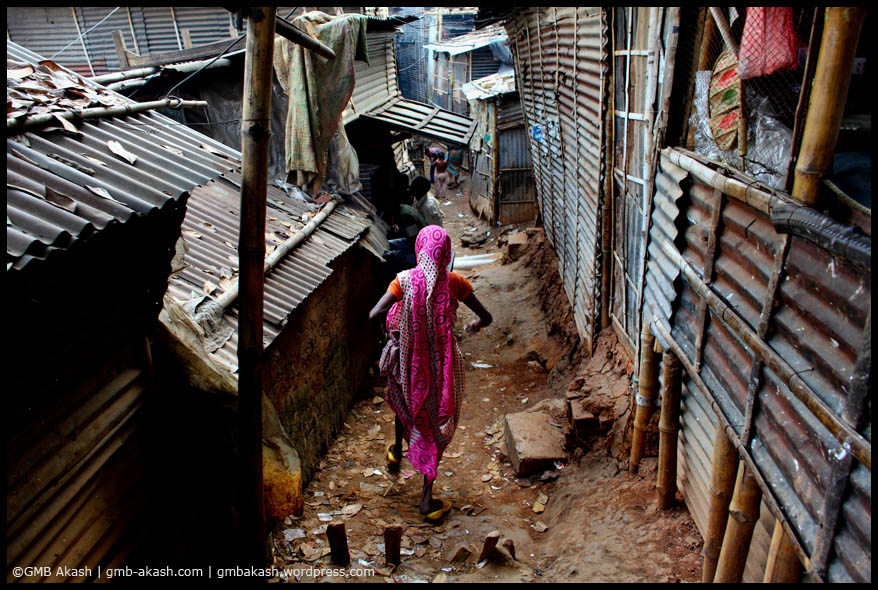
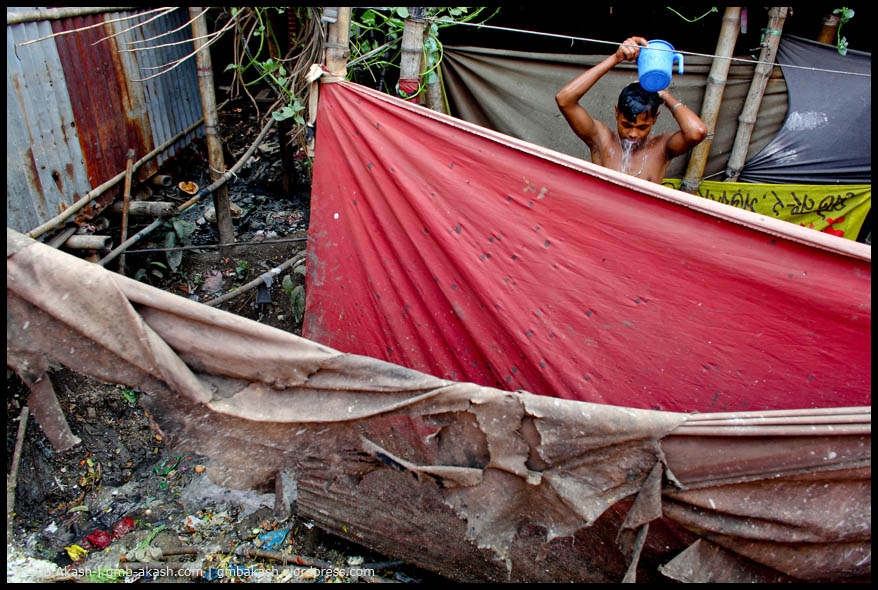
Inside the living zone of these garments workers are not rosy. Jhilpar Slum is accommodating at least 20000-30000 textile workers and alike this slums garments workers living throughout all industrial hubs with daily straggles. Rooms of 10 feet by 10 feet accommodate minimum four women workers which monthly rent is 3000 tk. One toilet and one kitchen are definite for ten families of the slum. But still after having this trouble, passing through narrow life lines women garments workers are appreciating their lives as an independent being but incident like fire in Tazreen fashions has break out all hidden frustrations of them.

textile (2)

textile (8)

textile (3)
Accompanying workers in the fight for their deserved salaries I also faced problems with police officers. They tried to stop me for taking photos and said many times that I am ruining my country’s reputation. Even in many cases the injured, victim’s families and workers faced continual negligence by police, local authority even after so much pressure from national and international media and having consolation from all over the world they had to fight for their due salaries. End of the day they knows they have to fight for their right after losing their dears ones and even facing fire may be easier than earning rights and justice.

textile (23)

textile (5)

textile (24)

Nilufar lost four members of her family. While she received call from her brother, she heard only shout, ‘Save us!” ‘Help Us’! The phone was on the line for 20 minutes & she helplessly heard the sound of wounded peoples and their mourning. She passed the whole night in front of the factory gate along her two little brothers. While rescuers had lined up all the recovered bodies on the grounds of a nearby school, Nilufar unzipped bag after bag, searching her mother, father, brother and sister-in-law. She said the charred human remains looked like chunks of coal, but no where she found any dead bodies of her lost dear faces. Police wants ID cards of these four members then she replied, “I cannot found their burnt bodies after running three days, where the hell I would find ID cards!’ The tragedy does not end here; they have a long future to bear the wound with them with a tragic memory in mind.

textile (14)

“While leaving the place I heard, a mother exclaims that her son’s blood demand Justice. We all know their sweats, their bloods asking answers. No, we can’t stands at more loss. No Space for Further burials. Each drop of blood, each drop of worker’s sweat asks JUSTICE. Nothing more, nothing less” – GMB Akash

textile (21)

textile (13)

textile (22)