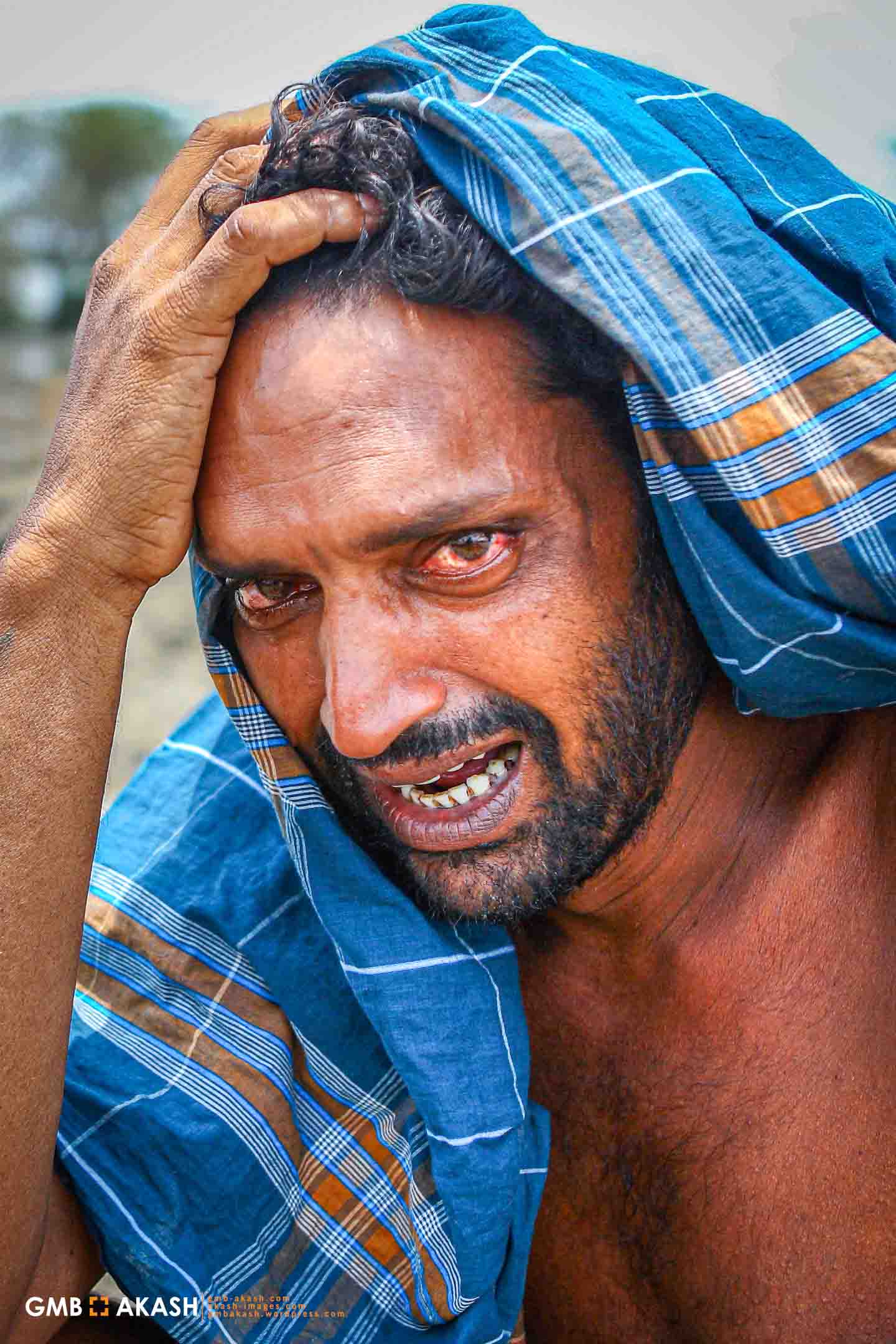
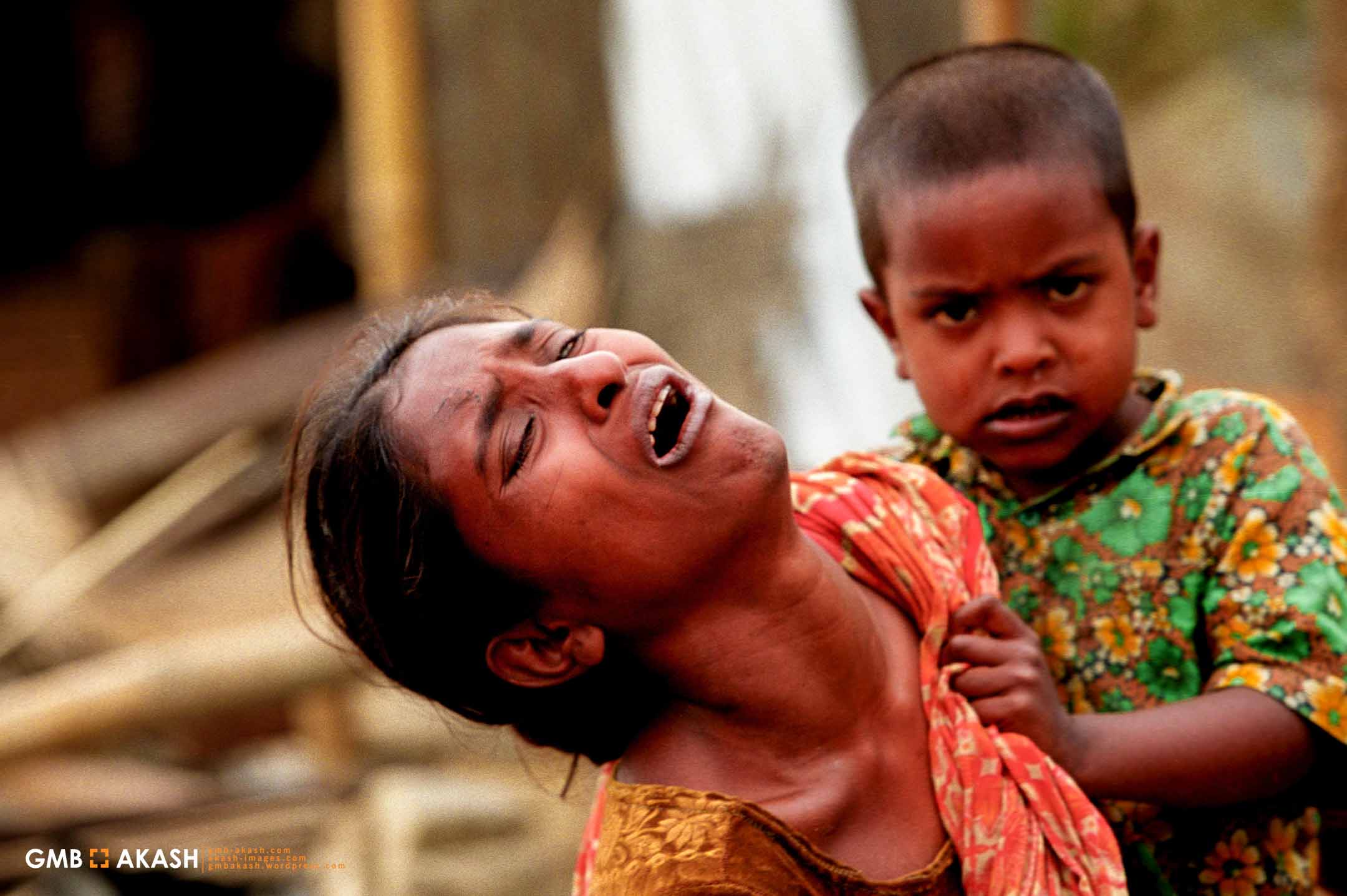
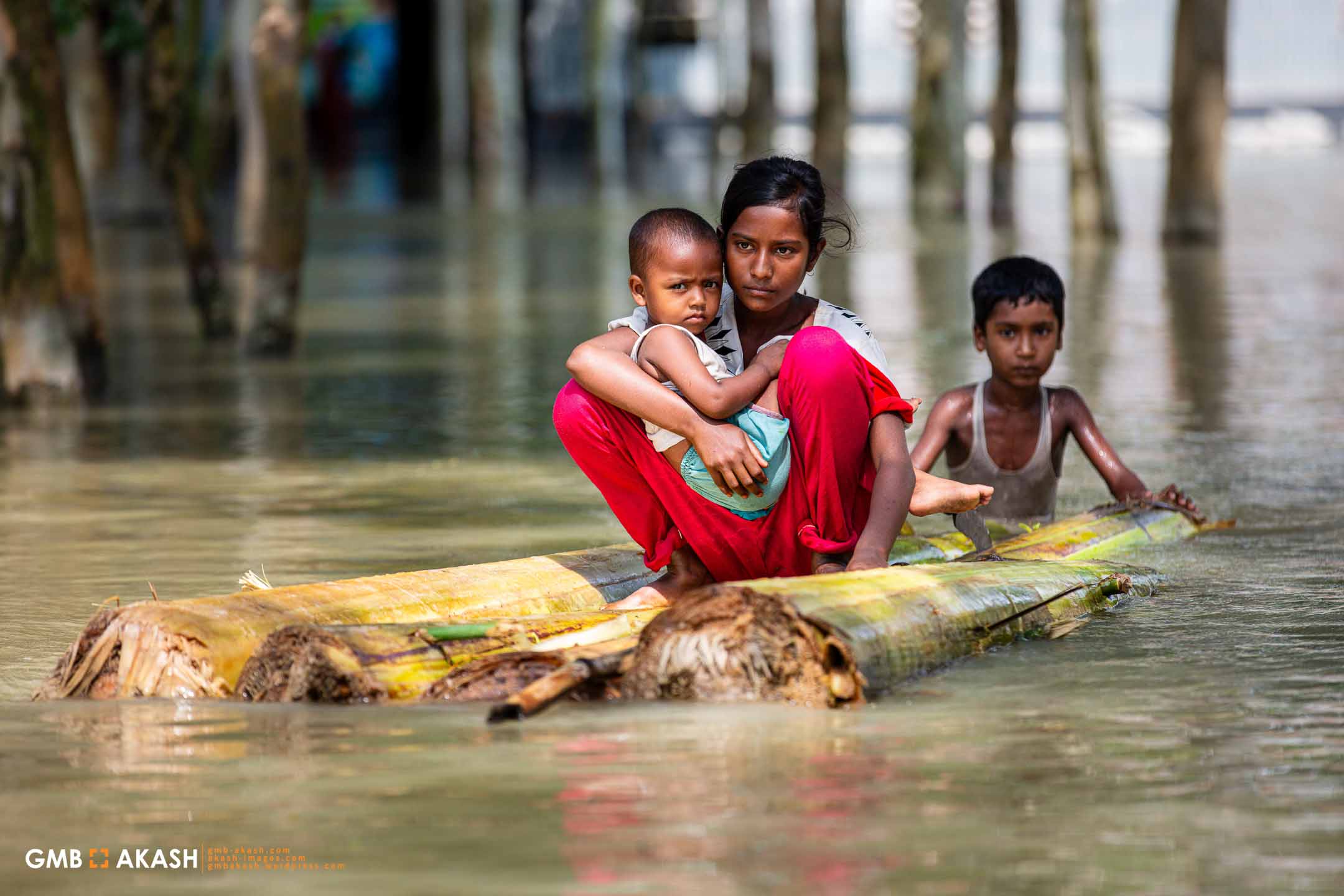
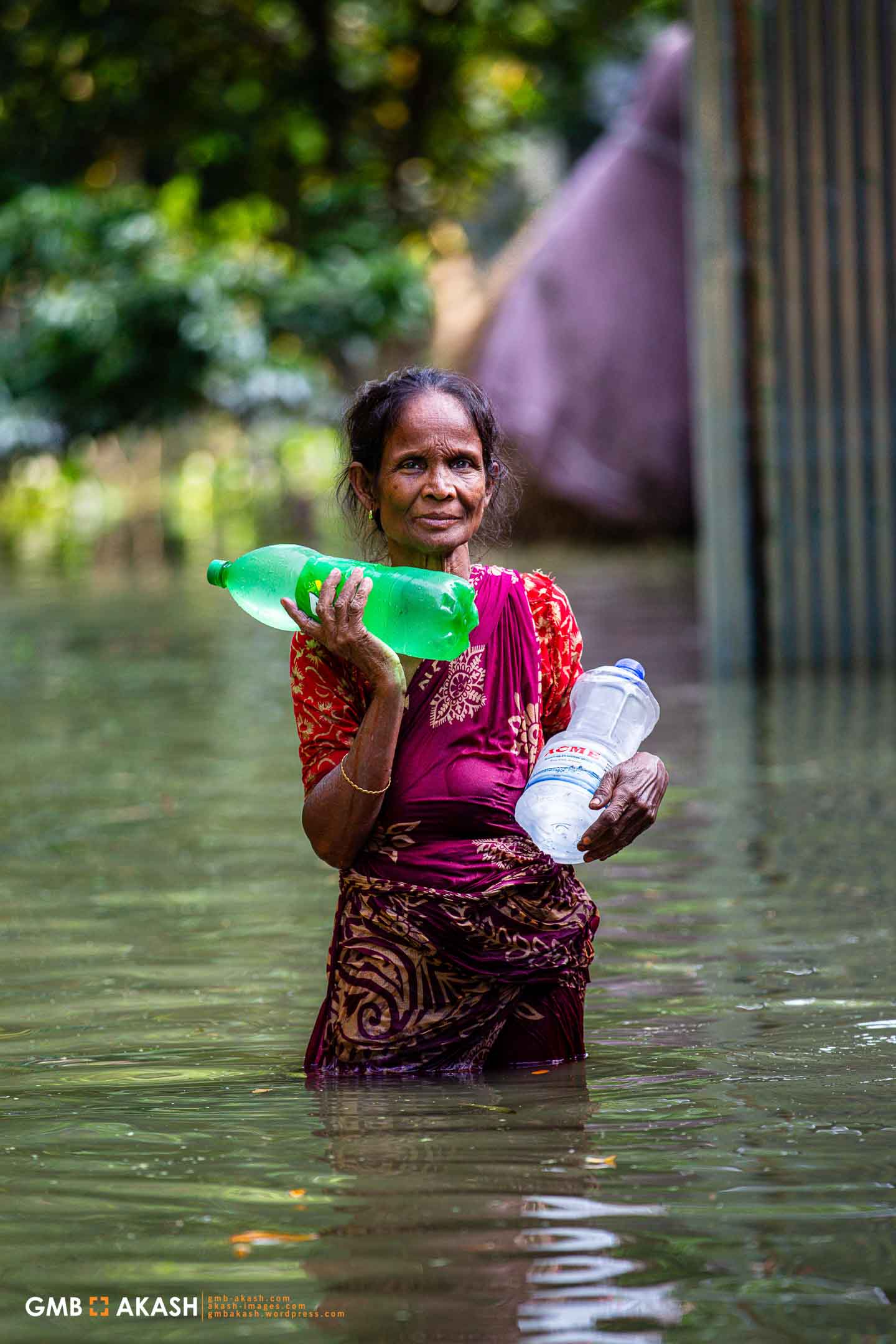
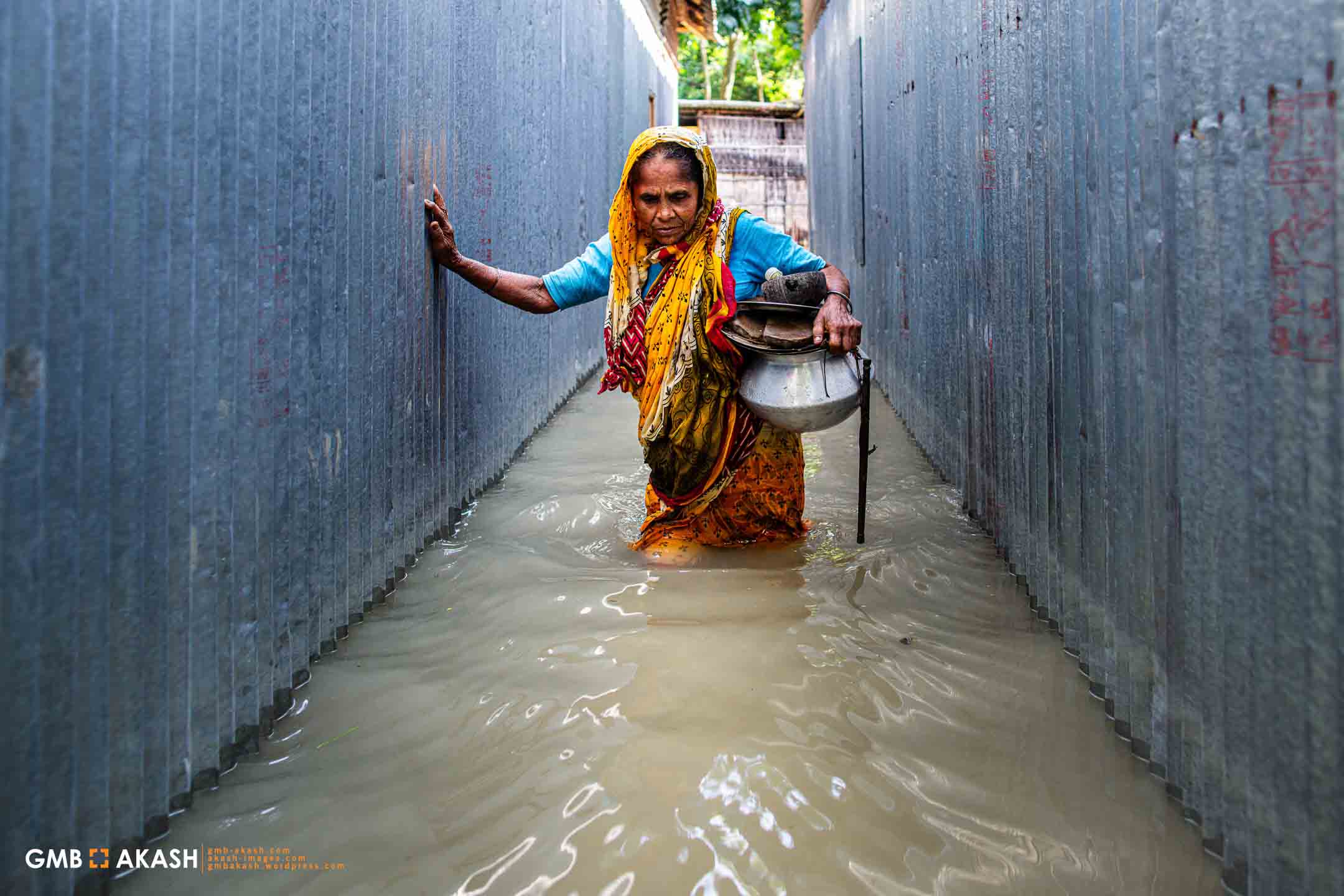
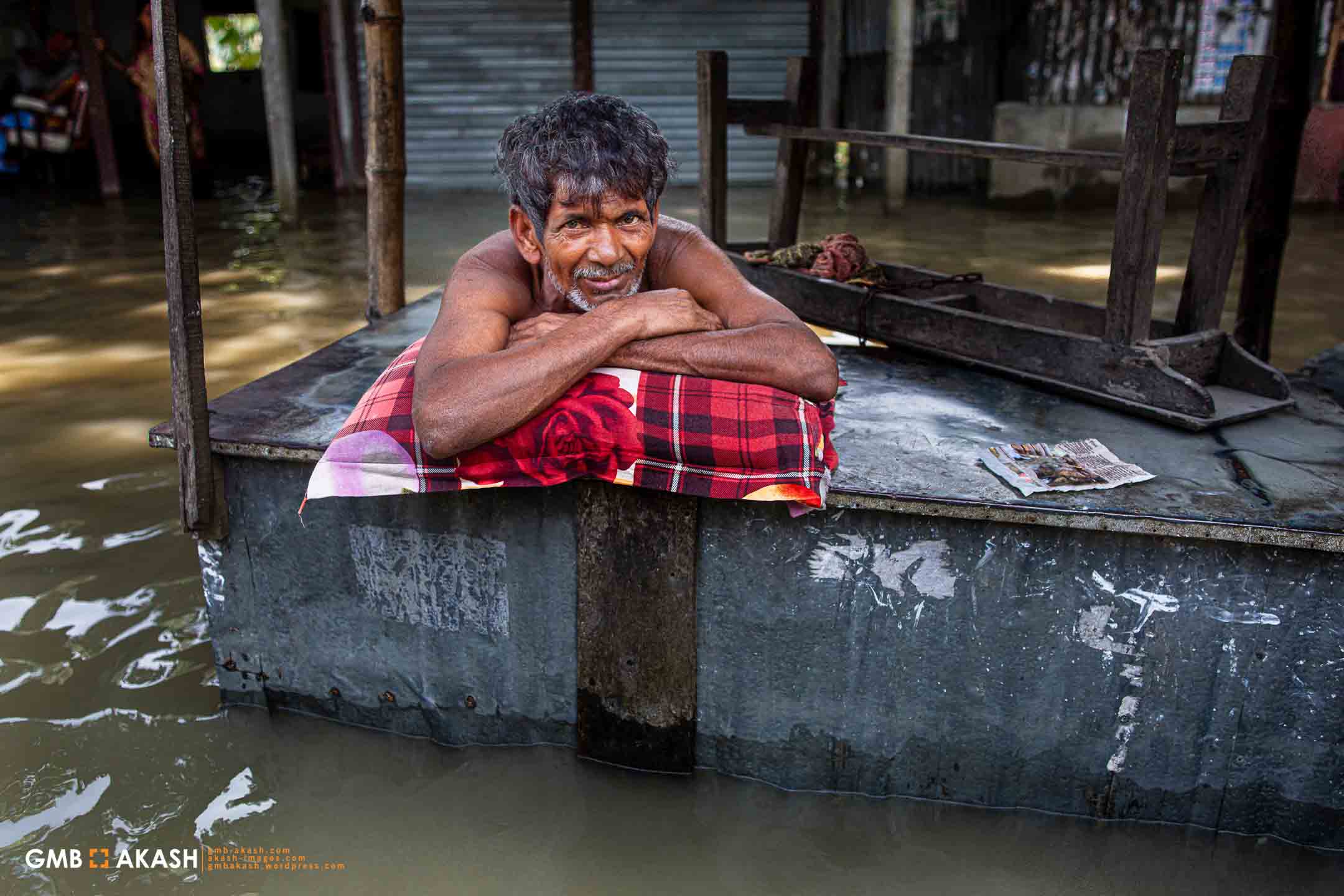
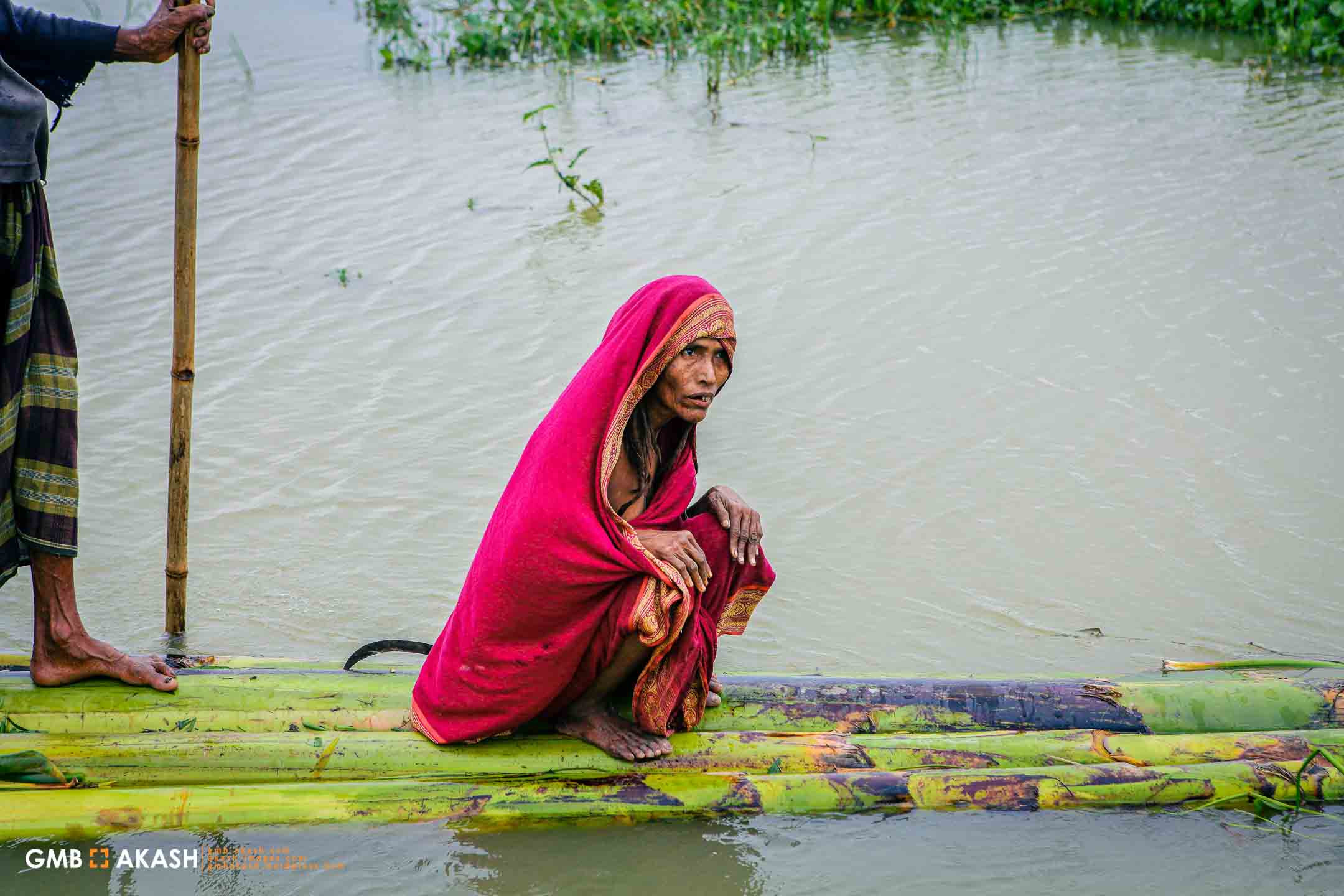
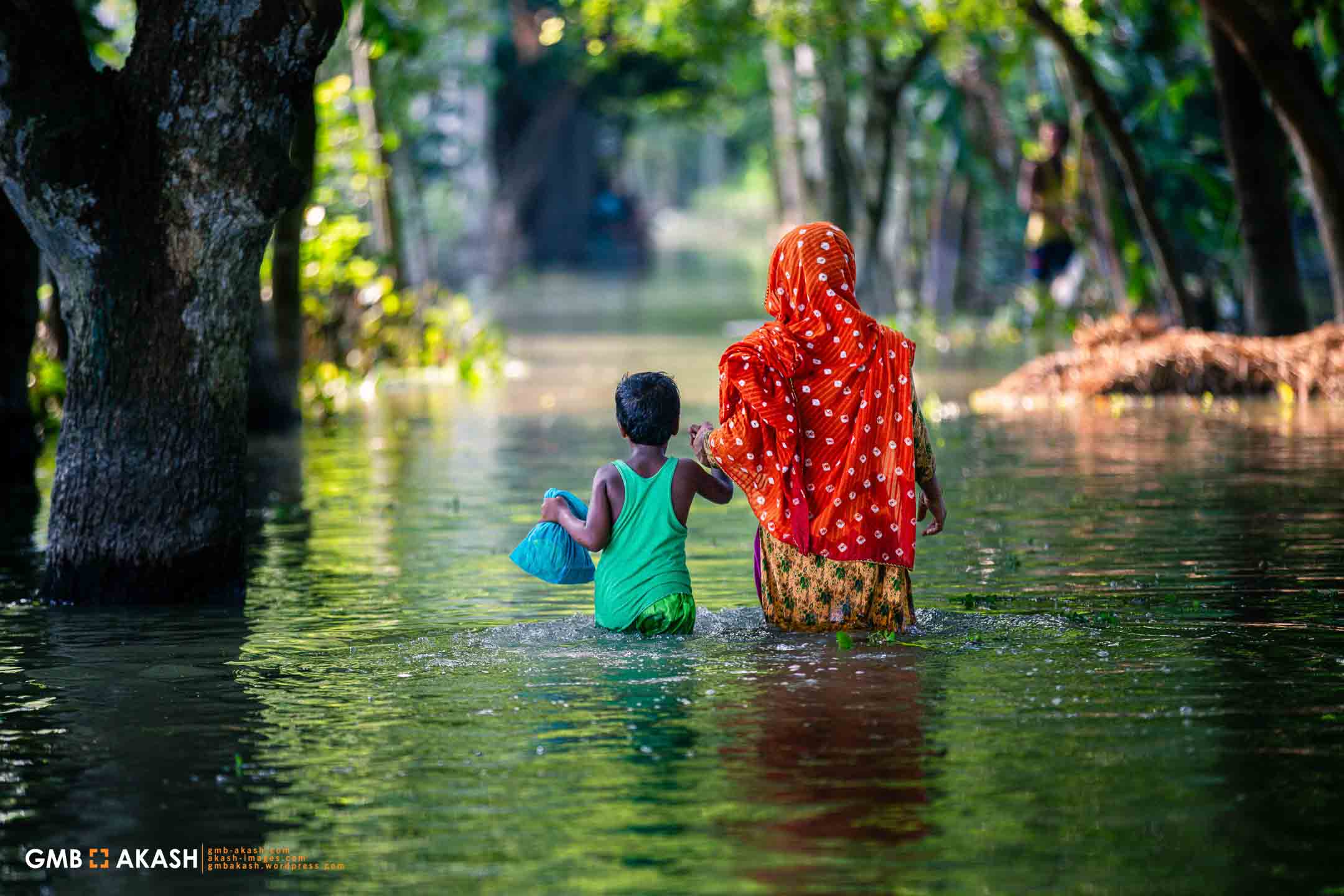
In the Shadows of Rising Waters!

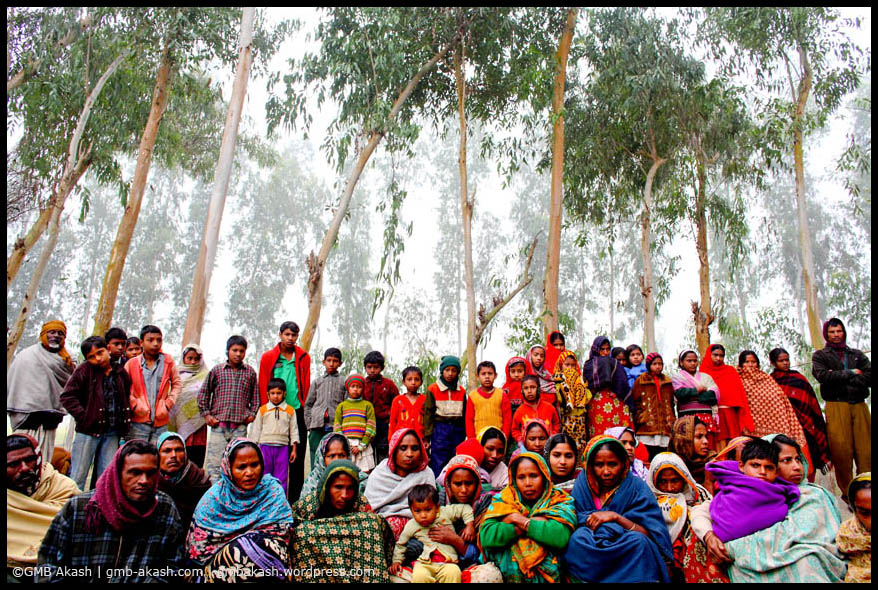
Every year, Bangladesh faces devastating floods that claim lives and leave millions homeless. In 2024 alone, over 5.8 million people were affected, 71 lives were lost, and damages soared to $1.2 billion.

Annually, disasters like floods, droughts, and storms inflict nearly $3 billion in losses, affecting over 6.3 million people.

These figures, while staggering, only hint at the personal tragedies—homes submerged, livelihoods destroyed, dreams washed away.

For over two decades, I have been documenting these stories through my lens, aiming to illuminate the resilience and dignity of those who face nature’s wrath with unwavering spirit.

Photographing the human cost of climate change is not just about images; it’s about empathy, understanding, and a call to action.

— GMB Akash

Stilt Fishing in Sri Lanka – A Vanishing Tradition!

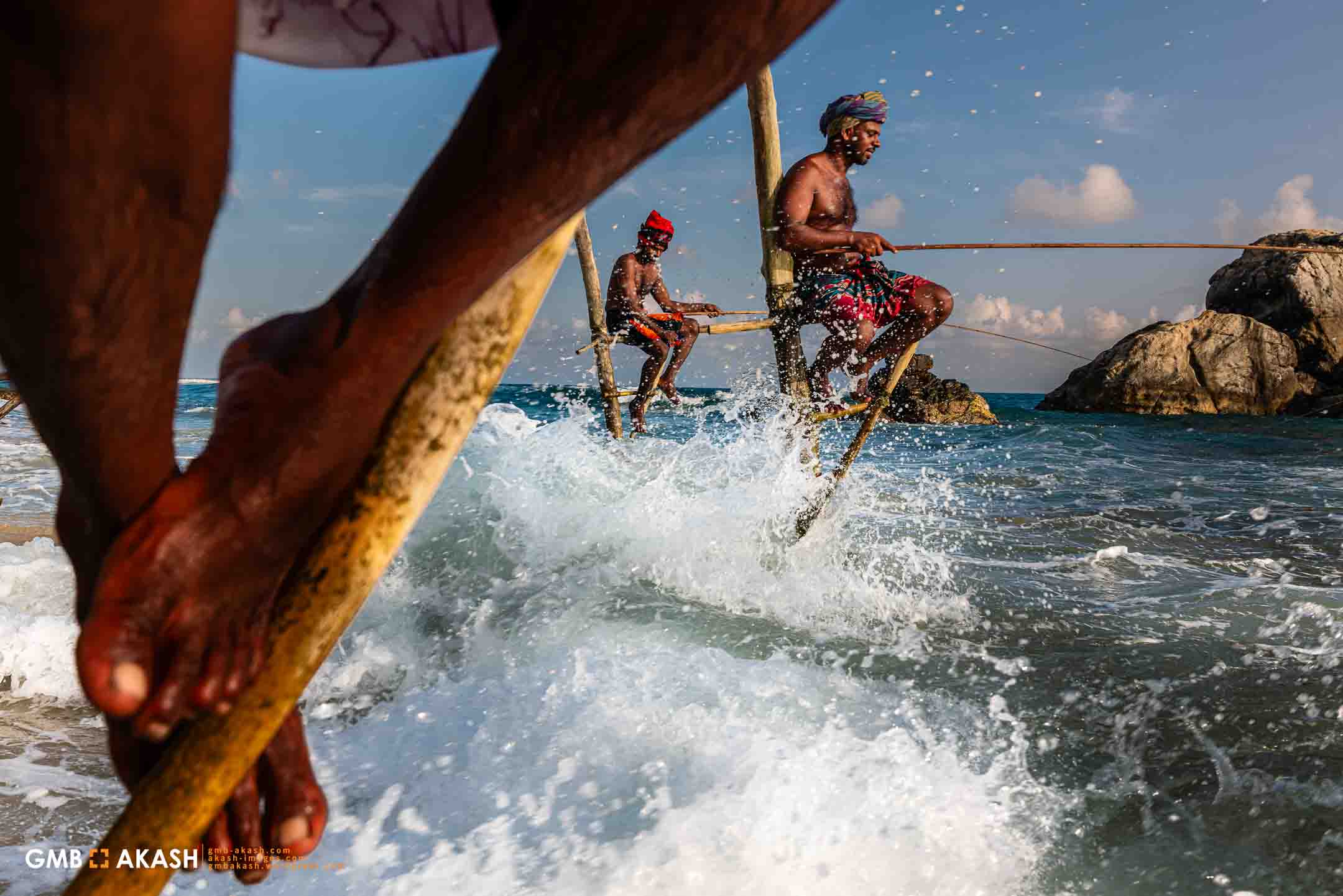
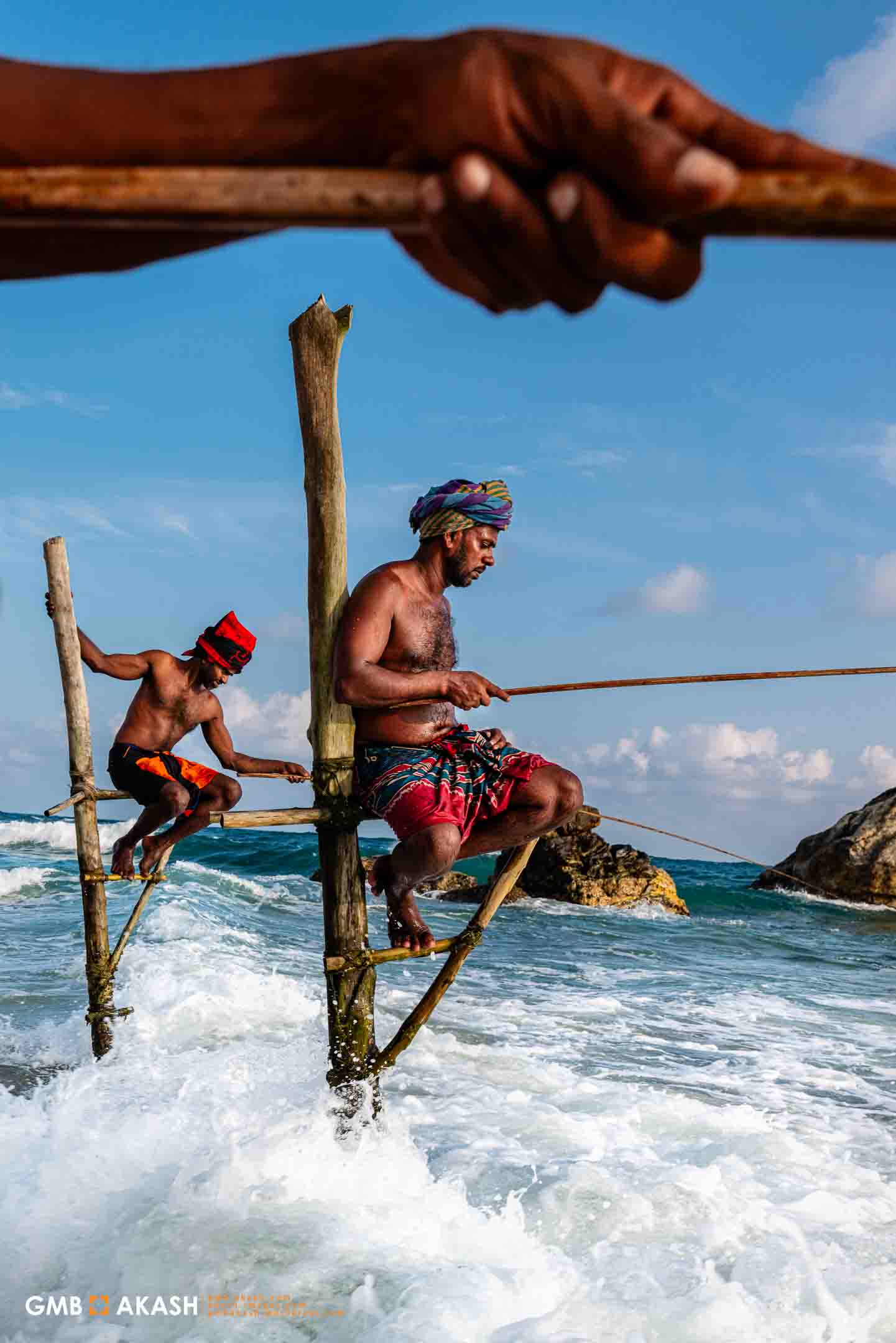
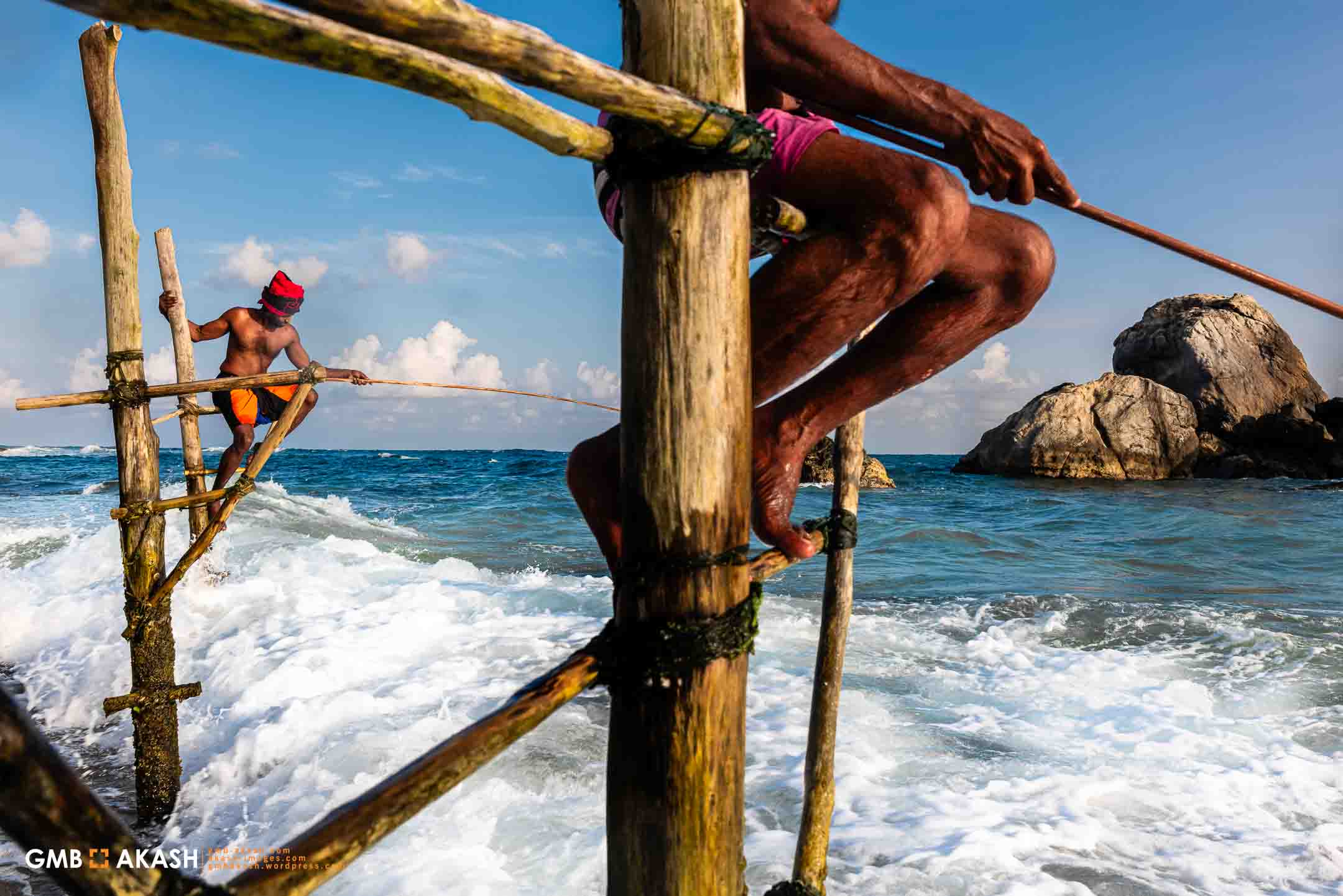
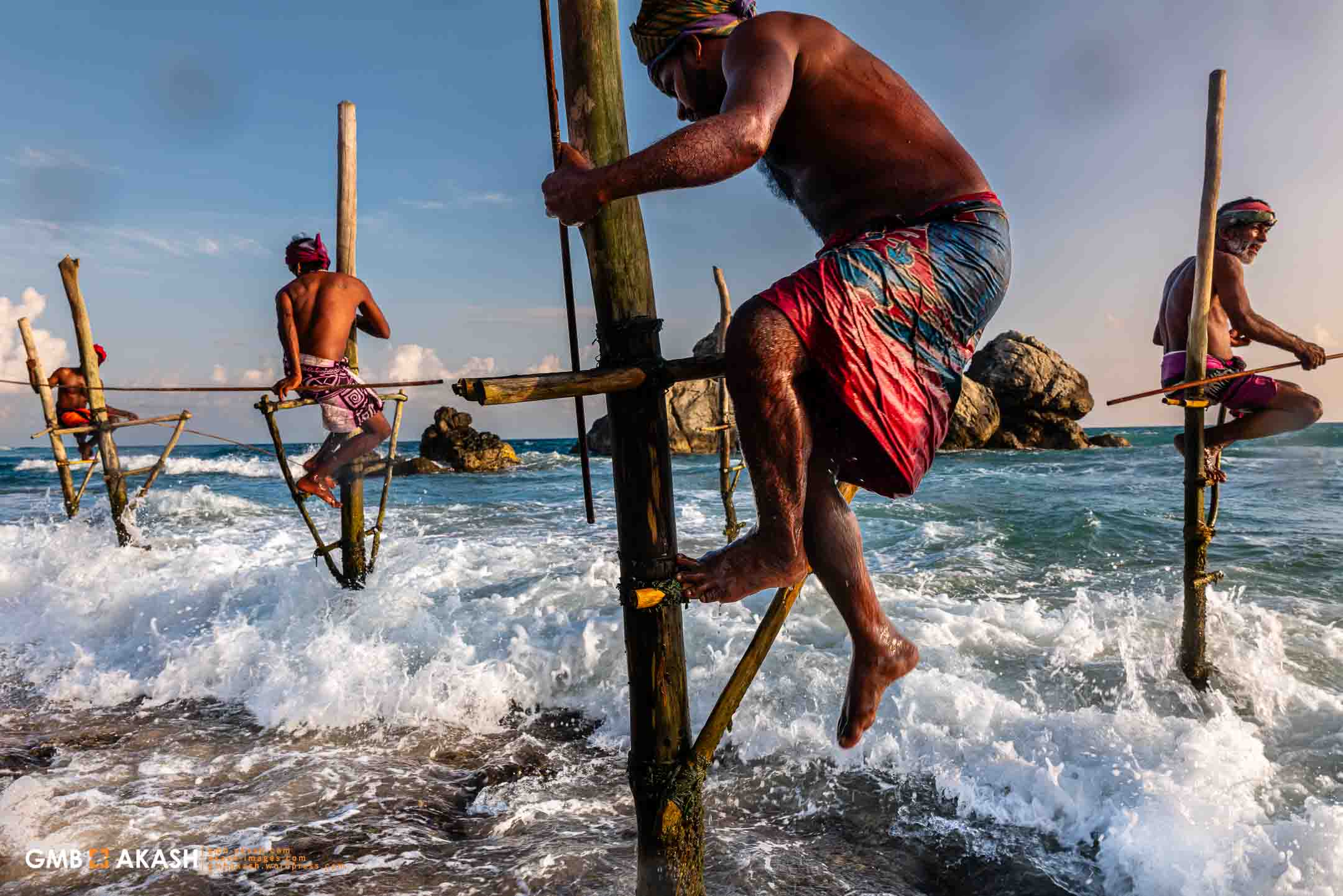
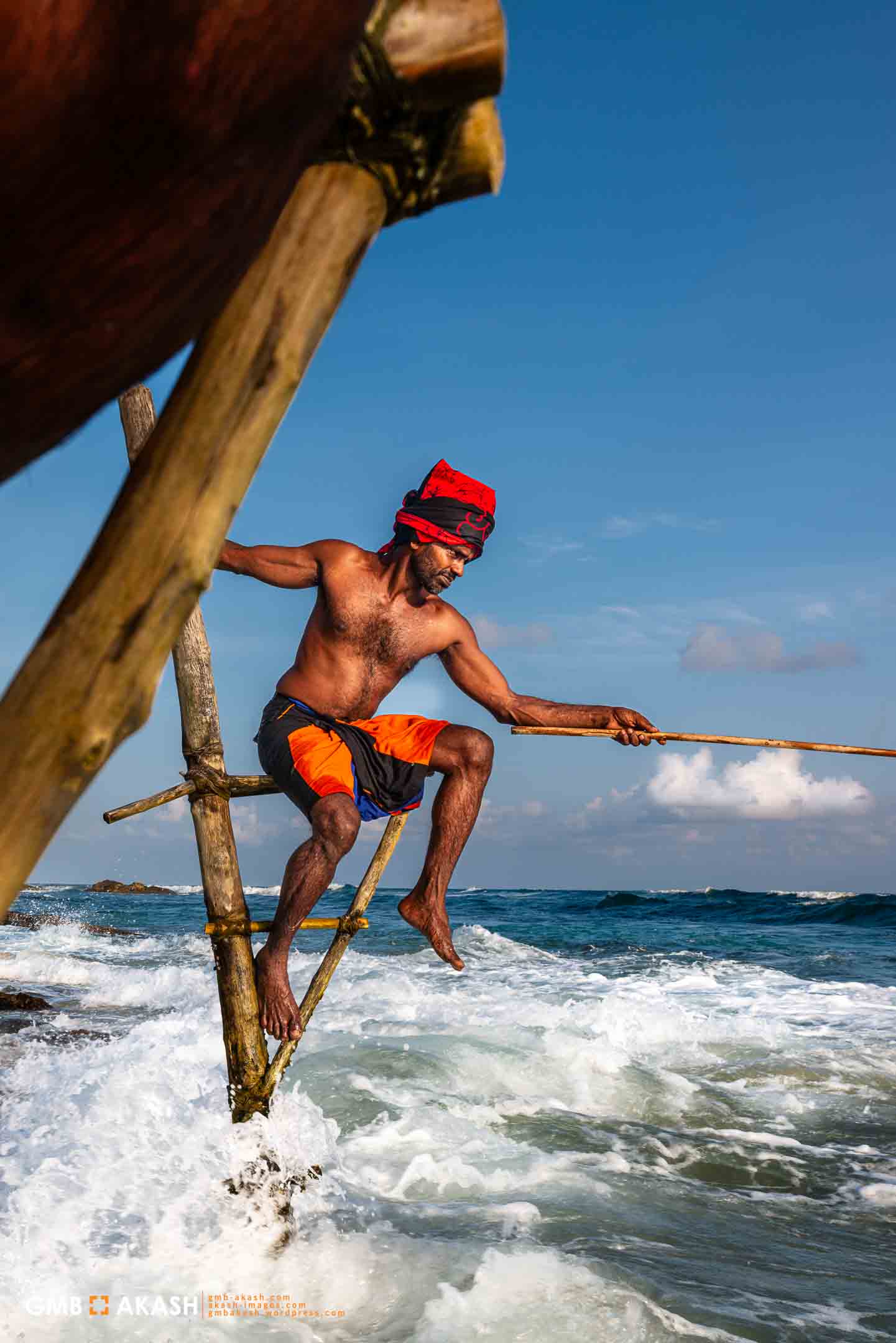
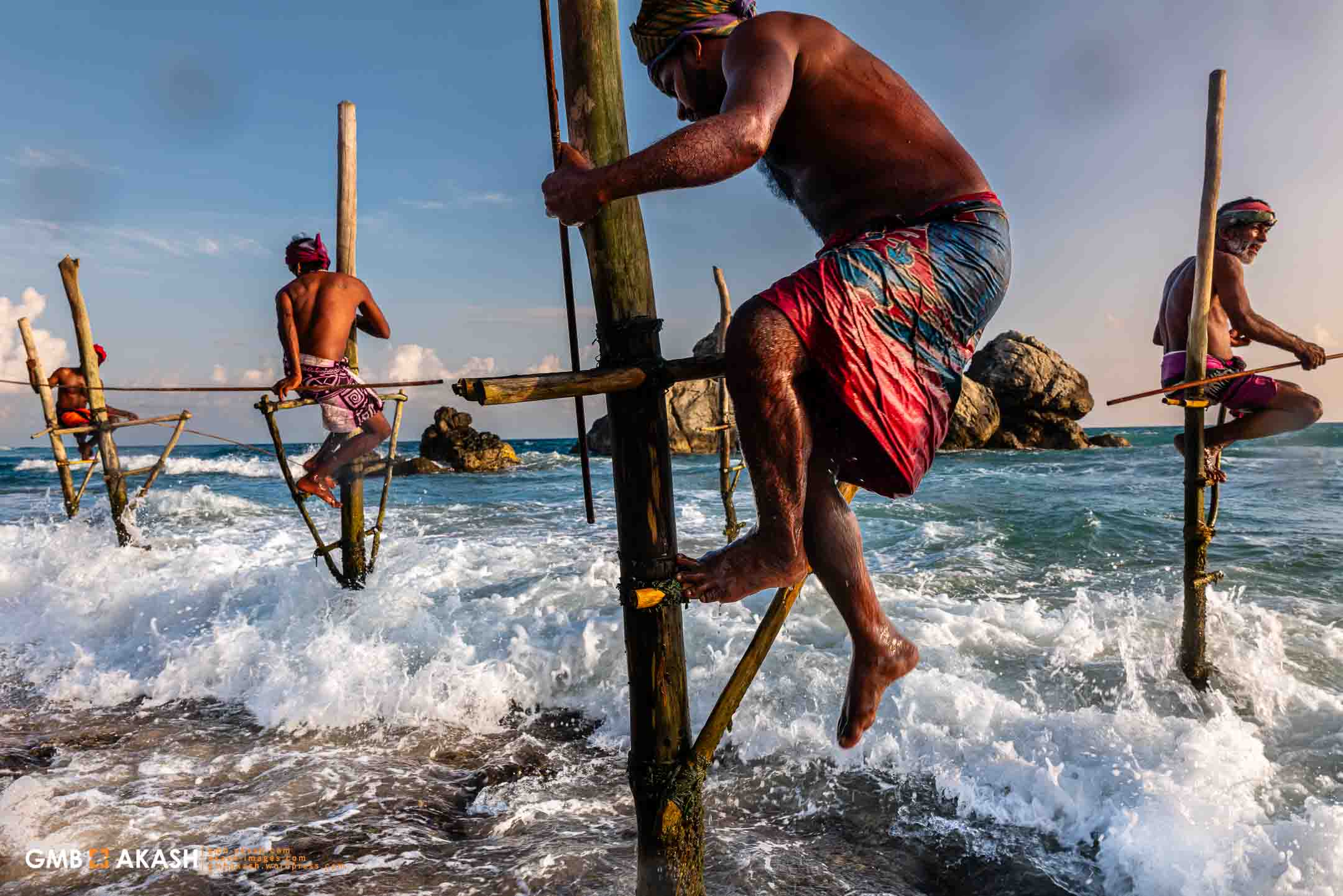
In the coastal waters of southern Sri Lanka, fishermen rise with the sun and climb wooden stilts planted deep into the seabed. With no nets or boats, they balance silently, waiting for the right moment to catch a fish with a simple rod.

This age-old method, passed down through generations, speaks of resilience, harmony with nature, and a life shaped by the sea.

But as tourism grows and the ocean changes, fewer families rely on this tradition for survival. What was once a way of life is slowly fading into memory.

Wounds That Speak!

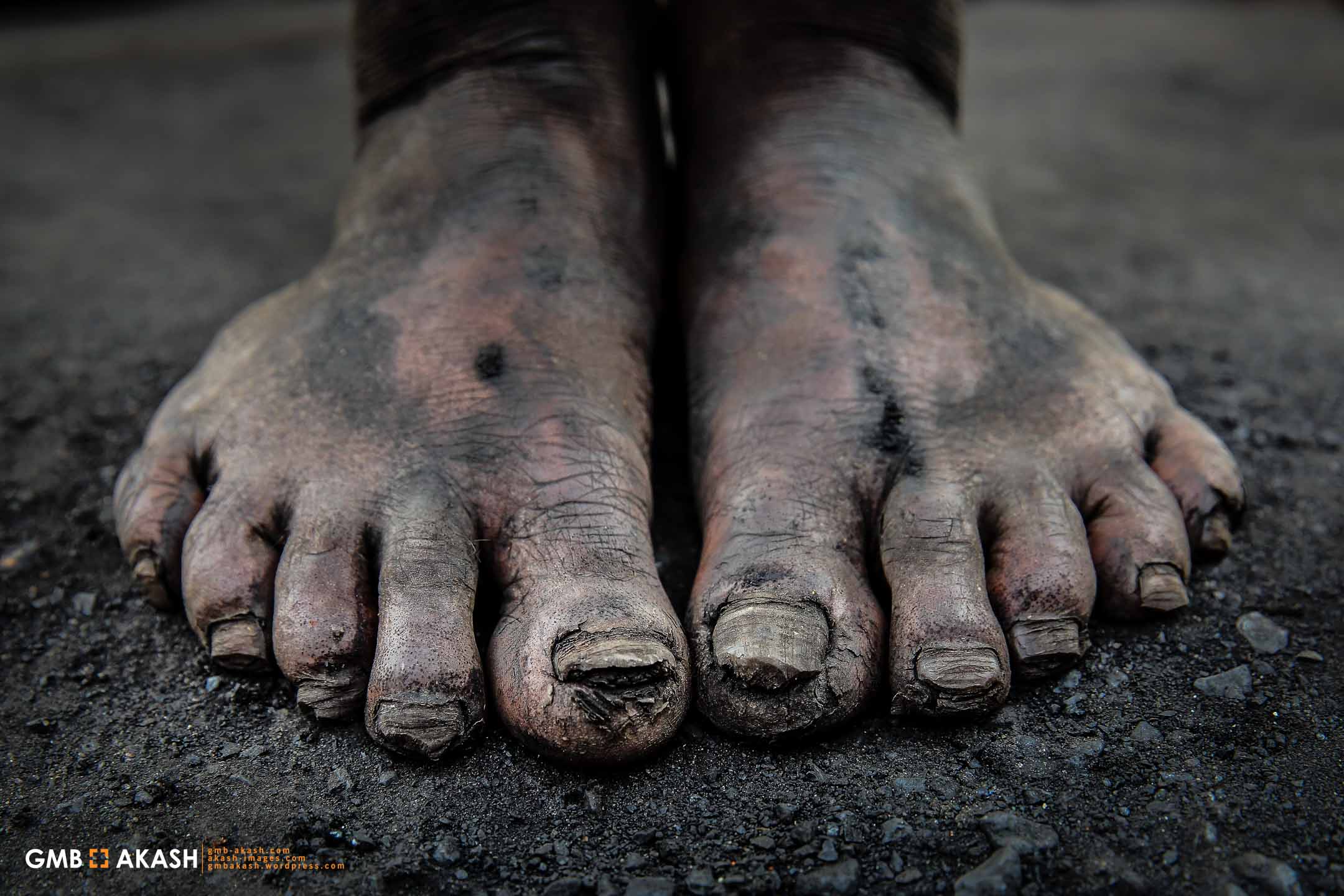
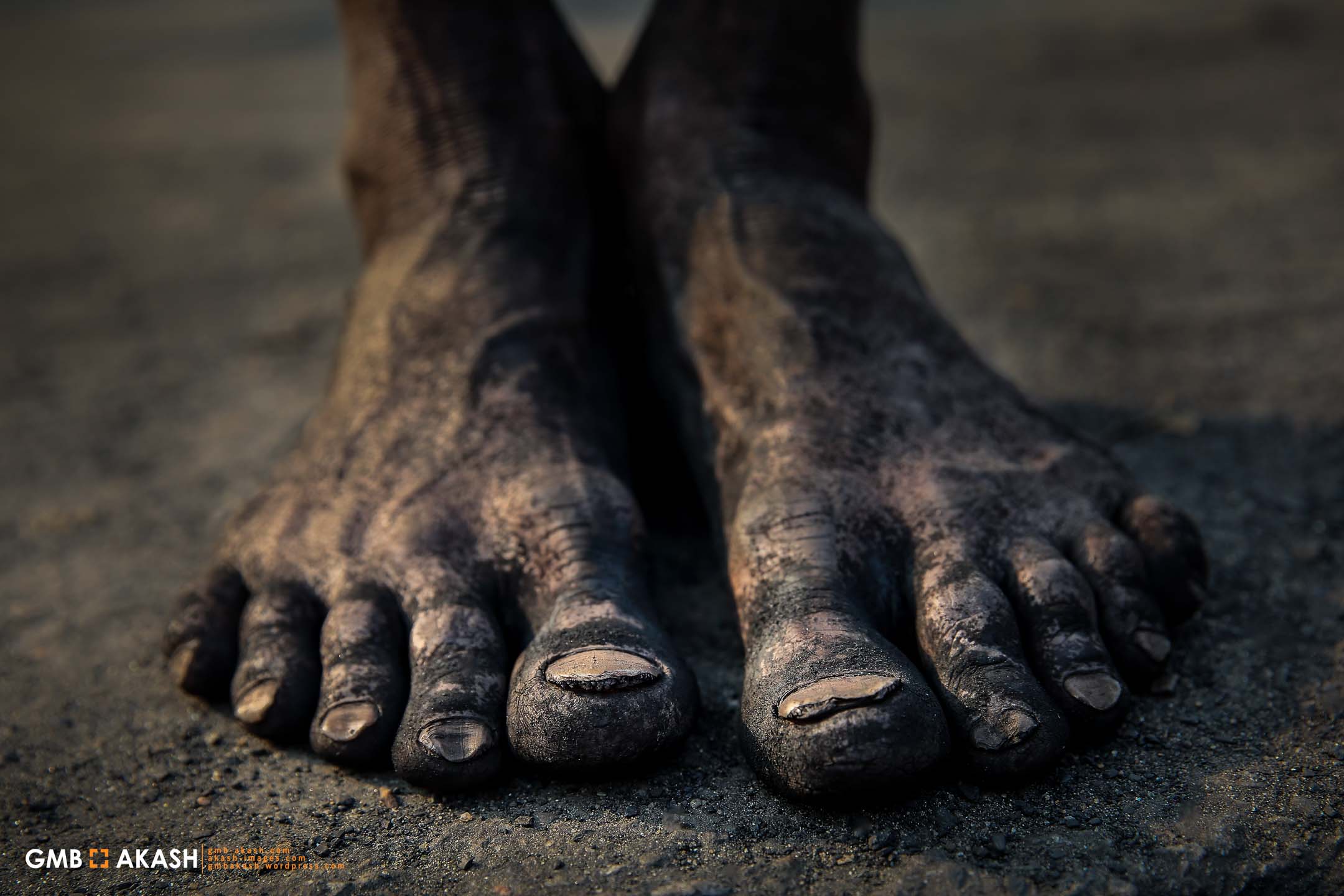
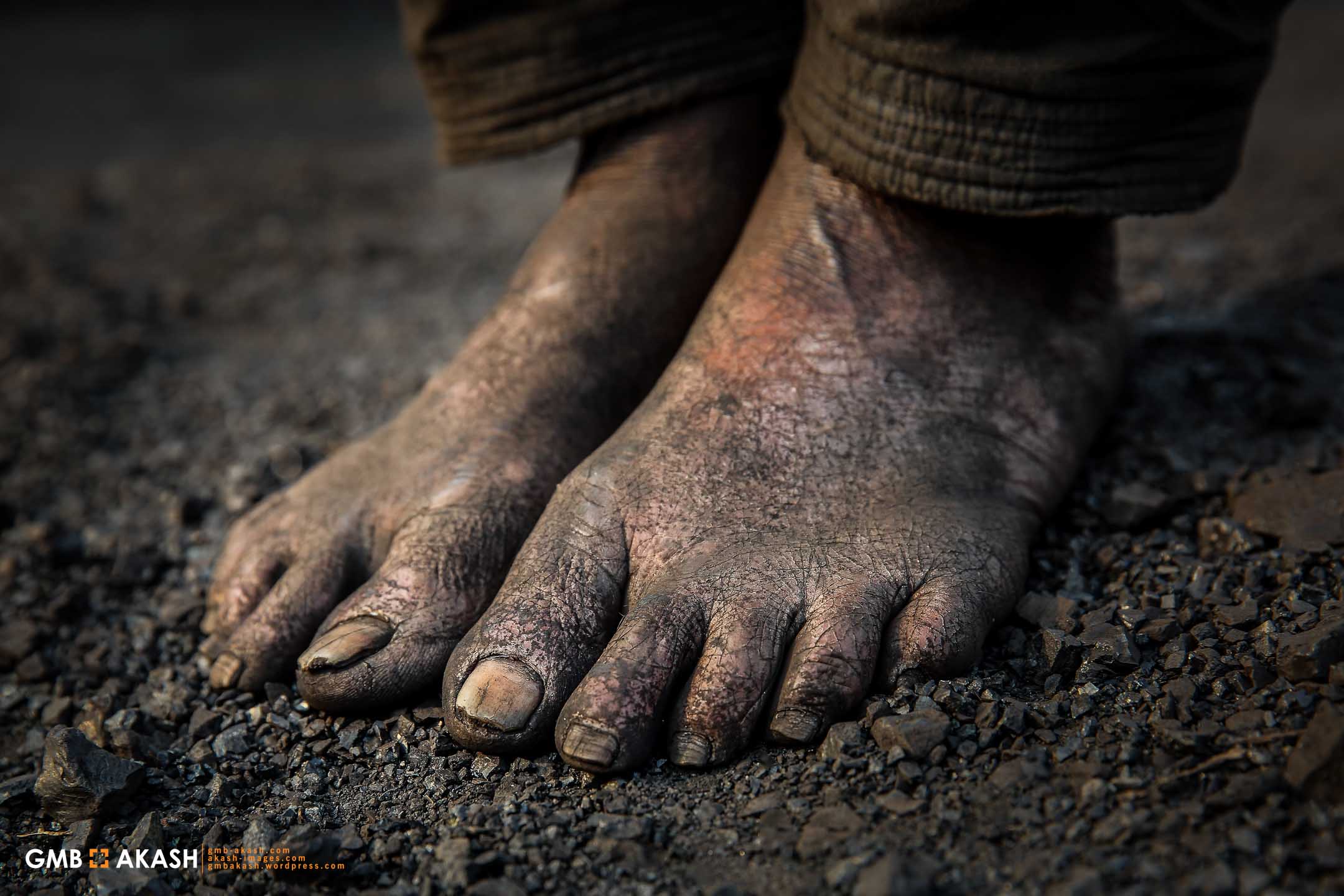
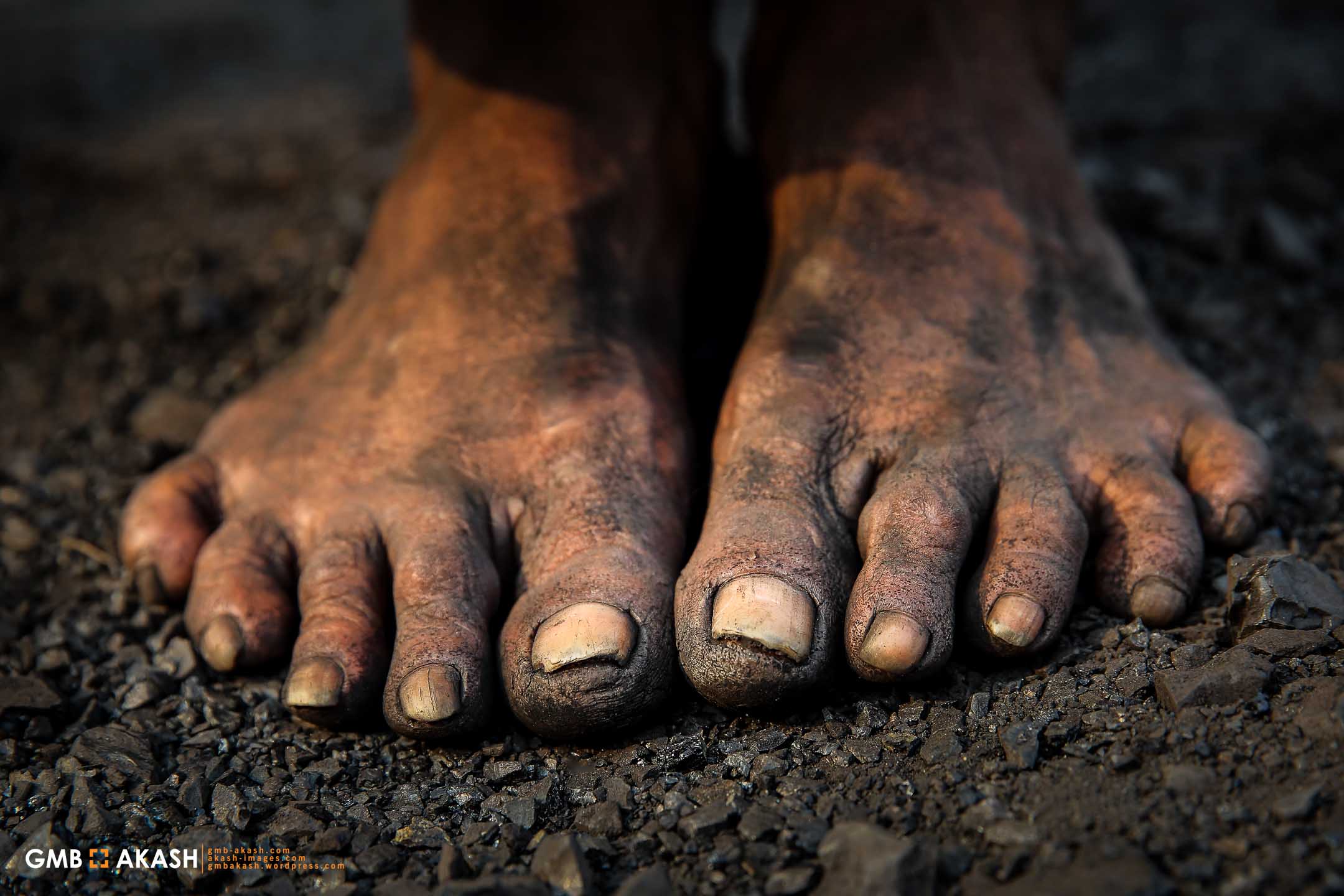
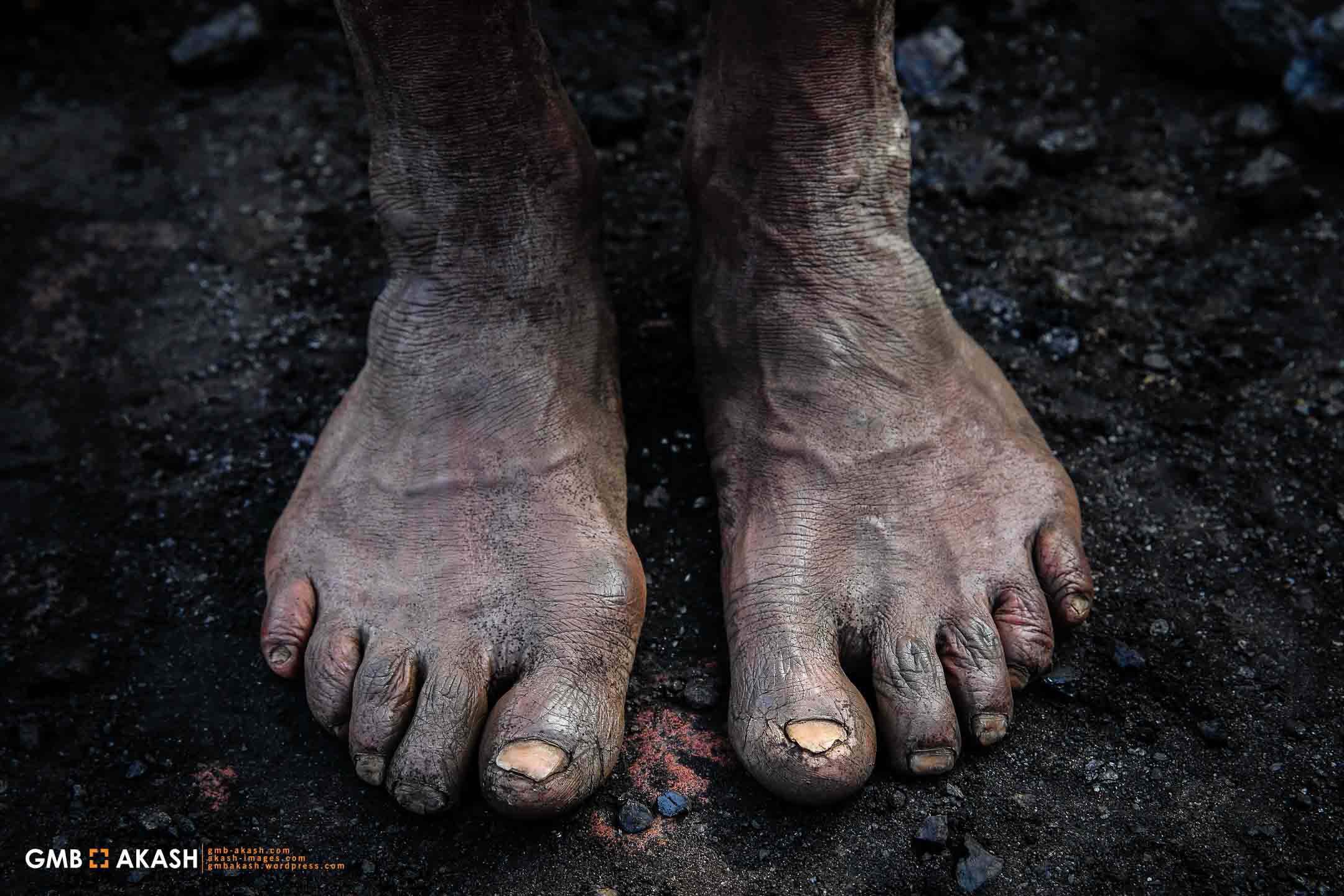
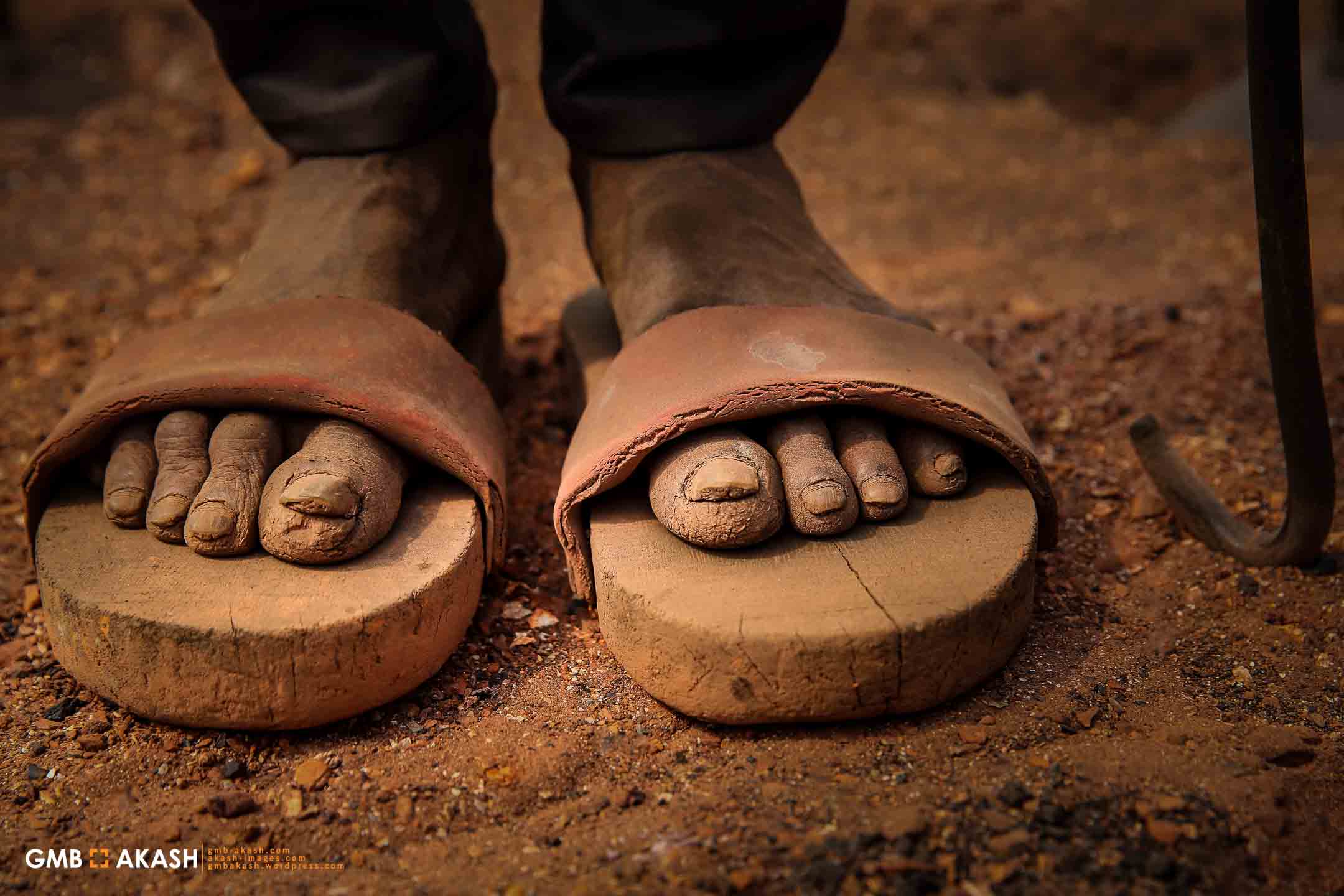
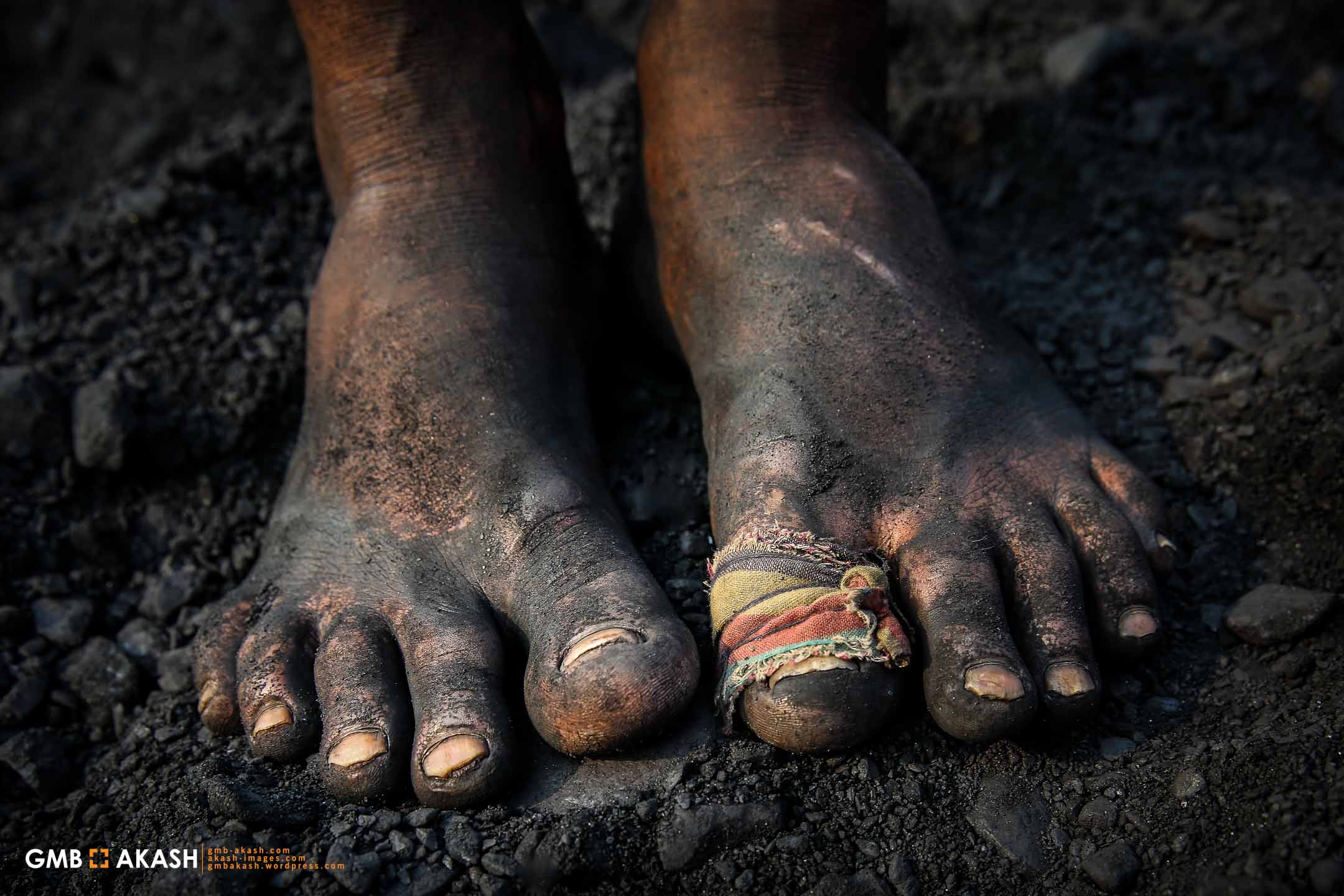
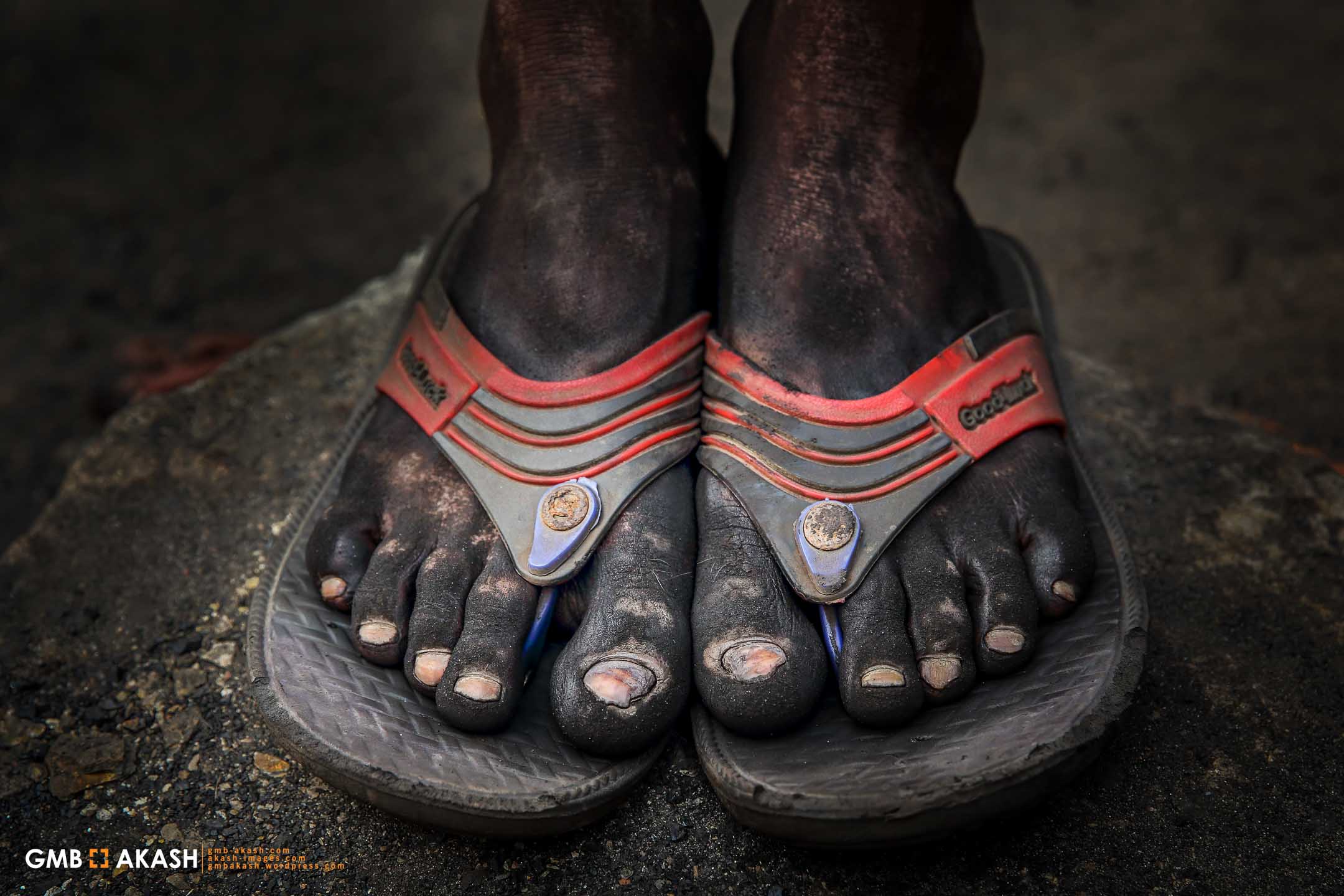
These feet don’t walk for comfort — they walk for survival.
Cracked, wounded, and caked in dust, they carry the silent weight of sacrifice, hunger, and unbreakable will.

Every scar tells a story — not just of pain, but of resilience, love, and the fight to build a better life.

These are not just feet — they are the quiet testimony of those who remain unseen, yet carry the world forward with bare hands and broken soles.
Their pain holds dignity. Their silence carries strength.

— GMB Akash

‘Heroes of Life’ – Part I

‘Heroes of Life’ – are those incredible humans who always find their way to light and love. They had known defeats, sufferings, struggles yet they possess a beautiful story in their hearts, which is worthy to share with the world.

Kawser Hossain, Shamsuddin Miah and Rani’s stories touched everyone’s heart. They were featured first in GMB Akash facebook page and become an inspiration for thousands of people all over the world. This video is about how we have helped three of them so they can give a good fight with their lives and remains as unbroken as they were. Thanks everyone for giving them love, respect and support.

You tube Video: ‘Heroes of Life’ Video interview

IMG_5918

https://www.facebook.com/gmbakash/

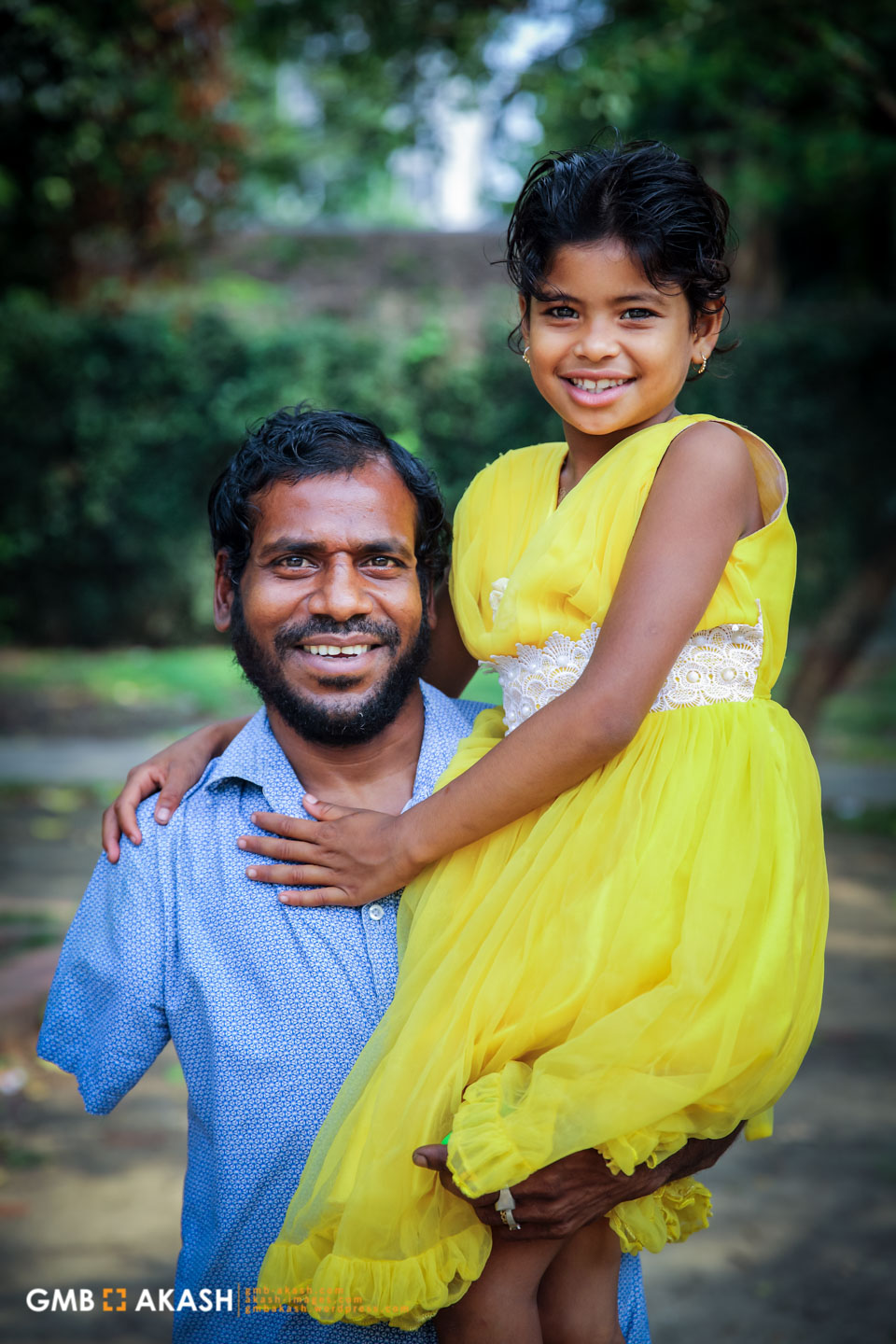
Yesterday, I was able to buy a new dress for my daughter after two years. While I handed sixty pieces of five taka note to the seller, he yelled at me by asking if I am a beggar. My daughter held my hand and cried to leave the shop by saying that she did not want to buy any dress. I wept off her tears with one hand. Yes, I am a beggar. Ten years ago I had never thought in my nightmares that I have to live by begging from people. The night coach fell from the bridge and unbelievably I was alive. I was alive by becoming a disable. My youngest son often ask me where had I left my other hand. And my daughter Sumaiya feed me every day by saying she knows how difficult it is to do all work with one hand.

After two years my daughter is wearing a new dress, that’s why today I brought her with me to play for some time. May be I will not be able to earn anything today, but I wanted to roam around with my little girl. I secretly borrowed this mobile phone from my neighbor without informing my wife. My daughter has no picture and I want to make this day memorable for her. When one day I will have a phone I will take a lot of pictures of my children. I want to keep good memories. It’s very difficult to send my children to school, but I am educating them all. Sometimes they cannot attend exam because giving exam fees is not always possible by me. On those days they feel very sad then I tell them, sometimes we can miss exams because the biggest exam is life which we are giving every day.

Now I will go for begging. I will place my daughter in a signal where she will wait for me. I will look at her from distant while begging. I feel shame while she looks at me when I lend my one hand to others. But she never leaves me alone. Because there are big cars, she thinks accident can happen again, these cars could run on me and I would die. Whenever I managed to get some money I return to home by holding my daughter’s hand. We do bazaar on our way and my daughter always carry that bag. During rain we love to get wet and talk about our dreams. In someday I do not get any money, on those days we return to home silently. On those days I feel like to die but at night when my children fall in sleep by holding me I feel being alive is not a bad thing. Only bad is when my daughter waits for me in the signal by keeping her head down. When I cannot look at her eye while begging. But today is different. Because today my daughter is very happy. Today this father is not a beggar. Today this father is a king and here is his princess.

– MD. Kawsar Hossain

IMG_5979

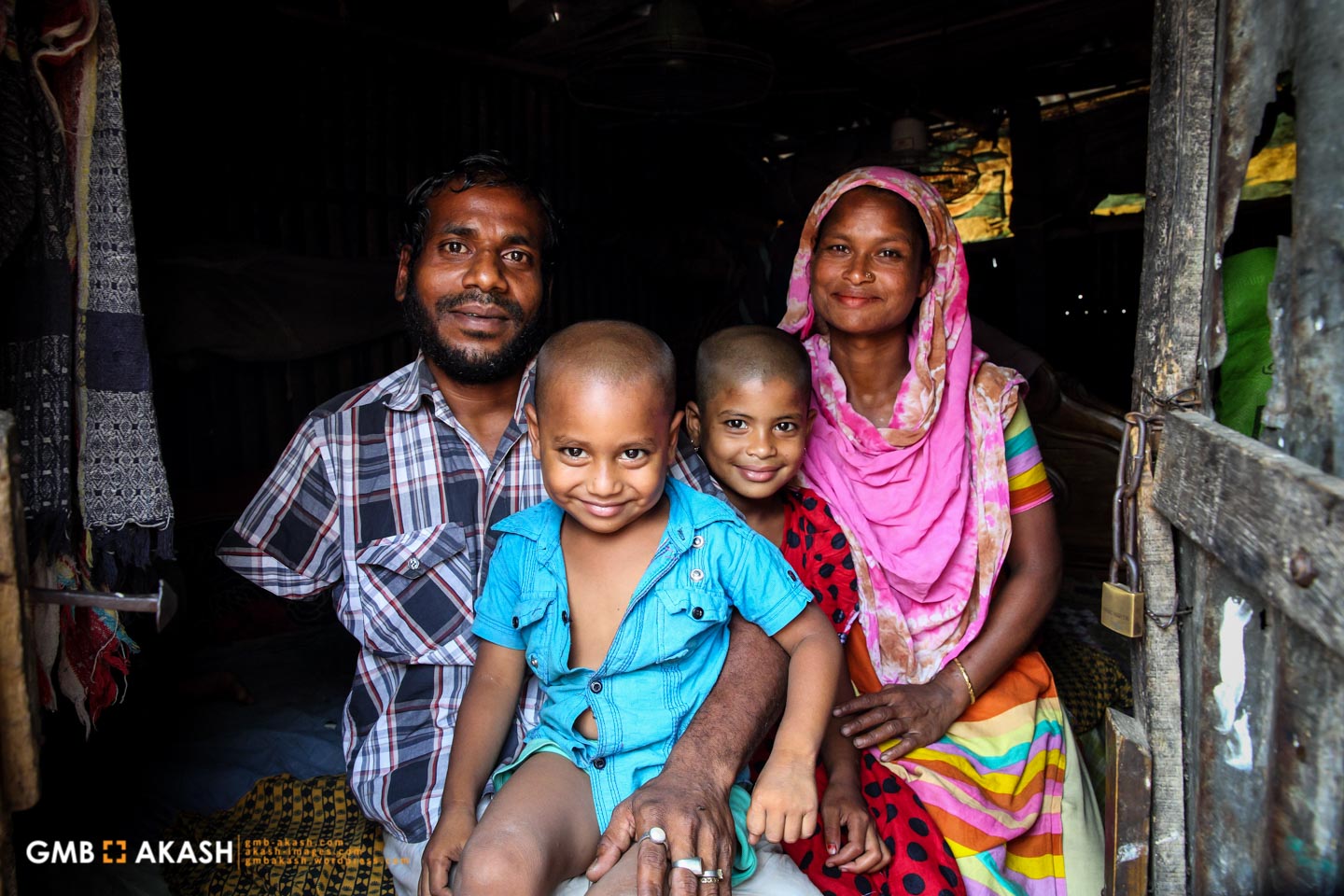
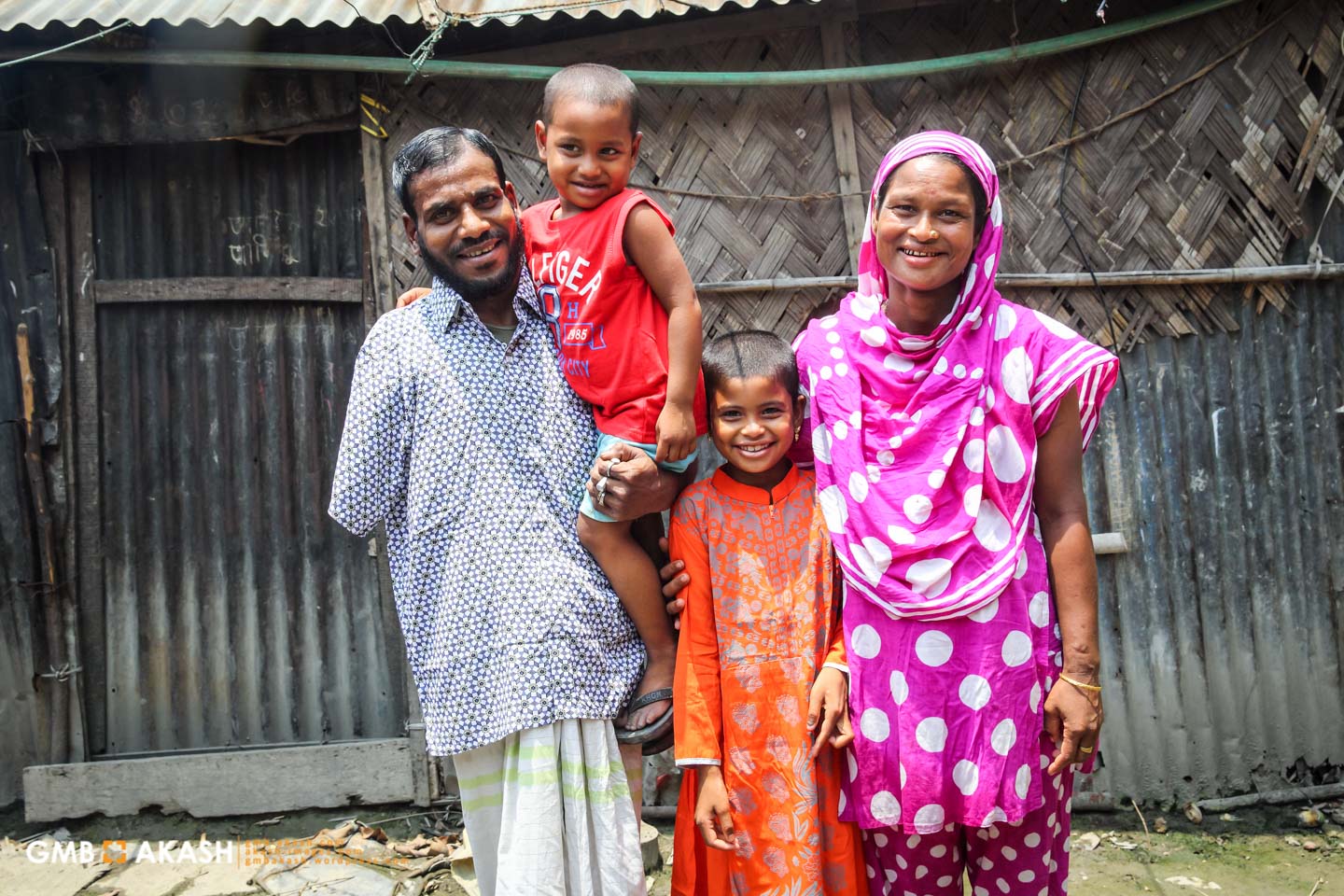
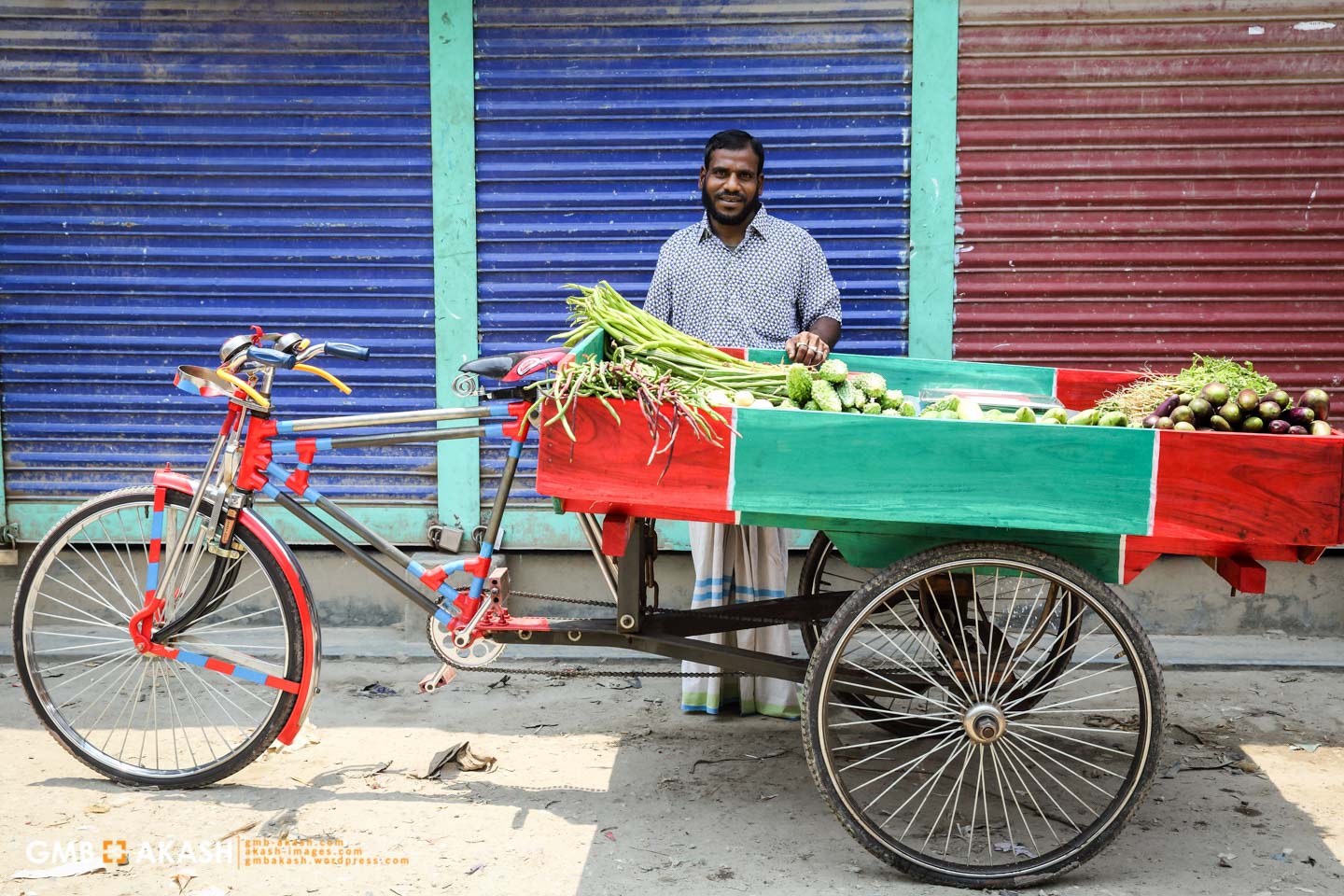
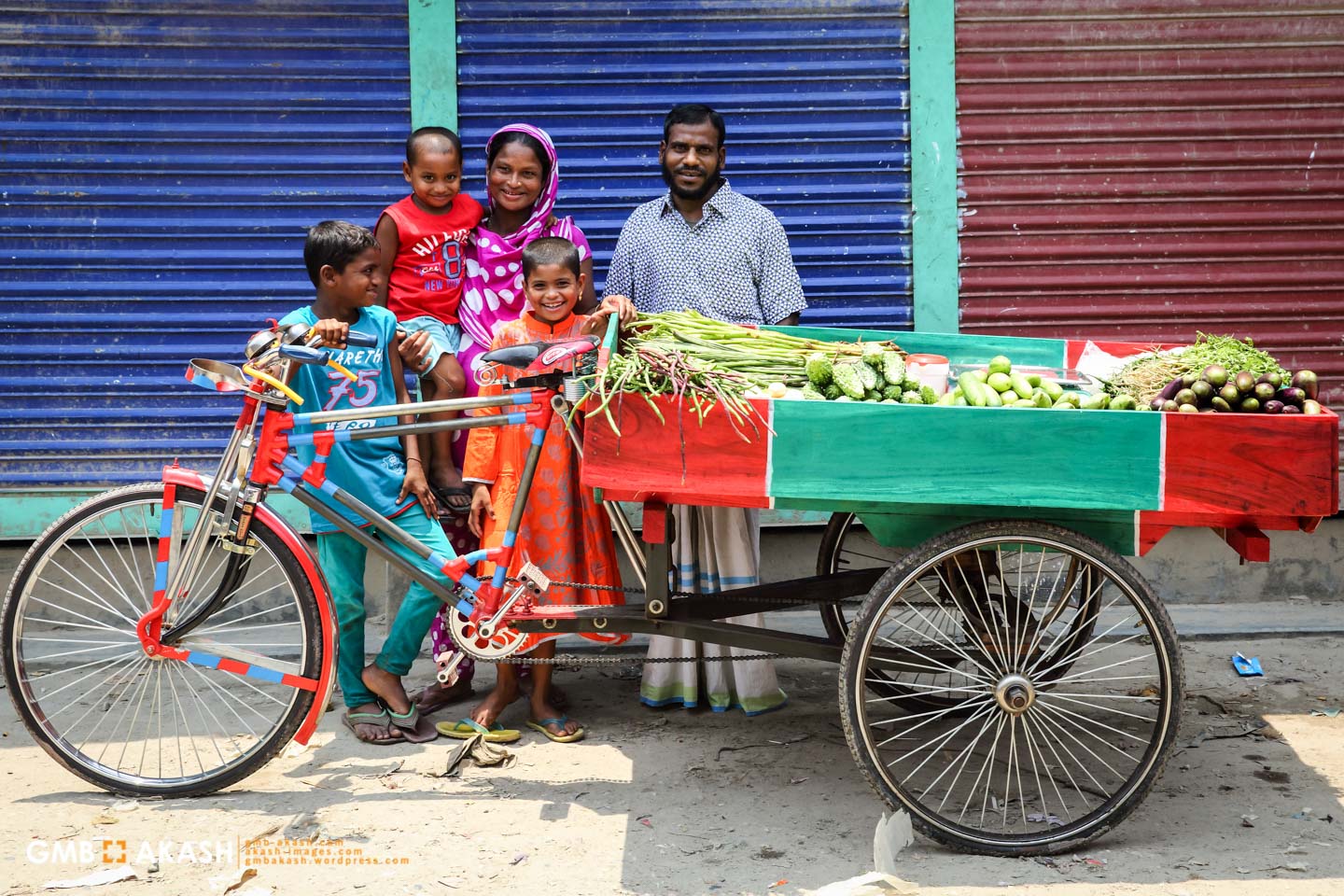
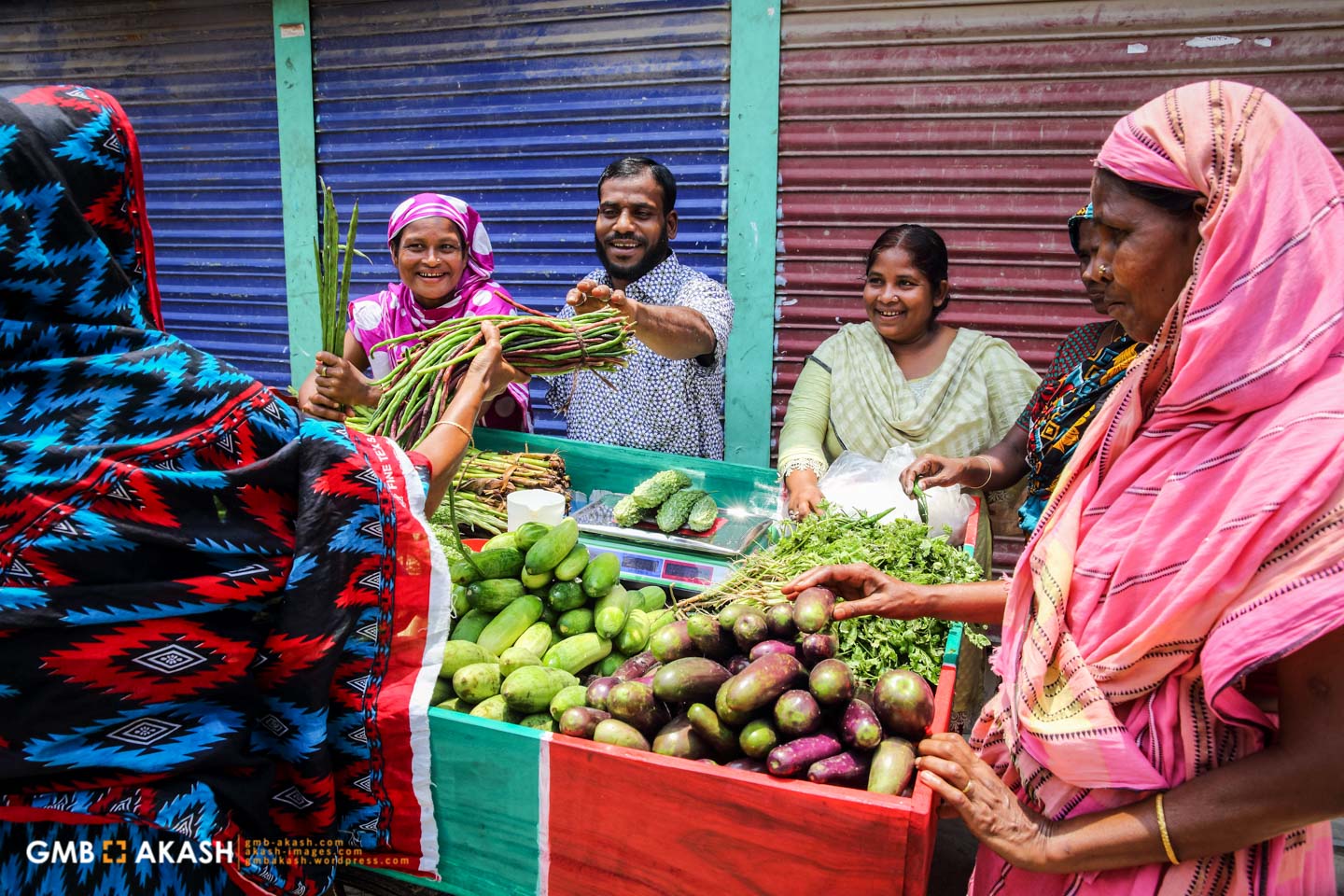
This father and daughter received love from all around the world. It takes almost one month for me to find out him. After several meetings with the family, Kawser wanted to have a source of income. He wanted to do vegetable business in rickshaw van. He also wanted to educate his daughter and he never want to beg in his life.

IMG_0657new

I promised Kawser to gift a van rickshaw and settle his vegetable business. He has received vegetable business and a rickshaw van. His children received scholarship for one year. I long a few generous friends contributed for this cause. ‘This Heroes of life’ – are extraordinary human beings. Sumaiya and his father Kawser is already making differences in their life.

IMG_5513new

IMG_5535new

IMG_5565new

IMG_5628new

IMG_5480new

IMG_5634new

IMG_5680new

IMG_5714new

‘We can help someone with the minimum we have. Someone’s nothing can be someone’s everything’   

Remember the elderly couple?’ For everyone they are ‘The Baghban couple’!

slum (2)

https://www.facebook.com/gmbakash/

Last year we fled together. We never thought we could do that. I knew that our children may stop communicating with us. But I and my wife are living forty seven years together. Every day after sunrise she wakes up me first and together we do our prayers. Forty seven years we never had spent a day without each other. Seeing my wife’s face was the first thing happen to me every day. We struggled together with our six children. In the past, often times I was able to manage one time food for my family, I and my wife starved whole day after feeding our children. She never complained, never told me that I was failed as a husband. After so much suffering we never left each other’s side, never fought one single day, and never lost faith on each other. When my elder son took me and the youngest daughter took their mother, we did not realize that they decided to take us separately. Our children earn little and they have their expenses. After fulfilling their children’s need our need was burden to them. We knew everything but it was impossible for us to accept that we cannot be together anymore. I shamelessly asked my elder son and he was very surprised. He informed me that none of them are capable of taking care both of us.

I tried to adjust. But every morning when I wake up I wanted to see her smile. I spent my whole day by waiting for my son’s arrival so I could talk to her with the phone he had. But he arrived late night when on the other side my daughter usually went to sleep. The day when I was able to hear her voice none of us could speak a word. I heard how hard she tried to keep clam her tearful voice and I murmured stupid things. I never thought life can become so meaningless without each other. Every day I felt to run to my daughter’s house which was far away from mine. Then one day by gaining some courage I told her that I wanted to run together. By surprising me, she asked me to go right away. I took my walking stick and never looked back. We run away together with empty hand.

Now I sell children’s toy. I hardly can manage 100 taka every day and after I return to home I found food on our bed. Our children arrived once to see us last year; they told us how we failed them, how humiliated they felt for our behavior. We did not say anything. We do not want to hurt them. They decided to never come again. Sometimes we feel bad for our children, we miss them. But we know we are running out of time. I am fifteen years older than my wife. Any day I may die in the road while selling children’s toy. So I keep saving some money in a mud bank, I do not want my wife to beg to people to finish my last work. But every day my wife cries a lot during her prayer, whenever I ask her why she is crying so much, she would always say, ‘I want to die with you’.

– Samsuddin Miah (77) with her wife Rekha Begum (62)

IMG_5731new

For Shamsuddin Chacha, it’s very hard to walk miles after miles by carrying toys in his back. After all his hard work the little money he earns goes for his cancer patient wife’s medicine. After daily struggle of managing food and medicine, every day they find their way in their wrecked one bed room house. I along my facebook page GMB Akash friends comes forward to help him. ‘After receiving the rickshaw van and shoe business we are very happy. We pray to God so we can move forward with this work. I cannot thank enough everyone who has helped us. We are feeling like today is an Eid day’ – Shamsuddin Miah

IMG_5778new

Be a lamp, or a lifeboat, or a ladder. Help someone’s soul heal …

IMG_3343

https://www.facebook.com/gmbakash/

He was about to throw my one month old boy. I was holding his leg and he was kicking me constantly. There were scars in every parts of my body. With blade, knife and needle. Sometimes by holding my legs he pulled me out in such a speed that it was very difficult to keep my clothes on my body. My daughter had run behind me by taking one of her scarf to cover the naked parts of my body. She used to scream, ‘Please, help my mother.’ But no one came to help us. He had beaten me on the road. Someday my girl counted the scars of my body and often told me that she lost those unlimited counts. My husband was a heroin addict. After selling everything I had, we were the only things for him to sell. I used to keep poison with me all the time. My daughter knew that it was poison. Whenever we were hurt, by holding and crying to me she asked, ‘When will we have the poison, maa?’ I asked her, ‘Why?’ By weeping her eyes off she replied, ‘It’s very painful to live.’ Then that night arrived when I decided to end all our pains. We were counting hours for our death. My one month old son was smiling in his dream. I could not put poison on his mouth. I held both of them with my chest and ran away, ran away before anyone could sell us or kill us. At that midnight no one asked us what had happened, where were we going? Whenever I was slowing my daughter was crying and telling me, ‘Run Maa, run.’ When the sun was rising, we heard the sound of azaan and crows were flying all over above our heads. I asked myself, ‘Where should I go?’ I wanted to give a chance to me and my children, by breathing in free air, by having some courage to dream. Without knowing where to go, whom to knock. I do not know what we will eat tomorrow. My daughter is struggling every single day to feed us. I am incapable of walking straight. Every night I heard my daughter crying secretly, whenever I touch her head to calm her down she often whisper, ‘Everything will be okay, very soon.’ I nod and say ‘Yes’ to her. Knowing very well nothing will change, light will never enter in our lives, we will never be able to smile. Not everyone knows how it feels to be happy in life.

– Rani (33)

Rani wanted to change her life. To help her we settled her with a rickshaw van and spice business.

IMG_5840new

IMG_5870new

Everyone can help someone. Everyday can be a different day. Thanks for becoming a part of this change making journey by giving your warm words, by offering your gift and making everyone believe that humanity exist

–         GMB Akash

Info Ladies – Women Heroes of Rural Bangladesh

Women have to go beyond any boundaries they might have set for themselves. Thinking something that a woman can’t do because that particular thing is a man’s domain, is where she is restricting herself! Women have incredible power. Just inspiration can help them to grow their dreams. As a photographer every day I am capturing woman’s battles, voices, dreams and triumphs. By putting light on their lives and dreams I would like to tell stories that the world should know about! Welcome all of you to the heroic world of INFO Ladies of Bangladesh!

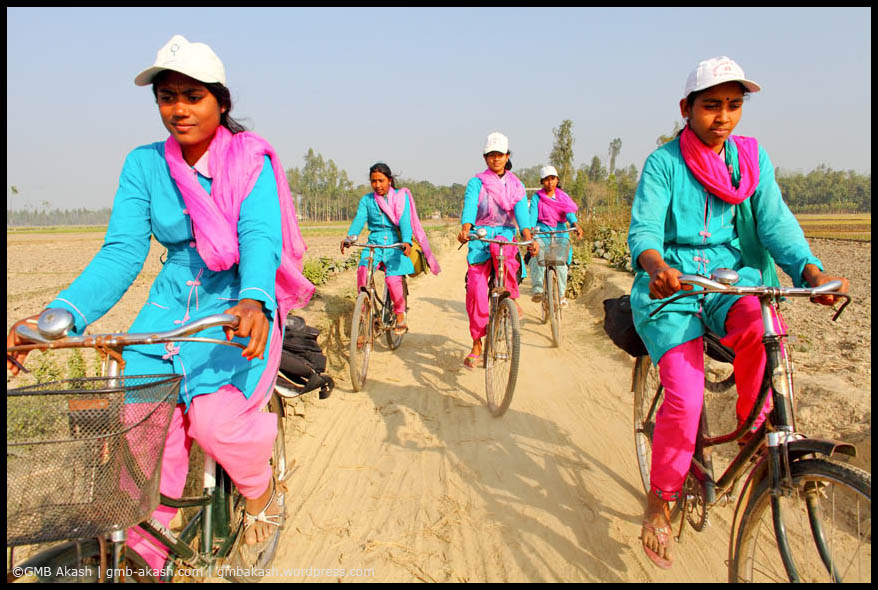
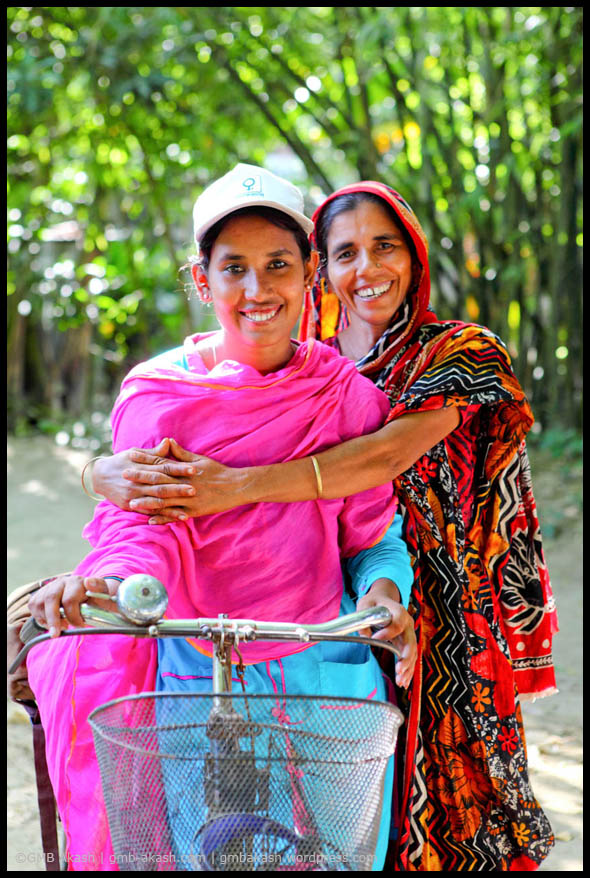
The Info Ladies cover many miles on their journeys from village to village. With their bicycles and laptops, the Info Ladies of Bangladesh bring the world a sense of independence from one village to the next. This has changed the country, and their lives, too. The young women have become role models for a whole generation.
info lady (4)

The Info Ladies cover many miles on their journeys from village to village/www.gmb-akash.com

info lady (2)

The meetings in the villages are free, with a charge for some services/www.gmb-akash.com

Sathi is the most successful Info Lady in the Gaibandha district. Between banana trees and flood swamps, she has opened an info shop in her home village Jarabarsha. A banner in front of the shop rattles in the wind. It reads: “We are independent because we are Info Ladies.”
info lady (10)

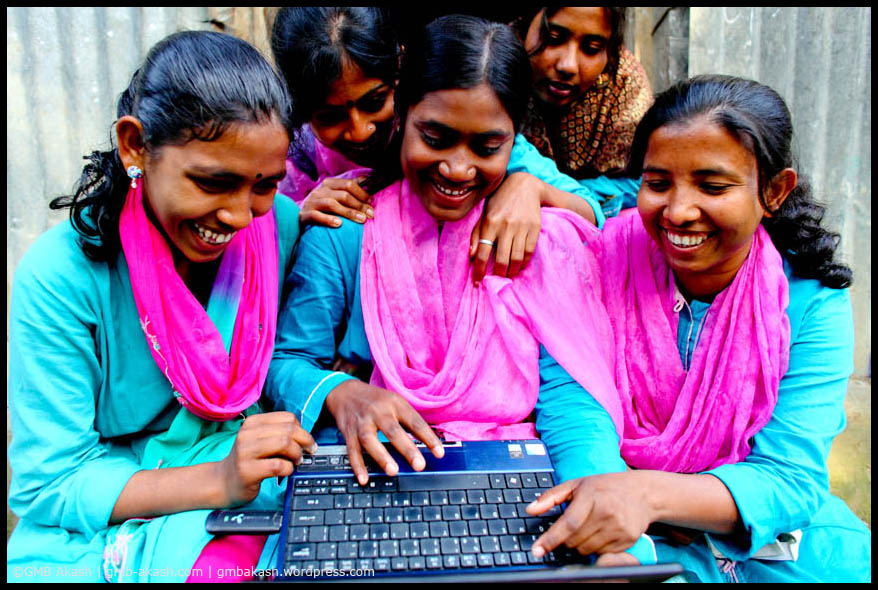
The Info Lady is wearing her info lady uniform, a blue cape and pink trousers. Amid the dark green landscape, she shines like a ladybird on a dandelion leaf/  www.gmb-akash.com

The corrugated iron on the roof shines more brightly than anywhere else in the area. A table mounted on the trunk of a tree lists all the services Sathi offers. Sathi offers Skype calls, online bank transfers, online university application assistance, digital camera rentals, mobile phone ringtone downloads and photography services. She gives pregnancy tests, measures diabetics, takes blood pressure, identifies blood type and even sells underwear for women. Recently she opened her pre-primary school with a vision to create an example for the village.


info lady (8)


Sathi in her info shop which provides for her whole family/ www.gmb-akash.com

Sathi is a 24 year-old petite woman with a barely perceptible smile and deliberate movements. When a man pushes his broken mobile phone across the counter, she unscrew the lid of the phone, fumbles around with the speakers for a few seconds with a metal pin and declares: “it’s broken, I will order a new one,” without expecting any rejection. Sathi has a scar with six stitches on her right ankle from a fall from her bicycle when she still had problems keeping her balance. She proudly shows the scar. Laughing loudly while explaining how difficult it was to convince her father about bicycle riding, she says, “I learned the basics of computers in three days, but it took months to convince my father to let me ride a bicycle.” But now she has changed the financial face of her family. In nearly three years of this job she built new house and renovated the old shop which is now the famous info shop.

info lady (9)

Sathi has to go from village to village to give her services. On that humid day Sathi repeatedly grabs the corner of her pink dupatta and wipes sweat off her face. She is wearing her Info Lady uniform, a blue cape and pink trousers. Amid the dark green landscape, she shines like a ladybird on a dandelion leaf. Sathi cycles past men in waist-deep water. The men stop their work for a moment and look up. Sathi nods in greeting. When she finally arrives in the village, she rings her bicycle bell three times, and women immediately start crowding around her.

info lady (18)

An Info Lady is a nurse, mail carrier, fashion consultant, farmer, photographer, psychologist – all in one.

A short while later the women they roll out fabric bags to sit on and Sathi shows them a film about feeding infants. Then in a firm voice, she repeats every single fact: “You need to wash your breast before you breast-feed your baby. You do not need milk powder from the store; your breast milk is perfectly fine until the fifth month. After this, pay attention to adequate amounts of calcium and proteins. Have you all seen which foods contain these substances?” The women, some twice as old as Sathi, look at her. Their silent glances show how much respect they feel for someone so knowledgeable.
info lady (3)

The meetings in the villages are free, with a charge for some serviceswww.gmb-akash.com

Sathi’s working day ends with accounting. Using a computer programme, she notes every cent she earns. The group meetings are free, but a digital passport photo costs 10 cents, a blood pressure measurement costs 5 cents. Sathi has earned the equivalent of 2.60 Euros – a moderate day’s income. Last month, her income totaled 133 Euros. By comparison, a farmer in the district of Gaibandha earns about 60 Euros a month.
info lady (11)

Many young women resist the opposition of their parents when they become Info Ladies. Sathi’s mother is different. She says: “All women bear children, but not all give birth to children as important as this one”

In a country where less than a quarter of the population uses the Internet and where access is both slow and expensive, Bangladesh’s ‘Info Ladies’ offer a series of vital services to people living in remote, rural parts of the country. The “Info Ladies” project was launched in 2008 by a local non-governmental organisation called D.net. The same organisation had previously sent so-called “mobile ladies” through Bangladesh – young women with mobile phones, who enabled the inhabitants to communicate with people outside their village. When most inhabitants eventually owned a mobile phone, the Info Ladies were launched. They now offer mobile Internet, in a country with 152 million people, of whom five million have access to the worldwide web. D.net works together with local organisations to implement the project. In Gaibandha district, the NGO Udayan is involved. The name translates as “the resurrection”. The Info Ladies are trained for several weeks in the barracks of Udayan.


info lady (19)

In the rainy season, the Info Ladies cross the water on hastily cobbled together rafts or bridgeswww.gmb-akash.com

A Bangladeshi Info Lady is not just a woman with a laptop; she’s an entrepreneurial businesswoman bringing isolated people a piece of the world with valuable information and services. Info Ladies managed to change the perspective of villagers in many ways. Dohrmina, a village elder, now gives advice to the youth that would have been unthinkable in her day. She says: go to school, secure your own income, and don’t have too many children. Dohrmina says: “We didn’t even know what independence meant.”

info lady (20)

Like Dohrmina villagers have been paying more attention to their health now the Info Ladies make their visitswww.gmb-akash.com

info lady (21)

After measuring weight of the pregnant woman Mahfuza says, “You need to eat more,”

Of the 10 Info Ladies from Sathi’s group, seven are still active after three years. The Info Lady Mahfuza who is one of them rests her bike on the kickstand. Mahfuza is 22 years old and an Info Lady. She is part of a project in which young women use modern technology to distribute information to the most remote corners of Bangladesh. Mahfuza’s former classmates are now all married; most have one or two children. Some girls are married by the age of 13 or 14 and by the age of 20, parents actively look for a husband for their daughters. But Mahfuza learned to hold her head up.


info lady (1)

info lady (22)

A camera transmits the image of the extended family – with the brown calf which has been given the name Bohon – from their village of Bangamur in the north of the country, showing the courtyard with its highly polished loam clay and hastily-stacked hay bales all the way to Riyadh, Saudi Arabia’s capital. Tajul Islam, son, husband, nephew, cousin – and sorely missed by his family for a decade – lives there, a distance of some 4,500 kilometres, slaving away on building sites and sending all the money he has left to the village. The time they talk every week via Skype is their only chance to hear and see each other.


Meanwhile Mahfuza sits under a roof made of bamboo leaves and takes measures the blood pressure of a pregnant woman. Someone from the crowd shouts: “she’s expecting a boy.” Mahfuzaa does not even look up from the blood pressure meter as she responds: “boy or girl, it does not matter, both are equally good.” Another lesson learned. Mahfuza is contacted by girls who need underwear but do not dare go into a store. She then goes shopping for them. Farmers ask Mahfuza what is wrong with their rice plants. She photographs spots on the leaves and sends the images to an expert in Dhaka.

info lady (5)

A grandmother holds her grandson in her arms. He seems apathetic, his arms and legs are hanging limply. Mahfuza throws a quick sideways glance to the mother standing by the roadside. “Did you have him vaccinated as I had suggested?” The mother shakes her head imperceptibly. Mahfuza exhales audibly, stroking her hand over the baby’s head. She promises to come back in a few days and take the child to a mobile clinic.

info lady (6)

info lady (7)

The Info Lady Mahfuza also is a photographer. She sends a photo of a villager in her finery to her husband in the capital Dhaka/  www.gmb-akash.com

As a result, the women themselves experience a sense of freedom, empowerment and economic independence. This has started to change their country, still struggling with improving the historical violation of women’s right. They have become heroes for an entire generation of young women by giving them hope and inspiration to also be able to work and enjoy personal freedom in a predominantly Muslim country. Although proving to be a driving force of positive change and transformation, these Info Ladies have had to “walk on thorns”. They have fought against social stigma, a conservative Muslim society as well as deep cultural prejudices against the value and rights of women.


If they were able to change their lives so radically, why should this not also be possible for others?

info lady (12)

info lady (15)


‘Survivors’ Part II

“My photo book ‘Survivors’ is not only important presentation of my 10 years works. It is significant to me in many ways. Surviving in a poor country — facing adversity daily — is akin to a lifetime of tragedy. So in a number of ways, the images presented on these pages are my own experiences, too. My journeys connect me to the many characters. Sometimes I had to run, take a ride on the roof of a moving train, sleep on a flooded floor and spend many hours walking the maze of avenues through sprawling city slums. It is the reaching of my protagonists, the welcome into their homes and their lives, that makes my work worthwhile.

And if mine is the hand that blocks the scorching sun from their eyes — bringing shade for just a single minute, then there’s value in the work I do. I am touched that people started valuing my small step. Yes, one never can complete one’s quest for serving for humanity but I am trying. While photography is a big task but beside it is my willingness to serve these people whom I photograph which is more challenging.

I am gifting business/source of income to each family I am able to give from my book ‘Survivors’. Finding people from the book whom I captured 5-10 years ago, talking/sharing ideas with them, finding the right business, even in some cases doing the business myself for few days, educating them, monitoring them become toughest than photography. But I believe, every amazing achievement starts with an impossibility. Now after seeing these happy families of Survivors, I realize, when many little people in many small places do many small things, they can change the face of the world” – GMB Akash

survivors 1

Over the course of the last decade, I have built a collection of photographs depicting the wise, resigned, sad and sometimes bewildered faces of children, sex workers, climate change survivors and many others who share the “struggle” day-in and day-out. And although the circumstances of many of the people I portray may be grim, as individual they are people of remarkable character. And it is the beauty of such people and the human soul that remains when nearly all else is gone. This beauty I strive to capture in the photographs I take.

This post is tribute to those ‘Survivors’ who sifted their life with my small gift and make a bench mark to rest of the people by becoming example to their community or locality.

survivors (1)

Sajib – a child labourer is busy with his immense workload. These children are deprived from almost all human rights, dedicating the entire childhood towards supporting their families in need. Heavy workloads, prone towards injuries and discrimination are common to them all.

I took picture of Sajib in an aluminum pot factory four years ago. Sajib’s (14) mother Salma Begum’s (35) working life started when she was 15 years old. 10 taka (1 USD =80 Taka) was her first salary. She has one daughter and only one son Sajib. She might never send Sajib to work in silver factory if her income can generate three times food for her two children. She came to her slum 26 years ago. She earns 500 taka per week as well Sajib earns 400 taka per week. They have to pay 1400 tk rent of only one room in which she, her husband sleeps along their children.

Her husband has affairs with other ladies and spends his whole income either for women or for addiction. She cannot let him go as he is her children’s father. Her daughter is very good student. She always do top in the class. But Sajib or Salma Begum no one can give her fees, books, dairy or even Tiffin. Sajib sometime manages to do overtime and gives his extra salary to his sister to continue her education. I spotted Sajib and get a picture of him three years ago in silver cooking factory when he was 11 years old.

Through the ‘Survivors’ project I find him out and get the insight of his family. I understand Salma Begum is one who can help the situation, if I lend my hand to her by project ‘Survivors’. She has previous experience of selling bed sheet and she earns enough that time. She was just an employee of a Khala (aunt) who has the capital. She saw khala earns 200-300 taka daily while she sells everything. But end of the day she got 50 taka as her labor cost. She leaves the job as she has no capital and the income was low. Now she wants to do that business again by the assistance of expertise of one of her sister. She wants to sell Kamiz (women dress) and Shari to door to door and later in a shop. The only thing is she needs capital. I trusted on her idea and let her do the business and go to buy clothes with her. Her plan was she will buy cloths with her full capital then with the selling profit she will buy more and again move for selling.


Survivors (9)


Survivors (3)


Survivors (4)

Her planned worked. She got good customer in her locality and other areas who willingly buy cloths seating at home. She do profit less, sells more thus she gains customer loyalty and this uneducated lady now is a successful seller. It’s been nearly year she is doing her business and her son Sajib is helping her. She sends Sajib to Brac School but he could not able to read or write and feels shame to do study with juniors. Salma Begum decided to involve Sajib more in her business and admit him in a technical school beyond conventional. She bought furniture for her small house and her only daughter now goes to teacher for private tuitions.

She is more than happy with the fact that still woman like her is capable to earn a dream with dignity. And my happiness? Seeing this family, I feel simply proud. 

Survivors (12)

Survivors (15)

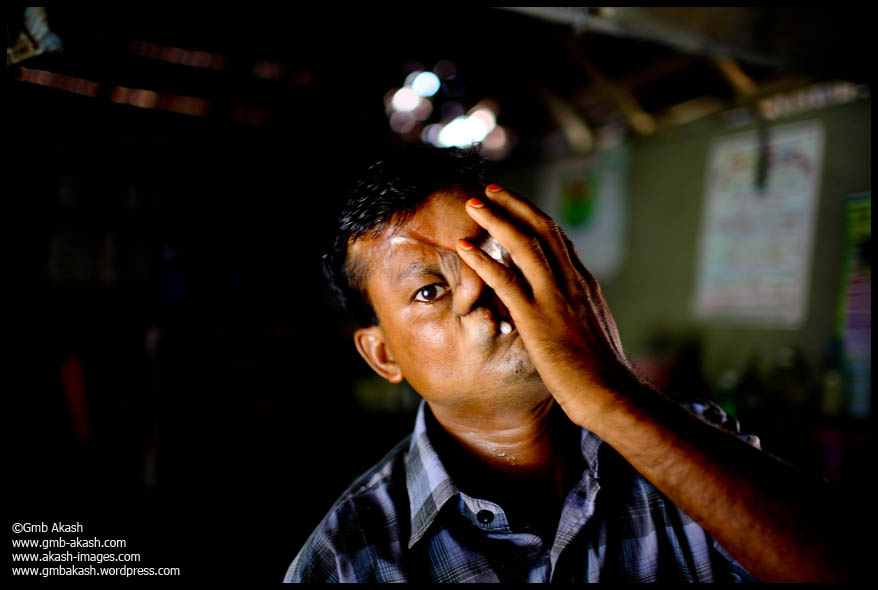
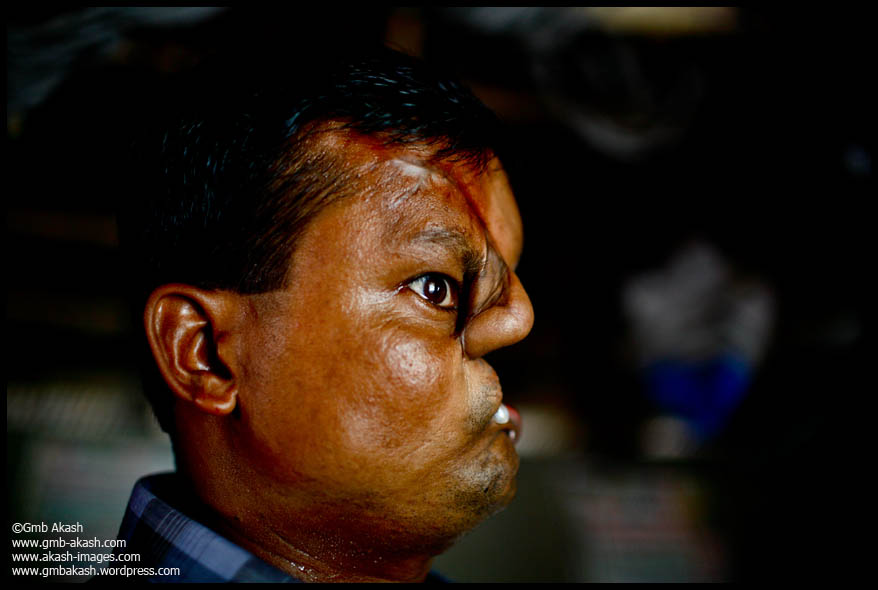
31 year old Hashmoth lost half of his face in a tiger attack in 1995. The attack was on his first day out fishing. He was sleeping in the boat when the tiger attacked. Though he survived it, the damage to his face was such that no one from his village would come near him. His parents forced a girl to marry him. At the initial days of his marital life, he would not allow his wife to look at him. The region is home to approximately 500 Bengal tigers, one of the largest single populations of tigers in one area. These tigers are well-known for the substantial number of people they kill; estimates range from 50-250 people per year. Satkhira, Bangladesh

Survivors (17)

By the project “survivors” I planned to help him. I ask them what business will be easy to do for them or what income source can be easily maintain by Hashmoth. He & his wife came to a decision that they will sell fish in market. For this purpose they need capital. I go to their near market with them, saw Hashmoth’s capability of selling fish by a trial. Then we went with Hashmoth to see how difficult fish business for him is. As my method of helping is not giving money in hand, so I assign a volunteer who will assist them to do business in first one month. Already I visited twice but still the place is far from the city, so I keep my faith alive that they will overcome all obstacles. 


Survivors (13)

And they did. Along help of her brave wife Hasmoth is selling fish in the market and spends his profit for daily expenditure of their family. His wife manages to save little from their profit. Hashmoth goes to sell fishes at early morning and at evening. Rest of the time either he takes rest. Thus Hashmoth is able to stop himself from begging door to door and become a real survivor in the race of life.

Survivors (14)

“Several times I have been severely broken heart, injured or illnesses have torn me down. Nevertheless I continue working because of my strong belief that my pictures can make a difference. I learn, the wound of today is the power of tomorrow. And ‘Survivors’ proved me that no matter what happens in life still life is precious, each moment deserves celebration

survivors (2)

“I was searching for ‘Survivors’ to help their families. It was a long journey to find each and every face after ten years later.”

A quote of Helen Keller is a big inspiration for me in this journey which I want to share with you all:

“I am only one, but still I am one. I cannot do everything, but still I can do something; and because I cannot do everything, I will not refuse to do something that I can do.”

– GMB Akash’