Dark Alleys

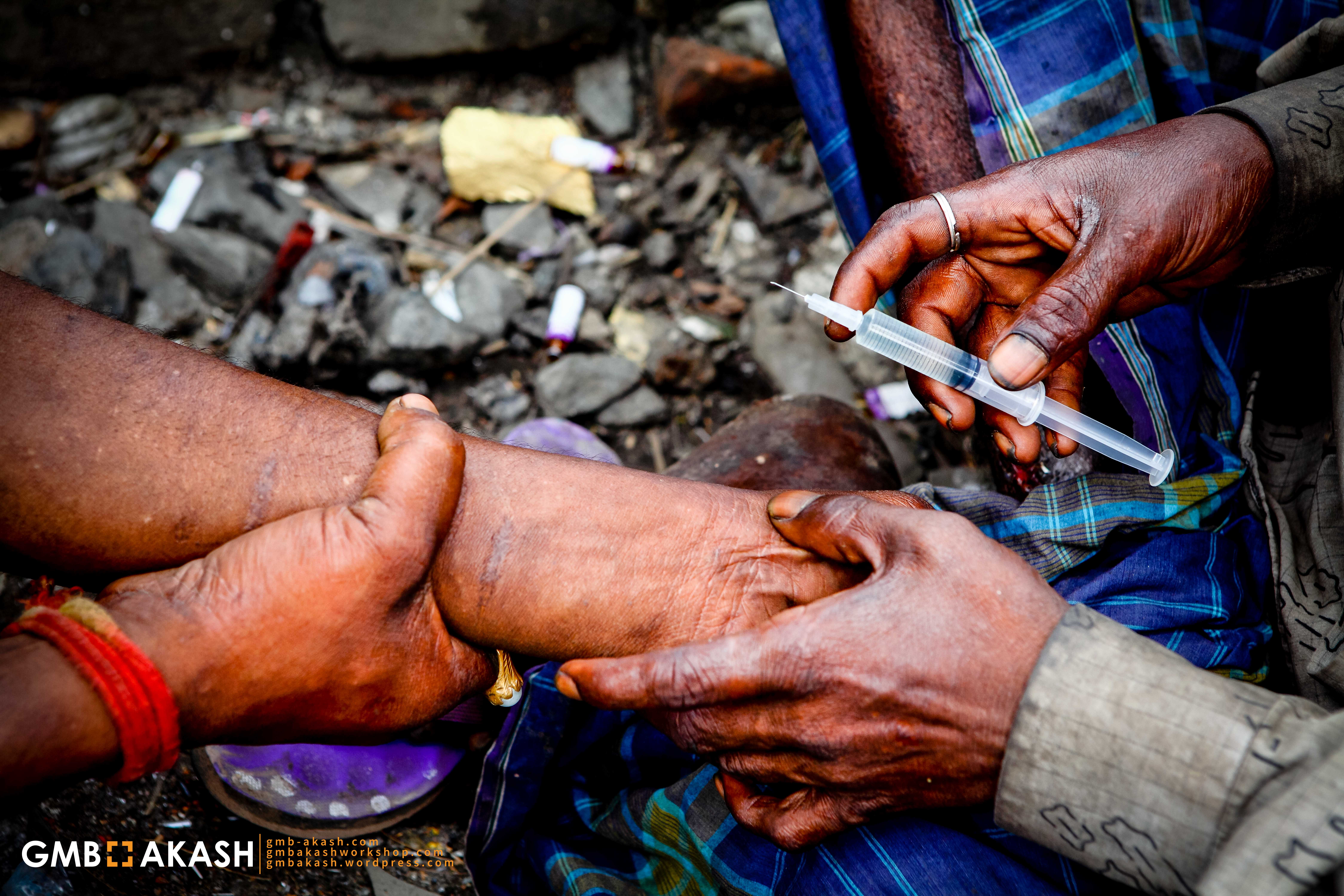
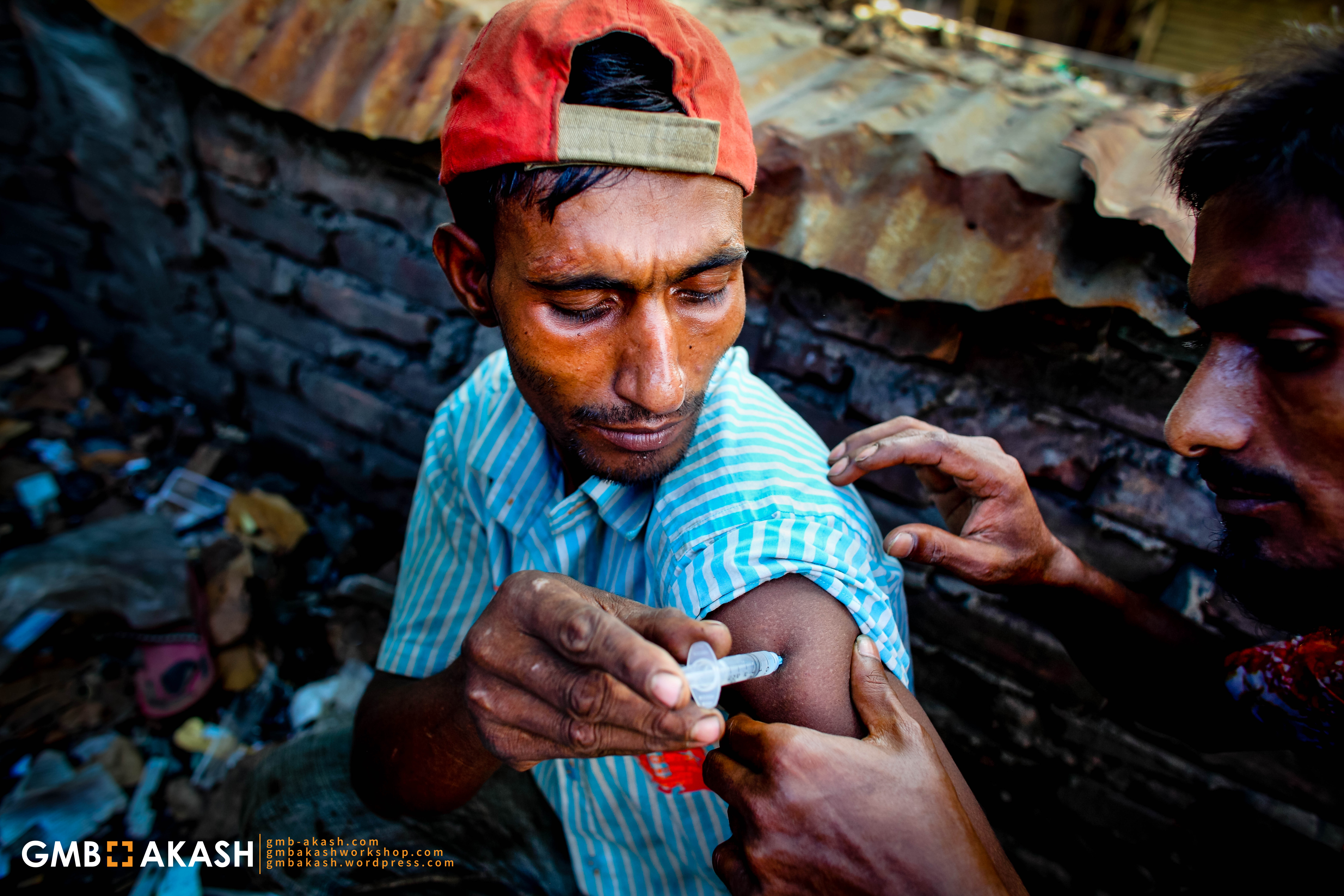
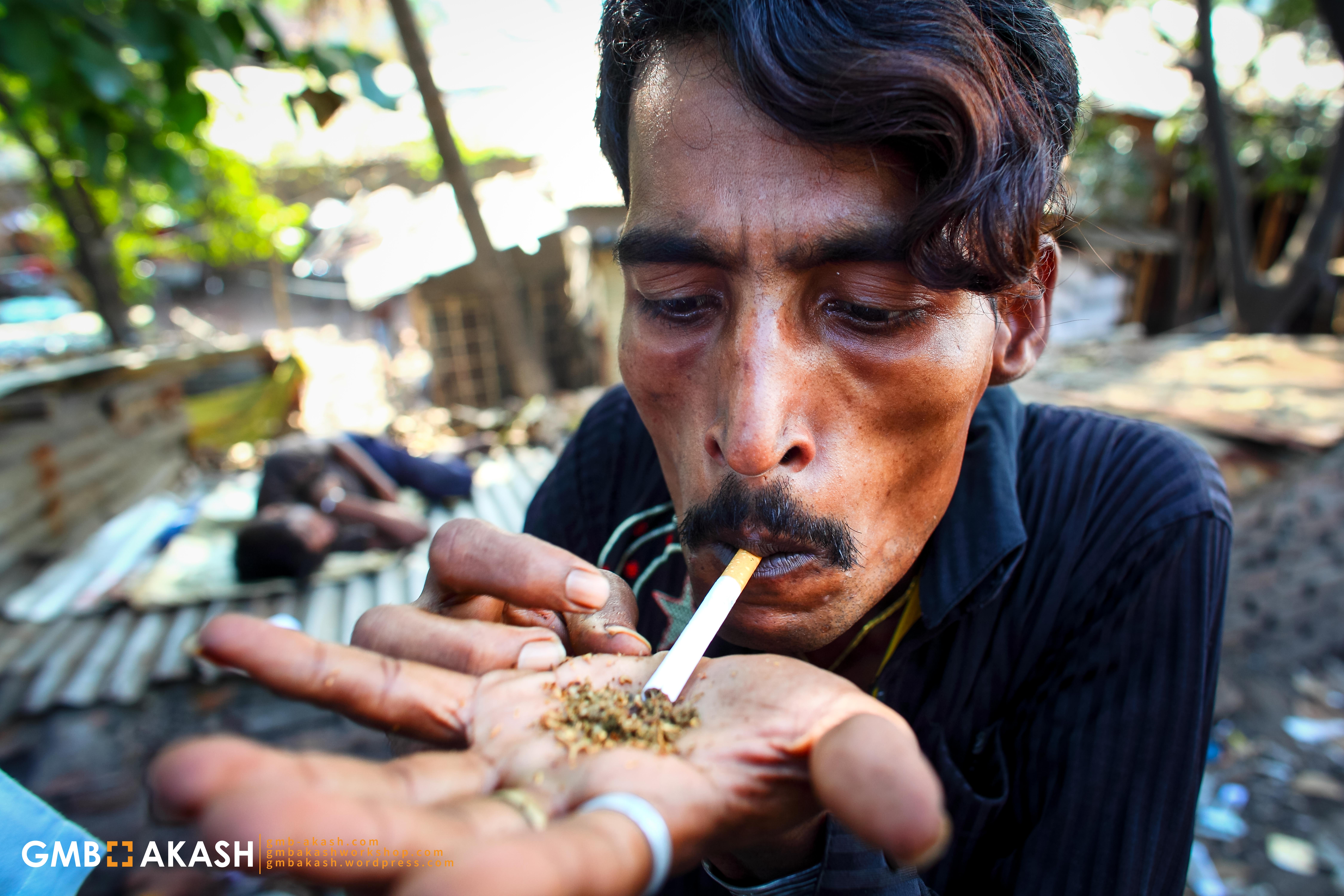
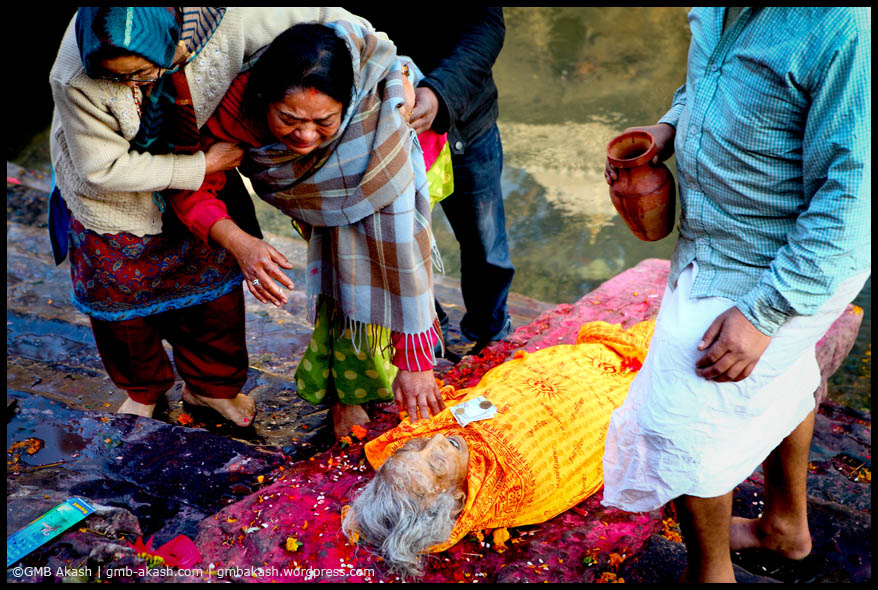
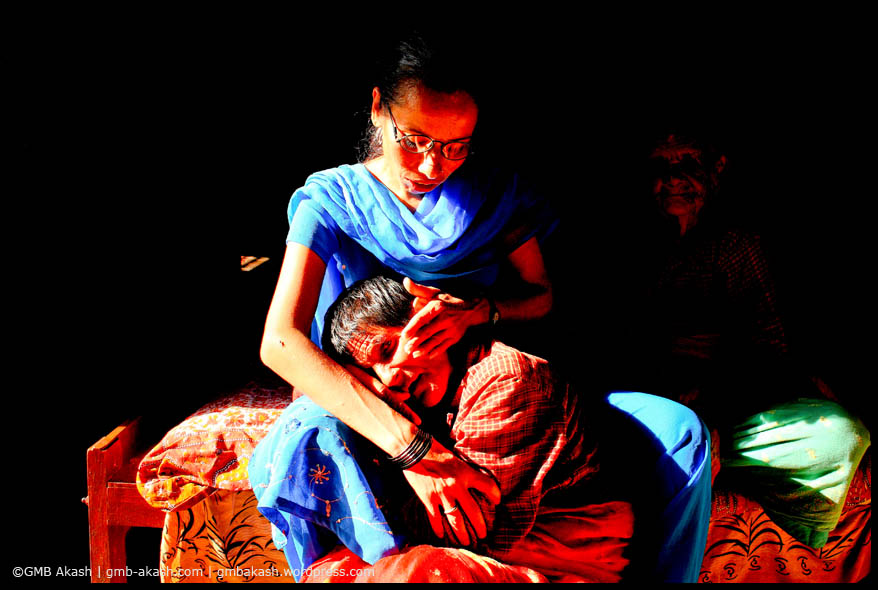
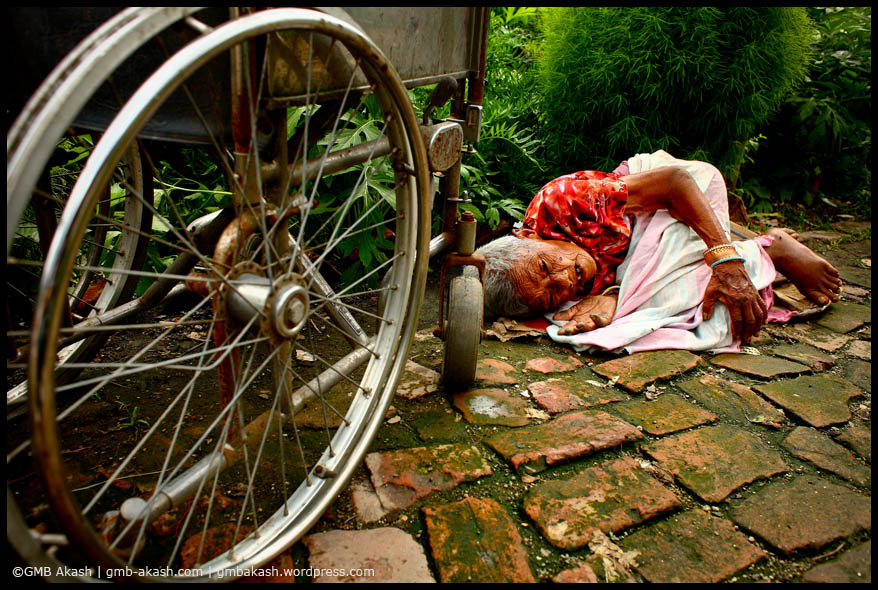
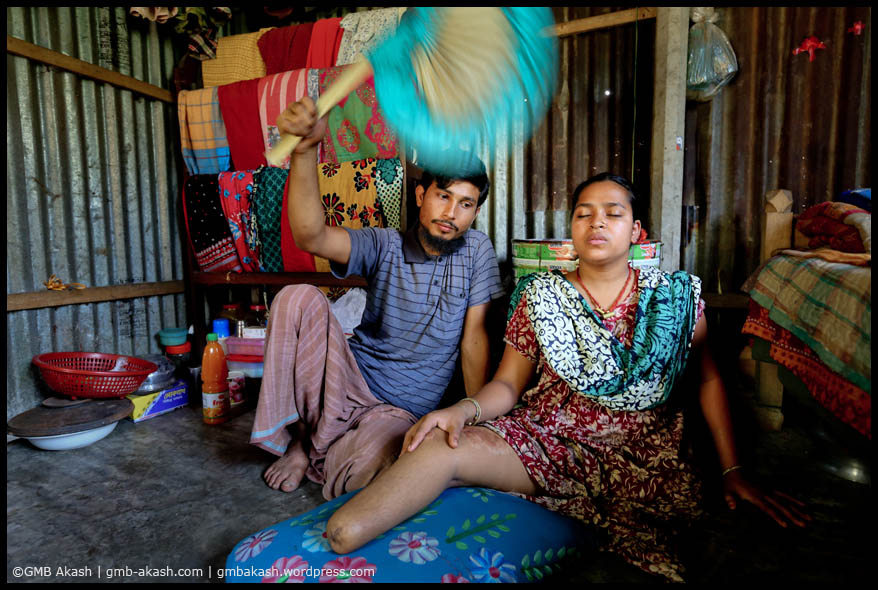
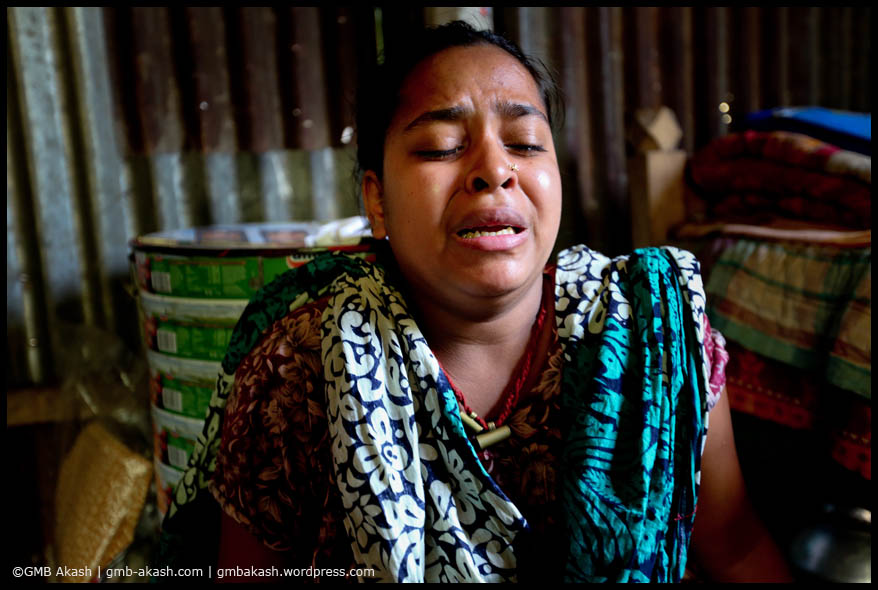
“These disorders — schizophrenia, Alzheimer’s, depression, addiction — they not only steal our time to live, they change who we are. In the time period of working with drug addict, I encounter tremendous shiver in thought of helplessness that how they are silently dying in these dark alleys and there is no dark Knight to hold them straight only we are here to celebrate the funeral of these fallen stars”_GMB Akash

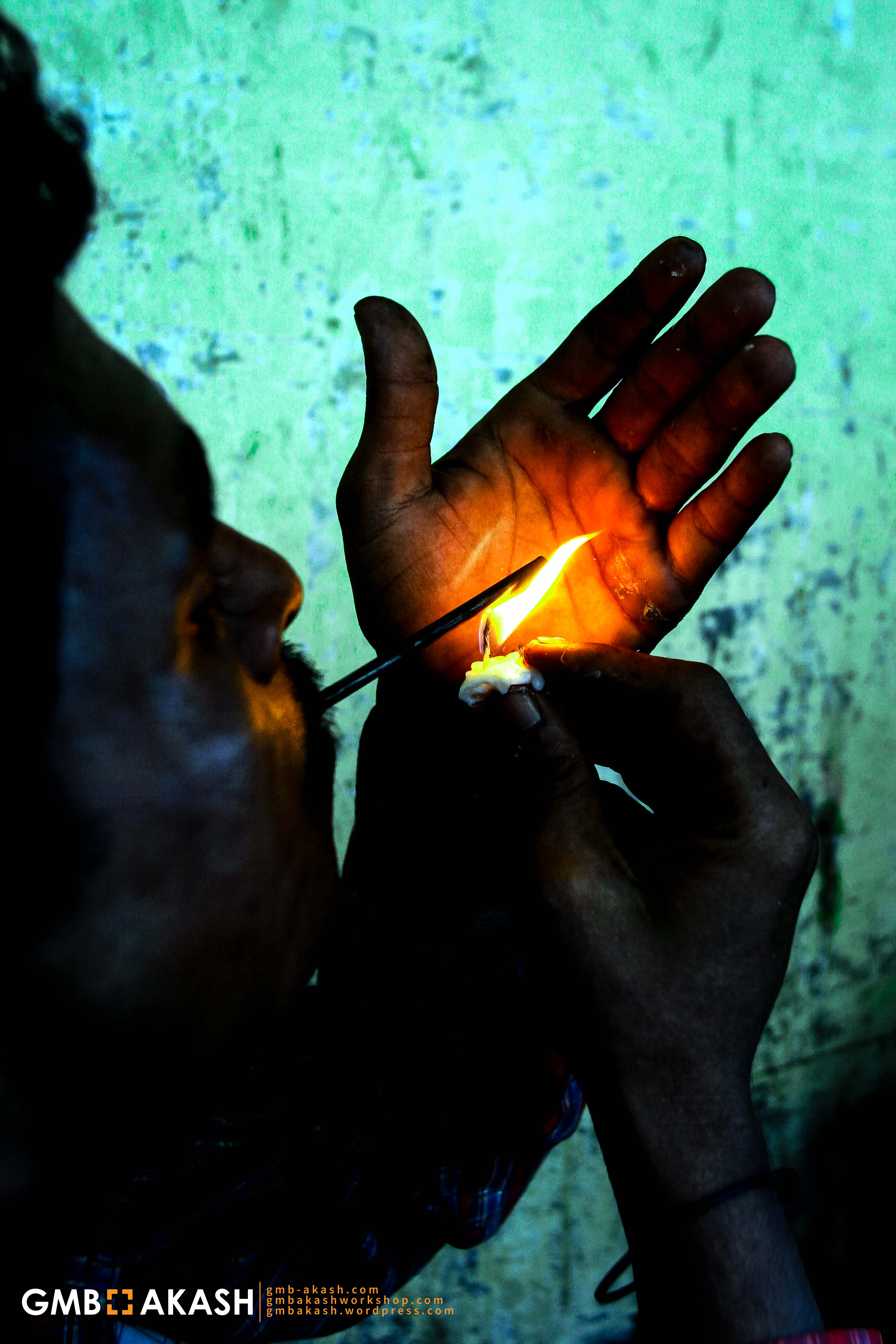
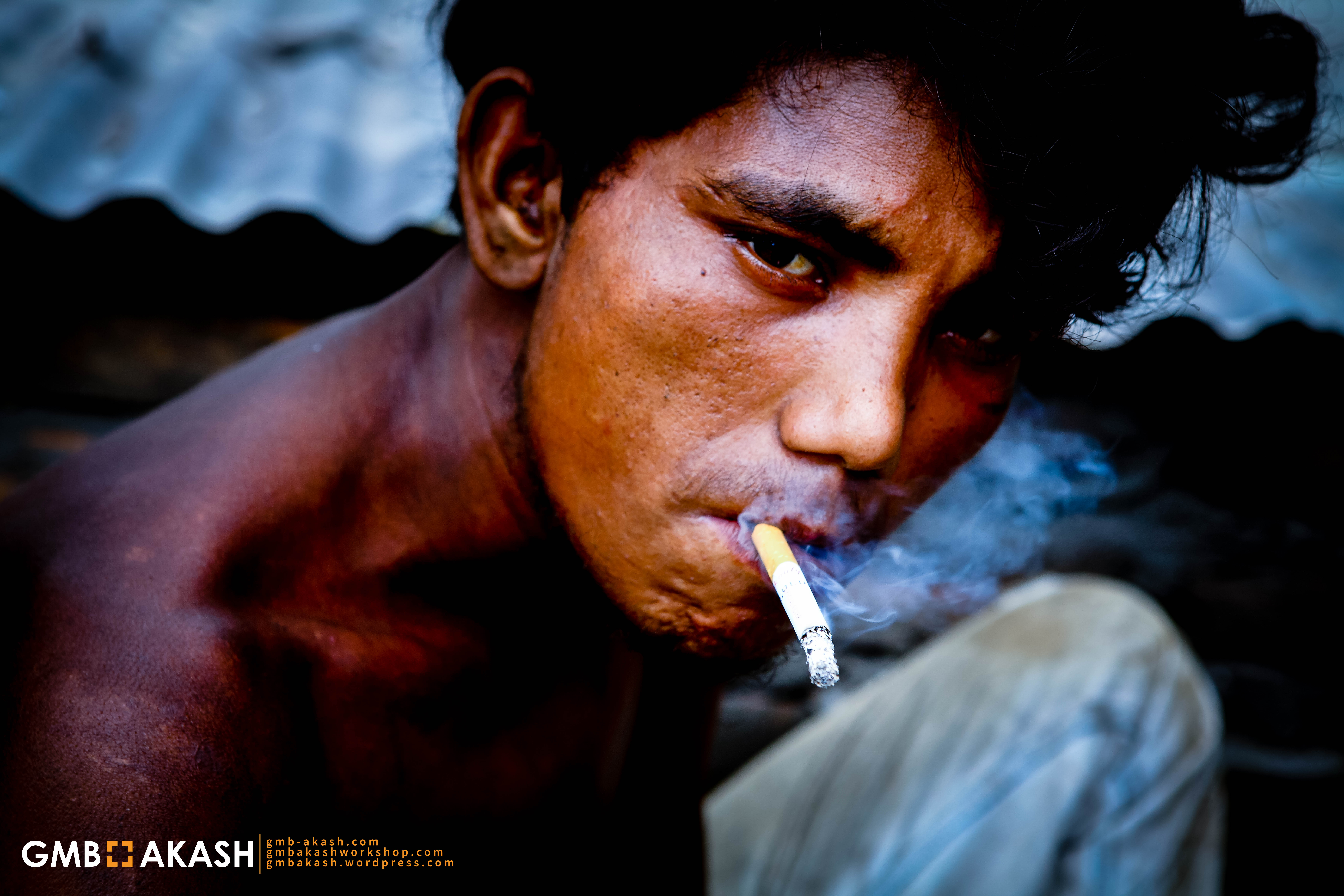
Drug addiction is a major social evil in Bangladesh, affecting thousands of young people and their families. There are thousands of addicted people in Bangladesh and most of them are young, between the ages of 18 and 30 from all walks of life. Drug addiction in young Bangladeshis is mainly seen because of reasons like depression. People try to remove depression using drugs as a tool. And this is how they become addicts.

Drug users are taking drugs by sharing same needle with each other. Injecting drug users have few places to turn, and they are one of the groups most at risk of contracting and spreading HIV. Heroin is mostly smoked within aluminum foil or cigarette paper, but in Bangladesh this is injected. Injections through infected needles can cause diseases of the liver, brain, heart, lungs and spinal cord. Estimates of the number of people living with HIV/AIDS in Bangladesh range from 2,500 to 15,000 most of them are affected while taking drugs. A Heroin addict may need about Taka 500 worth of the drug a day. They neglect the needs of the family, and those are non-earning may sell off family assets. They also go out on the streets for mugging and dacoit.

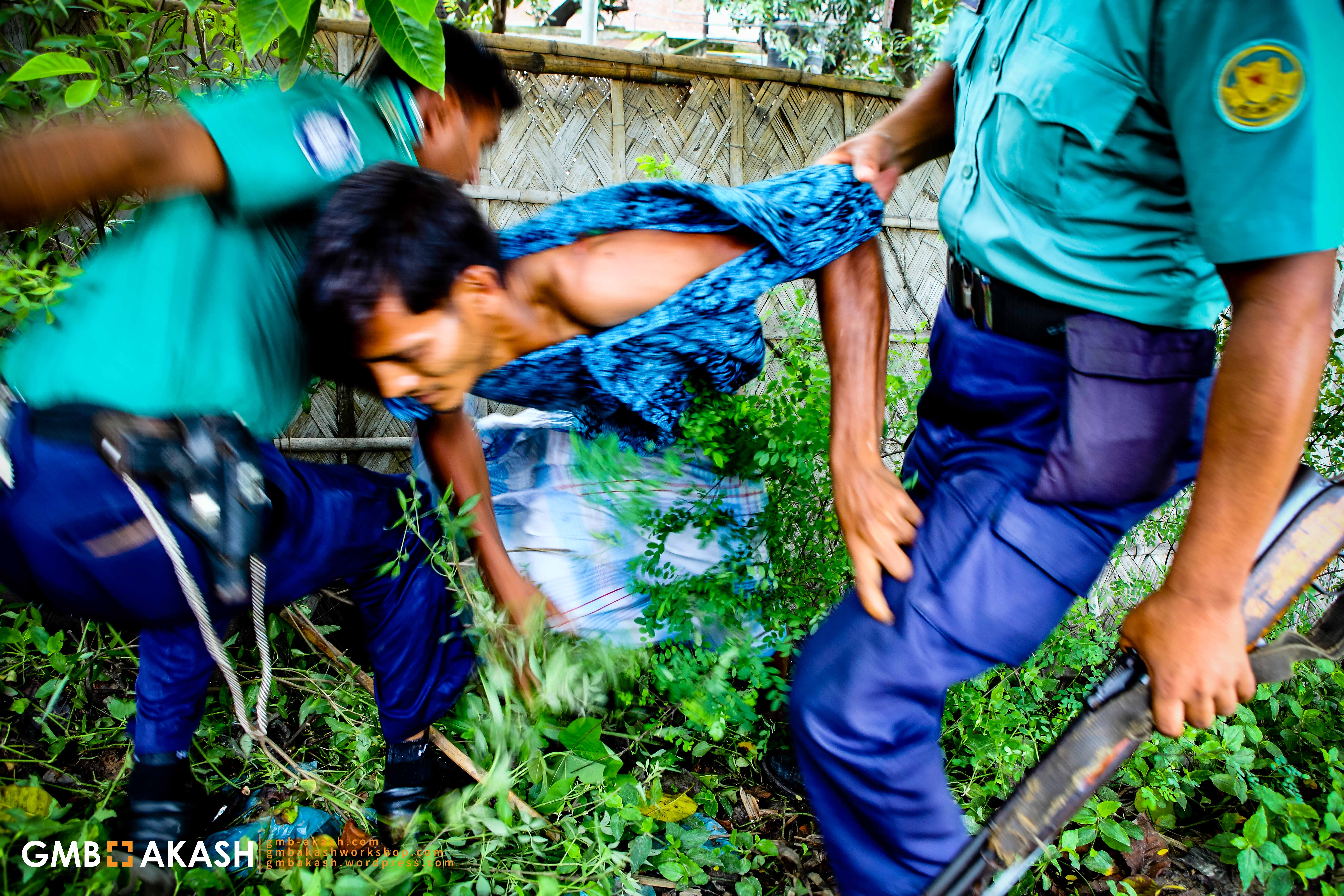
“Rickshaw driver Mohammad Bashir has been addicted to heroin for most of the last 13 years. His habit cost him his job and put an enormous strain on his family. Like most addicts, he often uses shared needles. Police has caught him in the spot, members of his addict team has managed to fly. But police caught him, while he is continually requesting police to leave him in the word of his promise that he will not inject him any more with drugs”

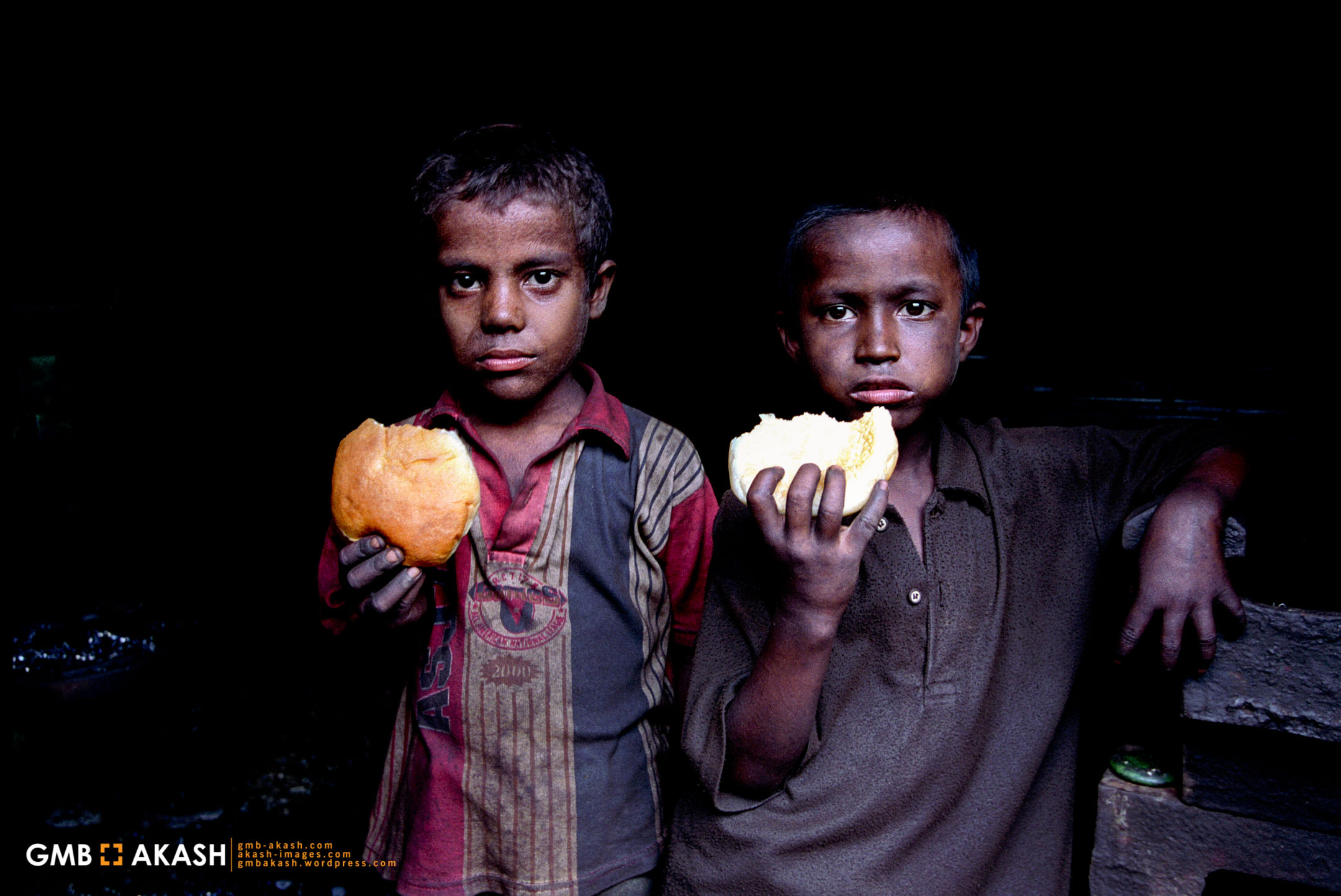
Drug addiction is increasing among the street children who live without a family, love and care. Bangladeshi youth are ‘huffing’ shoe glue, a drug locally called ‘Dandi’, which is seriously harmful to mental and physical health. Up to 17 percent of street children in capital Dhaka are addicted to drugs. Children as young as 10 years old are also experimenting with alcohol, phensidyl, Heroin, Baba, Ganja, pethedrine, and other forms of available drugs. For managing the money for drags these children spends all their earnings on drugs. Some time they beg whole day in the street and end of the day spends everything on drugs.

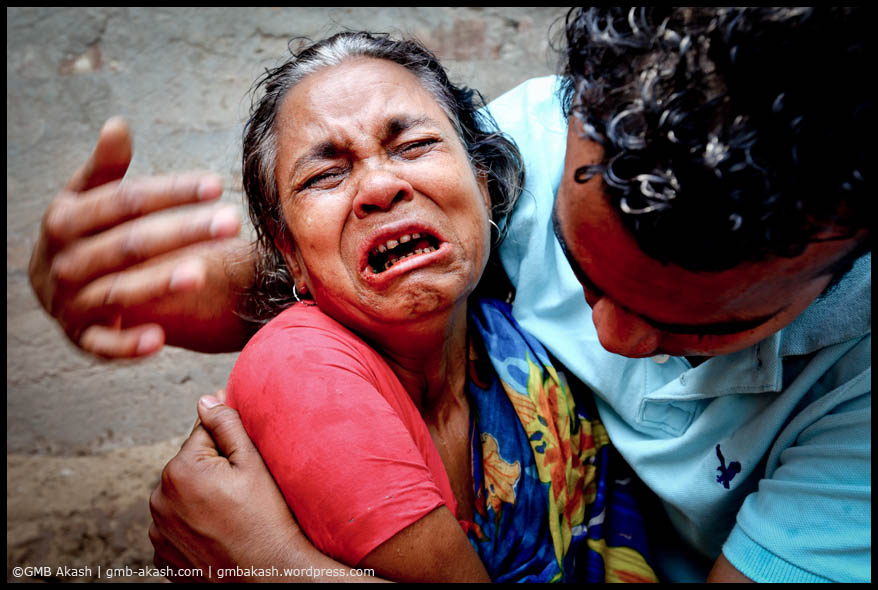
“Bitter experiences are there too. I visit all danger territory where these addicted people living senselessly. Few of them try to beat me sometime, few of them tied me with their arms and cried and cried, few of them burst out in depression and few of them wants to end their sufferings. But this is cycle of unbearable torment which has no end. In a world with chaos and hunger, everything becomes a guerrilla struggle. It becomes almost impossible to save lives or grow dreams sometime. But yet these lives deserve our affection, attention and sympathy. No medicine is as effective as love to them. “– GMB Akash

GMB Akash

Photojournalist and Profile Photographer at Panos Pictures, London

Founder of GMB Akash Institute of Photography, Dhaka

Patreon: https://www.patreon.com/gmbakash

Website: http://www.gmb-akash.com/home

Photography Workshop: http://www.gmbakashworkshop.com/

Facebook Page: https://www.facebook.com/gmbakash/

Instagram: https://www.instagram.com/gmbakash/

Blog: https://gmbakash.wordpress.com/

Twitter: https://twitter.com/GmbAkash

Love for Rudro!

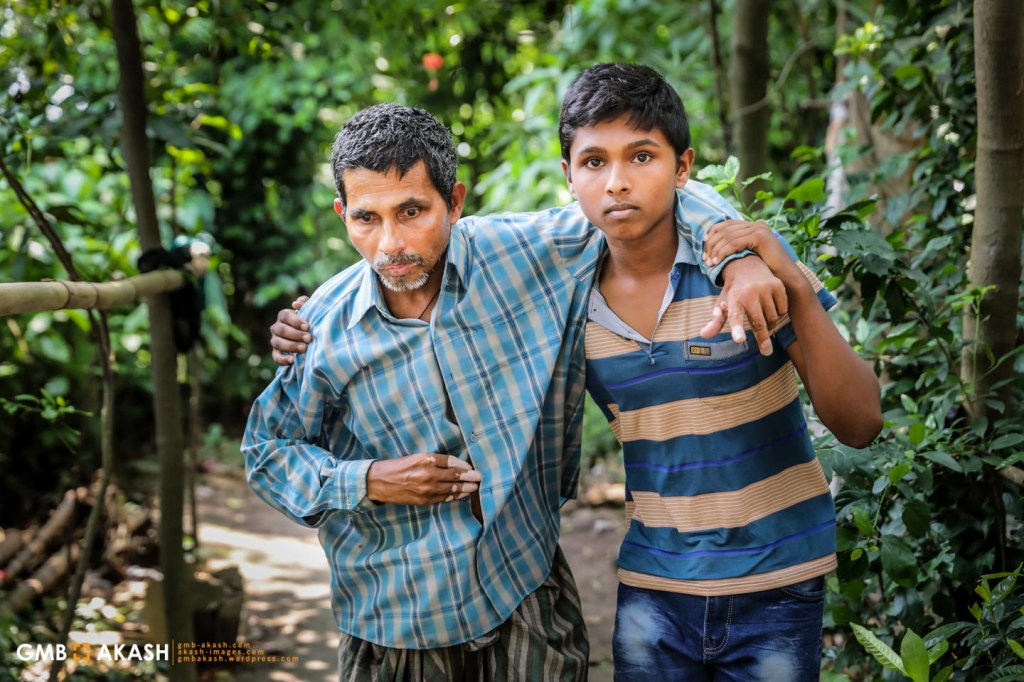
I have some good news to share with you about Rudro’s family! Rudro’s family had endured such hardship when his father had a stroke that crippled him greatly and the family had become destitute.

I had been taking care of all of Rudro’s expenses for his education since he was in class 9.

Rudro is now studying in the 2nd year in a highly prestigious Notre Dame College (Notre Dame College is the best college in Dhaka as well as in Bangladesh) And I will continue helping his family till he gets a job and starts earning for them himself.

I am sharing a short video where Rudro wanted to express his gratitude.

“Our little help, little words, little recommendations could bring light in some dark places of this earth.”

For the last two years I have been studying at the prestigious Notre Dame College in Dhaka. In 2021 my education at Notre Dame will be completed. From class 9, Akash brother took care of all my expenses so that I could go to school.

_ Rudro

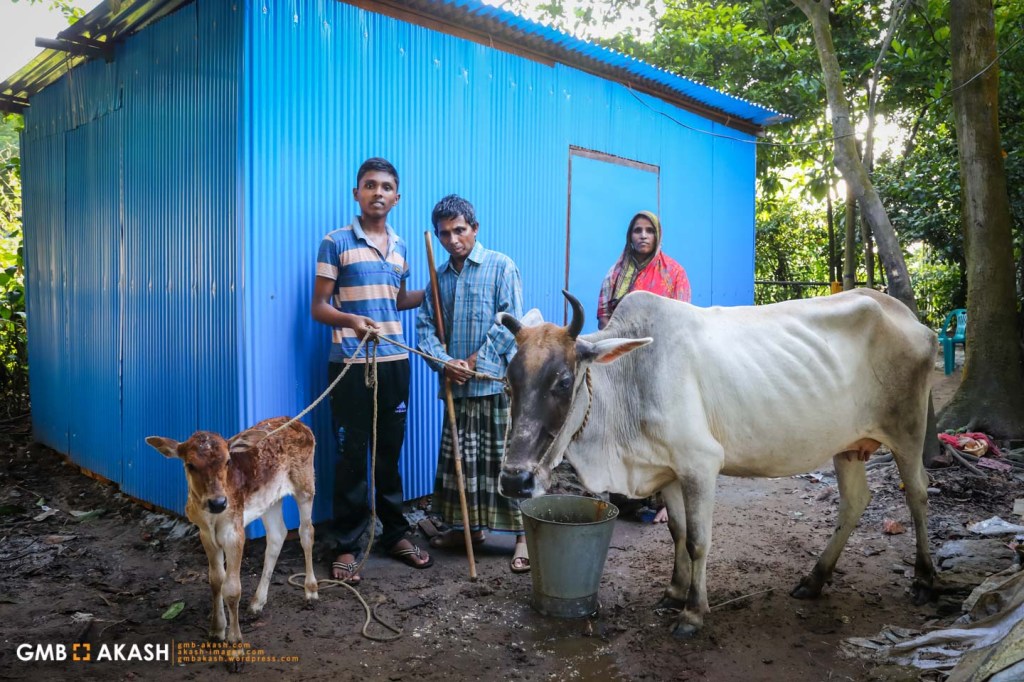
My father is sick; he is paralyzed and unable to earn anything. Without Akash brother’s help, my education would have stopped long ago. Four years ago Akash brother gifted us a cow with a calf.

_ Rudro

We have now received four calves from that cow. After raising those calves, we sold them and got a good amount of money. If Akash brother had not helped me by giving us this cow and the first calf, I have no idea what would have happened to my family, my education and my father’s treatment. 

Like me, Akash brother helps many people from our village with small family businesses or scholarships for education. Akash brother built a school in our village where around 150 poor children receive nearly free education. I pray for Akash brother so he can help more people.

_ Rudro

GMB Akash

Photojournalist and Profile Photographer at Panos Pictures, London

Founder of GMB Akash Institute of Photography, Dhaka

Patreon: https://www.patreon.com/gmbakash

Website: http://www.gmb-akash.com/home

Photography Workshop: http://www.gmbakashworkshop.com/

Facebook Page: https://www.facebook.com/gmbakash/

Instagram: https://www.instagram.com/gmbakash/

Blog: https://gmbakash.wordpress.com/

Twitter: https://twitter.com/GmbAkash

World Day Against Child Labour

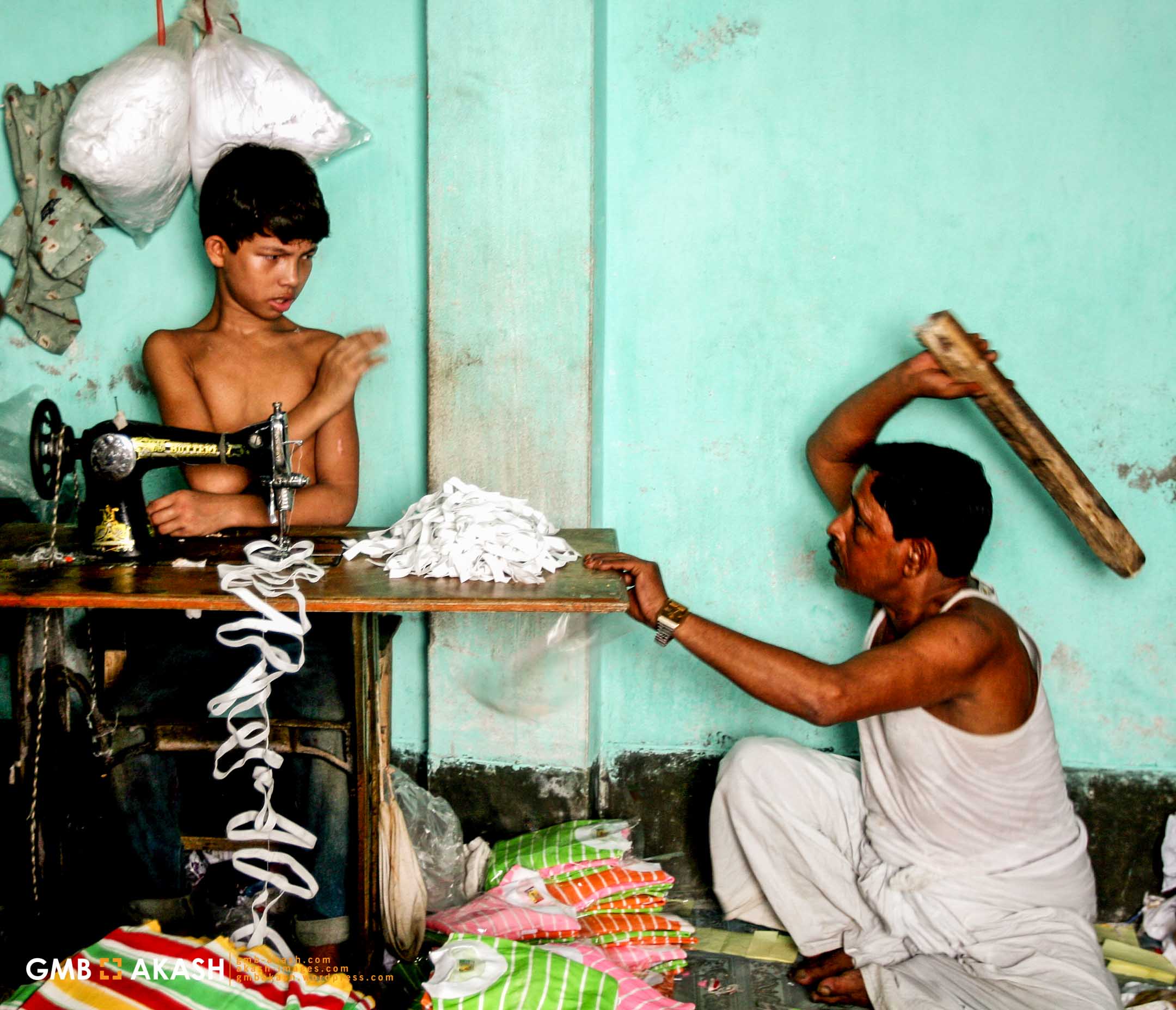
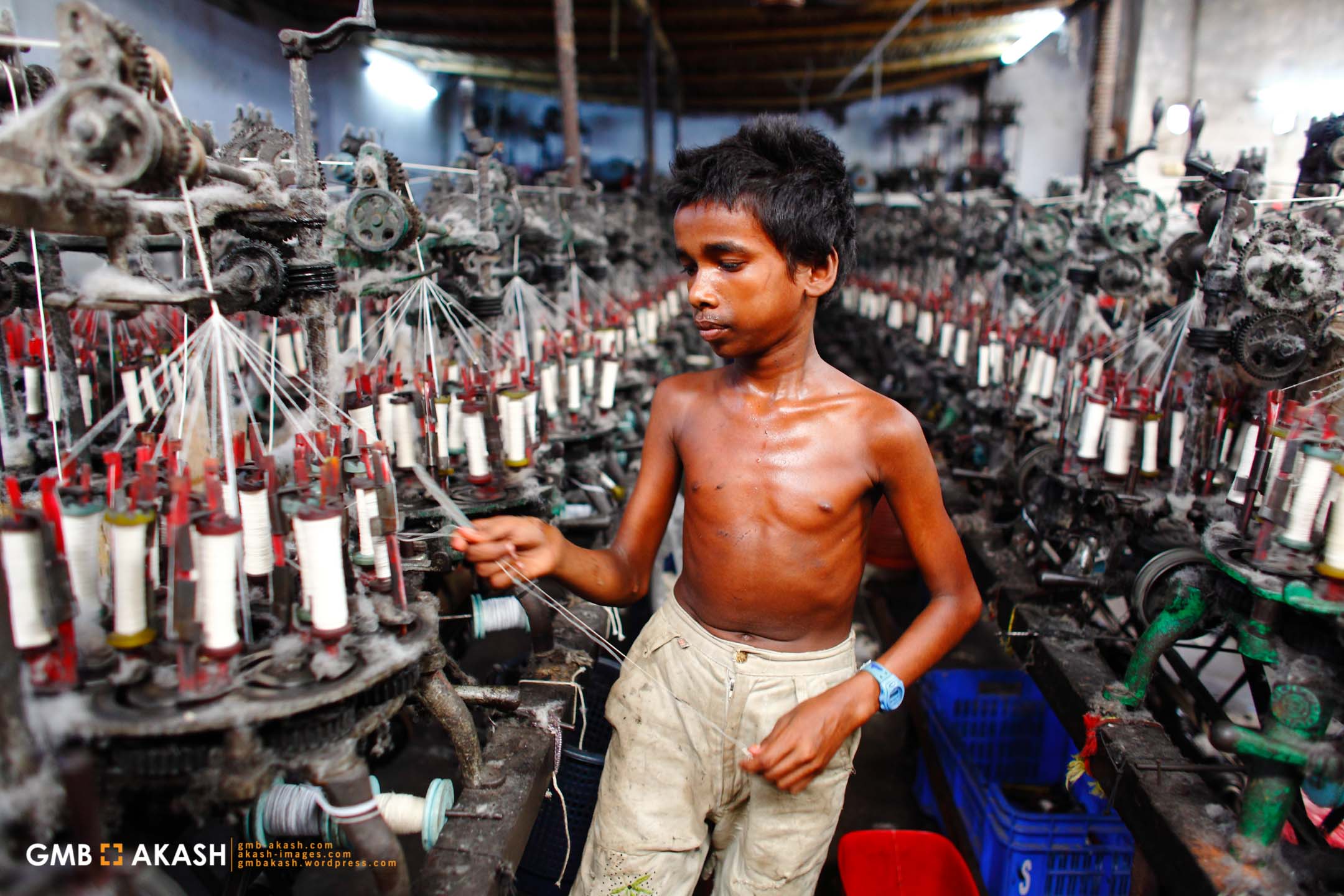
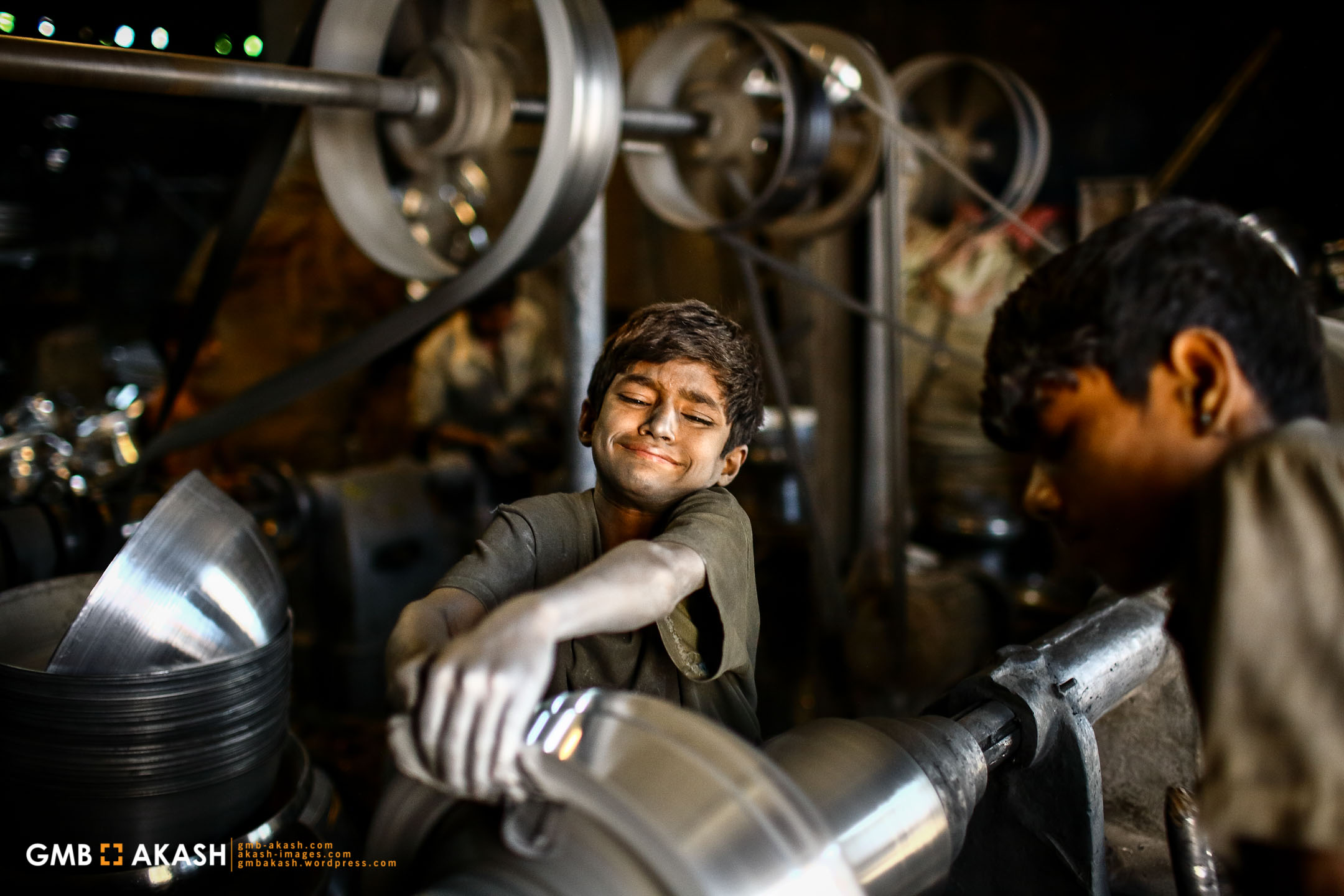
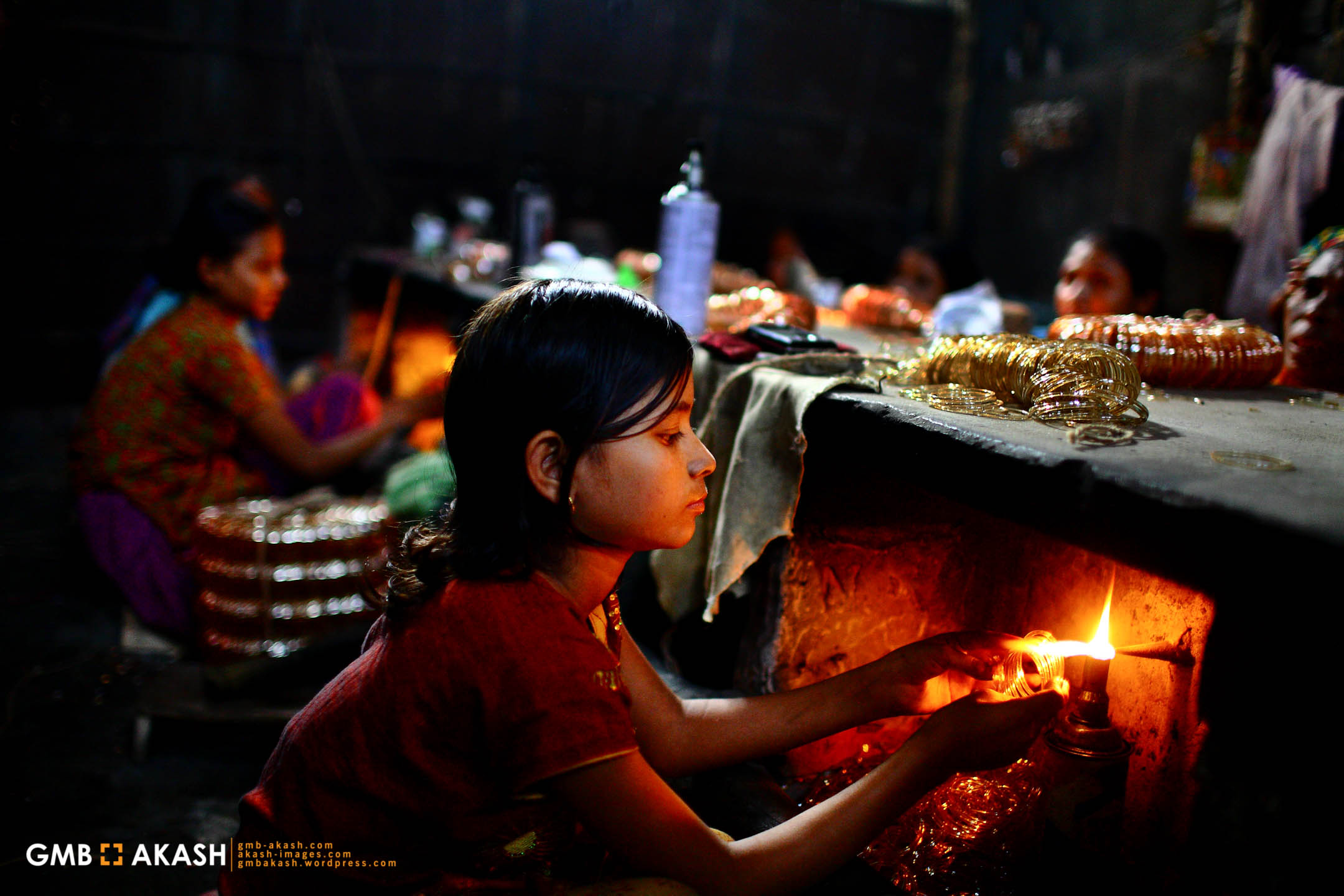
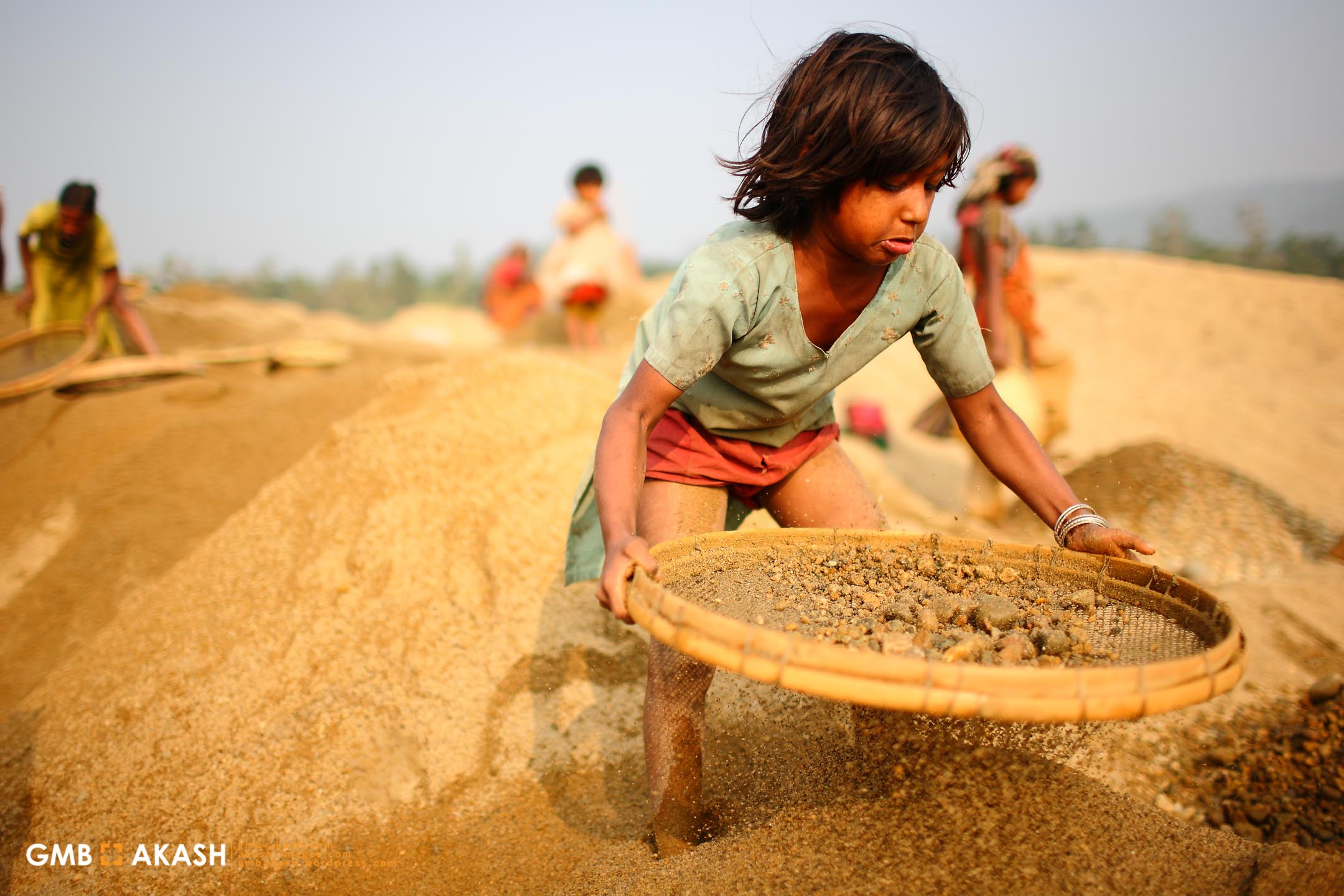
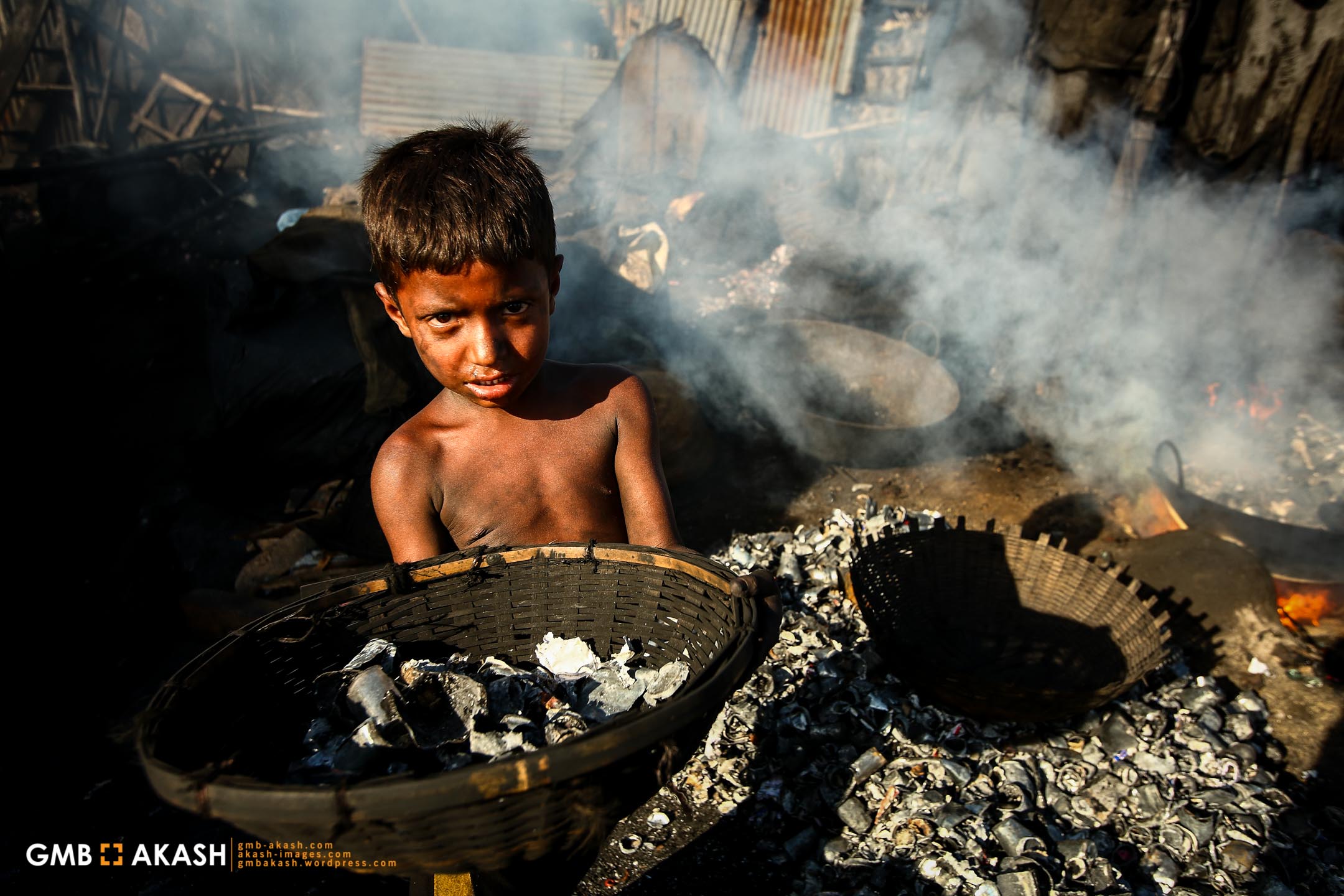
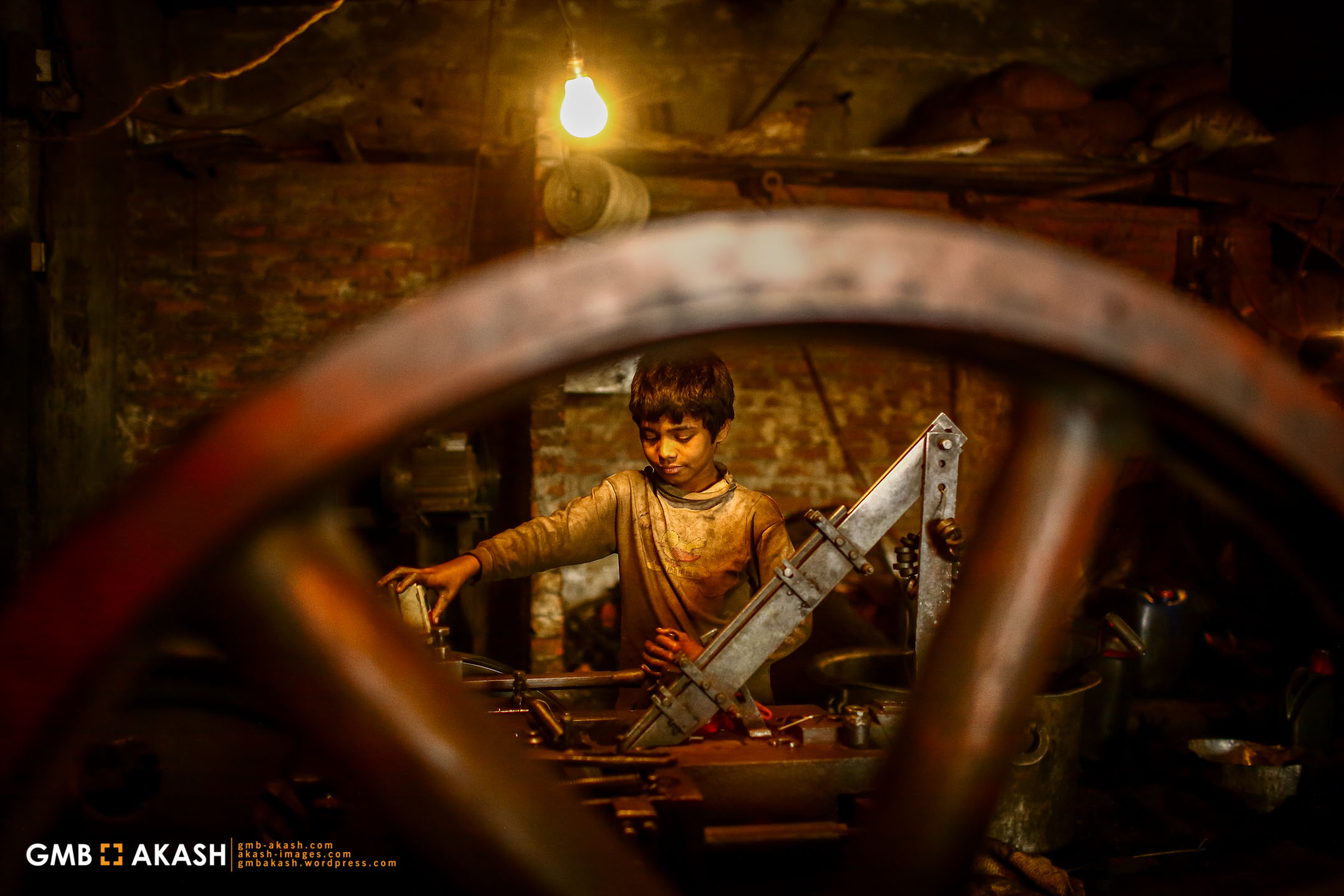
There are an estimated 152 million children in child labour, 72 million of which are in hazardous work.

Child labour in Bangladesh is common, with 4.8 million or 12.6% of children aged 5 to 14 in the work force.

No one has the time to listen to these unfortunate children who are mostly unseen humans beings. I always wanted to deliver their voices to all of you and show you their hidden pain and anguish. I tell their stories, depict their emotions, and steal their sorrows into my frames…

On the occasion of #WorldDayAgainstChildLabour let us Pledge to Secure the Future of our Children.

Let them Learn, Not Earn.

GMB Akash (7)

GMB Akash (19)

GMB Akash (4)

At the age where they should play and study, they are earning to fill their Stomachs!

No one deserves this childhood!

GMB Akash (48)

GMB Akash (2)

GMB Akash (50)

The COVID-19 health pandemic and the resulting economic and labour market shock are having a huge impact on people’s lives and livelihoods. Unfortunately, children are often the first to suffer. The crisis can push millions of vulnerable children into child labour.

GMB Akash (12)

GMB Akash (13)

GMB Akash (52)

GMB Akash (3)

GMB Akash (47)

Can you exchange a day with your own child in the place of these children? Can you deposit your children’s labor in such a place for a day in return for $1. If you can’t, can you please do something for these children? “Wishing to help” is an excuse. Shame is a mild word to what we are overlooking. May our spirits wake up?

GMB Akash (45)

GMB Akash (29)

GMB Akash (32)

GMB Akash (35)

——————-

GMB Akash 

Photojournalist and Profile Photographer at Panos Pictures, London

Founder of GMB Akash Institute of Photography, Dhaka

TEDxHyderabad:https://youtu.be/sXbmBCzgy8A

TEDxYouth:https://youtu.be/rLG7sPs6MkU

Website: www.gmb-akash.com

Photo Agency: www.panos.co.uk

Photography Workshop: www.gmbakashworkshop.com

Facebook Page: www.facebook.com/gmbakash

Instagram: www.instagram.com/gmbakash

Blog: www.gmbakash.wordpress.com

Twitter:www.twitter.com/GmbAkash


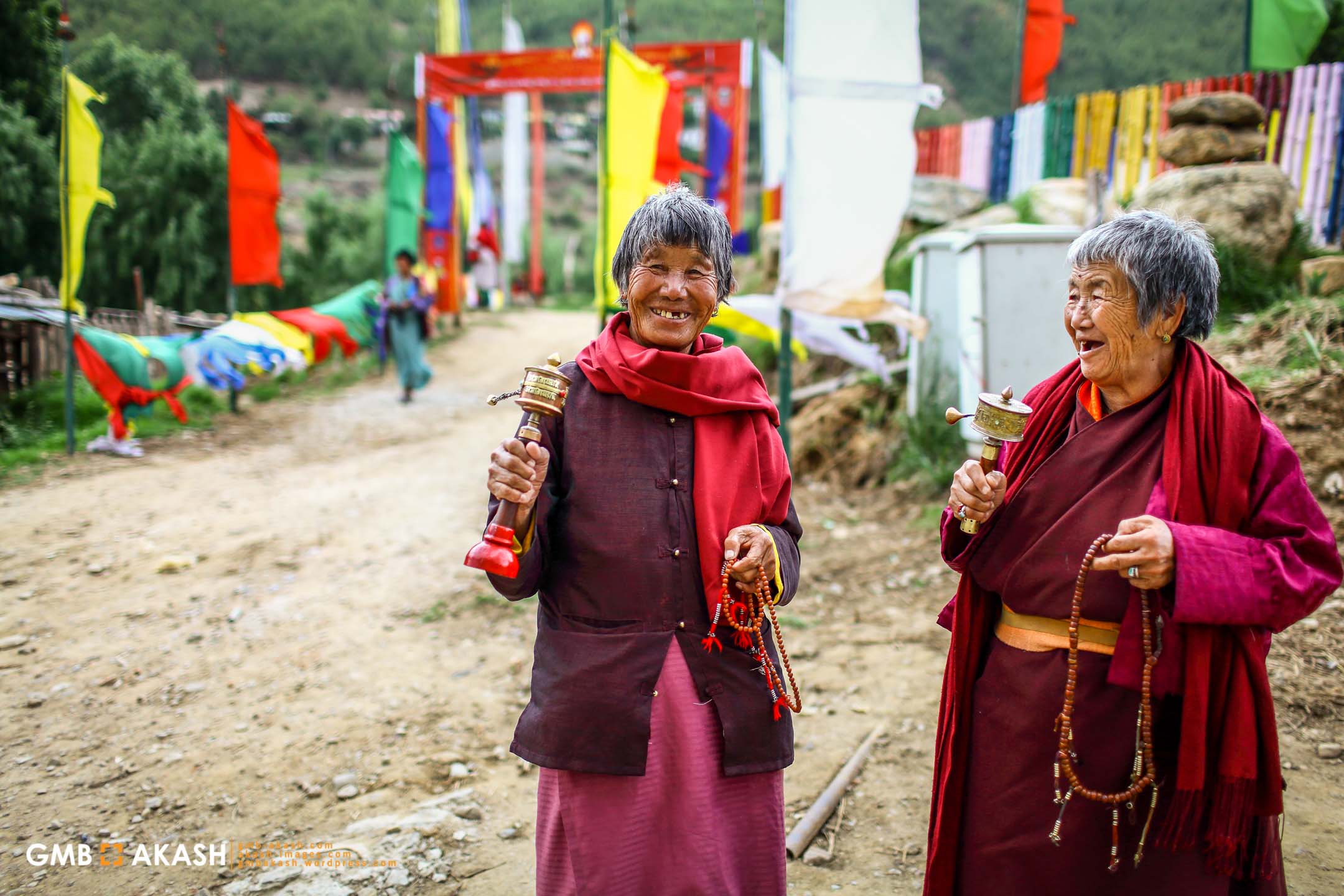
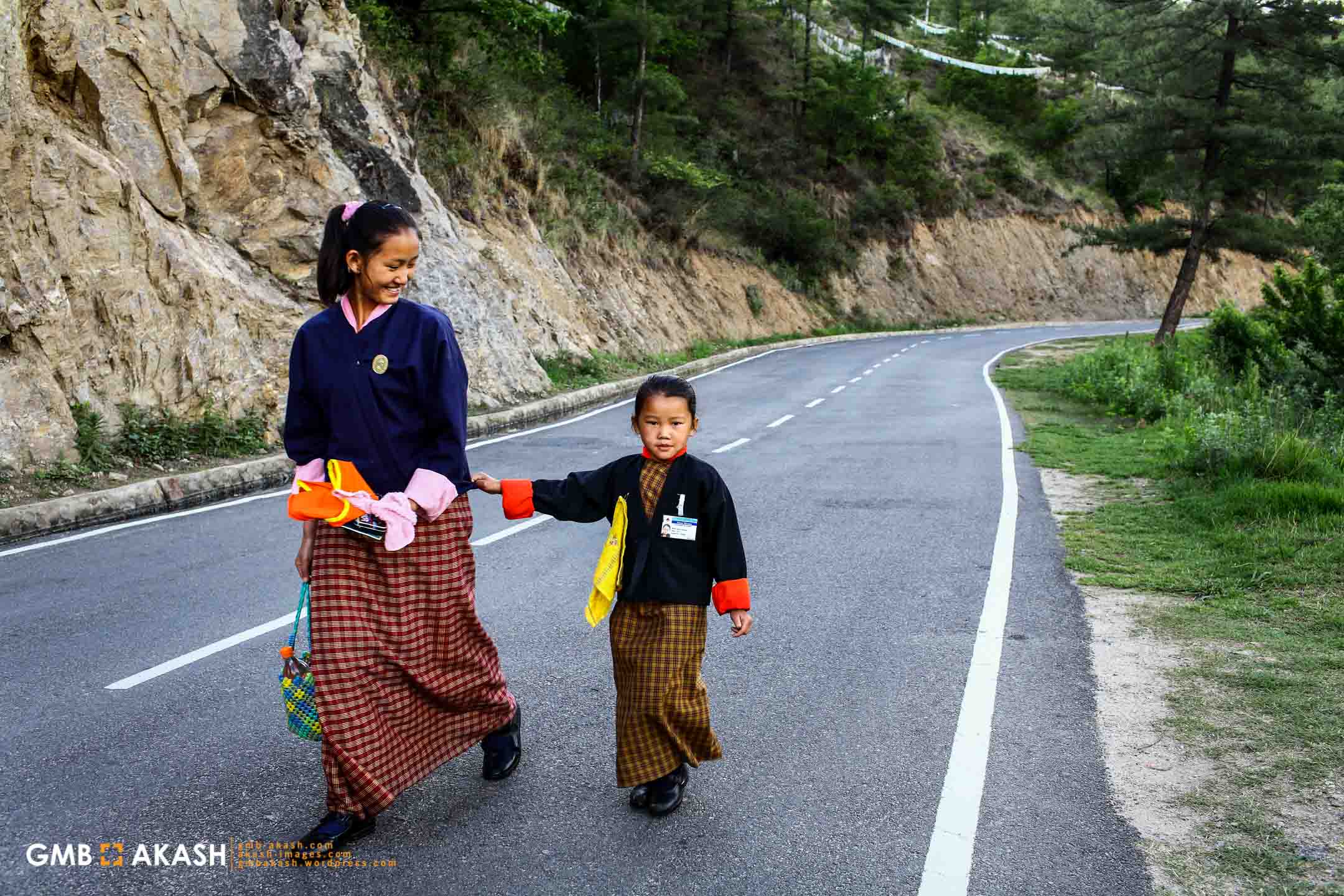
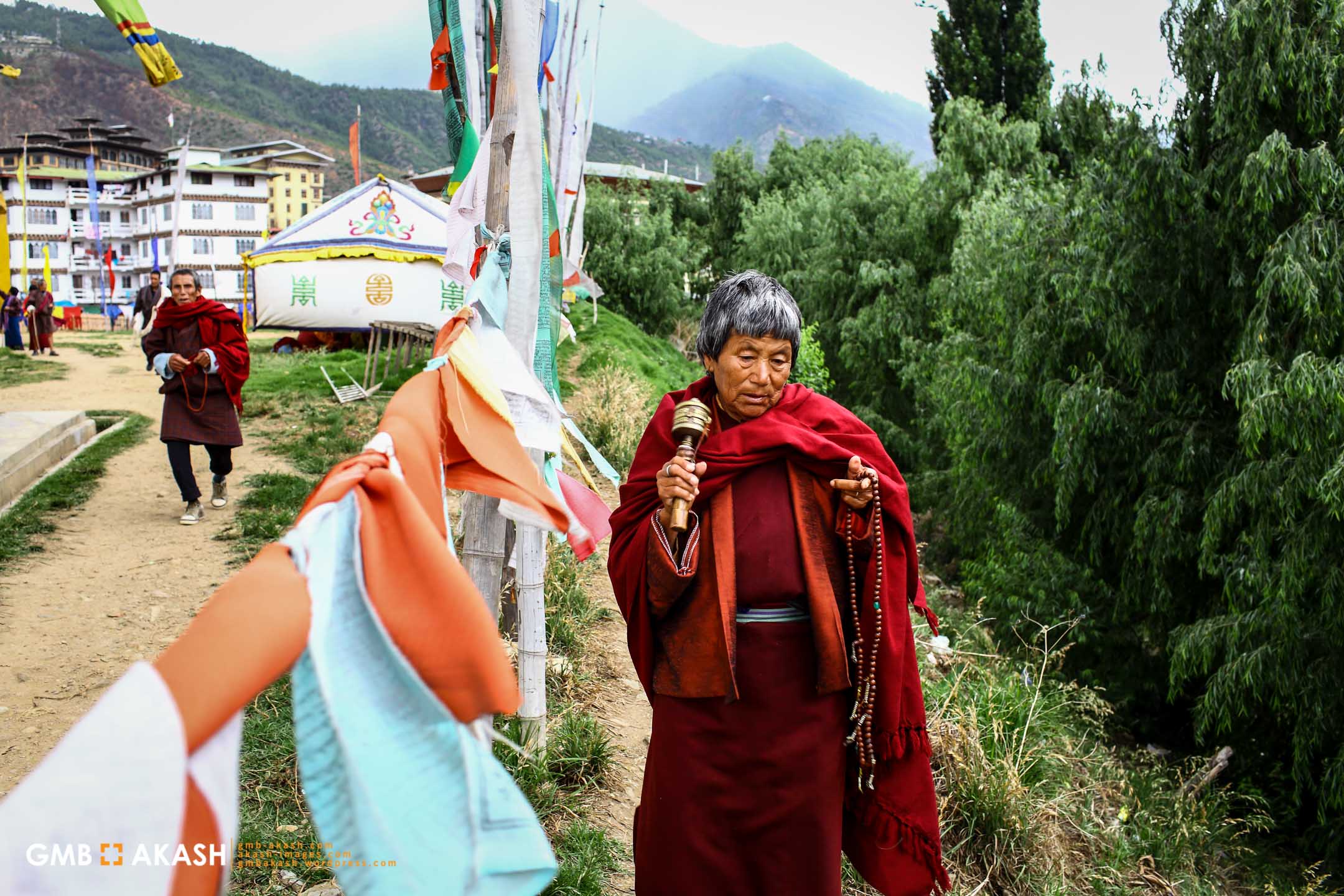
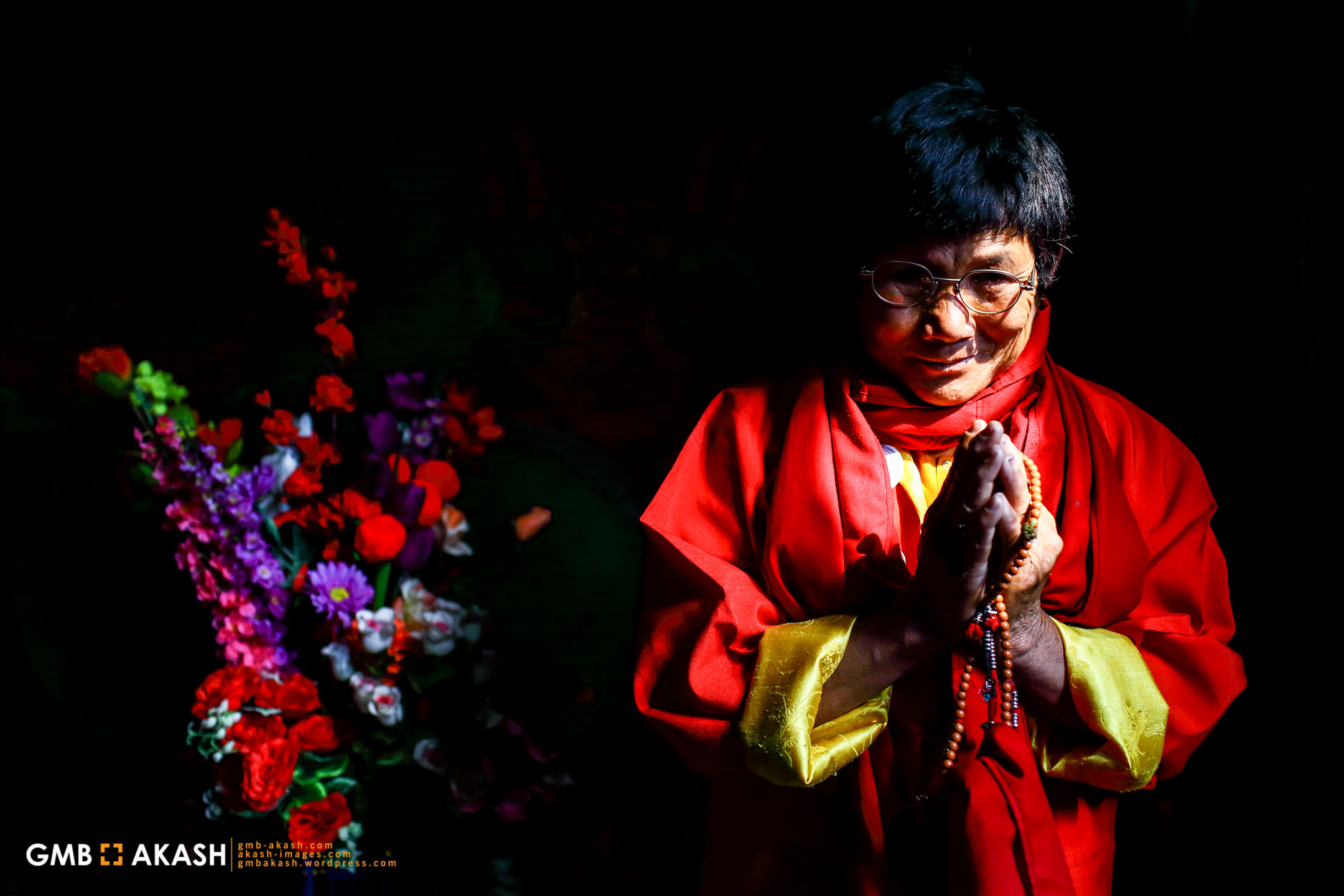
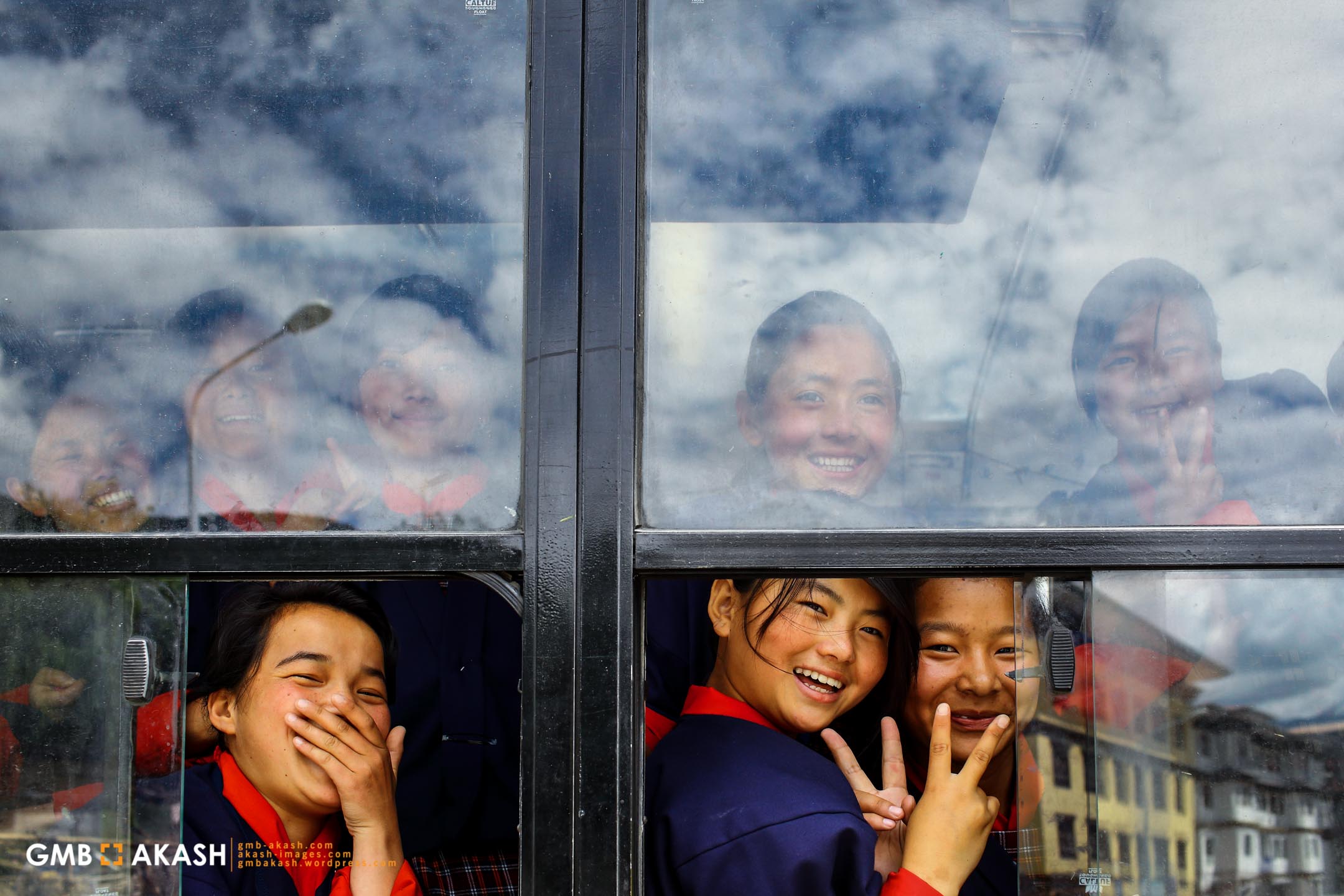
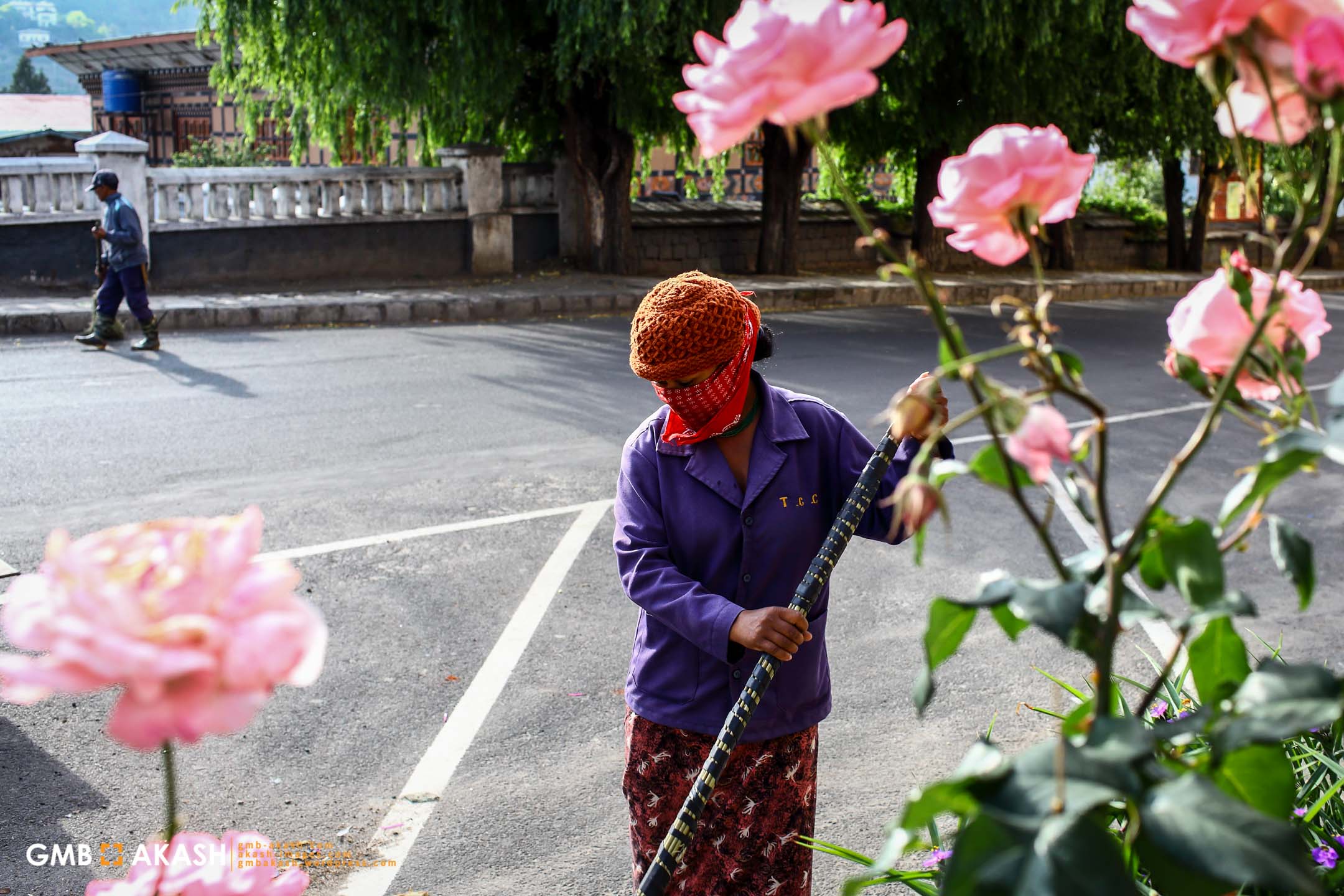
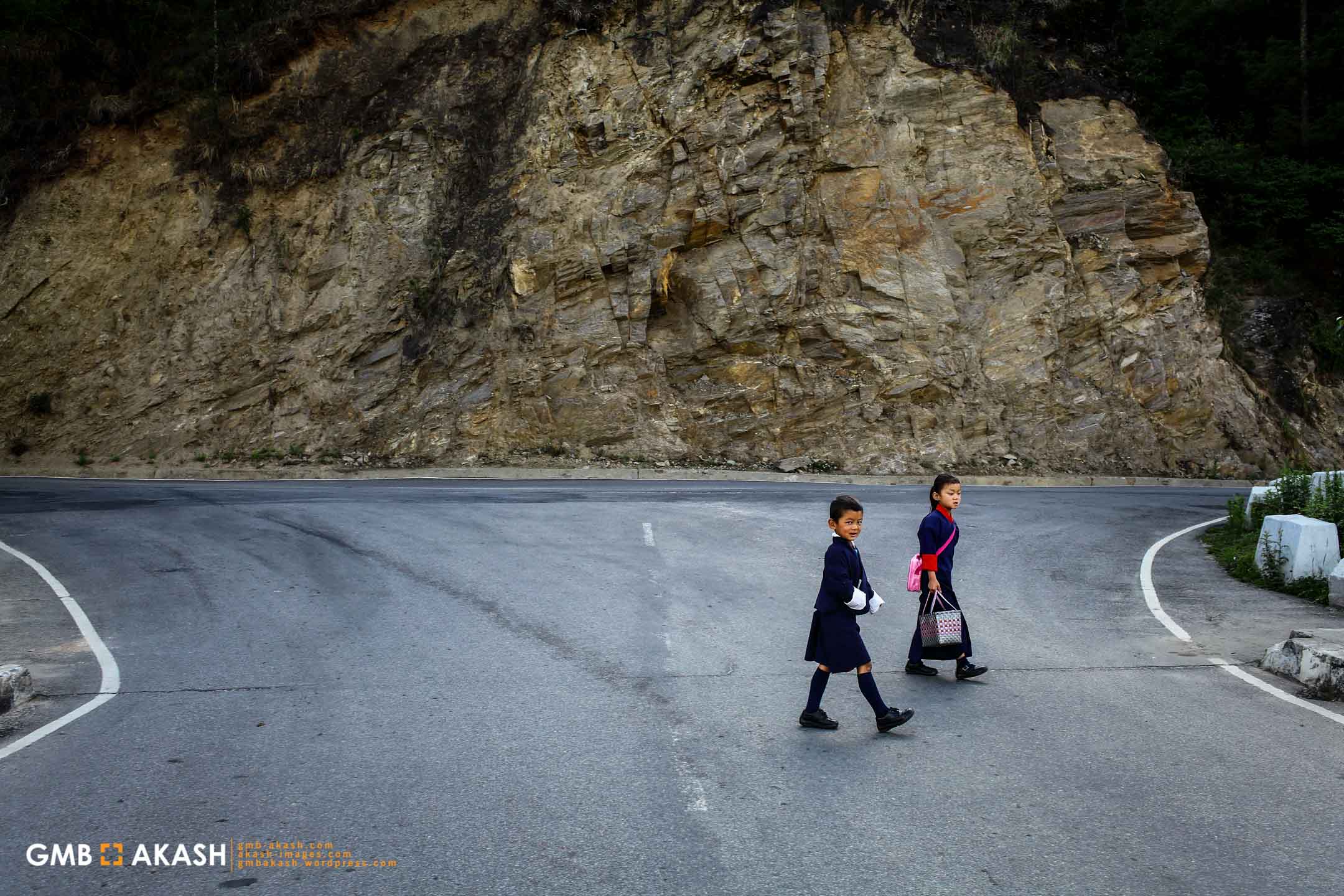
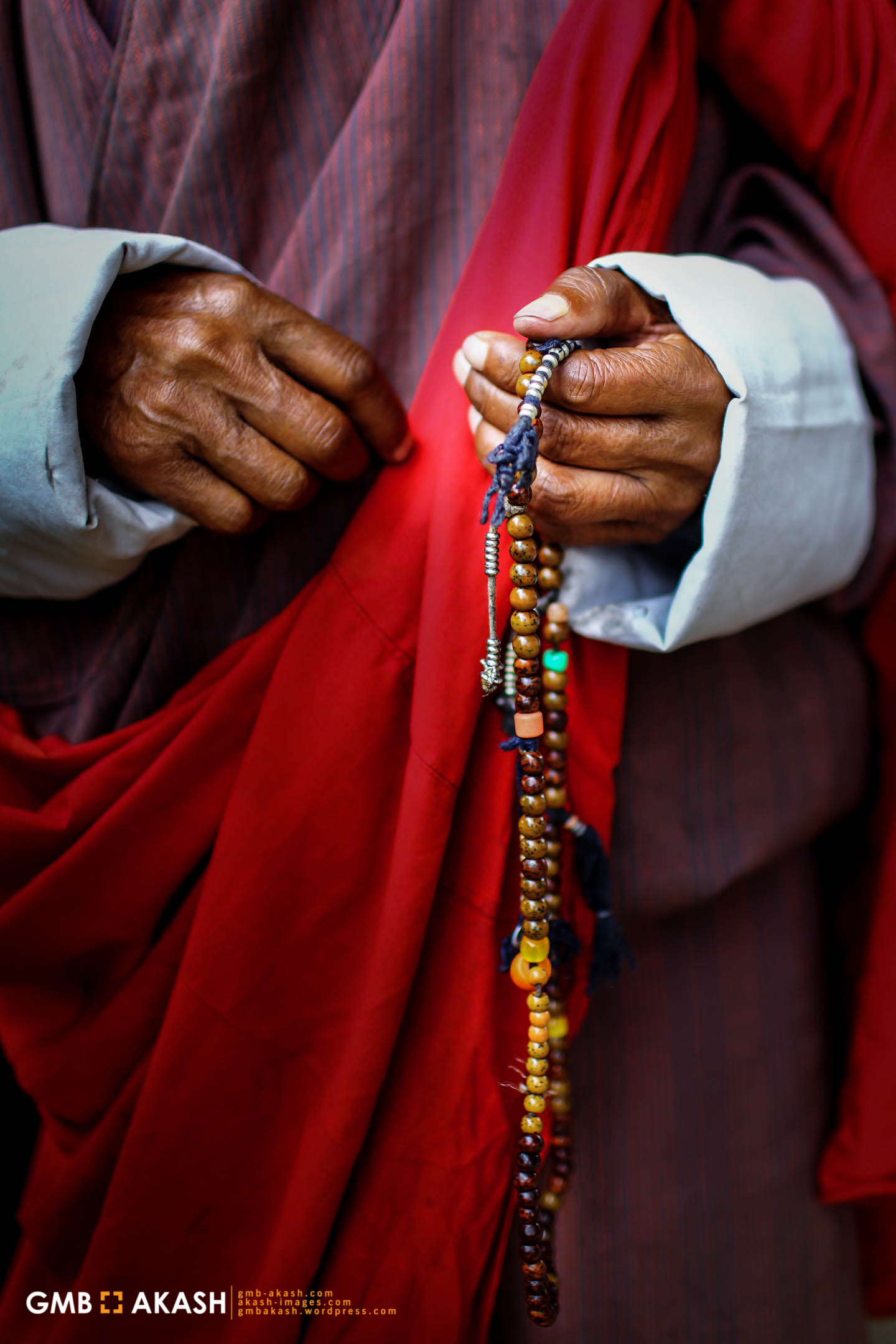
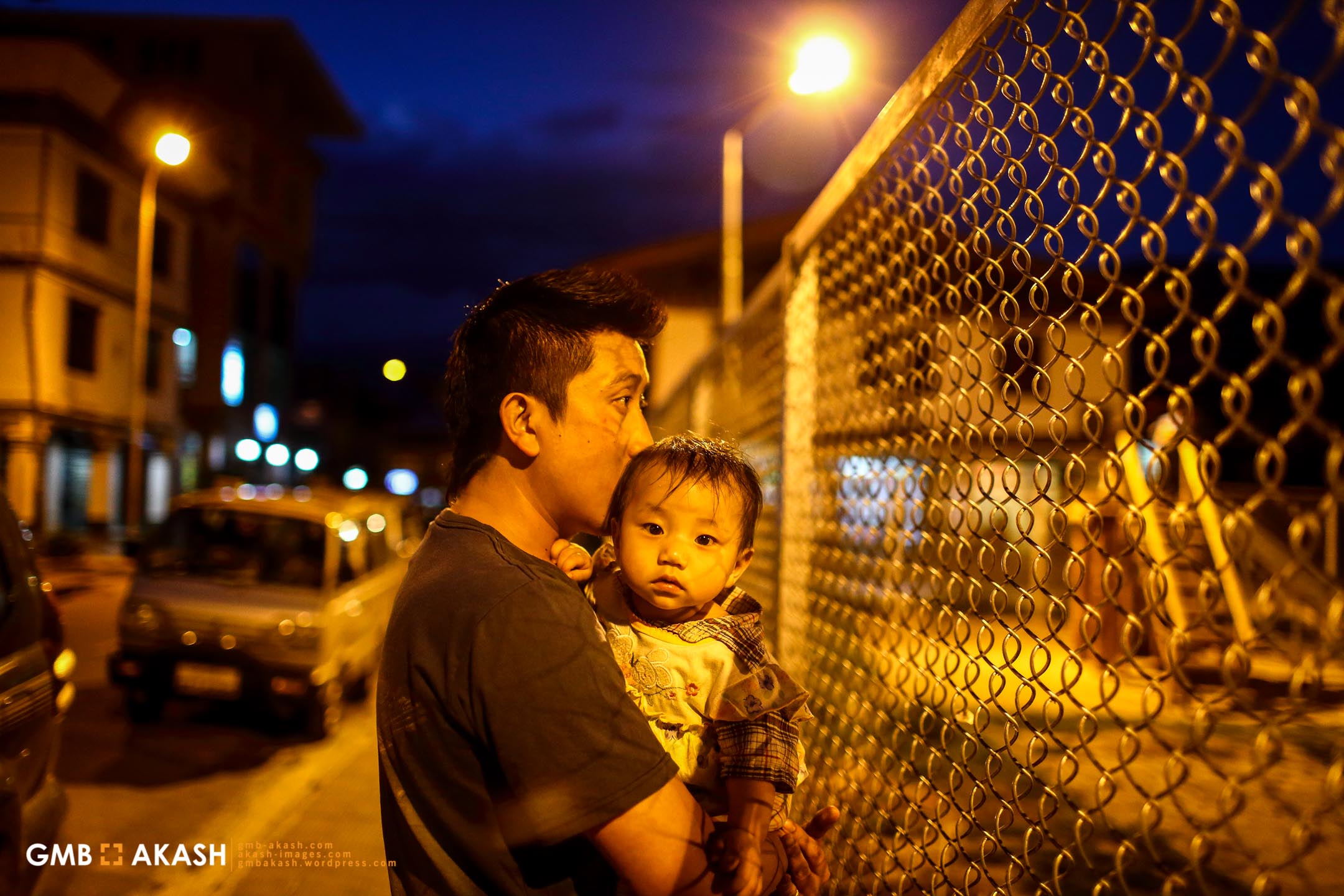
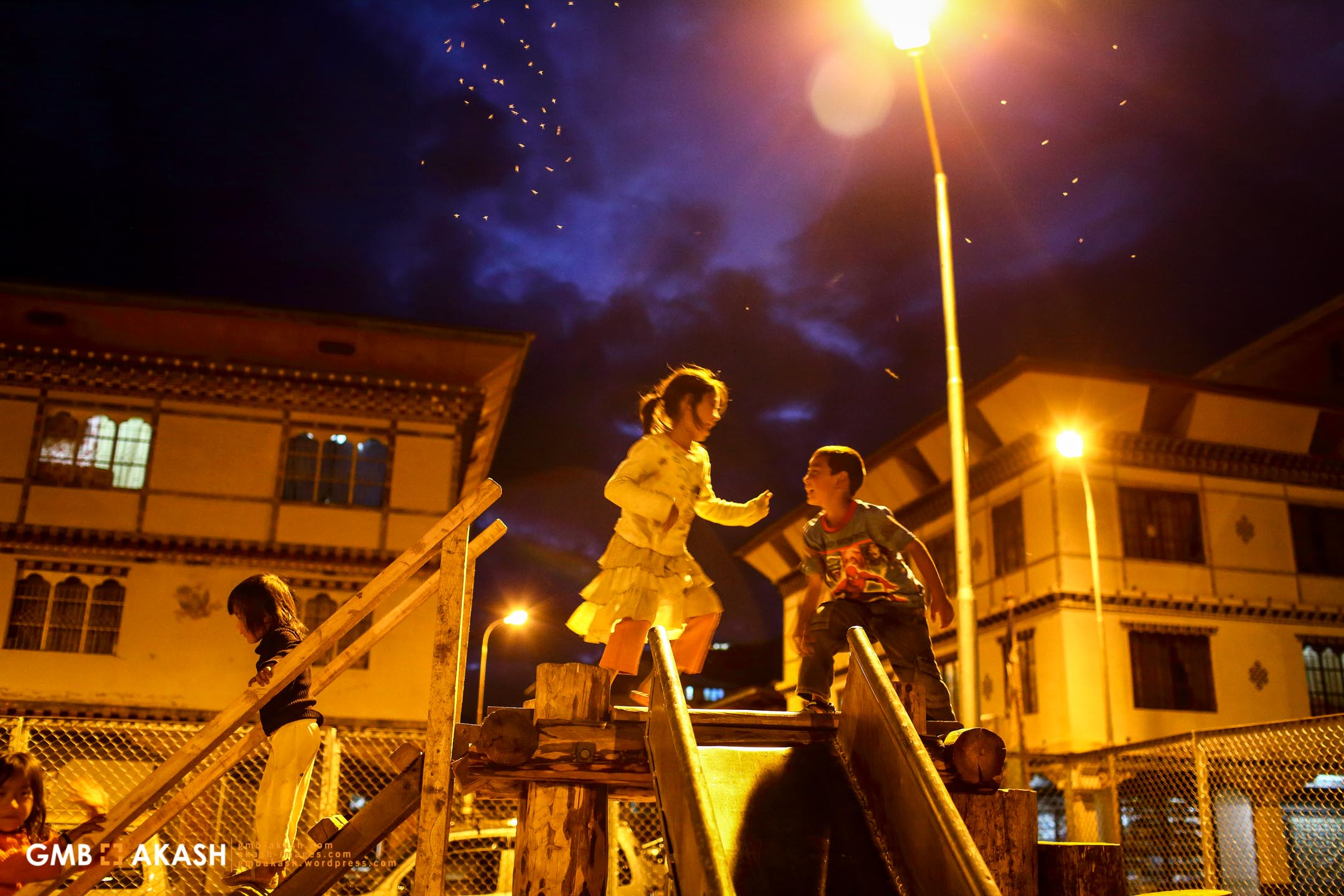
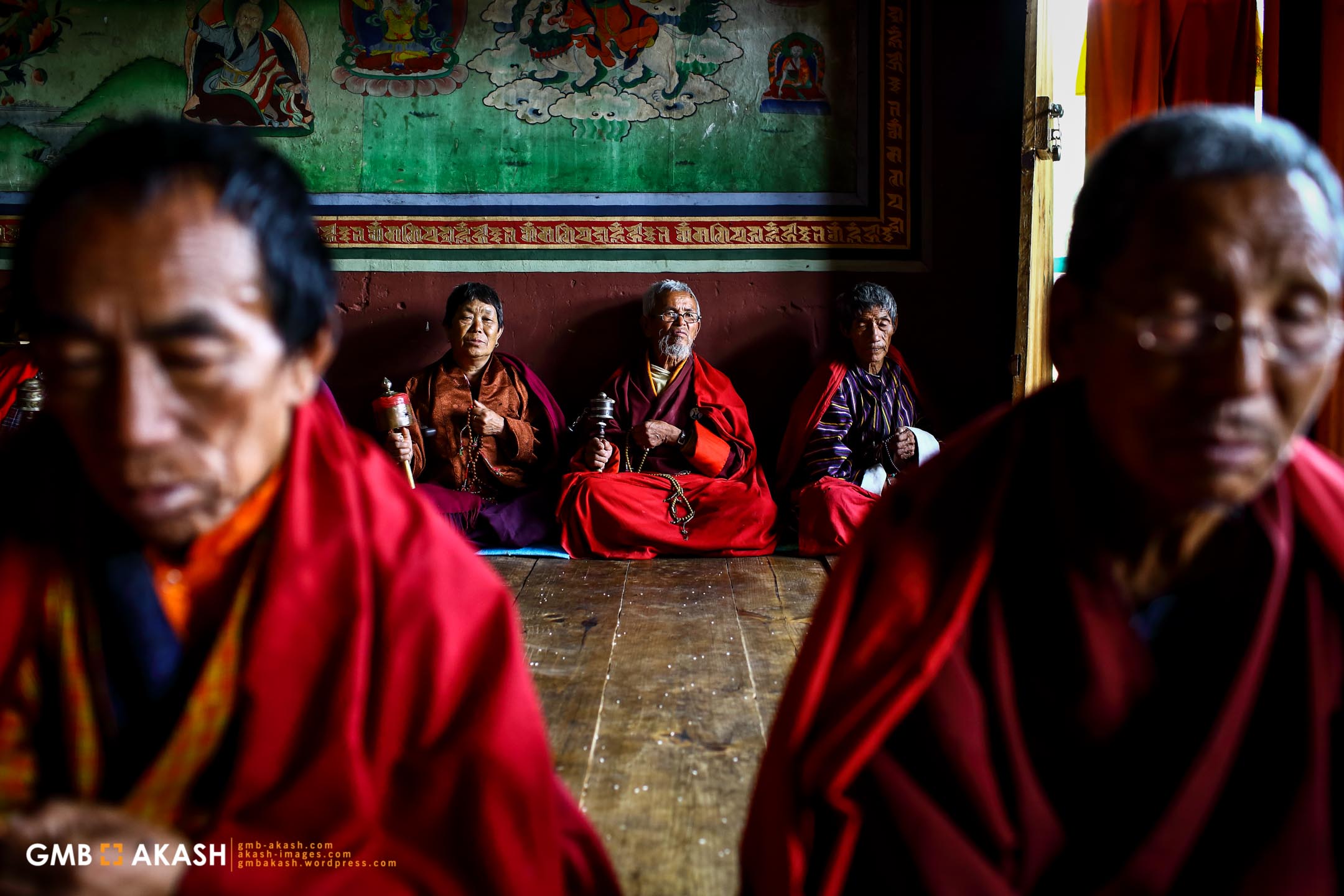
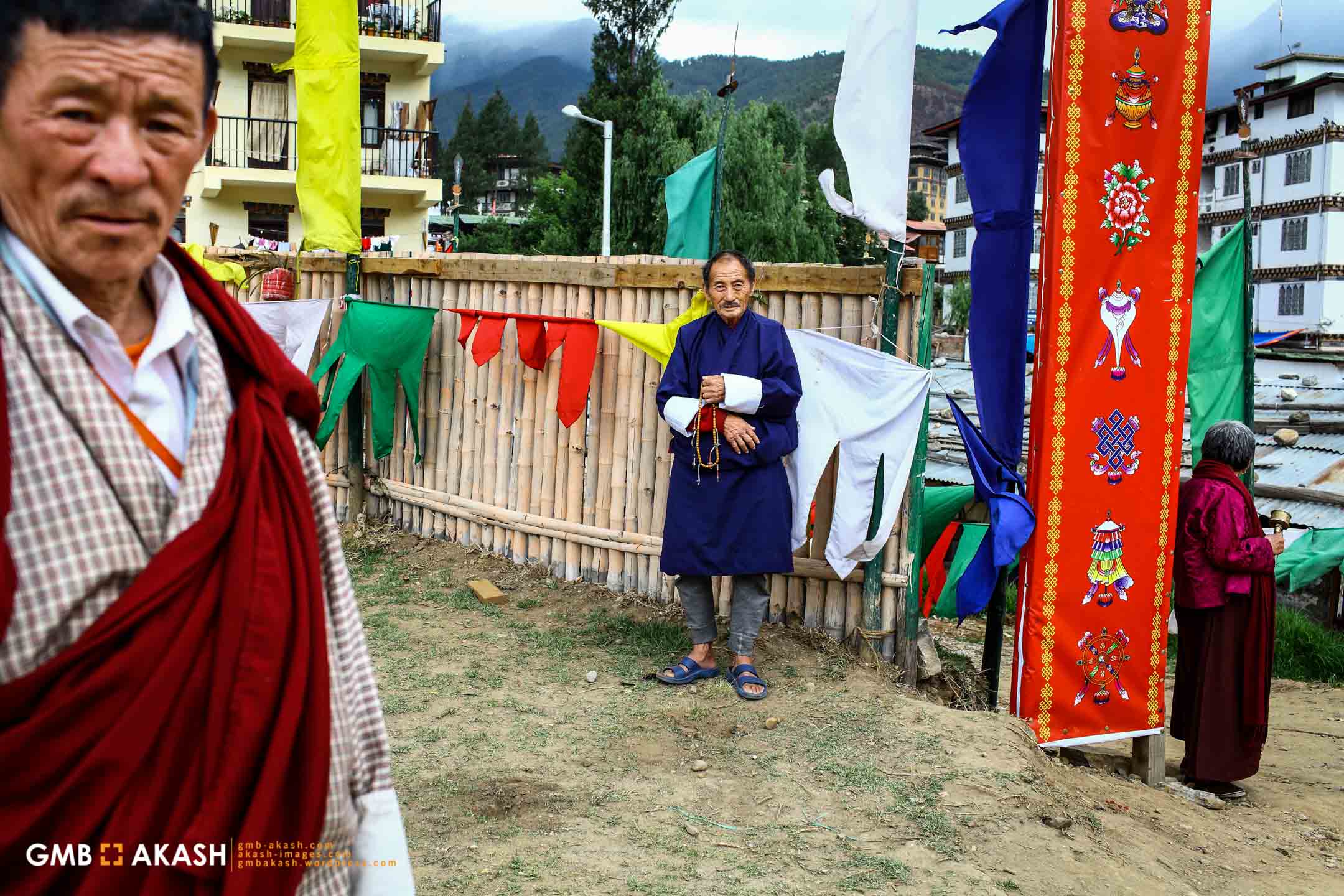
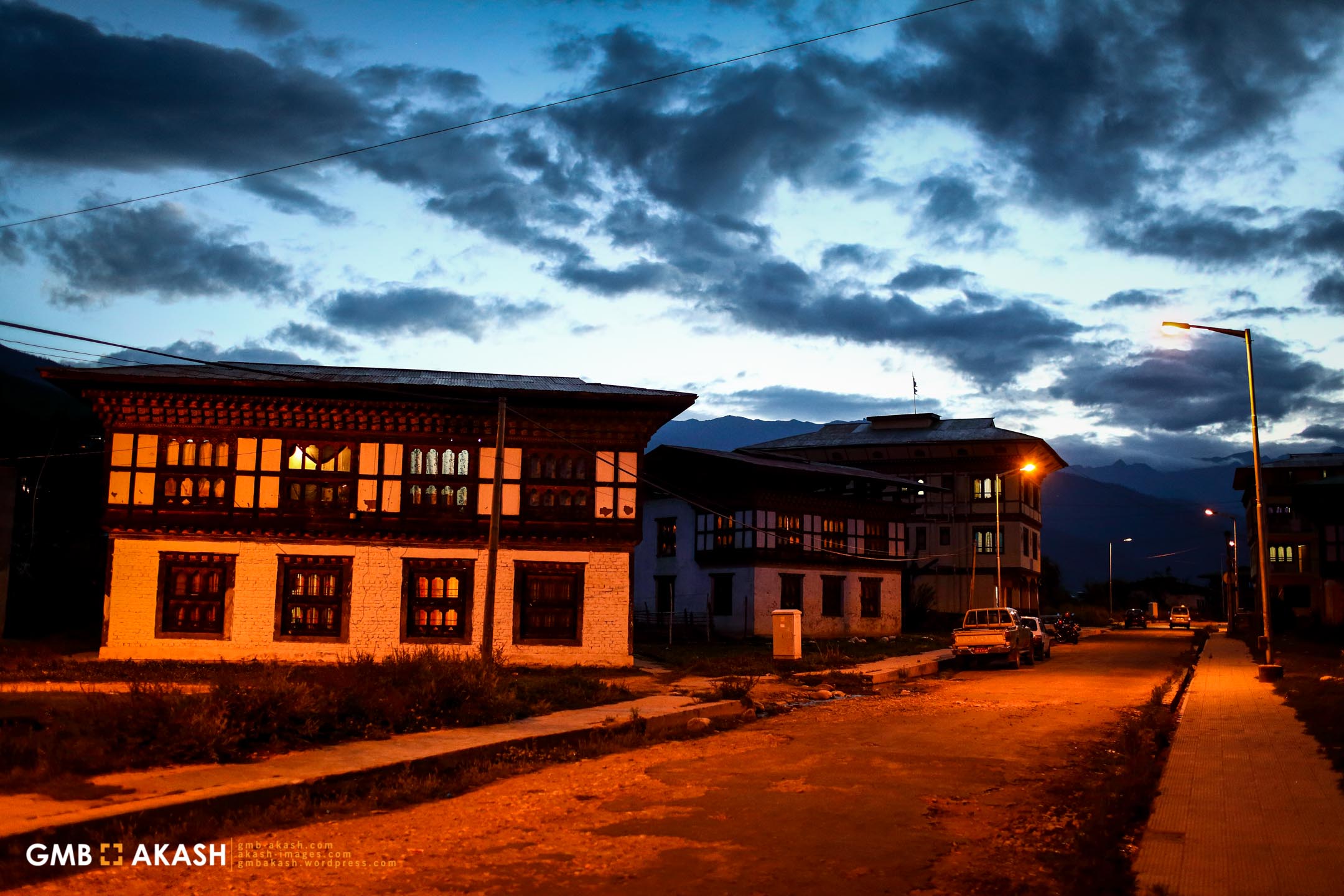
Faces of Bhutan by GMB Akash 

Bhutan has continually been ranked as the happiest country in all of Asia, and the eighth Happiest Country in the world.

Bhutan does not believe in GDP as an indicator of economic growth and development. It has introduced another measurement known as Gross National Happiness.

Bhutan, the Land of Thunder Dragon, is one of the most intriguing places I’ve visited.

– Bhutan is truly a feast for the eyes.

A tribute to Kingdom of Bhutan

aa00001863

aa00001860

Bhutan is the only country in the world that is carbon negative – meaning that it absorbs more carbon dioxide than it emits.

aa00001913

aa00001873

Bhutan is the only country in the world that has no traffic lights.

aa00001855

aa00001877

The United Nations recognized Bhutan as a country only in 1974.

aa00001821

aa00001837

Plastic bags are banned in Bhutan.

aa00001858

aa00001832

Education and healthcare is free for all citizens.

aa00001859

aa00001878

Bhutan is the first country in the world to ban tobacco.

aa00001840

aa00001843

aa00001927

Bhutan is one of the last countries in the world to introduce television to its people. The government lifted a ban on TV—and on the Internet—only 11 years ago.

aa00001861

aa00001844

aa00001884

One-third of Bhutan’s population is under the age of 14; its median age is 22.3 years.

aa00001849

aa00001852

aa00001887

Isolated from the World Until The 1970s.

aa00001918

aa00001926

aa00001831

aa00001909

Bhutanese call their home “Druk Yul,” which means “the Land of the Thunder Dragons,” because of the extremely powerful storms which constantly roar in from the Himalayas.

aa00001841

aa00001846

aa00001876

The first foreign tourists were allowed into Bhutan in 1974.

aa00001906

aa00001908

Bhutan is a Buddhist country with strong beliefs.

aa00001823

aa00001914

aa00001920

Bhutan is famous for its colorful, vibrant festivals.

aa00001868

aa00001893

Bhutan has never been conquered.

aa00001898

aa00001896

It is mandatory for the Bhutanese to wear their national costume.

aa00001838

aa00001820

aa00001835

aa00001874

It is Illegal to Kill Anything.

aa00001856

aa00001889

All of Bhutan’s buildings must follow the traditional architectural style.

aa00001825

aa00001904

aa00001905

——————-

GMB Akash 

Photojournalist and Profile Photographer at Panos Pictures, London

Founder of GMB Akash Institute of Photography, Dhaka

TEDxHyderabad:https://youtu.be/sXbmBCzgy8A

TEDxYouth:https://youtu.be/rLG7sPs6MkU

Website: www.gmb-akash.com

Photo Agency: www.panos.co.uk

Photography Workshop: www.gmbakashworkshop.com

Facebook Page: www.facebook.com/gmbakash

Instagram: www.instagram.com/gmbakash

Blog: www.gmbakash.wordpress.com

Twitter:www.twitter.com/GmbAkash

Smoke and Ashes

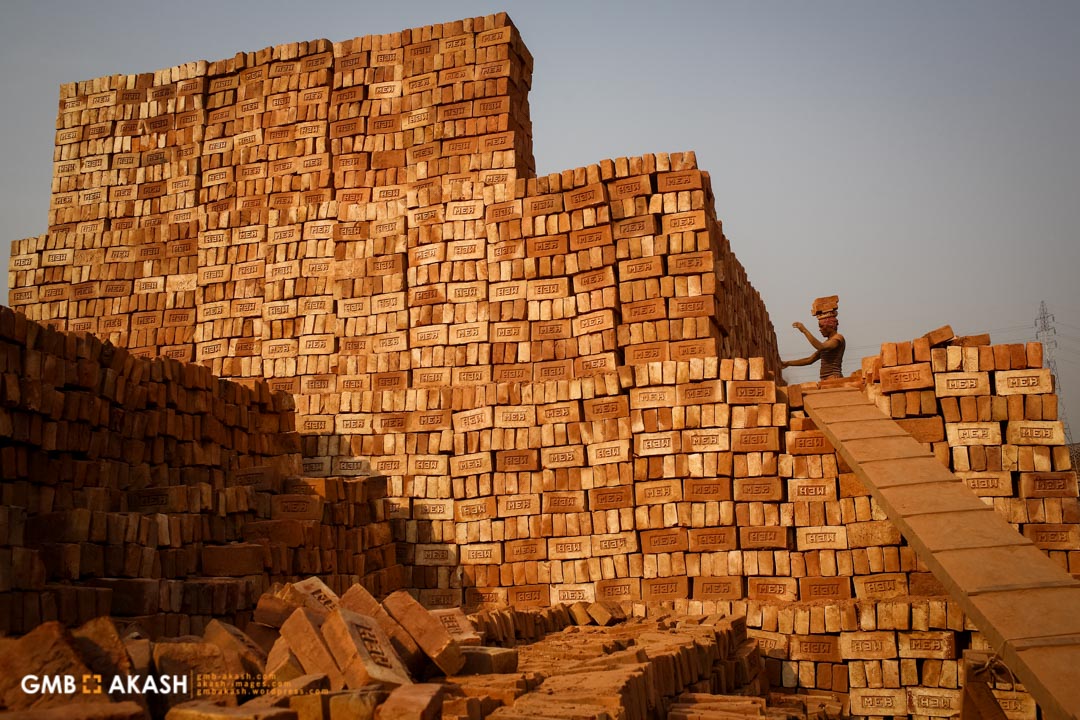
Rozina counts every day for six months running. Her family starts working long before the sun rises even when her small kids are remaining in the deepest sleep. She feels bad about calling them for work but like every day she cruelly has to do it. Everyone comes to have breakfast when the rice is still in the process of cooking. She rapidly waves her hand and lets the fire rise. During this time she quietly thinks about their time in the village that is far far away from this isolated brick field. She recalls her abandoned home and acutely feels a need to see the village sooner. But her urge quickly vanishes when she also remembers those days of starvation. Jalil sleeps in the bed that is made by gathering brick after brick. Rozina tried to hide those bricks by a flowery bed cover. Razina and Jalil have been married for ten years. Along with their five-year daughter and six year old son her family comes to work in this brick filed for six months in every year. 

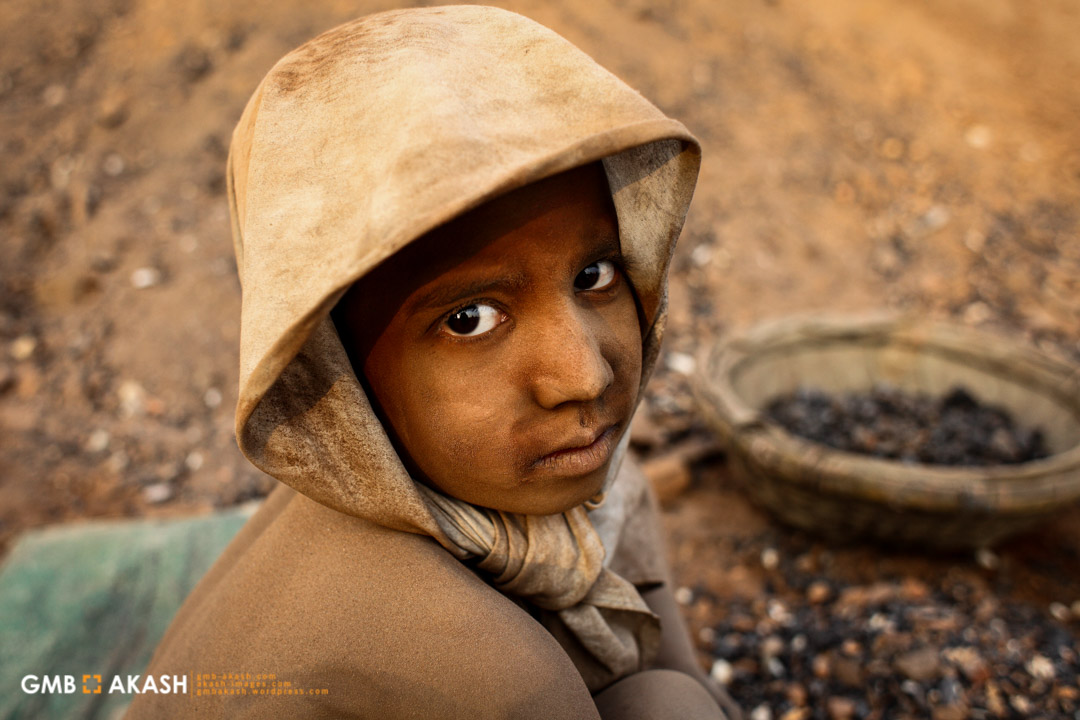
Five years old Sadia is working in the brick field for first time. Along her, seven members of the family are serving in the brick field to repay their loan. Sadia’s job is to dry 5000 bricks every day. For such seven days work she weekly gets 250 taka ($3). Sadia who once used to be naughty now hardly talk. She only smiles when after working she finishes collecting coal for her family.

akash (2)

akash (6)The houses that have been built by brick field owners are home to 100 brick field workers’ families. Just like Rozina they are living in hope of returning to their village one day. No one decorates their house. If a family buys any new item it goes into a box and it remain there until they get a final call to go back to their real home in the village. Rozina’s red bangles, her daughter’s new shoes, boy’ toy; everything goes into the trunk. She also keeps some precious things of her mother-in-law who dies last year from tuberculosis. Everyone says her mother-in-law died because she worked in the brick filed. Rozina does not believe it. Once the whole family strived for three days and no one died that time. Death is written by fate. This brick field is a way for them to survive; a way to feed themselves and their children.

akash (3)

akash (10)

akash (11)

akash (5)

The sound of songs awakens the brick field locality. The brick field workers start working. They are used to listening to songs from their mobile phones. The rhythm of the songs motivates them to work. Rahmat Miah has been working in brick field for seventeen years. The day he started understanding life he found himself in the brick field. During childhood he used to help his father for transferring bricks or lining the piles. Till today he does not do any work other than working in brick field. After carrying 5000 bricks he can manage to earn 200 taka for doing the bazaar shopping for his family. Sometimes he could save a little amount after cutting all costs. But his body does not help him much. Every month he has to take leave for 4-5 days because of illness then he has to spend out of that precious savings for food or medicine.

akash (8)

akash (9)

akash (13)

akash (12)

Men, women and children everyone remains busy in the brick field. Sometimes when the sun goes up in the overhead a few older men or women fall to the ground. Then they get an hour break. They have to carry or shift or line up 5000-10000 bricks every day. However they loudly chat in a half an hour break. They smoke and talk about the economy and the politics. Women generally rest in silence and sometimes go to their quarters to do quick house chores. Children work continuously. It seems that working is some kind of important game. Small Minara who is just four years old collects coal from the brick field. Why does she collect coal? After a long silence she replies boldly, ‘This is my job’.

akash (7)

akash (20)

akash (23)

akash (15)

During the one hour lunch break they eat a lot. Three plates of rice and lentil is their daily lunch menu. Men who are living with their families eat with them; those who came alone to the brick field eat in groups of men. A few go to take a quick nap. This is a kind of moment when they will not speak or hear a single word. All are tired, very very tired. Life goes on; work starts again after break.

akash (28)

akash (16)

akash (29)

akash (14)

akash (26)

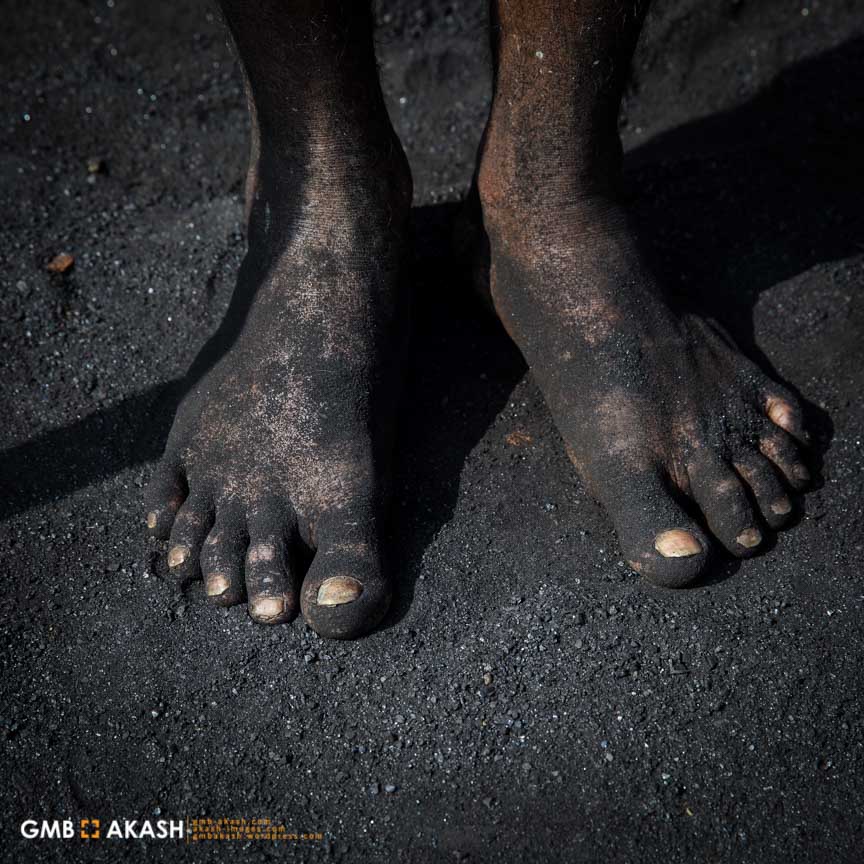
Smoke and ashes blow everywhere. Workers’ bodies turn black in smoke and ashes and their feet turn black like coal. Still they continue to work in a dreamless brick field. In the middle of this Rozina dreams to go back to her village. Rahmat tries hard to save a few pennies, the children continue to collect coal. Very Far from the town the workers of the brick field continue to work to build our urban world.

akash (27)

akash (22)

akash (24)

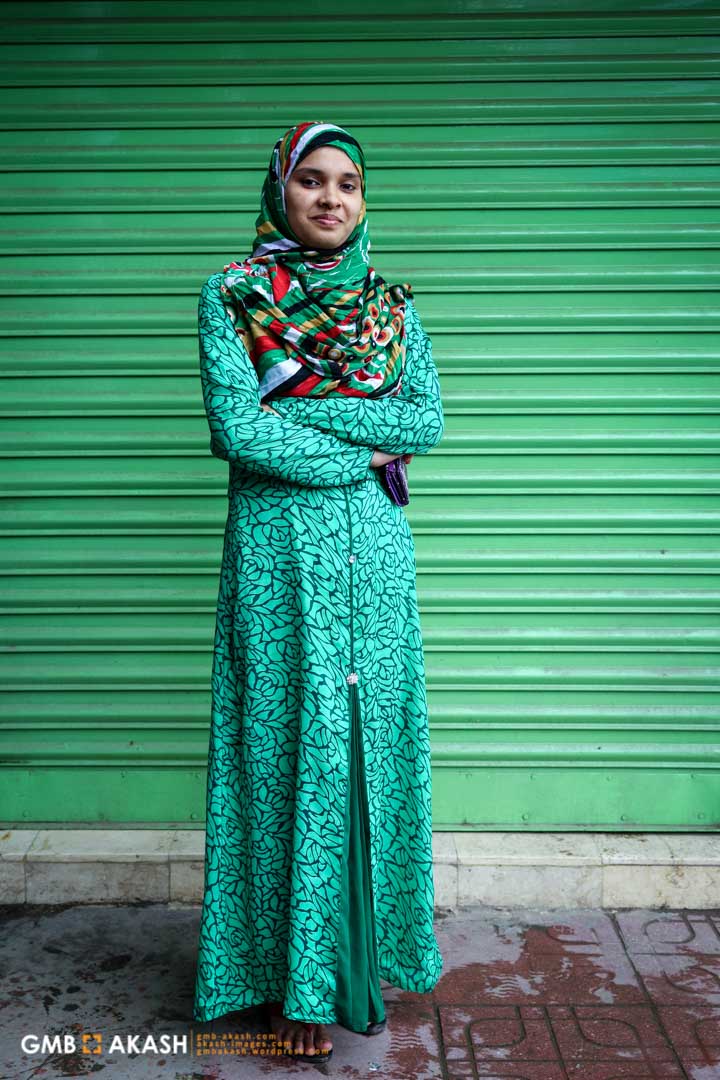
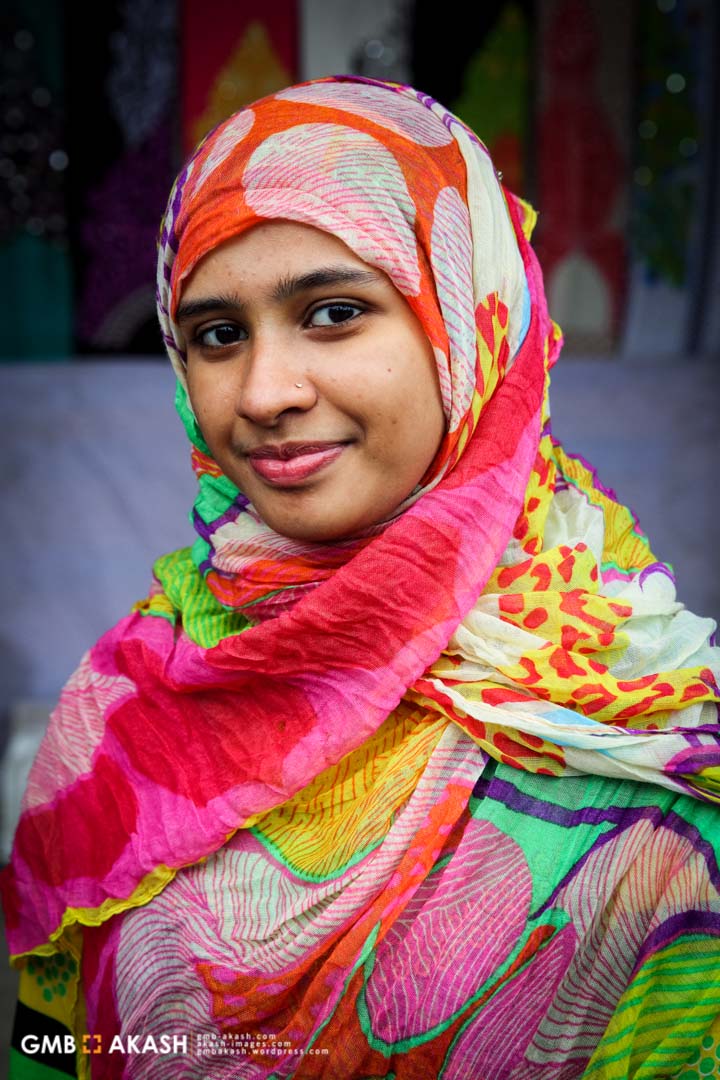
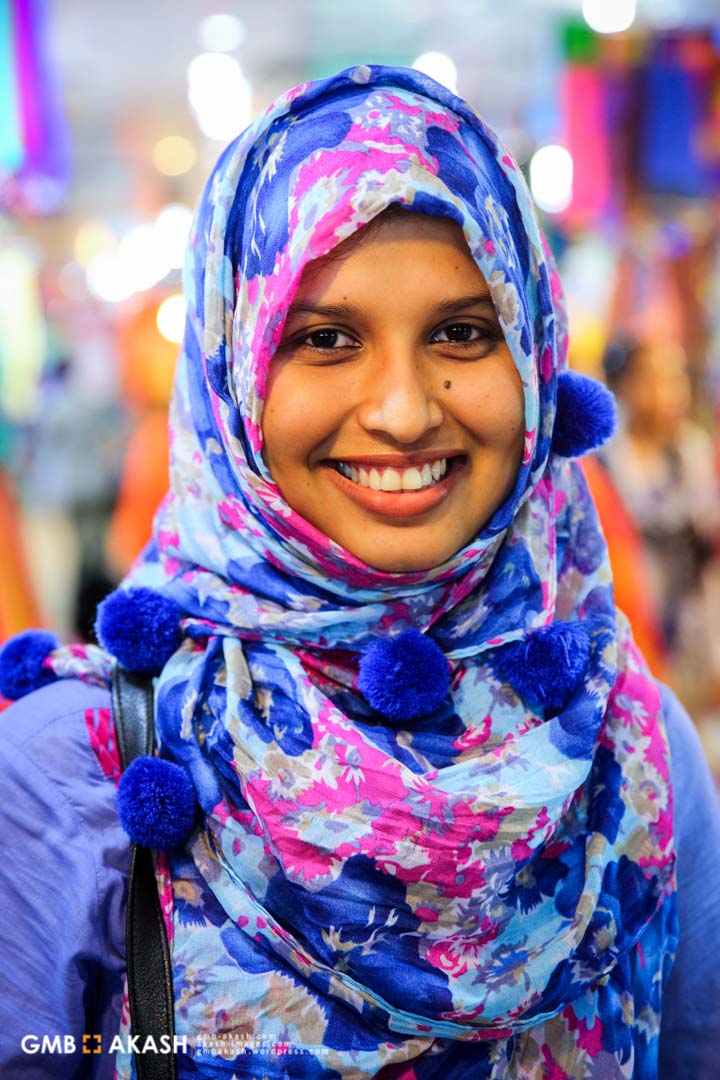
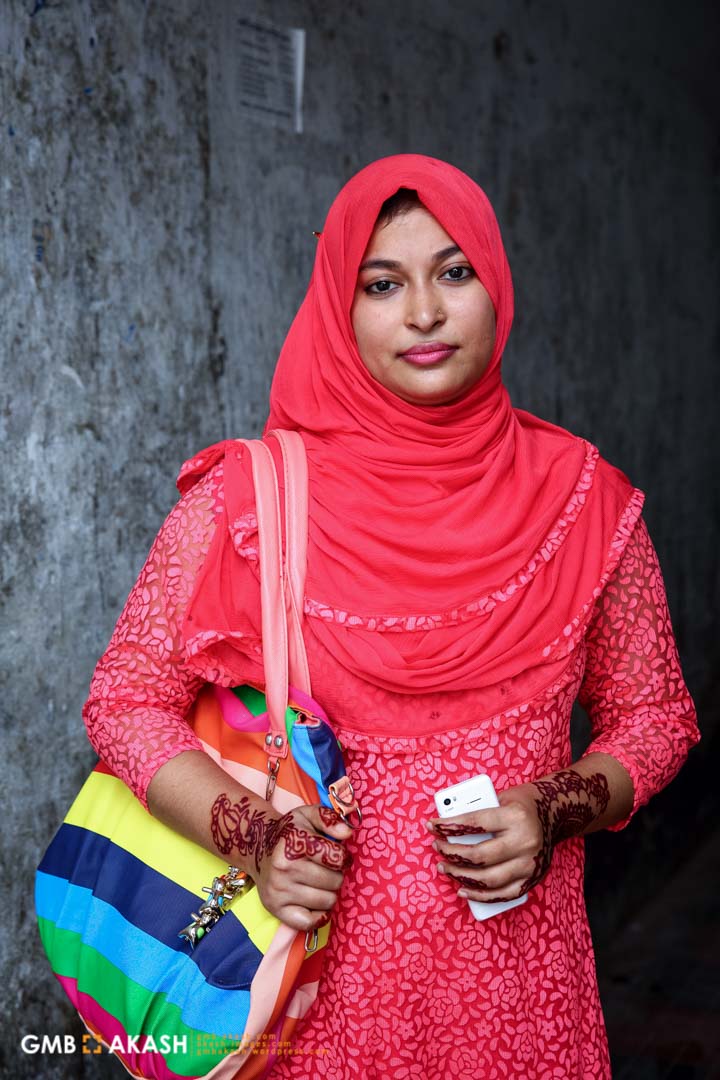
The Pride of Hijab

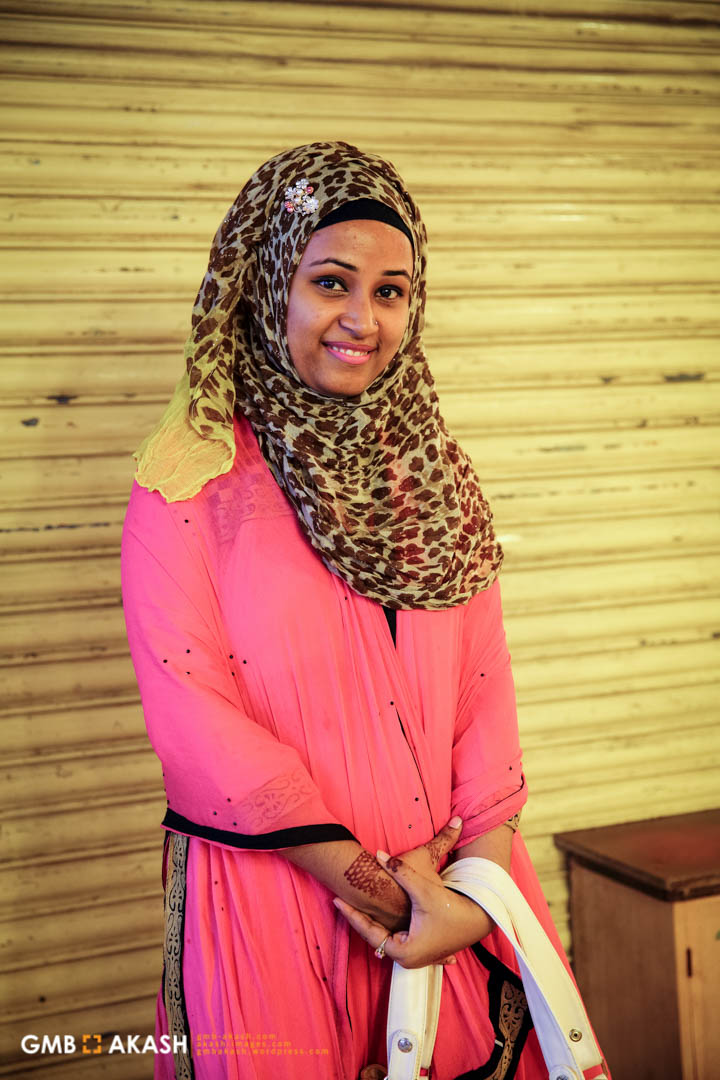
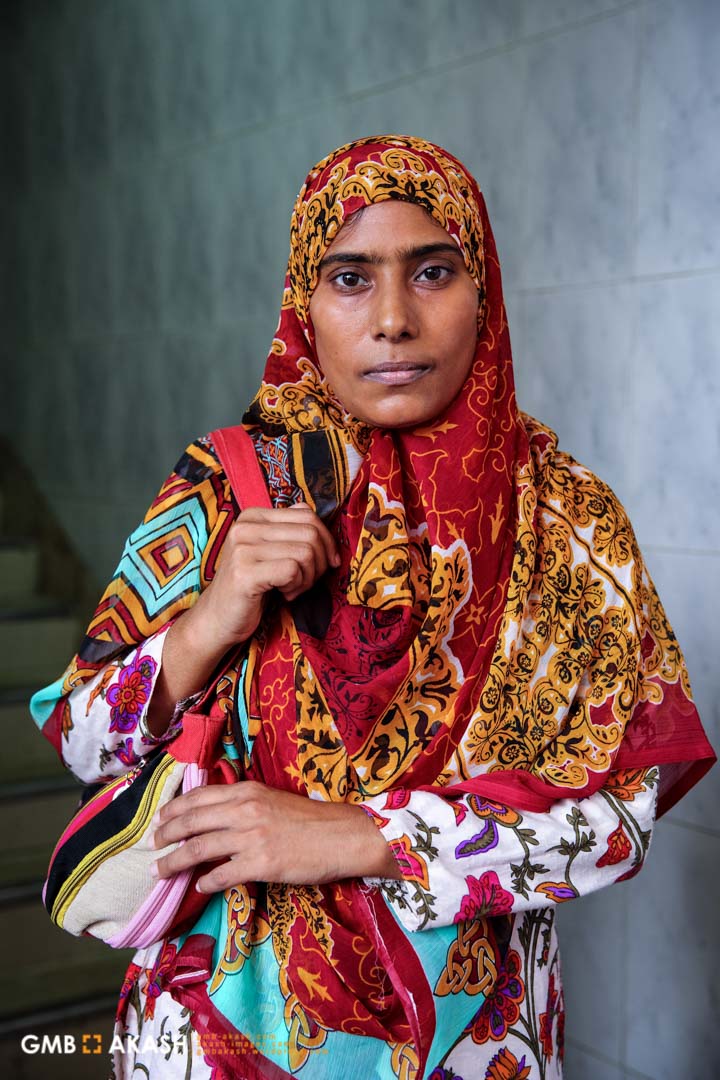
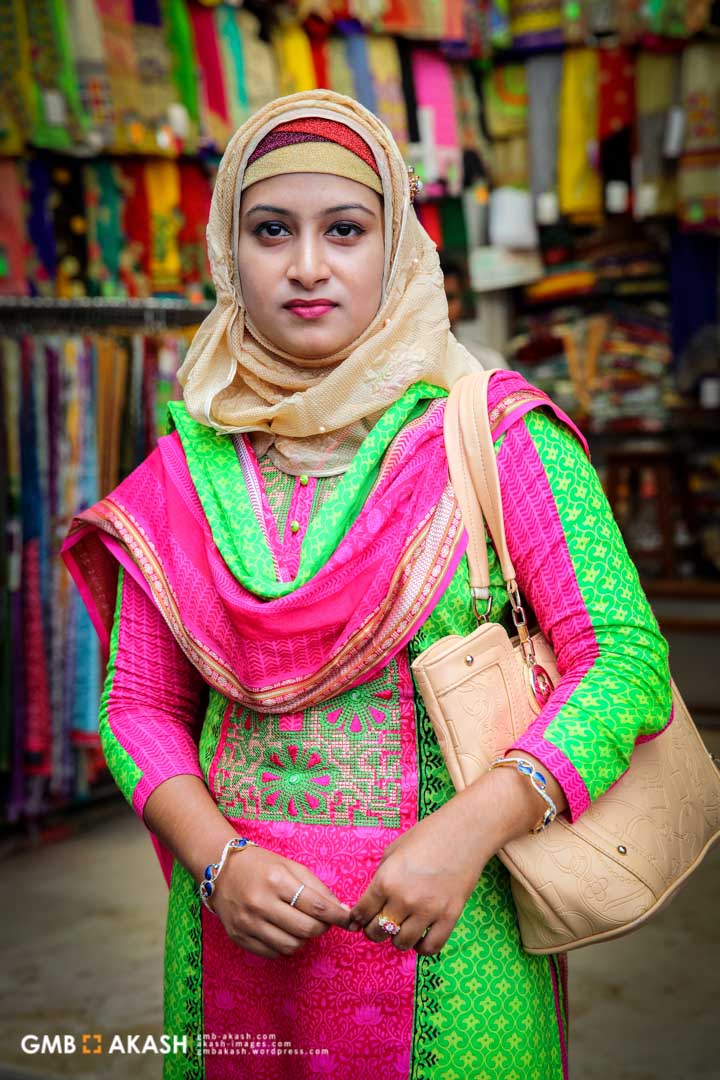
The wearing of the *hijab reflects the modern Muslim woman’s independence, her new world attitude in which she has a choice in whether she follows this old tradition or not. Her hijab displays her confidence to live life on her own terms and communicates the message that she is respected, intelligent and a pious person in her culture. She is also purposefully not drawing attention to herself vis-à-vis the male population in certain Muslim countries such as Bangladesh.

Beside religious value, this piece of folded head scarf can tell much about a woman. So, what does your hijab say about you? The colour, the style, the adornments, if any, all reflect the individual. There could be stripes or flowers that represent the softness, the brightness. These choices allow a woman to express who she is. The hijab sends clear signals about a Muslim woman and her personality. The increasing trend of wearing stylish hijabs or head scarves among young females in Bangladesh is not all about fashion nor has it been imposed upon them by Muslim parents or family. I have interviewed a hundred young Bangladeshi women and have compiled their opinions in order to know what has most inspired them to wear the hijab.

‘When I started hijab I wasn’t sure I could continue it or not. In summer time it is very hot in Bangladesh and traveling by bus become very hard for the weather. In the beginning it was very difficult but I have seen respect for me in eyes of people as a hijabi girl. I will continue to wear hijab’ – Adiba

‘I have been suffering from bad hair. After wearing hijab it has reduced. Hijab has brought a lot of change in my look also. I am feeling new. My family says it will protect me too’ – Jannatul Ferdous

The answers of these women I interviewed surprised me. Eighty percent of the women are wearing a hijab willingly just to protect themselves from evil eyes. For them this is a self-defense mechanism. Does that mean that all of the men of the country are behaving in threatening ways? Not exactly. But women who are wearing hijabs expressed that in adverse environments such as walking through the streets alone or traveling by public transportation, men used to stare at them inappropriately. The hijabi women said they have the courage to cover up themselves and still continue to walk on the same road with dignity. Many of these girls said, a Muslim girl would not entertain a man in the street by wearing see-through, distasteful dresses. Her ‘hijab’ is her message to the world to see women who are modest, decent human beings with dignity.
 

Saleha Nur

nahid haque

A few said straightforwardly, that they cannot close an ill-minded man’s eyes or his mouth but they can cover up themselves. When a man looks at a hijabi woman they see nothing but a message. That is, she is a Muslim girl and her life is ruled by Islam where there is no place for vulgarism. Her hijab is simply a reflection of her dignity.
What has inspired Bangladeshi young women to wear hijabs? Although many women were hesitant and some even refused to reveal their motives because I am a man, the following courageous women explained their reasons for wearing hijabs.

Juthi, a student

‘My hijab is my protection from all those evil eyes around me. The hijab is a message to wicked men that they no longer can stare at me rudely when I am on the road.’ – Juthi, student

‘As a NGO worker I have to travel a lot in public transport and sometime I come to home at late night. My hijab is my protection. It’s been 6-7 years I am covering myself as I had bitter experience of street harassment. Men used to look at women as if they are raping through eyes. As a woman I felt vulnerable and weak tough I used to wear modest cloth. But I have to confess from the day I started wearing Hijab men started to look at me less. I felt strong from inside’ – Siuly, NGO worker

‘As a NGO worker I have to travel a lot on public transport and sometimes I come home late at night. My hijab is my protection. It’s been 6-7 years that I have been covering myself as I had a bitter experience of street harassment. Men used to look at me and other women as if they were raping us through their eyes. As a woman I felt vulnerable and weak even though I used to wear modest clothes. But I have to confess that from the day I started wearing a hijab, men started to look at me less. I felt strong inside.’ – Siuly, NGO worker

‘I am a housewife. I feel very good after I wear hijab. Even when I look at girls who wear hijab seems very respectable to me. It is one kind of self protection and my aim is to follow footsteps of pious Muslim women’ – Jesmin, housewife

‘I am a housewife. I feel very good after I wear a hijab. Even when I look at girls who wear hijabs it seems very respectable to me. It is one kind of self-protection and my aim is to follow footsteps of pious Muslim women’ – Jesmin, housewife

Jinat jahan 12I study in class five. My mother tells me that my hijab will protect me. Also in the Islamic religion women have to cover their bodies’ – Jinnat Jahan (12 years old)

Kasfia

‘It’s been two months since I started wearing a hijab. I feel encouraged by so many girls nowadays wearing hijabs. Two out of five girls are wearing hijabs. For me it brings peace as my family often remains tense when I am out of the home. The hijab is my protection from all evil looks.’ – Kasfia

Jinath rehana sheuli

‘In Islam it’s mandatory for women to cover their bodies with veils. Islam gives women a respectful place in society. Since childhood I have been wearing a hijab. It has impacted my life as it is not only about folding a cloth and covering the body but it also encourages a woman to stand up and move with dignity. Because from the heart I know I am not only covering my body but also not letting men look at me badly. I believe it gives women respect.’ – Jinath Rehana Sheuli

‘As a student I have to travel everyday from home to university. After doing hijab for two years I face less eve teasing and it has given me a sense of good feeling that I am maintaining my life in the light of Islam’ – Laboni

‘As a student I have to travel every day from home to university. After wearing a hijab for two years I face less evil teasing and it has given me a sense of good feeling that I am maintaining my life in the light of Islam.’ – Laboni

Liza‘I started wearing a hijab religiously. No one has asked me to do it but I feel I should do it and it brings me respect.’ – Liza

Mumu a student

‘You can look stylish as a modern Muslim woman when you wear a hijab. It gives me protection and also makes a woman look very beautiful in a hijab.’ – Mumu, a student

Muna

‘Some girls wear hijabs in order to get a good marriage proposal or they just to do it to be in style. But for me it has come from inside. When I did not wear a hijab I experienced men who looked at women as if they were a product on the road and could eye them over any way they wanted. I have seen ill-meaning men’s expressions while on the road. But since the day I started wearing a hijab I have never faced such vulgar looks any longer. My hijab is my safety and self-respect.’

– Muna, school teacher

Lima

‘Dhaka is a very busy city though a few women travel by bus. Whenever I went outside I faced the problem that men used to look at me badly. I started feeling very angry and did not know what to do. My friend started wearing a hijab a couple of months ago and advised me to also wear a hijab. After wearing a hijab I am mentally satisfied that at least I am not showing my body to people. If they still try to see me, it is their ill behavior.’ – Lima

Nahid

I am in the last semester of my MBA. I have been wearing a hijab for six years now. It wasn’t for any reason of fashion nor for conservatism. Islam encourages women to wear decent clothes and commands them to cover their heads and bodies when they go out in public. I easily can move around as I feel safe in a hijab.’ – Nahid Haque

Tania

‘As a student I have to come out of my home every day. It is very difficult to manage time to get ready. When I am wearing a hijab it helps me to get ready easily. Also my family does not have to worry about me much as girls who wear hijabs face less teasing in the street.’ – Tania

Tajnuva‘Many girls are wearing hijabs for fashion. But this should not be. A hijab is to protect you from evil eyes. The girls who are very open and show their bare skin in public are seeking attention from men. But a hijabi girl is beautiful because she realizes her inner beauty more than her outer beauty.’ – Tajnuva

Sharmin

‘A girl can wear a hijab and still be beautiful. It gives us protection and respect.’ – Sharmin

Sniya Sultana , a student

‘From my teenage years I have been wearing a hijab. It is part of being beautiful. In some universities in Dhaka a full veil is not allowed, so I choose a hijab. It is comfortable and always protective.’ – Sania Sultana, a student

‘I am teacher and doing hijab for three years. I do not support girls who are doing ti for style or take it as fashion. It remains as women protector for hundreds of years. Women felt comfort and it brings security for a decent girl who does not want to show bare skin. Some people argue a woman should not do hijab as it makes them look weak, but I completely disagree. It needs courage in a world of style where owmen tend to wear short clothes. Its Muslim women’s dignity who cover up their body and go for searching respect than seeking attention’ – Simul, Teacher‘I am a teacher and have been wearing a hijab for three years. I do not support girls who are doing it for style or who use it as fashion. It has remained as a protector for women for hundreds of years. Women feel comfortable and it brings security for a decent girl who does not want to show bare skin. Some people argue a woman should not wear a hijab as it makes them look weak, but I completely disagree. It takes courage in a world of style where women tend to wear short clothes. Its dignified Muslim women who cover up their bodies and go searching for respect rather than seeking attention.’ – Simul, teacher

subarna parvin 28, school teacher

‘I believe in modesty. It’s been three years since I have been wearing a hijab. For me it is a self-defense as it has protected me from evil eyes. I am a Muslim and a married working woman. Since the day, I started wearing a hijab I noticed that men in the streets were not bothering me insistently. It has given me a sense of dignity and I started seeing respect in people’s eyes for me. When I cannot stop evil eyes at least I can cover up myself and follow the advice that my religion gives me.’ – Subarna Parvin (28 years old), teacher

Tajlima akter

‘I have been wearing a hijab for more than eight years. My mother, grandmothers all wore hijabs or veils. It is not about style or fashion. It is mandatory for a Muslim woman to wear a hijab.’ – Tajlima Akter

Papia

‘Muslim women can be stylish like Western girls. For that there is no need to show skin. I feel a hijab makes a girl more beautiful. Not only does it protect the dignity of the girl, but it also it protects hair and skin.’ – Papia

‘Everyday more girls are doing hijab. It’s a protection from sunlight and pollution. By doing hijab I am covering my hair and wearing decent clothes. I feel very much protected since the day I am wearing hijab’ – Pihu‘Everyday more girls are wearing hijabs. It’s a protection from sunlight and pollution. By wearing a hijab I am covering my hair and wearing decent clothes. I feel very much protected since the day I started wearing a hijab.’ – Pihu

(*what is a  Hijab – a veil that covers the head and chest, which is often worn by Muslim women beyond the age of puberty in the presence of adult males outside of their immediate family as a form of modest attire.)


‘Chain of Love’

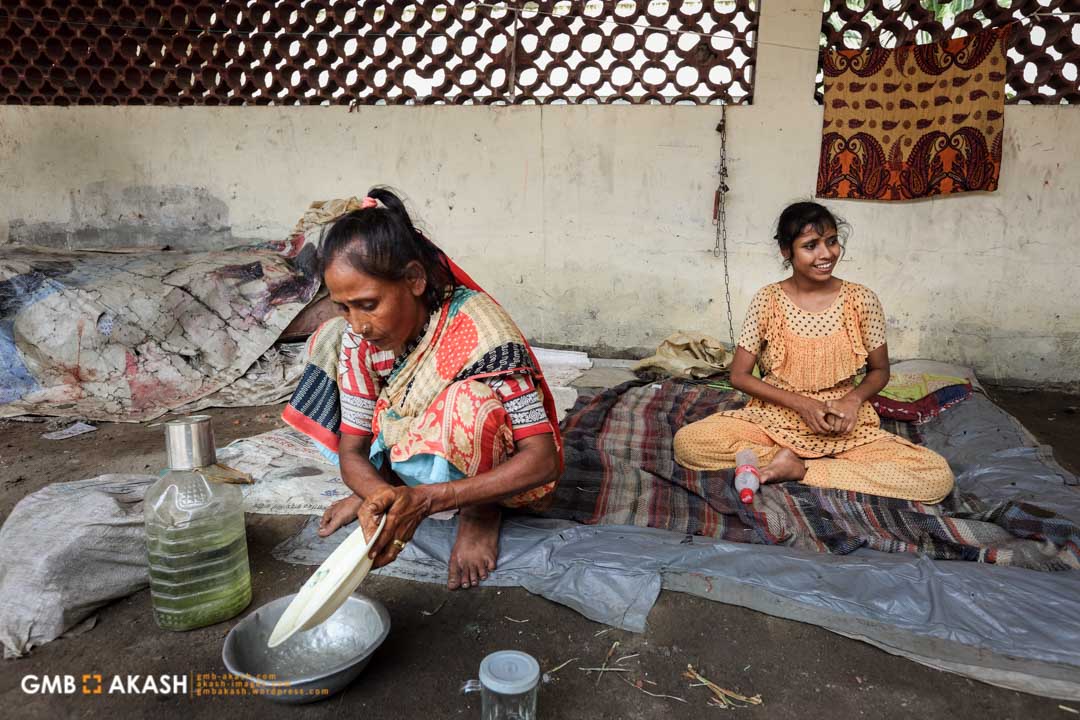
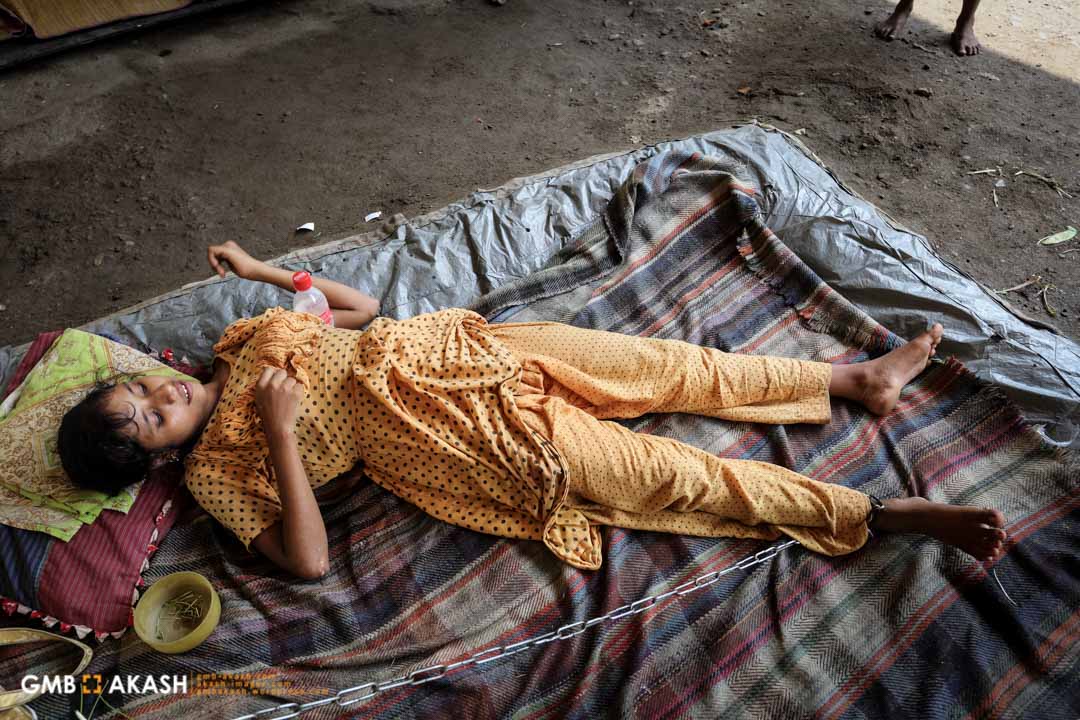
Life was never easy for Jarina Begum. During childhood she lost her parents in the Kamplapur railway station. She had no memory of her childhood. Lonely Jarina’s struggle never takes a break. After living here and there at the age of twelve, people from her locality gave her a marriage with Ismail. She knew nothing about family life though she started to dream. A few years went well. This was the best time of her life. But when her only son died at the age of twelve her family was shattered. Her husband got involved in drugs. Her happiness lost in darkness. She again gets back her hope during her second pregnancy. ‘Mali’ arrives as an angel in her life. She started dreaming about having a normal life again. But fate was not on Jarina’s side. She discovered when Mali was two years old that she is mentally disabled. Also when Mali was two Jarina’s husband died from taking  excess drugs. Till today ‘Disabled Mali’ is the reason to live Jarina’s Life.

Chain of affection (1)

Chain of affection (12)

Chain of affection (9)

Now Jarina is only Mali’s maa. Mali behaves like a child at the age of thirteen. She has very slow mental growth. Jarina has to connect her to a chain so that she cannot flee alone while her mother went to work. She was lost twice while Jarina went to work. The tragedy of Jarina losing her own parents is like a nightmare for her. She does not want to lose Mali again. After finding her, she found a way to keep Mali at their place. She chained her with a long chain. She goes to work in the morning and works madly while feeling the tension of Mali. She collects paper from the road. She carefully crosses the road everyday as she knows if she died there is no one for Mali. With cloudy eyes Jarina said, ‘I put a chain on her leg and put a stone in my heart’. While she was saying this, Mali untied her pajama bottoms and squatted to do her toilet. Jarina swiftly wnt there and covered her daughter with a cloth. Mali is Jarina’s world.

Chain of affection (5)

Chain of affection (7)

Chain of affection (3)

Jarina dreams one day Mali will be okay. Sometimes she gets upset thinking, if Mali could be like other girls, she could help her with earning a living; she could understand how hard it is to work feverishly. But Mali understands nothing. She can only feel the touch of love, the smile of affection. When Jarina ties her hair Mali gives kisses on her mother’s cheeks. When Jarina is feeding her, Mali takes some rice and puts in her mother’s mouth. They have nothing; no home, and no furniture and no utensils with which to cook. This mother and daughter have only love that is sheltering them so far.

Chain of affection (10)

Chain of affection (11)

Chain of affection (6)

IMG_4684

As street people, Jarina and Mali have nothing. They only possess a few household materials that Jarina ties up and hides in a neighbor’s place because Mali cannot take care of anything while her mother goes to work. The neighbors of Jarina help her when she goes to work. They look out for Jarina if someone comes to disturb disabled Mali. The neighbor Kalpona said, ‘There is no one for this mother and daughter. They are living for each other. We see no one like Jarina who is doing this much for Mali. We pray for their happiness.’

Chain of affection (14)

Chain of affection (13)

Chain of affection (8)

Jarina Begum has now only one dream in life: to educate Mali in order to give her a normal life and to see her as an able person. Jarina pointed at the pen and drawing paper of Mali and said, ‘If there is any heartfelt person who could admit her to a school for the disabled then I can I die in peace’. While embracing Mali, Jarina lastly said, ‘Pray for us so that we, the mother and daughter, can die together. Why is life so painful?’

Chain of affection (2)

Chain of affection (4)

Chain of affection (15)

Chain of affection (16)

‘Orange Generation’

Akash  (7)

IMG_9958

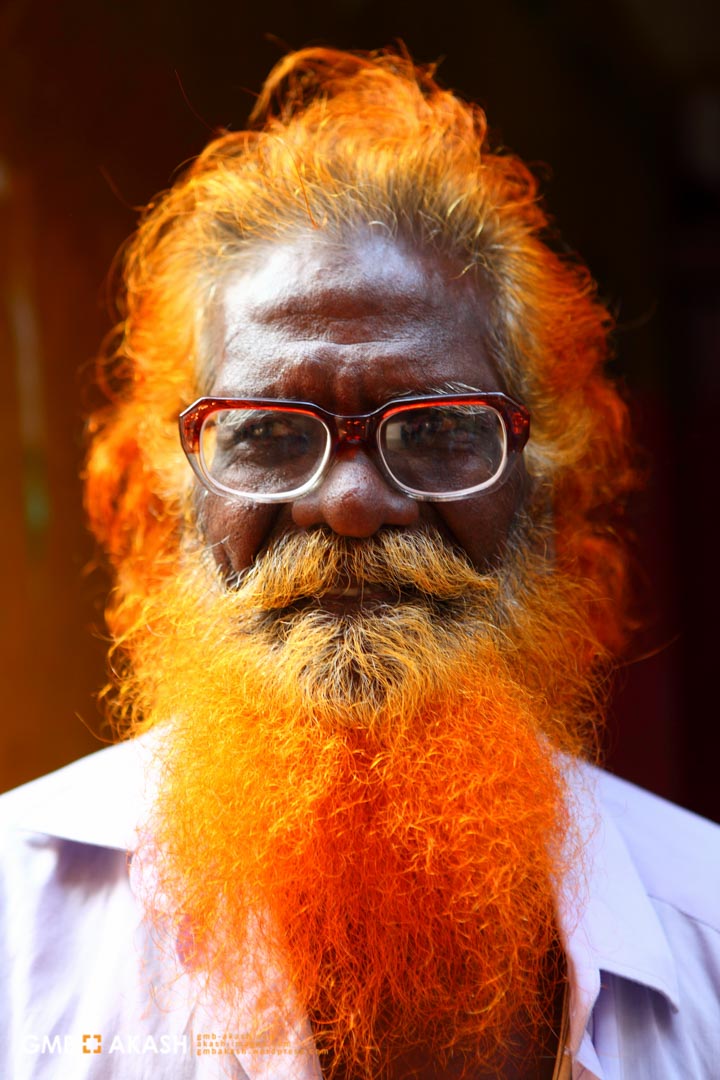
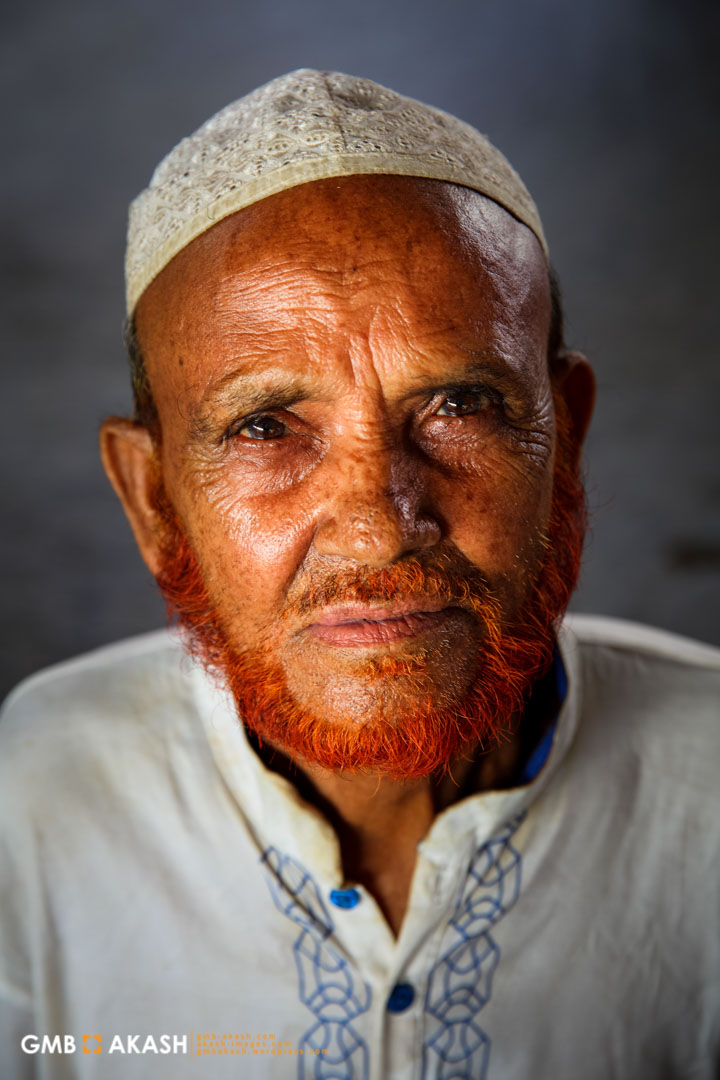
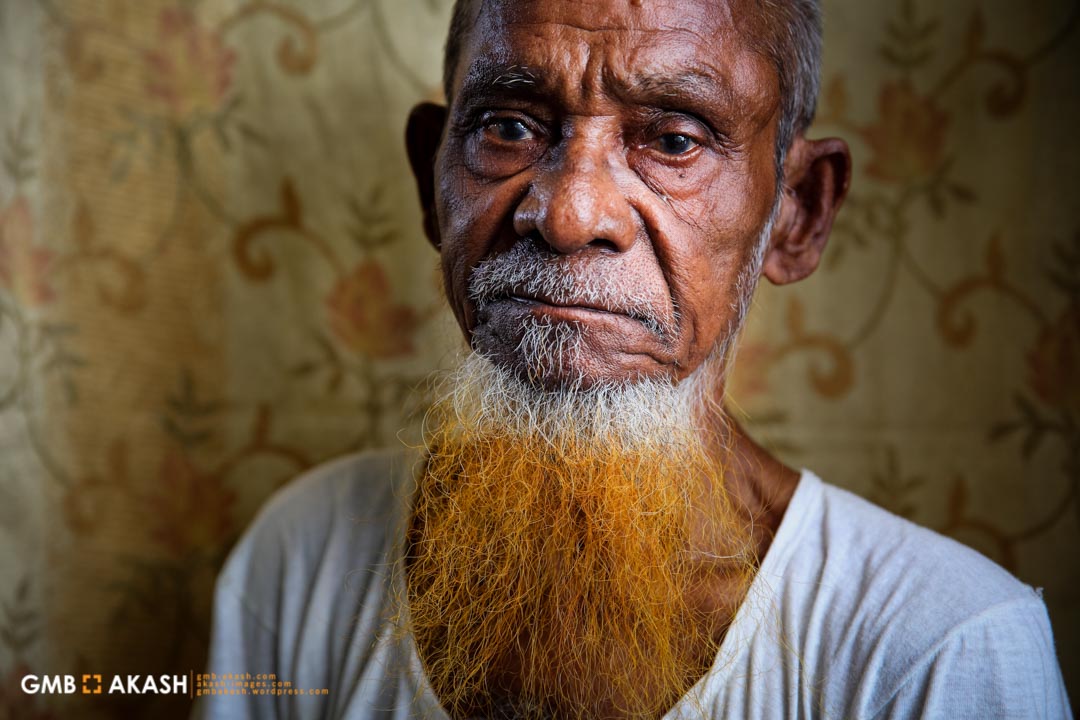
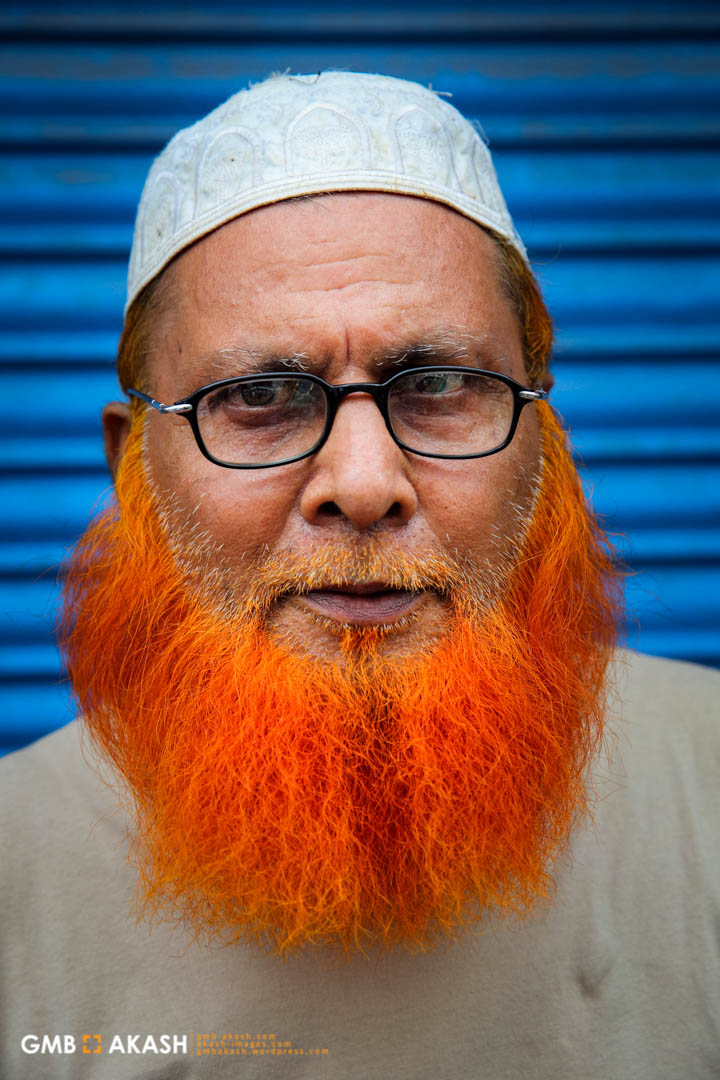
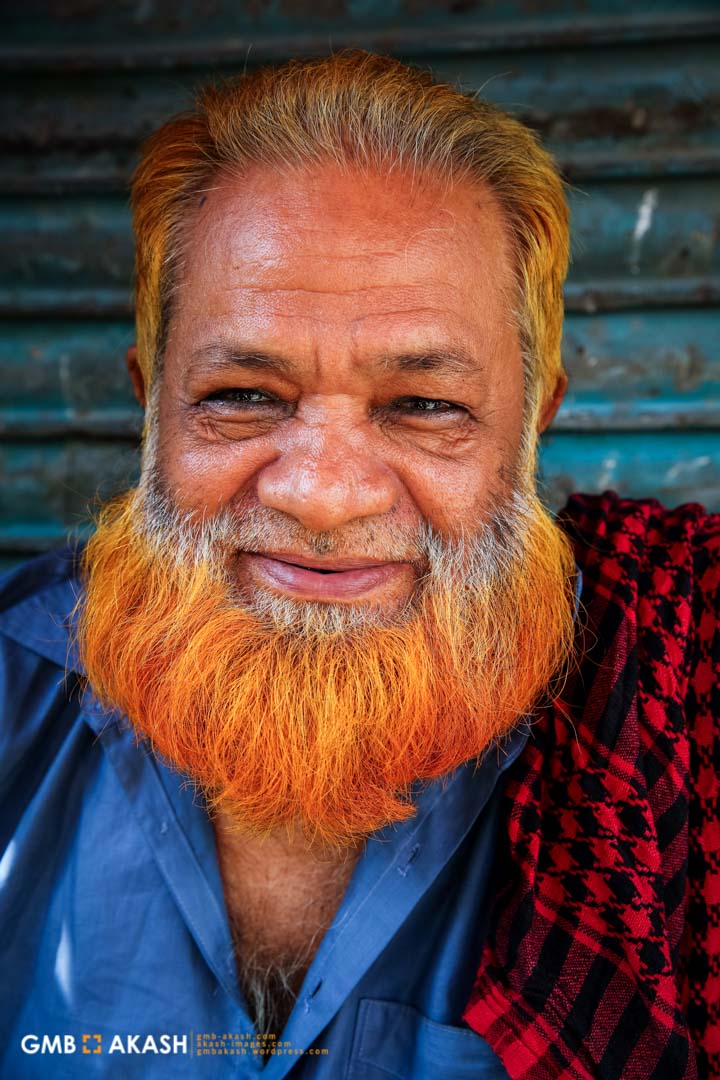
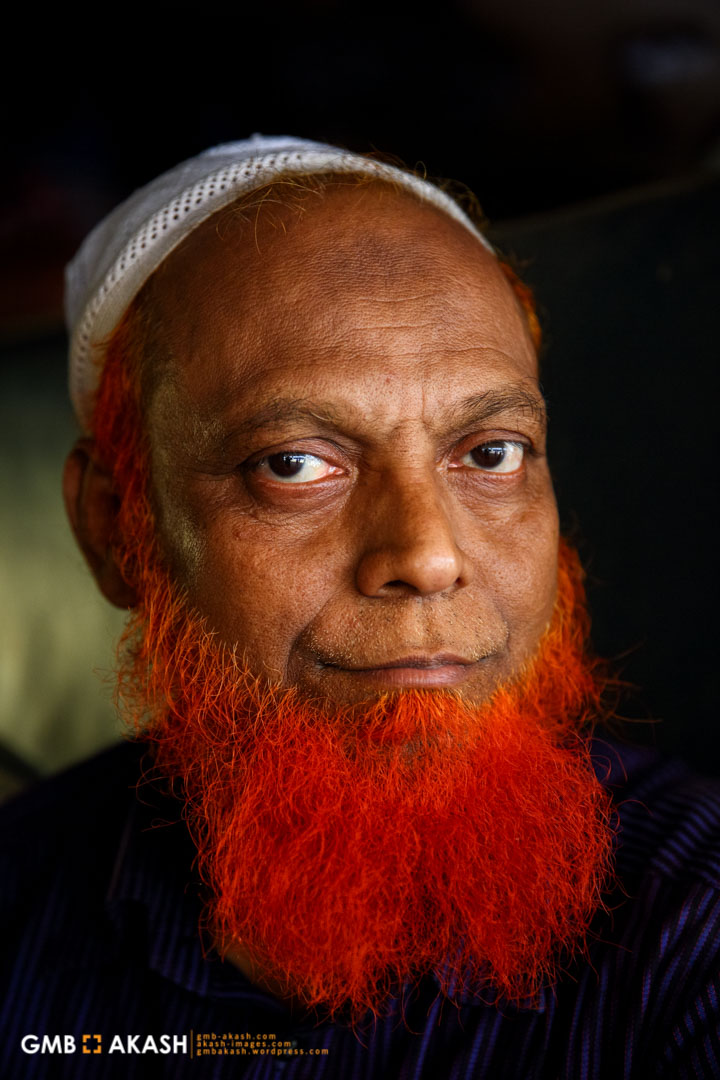
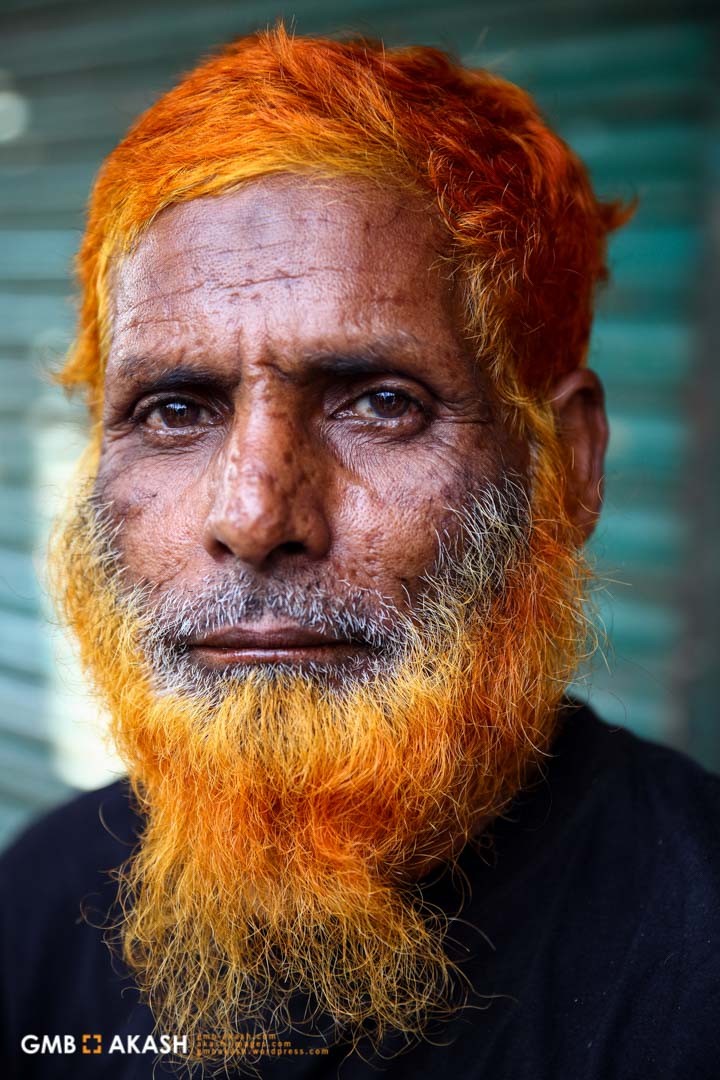
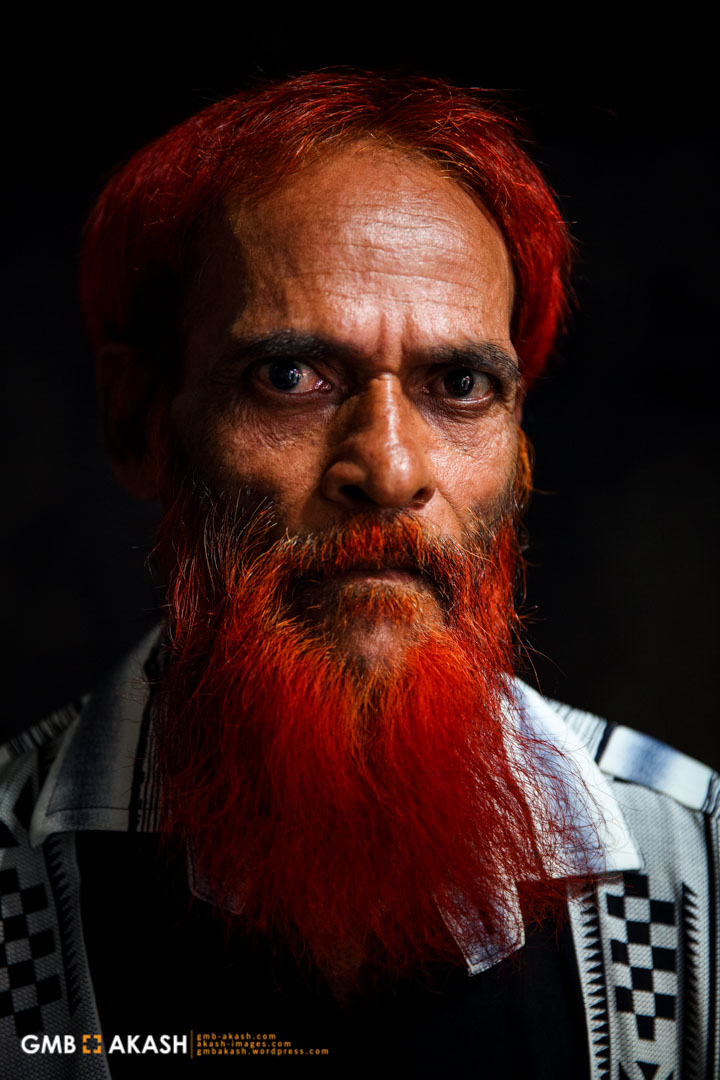
I grew up seeing my ancestors’ orange beards or hair. It is so common in our culture that I was hardly curious to know why older Muslim people colour their hair, beards or moustaches. With time I learned and found out that it was very natural to know  about the importance of henna in Muslim Culture.

IMG_7641

hajrat ali (2)

But for the first time I realized and wanted to know about the real motivation of different individual Muslim men and women for dyeing their grey hair. The first time I started asking the question was when many of my foreigner friends asked me about it frequently during their visits in Bangladesh. Then I started noticing that this colour is making this older generation different. So I started asking the Muslim older generation why they colour their grey beards or hair and what is it that they are so fond of?

abdul kader (3)

abdul malek

abdul sobahan

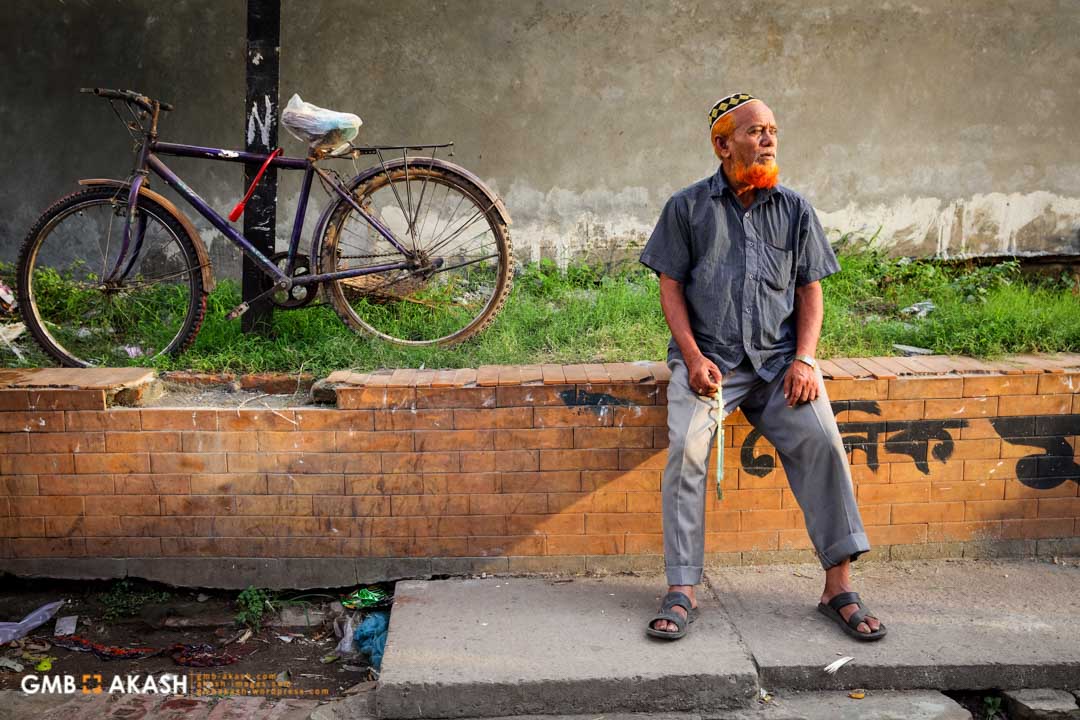
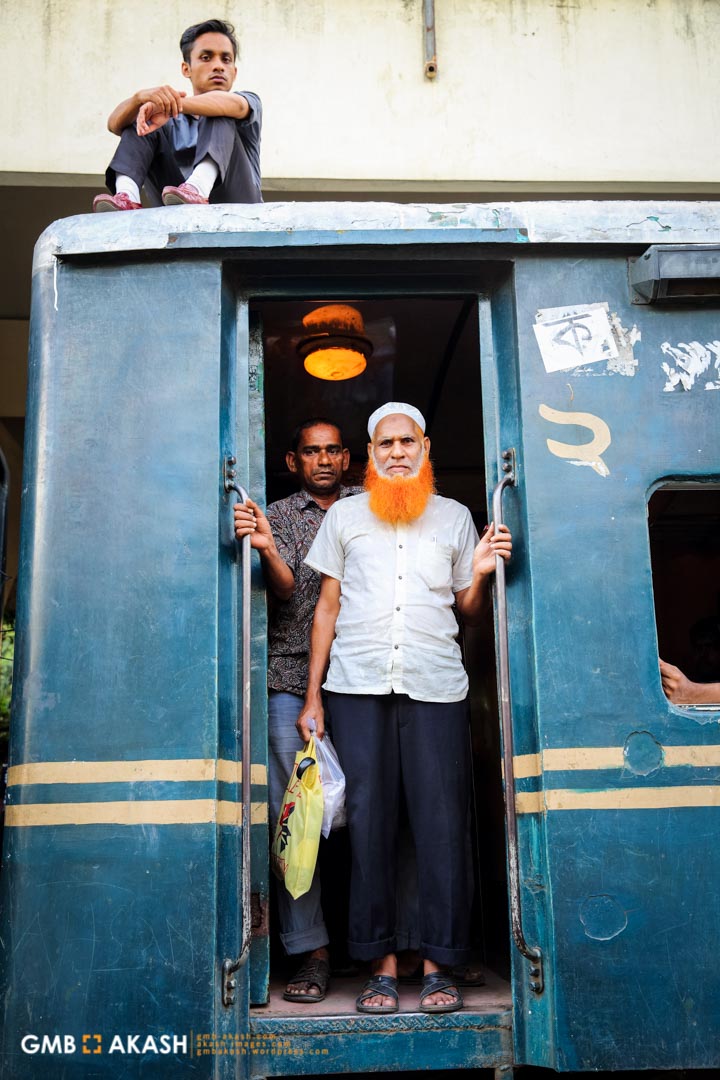
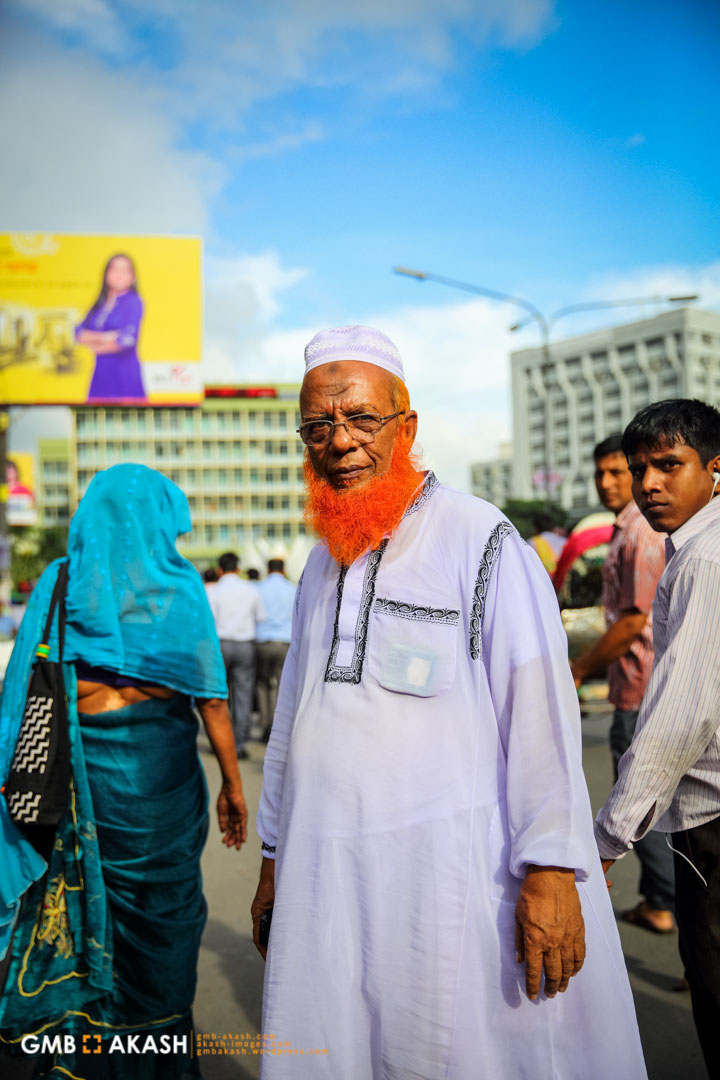
This series consists of portraits of men and women in Bangladesh who have dyed their hair or their beard using the orange-red colour produced by the flowering Henna plant. They shared with me why they use this henna in particular. It’s very common in Bangladesh to see one older person in five old people with orange hair (male or female), and men with orange beards or orange moustaches.

hajrat ali

IMG_7195

During Ramadan dying hair or beards is a very common practice as Henna dying comes from religious beliefs too. It has been believed that the Prophet Muhammad (SM) dyed his beard and hair as well. Some men and women who have returned from the Haaj, the Islamic pilgrimage also practice Henna dying. Not only in Bangladesh, but many Muslims across all continents apply Henna dye and coat their hair to get this bright coloured look.

barasat hossain

johir uddin

jabbar 70 (4)

IMG_7547

For those who did not reference religion as playing a role in their decision to color their hair, they consider it admirable to do so. They believe, Henna covers their head and body and makes them look good in their old age. Therefore, for some other elderly people, especially women, Henna is mostly used as a cosmetic thing for their grey hair.  A lot of men also see a red beard as preferable to a grey or white beards.  Besides this reason many older persons usually follow this practice for cultural or traditional reasons, as they saw that older generations always prefer henna dying.

julhas uddin (3)

musle uddin

julhas uddin (2)

Why did you use Henna dye?

Answers of question:

mohammad sagir

‘I am not old. We all eat polluted food and that causes hair loss and greying is faster. Henna helped to hide my grey hair. Grey means old’ – Mohamaad Sagir

gias uddin (1)

‘It’s our Sunnat. Our Prophet Muhammad used it’ – Gias Uddin

abdul majid

‘Henna helps to clam down my head and body. I dye my hair every month.’ – Abdul Majid

yousuf haolader (1)

‘I use henna dye because I love to do it. What else!’- Yusuf Haulader

mohammad oli (2)

‘I love color more than grey. It’s my fashion. Ha ha ha’ – Mohammad Oli

obaidullah

‘It distinguishes Muslim. It is our culture’ – Obaidullah

IMG_4501

‘Who likes grey hair? I want to be young. Ha ha ha’ – Kashem

gias uddin (2)

‘Most of my friends do henna dying. For the last two years I am doing it also’ – Gias Uddin

IMG_0663

‘Since I have come from the Haaj I started applying Henna to my hair. It has religious value’- Abdul Samad

abdul kader (4)

‘Not only have I, but my wife has dyed her hair to hide the grey. Both of us want to remain young. Ha ha ha’ – Abdul Kader

amina (3)

‘It’s our tradition, our Muslim tradition’ – Amina

mohammad alam (3)

‘My grandfather did it, my father did it and now I am doing it. All older Muslim people love to practice this generation after generation.’ – Mohammad Alam


‘Feet tell stories’

Brick field (15)

Brick field (16)

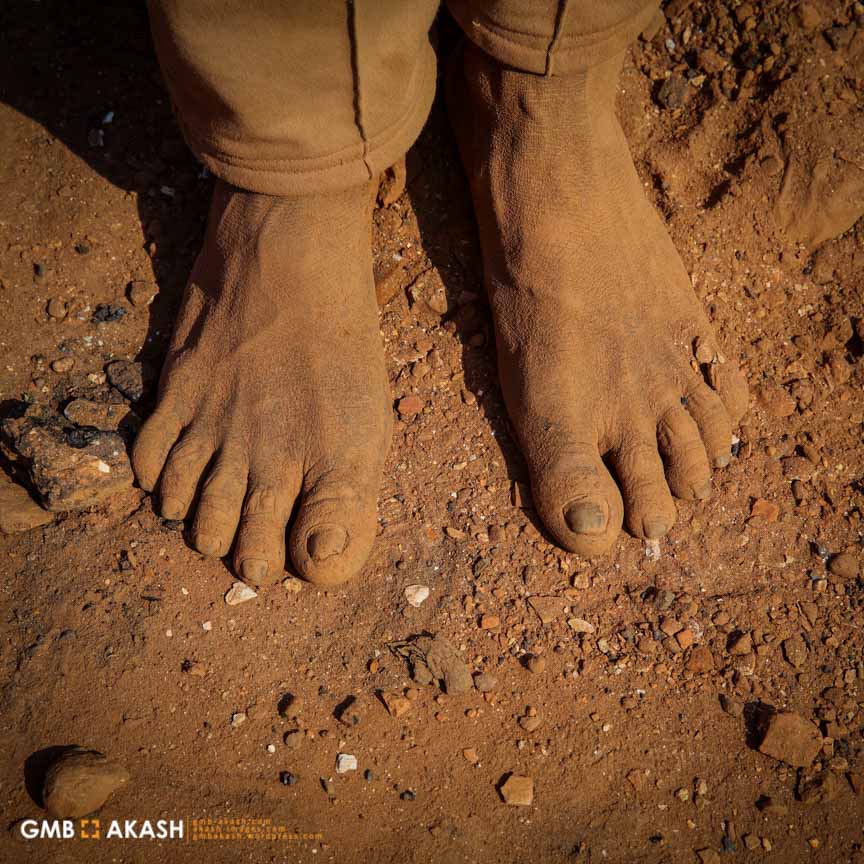
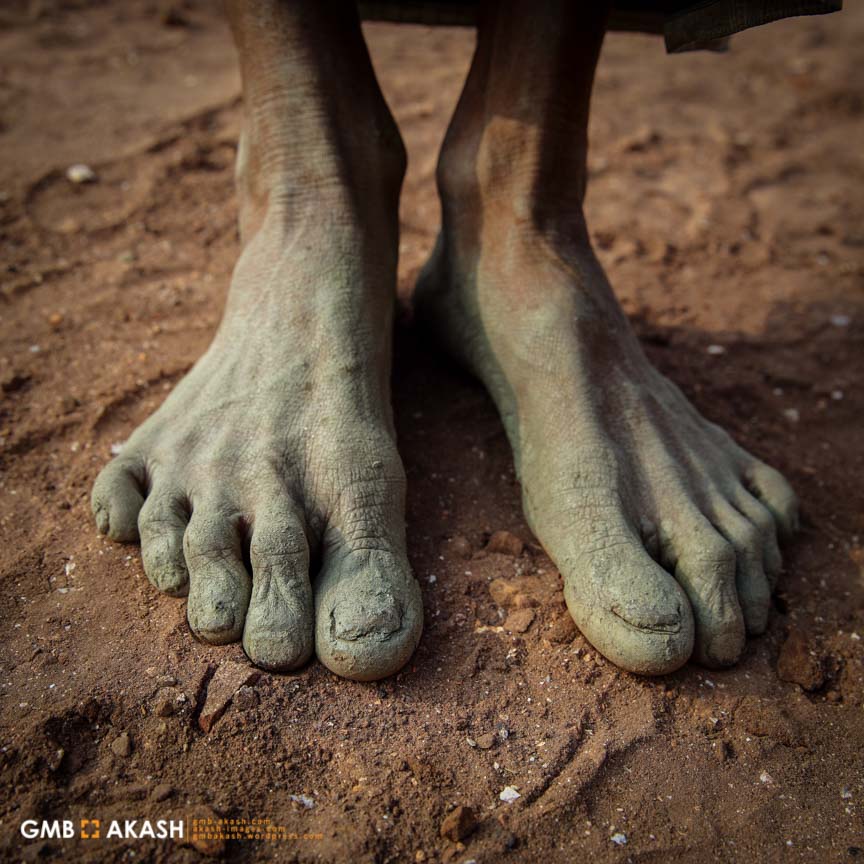
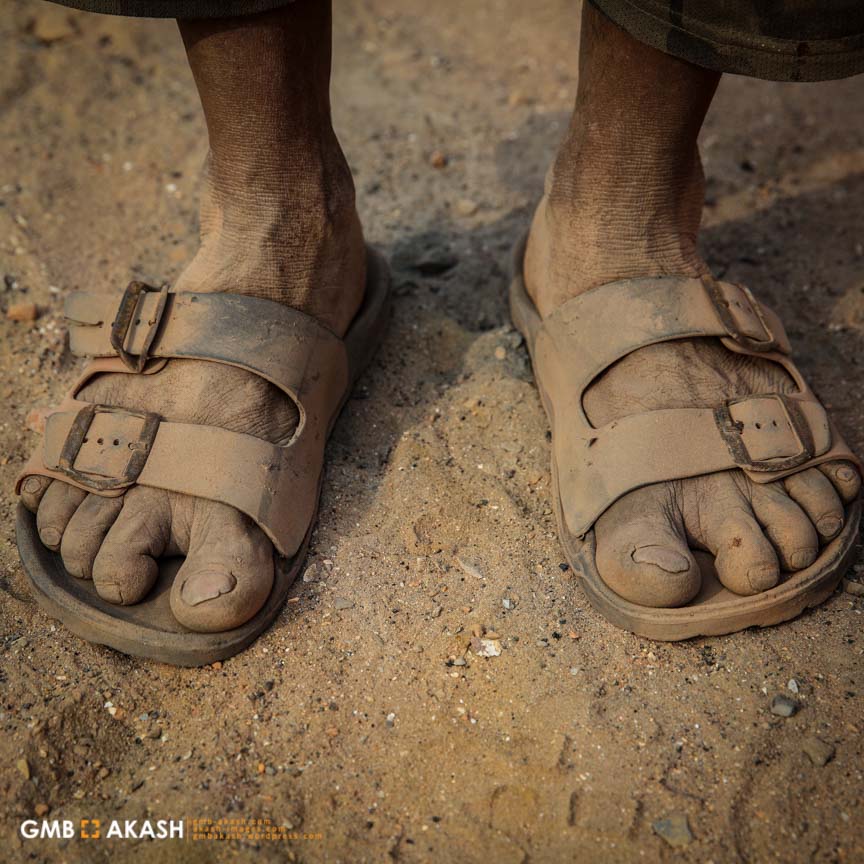
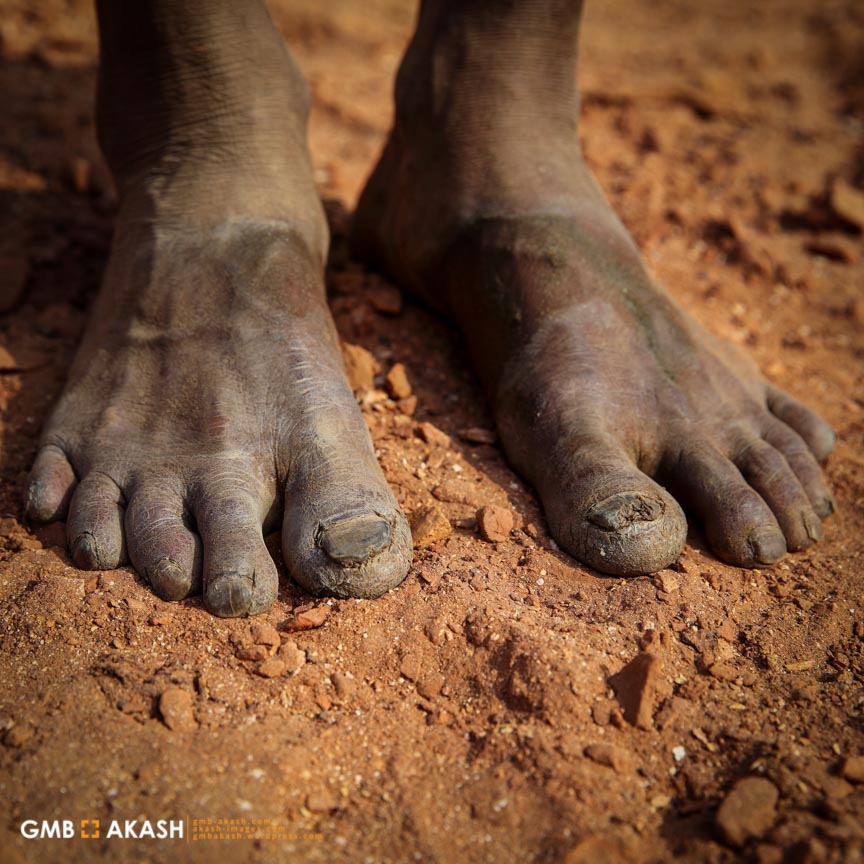
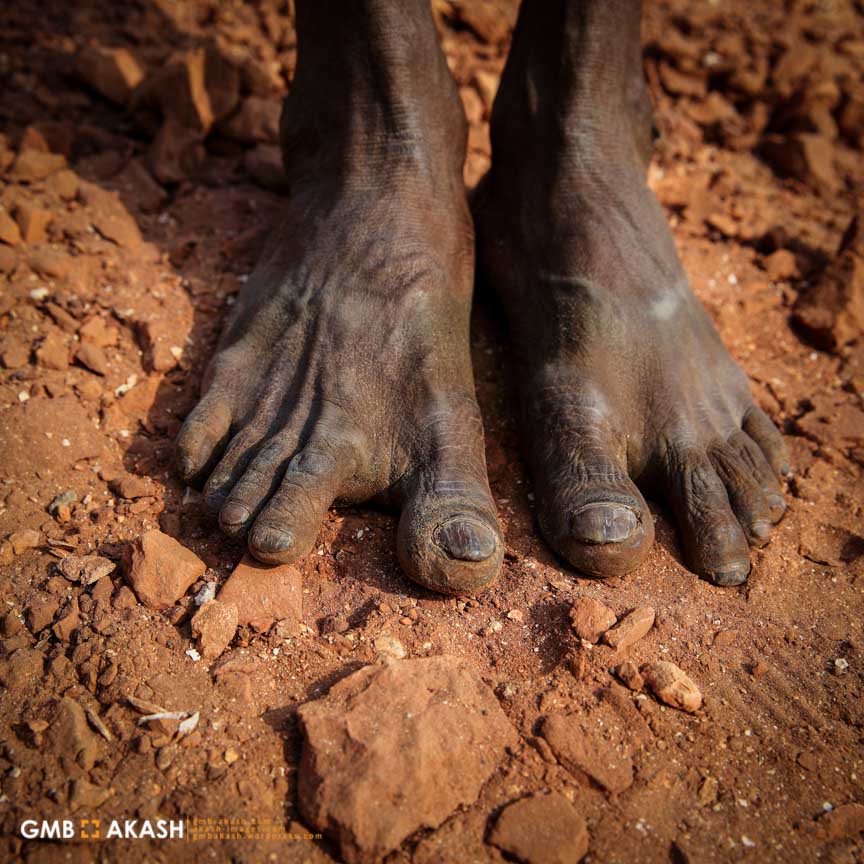
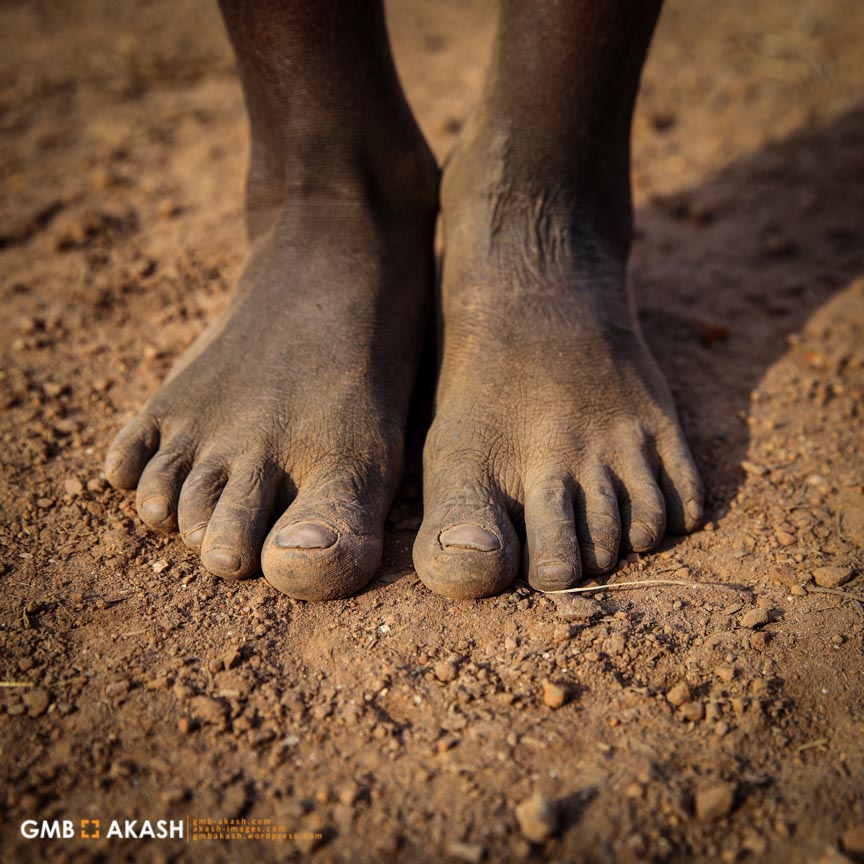
Brick field labouer’s feet tell their tales. Thousands of men, women and children continue tolling in the open brick fields. Their muddy clothes, smudged coal colored skins and bare feet tell the tale about how everyday they are fighting to live a life. I continue to search their stories of struggle about how their hope transform into despair. Once a labourer stopped me to take his portrait and asked me to take an image of his feet and said, ‘Show our feet. It’s enough to explain what we are up to.’

Brick field (1)

Brick field (2)

Under the baking hot tropical sun, Moriyum (7 years old) continues to collect coals in the most perilous conditions even though everyone goes to lunch. Just after shifting 1000 bricks to dry in the sun, Moriyum’s brother Mohsin (9 years old) also goes to lunch. But Moriyum continued to collect coal for her family.

Brick field (18)Brick field (19)

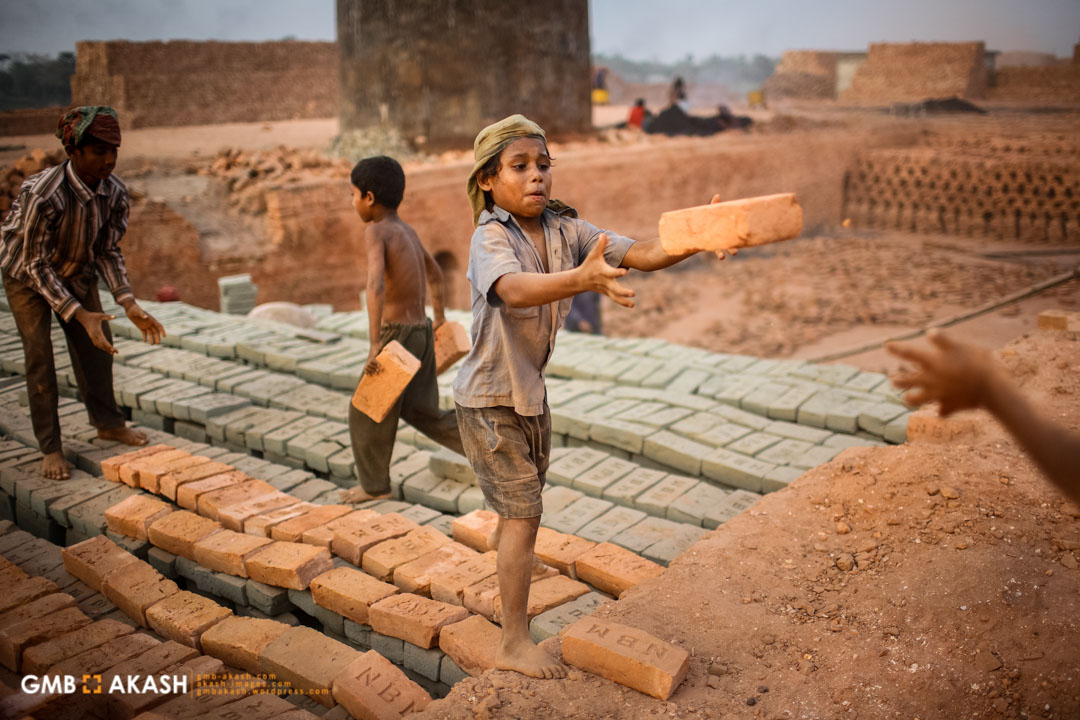
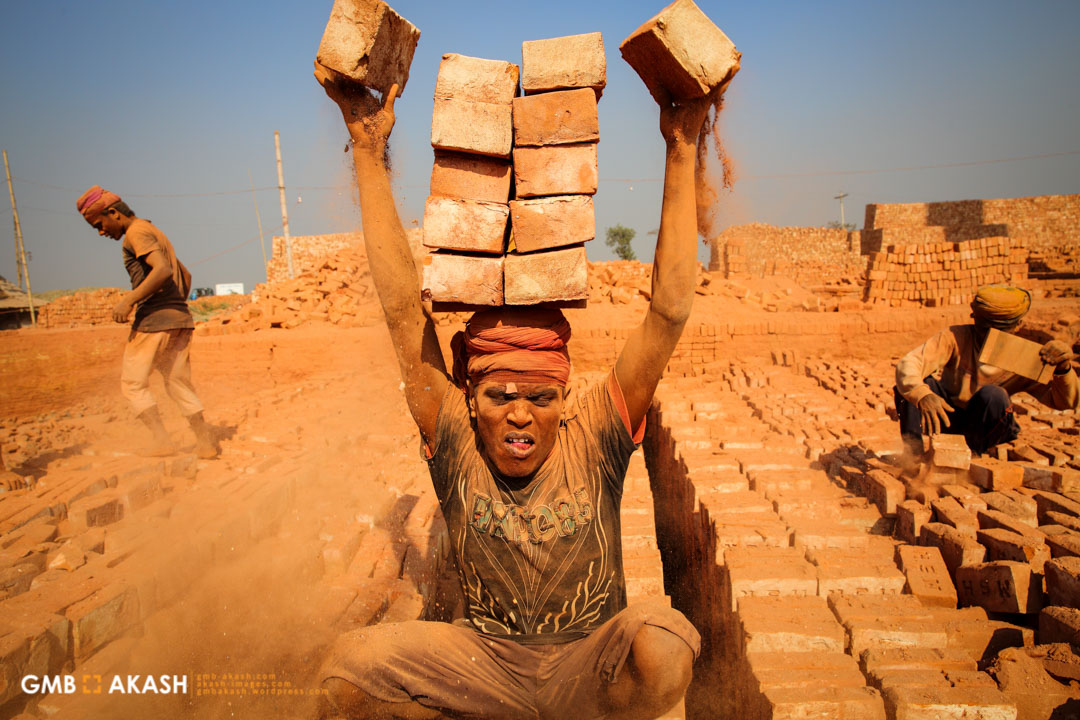
Working children are a common sight at the brickworks as they regularly employ entire families – who oftentimes make their homes on site. Education is a luxury for Bangladesh’s rural poor with children often earning their keep as soon as they can walk. Ranging in age from young children to grandparents, they work long hours to mix out millions of bricks to fuel construction boom that shows no signs of abating. The high chimneys of brick fields are snot only pouring grey smoke into the air but also blowing it into labourer’s lungs. All of the brick fields are located along rivers. Millions of bricks are burned here. Almost all bricks are made using a 150-year-old technology. Soil is mixed with water, formed into bricks using wooden forms, then left to dry in the sun before being burned in traditional kilns. The process is done almost entirely by hand.

Brick field (3)Brick field (4)Brick field (5)

Kohinoor who was balancing the heavy loads atop her head said, ‘We work like slaves. And we die like slaves.’ Kohinoor’s mother-in-law died last year while working in the brick filed. Another woman who has worked a decade in the field was badly suffering from tuberculosis and headaches. Kohinoor added, ‘We know we will die by working here, but we have no option.’

Brick field (6)

Brick field (7)

Brick field (8)

Brick-making provides a better income than agriculture or other jobs available in rural Bangladesh, but it is dangerous and often devastating to workers’ health. Accidents are common and workers have no protective gear except save for what they are able to cobble together themselves. 

Brick field (9)Brick field (10)

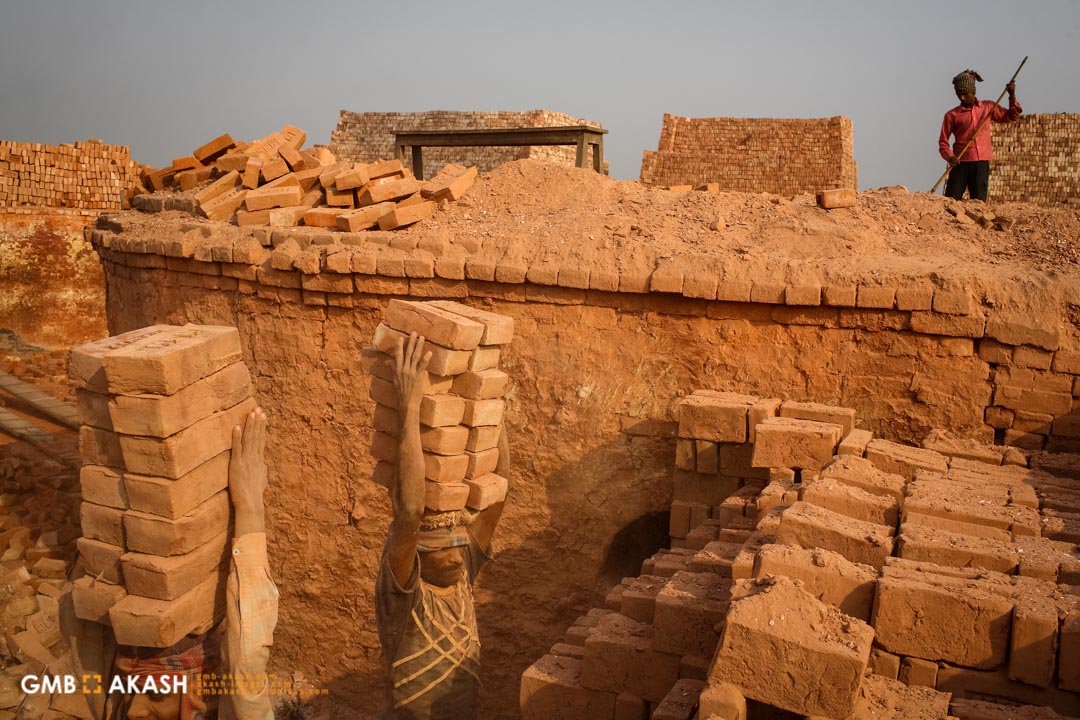
By balancing the heavy loads atop their heads, workers must carry the raw mud to the brick making area are where skilled artisans shape it using brick moulds filled by hand. However, the millions of workers who make the bricks face harsh and uncertain conditions. Brick field labourer Makbul said, ‘Everything tastes like mud. I taste mud in my mouth, tongue, throat everywhere.’ By showing the feet of Makbul’s friend, Jasim said, ‘We are brick human. We have feet like coal.’

Brick field (11)Brick field (13)

Like Makbul and Jashim, hundreds of men come with their families during the brick session in the brick fields. They made their temporary shelter near the brick field in the place given by the brick field owner. The mud house’s bed is made by brick after brick and then putting plastic over the bricks where they rest and sleep. They took loan from the brick field owner which and continue to pay it back by giving labour with full family. Small children of each family works to dry thousands of brick every day. For drying 1000-5000 bricks a child gets 25-50 taka daily. That also goes into the pocket of father for buying food for the family. The Father and mother of each family go to work before sun rise. They carry 12-16 bricks each weighting 2.5kg. For a twelve-hour workday during which an average worker carries about five thousand bricks, he earns Tk. 80 after his expenses are paid. This means toiling 12 hours a day for a daily wage of 120 taka (USD 1.70) for men and 100 taka (USD 1.40) for women.

Brick field (14)Brick field (17)

Still they hope for a better life and perhaps dream of happiness. During his break, after lighting a cigarette Motahar said, ‘My wife often asks me to take her to the cinema. We have no money left after basic shopping at the bazaar and paying loans. But she managed to save and bought an old phone for me. Now while I work, I listen to songs.’

Brick field (20)

(Brick fields are not only causing suffering for labourer but for the environment also. Bangladesh is hit harder than almost any other country in the world by climate change despite emitting very little greenhouse gases. But still the emissions from the brick kilns hurt the environment. Brick kilns are the leading cause of air pollution in the country. There are about 5000 brick kilns in Bangladesh, which are largely responsible for air pollution. Dust from the brick-making sites spreads in the wind to nearby towns and villages clogging the lungs of young and old and generates health problems that the country is ill-equipped to handle. The chimneys continue to poison labourer lives and as well as letting the environment to suffer in silence)


Women of Worth

“Sometimes the strongest women are the ones who love beyond all faults, cry behind closed doors, and fights battles that nobody knows about. This blog post is dedicated to honour women who are living at the edge of the society and continue their fighting to earn food and dignity, who merely ever come in the world’s limelight; even the society they are living have never appreciated their bravery. I have met with many of them, discovered closely how women have worked for the greater good and brought about change in their families and society. This is a way to tribute to a mother, sister, wife, daughter, friend and the many roles she plays in life. These personalities have made me understand that nothing can kill the spirit of a woman and that makes her incredibly beautiful” – GMB Akash

Women at work (8)

Many women have broken away from tradition, knowing fully it leads a tough road to walk/ www.akash-images.com

Women at work (2)Be fearless/ www.akash-images.com

Women at work (13)

A woman cannot be free until she is financially free/www.akash-images.com

Women at work (11)

Each time a woman stand up for herself, without knowing it possibly, without claiming it, she stands up for all women/ www.akash-images.com

Women at work (21)

In diversity there is beauty and there is strength/ www.akash-images.com

Women at work (7)

Success isn’t measured by your wins, it’s the size of the challenges you overcame/ www.akash-images.com

Women at work (6)

Living life on the edge with dream/ www.akash-images.com

Women at work (12)

The strongest actions for a woman is to love herself, be herself and shine amongst those who never believed she could/ www.akash-images.com

Women at work (1)

Dreams don’t work unless you do/ www.akash-images.com

Women at work (14)

You have to do what is right for yourself; nobody else is walking in your shoes/ www.akash-images.com

Women at work (26)

Be an encourager/ www.akash-images.com

Women at work (22)

When a woman wants she can become an unstoppable force/ www.akash-images.com

Women at work (10)

Nothing can dim the light that shines from within/ www.akash-images.com

Women at work (3)

 Don’t let anyone stop you from your goals, dreams and true happiness/ www.akash-images.com

Women at work (9)

Yesterday is nothing more than a lesson. Today is who you are/ www.akash-images.com

Women at work (16)

Be yourself. Life is what you make of it/ www.akash-images.com

Women at work (24)

There’s nothing damnable about being a strong woman. The world needs strong women/ www.akash-images.com

Women at work (28)

Don’t let anyone to dull your sparkle/ www.akash-images.com

Women at work (17)

Never ask the question, can I do it? Just go with ‘I will do it’. Your determination will always take you a long way to your dream, so hold on to it/ www.akash-images.com

Women at work (15)

She is the best when you believe in herself/ www.akash-images.com

Women at work (27)

 You are the force of nature/ www.akash-images.com

Women at work (25)

Follow your heart to be the best that you can be/ www.akash-images.com

Women at work (23)

Courage may be the most important of all virtues, because without it one cannot proactive any other virtue with consistence/ www.akash-images.com

Women today are now coming into their own. They are their own heroes. The power to change their lives lies within them. However well accomplished a woman may be she takes on guilt and responsibility far more easily than a man does. She is conditioned to believe that everyone and everything is her responsibility. Sometimes, she forgets that she has a responsibility towards herself. Accept and love yourself because there is just one YOU!


‘EID Respect’

10269582_704058289658928_1565516508145764793_n

1654326_739725882758835_5008520803241229993_n

Being unwanted, unloved, uncared for, forgotten by everybody, I think that is a much greater hunger, a much greater poverty than the person who has nothing to eat ― Mother Teresa

I believe an affectionate smile, an overwhelming hug can cure illness!

We start our journey to find our lives that deserve our affection, attention and respect. On the occasion of the biggest festival ‘Eid’ in our country there are elders who are living miserably in the yard of their houses. Many of them can not speak, some cannot see and others are counting their last days. These respected elders are living their lives like burdens to their poor families. Maybe for many of them this Eid will be their last festival. We set out our journeys to give them some sort of happiness, to give them a surprise and to show them respect.

Eid Gift (7)

Amena Begum (80) lives in the village Pechayain. She cannot speak. A year ago after her heart attack she is unable to move her right hand and lost her voice. For her poor family now she is an unwanted person. Her bed has been shifted to the open kitchen outside their house. Amena Begum has no idea when the Eid comes and goes but she try hard to see people passing her yard though she can not see anything clearly. These last days of her life are filled with humiliation and loneliness. Like her there are hundreds of elderly women who are suffering silently.


Eid Gift (11)

Eid Gift (12)

Eid Gift (10)

In the upcoming Eid festival we want to show respect to our elders. Women who fought throughout their lives without expecting anything. Now even in the last days of their lives they are suffering miserably; being unnoticed, unloved, uncared for. Finding them and giving them a small gift has been our mission during this festival.

Eid Gift (2)

Eid Gift (1)

Eid Gift (3)

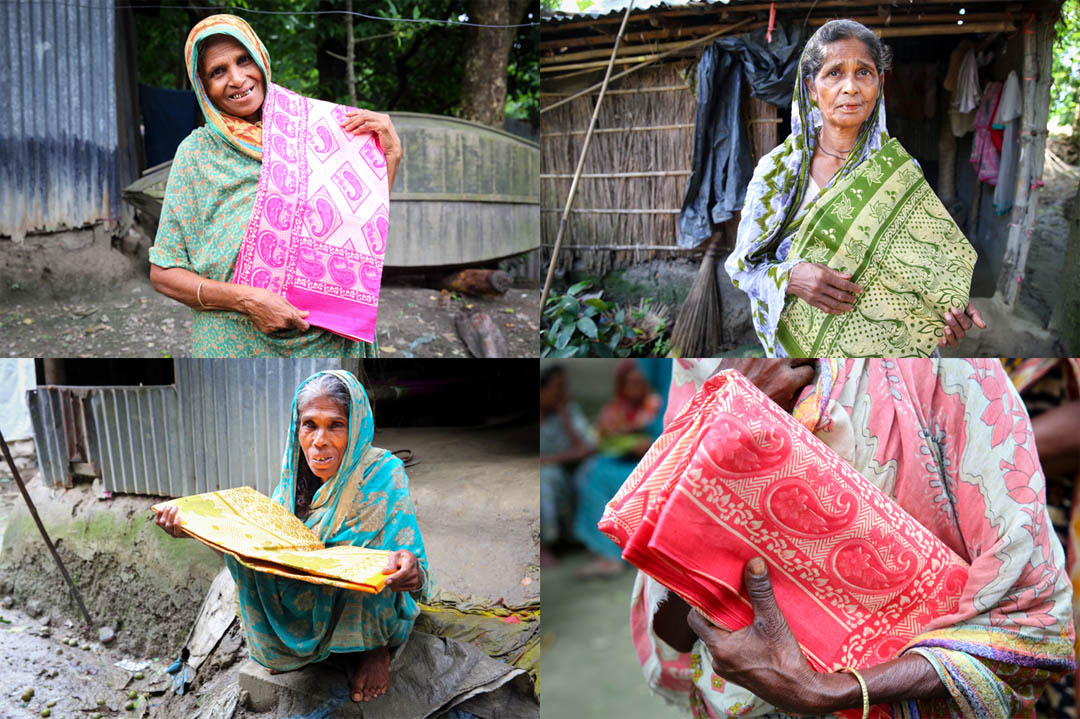
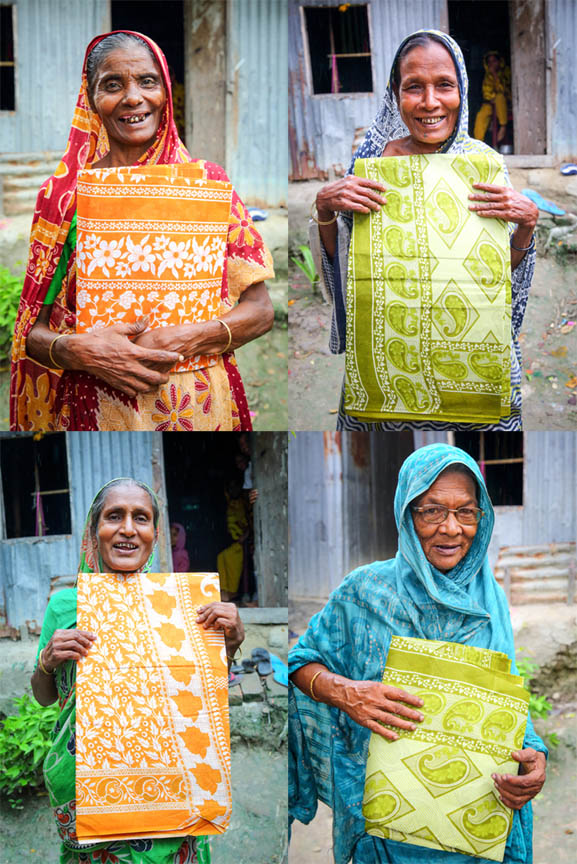
I went to the villages of Varat and Pechayain. And by the help of my friends and students we found elders who needed our attention, affection and respect. These elderly people cannot go out for asking help. So we reached their doors with our gifts. We gifted sarees to these helpless elderly women in some villages to bring out smiles on their face. To make them feel that they are not alone.

Eid Gift (5)

Eid Gift (4)

Eid Gift (6)

The smiles in their face, the sparkle in their eyes, their affectionate touch on our heads give us the feeling that , there is happiness in the act of giving and caring.

Eid Gift (8)

Let’s speard our arms, lets walk upto their doors. lets bring out smiles in the faces of the unprivileged! May this Eid festival break all bricks of inhumanity. Our small attempt is to go and find these miserable souls . Giving them a small gift, showing some respect and touching their feet makes us feel fortunate. Elders are our pillars. Lets make them even stronger!

Eid Mubarak to you ALL!

Eid Gift (13)

Eid Gift (14)


Info Ladies – Women Heroes of Rural Bangladesh

Women have to go beyond any boundaries they might have set for themselves. Thinking something that a woman can’t do because that particular thing is a man’s domain, is where she is restricting herself! Women have incredible power. Just inspiration can help them to grow their dreams. As a photographer every day I am capturing woman’s battles, voices, dreams and triumphs. By putting light on their lives and dreams I would like to tell stories that the world should know about! Welcome all of you to the heroic world of INFO Ladies of Bangladesh!

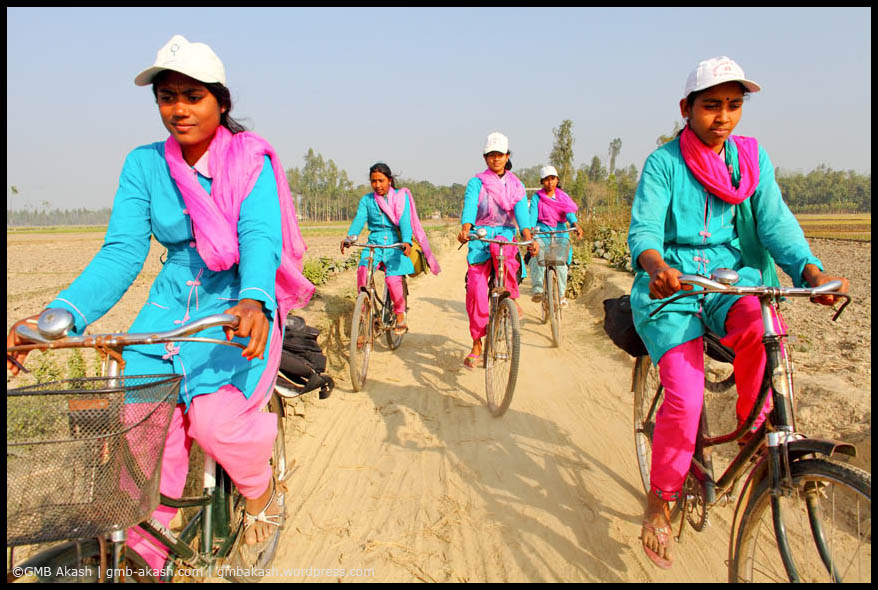
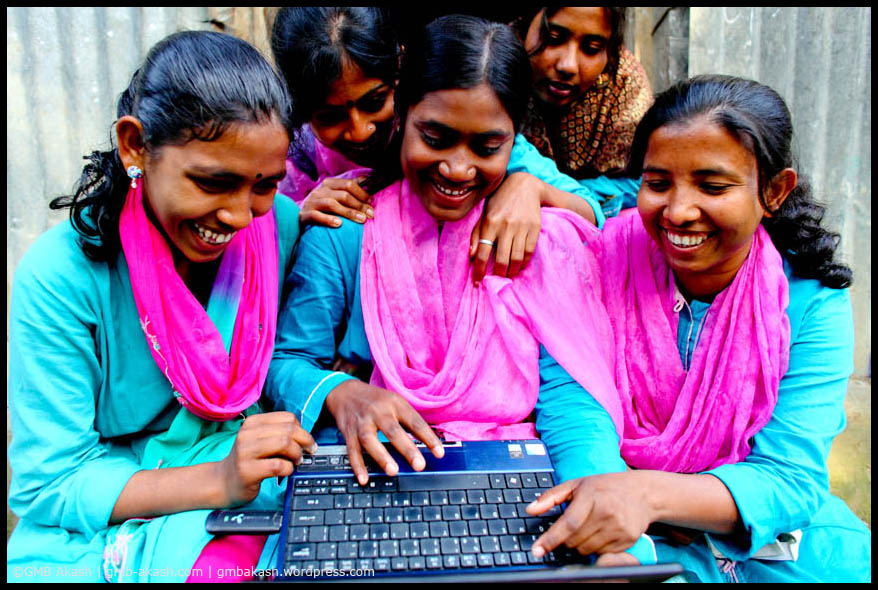
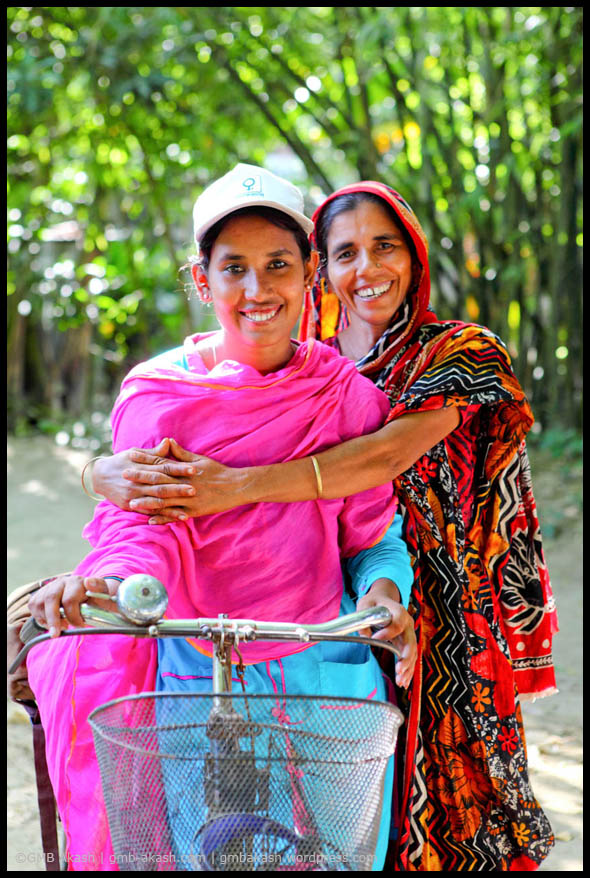
The Info Ladies cover many miles on their journeys from village to village. With their bicycles and laptops, the Info Ladies of Bangladesh bring the world a sense of independence from one village to the next. This has changed the country, and their lives, too. The young women have become role models for a whole generation.
info lady (4)

The Info Ladies cover many miles on their journeys from village to village/www.gmb-akash.com

info lady (2)

The meetings in the villages are free, with a charge for some services/www.gmb-akash.com

Sathi is the most successful Info Lady in the Gaibandha district. Between banana trees and flood swamps, she has opened an info shop in her home village Jarabarsha. A banner in front of the shop rattles in the wind. It reads: “We are independent because we are Info Ladies.”
info lady (10)

The Info Lady is wearing her info lady uniform, a blue cape and pink trousers. Amid the dark green landscape, she shines like a ladybird on a dandelion leaf/  www.gmb-akash.com

The corrugated iron on the roof shines more brightly than anywhere else in the area. A table mounted on the trunk of a tree lists all the services Sathi offers. Sathi offers Skype calls, online bank transfers, online university application assistance, digital camera rentals, mobile phone ringtone downloads and photography services. She gives pregnancy tests, measures diabetics, takes blood pressure, identifies blood type and even sells underwear for women. Recently she opened her pre-primary school with a vision to create an example for the village.


info lady (8)


Sathi in her info shop which provides for her whole family/ www.gmb-akash.com

Sathi is a 24 year-old petite woman with a barely perceptible smile and deliberate movements. When a man pushes his broken mobile phone across the counter, she unscrew the lid of the phone, fumbles around with the speakers for a few seconds with a metal pin and declares: “it’s broken, I will order a new one,” without expecting any rejection. Sathi has a scar with six stitches on her right ankle from a fall from her bicycle when she still had problems keeping her balance. She proudly shows the scar. Laughing loudly while explaining how difficult it was to convince her father about bicycle riding, she says, “I learned the basics of computers in three days, but it took months to convince my father to let me ride a bicycle.” But now she has changed the financial face of her family. In nearly three years of this job she built new house and renovated the old shop which is now the famous info shop.

info lady (9)

Sathi has to go from village to village to give her services. On that humid day Sathi repeatedly grabs the corner of her pink dupatta and wipes sweat off her face. She is wearing her Info Lady uniform, a blue cape and pink trousers. Amid the dark green landscape, she shines like a ladybird on a dandelion leaf. Sathi cycles past men in waist-deep water. The men stop their work for a moment and look up. Sathi nods in greeting. When she finally arrives in the village, she rings her bicycle bell three times, and women immediately start crowding around her.

info lady (18)

An Info Lady is a nurse, mail carrier, fashion consultant, farmer, photographer, psychologist – all in one.

A short while later the women they roll out fabric bags to sit on and Sathi shows them a film about feeding infants. Then in a firm voice, she repeats every single fact: “You need to wash your breast before you breast-feed your baby. You do not need milk powder from the store; your breast milk is perfectly fine until the fifth month. After this, pay attention to adequate amounts of calcium and proteins. Have you all seen which foods contain these substances?” The women, some twice as old as Sathi, look at her. Their silent glances show how much respect they feel for someone so knowledgeable.
info lady (3)

The meetings in the villages are free, with a charge for some serviceswww.gmb-akash.com

Sathi’s working day ends with accounting. Using a computer programme, she notes every cent she earns. The group meetings are free, but a digital passport photo costs 10 cents, a blood pressure measurement costs 5 cents. Sathi has earned the equivalent of 2.60 Euros – a moderate day’s income. Last month, her income totaled 133 Euros. By comparison, a farmer in the district of Gaibandha earns about 60 Euros a month.
info lady (11)

Many young women resist the opposition of their parents when they become Info Ladies. Sathi’s mother is different. She says: “All women bear children, but not all give birth to children as important as this one”

In a country where less than a quarter of the population uses the Internet and where access is both slow and expensive, Bangladesh’s ‘Info Ladies’ offer a series of vital services to people living in remote, rural parts of the country. The “Info Ladies” project was launched in 2008 by a local non-governmental organisation called D.net. The same organisation had previously sent so-called “mobile ladies” through Bangladesh – young women with mobile phones, who enabled the inhabitants to communicate with people outside their village. When most inhabitants eventually owned a mobile phone, the Info Ladies were launched. They now offer mobile Internet, in a country with 152 million people, of whom five million have access to the worldwide web. D.net works together with local organisations to implement the project. In Gaibandha district, the NGO Udayan is involved. The name translates as “the resurrection”. The Info Ladies are trained for several weeks in the barracks of Udayan.


info lady (19)

In the rainy season, the Info Ladies cross the water on hastily cobbled together rafts or bridgeswww.gmb-akash.com

A Bangladeshi Info Lady is not just a woman with a laptop; she’s an entrepreneurial businesswoman bringing isolated people a piece of the world with valuable information and services. Info Ladies managed to change the perspective of villagers in many ways. Dohrmina, a village elder, now gives advice to the youth that would have been unthinkable in her day. She says: go to school, secure your own income, and don’t have too many children. Dohrmina says: “We didn’t even know what independence meant.”

info lady (20)

Like Dohrmina villagers have been paying more attention to their health now the Info Ladies make their visitswww.gmb-akash.com

info lady (21)

After measuring weight of the pregnant woman Mahfuza says, “You need to eat more,”

Of the 10 Info Ladies from Sathi’s group, seven are still active after three years. The Info Lady Mahfuza who is one of them rests her bike on the kickstand. Mahfuza is 22 years old and an Info Lady. She is part of a project in which young women use modern technology to distribute information to the most remote corners of Bangladesh. Mahfuza’s former classmates are now all married; most have one or two children. Some girls are married by the age of 13 or 14 and by the age of 20, parents actively look for a husband for their daughters. But Mahfuza learned to hold her head up.


info lady (1)

info lady (22)

A camera transmits the image of the extended family – with the brown calf which has been given the name Bohon – from their village of Bangamur in the north of the country, showing the courtyard with its highly polished loam clay and hastily-stacked hay bales all the way to Riyadh, Saudi Arabia’s capital. Tajul Islam, son, husband, nephew, cousin – and sorely missed by his family for a decade – lives there, a distance of some 4,500 kilometres, slaving away on building sites and sending all the money he has left to the village. The time they talk every week via Skype is their only chance to hear and see each other.


Meanwhile Mahfuza sits under a roof made of bamboo leaves and takes measures the blood pressure of a pregnant woman. Someone from the crowd shouts: “she’s expecting a boy.” Mahfuzaa does not even look up from the blood pressure meter as she responds: “boy or girl, it does not matter, both are equally good.” Another lesson learned. Mahfuza is contacted by girls who need underwear but do not dare go into a store. She then goes shopping for them. Farmers ask Mahfuza what is wrong with their rice plants. She photographs spots on the leaves and sends the images to an expert in Dhaka.

info lady (5)

A grandmother holds her grandson in her arms. He seems apathetic, his arms and legs are hanging limply. Mahfuza throws a quick sideways glance to the mother standing by the roadside. “Did you have him vaccinated as I had suggested?” The mother shakes her head imperceptibly. Mahfuza exhales audibly, stroking her hand over the baby’s head. She promises to come back in a few days and take the child to a mobile clinic.

info lady (6)

info lady (7)

The Info Lady Mahfuza also is a photographer. She sends a photo of a villager in her finery to her husband in the capital Dhaka/  www.gmb-akash.com

As a result, the women themselves experience a sense of freedom, empowerment and economic independence. This has started to change their country, still struggling with improving the historical violation of women’s right. They have become heroes for an entire generation of young women by giving them hope and inspiration to also be able to work and enjoy personal freedom in a predominantly Muslim country. Although proving to be a driving force of positive change and transformation, these Info Ladies have had to “walk on thorns”. They have fought against social stigma, a conservative Muslim society as well as deep cultural prejudices against the value and rights of women.


If they were able to change their lives so radically, why should this not also be possible for others?

info lady (12)

info lady (15)


‘My Genie’

It was too boring when Maa used to stare at me while I was eating. I repeatedly taunted her, ‘Why are you staring Maa?’ While putting her portion of fish on my plate she always ignored my question and said, ‘I know you are still hungry’. I showed anger to her but I know no mother cares about her child’s anger. Late at night the lock of the back door used to open instantly to the sound of my my silent footsteps. When Abba burst out in anger and the hell with my bloody photography, Maa for the first time miraculously raised her low voice and faithfully said, ‘Photos are good. Have you seen any one else to do such work in the area?!’ Our small area was the world to her and I was the hero. Maa was the only fascinated listener of my fairy photo-world-tour tales.

mother (20)

mother (7)

To me she always seemed ‘simplest’ than the word ‘simple’. At mid-night when I felt suffocated in sleeplessness my mother appeared at my bed side with hot milk in her favorite silver glass. I never felt surprised or ever questioned her how she knew I was wake in the middle of the night. Returning home from a heavy rain and getting hot lemon tea at my table was very normal. Or tasting Maa’s peculiar juices in the crazy summer never bagged her any special credit. But I know from my heart that she is my ‘Mother Genie’. She broke the mud coin bank that she secured with each paisa she had and that day said, ‘Go, get your photo prints’.

mother (9)

mother (1)

Suddenly one day I realized there was no one… no one no more to be concerned about the sweat on my forehead. My Genie left me suddenly without telling me a good bye. If I would have known I have to now walk a long road without her, I would have told  her a lot of untold stories. I sure would have told her, the photography that I love more than my life is as important to me as her; I love her more than that photography. Maa is no more. That’s why I keep searching Maa everywhere.

mother (12)

mother (14)

A sister in a brothel used to send letters to her mother with fake address by putting small words, ‘Maa Goo your Pakhi’. Like me she also knows mothers never give up. They will wait until their children arrive. Exactly like the mothers of the Old Age Home who are crossing through their 80 s and still praying for their children from nuclear families that they may live in happiness.

mother (3)

mother (16)

For bringing light into the face of their children of early ages these mothers went down in the garbage, worked in dusky brick fields, showered in cold sweats as mothers do. Their tired bodies never take rest even after returning homes. They did the shopping on the way to their home and cooked rice and Daal. By lining up their four to six children they checked carefully if all of them are well or not. A few mothers, even after being beaten by the fathers everyday kept their children in their lap and dreamt of an impractical reality for them.


mother (24)

mother (33)mother (5)

Children well known the God has gifted special power to their mothers. That power comes out in love, patience, sacrifice. But what do Mothers gets? Can’t we do something for the mother who never wants anything for themselves? The mother who is giving a new life to us everyday can’t we warm her with our affection?
mother (37)

Why still today mothers get humiliated at the corner of the house? On the floor of the Old Age Home? Or in the dirtiest hospital bed from negligence?


mother (29)


mother (10)


‘Lifelong Scars’

The small window is a passage to the world for Rebeka Khatun (22) since she rented the tin shed room two months ago. Living in hospital for ten months took most of her will power after the deadliest incident of her life. Now she does not think too much. But the silence of her tin shed rented room does not allow her to rest in peace. Idle Rebeka now thinks about the charger fan that  is restlessly cooling her. The inventor of the Dolphin charger fan might never have thought a garment factory worker could think about this fan for such long time. Yes, she wants to think different things now-a-days. She is tired of answering the same questions, tired of seeing unknown faces, tired of begging from people, tired of crying so long. She needs a break but from what she does not know.

Rana plaza (10)

When she closes her eyes her mother gently touches her cheeks. The mother who once made cow dung to feed Rebeka. The mother who wiped her tears when she cried and slept in hunger. Rebeka and her mother Chan Banu (45) had seen all the ups and downs in life. In the village they had to even beg to survive. Chan Banu did everything for her daughter Rebeka . She was life to her. Rebeka opened her eyes that were filled with tears and touched her right leg which itched all the time. There is no electricity for two hours and the restless Dolphin fan slowed down. Rebeka was sweating; the salted water flowed from her body, her eyes and maybe from her soul. The girl who started earning at the age of 15 never imagined her life without her mother and as a disabled person. She could not sleep the last two nights. Rebeka’s husband Mostafizur fanned her the whole night but pain is part of her existence now. Even when she opens her mouth only pain is visible on her face.

Rana plaza (4)

She lost her father in childhood. Her mother remarried just to save her from hunger. Fate did not take any right turns. After some years the mother and daughter moved to Dhaka with her two stepbrothers. Her stepfather’s only problem was Rebeka. But Chan Banu chose her daughter. Their struggle took them to the right place after so many years. That was to the garment factory. Thinking about the happy times unconsciously Rebeka slightly smiles. Her mother used to buy fishes for her after getting her salary. The last 12 months she and her husband’s life depended on charity. One year ago together they earned 22000 taka. Now the government assures her 10000 taka monthly as interest of her compensation that is hardly enough to live a disable life in the costly city of Savar. It’s been four years since Rebeka got married. She and her mother together joined Rana Plaza. They went everyday to their factory Ethar Tex hand in hand. One month before the biggest disaster ever she had a miscarriage. She and her mother cried a lot. Chan Banu said, ‘Don’t worry! Allah will give you happiness ma!’Huh! Happiness! Rebeka tried hard to turn her body around and her tongue dried. She had to ask her husband for a glass of water. Asking for help is now her only job.

Rana plaza (7)

Rebeka has gone through eight operations. Now she is mentally preparing herself for another. Depression is a minor word to express what Rebeka feels about life. Five members of her family died in the incident of Rana plaza. She was sewing the last piece of a pocket during the one hour left of her assigned work. She was about to go to the canteen to join her mother who was a peon in Ethar tex. After recalling the last glimpse of her mother she felt hollow. The mother who sacrificed all her happiness for her, she could not even hug her for the last time. She could not find her body. No DNA test matches. No compensation. No consolation.Disabled Rebeka is hoping for nothing. Life has treated her in the worst possible way. She just wants to know why Allah punished her!

Rana plaza (1)

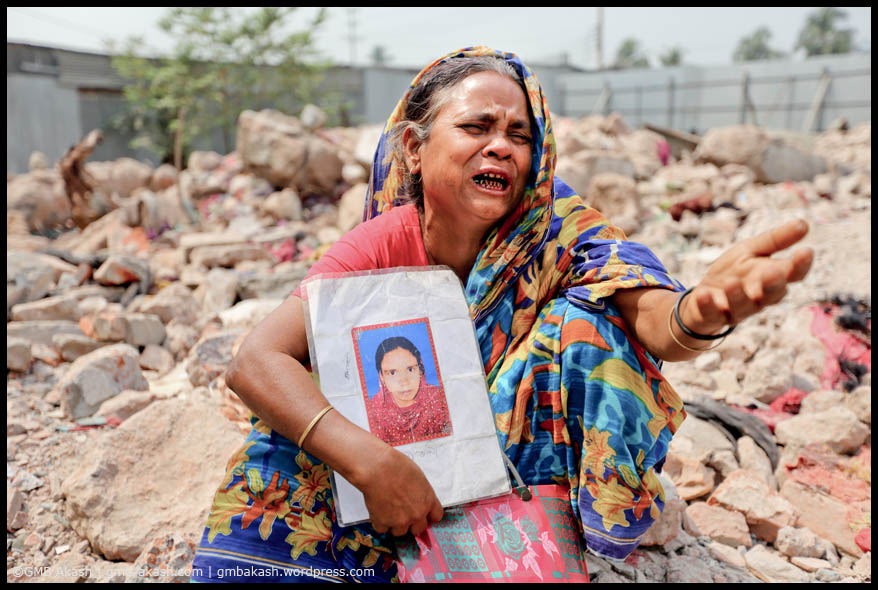
It is not only that daughters like Rebeka are crying for mothers. Hundreds of mothers are each day crying for their dead daughters. Hundreds of mothers are still roaming around in front of Rana Plaza after nearly twelve months after the incident by holding pictures of their dead children. On the day of the accident Romila Begum (46) combed her daughter Lovely’s hair and requested her not to go to garment factory. Romila  continued, ‘I am afraid Lovely, do not go for collecting the salary today. I will somehow manage our today’s food.’ Lovely had a fight with her husband and after leaving three of her sons to her mother she left for the garment factory . And never returned.

Rana plaza (29)

Rana plaza (35)

Clutching Lovely’s photograph at the site of the ruins, Romila fainted after saying, ‘My daughter gave her gold ring before leaving the house, and now how I will feed her sons and my family without compensation Allah!’ Ambia Begum who also came to join the demonstration by demanding compensation holds Romila. Ambia Begum harshly said, ‘You people will never understand our pains of losing children. Compensation isn’t charity, it is the right of my daughter’s blood’.


Rana plaza (23)

Rana plaza (33)

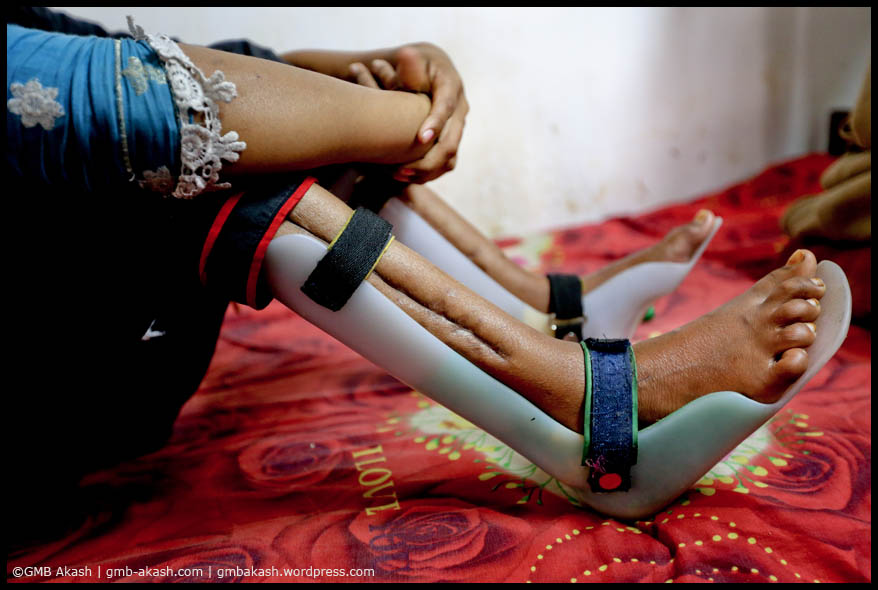
But the survivors who lost one or legs aren’t very hopeful with the compensation they got from Government. Rehana Khatun (24) was a sewing operator of New Star Ltd. at Rana Plaza. She had been rescued after 20 hours and had amputated two legs amputated six days after the incident. She said, ‘two years ago everyone in the family was against me taking a job in the garment factory. I left the village after my father’s death because I wanted to give a better life to my two younger brothers. When I started sending money back home they all became positive. I bought gold rings and a television for the family. I became the role model for my village.’ By telling these facts Rehana’s face suddenly gets depressingly dark by adding, ‘I do not want to go back to the village. Conservative villagers already told my mother that I ruined my life because I wanted to be independent woman’.

Rana plaza (25)

Rehana is not hopeful with the money the government gave her. Rehana said, ‘Interest of 1.5 million every month for two legs! But who will take care of me? Who will give this extra expense? I could have earned this money and have a good life at a lower cost if I were well. I want a way to run my life. I want a job that I can do in this situation.’

Rana plaza (19)

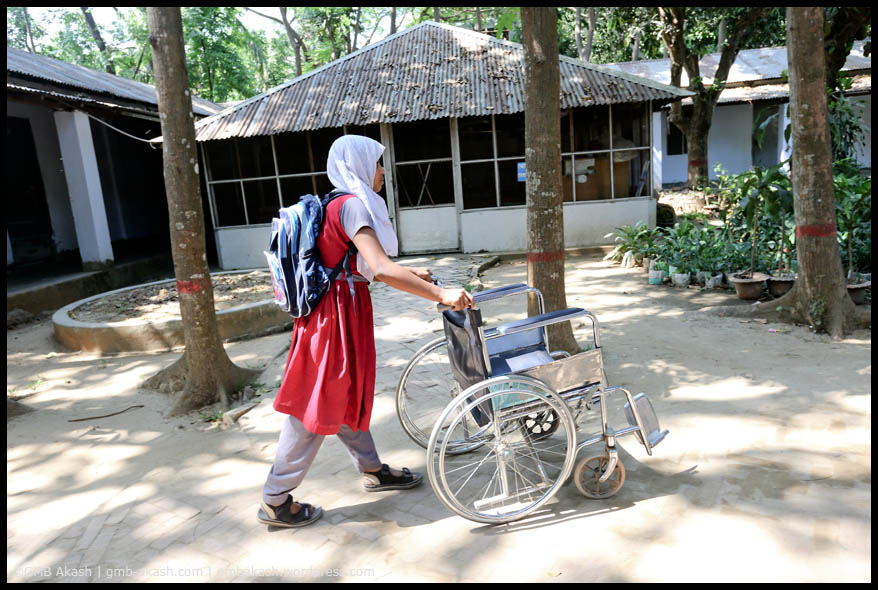
For Yanur the 1st term exam is more important than remembering Rana Plaza’s anniversary. She believes that she will be able to forget those unbearable scars of her muscle injury. She believes that she will be able to remember all the word’s meanings of her English book. She believes that she will one day forget pains of her chest and the memory of her mother. She believes that one day she will recover from the trauma and will no more cry for no reason. When Yanur rushes forward with the sharp sound of that scary crack-crack of the wheelchair, everyone understands Yanur is going to the William and Marie Taylor School that is inside the CRP (Center for the rehabilitation of the paralyzed) hospital from the hospital hostel. Talking about her present condition Yanur was looking through the little window of her small cabin keeping her favorite book Maxim Gorky’s ‘Mother’ aside. She softly whispered, ‘I missed mom a lot. I have five siblings. Poverty forced my mother to seek job in Rana Plaza at Ether TexLtd. Two years ago she found the job for me there too. We together worked and she used to say after some years we all will return to village with our savings.’ Introvert Yanur has had no frienda other then mother Anowara Begum. They found her body in the building after 17 days.

Rana plaza (14)

Anowara came to Dhaka with her family 18 years ago because of river erosion. Yanur’s father is waiting for compensation. He is coming every day to visit his daughter in CRP. For taking care of the five little children he recently got married. Speaking positively about her new mother, Yanur said, ‘What can my father do alone? He has to all the time take care of me. Our new mother is a little different from my mother. I am trying hard to accept her. Only it hurts a lot when I call her mom.’


Rana plaza (24)

Rana plaza (13)

Now-a-days Yanur finds it hard to remember things. She has had a massive muscle injury in her left leg. She was in the emergency unit of Apollo Hospital for nearly a month. By touching Yanur’s new hair she sadly said, ‘I had long hair. My hair was under a pillar; my leg was opposite under another pillar. I heard people sucking each other’s blood in thirst. But I believed at that moment my mother was alive. After one month I knew she was dead. My father went everywhere for compensation and got three lakh for my mother and for me nothing.’ Yanur is trying hard to recover from her injury by attending physiotherapy. She wants to continue her education. Putting the English book on her lap she asked, ‘Who is responsible for my disabled life? I want to forget my scars, my right leg that I hardly can move; they said they will not give me money because I did not lose my legs. Can they imagine how bitterly I am living every day? I want to be well-educated; won’t they at least give me this opportunity?

Rana plaza (11)

Nearly twelve months have passed since the Rana Plaza collapsed in Savar on 24 April, 2013 one of the deadliest accidents in the history of the world’s industrial sector. This tragic incidence has pointed to the fact that workplace safety and security for workers, even in the globally competitive RMG sector of Bangladesh, is far behind the required standard. An industry in which 3.6 million women are working in Bangladesh, a job which brings liberty for women. The total number of deceased is the same for most of the noted organizations and so far 1134 dead have been reported. The numbers of victims initially buried without identification, prior to the DNA test results, were 291. The Rana Plaza tragedy resulted in an outpouring of commitments from governments, local and global institutions, groups and individuals. According to some reports, each family of the deceased and seriously injured received up to a million Taka


Rana plaza (18)

‘Life for Rent’

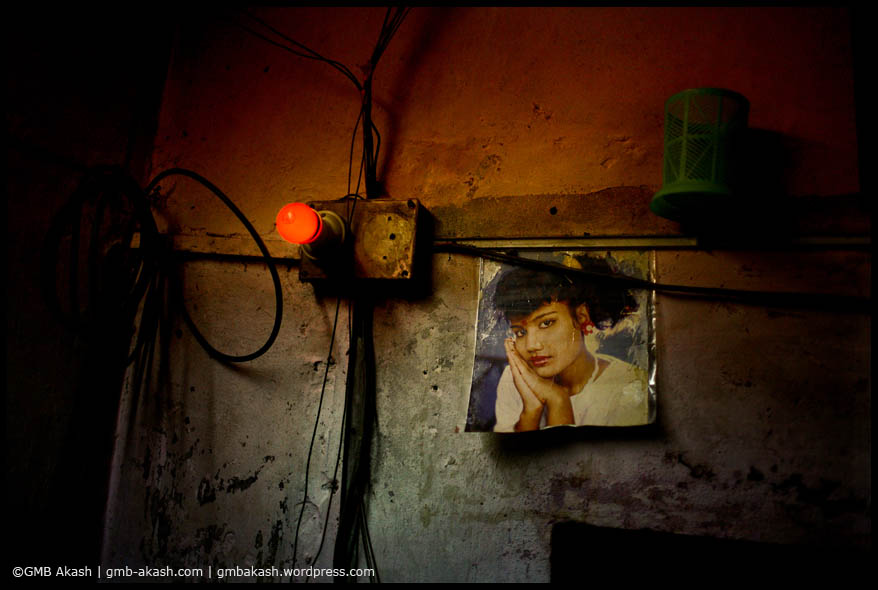
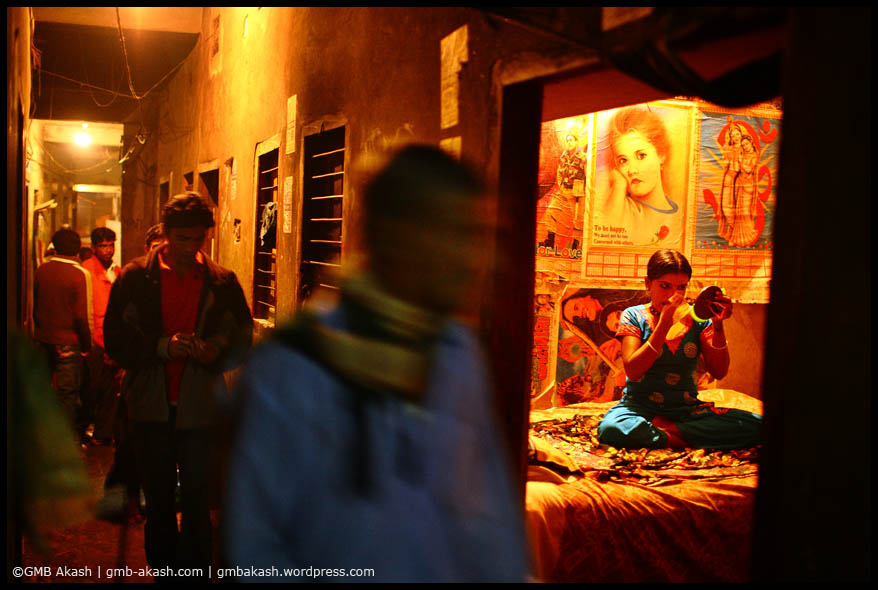
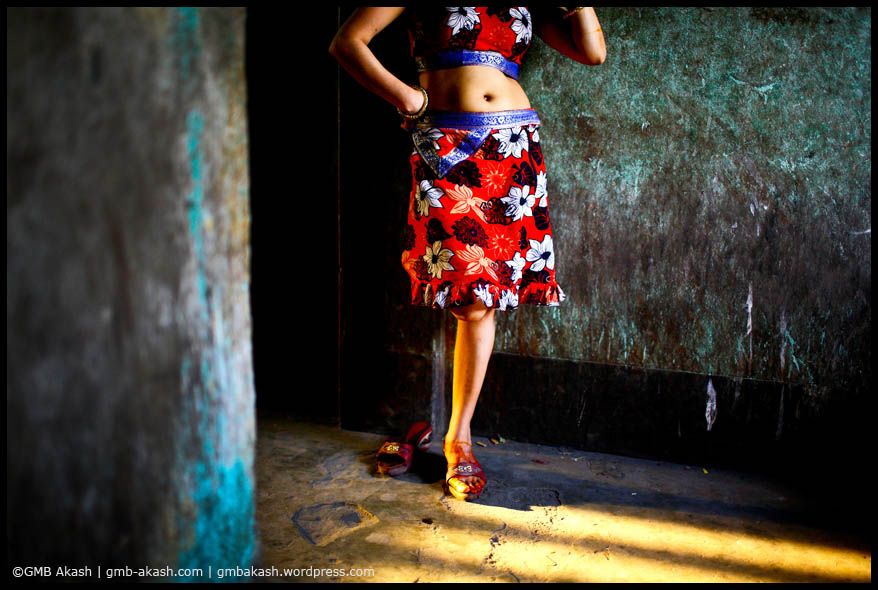
Night is the meaning of life here. Don’t dare to feel I am talking about moonlit night. It’s about a place where fluorescent bulbs hesitate to light up the great darkness.  You have to go step by step by listening giggles and following Hindi songs. Cheap aroma or local fragrance continually defeated to hide smells of stinks. At this place, dreams never can lose its paths even by mistakes. But it certainly can turn into the ideal background for a horror blockbuster by following nearly naked heroine’s poster or staring into a photographs where a lady wearing red lipstick with her innocent eyes hanging over fungus wall.

life for rent (3)

life for rent (1)

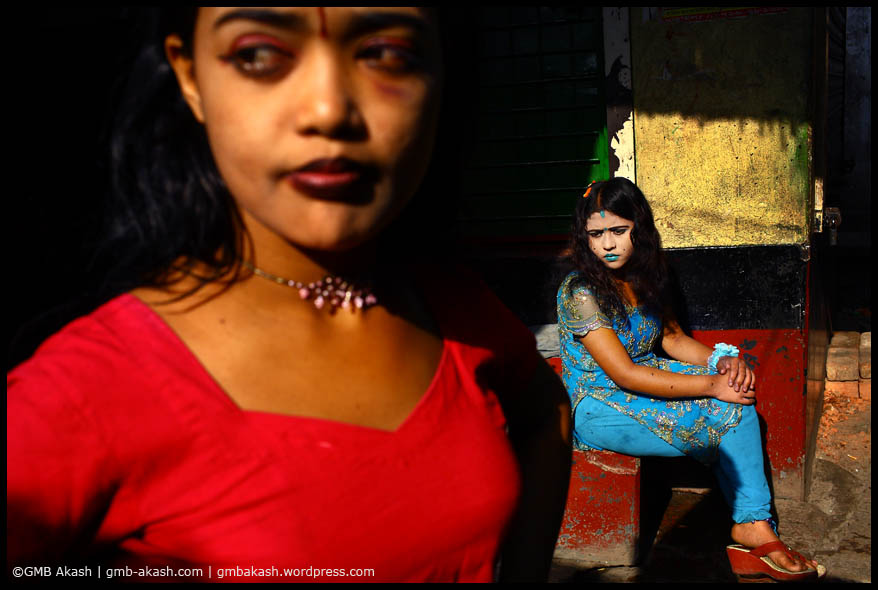
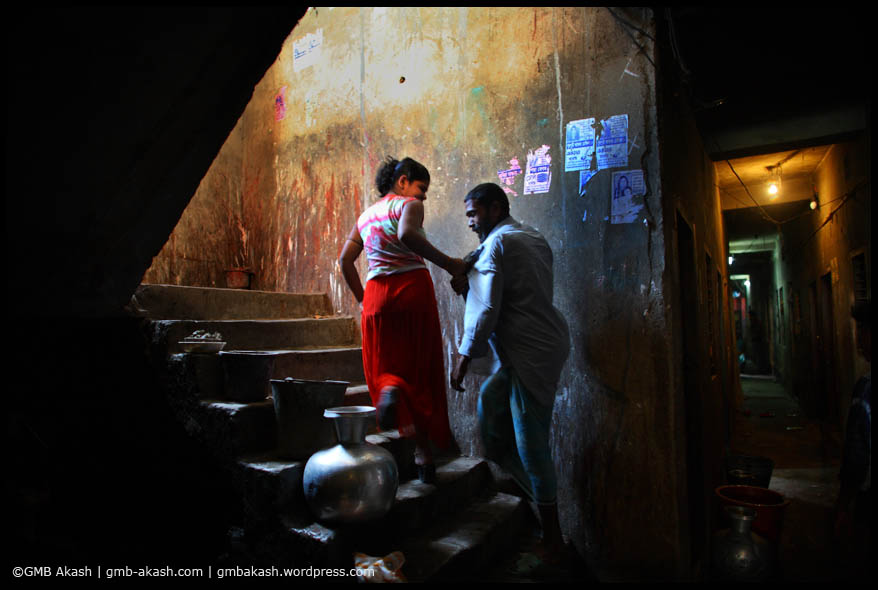
Four storied building’s busy staircases are lively by steps of clients. Girls for converting themselves as women putting all make up from her dearest make up box and keeps doubling lighten up their cheeks with cheap blusher. For killing hunger each moment they have drunk tears and fighting with each other to get same client for a night. Excess make up, vulgar cloths and even by showing off most of the female fascinated body parts these girls can not satisfied their MADAMs.

life for rent (13)

life for rent (26)

life for rent (2)

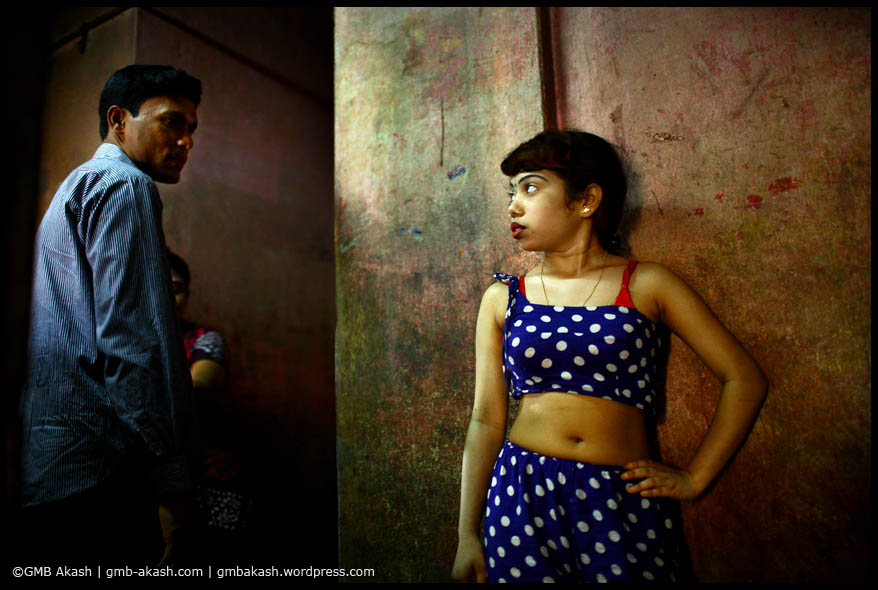
In the race by standing full day beside the door dressed like this they have to show their madam their extra talent for hunting a client. While few of them get tired of being waiting and being rejected, lastly they may get one/two clients at the last moment of their very tiring publicity. Then the bargaining starts. It’s the bargaining of beauty, the outer shell. Minimum 100 Tk – to maximum 500 Tk depends on the job’s creativity and longevity.  Either a client comes for an hour, for a night or for several nights they never bother to enter into the corridor of these beautiful doll’s heart. They rather treated her as a toy of entertainment.

life for rent (19)

life for rent (20)

life for rent (11)

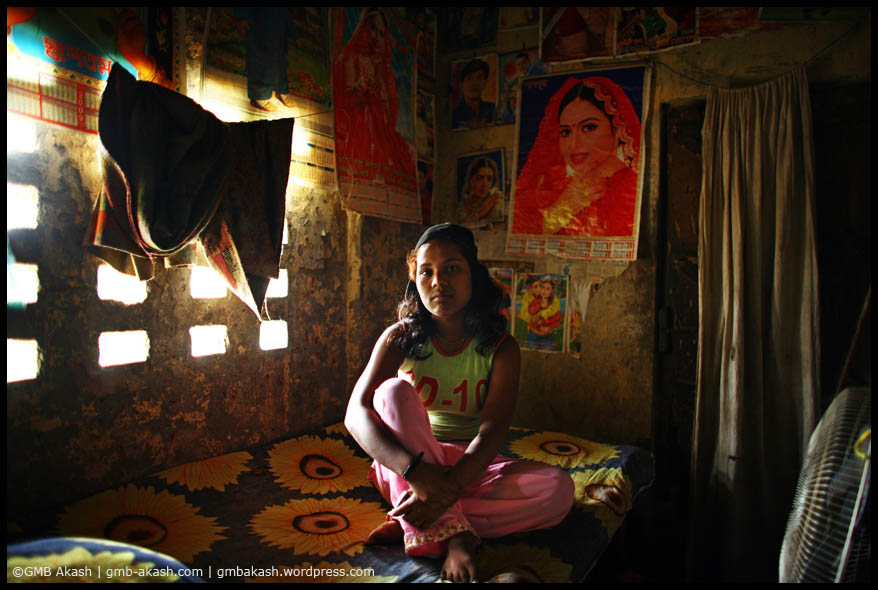
As like being used for years after years these girls started feeling themselves as product. Product of modern day slavery. In the middle of these professionals there is also few girls common who uselessly try to hide their body with their small cloths, who will not look at any one’s eyes either for sorrow or for shame. These girls are new to the place, they been bought by madam one or two days ago. Betrayal boyfriend, step parents or their closest one play with their innocence and sold them in the castle for Tk 4000- 20000. Before realizing what had happened in her life her innocent soul has been captured by brothel’s reality. In between them there are girls who has been gang raped and our civilized society refused to accept her, so she finds her MADAM as mother and releasing all bitters of her life by the profession of sex worker.

life for rent (23)

life for rent (22)

life for rent (25)

Fighting over getting men at night does not change relationship between themselves on the day. An unknown bonding for each other has tied them up and takes care of them in dear need. That’s why, when a girl out of frustration cut her full hand with blade just to torture herself, her roommate wipe it off and put medicine on it. A six feet by six feet room is world for 3-4 girls, so when customer leave they decorate the bed with flowery bed sheet or place artificial flower for adding beauty of it. Knowing a home never will come in their life still they care for their small room as like their house.

life for rent (5)

life for rent (16)

life for rent (8)

By remaining in the strict guidance of Guards for several years these birds stop weaving their wings and thus they forgot how to fly. After earning 100 Tk per client 3-4 years passed thus but loans and buying money of madam does not meet up as these fates less girls can’t even calculate. If their luck is good enough few of them get little better madam who let them free after three to four years to do their business independently.

IMG_7776

life for rent (18)

life for rent (17)

life for rent (24)

The story does not change here. Again after doing free business the girl do same mistake by giving heart to a client. Then one day come when the trusted man flew with her all money, gold and faith. All the tiny battles she had within inside that do nothing but shape her emotions, make her able to drink her tears of blood. Stories of a brothel have many shapes. Many girls do not miss their Fazar prayer; many girls learn to recite Quran. Many girls penned their parents and send money monthly putting fake address in the envelope. Many girls forced to take a drug designed to fatten cattle for market name Oradexon.

IMG_7566

The Bitterest Pill - A new danger for child sex workers in Bangl

Their day passes by. One day visibly wrinkles can no longer hide by their heavy make up, then they started losing clients, then one night come when they had no one, and they become nanny of younger sex worker. Finally after death their bodies can be buried in a cemetery, though still in a separate one. But better than having their remains floating in the river covered by a sheet which previously practiced as ritual. Their existence remains in their tank which preserve full of their life memories, which lastly kept by their dear one if someone still have time to recall a sex worker.

IMG_3819 (2)

life for rent (8)

“Its been 12 years I am familiar to them. Not only as a photographer but also as a brother. In the photograph, I am seating with my one of the sister from Tangail brothel. Whenever I go there, she runs towards me by calling “Akash Bhai”, she brings sweet, tea and speaks and talked lot about her dreams. These girls are weak for affection as I once treated her as sister now she granted me as her brother. No one knows the story of those faceless girls who are sold by their boyfriend, husband or parents. This is one way journey to brothel a place that is everything to them. By documenting on them I would like to spread their story of pains which are only locked into their own madam’s castle. I can also recall about one girl from those uncountable faces. Unsurprisingly – and despite her name – Asha isn’t very hopeful for her own future. ‘I don’t think I’ll ever get married or have children,’ she says. ‘No one will marry me. If they did they’d only keep me for two or three days, and then they’d sell me back.’ She is more streetwise than some of the other girls here, many of whom share a tragic dream that one day a knight in shining Armour will arrive, to carry them off; then they will marry him, have his babies and love him forever. I wish there would be a knight in shining Armour will surly arrive, to carry them off from this living hell! I wish and I really wish!” – GMB Akash

428368_296961003701994_683763109_n