‘Heroes of Life’ – Part I

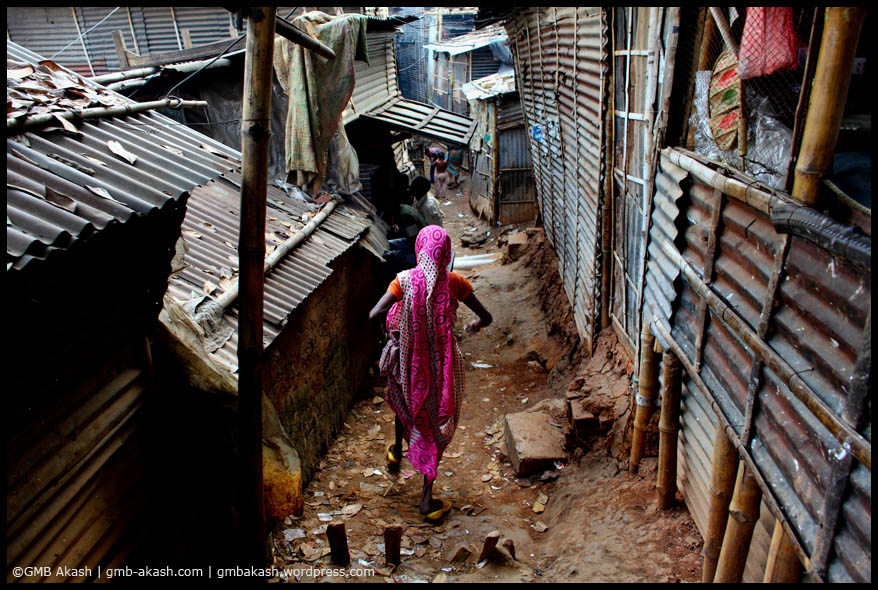
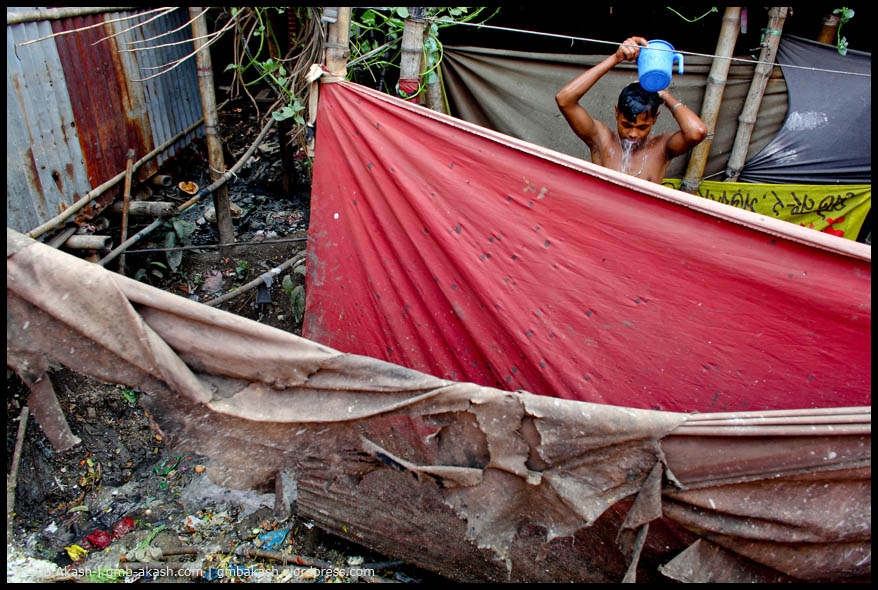
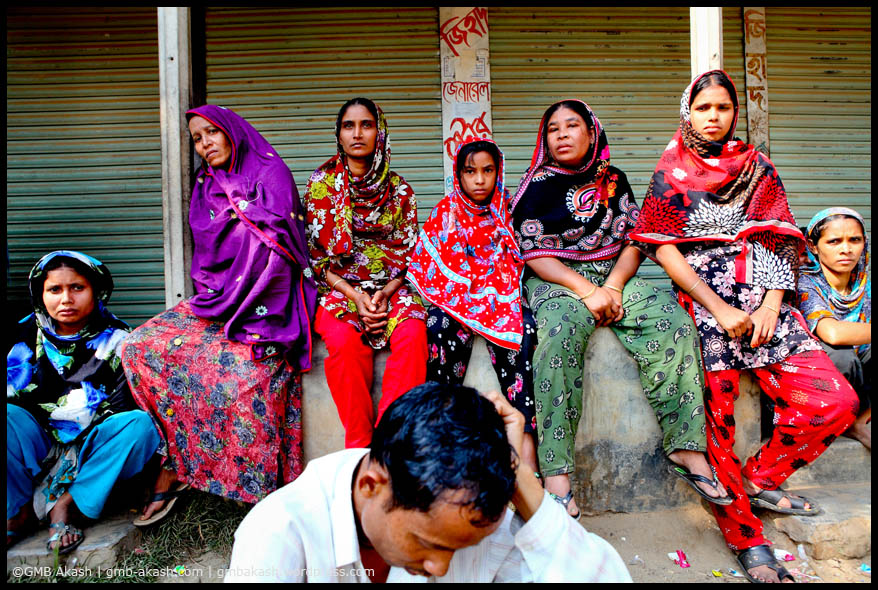
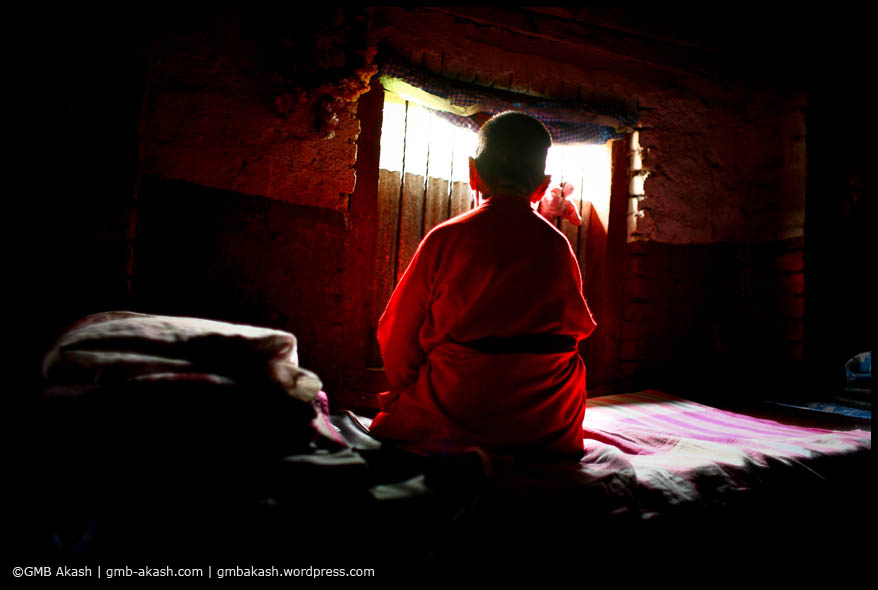
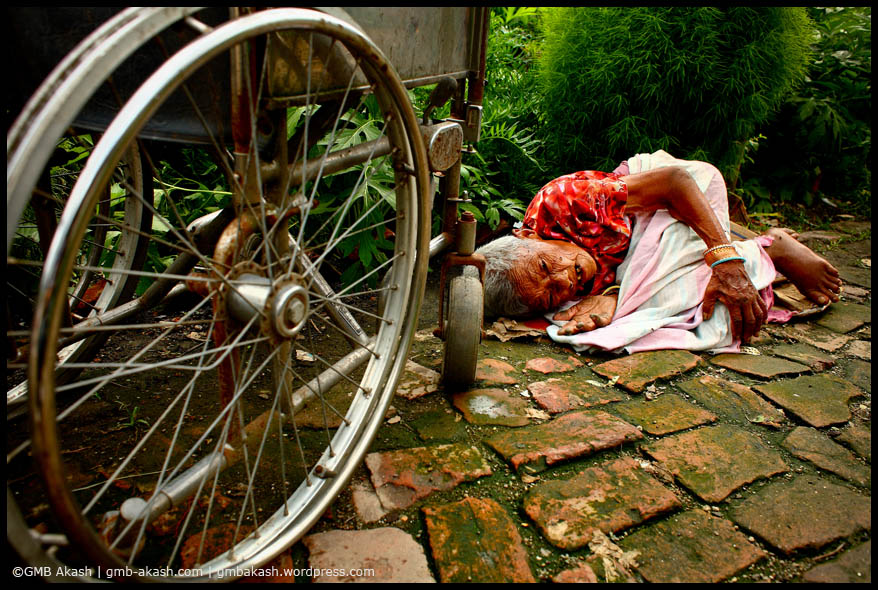
‘Heroes of Life’ – are those incredible humans who always find their way to light and love. They had known defeats, sufferings, struggles yet they possess a beautiful story in their hearts, which is worthy to share with the world.

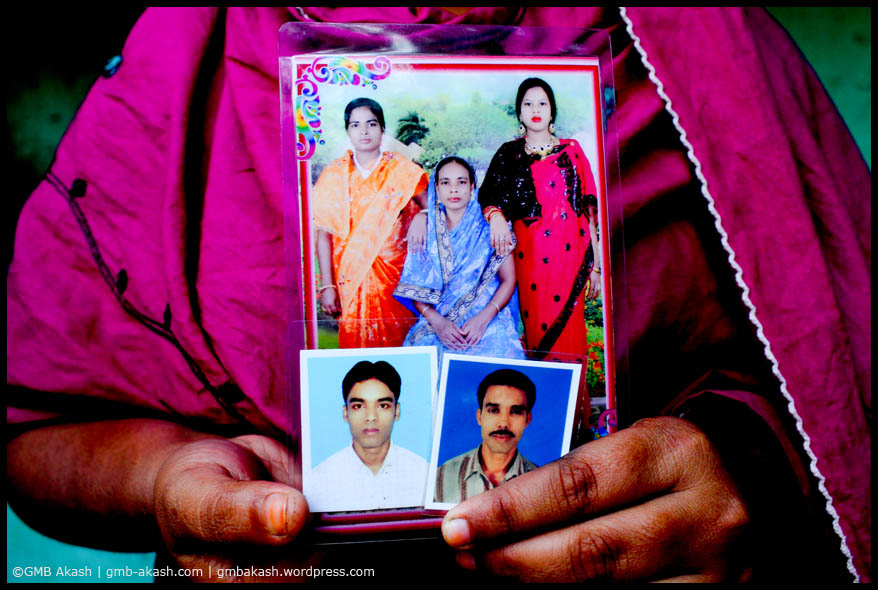
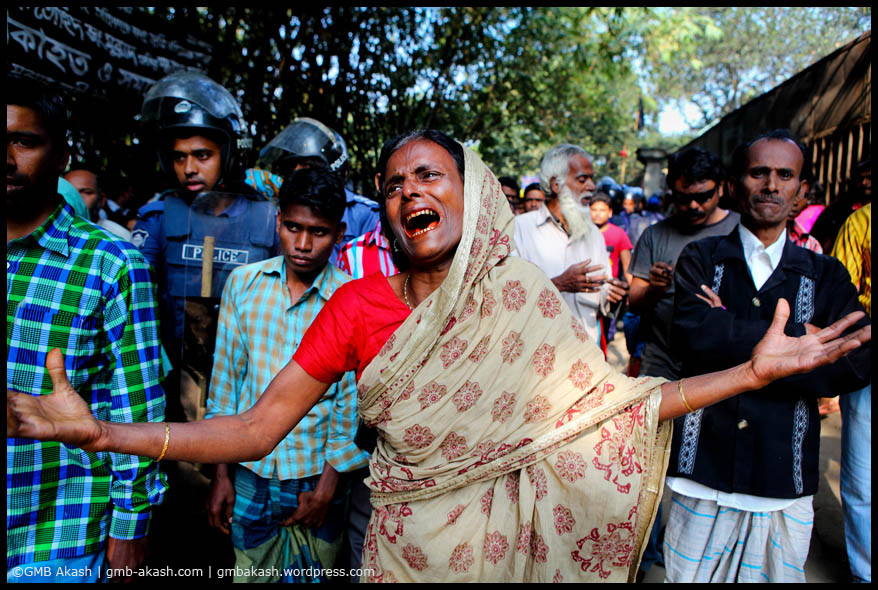
Kawser Hossain, Shamsuddin Miah and Rani’s stories touched everyone’s heart. They were featured first in GMB Akash facebook page and become an inspiration for thousands of people all over the world. This video is about how we have helped three of them so they can give a good fight with their lives and remains as unbroken as they were. Thanks everyone for giving them love, respect and support.

You tube Video: ‘Heroes of Life’ Video interview

IMG_5918

https://www.facebook.com/gmbakash/

Yesterday, I was able to buy a new dress for my daughter after two years. While I handed sixty pieces of five taka note to the seller, he yelled at me by asking if I am a beggar. My daughter held my hand and cried to leave the shop by saying that she did not want to buy any dress. I wept off her tears with one hand. Yes, I am a beggar. Ten years ago I had never thought in my nightmares that I have to live by begging from people. The night coach fell from the bridge and unbelievably I was alive. I was alive by becoming a disable. My youngest son often ask me where had I left my other hand. And my daughter Sumaiya feed me every day by saying she knows how difficult it is to do all work with one hand.

After two years my daughter is wearing a new dress, that’s why today I brought her with me to play for some time. May be I will not be able to earn anything today, but I wanted to roam around with my little girl. I secretly borrowed this mobile phone from my neighbor without informing my wife. My daughter has no picture and I want to make this day memorable for her. When one day I will have a phone I will take a lot of pictures of my children. I want to keep good memories. It’s very difficult to send my children to school, but I am educating them all. Sometimes they cannot attend exam because giving exam fees is not always possible by me. On those days they feel very sad then I tell them, sometimes we can miss exams because the biggest exam is life which we are giving every day.

Now I will go for begging. I will place my daughter in a signal where she will wait for me. I will look at her from distant while begging. I feel shame while she looks at me when I lend my one hand to others. But she never leaves me alone. Because there are big cars, she thinks accident can happen again, these cars could run on me and I would die. Whenever I managed to get some money I return to home by holding my daughter’s hand. We do bazaar on our way and my daughter always carry that bag. During rain we love to get wet and talk about our dreams. In someday I do not get any money, on those days we return to home silently. On those days I feel like to die but at night when my children fall in sleep by holding me I feel being alive is not a bad thing. Only bad is when my daughter waits for me in the signal by keeping her head down. When I cannot look at her eye while begging. But today is different. Because today my daughter is very happy. Today this father is not a beggar. Today this father is a king and here is his princess.

– MD. Kawsar Hossain

IMG_5979

This father and daughter received love from all around the world. It takes almost one month for me to find out him. After several meetings with the family, Kawser wanted to have a source of income. He wanted to do vegetable business in rickshaw van. He also wanted to educate his daughter and he never want to beg in his life.

IMG_0657new

I promised Kawser to gift a van rickshaw and settle his vegetable business. He has received vegetable business and a rickshaw van. His children received scholarship for one year. I long a few generous friends contributed for this cause. ‘This Heroes of life’ – are extraordinary human beings. Sumaiya and his father Kawser is already making differences in their life.

IMG_5513new

IMG_5535new

IMG_5565new

IMG_5628new

IMG_5480new

IMG_5634new

IMG_5680new

IMG_5714new

‘We can help someone with the minimum we have. Someone’s nothing can be someone’s everything’   

Remember the elderly couple?’ For everyone they are ‘The Baghban couple’!

slum (2)

https://www.facebook.com/gmbakash/

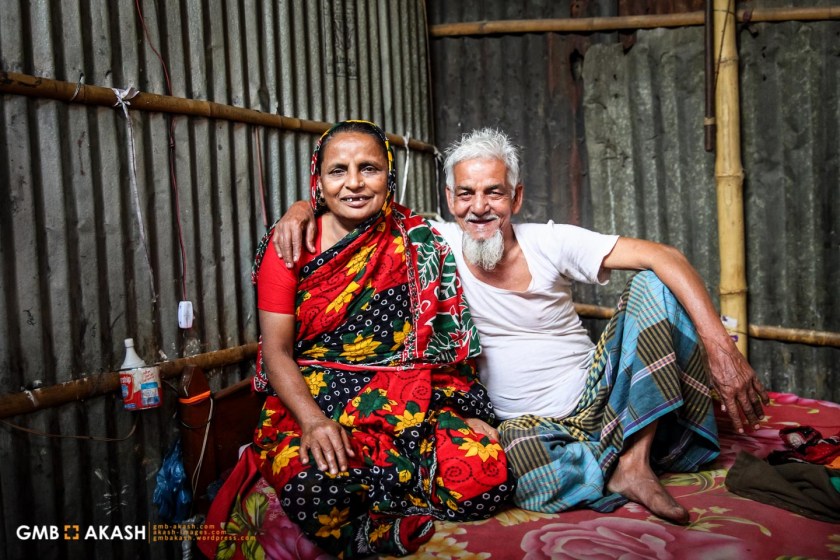
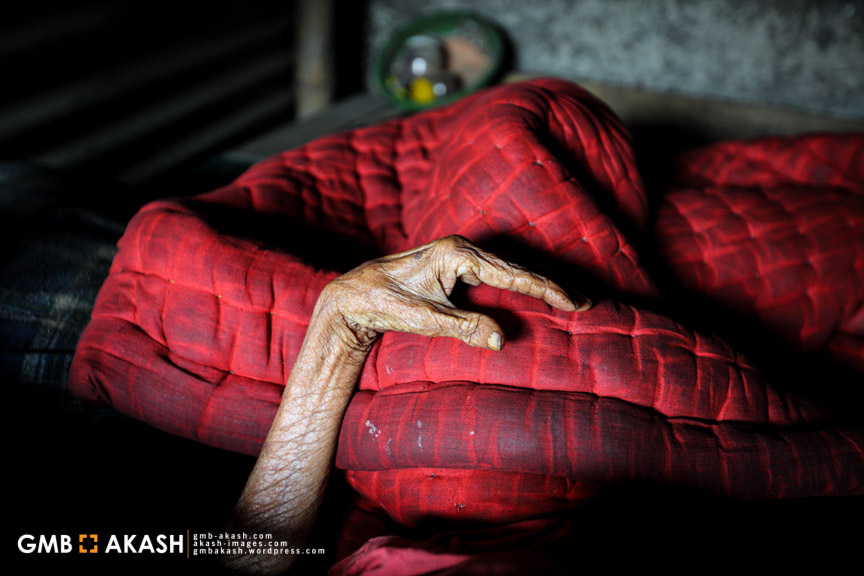
Last year we fled together. We never thought we could do that. I knew that our children may stop communicating with us. But I and my wife are living forty seven years together. Every day after sunrise she wakes up me first and together we do our prayers. Forty seven years we never had spent a day without each other. Seeing my wife’s face was the first thing happen to me every day. We struggled together with our six children. In the past, often times I was able to manage one time food for my family, I and my wife starved whole day after feeding our children. She never complained, never told me that I was failed as a husband. After so much suffering we never left each other’s side, never fought one single day, and never lost faith on each other. When my elder son took me and the youngest daughter took their mother, we did not realize that they decided to take us separately. Our children earn little and they have their expenses. After fulfilling their children’s need our need was burden to them. We knew everything but it was impossible for us to accept that we cannot be together anymore. I shamelessly asked my elder son and he was very surprised. He informed me that none of them are capable of taking care both of us.

I tried to adjust. But every morning when I wake up I wanted to see her smile. I spent my whole day by waiting for my son’s arrival so I could talk to her with the phone he had. But he arrived late night when on the other side my daughter usually went to sleep. The day when I was able to hear her voice none of us could speak a word. I heard how hard she tried to keep clam her tearful voice and I murmured stupid things. I never thought life can become so meaningless without each other. Every day I felt to run to my daughter’s house which was far away from mine. Then one day by gaining some courage I told her that I wanted to run together. By surprising me, she asked me to go right away. I took my walking stick and never looked back. We run away together with empty hand.

Now I sell children’s toy. I hardly can manage 100 taka every day and after I return to home I found food on our bed. Our children arrived once to see us last year; they told us how we failed them, how humiliated they felt for our behavior. We did not say anything. We do not want to hurt them. They decided to never come again. Sometimes we feel bad for our children, we miss them. But we know we are running out of time. I am fifteen years older than my wife. Any day I may die in the road while selling children’s toy. So I keep saving some money in a mud bank, I do not want my wife to beg to people to finish my last work. But every day my wife cries a lot during her prayer, whenever I ask her why she is crying so much, she would always say, ‘I want to die with you’.

– Samsuddin Miah (77) with her wife Rekha Begum (62)

IMG_5731new

For Shamsuddin Chacha, it’s very hard to walk miles after miles by carrying toys in his back. After all his hard work the little money he earns goes for his cancer patient wife’s medicine. After daily struggle of managing food and medicine, every day they find their way in their wrecked one bed room house. I along my facebook page GMB Akash friends comes forward to help him. ‘After receiving the rickshaw van and shoe business we are very happy. We pray to God so we can move forward with this work. I cannot thank enough everyone who has helped us. We are feeling like today is an Eid day’ – Shamsuddin Miah

IMG_5778new

Be a lamp, or a lifeboat, or a ladder. Help someone’s soul heal …

IMG_3343

https://www.facebook.com/gmbakash/

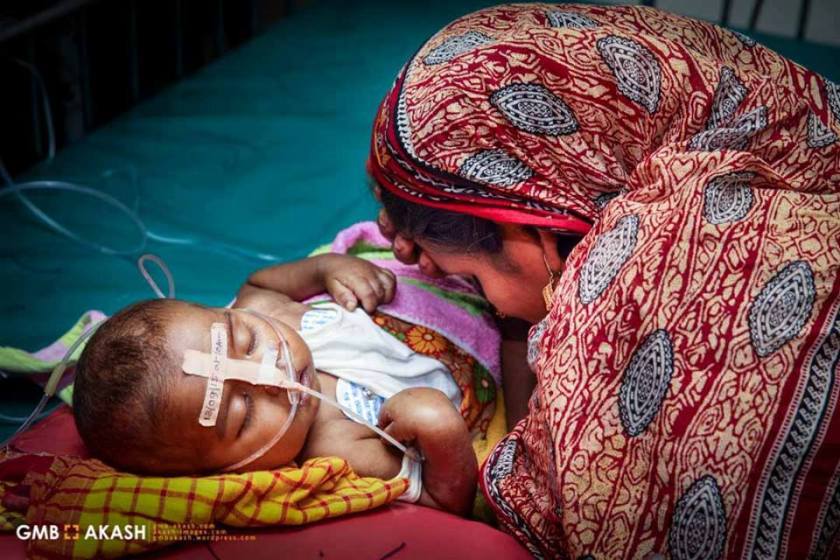
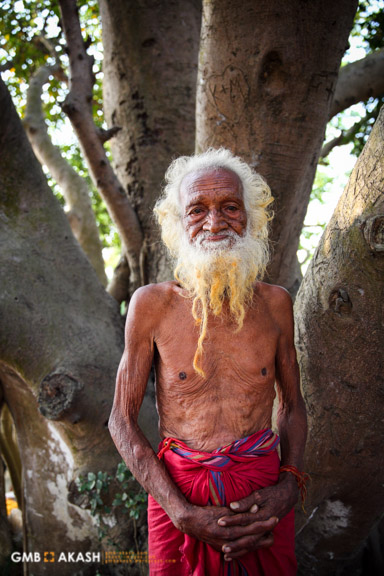
He was about to throw my one month old boy. I was holding his leg and he was kicking me constantly. There were scars in every parts of my body. With blade, knife and needle. Sometimes by holding my legs he pulled me out in such a speed that it was very difficult to keep my clothes on my body. My daughter had run behind me by taking one of her scarf to cover the naked parts of my body. She used to scream, ‘Please, help my mother.’ But no one came to help us. He had beaten me on the road. Someday my girl counted the scars of my body and often told me that she lost those unlimited counts. My husband was a heroin addict. After selling everything I had, we were the only things for him to sell. I used to keep poison with me all the time. My daughter knew that it was poison. Whenever we were hurt, by holding and crying to me she asked, ‘When will we have the poison, maa?’ I asked her, ‘Why?’ By weeping her eyes off she replied, ‘It’s very painful to live.’ Then that night arrived when I decided to end all our pains. We were counting hours for our death. My one month old son was smiling in his dream. I could not put poison on his mouth. I held both of them with my chest and ran away, ran away before anyone could sell us or kill us. At that midnight no one asked us what had happened, where were we going? Whenever I was slowing my daughter was crying and telling me, ‘Run Maa, run.’ When the sun was rising, we heard the sound of azaan and crows were flying all over above our heads. I asked myself, ‘Where should I go?’ I wanted to give a chance to me and my children, by breathing in free air, by having some courage to dream. Without knowing where to go, whom to knock. I do not know what we will eat tomorrow. My daughter is struggling every single day to feed us. I am incapable of walking straight. Every night I heard my daughter crying secretly, whenever I touch her head to calm her down she often whisper, ‘Everything will be okay, very soon.’ I nod and say ‘Yes’ to her. Knowing very well nothing will change, light will never enter in our lives, we will never be able to smile. Not everyone knows how it feels to be happy in life.

– Rani (33)

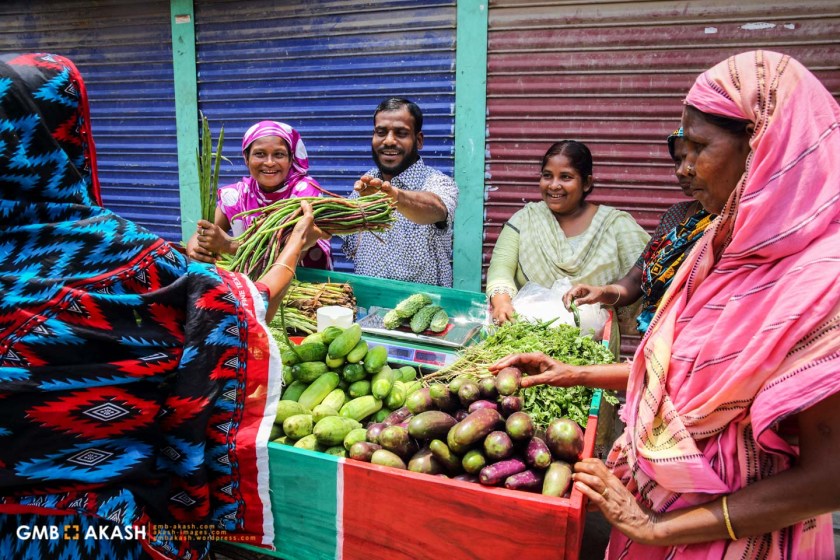
Rani wanted to change her life. To help her we settled her with a rickshaw van and spice business.

IMG_5840new

IMG_5870new

Everyone can help someone. Everyday can be a different day. Thanks for becoming a part of this change making journey by giving your warm words, by offering your gift and making everyone believe that humanity exist

–         GMB Akash

Incredible Humans

Incredible Humans are extraordinarily beautiful. And the most beautiful people we have known are those who have known defeat, known suffering, known struggle, known loss, and have found their way out of the depths. These persons have an appreciation, a sensitivity, and an understanding of life that fills them with compassion, gentleness, and a deep loving concern. Beautiful people do not just happen.

Welcome to my blog to meet 10 incredible humans : ten workers of all time who were previously featured on my Facebook page:  GMB Akash

Undoubtedly their views on life will fill us with awe and leave us in wonder. Let’s have some inspiration to celebrate May Day.

12719486_1064700910261329_1735398948499873688_o

‘We do everything a man does, our working hours are same. But when I went to take my wage the manager gave me 50 taka less than my male coworker. I asked what my mistake was. He shouted on me and said, ‘You did more work than him. But you don’t wear shirt. You are a woman. You will get always less.’ The next day I came to work by wearing a shirt. All the men laughed at me. I ignored them and asked the manager to pay me equal as I wore a shirt after listening to him. I clearly saw he was hesitating and was afraid of my bravery. But again he said, ‘He will pay all women equal if all of us could wear shirts.’ He gave me a smile like a fox. I lost hope, knowing no one will wear a shirt. The next day when I arrived at the field all women were wearing their husband’s shirt on the top of their saree. I never could imagine the manager would be this much afraid of seeing us together. He paid all women equal to men for the first time during his ten years in the brick field’s history. From that day girls call me, ‘Hero’. I don’t mind!’ – Taslima

12973141_1074326089298811_8940474916927352169_o

‘I lost my mother when I was very young. I always tried to please my stepmother. I do not know but why she never tolerated my shadow. She had beaten me a lot. I used to stand silently the times she was beating me, I could not cry, as she told me that if I cried she would throw me out from the house. After tolerating all these, one day she finally threw me from my home. I cried loudly all night by standing in front of the closed door, but not even my father came out to take me back. I came to Dhaka from Chadpur. I used to roam around all the streets and sometimes ate from dustbins. Then one day I got this job, a job as a sweeper. But the sad thing is, everyone hates us, no one talks to us. Today I am very happy, brother, nobody ever took my photo, no one ever wanted to know if I have something to share. When you tell my story to people please tell them not to hate us. If we stop cleaning, you will die. We are servant, we go into your rubbish and by becoming dirty we cleanse you.  Please do not look at us with hatred’

– Md. Rabbi (18)

13123291_1085428934855193_459478002714944206_o

‘One day madam bought a girl of nine years old. Her stepmother sold her to a brothel and then spread the news that she had been lost. The stepmother was satisfied to get rid of a stepdaughter for a life time and 3000 taka was just a bonus of selling a human being. My madam gave the little girl to me to prepare for clients. She was a doll, her pink chubby cheeks and big brown eyes melted my heart. When she cried and cuddled me at night I felt like that baby was made of milk. I went through forced abortions two times; for me Putul was my lost fetus. I bought her a doll to play with. After seven days she was able to speak, her first question was, ‘will that madam cut my hands and send me for begging’? I closed my eyes and whispered, ‘they will do much worse than anyone’s imagination’. Madam was impatient and gave me one week to teach her all the tricks of the business. And I planned something else by putting my life at risk. The day before they fixed a client for Putul, I communicated with one of my old admirers to talk to an organization who was working with orphans. I knew they would kill me if they found me while or after transporting the girl to the orphanage. But that time I did not care about my life. I was able to get her free from this hell. She left her toy doll for me as her memory. I know there must be thousands of such hells waiting for the girl but at least I was able to save her from the biggest one. Please pray for my baby; may she get all the happiness and love in her life; may her chubby cheeks always gets rosy from laughter.’

– Purnima, a sex worker

13735149_1140521769345909_3987720622604558899_o

‘I am trying hard to love the job I am doing. But it seems impossible to be happy with my work life. I am giving my one hundred percent. Not a single day do I arrive late at work nor ever overlook any of my mistakes. My job is to help passengers on the train. After giving my best, so many times people have misbehaved with me. It really hurts. People behave miserably to such an extent that I lose control over myself but I never utter a single negative word against passengers. After returning home, many nights I tried to understand why everyday people are becoming aggressive; why educated-socialized people are uttering ugly words against someone they do not even know. Maybe now-a-days we all are going through so much stress and anxiety; who knows? But behaving well to people is not only my job responsibility, it’s my moral value. I only earn 5000 taka monthly; it’s very difficult to run a family with the amount of money I am receiving. But that does not mean I will only perform according to my salary scale; I want to perform my best.’ – Pappu (22)

13331170_1105673736164046_5654528743734809972_n

‘I was very happy when I got a job as receptionist. I only went up to class eight so I was surprised when I got the job while I actually went for a peon post. I belong to a poor family and I have little brothers. My mother was very happy by the kindness of my boss. How lucky was I to get a respectable job with my little education! Things were okay at the beginning. But then I started feeling what only a woman can feel with her inborn senses Many things happened and I could not drop my job and tried to adjust as much as I could. One day when I was showing the appointment list to my boss he touched my hand and asked if I had I heard about Sunny Leone. He would be happy to watch a film of hers with me. I just said, ‘no’ and ran from his room. I cried my heart out while returning home. But I decided to speak up. The next day during lunch sir’s wife came with lunch. I entered inside the boss’s room and with a brief greeting boldly said, ‘Mam, do you know Sunny Leone? Sir wants to watch a movie of hers with me.’ I could never forget their faces. That was my slap to the most educated man. I am very happy with my textile job, I am a worker, but I have dignity, which I will never compromise for money and a reputed post.’

– Nilu, Textile worker

14102313_1167960353268717_1139490007495564267_n

‘I am not living with my husband and in-laws anymore. I was fed up living with a drug addict, who sold everything I had: my saree, sandals, even the bucket of the bathroom. My in-laws kept taunting me as they believed I was the one who could change him but I failed. I realized it would be very late if I did not leave him at that point. But I loved him entirely. It was not easy for me to leave my husband and start a life with my only child. My brothers shut their door in my face. My grandmother was the only one who gave me shelter and helped me to find work. What more could I accept from a ninety-year old woman? She did not turn off her love while the rest of the world kept blaming me by saying what an awful woman I am who broke up her own marriage. But I know my suffering, my fights, my fears and my limits. No one else felt what I had gone through. Yesterday, my child cried all day as I cannot breastfeed her in the work place, publicly. I know well how men gave nasty looks; women pass bitter comments and breastfeeding becomes a sin for working women. But today, when my daughter started crying, I said to myself, if I can go against the society for the betterment of my child, then I can breastfeed her too. There should be a stop to this limitation and I am no longer afraid of what society says about me.’

– Jesmin (28)

12140911_978220678909353_3769136416491490346_o

My wife died when my daughter was 40 days old. My daughter was my reason to live. I never thought to remarry. When she was a child I used to take her with me to work. Everyone used to laugh at me. I had not much money to send her to school. But at night I took her with me to the elderly school. Together we learned to read and write. When she turned fifteen a good marriage proposal came from a far away village. We are very poor. I could not give her anything. She took my writing book with her as my memory. I did not have money to visit her nor did her husband let her come to meet me. When she became pregnant I went to see her. She held my hand and said if she dies I had to take her child with me. I scolded her for her childish behaviour. She requested me to spend a night there, but her in-laws did not let me so I came back. My daughter died during her delivery. Her daughter is one year old. I take care of her.‘ – Abu Mia (65)

13241278_1100775156653904_8529730604376056853_n

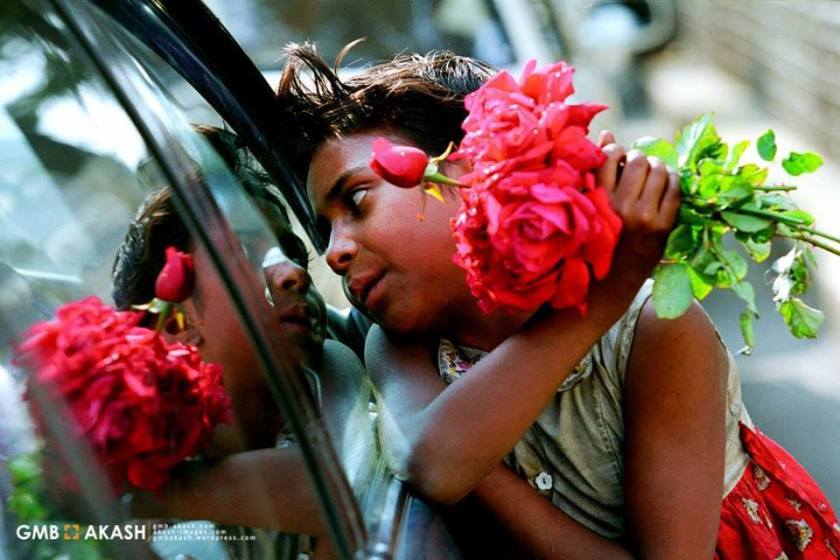
My mother flew with me when my father wanted to make me disabled after my birth, so that he could use me for begging. I do not know, what my mother actually does; she sleeps the whole day and works at night when I sleep. We live in the street. Our neighbours and the police call me the ‘whore’s daughter’. Mom told me not to reply to them as bad people always talk bad. I am a flower seller. I sell flowers; I do not beg. But people have no time to look at flowers. I pop into the windows of big cars and see beautiful children with their parents. Sometimes I wonder, didn’t their dad want to sell their organs or want to make them disabled for begging? One day a rich mom bought all of my flowers for her girl but when the girl wanted to give me the money, her mom said not to touch me, I might have a disease. The baby girl threw the money in the air and I caught it. That day made me the best flower seller among all.’ – Lutfa


Aklima (1)

‘I started working as a labourer a year ago. Including me only ten females are working at this site. The constructor does not like to employ women. There are fifty men working besides us. They always get break time to drink tea or smoke cigarettes. But we, the female group never get any break. For almost a year the strongest man of our group is making fun of us every day. Sometimes he says, he can carry more buckets of stones than the women, even when he sleeps. The contractor laughed loudly at his jokes. And sometimes after transporting all buckets of stones he showed us his muscle and the men laughed at us. A week ago I asked our contractor to give us at least half an hour break. He mocked me, pointed to the macho man and openly declared, he will give women equal break time, if I or any other woman can beat the man the next day. I looked at our women’s group and they were looking at the ground. On my way back home, my little girl was warning me never to challenge a man. I asked her why, then my five-year-old girl fearfully showed me her muscle and told me, ‘We don’t have this.’ The next day, when I came to work I told them I was ready to take the challenge. When I started carrying the stone buckets beside our macho man, everyone stopped working and started clapping. It turned into some kind of game. I had no idea how time had passed. When the contractor asked me to stop I looked at the man beside me. He was lying on the ground, already very much exhausted. Then I saw, I transported fifty more buckets than him. When every woman was screaming in joy, I looked at my girl, she jumped into my chest. I did not say a word. I had to prove to my little girl that, women too have muscle but they do not like to show it.’ – Aklima

12473936_1058725157525571_204788509166671071_o

“I found out my daughter had an affair with a boy for five years. She never spoke about it as she is always afraid of me. Apart from that I assumed my children always hated me for the job I have been doing since my childhood. I asked her to bring the boy and his family to our house. I decorated the house like a new bride and brought the best food for them. I have been saving for my daughter’s marriage for twenty years. That day my daughter was the happiest ever. When they started the conversation they brought out a note of demand. They wanted all material things a family needs, I was calculating and nodded in agreement with every word they said. After all it’s about the happiness of my daughter. The last point was that they did not want me to be introduced in front of their relatives and I should never go to visit my daughter. The moment they said it my daughter screamed in anger and by surprising all she slapped the boy. She angrily said, ‘My father can do the thing that no one can do. Not everyone can clean others’ messes. I am proud of what he does and if you do not leave my house in one minute I will beat you all.’ She broke the marriage proposal and ended her five-year relationship in one second. From that day I knew what a fortunate and happy person I am.’ – Sweeper Monu lal


‘Realm of Illusion’

‘My camera is a vessel to reach to my dream. I started documenting suffering and find beauty in ugliness, happiness in despair, dreams in suffocation. I am just a poor storyteller who has nothing but a suitcase full of tales’ – GMB AKASH

DPP_0004

Love is my religion; unity is my faith/ www.akash-images.com

DPP_0003

If you taste the love, you are already rich/ www.akash-images.com

DPP_0009

I am on a journey to seek the remedy of Life / www.akash-images.com

IMG_1948

When I take off the mask from my soul, I find the beauty of living/ www.akash-images.com

IMG_0415

IMG_0429

IMG_0505

May everyone who loves God honor the path of everyone else. May all the sacred scriptures be universally cherished as the treasures of all mankind / www.akash-images.com

IMG_1709

I continue to search for myself / www.akash-images.com

IMG_1335

The beauty of life is hidden in the HOPE and in the possibilities of life itself/ www.akash-images.com

IMG_1629

Every person has a story and an end/ www.akash-images.com

IMG_1679

To taste life prepare to taste thousands of deaths / www.akash-images.com

IMG_0160

Living a simple life is hardest because the whole world continues to show you greed in the name of happiness

/ www.akash-images.com

IMG_2973

If you seek to know the truth of universe, you’ll have the power of the whole universe with you

/ www.akash-images.com

IMG_3039

For living life once I cut off the wings of my soul, now for tasting life I cut out my greed. That’s how my journey starts/ www.akash-images.com

IMG_3086

You live in the world and my world lives in me/ www.akash-images.com

IMG_9441

My race begins of deriving the internal peace / www.akash-images.com

IMG_4995

You have done everything to feed your body, what have you done to feed your soul

/ www.akash-images.com

Shadu

You can get life if you can get rid of fear/ www.akash-images.com

IMG_0263

I can only take a look at my own soul and follow its map / www.akash-images.com

1457479_614992865232138_1434714953_n

“Sometimes I feel – I am wearing perfume in the middle of the desert” – GMB Akash

Train Track Life

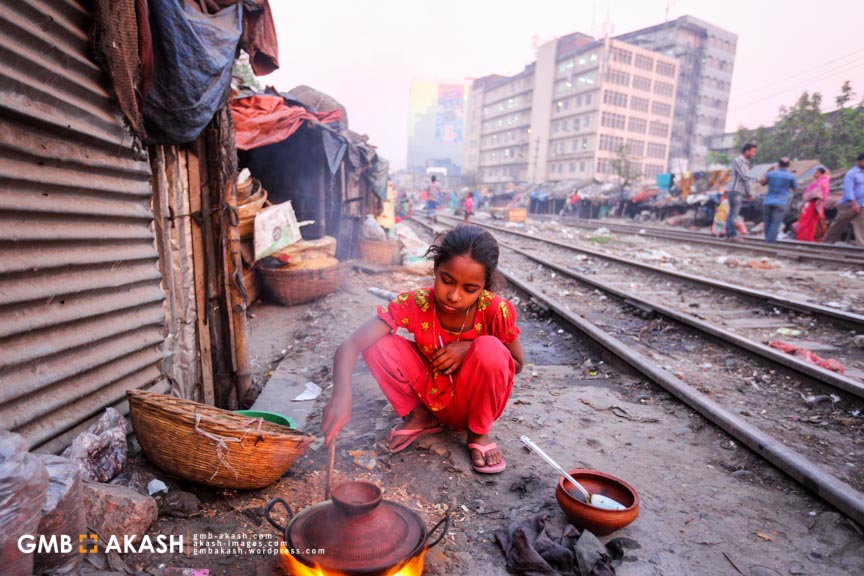
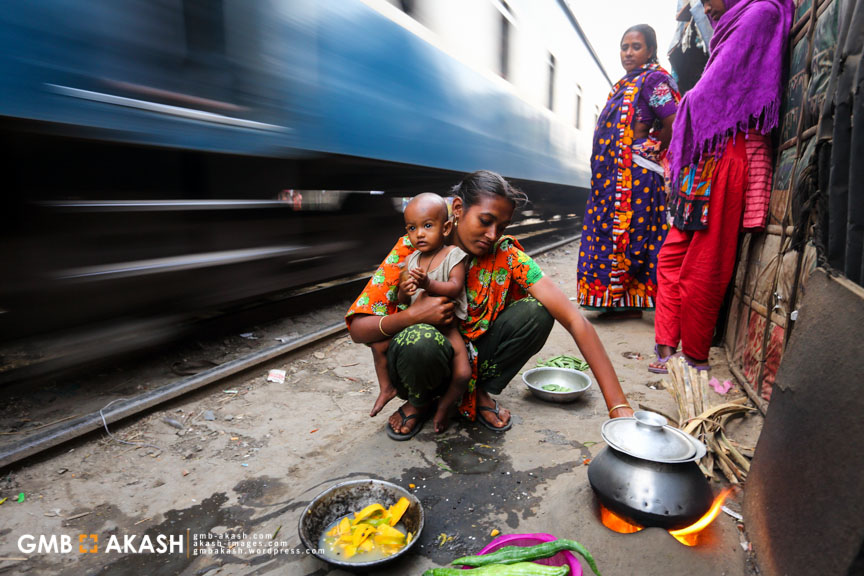
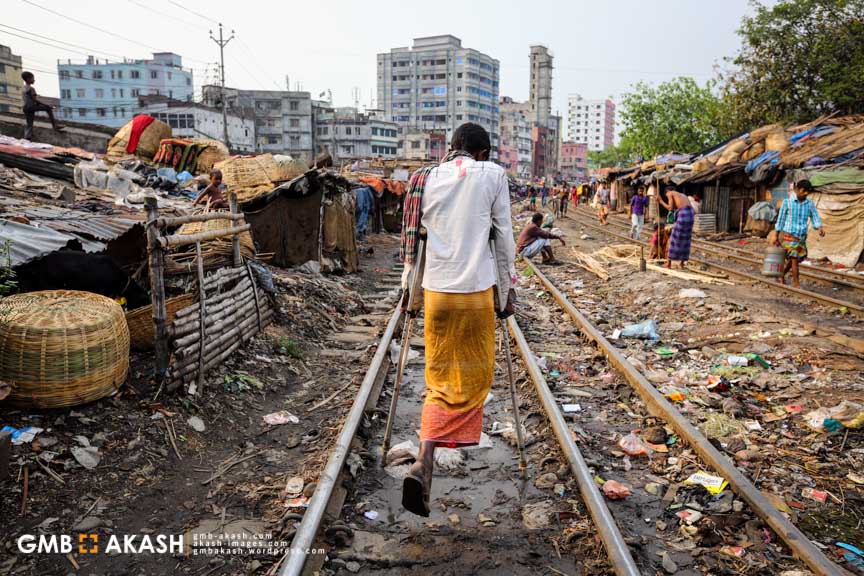
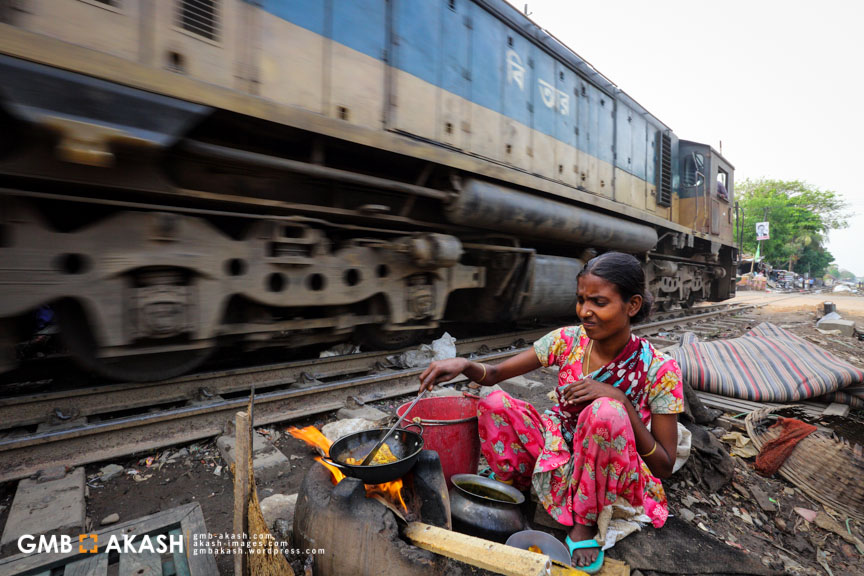
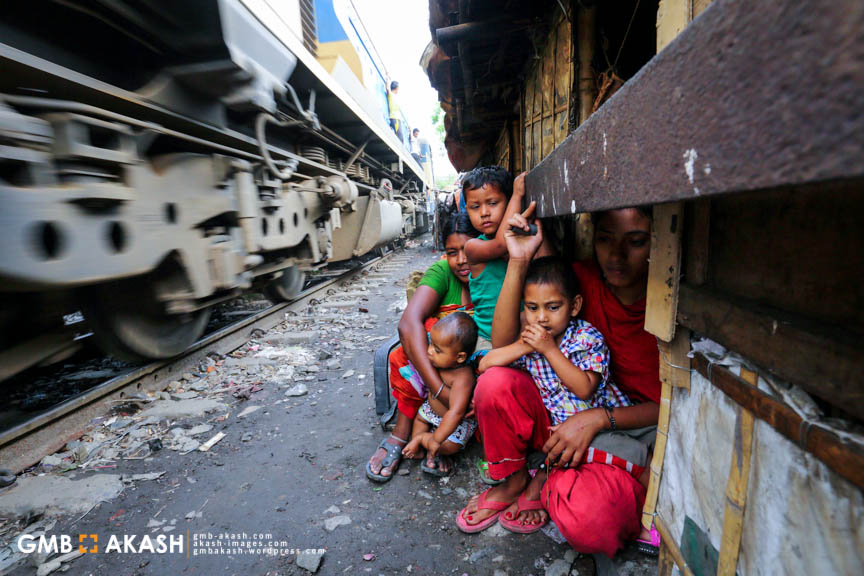
Suddenly the inter-city train appears rushing at them on the tracks with its deadly noise which is the only thing that alerts the people. The scene includes a train that seems to be traveling as if to arrive at the slum but then ruthlessly goes right through it. It watches and touches both sides of the slum’s tin-roofs. Who could have ignored such g-o-t-a-n-g, g-o-t-a-n-g sound that raises heartbeats of the inhabitants of the Karwan Bazaar train track Slum in Dhaka on a daily basis… at least fifty times a day?

slum (6)

slum (16)

People speculate that this train track-side slum had been built after the Liberation War of 1971. Though the slum does not seem too old, several inhabitants say that they have been living recklessly here for more than thirty years. Moreover, on both sides of the curvy train tracks that are lined with 1’000s of shanties, more than a hundred huts have been built in more recent times. Some of the smallest huts with only three foot high roofs rent for as much as 2000 taka (About $25). Those houses that are newly built with heights for standing-up cost 3000 taka (About $39) for a month.

slum (38)

slum (43)

The muddy train tracks are loaded with wastage and leftover rotten vegetables. During an ordinary mid-day women are busy preparing lunch with difficulty trying to manage their mud clay oven cookers set up only one foot from the rail. When a train passes through anybody from the train could take away the potatoes that Marium Begum (35 years old) is frying in the pan. Marium says, ‘my eldest daughter is ten years old and I taught her how to save herself when the train rushes to our hut’. Marium clearly knows how much distance is safe for her two small kids. All children of the slum are well taught how to run away when a train arrives on the tracks. But a lot of times trains come simultaneously on both tracks and terrify the children. It happens many times from day to night without prior warning.

slum (14)

slum (27)

Accidents are common and dangers are unlimited. The banyan tree root that grows from the hut of Kahinur is losing its leaves because many passengers who are riding on the tops of the moving trains are picking off the leaves for fun. It also amuses the slum children who have little to do. In this impossibly tiny strip of living space a lot of children lose their legs, hands and fingers in train accidents that take place in front of their parents’ eyes.

slum (57)

slum (11)

Jaleha Kahtun says, ‘If we had something in which to live in the village, we would never come to live in this train track slum. In the village the river overflowed and took away everything and now here in the bazaar is everything we own.’ Jaleha Kahtun is a rotten vegetable seller in the bazaar. She has to go to work at 5:00 in the morning. So she lives in this slum that enables her to go to the bazaar as early as possible. All of the people who are living along the train tracks are climate migrants due to frequent flooding disasters in the country.

slum (18)

slum (68)

slum (56)

Nothing has changed in their lives since they left their villages, but now at least they can feed themselves better. Sriti (15 years old) who is sitting in the middle between the two rail lines says, ‘We now understand how to act when a train comes. If you were in my place you might die without knowing where to go after seeing a train three feet in front of you. It takes experience.’

slum (52)

When there are no trains all of the inhabitants are sitting on the train tracks, gossiping or arguing with each other. Children are playing here and there. To add some life to this atmosphere someone repeatedly turns on the music of popular Hindi songs. When Rasel (10 years old) starts dancing by waving his lungi and mimicking the song ‘Lungi dance’, Lungi dance,’ people near him also begin to move their bodies to the melody. But before Rashel shows his brilliant steps someone screams that the trains are coming on both sides of the rail lines. Nobody forgets to take their sitting arrangement away with them; children quickly move with their toys, a grandmother rapidly puts a pot over her vegetable curry to save it from the dust. Just like in a theater the trains get a stage upon which to perform for a few seconds and when they leave, all of the inhabitants return to their customary life on the tracks that have been occupied for more than 30 years.

slum (59)

‘Today’s Slavery’

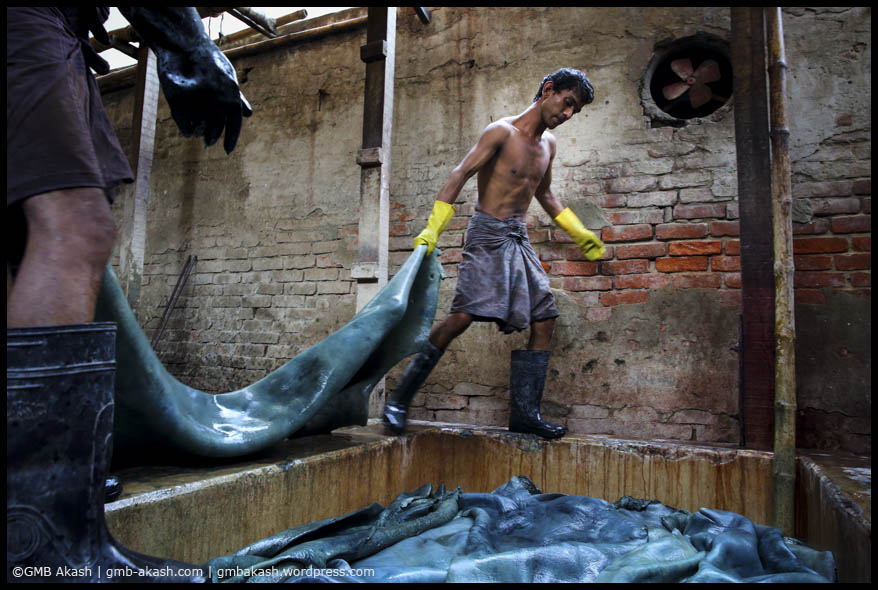
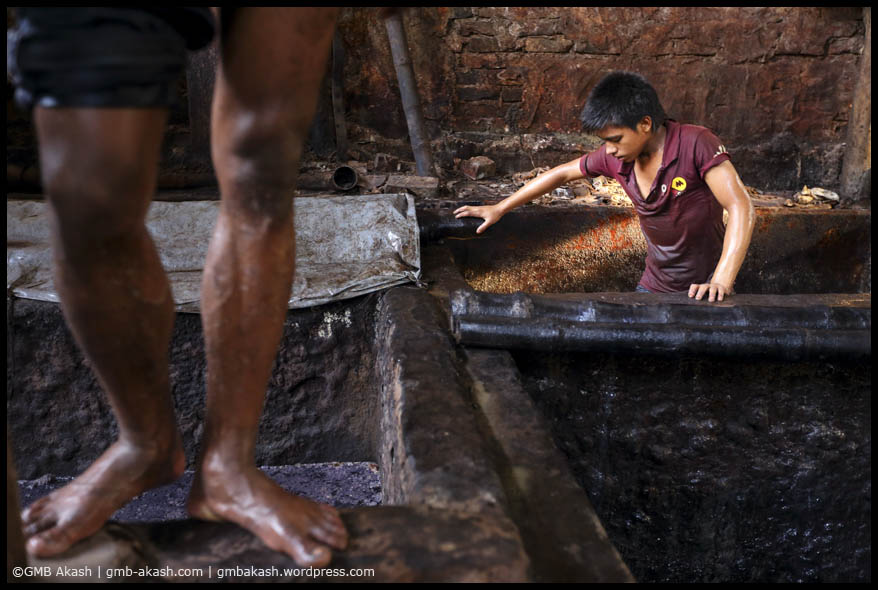
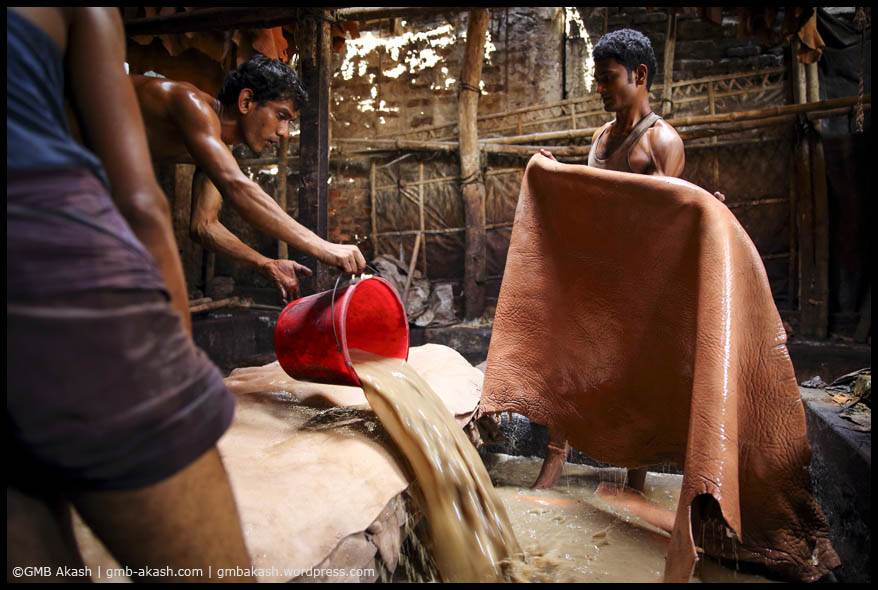
The sound of Monu’s footsteps compel us to look at him. It seems he is willingly trying to make the strange sound grab our attention towards his new gum boots. Before I speak to him, he shows all his teeth and enthusiastically says, ‘Bhaijan I bought them for 200 taka from the street. Bou (his wife) had washed them so well that I can see my face in them! Ha! Ha! Ha’

Before I compliment him something someone on my right side, Nibaron, who is Monu’s colleague of 15 years loudly said, ‘Hmm, does your new wife, still cry for you to drop the job, Monu?’ Monu recklessly replies, ‘Women are fools! She thinks tannery labourers die earlier. Allah is the one to decide. Women are crying party. Now I have these gum boots to protect me. She is happy and I am happy too!’

Monu got married to ‘Salma’ five months ago. Salma heard that tannery workers die at an early age, so she started requesting Monu to leave this dangerous job. But by doing this job for last 15 years, Monu, a 21 years-old man is surviving. He cannot imagine doing any other work than tannery nor is he capable of doing any other job.

The chronic cough he has or the rashes on his skin do not bother him anymore. Still he dreams of a better future with the 8000 taka salary. Now the dream is sweeter with his caring wife ‘Salma’.

Posing for the camera he said roughly, ‘By working in this hell, I am still alive. God might be giving me a long life bhai.’

Leathers (11)

Leathers (13)

Leathers (22)

Leathers (17)


I have been taking photographs in this factory for many years. I cannot find many of the faces I used to know. When I inquire about them the common response I hear is that because of illness they moved to their villages with their families.

The repulsive smell on my body or the sticky chemicals on my favorite jeans does not affect me anymore; Just like Monu. Only when I return from this work and the rickshaw puller turns his head several times and at last wisely says, ‘Sir, you came from tannery!’ Then I realize I am also polluting the air.


Leathers (1)

Leathers (24)

Leathers (2)

Tenary in Dhaka (123)_1

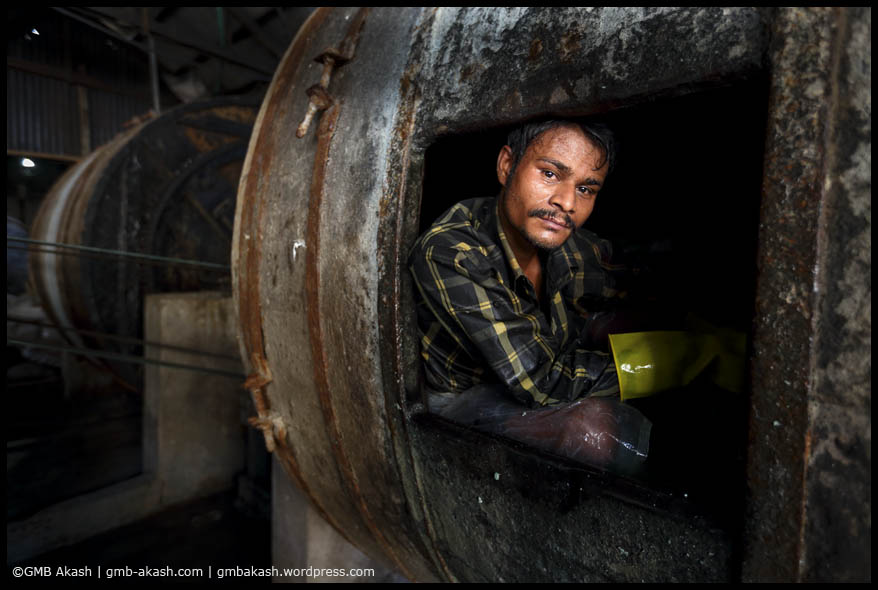
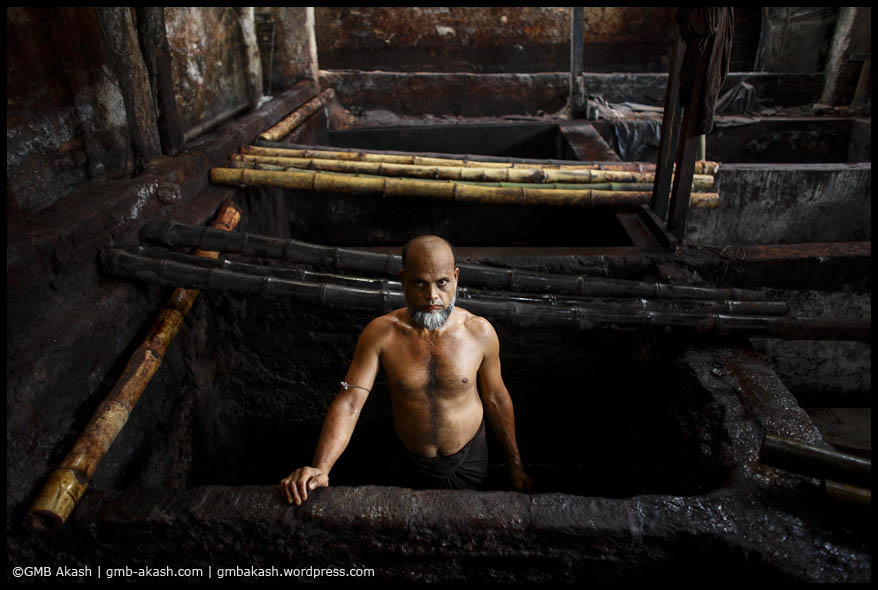
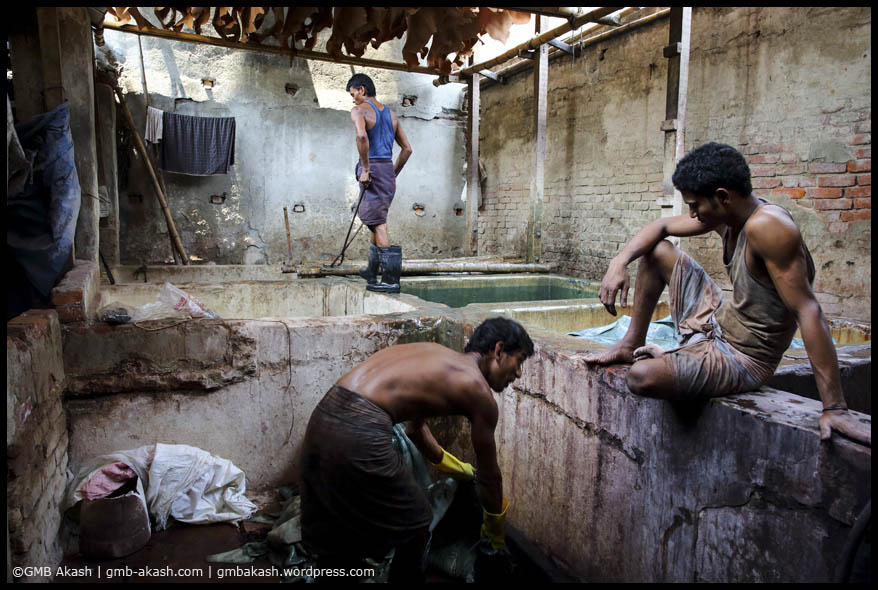
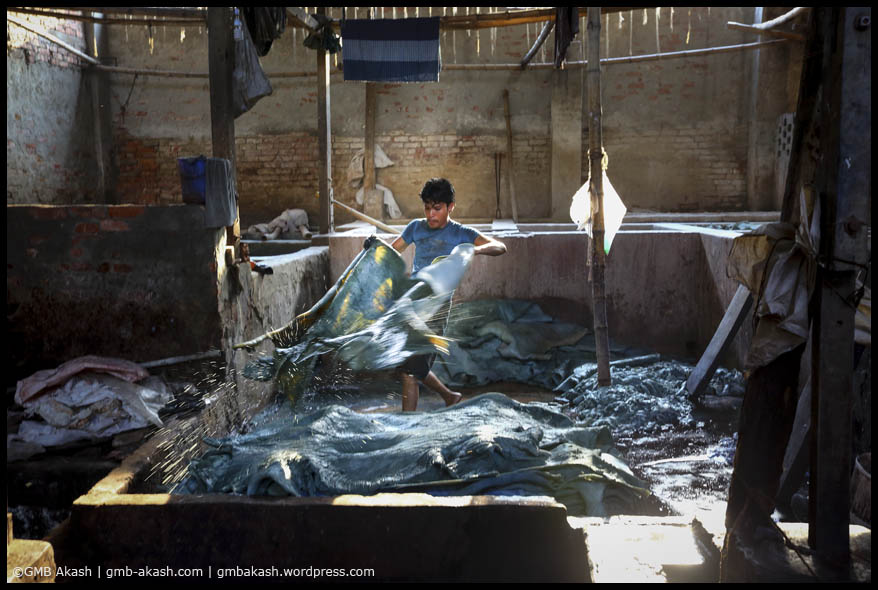
Like Monu many labourers believe that a pair of gum boots is their safe guard. Some of them tie gamsa (a traditional cotton towel) to save their lungi from the filth. But when they start working their sweat, factories chemicals, and raw leather shower them with poison and loathsome smells. A pair of gum boots and gamsa can not not save their hope to survive very long.

Leathers (16)Tenary in Dhaka (96)_1

Leathers (21)

Tenary in Dhaka (49)_1

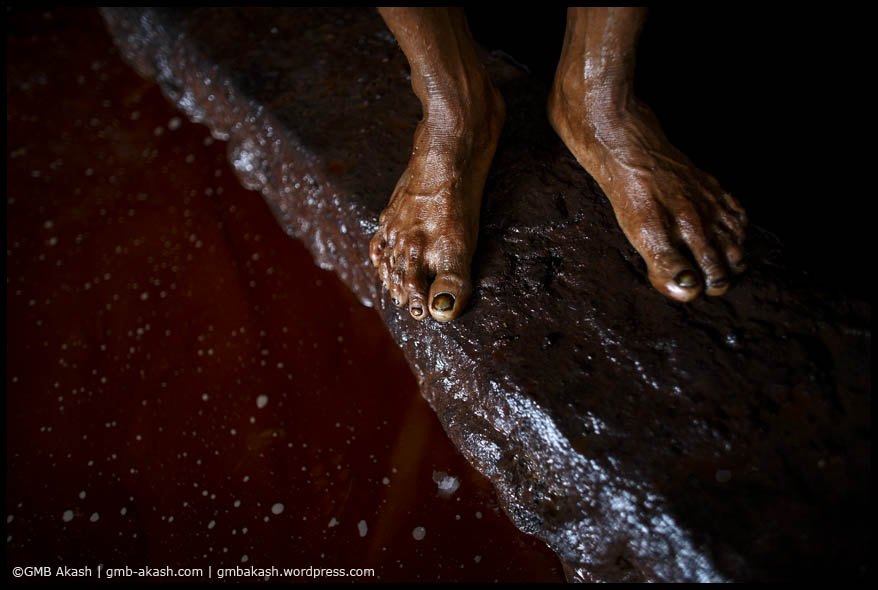
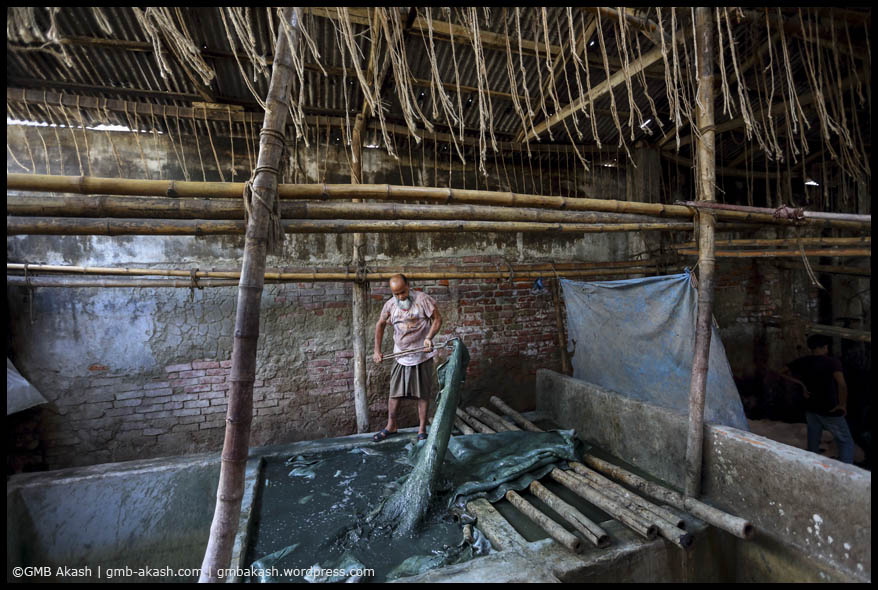
Every time I enter these deadly factories, I imagine that I am leaving the 20th century and have gone back 100 years in time. The ancient plan has neither fan nor any air circulation system. Thanks to those decades old broken bricks in the wall there ia a path for some fresh air. The leather hangs from the ceiling makes the air more toxic. The unstoppable giant drum keeps moving restlessly with raw leather pieces  and produces extreme laud noise. If fatigue overcomes labourer they fall asleep in the piles of raw leathers. Some labourers get a cigarette and take a break to see the sky outside. But the sky is dark and filled with smoke. The drain that is passing by is full of red chemical liquids that keep polluting the area and the mighty river Buriganga for 60 years now.

Tenary in Dhaka (54)_1


Leathers (15)

Leathers (20)

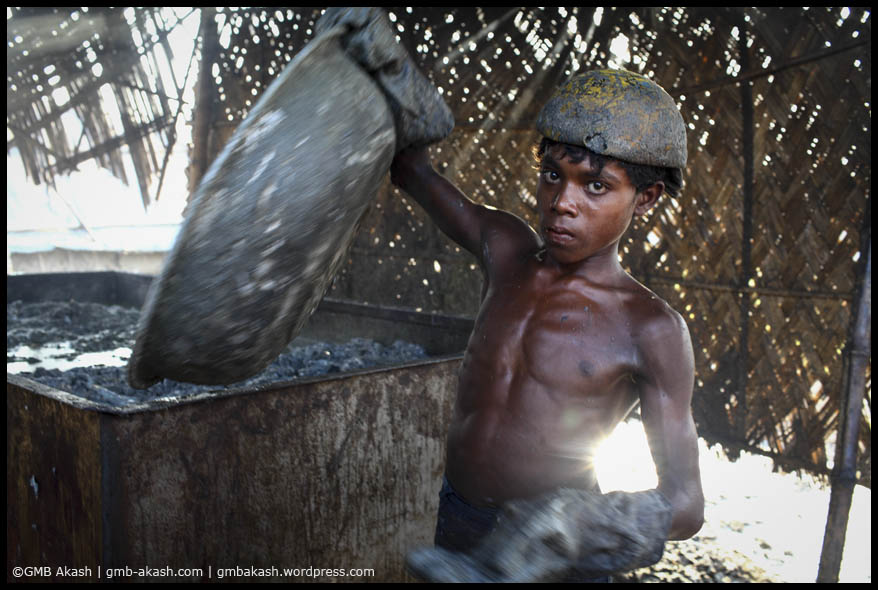
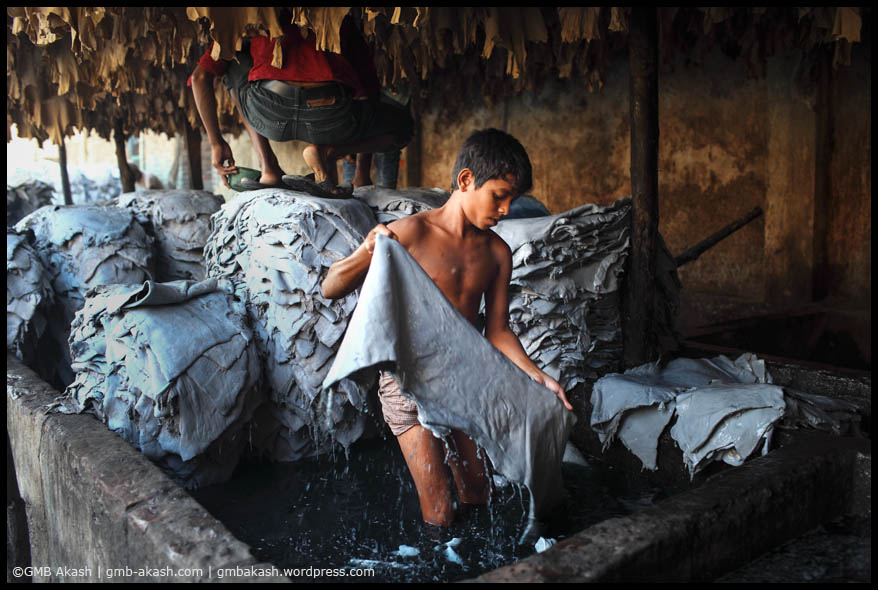
11-year old Rakib gives me the brightest smile and curiously asks, ‘What do you do with all these picture, sir?’ But he then rushes away before I can speak to him. Carrying uncountable leather pieces  in his shoulder he has no time for questions and answers. Rakib’s friend Monir (7-year old) keeps pinning up the leather at the yard. After the death of his father he got the job in his father’s factory. He had no idea what had happened to his father. He only knew he was suffering from an incurable disease. He feels good to work during the whole day and it is only in evening when his heart cry for playing.

Leathers (6)

Leathers (7)

Leathers (4)

Leathers (5)

Standing beside Monir I was trying hard to understand their miseries but laughter broke my concentration. I saw a group of workers cracking jokes outside and were laughing hilariously. Life goes on. These simple people risking their lives everyday in order to live the best they can. Society is not actually willing to know about their sufferings but they are nevertheless  willing to buy their processed leather which leather has a good worldwide reputation. However the savles of the toxicity and repugnant odors have no good reputation. In their way home to to their slums they cannot sit in any tea stall to relax. People shout on them for their repulsive odors which disturbs everyone. Only their produced goods get place inside a branded shop with a prestigious tag ‘Made in Bangladesh’. The makers only receive humiliation.

Tannery worker Omar Faruk sadly says, ‘If we travel by bus nobody will sit beside us. One day a man harshly said to me, ‘You must come from hell.’

Leathers (8)

Tenary in Dhaka (13)_1

Leathers (23)

Leathers (9)

(Almost all of Bangladesh’s 200-plus tanneries are concentrated in Hazaribagh, a densely populated, filthy neighborhood on the banks of the Buriganga River in southwestern Dhaka. You can smell them long before you can see them: an unbearable stench like bad eggs, rotting fish and harsh ammonia. It’s almost impossible to walk through the tanneries without a scarf pressed to your nose. At almost $1 billion a year in sales, the leather industry is one of Bangladesh’s most profitable sectors. The lives of more than 20,000 tannery workers are still at risk. After 60 years of tannery operations, no one knows what content of toxins have been poured into the river, only that it is incalculable and staggering. Chromium sulfate, lead, organohalogens, lime, hydrogen sulfide, sulfuric acid, formic acid, bleach, dyes and oils all flow into the river)


‘My Genie’

It was too boring when Maa used to stare at me while I was eating. I repeatedly taunted her, ‘Why are you staring Maa?’ While putting her portion of fish on my plate she always ignored my question and said, ‘I know you are still hungry’. I showed anger to her but I know no mother cares about her child’s anger. Late at night the lock of the back door used to open instantly to the sound of my my silent footsteps. When Abba burst out in anger and the hell with my bloody photography, Maa for the first time miraculously raised her low voice and faithfully said, ‘Photos are good. Have you seen any one else to do such work in the area?!’ Our small area was the world to her and I was the hero. Maa was the only fascinated listener of my fairy photo-world-tour tales.

mother (20)

mother (7)

To me she always seemed ‘simplest’ than the word ‘simple’. At mid-night when I felt suffocated in sleeplessness my mother appeared at my bed side with hot milk in her favorite silver glass. I never felt surprised or ever questioned her how she knew I was wake in the middle of the night. Returning home from a heavy rain and getting hot lemon tea at my table was very normal. Or tasting Maa’s peculiar juices in the crazy summer never bagged her any special credit. But I know from my heart that she is my ‘Mother Genie’. She broke the mud coin bank that she secured with each paisa she had and that day said, ‘Go, get your photo prints’.

mother (9)

mother (1)

Suddenly one day I realized there was no one… no one no more to be concerned about the sweat on my forehead. My Genie left me suddenly without telling me a good bye. If I would have known I have to now walk a long road without her, I would have told  her a lot of untold stories. I sure would have told her, the photography that I love more than my life is as important to me as her; I love her more than that photography. Maa is no more. That’s why I keep searching Maa everywhere.

mother (12)

mother (14)

A sister in a brothel used to send letters to her mother with fake address by putting small words, ‘Maa Goo your Pakhi’. Like me she also knows mothers never give up. They will wait until their children arrive. Exactly like the mothers of the Old Age Home who are crossing through their 80 s and still praying for their children from nuclear families that they may live in happiness.

mother (3)

mother (16)

For bringing light into the face of their children of early ages these mothers went down in the garbage, worked in dusky brick fields, showered in cold sweats as mothers do. Their tired bodies never take rest even after returning homes. They did the shopping on the way to their home and cooked rice and Daal. By lining up their four to six children they checked carefully if all of them are well or not. A few mothers, even after being beaten by the fathers everyday kept their children in their lap and dreamt of an impractical reality for them.


mother (24)

mother (33)mother (5)

Children well known the God has gifted special power to their mothers. That power comes out in love, patience, sacrifice. But what do Mothers gets? Can’t we do something for the mother who never wants anything for themselves? The mother who is giving a new life to us everyday can’t we warm her with our affection?

mother (37)

Why still today mothers get humiliated at the corner of the house? On the floor of the Old Age Home? Or in the dirtiest hospital bed from negligence?


mother (29)


mother (10)


‘An Unrest Soul : On Street Photography’

‘It was midnight, a night about 12 years ago. Year was 2002. It was six years after that I started photography. Without photography nothing was precious to me. I used to save each and every penny of mine to travel and to do photography from 1996. It was a mysterious, tiring night and I did not know what exactly happened to me. I was restless and I decided to destroy my past. I wanted to start a new start with my photography. I could not like my work anymore. I set fire in all negatives that hold images of mine. I destroy each and every image that I had. Maa run as mad and stood still at my window but did not say a word. She knows I love photography more than my life and when it was burning in front of my mother she was looking at me with deep sympathy. I ignored everything. Wept silently. I felt alone and I know this will be the beginning to search a new me. 18 years I am trying to depict images that I see through my soul with the same thirst that one day I could fulfill my inner emptiness’
– GMB Akash

part 2 (3)

part 2 (28)

part 2 (4)

The place I like that I love to go very often. There are places where I went more than 100 times. Every time every place is different than my last visit. I would love to discover stories of my frames. Time changes face of place, people and in fact me. The same place that has been visited thousand times gift exclusive images with different layers.

part 2 (16)

part 2 (33)

part 2 (17)

I can smell photograph. During walking in a street suddenly a place attract me magnetically. I can smell the right place and can smell my future photograph. I wait until I get the picture I want, the waiting makes it more interesting, my attempts make me more excellent. I wait hours and hours with happiness but no boredom. Because I am sure I will get something every very special. Even I spend one day in one place just to get one shot that will remain precious to me for lifetime.

part 2 (13)

part 2 (8)part 2 (40)

I am a nutty traveler. I never hide myself during I am photographing or traveling. I interact with the community whom I go to visit. I give them time to understand me and I take time to understand them. In any place you will find children and dogs first to welcome you. They will follow you and you have to win their hearts. If they accept you then the community will accept you. Documentary/travel/street whatever photography I am doing I always know I have to respect people and their thought. If someone refused me take picture I accept it with respect. I take photography when I feel the person is easy with me and in the time when I got an affirmative signal. After taking picture I show them and heard their comment. Sometime I take print with me to show them, surprise them. Small interactions make you confident as a communicator and a photographer. It is important to be trustable when you are a photographer. A small thanks and a big smile can win many hearts.

part 2 (35)

part 2 (21)

part 2 (41)

I want to extend my territory as photographer. Roads are like my homes. Sometime people call me ‘Specialized tourist’, sometime ‘Documentary photographer’, sometime ‘Travel photographer’. This photographer me is nobody just a medium to bridge with the people I meet. I create bridge with people’s feelings, with their joys with their sorrows. I merge with their cries, laughs. I walk in the street and collect untold stories of people. Every place has different color, smell, sound. That attraction takes me again again. I am nobody of that place but I feel I left a part of me there with the people I photographed.

part 2 (20)

part 2 (36)

part 2 (27)

‘I keep searching myself over and over again in all cities, footpaths and in streets, from country to countries. People forget about me, my face and my camera. As because I am not any part of their life. But I never can forget a single person I met in the road. I keep their pictures in my mind in my memory card. And I wish one day or one night again I will meet with any of them and will say how I kept their memories in my heart’ – GMB Akash

To Join in my upcoming street photography workshop in March 2014 please sign in at:

Making Photo Essays of the Street’ With David Bathgate and GMB Akash’

part 2 (1)

IMG_0587

part 2 (34)


‘Street Boy’s Dream’

I am nobody and I have nothing. A simplistic human being stated as photographer who continued to question around his world. I conjure traveling in the different layers of myself and host an activist inside me by innate attributes. Yes, neither I am an industrialist nor do I hold a lion’s share of a company. For me CSR or charity is fancy word. But the passage I walked 15 years smiled melancholic to me. I marvel and interpret it to the world believing for a change. But the verb ‘Change’ itself very ‘dearly-won’. I found 18 years old drug users dyeing abandoned before I take him in my shoulder, I know how a sex worker cut off veins and her bleeding marks keep me awakening nights. I know how cold and deep an old lonely mother’s breathe can be in an elderly home. In the dormitories of injustice of the world I uphold to believe in ‘Miracles’.

street boys dream (9)

 street boys dream (8)

Roton a 12 years old street child once said me. “You rich people just talk, talk and talk! You are nonsense, all of you are nonsense. Children of my age goes to school, plays at park, their mother clean their skin, force them to get shower. Look at my hand, my hair, my skin no one tells me to take shower. I run to carry baggage of passengers, they throw me money like I am piece of shit, police beat me, and goons take my money. No one care, nobody. I sniff shoe glue, I want to lost, and I want to delete my memory. I curse you, I curse government, I curse my unknown parents, I curse everyone of this cruel world”.

street boys dream (7)

Roton’s voice echoing all the time and I can’t rest in peace with my eminence. This is the story of me and the people I care for. I feel it to tell it to you as I want you to love someone, to give tinniest love of your heart to the abandoned. Try to discover your image in the light of their eyes with love and hope. So sharing a small episode of my continual journey and once more telling you I am one of you, a person having no wealth at all but a heart to give away whatever I have. If my single word, small phase of explanation inspires you, please merge in.

You’re given this life as gift; make yourself a gift to life.

street boys dream (6)

‘By wiping off tears with corner of his shirt a Teenage boy was walking through rail line. The world seems ugly with eyes pour water. A weird anger runs in his vein which is unexplainable to him even. When he takes a seat under the lazy evening light, he started feeling the pain of his chest. His father beat him by clutching with mango tree. His step mother was literally happy and didn’t give him his lunch. His crime was to fall asleep in the field with cattle. Hungry Shuvo (13) started missing his dead mother, who may never allow him to go away from home without having lunch. In the station and in such a warm day who care about an oversensitive boy and his empty stomach. Anger, depression, misery everything mock at Shuvo. Two days, three nights Shuvo had only leftover from restaurants. When he jumped into a running train, he didn’t calculate about upcoming calamities of his life, only he heard the roar of his angry heart. When he started seeing around him, he saw many of other children reluctantly sleeping in the floor of station’s platform. In the time Shuvo feels he is not alone. Unknown faces become familiar and more affectionate. He sleeps with serenity after three nights of sleeplessness. From the day Shuvo is bohemian.

street boys dream (10)

When Shuvo tell me his tale, Raihan (11) laughs loud and say ‘Police first day take me and beaten up a lot. They thought I take drug. I don’t even know what Dandi (a drug street child takes) is’. All of their daily earning is 60-80 Tk by carrying baggage of passengers. Sharif (14) remained silent. Neither he wants to share his story nor listen to others. Depression is in his skin, in everywhere of his belongings. When I smiled at him, he smiles back too, then whisper, “Do you think I can do it ?” I replied “YES! Three of you can!’

street boys dream (16)

Their curies eyes, hope on me, their trust making me nervous inside. What I can do further? In a scorching afternoon I can lend my hands to them and show affection but what about their wound which is as fresh as their age! It’s been already months I seat with children show movies, counseling with them, taken them into lunch BUT THEN? One, two, Three thus hundred children and their dreams! Am I capable to hold them all! But I stop myself questioning. I started doing something. With my nameless family our journey begins. Shuvo, Sharif and Raihan are three members of my family.

street boys dream (11)

‘Can’t sleep last night Bhai, I pushed Sharif many times and ask him when the sun will rise and you will come’ – It was Raihan speaking to me in the final day. Three of them were wearing two paints and two-three shirts at a time. They don’t want to lose their precious dirty cloths so they wear it all the time. Returning from a long assignment and was on the way when I received call at 6 am from Shuvo asking when I will come. I change my mind and by hanging the bag I started towards them skipping home. I was 10 minutes late but as soon as I appear to the place three of them running to me like kitties. Besides them many of others were wondering with curiosity.  I heard a loud voice of Paglu (self-named) ‘Bhai, if they become good boys I will join you too. I swear my Mojnu (a street dog) that I will never take drug again.’ Paglu is along them with whom I pass a day monthly, show them my images and discuss topics needed to share.

street boys dream (1)

When I walked with my three boys I realize they didn’t eat anything yesterday. So first we went to have our breakfast and had it full. They listen to my each word carefully and we planned what we will do in coming three months. Already I taught them small calculation weeks ago. Then I went to buy clothes for them. Raihan is the youngest and started demanding many things while Sharif scolds him for his behavior. When again I ask them, is that they can remember their address/home and I can take them back like Masud, then their faces become cloudy. After a long period of silence Sharif said ‘After I become succeed in life I will return back. Then you can take me home’. I realize their mental condition and don’t force any more.

street boys dream (2)

In the shopping mall they started selecting their desired cloths in the time of bargaining I shared sharing their small story with curious people though none of the shopkeepers sacrifice a penny of profit for the sake of these boys. I don’t wonder because I know ‘responsibility’ term only referred to ‘family’ in our society. & we cannot change until we realize from ourselves. After buying cloths, we buy sandals, combs, mirror, oil, everything they needed to live a children life properly. I took them to cut their hairs and nails. Then I took them to a place for shower.

street boys dream (12)

street boys dream (3)

When I stood beside them with soap they were the world’s happiest children in that moment. I can’t control to capture the moment with my camera. Crowd of people were following us, few of them thanks me and few of them make me annoyed. After having full packed lunch we moved to our working place.

street boys dream (13)

I gift them small opportunity of work and connect them with business under a mentor. MD. Melon has a popcorn business who alliance with us and agreed to be their supervisor. I gift them the capital for popcorn business for three months. At first day of their work I myself sell popcorn in the road with them to inspire them by standing next to them full time. We calculated profit and they put it in their own piggy bank as saving of their first day job. They were amazed to see that together they made a good profit and still had enough for food. Thus their story starts, every day after finishing school they come to their Supervisor and take products and go for selling. At evening they return back calculate prices and pass free time by playing. It’s been three months and they make their capital double. The name of their business is ‘Street Boy’s Dream’. Now they are planning to shift their business for selling Ladies accessories and cosmetics.

street boys dream (5)

Beside them other groups of children are doing different kind of small businesses by my gift which comes from my book ‘Survivors’. It is bless to share that ‘First Light Institute of Photography’, the photo school, I am going to launch in this August will be their institution and support center. I dream to go along with street boy’s dream. Their small steps are gift for my life, reincarnation of my soul. Their affection has filled my heart with utmost peacefulness. I believe, we cannot afford to lose hope, for we are all part of making some small and large changes, each day, each moment. We all can make a deposit into someone’s life. The best part of this form of giving is that it is LIMITLESS. By which we can make an incredible difference in their world.


street boys dream (4)

“Factories of Death”

garments (5)

garments (1)

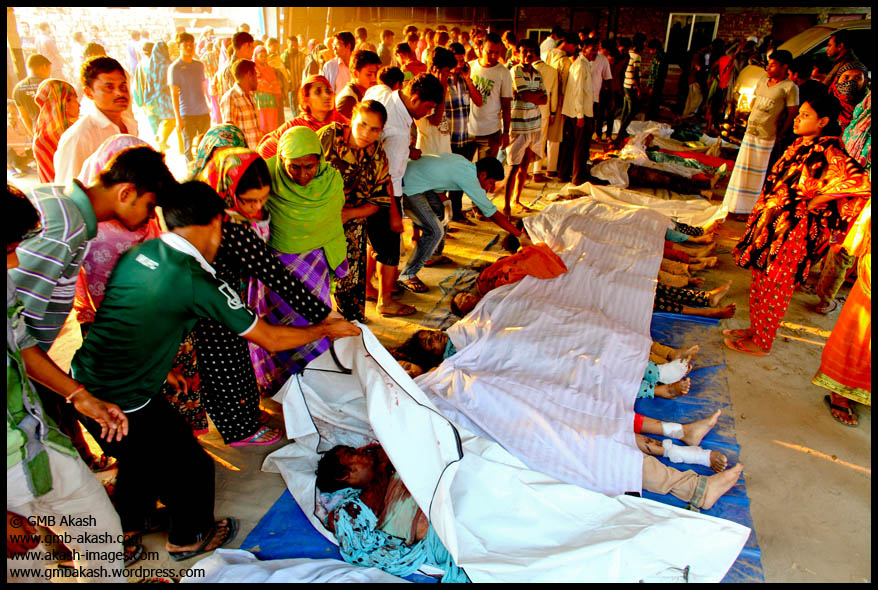
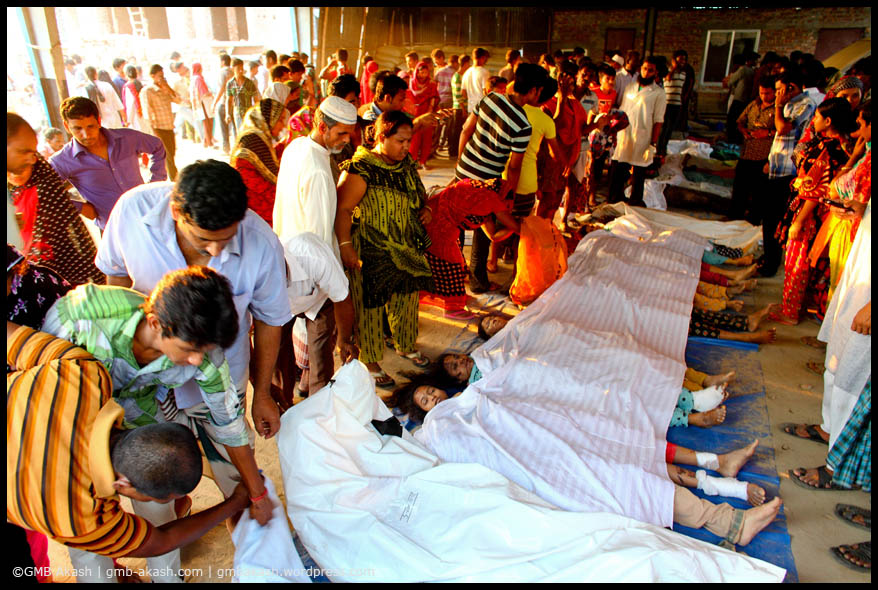
“Drinking tears now is a daily menu to the people whose life collapsed with the building Rana plaza. In a stormy day when I arrived at hospital door I pulsed by the melancholy I encounter. No rain was not the reason, it was the pain in ever face which will haunt everybody long. Following continual screaming of a young girl I found her requesting mother to a reluctant nurse. As soon as my camera clicks the doctor arrived swiftly, not sure seeing camera or may be reminding patients call! Looking at hundred wounded bodies and hearing their screams it was hard to stand in the middle. But it is more important to share a bit of their unbelievable suffering in a small form. Thus my camera take place and I share their pain among you all”- GMB Akash

.

garments (11)

Khadeza (18) was a kind of girl who laughed more than she talked. Her mother used to beat her for excess laughing. Now everyday her mother asks Khadeza to smile for a while but Khadeza only wipe off. Doctor prescribes her not to do any hard work at least for next six months. She will not be able to do any hard job in future. Her mother is not sure how long it will take to recover. She is one of the survivors of Rana plaza.

garments (16)

It will take three more months to get physical recovery and six months she will not be allowed to do any hard work. Eighteen years old Shapla was working in textile factory for three years. She was in third floor while rescuer rescued her. Her one hand cut off while she was inside. Living with Several scars in all over her body, she sometime cannot recall her name. Her Husband Mehedul was inside the building for 72 hours but he came out harmless.

garments (2)

Rebeka (20) been rescued after two nights of the incident. Dead body of her colleague was stumbled on her shoulder for a night. People threw water from the only hole and she sip water from the floor. Doctors cut her one leg and another leg is badly injured. Still she screamed full night in imagining the hospital building is falling on her. Her husband is beside her but helpless. Her mother and grandmother who worked in the same floor are missing and she is unaware of the news.

garments (12)

garments (13)

Seeing them in the bed of hospital, no one can recognize that these workers – once upon a time used to work 7 am to 12am of the night. Life has treated them bitterest. Pains are unbearable to make anyone understand of it. Stepping out from the hospital I heard a woman telling that these workers will be much benefited. They will get 5 lac tk so this comes good for them. I can not stop myself and turn around, told her, can you cut off your hand if I give you 5 lac? I wonder how heartless some people can be!

garments (3)

My journey continues so as the rain. When I stepped in the residential area of Rana plaza’s garments workers, I met Isa Mia, a boy who lost his brother in the incident. Her mother was crying in the door and after 20 days of the incident she can not eat anything properly. Isa himself a survivors but not depending much he taken me to meet Marium, the single mother who lost her hand. One after another I meet with all. I have dedicated my fees to them which come from published textile stories in different publication of mine. I encounter the pain. the urge, the pathetic emotions which words can never justify. I want to believe one day will come when these people will see their life in the ray of a sweet dream. & then I realize this is non sense. The reality is they will suffer and this is destiny. But I will run to them again and again, until I can take in some of their tears.

garments (9)

After losing her right hand Textile worker Marium (27) lost in despair. Single mother Marium never spends two tk for buying a hair band as she knows her two children’s future is in her hands. Disable Marium shouts at night afraid of feeling dead bodies of workers friends are circling her. She spent one night and two days in the 6th floor of the collapsed building while her right hand injured under pillar. She started her job four years ago in that time she received 1200 tk monthly, now she lastly get 4500 tk monthly wage in New Wave star Ltd. a factory which was in 6th floor of Rana plaza. She lost her stability to think about her future. Still after near one month of the incident she did not receive any compensation from anyone instead of her last month salary.

garments (8)

Blue is Aleya’s favorite color. In the morning she wore her new blue dress and told her young sister if she die who will wear the dress! Aleya’s (18) family was fully dependent on her income. She wants to educate her younger sister and alert her mother not to send her in textile factory. Heart patient father and kidney problem of mother forces Aleya to start work in her early age. Her mother asks her to married off soon but she reluctantly said straggle of her life will never come to an end. There was no money at home and she told her mother instead of dying in hunger it’s better to work in a cracked factory. She was sure God has given them enough sorrow and nothing will happen to her. Her believe proved wrong. Her family cannot even find her dead body parts after 17 days of searching everywhere. Neither have they received her salary nor compensation.

garments (15)

A room call home is never a place of relaxation for textile workers. Often a room shared by 5/6 workers offer them the untidy floor to sleep. Their salary won’t make them able to go in a better place still after 5-6 years of their job straggles.

garments (6)

garments (7)


“Even after losing one leg in the terrible incident the worker is begging for a sewing machine. She said, “Still I have two hands. & my children are hungry”. Alike her thousands workers keeps their dreams alive in their heart and goes to work on time. In spite of everything they are straggling happily to get a dream future knowing dream is a dream. But they never imagine nightmares will replace their dream and they obviously fall in concrete mattress. Incidents of Tazrin/ Rana plaza might wake up them from their dream. But still they say, hunger is ugly than death”

– GMB Akash

garments (14)

‘Low-priced Slaves’

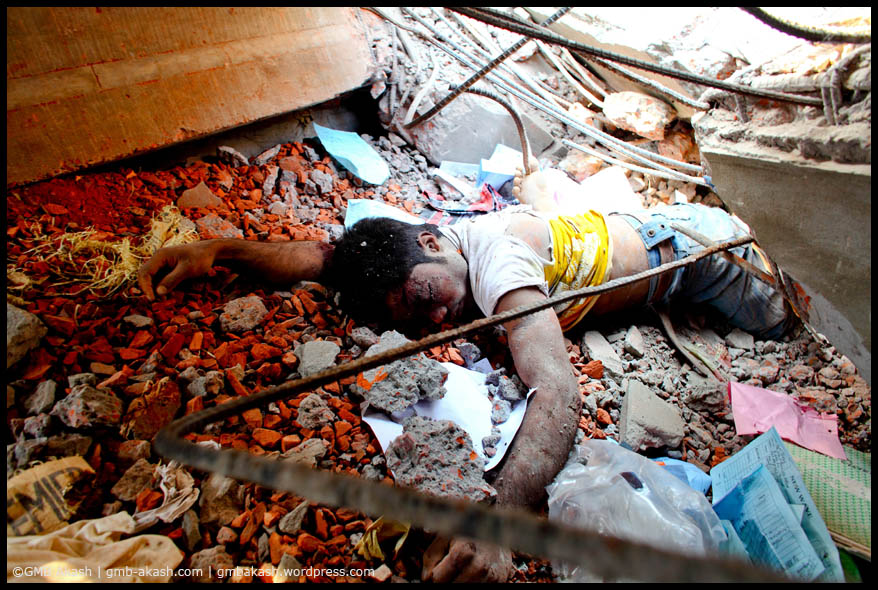
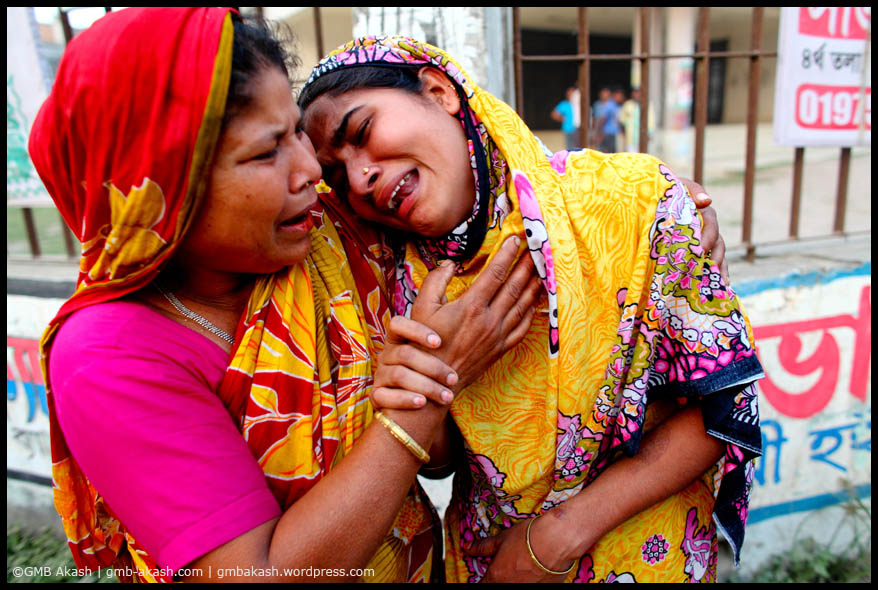
Nargis fainted three times while she could not find her mother in the derbies of nine storied building. It’s been a day and a night she is frantically checking around hospital, in each corner of destructed building and hundreds smashed dead bodies. But where is Nargis mother’s existence? Hundreds of weeping mother, father, sister, brother, husband, wife and children were like mad for searching their beloved faces. The population who are the backbone of the family, of the country their bones cracked under wretched concrete. Knowing still hundreds people are breathing inside the dreadful collapsed building helpless thousands mass people came out with their humanity. Rescuing living being or carrying out dead bodies but nothing evaporates tears of people who experienced such frightening circumstances. The deadly trap eat out lives of thousands workers who never might thought of loosing life as prey of capitalism greed. Many workers leave their breathe waiting to hear a call of rescuer. Many female worker’s hand or leg trapped under stone while they are still alive and asking rescuer to cut their hand and take off. What to do and how to do? The traumatized nation has no word in mind to speak. Sharif after finding cracked half body parts of his 21 years younger brother screamed “My brother never do any harm to any body. Why Allah punishes him, why? Because we are poor, we are useless to Allah, we are useless to riches, and because we are bloody workers”.

Rana plaza (1)

Rana plaza (11)

Some 3,500 people were in the Rana Plaza building in Savar, some 30km (20 miles) outside Dhaka, when it collapsed suddenly on Wednesday morning 24th April. The first three floors of the building, located in the Dhaka suburb of Savar, contained around 300 shops. At least four garment factories — New Wave Bottoms, Phantom Apparels, Phantom Tack and Ethar Textile — occupied higher levels, employing around 3,500 people. Building showed cracks on Tuesday, but all garments workers forced to go to work on Wednesday threatening to cut off salaries. & the devastating accident happened

Rana plaza (6)

Rana plaza (8)

Rana plaza (4)

Local hospitals were overwhelmed with the arrival of more than 2,000 injured Textile workers. Victims were still calling for help from among the piles of shattered concrete slabs, according to rescue workers and volunteers, as hope began to fade for hundreds still trapped.  And the death toll had reached 400. After putting the conclusion that no more workers can be alive rescuer workers are now using heavy equipment to clear the site and officials expect the number of casualties to rise as hundreds of people remain missing.

Rana plaza (5)

Rana plaza (13)

Rana plaza (12)

Around 4 million people are employed in Bangladesh’s 4,500 textile factories. The industry generates 80% of the country’s $24 billion annual exports — making Bangladesh the world’s second largest clothing exporter after China — yet wages remain as low as $37 per month for workers spending 15-hour shifts in sweatshop conditions.

Rana plaza (3)

Rana plaza (9)

“What to describe and what to write! All I could see were dead bodies all surround me. A silent anger, unbearable pain and helplessness had frozen my finger to click. Besets dead bodies and their each drop of blood asking me to tape their vulnerable death memoir to show the people around the world, how painfully they left the world. And I can not rest until I can spread their pains of deaths. Shouts slaughtered under concrete. How many times we will remain mute and hollow out graves! Why world’s most innocent souls has to be always trapped as vulnerable victims! Their souls will never rest in peace until we know how dreadfully they died without telling their last wish”

– GMB Akash

Rana plaza (10)

Rana plaza (14)


Inescapable Jungle

“Every day living in the terror of death is enough to sabotage ones life. Behind the beautiful jungle there are stories which has mentally paralyzed 3,000 ‘tiger widows lives’ in the universe of Sundarbans. People living surrounded by the jungle are living in the fence of fear. Fear of losing their own life or their family in any day or night. Sons after losing their parents, grandparents in tiger attack has again walked in the same path to feed rest of the family, knowing their life may end any day, any moment by a second’s ignorance. Their bravery of fighting with a small knife with the ferocious tiger is heroic only if they can fight and win, if not the flesh of the hero will dry and might disappear in salty water of the sea. From there no one can get anything than the blooded cloths. The story of surviving hunts them every moment in their life. As the beautiful jungle is the reason of their life and reason of their death too. They and their breathe belong to the mighty inescapable jungle” – GMB Akash

Marium Begum’s Husband Abdul Hamid went for fishing in Hatdabra canal in the Sundarban along with two fellow fishermen after Azaan. While they were fishing a tiger swooped on him and dragged him into the deep forest while his fellow fishermen escaped unhurt. Later, forest guards recovered the bruised body from the deep forest.  Marium is just one of about 3,000 “tiger widows” in the Sundarbans.

Killer Tiger (15)

Marium is bearing the wound of losing her husband. She describe the day with a painful tune , “The day remains nightmare for me. Noisy birds were circling my hut. There were bad omens everywhere. And my heart was beating in rush. I told him not to go but there was no food to eat so he has to leave and never come again” – Marium

Killer Tiger (10)

75 year old Momresh Sekh lost his left eye to an attack by a tiger in 1969. He was accompanied by his uncle who hit the tiger with the branch of a tree. A jagged scar runs from his head to the back of his skull. Lumps of flesh were torn from his chest and thigh. He is blind in his left eye.

Killer Tiger (11)

Forty-five-year-old Emem Ali poses with his daughter. In 2008, Emem was the target of a tiger attack. Grabbed by the arm, he was dragged into the forest, but abandoned by the predator at last. Found and brought to safety by a companion, he lives to tell the tale. Now he is living by selling fish in the local market. He is hoping to get a shop for surviving.

Killer Tiger (4)

tiger (14)

It was a small life saving knife as this only tool saved Shofiqul Islam’s (42) life from the men eater tiger which was snatching him to the jungle. Hurts kept marks in his body though honey collector Shofiqul lived form hand to mouth for four months by avoiding the path of jungle. But after four months of his attack while again he was entering into the jungle, he said ‘Either I have to earn my food or I will become food for the prey.’

Killer Tiger (13)

This shirt bears the horrific memory but it is an icon for Shofiqul (42) too. The shirt reminds him the roars of the attacking tiger, its unbearable snatch to his backbone and his spirit to fight back to it with nothing but a small knife.

Shofiqul said “You no longer have to go deep into the forest to be attacked. They wait at the banks. I have never seen that before. We believe that even to use the word tiger risks summoning one”

The Sundarbans is made up of hundreds of islands of mangrove forests and mudflats. This is one of the most beautiful but most dangerous places in the world, a place of tigers and crocodiles and dangerous seas and canals. The region is home to approximately 500 Bengal tigers, one of the largest single populations of tigers in one area. These tigers are well-known for the substantial number of people they kill; estimates range from 50-250 people per year. Because of rising sea levels and shrinking forest, humans and tigers are fighting for space. The farmers are forced into the forest to hunt for honey, fish, or collect crabs, putting them at risk for a tiger attack.  Poverty forces people into the forest, into the tigers’ natural habitat. And the animals are hungry, with hunting and newly introduced diseases steadily reducing the populations of wild boars, deer and monkeys in the Sundarbans. Hindus and Muslims alike believe that only the Goddess Bon Bibi can offer protection from the big cats. There are several statues of the forest goddess scattered throughout the jungle.

Killer Tiger (2)

Killer Tiger (3)

45 year old Shaidul has stitches put into his chin in Shemnagar Hospital. He was badly injured by a tiger while he was out fishing. He said , “I thought it was a large dog. I pushed it away and heard a splash within the time its hits me”

Killer Tiger (14)

45 year old Abu Taleb lies motionless outside his home. He was attacked by a tiger whilst fishing and has now lost the use of his arm and leg. He is unable to walk without the help of his wife. He spent seven days on the floor of Satkhira Hospital with severe injuries to his head, back and neck. After a year of bed rest he has still not recovered from his injuries and his wife has been forced to become a day labourer and beg house to house.

tiger (8)

In 1995, the attack was on his first day out fishing. He was sleeping in the boat when the tiger attacked. Though he survived it, the damage to his face was such that no one from his village would come near him. His parents forced a girl to marry him. At the initial days of his marital life, he would not allow his wife to look at him.

Killer Tiger (9)

tiger (6)

Beside men tiger attacked many women of the village too. Faizun is showing her scars which are permanent mark in her head. Tigers are coming closer to villages in search of food. They smartly attacking villagers and standing near the bank. Faizun was collecting woods from near her home beside the bank of the river, while tiger attack she thought it is a big dog while realizing she remember nothing. She believes forest’s goddess saved her. Somehow she manages to escape and after the attack, she fled to her hut and collapsed.

Killer Tiger (16)

Killer Tiger (7)

42 year old Atiar Rahman was attacked by a tiger whilst out fishing. He lost his sight in his right eye, the ability to hear, as well as severe injuries to his back, neck and face. He spent six months in hospital at the cost of 9,000 Taka (80 GBP) and is now completely bed-ridden. His wife works to support their large family by working as a day labourer. She earns 50 Taka (0.4 GBP) a day.

Killer Tiger (1)

Because of rising sea levels and shrinking forest, humans and tigers are fighting for space. The farmers are forced into the forest to hunt for honey, fish, or collect crabs, putting them at risk for a tiger attack. 

Killer Tiger (17)

The boat is the small vehicle which is use to go for fishing in the deep forest of sundarban. And often while they stay at the boat in night tiger attack fisherman and they have to fight back.

“Inside the Sundarban there is ‘silence’ everywhere, a fear runs in veins with the fragrance of incense, standing in the village of frequently visited by Man Eater Tigers, listening villagers rhythmic chanting and prayers and feeling the urge to get back to safety all these made it helpless for urban, educated, technologically advanced people. This jungle is only understandable for the people who are made from it, the people live by jungle can’t leave the place even knowing how risky to live within. Thus they will face the hungry tiger habitually either to live or to die.”

– GMB Akash

Killer Tiger (12)


Ashes of Souls

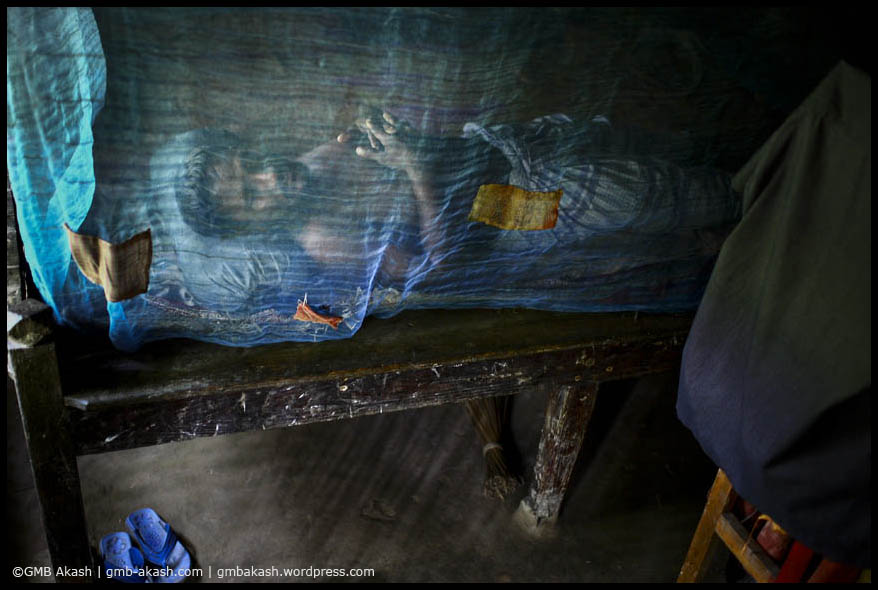
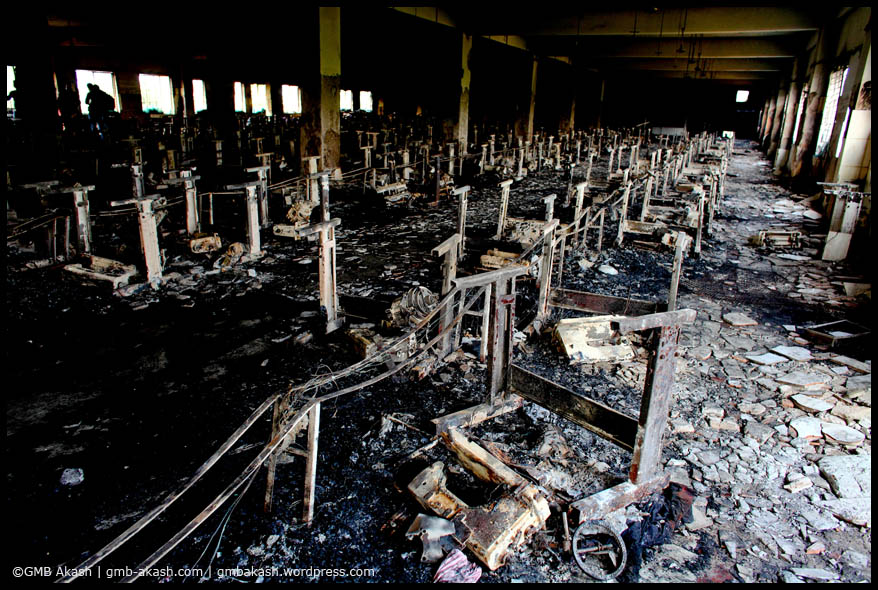
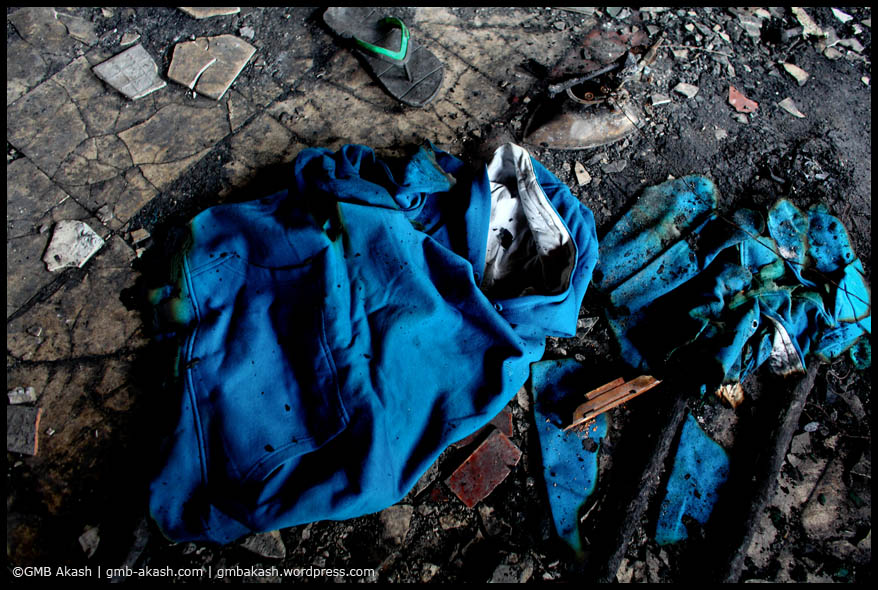
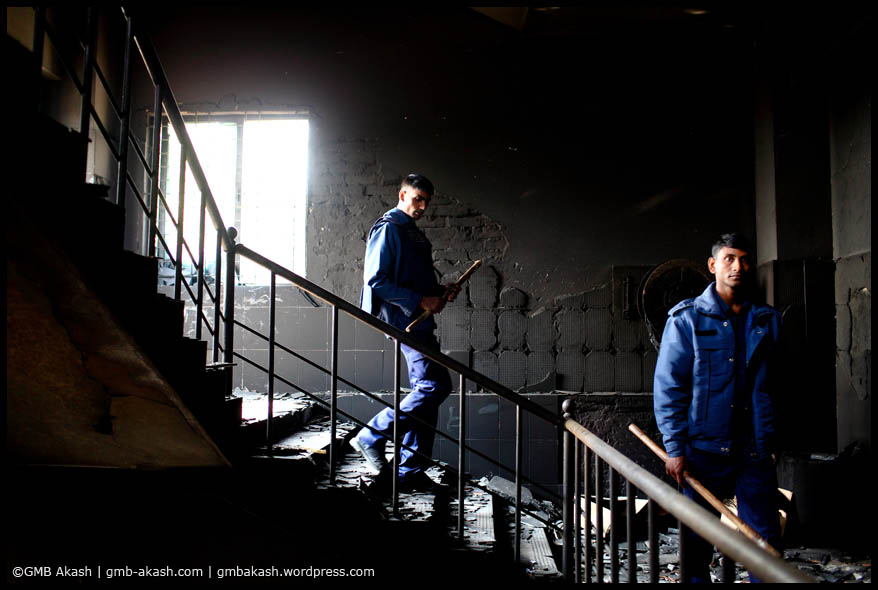
“A silent burial ground, where may be the ashes of wounded souls are still encircling. Broken pieces of brunt smashed tiles with countless busted glasses can tell the tale how staircases could not save hundreds of scorched living beings. Imagining myself at the place of these unfortunate garments workers who burnt alive, I felt vulnerable. Shoes, bangles or an unfinished ironed cloth in the stand or the half eaten evening tiffin are standing witness, how workers died helplessly. Pieces of glass bangles all over the floor, as mostly female workers had faced the tragedy, were witness of a violent disaster those no one of them even seen in nightmares. & thus by facing fire they lost their existence in burning blaze” – GMB Akash

textile (1)

textile (11)textile (9)

Tazreen Fashions, located in a rural area of Ashulia occupies a nine-storied building. The ground floor, which stored the factory’s raw materials, had the only entrance to the factory, with three staircases leading to other floors. The fire at the eight-story building of the apparel factory started on the first floor, quickly cutting off all three exits from the building. Survivors stated that at least one exit was locked while no emergency exits existed in the building whatsoever. Some workers tried to escape the fire by jumping out of the windows of upper floors – many of them died. Others choked to death in the thick smoke of burning fabrics. Many of the bodies the firefighters found in the ruins were burnt beyond recognition. Later it was estimated that more than 1,000 people could have been inside the building when the fire started. But survivors claims more. Even it takes more than two hours for fire fighters to arrive at the factory. Firefighters trying to reach the blaze were slowed because the narrow road leading to the factory made it difficult to get to the site and there was no source of water nearby. It took firefighters over 17 hours to douse the blaze at the factory, after it started on Saturday evening November 24. The fire at Tazreen Fashions Ltd, lead to the death of reportedly 111 workers, but witnesses and survivors alleged that the real number dead is possibly much higher.

textile (7)

textile (10)

textile (19)

textile (6)

textile (12)

Raziv is one of the Survivors of the tragic incident; he worked at fourth floor along 300 other workers that evening.  He said, “I smelt smoke and ran downstairs at third floor and found that the place was already full with black fumes and I cannot breathe properly. With the sound of crying women the electricity went off within 5 minutes and most of the female workers had no mobile phone atleast to see though the phone light. I accompanied by my three friends & went at the small room of the third floor where I was atleast 200 woman were standing & crying helplessly. With another worker, I broke the window of the room and give the place to female workers to go out but most of them was so afraid and cannot do anything. I cannot be selfish to fly alone and helped them to jump through. But as soon as the fire was increasing I run to the biggest exhaust fan of the floor, many women workers seated at prayer and many started losing sense. Only by hand, I broke out the fan but cannot jump. The fire was so scary that I lost my power, I called and cried to my brother, he just said ‘Jump!Jump! Then I jumped to the roof of a shed next to the factory and found myself injured at the ground! I survived but I had no money for my treatment and no one asked me to help, even after five days of the incident I am searching for my coworkers and had not get any money for my treatment. I come to the factory for my four months due wages, no expectation from these rich bosses.” Along Raziv, Few more fire survivors said, that most victims died of suffocation as the blaze started on the ground floor warehouse, trapping the night-shift staff.

textile (20)

In hospitals cases are alike. Injured workers hardly save themselves form fire, some lost their memory, some are in trauma, poor families has nothing to give them better treatment. Amongst huge numbers of injured, few are receiving treatment and rests of the survivors are not fortunate to get treatment except lying at home for money crisis. A survivor Kushi stated that, after jumping from the third floor she broke her legs and cried at least one hour for help but no one was there and eventually she lost her sense.

textile (16)

textile (17)

textile (15)

Inside the living zone of these garments workers are not rosy. Jhilpar Slum is accommodating at least 20000-30000 textile workers and alike this slums garments workers living throughout all industrial hubs with daily straggles. Rooms of 10 feet by 10 feet accommodate minimum four women workers which monthly rent is 3000 tk. One toilet and one kitchen are definite for ten families of the slum. But still after having this trouble, passing through narrow life lines women garments workers are appreciating their lives as an independent being but incident like fire in Tazreen fashions has break out all hidden frustrations of them.

textile (2)

textile (8)

textile (3)
Accompanying workers in the fight for their deserved salaries I also faced problems with police officers. They tried to stop me for taking photos and said many times that I am ruining my country’s reputation. Even in many cases the injured, victim’s families and workers faced continual negligence by police, local authority even after so much pressure from national and international media and having consolation from all over the world they had to fight for their due salaries. End of the day they knows they have to fight for their right after losing their dears ones and even facing fire may be easier than earning rights and justice.

textile (23)

textile (5)

textile (24)

Nilufar lost four members of her family. While she received call from her brother, she heard only shout, ‘Save us!” ‘Help Us’! The phone was on the line for 20 minutes & she helplessly heard the sound of wounded peoples and their mourning. She passed the whole night in front of the factory gate along her two little brothers. While rescuers had lined up all the recovered bodies on the grounds of a nearby school, Nilufar unzipped bag after bag, searching her mother, father, brother and sister-in-law. She said the charred human remains looked like chunks of coal, but no where she found any dead bodies of her lost dear faces. Police wants ID cards of these four members then she replied, “I cannot found their burnt bodies after running three days, where the hell I would find ID cards!’ The tragedy does not end here; they have a long future to bear the wound with them with a tragic memory in mind.

textile (14)

“While leaving the place I heard, a mother exclaims that her son’s blood demand Justice. We all know their sweats, their bloods asking answers. No, we can’t stands at more loss. No Space for Further burials. Each drop of blood, each drop of worker’s sweat asks JUSTICE. Nothing more, nothing less” – GMB Akash

textile (21)

textile (13)

textile (22)


Life and Death in Pashupati

“Here and there they are seating in the courtyard and on the shrine platform with absorbed in detailed memories of a distant happiness. Or it is a place where elderly people are left by their families to die? Thousands question will haunt you but there is no one to answer you but only your inner realm of emotion. They submits to being fed, here, in a old home, It’s the same every day, every day…..I understand, when you get here you don’t worry about the future. Then, I mesmerize, May God bless and give them solace.” – GMB Akash

elderly home (4)

elderly home (9)

elderly home (19)

Once you enter the premises of the Briddhasram at Pashupathinath you can’t help but feel like you are transcended time back at least half a century or more, to a place where the world moves very slowly.

elderly home (7)

elderly home (6)

Looking at the bed side a damped photo of a grandchild while a grandma smiles and say she didn’t see her last 10 years yet she sleeps with a same photo in her mind. They were like reciting their homelessness to me. I have to capture their souls to keep their image from disappearing out of sight.

elderly home (11)

elderly home (17)

There, you can see all grey haired elderly citizens doing nothing but spending lazy moments for hours in the courtyard and on the shrine platform. Some curious eyes follow you as you walk pass the welfare gate. If any of them is busy praying than other is trying hard to bend and dust off his cloths. A place, all you hear is the steady sound of the wheeled metallic support of an elderly with crippled feet or a faint sound of a broken radio which is playing Nepali song or news.

elderly home (15)

elderly home (16)

(Social Welfare Centre Briddhashram is the only Elderly’s Home operated by His Majesty’s Government in the Kingdom Nepal. At present it is being operated by the name of Social Welfare Centre Elderly’s Home, Pashupati since 1977 A. D. The total sheltering capacity of this Elderly Home is 240 persons. These residents suffer from many illnesses associated with old age; including paralysis, failing eyesight and deterioration of mental faculties)

elderly home (13)

For some it is a depressing scene to see people at the end of life, away from family, living in the Briddhasram. But for many, this is a place where they seek refuge from an ever speeding life and feel satisfied enough simply helping and sharing talk with the older citizens. The residents of the home don’t talk much to each other, which gives you an aura of wilderness where no word is spoken; but they really live for each other closely for rest of their life. This home for the elderly fills one with hope. What gives hope is that although they have lost families and possessions, the residents still care, they care for each other and they retain a deep sense of humanity.

elderly home (5)

elderly home (8)

Many people believe that they must help and protect their parents, when they become old. I personally believe that this is a moral obligation that every child should have towards their parents, whichever the way they choose to do so but they should never let them break apart alone.

elderly home (12)

elderly home (18)

elderly home (2)

“Through my lens I try to listen to their silent voices, in absolute solitude and silence,for I am sure I shall be able to hear about their unbearable wounds in which they stumbled upon alone years after year. So I take out my camera, go inside the place and merged with their pain”

– GMB Akash

elderly home (1)

elderly home (10)

elderly home (14)

Invincible Faces

“I am fascinated to some faces, some characters who are incredibly important to me as a photographer or as an admirer. Many of these faces are invisible but their spirits for living life makes them invincible. Journey of portraying these invincible characters starts long ago when I find out there are certain people who are icons of heroism and enthusiasms. Over and over again I go back to them, find them out and by portraying them able to keep a part of these victors with me.” – Gmb Akash

© GMB Akash / www.akash-images.com

© GMB Akash / www.akash-images.com

Often get inspired by these faces I go to isolated group/people who are ordinary or I can say by having an urge to go to these people is my practice for understanding them. As an individual they are available around us, living life in troubled climate every day. But their willingness to over come difficulties titled them Invincible. My characters are raw, picked from a sticky street or from an isolated brothel or even from a dumped factory. Every face is passing a message of anticipation. I have learned to run my photography equipments; I have studied to learn to take portraits or getting a best environmental portrait. But when I concentrate beyond technical things, these characters become icons to me. I looked into them through the lens and I tried to pick the message of anticipation into the photograph. This is the biggest challenge which has no rules, which can never be taught, which can be only a self taught rule of getting invincible faces into photograph.

© GMB Akash / www.akash-images.com

© GMB Akash / www.akash-images.com

I emphasize the character. I want to present them vividly.  I go to very close to my characters. Apart everything, I focused them. In spite of taking environmental portrait, often I try to present the environment differently. When the characters become focused, my concerns packed to represent these faces as a representative of their own environment. I would like to make imagine the audience – where these faces are come form, where they live in, what they do. Inviting questions can be way of portraying significant things which we mostly over look.


© GMB Akash / www.akash-images.com

© GMB Akash / www.akash-images.com

Most of the time, I have to work in very compact situation. Often I been located, where life is put in a box of measured 8 feet by 8 feet room or in a distressed noisy factory or even in an abandoned colony where I have to pass by three feet narrow road. I need to be patience and keep trying to work in these compact situations. Often I hardly get changes to use lot of lens. I am comfortable with 24mm and besides habituated I believe it is good to work with one kind to work fast and flexibly. For taking portrait I use 70mm. I do not like lot of distraction. My image should be clear and focused.

 © GMB Akash / www.akash-images.com

© GMB Akash / www.akash-images.com

For taking environmental portrait, placement of the character is hard thing. I keep in mind environment should not disturb the character, I am taking in. It has to be supportive to each other. But I prefer to believe in my photos, character is presenting the environment; environment is not presenting the character.

© GMB Akash / www.akash-images.com

 © GMB Akash / www.akash-images.com

– I always use natural light. No flush gun and no manipulation. Even in a bad light day I tried to use the available light into the character little differently so that it creates a different mood.

 – Simplicity and be straight is my rule. Be focused, use simple background, experiment with color and get closer to the character.

– However near or far is my character, however intimate or distant the gaze my camera directs, I always keep in mind the elements of composition and the technique that will best help me to communicate what I am trying to say.

© GMB Akash / www.akash-images.com

© GMB Akash / www.akash-images.com

– I prefer to intimate with the character I am going to portrait. Relation and building trust is important. Many times people refused me to take photos, but I never gave up, I always make them understand what I am doing, telling the effectiveness of the shot. And if I failed I do not force but I never fail to try.

– It is helpful to get environmental portraits by finding out where they spend their time, what the rhythm of their life is like and observing their personality.

© GMB Akash / www.akash-images.com

© GMB Akash / www.akash-images.com

“I think the art of photography is to observe and document in your own personal way. On my way I found these invincible faces which are inspiring to keep my searches on. These insignificant characters are inspirations to win over all chances of life. Connecting these invincible souls in photograph has no rules. Besides photography, I learnt from them, we need never be hopeless, because we can never be irreparably broken. We should think that we are invincible because we are.”

– Gmb Akash

© GMB Akash / www.akash-images.com

© GMB Akash / www.akash-images.com


A World Full of Hungry Apes

“Photography has taken me to discover many unexpected territory as all time I wanted to see the sights of unseen & unforgiving incidents of reality. I was engaged in one of my personal project’s work on ‘sex workers’ for which I went to Madaripur. I have been working on ‘sex workers’ last 7 years & my works demand me to investigate their situation all over the country. Last year, in the month of August when I arrived at Madaripur it was afternoon. Shockingly I have seen thousands of apes are in street, running here & there. It was an unexpected thing of my life to see thousands of ill monkeys are moaning alone. I was traumatized, unspoken & felt awful when I understand all these thousands monkeys stand in front of me are HUNGRY. I always concern to cover stories of situation which need concentration for helping out by the assessment of the world. So I take out my camera & run to middle of them”

– Gmb Akash

© GMB Akash / http://www.gmb-akash.com

© GMB Akash / http://www.gmb-akash.com

© GMB Akash / http://www.gmb-akash.com

© GMB Akash / http://www.gmb-akash.com

In char Muguria area, Madaripur around 2,500 monkeys are facing severe food crisis. Due to acute food crisis many mother monkeys, passing days starved or half-starved, are even unable to breast feed their babies. Quite a few monkeys have already died in this serious situation. Concerned over the pitiable life of the monkeys, locals and visitors have urged immediate arrangement of food for the monkeys. Though the local communities are already poor to feed themselves but the heartbreaking scenarios of monkeys influence them to share their own food with them. Despite keeping distance with human the unable monkeys are taking foods from people’s hands. The hungry monkeys were competing for the inadequate foods like peanut or biscuit given by the visitors. They were also trying to eat whatever they got — grass, garbage, polythene etc. Baby monkeys are suffering badly in malnutrition. Even the water crisis made their lives more pitiful. Local community sought allocation for food for the monkeys but the higher authorities are yet to give any response in this regard.

© GMB Akash / http://www.gmb-akash.com

© GMB Akash / http://www.gmb-akash.com

© GMB Akash / http://www.gmb-akash.com

© GMB Akash / http://www.gmb-akash.com

“A mother monkey by carrying its dead child was passing from trees to trees. When it came in front of me & begged foods I realized the monkey did not identify its child is already dead. This pitiable situation made me terrified. These apes, whose residents are jungle, came out for food & begging to feed themselves. These climate victims are more alike my working project of  ‘Sex workers’. Human & animal all are helpless in front of starvation & need. They are survivors of dreadful situation which many of us over looked or never know”- Gmb Akash

© GMB Akash / http://www.gmb-akash.com

© GMB Akash / http://www.gmb-akash.com

© GMB Akash / http://www.gmb-akash.com

Life Indulges In Colour

I usually take a picture of a person and then afwerward when I close my eyes for recalling what I have taken – the first thing that hits my mind is – Colour. After observing a person if we try to recall, then unconsciously colours comes first in our mind. The texture of the skin, colour of hair, colours of cloths and over all colour gives us an impression about the mood of the sight. Colour is a strong element to illustrate a person’s traits. I believe every person cover a mood of colour.

From beginning of my career I am working for those people who are living in the edge of the society.While I started working with these people I surprisingly discover – life has taken all colours from them but still they are cherishing every moment of their life with colour. Colour is their courage; colour creates enthusiasm on them to fight to live for another day. Person, who has nothing, has colour in life. In beginning of my career I took all black & white photographs of those who are colourful.  I found out poverty, sorrows and depressions become vivid if I skip colour from their life.

To present – ‘the present’ I start working on colour. A street child, laborer of a road or even a homeless lady all of them has colour. People who are fighting everyday to live life are heroes to me and these heroes represent colour. Their skin tone, dresses, living places all are colourful and powerful. They are deprived from all happiness of life but yet they treating themselves with colour. While I discover the truth I learned to capture the mood of colour on them.

color (20)

color (10)

   “…I realize I have no power to deny the colour of these colourful people who are straggling in a colourless, hopeless world, nevertheless they live and smile. So I can not ignore the yellow balloon of a homeless child or even a red bowl of a beggar of the street. This inspiration inspires me to work with colour. Ans I continued my journey in the path of a colourless world to meet with all these colourful souls…”- Gmb Akash

color (17)

color (8)

cernival in cologne, germany. february 2007

Colour arouses my work for getting the depth of the sight. I got colour in different mood in the different part of the world. But I discover people who are fighting endlessly for surviving are more colourful than any part of the world. Because of this colour is more challenging to me. I take this challenge to explore the unrevealed spirit through every capture of mine.

color (18)

color (14)

color (7)

I have a special affection for red. I like to take picture in the early morning and late afternoon. Unpredictably red comes to my way often. People who are living in lower rang affectionate about the colour – Red. It is important to take a red shoot carefully. Contrast might made the capture disturbing, while too much red can destroy the attention for the subject. A good composition and balancing of colour can create an outstanding shot. Apart of all it is important to discover the right mood of colour in the right temperament of an individual.

color (19)

color (21)

color (22)

I go to country to country to explore colour differently. I have found out different colour in different cast. You will find people of power through colour. Your experiences & observations with colour will help you to reveal certain attribute of a community through colour.

color (5)

color (2)

   –    I prefer to use natural light which allows me to capture the originality of the moment of colour.

   –   I try to find out a natural background which suits the subject’s colour instinctively perhaps my entire colour photos are – found situation. So I believe to observe more & more while traveling frequently.

  – Working with a single colour allows me to appreciate more intricate details within the       subject itself.

  –  I travel to discover for getting the unexpected shot yet carrying the note in mind that I am searching thing which I have seen several times but never been noticed. Searching without clue for a known thing helps me to get a good colour shot.

–    I only pick colour which has meaning to the subject.

color (15)

color (1)

“While I am taking photos of these colourful souls I am learning to live in colour. By capturing these colour moments I have learned – few hints of red, blue & yellow has inspirations in our life. People who are fighting without anything in this world are healing their pains by indulging in colour”

– Gmb Akash

color (12)

color (16)

color (9)

‘Nothing to hold on to’

“When the train starts your feet will shake and you will automatically try to hold something, but there is nothing to hold on to. From 2005 I went up the train. Sitting or lying on the corroded metal roof of a train moving at 40 kilometers/hour is dangerous. By knowing that any time accident can happen you obvious to be nervous. It gives you an insecurity and makes it more risky. In that time there was no one who can tell me the rule of hanging in a running train, there was no example of photograph by which I can inspire myself to capture moments in camera. But I did not think twice to step into the slippery train and attempted to make a new series on the bravery of some insignificant heroic lives.”

Gmb Akash

Train new (3)

 © GMB Akash / www.gmb-akash.com

Seven years ago I had to travel many times by train to come to the city. During traveling I noticed low income people were traveling in the roof of the train and even in between joining line of the train. Most of them were low wage working class and traveled with high risk of severe accident. I was surprised to the fact when I discovered few of them traveled many times of the day with life risk. For knowing the reason my interest had taken me to the root. I pick my camera and leave my seat. Thus my journey starts in the running train. I had a basic curiosity to know about people whom I intend to photograph. From beginning of my journey I work for those people who are fighting endlessly to survive without anything but a smile. For taking photo of them I blended myself into the same conditions which help me to get the insight of the story. This inquisitiveness leads me in the top of the train. And I become one of the free passenger of regular running train. Thus I got familiar with the scary situation of the fearful journey; discover people and above all I took pictures.Train new (14)

© GMB Akash / www.gmb-akash.com

Train new (1)

© GMB Akash / www.gmb-akash.com

Train new (8)

© GMB Akash / www.gmb-akash.com

Uncountable times, I went to the roof of the train. Often traveling made me familiar with scariness of a running train. People become well-known to me. I find out so many different stories of people and their determination of surviving. When I manage myself to step straight then I pick my camera and start capturing my feelings. No one travel to risk their life to get pleasure. All were unable to manage travel cost as they were living under the margin. Many of those travelers work as day laborer, many of them goes for selling fishes in city which they collect from their villages. All of them have to return also. These travel costs can not manage by them so they risk their life in the top of the train.

Train new (6)

© GMB Akash / www.gmb-akash.com

Train new (16)


© GMB Akash / www.gmb-akash.com


This traveling is very addictive. When you will discover people who have power on them, who were bravely setting without caring anything the something will happen to you too. These people inspire you to live life without getting frustrated. They have nothing with them only have bravery to fight against all odds of life. So this journey put power inside me to fight in rest of my life with bravery and inspire to take any risk to live a life.

Train new (10)

© GMB Akash / www.gmb-akash.com

Train new (7)

© GMB Akash / www.gmb-akash.com

Train new (9)

© GMB Akash / www.gmb-akash.com

In winter surface of the train get slippery, once I stepped without been concern and attempted to fall. It is difficult to take picture in opposite of the direction of the running train. Along other passengers I have faced terrible winter, unwanted rains and continual heat in the top of the train. Many times wires hit me, every time I thought I should not go more. But again I can not resist myself. Getting a good picture is toughest thing while you need to spend days and months for the right moment and for the right click. I won travel photographer of the year title in 2009 on the series. Besides all I am fortunate to be able to stand in this fearful journey which will continually give me power for rest of my life.

Train new (11)

© GMB Akash / www.gmb-akash.com

Train new (15)

© GMB Akash / www.gmb-akash.com

“I recall all these journeys repeatedly. My achievement is that I established this series as one of favorite topic for photographers. I feel happy when I see photographers come from around the world to get a free ride in the top of the train and takes pictures. All these make me happy. I collect all these treasured moment and I am working for publishing a book soon on this series. I have to say, I am fortunate by killing fears of me to become able to go to the top of the train. There is nothing to hold on to, only your fearlessness”

– Gmb Akash

Train new (4)

© GMB Akash / www.gmb-akash.com

Train new (13)

Born to work – A Battle of a “Survivor”

“Survivors” depicts the invincibility of the human spirit to survive against all odds. People who live on the edges of society have had a big impact on me and have been a great inspiration to me as a person and in my career. The existing social hierarchies have made me realize that those who live at the lowest rank on the economic ladder are the true survivors. These people are deprived of even the basic necessities of life, yet they manage to live each day with a smile on their faces. As a photographer I feel it is my task to show the world those unseen realities and to shed light on what most of us never see with our own eyes.

I have been doing my project “Survivors” for the last 10 years. In these years I tried to bring changes in some lives. But now, I moves to work on it highly by bringing the project “Survivors” in light. & lend hands to some miserable souls. Munna is one of them. Here I am revealing life & straggle of Munna – which many of you may never seen but heard many times, which many of you may imagine but never feel. Welcome to the world of a – little soldier ‘Munna’

“Born to work – A Battle of a Survivor”, First video made by me & a documentation on ‘Munna’ from the project ‘Survivors’.

‘Integrity with innocence’ this is the concrete of Munna’s character portrayal. Five years ago I first met Munna, he was same like now. He was a seven years old shy boy who never complains to anyone. At the age of five he comes to the factory. Two years he did nothing & got no money. At the age of seven, he learns & starts working. When I took his first picture his hands remarks his experiences.

© GMB Akash / www.gmb-akash.com

Five years have passed fates of Munna & his father brings no change in their lives. Only difference is, with his five years experience Munna is getting 1600 taka ($1=72taka) per month. Moreover 12 years old Munna is running his younger sister education with his extra income of Friday overtime. His dreams confine to get more experience of hard work & made a big factory. He dreams to give good food to his family, he dreams to take them in a better place. The boy speak too less, stand always like a shadow. Whenever I took picture of him, he tried to clean his torn cloths as well hide torn areas. These little doings, little words earn respect.

© GMB Akash / www.gmb-akash.com

20 years ago Munna’s family had come to Dhaka for better living. Time never brings any happiness in their lives. By a little donation Munna’s father bought shoe sewing materials & now he is working as cobbler. They pray that rainy season may never come. As people does not come to do shoe polish in rain time. Munna & his family are surviving in the race of life.

© GMB Akash / www.gmb-akash.com

Like Munna around 7 million children are straggling in our country. May be it is difficult but not impossible to give hope to these 7 million children. If only every capable person lend their hands for one family.

My project “Survivors” aims to help Munna & his family. This project designed to help ten families from ten backgrounds. By little collection – a fund will hand over to Munna & his father. Munna’s father will utilize it for lifting their fates. 25% of the selling price of my book “Survivors” will give to these kinds of 10 selected families. You all are invited to stand beside Munna. Won’t you lend your hands? If your heart is moved to do so please visit “Survivors” by Gmb Akash at : http://emphas.is

“Our little help, little words, little recommendations could bring light in some dark places of this earth. ” Gmb Akash

‘A Hope to See’

Stepping inside the Geta Eye hospital automatically you will close your eyes. Blind people all around you will be circling everywhere, all gathered here with only a hope – Hope to see! Moaning of blind people who are resting in fields will take you in the city of blinds. Then when you will enter in the main building of the hospital you will see a tireless world of doctors and their patience of serving, to give their best to give back patient’s sight. I spent seven days in Geta eye hospital and experience the soreness of being unable to see. I discover the happiness to seeing again. I understand the value of belief!

getaeye (3)

getaeye (10)

Before setting in these benches these cataract patients have passed days and nights in the open air of hospital field. After traveling far distant, getting accommodated in the field and having went though all obstacles they keep their hope alive till the final operation. Today they are waiting for the doctor’s call to open their bandages and hoping to see the world again. Nepal © GMB Akash / www.gmb-akash.com

getaeye (6)

Every day a long queue and big crowd engage doctors of Geta eye hospital. Dr. Bidya examined patient eyes who admitted for cataract operation. Nepal © GMB Akash / www.gmb-akash.com

Cataract and trachoma have emerged as prominent among eye diseases in Nepal and India. Cataract is the main cause of blindness in Nepal and India. In many parts of the country, lack of awareness and ignorance about any eye disease is still widespread where people take it as a curse of god or sin of previous birth, and very often, they turn to local spiritual healers for cure in such a situation instead of getting timely medical treatment in the hospital.

getaeye (9)

All cataract patients wait for days and nights in the hope for a call  from doctor. Doctors can never relax here within the  crowd of patients and for the hope to return their eye sight. Every day hundreds of patients making queue and enter into the hospital. Sometimes it seems like a big crowd is going to attend a picnic where the truth is those are gathering of blind people in hope for their eye sight.


getaeye (8)

Nepal © GMB Akash / www.gmb-akash.com

36,000 new cases every year are being added to the number while over three hundred thousand people are found to have suffered from eye diseases of one or the other sort. Ninety percent of eye patients in Nepal live in rural areas where people still do not go to hospital for treatment on time whenever something goes wrong with their eyes.  As most of the people in rural areas are farmers by profession, they are quite exposed to the risk of getting their eyes pierced or hurt any time.

getaeye (7)

The patient getting the treatment on the hospital bed came from Uttar prodesh. Cheaper and reliable treatment gives them hope to gain back the power of eye sight. Nepal © GMB Akash / www.gmb-akash.com

getaeye (4)

Nepal © GMB Akash / www.gmb-akash.com

getaeye (1)

A cataract patient is lying under the tree outside the hospital. Hospital can not accommodate all the patients, so lot of patients have to sleep under open sky in the cold winter. Nepal © GMB Akash / www.gmb-akash.com

Every year thousand of Cataract patients come to Nepal from India. Purpose is eye surgery. Most of the patients are coming from Uttar Pradesh India. They have to travel 24 hours to arrive in the Geta eye hospital. Only for the cheap and reliable treatment they stayed in the open field sometimes even one week. The whole day and night patients are coming from India. When the weather permits the patients to travel over 400 cataracts patients enter into the door per day from all over India and Nepal

getaeye (11)

Ram Lal (45) is one the cataract patient from Uttar Prodesh, India. He said in India eye treatment is expensive and not proper enough. He has traveled seven days, collected money last one year to get treatment from Geta eye Hospital, Nepal. All he did to get back light of his eyes. Nepal © GMB Akash / www.gmb-akash.com

getaeye (5)

To see the light she traveled five days from her villages and after spending three days outside in the hospital the young girl got the bed. She already overcomes distance, crowd of patients & many other barriers to get the seat in this bed. Nepal © GMB Akash / www.gmb-akash.com

getaeye (15)

When I was interviewing patients they happily replied that they do not think this as trouble to reach to the hospital. They only believe miracles happens here, they will leave Nepal with power of seeing. Patients who came from Uttar Pradesh India have traveled by bus and train. They have crossed the bridge over the border river – and then to squeeze into a Nepalese minibus. In a forest outside the town of Dhangadhi in Nepal to reach to Geta eye hospital.

getaeye (16)

This old lady had her operation. She have traveled long and came from uttar prodesh, India. After sleeping in the open field and after passing painful days now she is waiting eagerly for opening the bandage. All these pains & sufferings are little in front of the eagerness to open the final bandage. Nepal © GMB Akash / www.gmb-akash.com

getaeye (17)

A cataract patient lying on the ground comes back from the operation theater. She is basking in the sun. Long time waiting, lying in open air & many other obstacles were not their concern. All of them want to see light in the minimum cost even if they have to come to another country after conquering all obstacles. Nepal © GMB Akash / www.gmb-akash.com

getaeye (13)

In these seven days of working I experienced the joy of people when they get back their eye sight. I saw hundred blinds and severely visually impaired people every day drifting through a large white painted gate. The place is the same in a forest area near by the Nepali-Indian border.  Few see a bit on one eye, others do not see at all. They were stepping cautiously and were lead – by a spouse, a son, a grandson. After the operation magically they walk out again, without help. And leave the hospital with a wide smile on their faces.

getaeye (14)

getaeye (12)