Smoke and Ashes

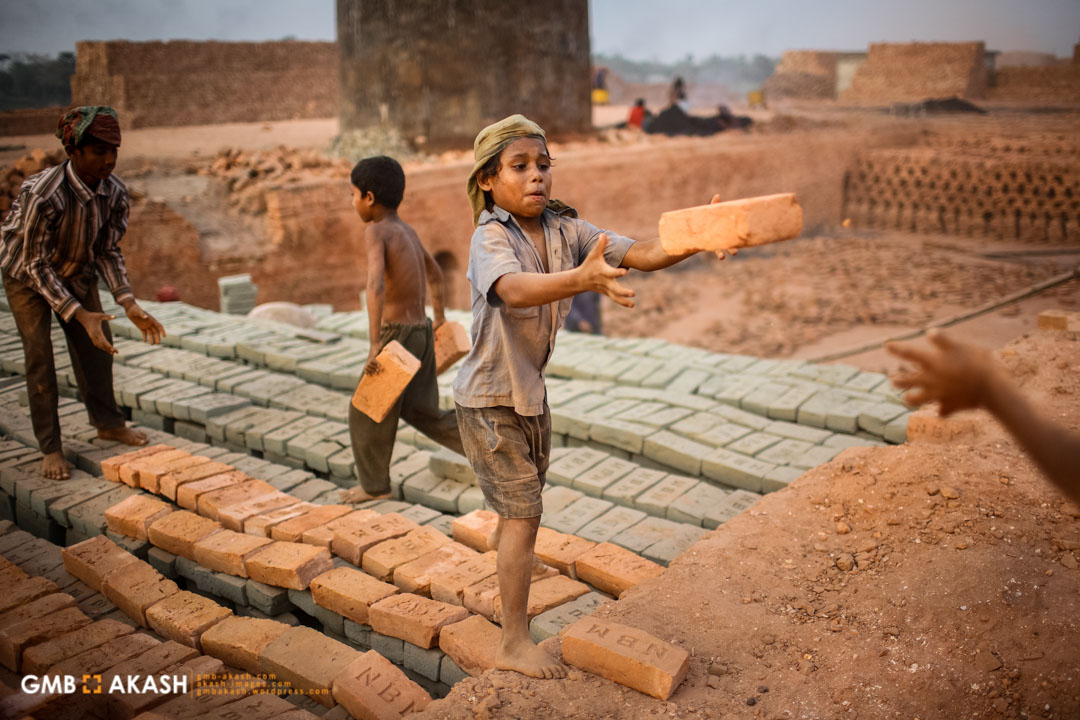
Rozina counts every day for six months running. Her family starts working long before the sun rises even when her small kids are remaining in the deepest sleep. She feels bad about calling them for work but like every day she cruelly has to do it. Everyone comes to have breakfast when the rice is still in the process of cooking. She rapidly waves her hand and lets the fire rise. During this time she quietly thinks about their time in the village that is far far away from this isolated brick field. She recalls her abandoned home and acutely feels a need to see the village sooner. But her urge quickly vanishes when she also remembers those days of starvation. Jalil sleeps in the bed that is made by gathering brick after brick. Rozina tried to hide those bricks by a flowery bed cover. Razina and Jalil have been married for ten years. Along with their five-year daughter and six year old son her family comes to work in this brick filed for six months in every year. 
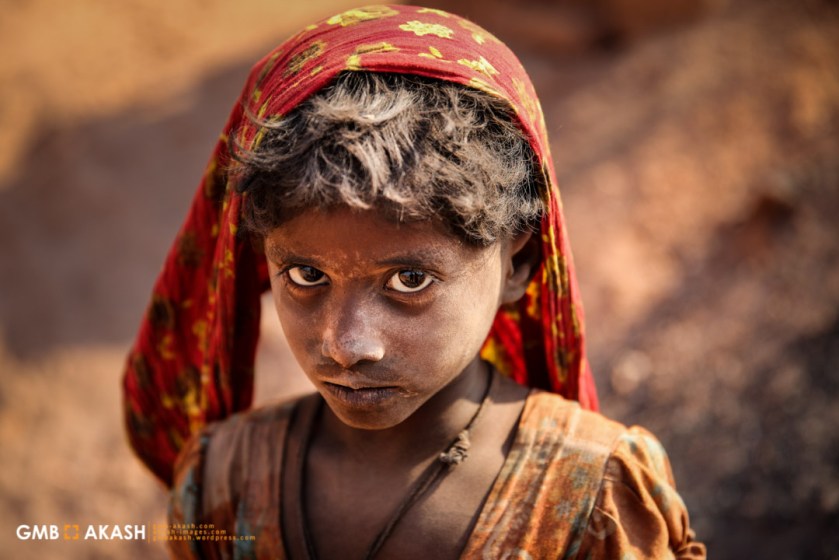
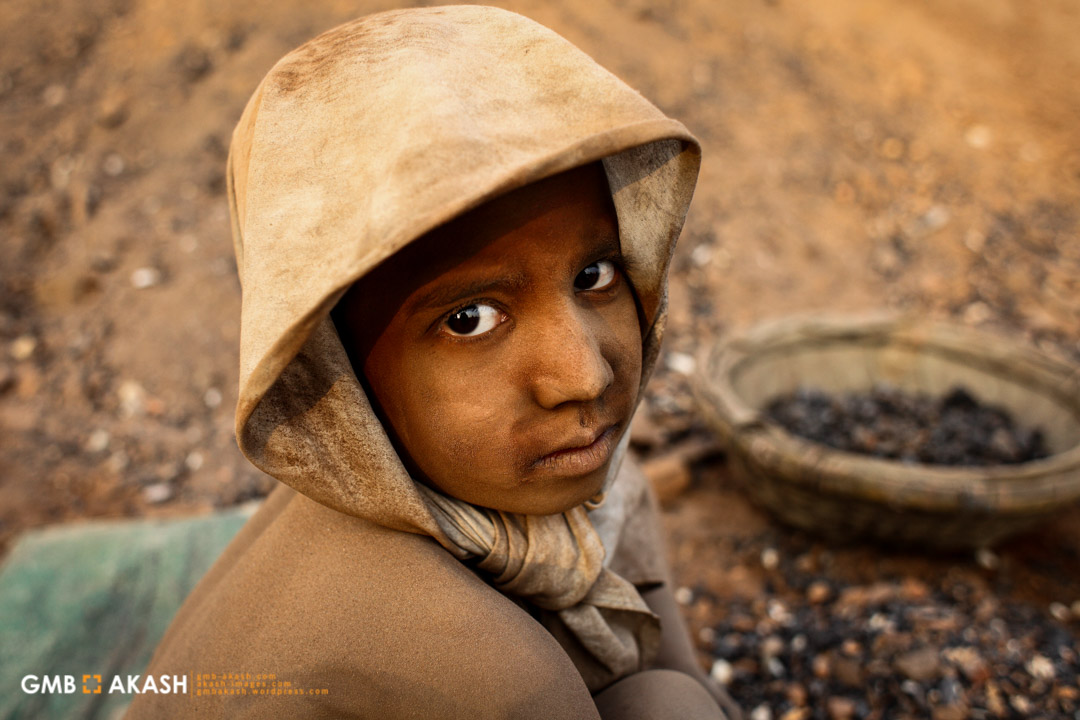
Five years old Sadia is working in the brick field for first time. Along her, seven members of the family are serving in the brick field to repay their loan. Sadia’s job is to dry 5000 bricks every day. For such seven days work she weekly gets 250 taka ($3). Sadia who once used to be naughty now hardly talk. She only smiles when after working she finishes collecting coal for her family.

akash (2)

akash (6)The houses that have been built by brick field owners are home to 100 brick field workers’ families. Just like Rozina they are living in hope of returning to their village one day. No one decorates their house. If a family buys any new item it goes into a box and it remain there until they get a final call to go back to their real home in the village. Rozina’s red bangles, her daughter’s new shoes, boy’ toy; everything goes into the trunk. She also keeps some precious things of her mother-in-law who dies last year from tuberculosis. Everyone says her mother-in-law died because she worked in the brick filed. Rozina does not believe it. Once the whole family strived for three days and no one died that time. Death is written by fate. This brick field is a way for them to survive; a way to feed themselves and their children.

akash (3)

akash (10)

akash (11)

akash (5)

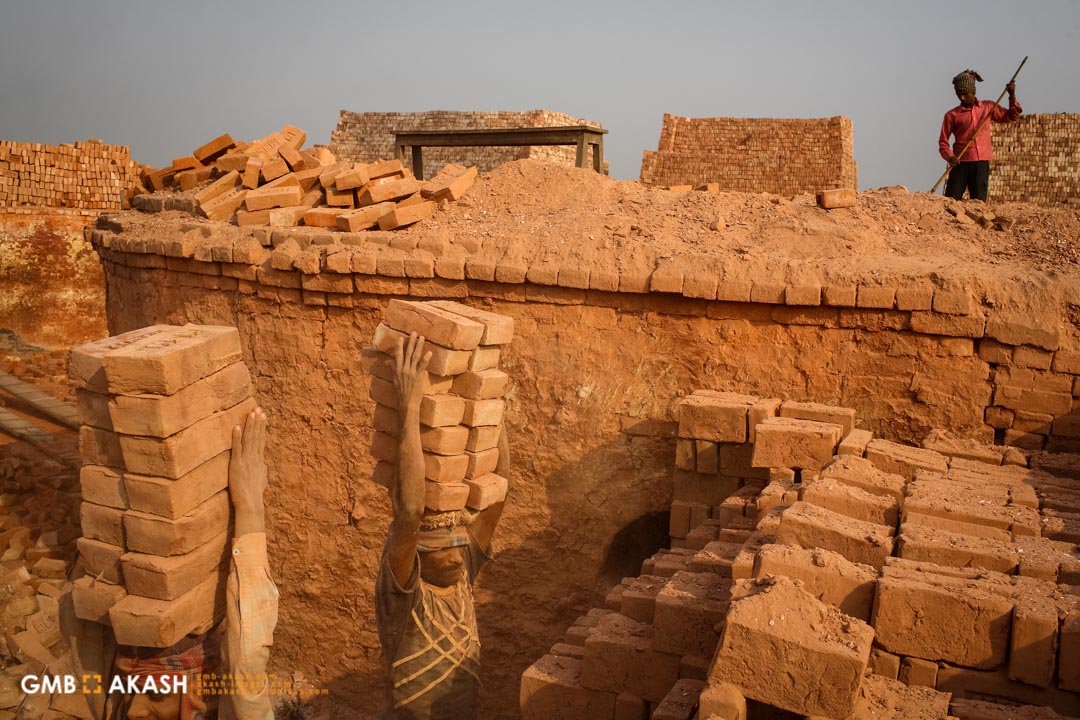
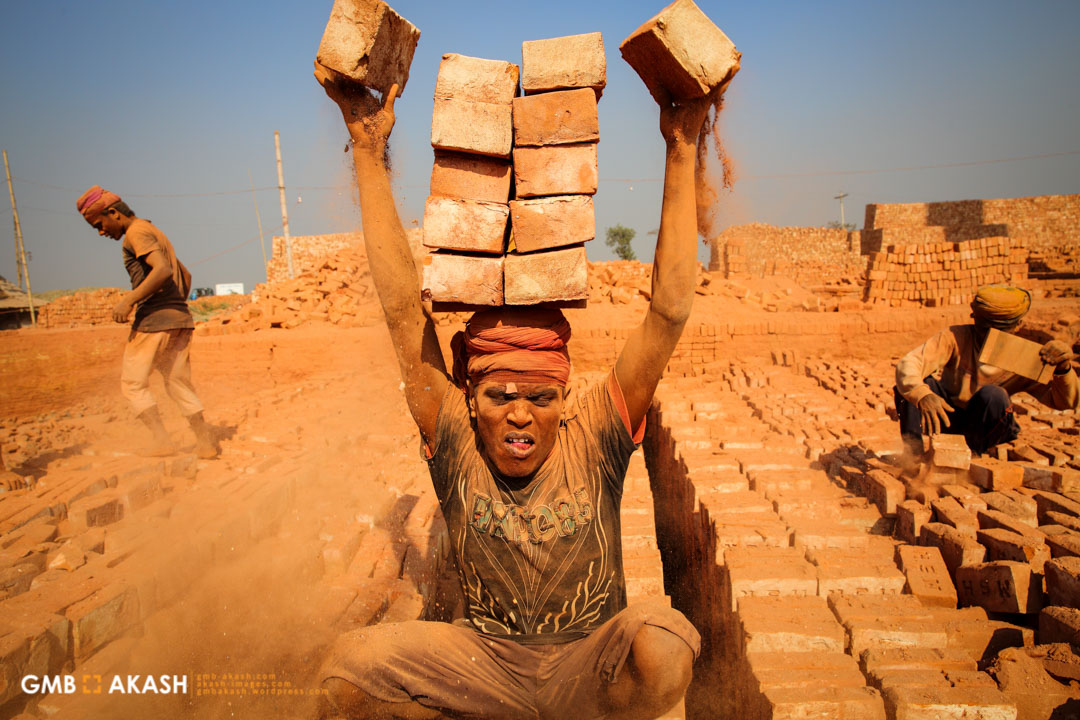
The sound of songs awakens the brick field locality. The brick field workers start working. They are used to listening to songs from their mobile phones. The rhythm of the songs motivates them to work. Rahmat Miah has been working in brick field for seventeen years. The day he started understanding life he found himself in the brick field. During childhood he used to help his father for transferring bricks or lining the piles. Till today he does not do any work other than working in brick field. After carrying 5000 bricks he can manage to earn 200 taka for doing the bazaar shopping for his family. Sometimes he could save a little amount after cutting all costs. But his body does not help him much. Every month he has to take leave for 4-5 days because of illness then he has to spend out of that precious savings for food or medicine.
akash (8)

akash (9)

akash (13)

akash (12)

Men, women and children everyone remains busy in the brick field. Sometimes when the sun goes up in the overhead a few older men or women fall to the ground. Then they get an hour break. They have to carry or shift or line up 5000-10000 bricks every day. However they loudly chat in a half an hour break. They smoke and talk about the economy and the politics. Women generally rest in silence and sometimes go to their quarters to do quick house chores. Children work continuously. It seems that working is some kind of important game. Small Minara who is just four years old collects coal from the brick field. Why does she collect coal? After a long silence she replies boldly, ‘This is my job’.

akash (7)

akash (20)

akash (23)

akash (15)

During the one hour lunch break they eat a lot. Three plates of rice and lentil is their daily lunch menu. Men who are living with their families eat with them; those who came alone to the brick field eat in groups of men. A few go to take a quick nap. This is a kind of moment when they will not speak or hear a single word. All are tired, very very tired. Life goes on; work starts again after break.

akash (28)

akash (16)

akash (29)

akash (14)

akash (26)

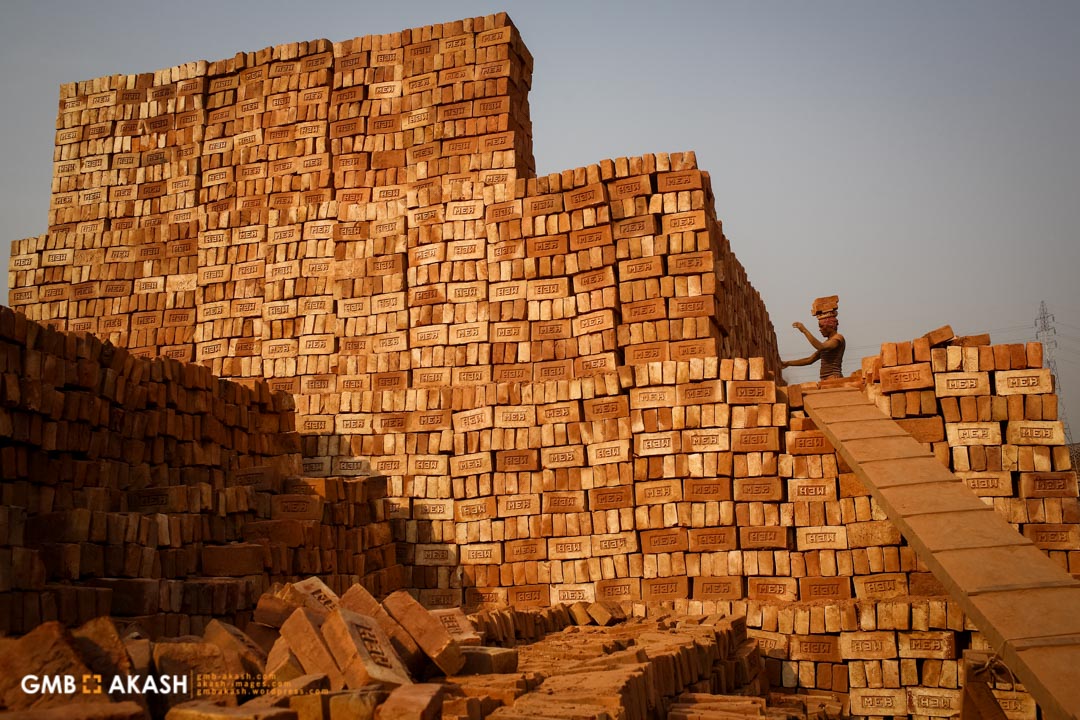
Smoke and ashes blow everywhere. Workers’ bodies turn black in smoke and ashes and their feet turn black like coal. Still they continue to work in a dreamless brick field. In the middle of this Rozina dreams to go back to her village. Rahmat tries hard to save a few pennies, the children continue to collect coal. Very Far from the town the workers of the brick field continue to work to build our urban world.

akash (27)

akash (22)

akash (24)

‘Chain of Love’

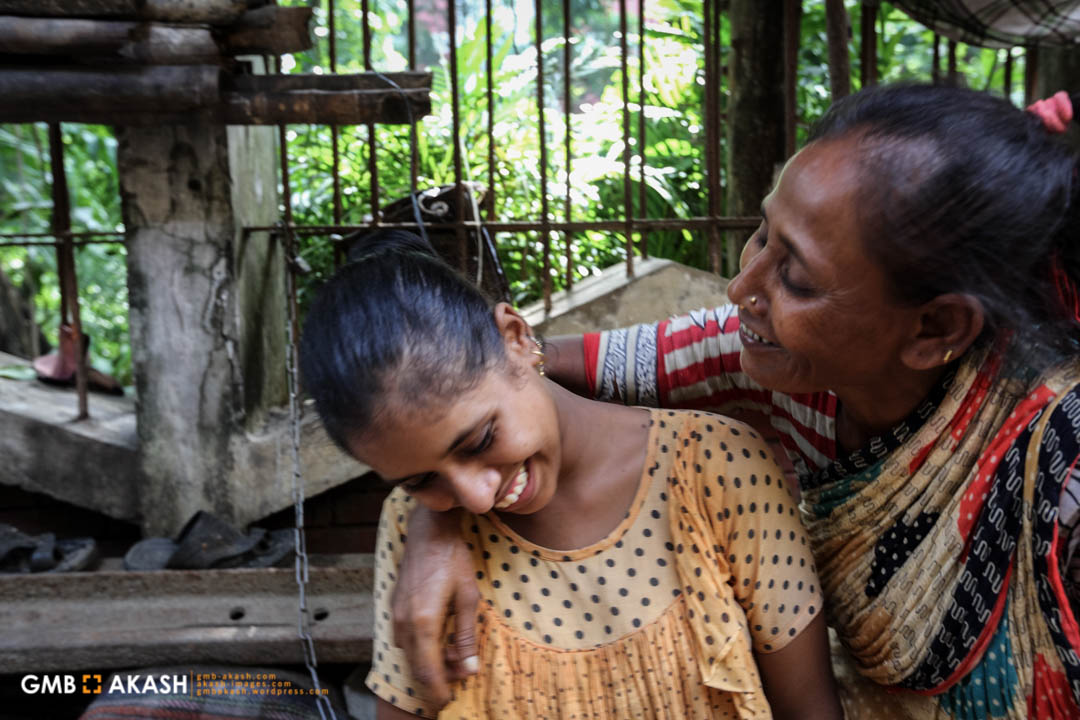
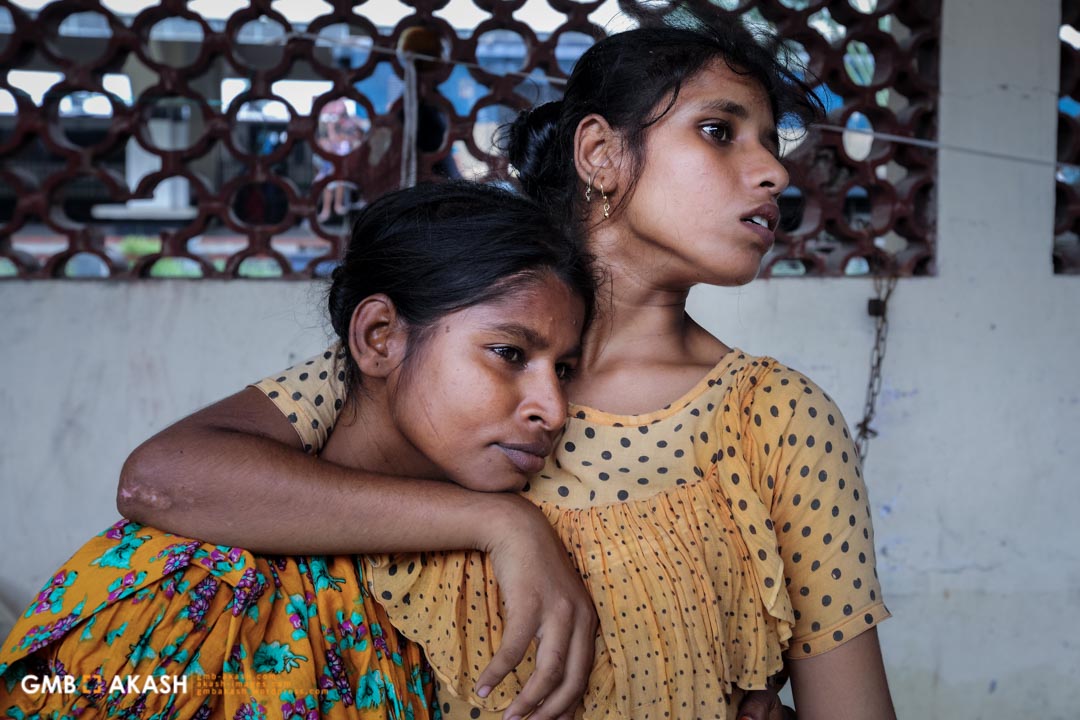
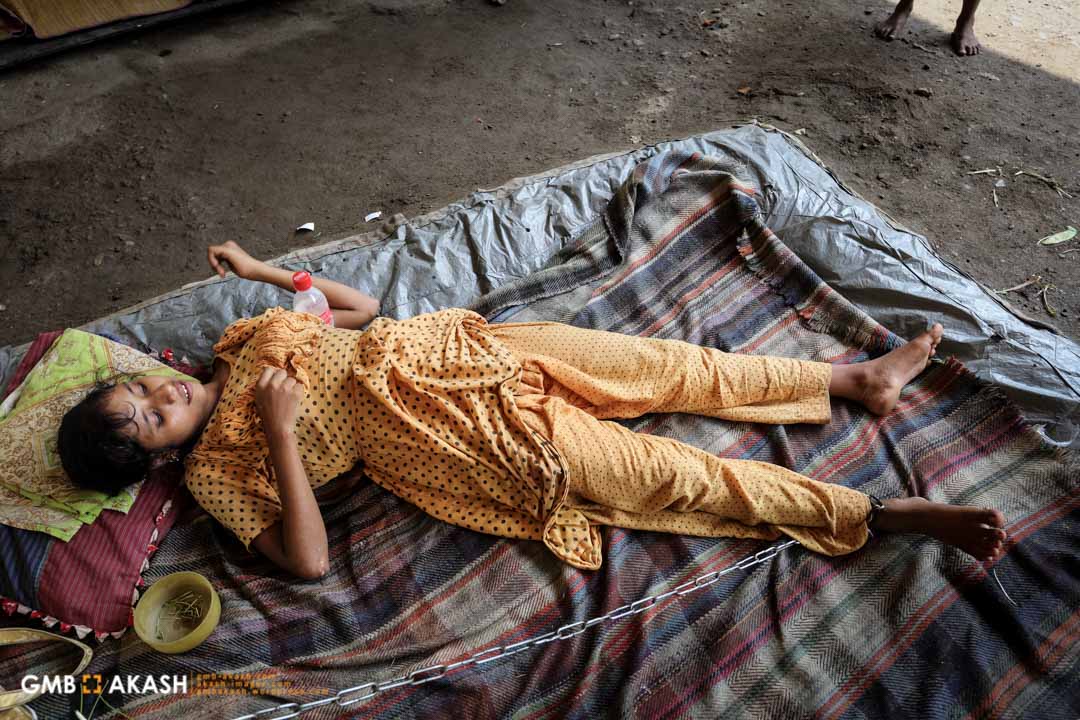
Life was never easy for Jarina Begum. During childhood she lost her parents in the Kamplapur railway station. She had no memory of her childhood. Lonely Jarina’s struggle never takes a break. After living here and there at the age of twelve, people from her locality gave her a marriage with Ismail. She knew nothing about family life though she started to dream. A few years went well. This was the best time of her life. But when her only son died at the age of twelve her family was shattered. Her husband got involved in drugs. Her happiness lost in darkness. She again gets back her hope during her second pregnancy. ‘Mali’ arrives as an angel in her life. She started dreaming about having a normal life again. But fate was not on Jarina’s side. She discovered when Mali was two years old that she is mentally disabled. Also when Mali was two Jarina’s husband died from taking  excess drugs. Till today ‘Disabled Mali’ is the reason to live Jarina’s Life.

Chain of affection (1)

Chain of affection (12)

Chain of affection (9)

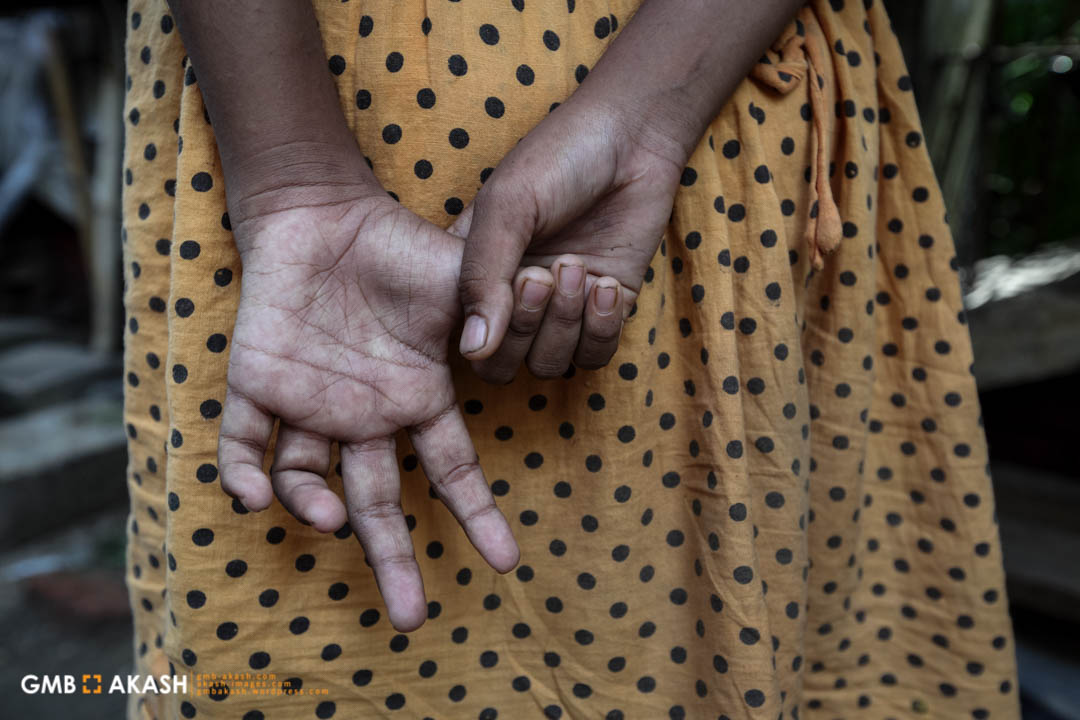
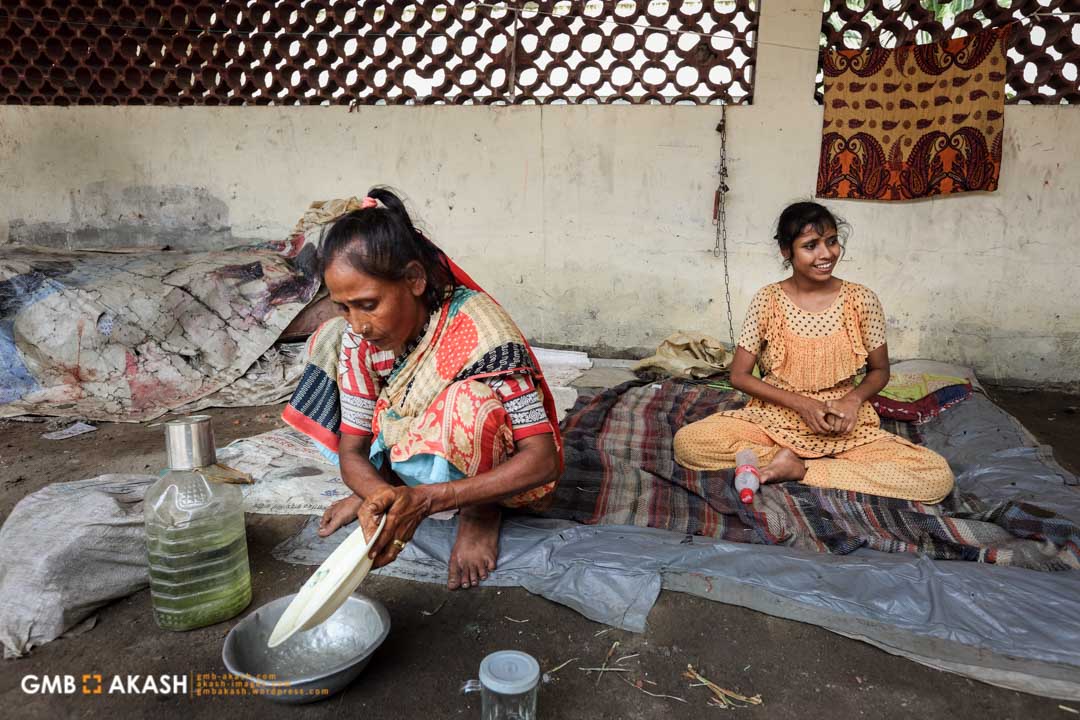
Now Jarina is only Mali’s maa. Mali behaves like a child at the age of thirteen. She has very slow mental growth. Jarina has to connect her to a chain so that she cannot flee alone while her mother went to work. She was lost twice while Jarina went to work. The tragedy of Jarina losing her own parents is like a nightmare for her. She does not want to lose Mali again. After finding her, she found a way to keep Mali at their place. She chained her with a long chain. She goes to work in the morning and works madly while feeling the tension of Mali. She collects paper from the road. She carefully crosses the road everyday as she knows if she died there is no one for Mali. With cloudy eyes Jarina said, ‘I put a chain on her leg and put a stone in my heart’. While she was saying this, Mali untied her pajama bottoms and squatted to do her toilet. Jarina swiftly wnt there and covered her daughter with a cloth. Mali is Jarina’s world.

Chain of affection (5)

Chain of affection (7)

Chain of affection (3)

Jarina dreams one day Mali will be okay. Sometimes she gets upset thinking, if Mali could be like other girls, she could help her with earning a living; she could understand how hard it is to work feverishly. But Mali understands nothing. She can only feel the touch of love, the smile of affection. When Jarina ties her hair Mali gives kisses on her mother’s cheeks. When Jarina is feeding her, Mali takes some rice and puts in her mother’s mouth. They have nothing; no home, and no furniture and no utensils with which to cook. This mother and daughter have only love that is sheltering them so far.

Chain of affection (10)

Chain of affection (11)

Chain of affection (6)

IMG_4684

As street people, Jarina and Mali have nothing. They only possess a few household materials that Jarina ties up and hides in a neighbor’s place because Mali cannot take care of anything while her mother goes to work. The neighbors of Jarina help her when she goes to work. They look out for Jarina if someone comes to disturb disabled Mali. The neighbor Kalpona said, ‘There is no one for this mother and daughter. They are living for each other. We see no one like Jarina who is doing this much for Mali. We pray for their happiness.’

Chain of affection (14)

Chain of affection (13)

Chain of affection (8)

Jarina Begum has now only one dream in life: to educate Mali in order to give her a normal life and to see her as an able person. Jarina pointed at the pen and drawing paper of Mali and said, ‘If there is any heartfelt person who could admit her to a school for the disabled then I can I die in peace’. While embracing Mali, Jarina lastly said, ‘Pray for us so that we, the mother and daughter, can die together. Why is life so painful?’

Chain of affection (2)

Chain of affection (4)

Chain of affection (15)

Chain of affection (16)

‘An Unflinching Eye : Introducing Street Photography’

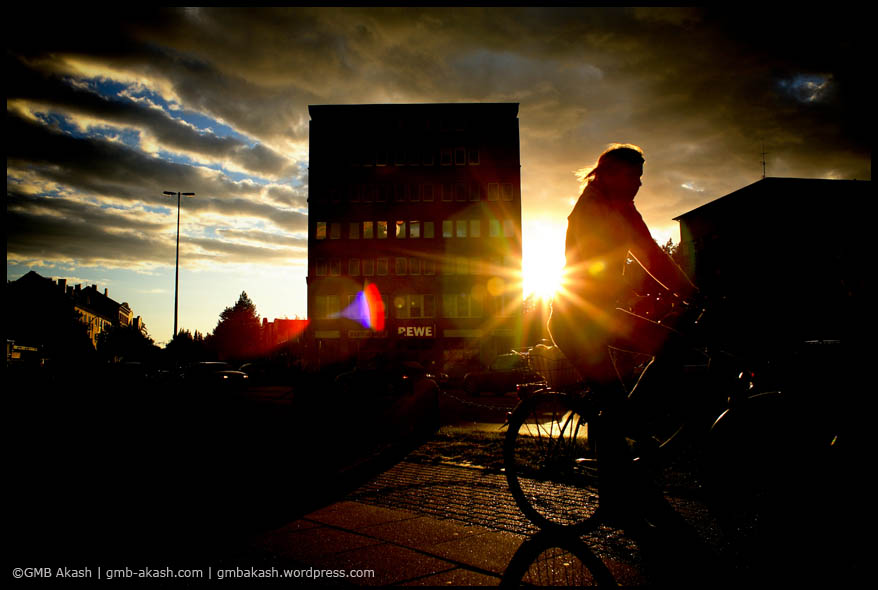
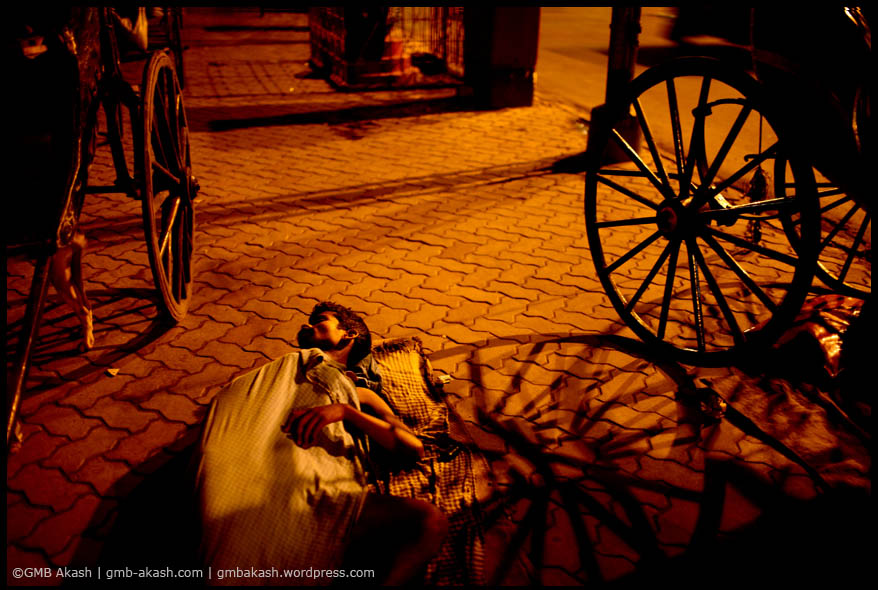
‘Sometime a crow visits my balcony and its harsh calling wakes me up. Those mornings often turned me down. In such meaningless morning I just pack my bag, give myself a break and walk out in a nameless street. My endless journey welcomes me ahead and I picked memories one by another from my unknown destination. Capturing a definition of an indefinite street is street photography to me’- GMB Akash

street_akash (1)

street_akash (4)

Stop being bookish, follow your own theory’

‘Make yourself comfortable’ or ‘feel being at home’ these advices are too bookish to me. In practical, my heartbeat goes up and my knees shake a bit when I stand in a place that I want to express just accurately the way I am encountering. When a cat suddenly popped up with an old woman and their astonishing-frightened-funny stunt gives me a command in my head ‘click-click-click’. ‘But what I shoot!’ I missed a second and that took out all. Yes, this is the biggest challenge that street photography offers you. You have to seize the moment before your cerebrum read it. So the question is, ‘are you afraid being in street’? I believe when a person become photographer he/she leave ‘afraid/anxiety’ behind. I rather call it hesitation/nervousness and insecurity. When you jump into the street by carrying your camera you already killed your 50% fear.  Now it is your nervousness that holds you back and just after clicking your first shot you are ready to rock in the road.

street_akash (10)

‘A photographer next door image’ or ‘an invisible photographer image’?

In the middle of a big crowd, surrounded by so many people different than me sometime I become unusual. And when people started noticing me by raising their eye brows then my big smile helps me out being abnormal. Yes, as a photographer it is very important that you have a familiar face with a universal smile at least an ability that tells people you are reliable. When you learn to merge in the ground then surprisingly you will see that you learn the method of being there but unseen by people. It depends on you either you want to earn a ‘photographer next door image’ or an  ‘invisible photographer image’, pick one that serve your intention and that helps you to shot well.

street_akash (2)

Get the hint

The street that I often visit is not only familiar by me but I am also familiar by it. A common place I visit has a triangle turn where then comes the street corner; there I usually followed by one or two street dogs. In the beginning it was not the same. In the very first day they suspect me and even after touching them they suspiciously moves with me whole day. Now when I appear in the street they wave their tail and follow me obediently. Inhabitants know well that I am no longer a stranger. So whenever you are new to a place make a relation, get a hint or balance yourself repeating something people can understand that photography is your passion not any venture. When you are totally in a new place and you might never get another chance to be there even then try to find a mutual intimation. Trust me your understanding and relation will show in the picture you will take.

street_akash (25)

Enjoy discovering yourself

Every street is different, people belong to the street is different, smell is different, color, texture, light all are different. Indifferent is you and your camera. Discover a different you in every different street is your voyage. The biggest challenge is to discover the unique thread by this common with your third eye. For me the photograph is only a wow – when I take a picture of the street and after showing it to the curious inhabitant they express, ‘when it happened? Does it really look alike?!’ when people laugh, shout, surprise and question then I get the picture is happy to be about. It’s a treat for yourself when seating at your lab you suddenly bumped in a folder where you found the expression of a European shopkeeper is the same with an Asia shopkeeper just difference is in place and circumstance. Discovering this similarity is way more interesting than finding differences. Enjoy discovering yourself in everything that is the wow factor will keep you motivated in long run.

street_akash (7)

Inspiring trigger

Try to answer yourself why you are fascinated about street photography. What will it bring to you? Why are you passionate to be in street? Are you stopped yourself because there is no fame or name after continuing do it! Find your inspiring trigger and forget about expectation. Keep yourself motivated, ignore critiques. Find an inspiring space which appreciates that what you are doing. It can be a friend circle; it can be your blog or your website or just your facebook. It is very important to be inspired to continue your work that you are doing.

street_akash (18)

What actually Street Photography gives you?

–          Street Photography helps to be a good photographer. Street photography has a trial and error method that helps you to enrich yourself as a photographer though whatever your field is.

–          It brings you the utmost courage to go to that much close to the people that someone allows to welcome a stranger. Its helps you to mix with unknown people and to know about their attitude towards you

–          It bounds you to take challenge. Finding a way of a maples road is aspiration of street photography.

–          It will help you professionally to gain new concept, unconventional idea and will help to create your masterpiece.

–          People said in street photography 99% are wasted. I said street photography teaches you photography 99% and rest 1% you have to gain.

street_akash (24)

street_akash (21)

In Patan Darbar squre the woman is feeding pigeons

How to do good out in the street?

–          What you are carrying who cares, carry that much you can effort, just remember you have to walk a lot and you cannot annoy people by your baggage.

–          Street photography helps to stay focused but you have to make the connection. Smile a lot and try to make fun with people you are meeting.

–          Make street photography one of your favorite time pass. Discovering new things everyday is like surfing in a new you.

–          Street photography is like swimming. I am not kidding! When you learn to swim (photographing) you will desire to go deeper.

–          Learn to handle yourself in the street. It is you and your personality that will help people to look at your camera naturally.

street_akash (15)

street_akash (16)

street_akash (12)

–          Until you are not enjoying your walk your camera or your mind will not take your demand.

–          Take a company or a friend with you at the beginning to break the ice. Shooting alone is way too enjoyable when you know how to treat yourself best in a lone journey. Do not go out with more than three friends then shooting will be secondary.

–          Keep wakening your third eye

–          Look at things in the streets like you are watching a movie. Find the characters, drama, action, humor and romance.

–          Carry the camera that follows your command. Do not juggle with new equipments in the street without run it previously.

Daily life in Kathmandu, Nepal. 2006street_akash (20)

street_akash (19)

In the journey of photograph limitless experiences remain uncounted. Bad news won’t keep navigators from the open seas. The street photographer who loves the work he/she is doing will never stop. The courage of such ONE gives birth of His/her kind of street photography.

Instructor :

I teach street photography in The compelling Image: The Compelling Image: Online-Interactive Courses in Photography and Multimedia Storytelling

If you are interested to join in my street photography course sign in: Street Photography

street_akash (28)

street_akash (6)

‘Survivors’ Part II

“My photo book ‘Survivors’ is not only important presentation of my 10 years works. It is significant to me in many ways. Surviving in a poor country — facing adversity daily — is akin to a lifetime of tragedy. So in a number of ways, the images presented on these pages are my own experiences, too. My journeys connect me to the many characters. Sometimes I had to run, take a ride on the roof of a moving train, sleep on a flooded floor and spend many hours walking the maze of avenues through sprawling city slums. It is the reaching of my protagonists, the welcome into their homes and their lives, that makes my work worthwhile.

And if mine is the hand that blocks the scorching sun from their eyes — bringing shade for just a single minute, then there’s value in the work I do. I am touched that people started valuing my small step. Yes, one never can complete one’s quest for serving for humanity but I am trying. While photography is a big task but beside it is my willingness to serve these people whom I photograph which is more challenging.

I am gifting business/source of income to each family I am able to give from my book ‘Survivors’. Finding people from the book whom I captured 5-10 years ago, talking/sharing ideas with them, finding the right business, even in some cases doing the business myself for few days, educating them, monitoring them become toughest than photography. But I believe, every amazing achievement starts with an impossibility. Now after seeing these happy families of Survivors, I realize, when many little people in many small places do many small things, they can change the face of the world” – GMB Akash

survivors 1

Over the course of the last decade, I have built a collection of photographs depicting the wise, resigned, sad and sometimes bewildered faces of children, sex workers, climate change survivors and many others who share the “struggle” day-in and day-out. And although the circumstances of many of the people I portray may be grim, as individual they are people of remarkable character. And it is the beauty of such people and the human soul that remains when nearly all else is gone. This beauty I strive to capture in the photographs I take.

This post is tribute to those ‘Survivors’ who sifted their life with my small gift and make a bench mark to rest of the people by becoming example to their community or locality.

survivors (1)

Sajib – a child labourer is busy with his immense workload. These children are deprived from almost all human rights, dedicating the entire childhood towards supporting their families in need. Heavy workloads, prone towards injuries and discrimination are common to them all.

I took picture of Sajib in an aluminum pot factory four years ago. Sajib’s (14) mother Salma Begum’s (35) working life started when she was 15 years old. 10 taka (1 USD =80 Taka) was her first salary. She has one daughter and only one son Sajib. She might never send Sajib to work in silver factory if her income can generate three times food for her two children. She came to her slum 26 years ago. She earns 500 taka per week as well Sajib earns 400 taka per week. They have to pay 1400 tk rent of only one room in which she, her husband sleeps along their children.

Her husband has affairs with other ladies and spends his whole income either for women or for addiction. She cannot let him go as he is her children’s father. Her daughter is very good student. She always do top in the class. But Sajib or Salma Begum no one can give her fees, books, dairy or even Tiffin. Sajib sometime manages to do overtime and gives his extra salary to his sister to continue her education. I spotted Sajib and get a picture of him three years ago in silver cooking factory when he was 11 years old.
Through the ‘Survivors’ project I find him out and get the insight of his family. I understand Salma Begum is one who can help the situation, if I lend my hand to her by project ‘Survivors’. She has previous experience of selling bed sheet and she earns enough that time. She was just an employee of a Khala (aunt) who has the capital. She saw khala earns 200-300 taka daily while she sells everything. But end of the day she got 50 taka as her labor cost. She leaves the job as she has no capital and the income was low. Now she wants to do that business again by the assistance of expertise of one of her sister. She wants to sell Kamiz (women dress) and Shari to door to door and later in a shop. The only thing is she needs capital. I trusted on her idea and let her do the business and go to buy clothes with her. Her plan was she will buy cloths with her full capital then with the selling profit she will buy more and again move for selling.


Survivors (9)


Survivors (3)


Survivors (4)

Her planned worked. She got good customer in her locality and other areas who willingly buy cloths seating at home. She do profit less, sells more thus she gains customer loyalty and this uneducated lady now is a successful seller. It’s been nearly year she is doing her business and her son Sajib is helping her. She sends Sajib to Brac School but he could not able to read or write and feels shame to do study with juniors. Salma Begum decided to involve Sajib more in her business and admit him in a technical school beyond conventional. She bought furniture for her small house and her only daughter now goes to teacher for private tuitions.

She is more than happy with the fact that still woman like her is capable to earn a dream with dignity. And my happiness? Seeing this family, I feel simply proud. 

Survivors (12)

Survivors (15)

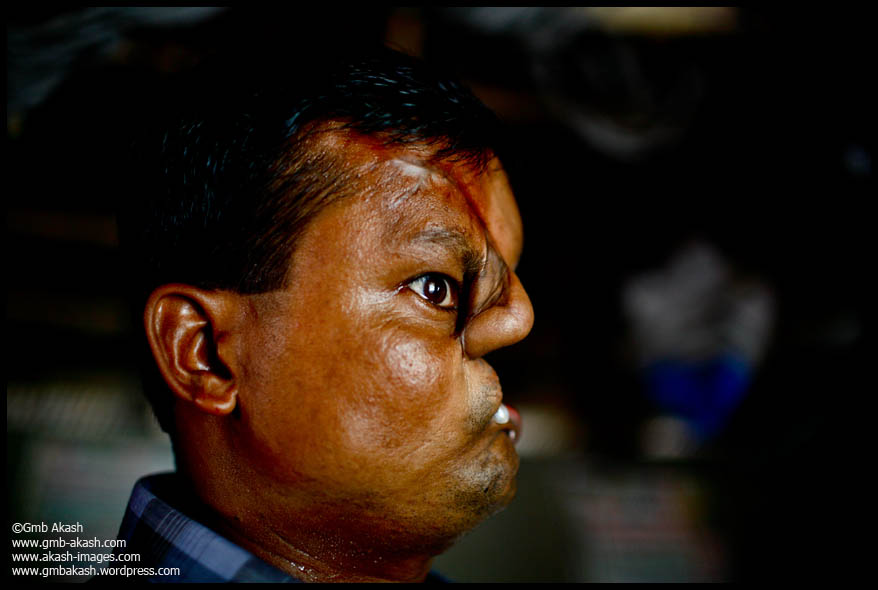
31 year old Hashmoth lost half of his face in a tiger attack in 1995. The attack was on his first day out fishing. He was sleeping in the boat when the tiger attacked. Though he survived it, the damage to his face was such that no one from his village would come near him. His parents forced a girl to marry him. At the initial days of his marital life, he would not allow his wife to look at him. The region is home to approximately 500 Bengal tigers, one of the largest single populations of tigers in one area. These tigers are well-known for the substantial number of people they kill; estimates range from 50-250 people per year. Satkhira, Bangladesh

Survivors (17)

By the project “survivors” I planned to help him. I ask them what business will be easy to do for them or what income source can be easily maintain by Hashmoth. He & his wife came to a decision that they will sell fish in market. For this purpose they need capital. I go to their near market with them, saw Hashmoth’s capability of selling fish by a trial. Then we went with Hashmoth to see how difficult fish business for him is. As my method of helping is not giving money in hand, so I assign a volunteer who will assist them to do business in first one month. Already I visited twice but still the place is far from the city, so I keep my faith alive that they will overcome all obstacles. 


Survivors (13)

And they did. Along help of her brave wife Hasmoth is selling fish in the market and spends his profit for daily expenditure of their family. His wife manages to save little from their profit. Hashmoth goes to sell fishes at early morning and at evening. Rest of the time either he takes rest. Thus Hashmoth is able to stop himself from begging door to door and become a real survivor in the race of life.

Survivors (14)

“Several times I have been severely broken heart, injured or illnesses have torn me down. Nevertheless I continue working because of my strong belief that my pictures can make a difference. I learn, the wound of today is the power of tomorrow. And ‘Survivors’ proved me that no matter what happens in life still life is precious, each moment deserves celebration

survivors (2)

“I was searching for ‘Survivors’ to help their families. It was a long journey to find each and every face after ten years later.”

A quote of Helen Keller is a big inspiration for me in this journey which I want to share with you all:

“I am only one, but still I am one. I cannot do everything, but still I can do something; and because I cannot do everything, I will not refuse to do something that I can do.”

– GMB Akash’


‘Inside the Cage’


Mental Hospital (24) Mental Hospital (2)

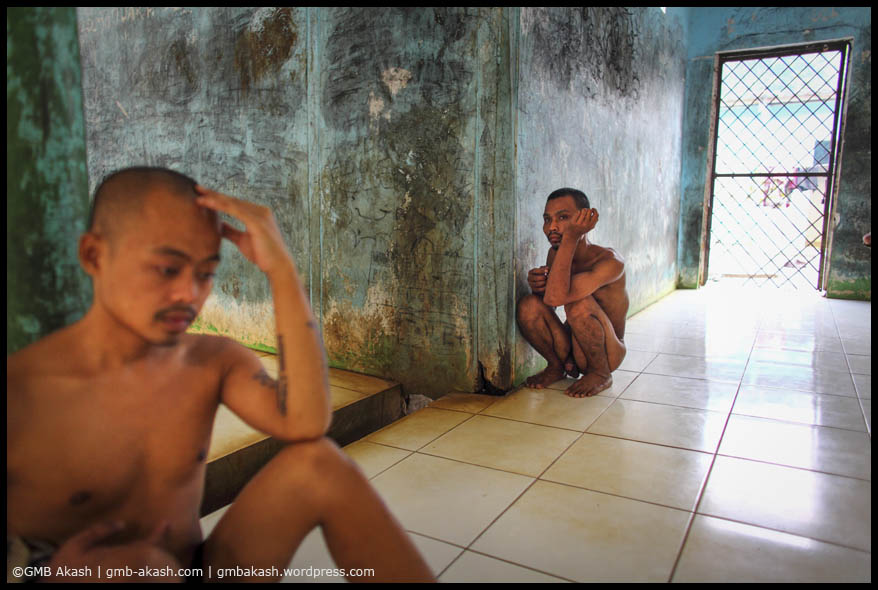
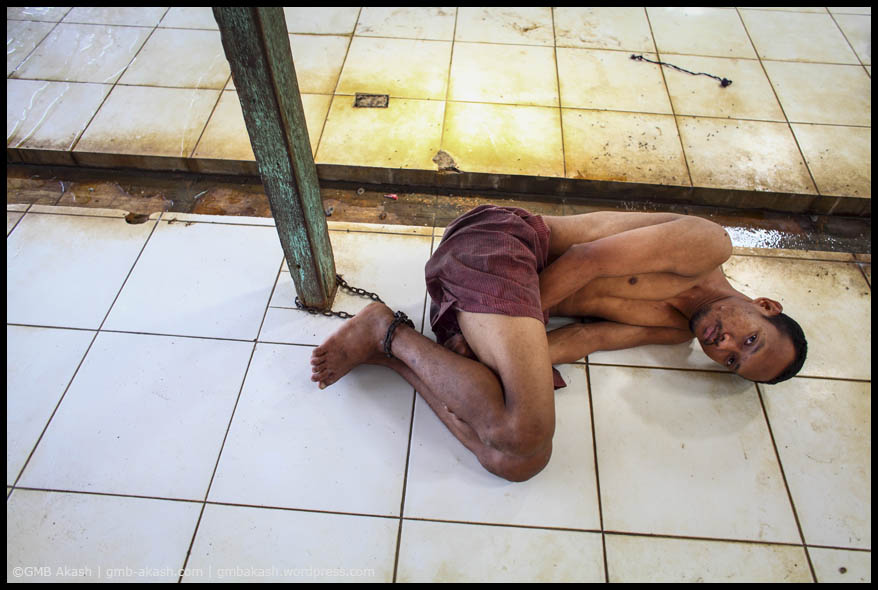
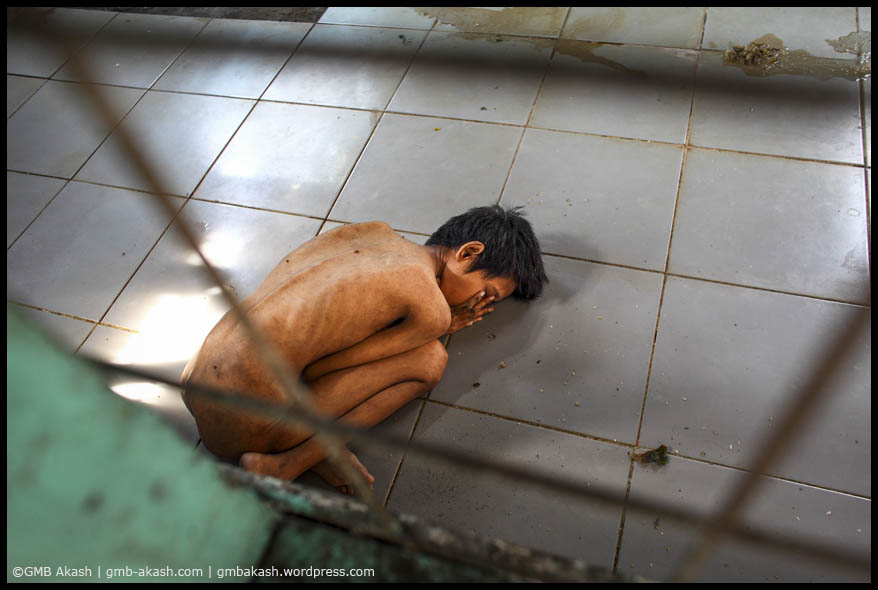
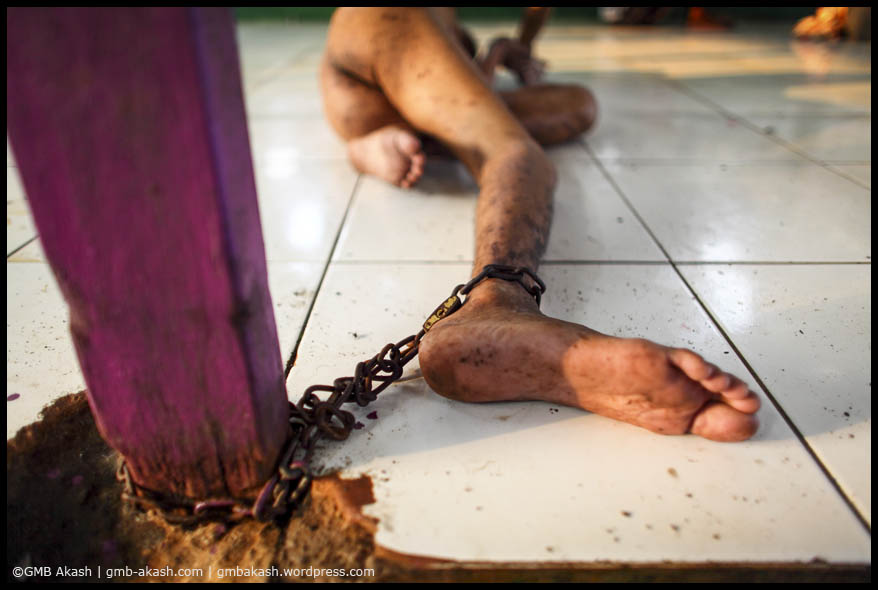
I inspect them with wondering mind. Standing in the middle of a place that is difficult to describe with adjective is impossible. The guard opens the door and bumped me in. Before I realize the guard was disappeared and I found myself in the cage.  A whistle breaks my nervousness and I eyed over a young face. He mocked at me and as soon as I take my first step he vanished with sound of his chain fitted in his leg. In a meter distance from me a naked man seating beside the drain. A few meters away some contorting their emaciated bodies as much as the shackles will allow. Others are setting comatose. The 1,000-square-meter center is divided into two iron-fenced dormitories — one for men and one for women. Confined by the length of their chain, the wooden stock in which they are trapped, or the makeshift cage in which they are imprisoned, they are forced to eat, sleep and defecate in the same spot.

Mental Hospital (12)

Mental Hospital (16)

Mental Hospital (34)

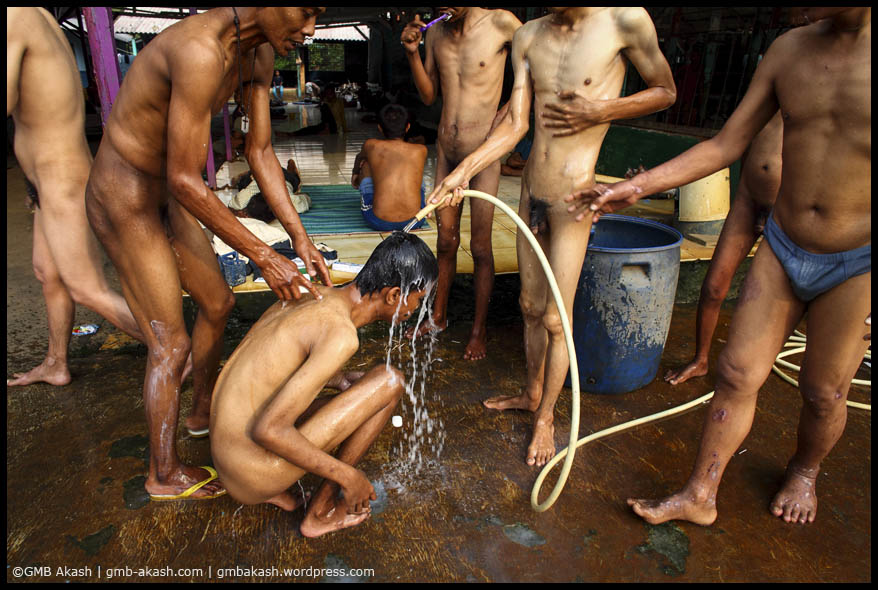
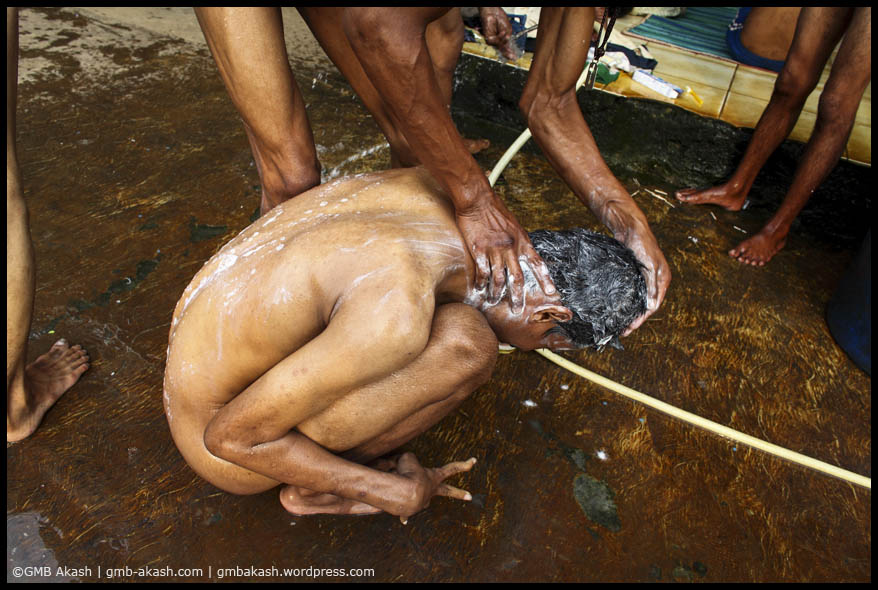
I found the boy mocked me at the door again in water area. A naked boy, thin with protruding ribs, turns his head down as he is sprayed with a water hose and getting bath by the help of center’s stuffs. But this time he didn’t even notice me.

Mental Hospital (21)

Mental Hospital (22)

I continue motivating myself not to lose my mind. As a human being it is intolerable to look into faces which have no more past, no more future in fact no more present even. It’s seems odd to see how patients are living in iron-fenced dormitory and how many are chained but this is somehow logical when the centre’s assistant make me understand later. They do it for patient’s attacking behaviors. Many of them hurt others as well themselves by hitting head in the floor or wood. In the beginning when their treatment starts with the chain they slowly become clam and it helps later for their treatment.

Mental Hospital (14)

Mental Hospital (7)

Mental Hospital (31)

A man suddenly appears in front of me pointing his finger he is calling me ‘Hello Mr. Teddy Smith, how are you?’ for a second I feel he is completely fine, a normal person like me. Then I saw his chain. His words were echoing in my ears. With another turn I noticed, I am wearing a T-shirt with a print in it “Teddy Smith”.  

Mental Hospital (6)

Mental Hospital (18)

Mental Hospital (29)

Mental Hospital (25)

Mental Hospital (26)

I keep looking at patients lying in the floors. Confined by the length of the chain a patient is lying comatose. Most of the patients have brought by police or NGO’s as they were spending their lives in on the streets for lack of ignorance family to the lack of psychiatric services for the poor. In lunch time most of the patients eats boiled rice and usually there is not much chatter between them. They need at least 3 tons of rice a month and tons of vegetables, but the center hardly can manage the food for enough funds.

Mental Hospital (8)

Mental Hospital (9)

Mental Hospital (10)

Mental Hospital (15)

My visiting time ends but the guard forgets about me. I shivered in fear for a moment that how I will pass more hours in these iron-fenced dormitories. I keep listening someone is crying quietly, someone is reciting Quran’s one phase repeatedly; someone is singing a song with an unusual tune. I waited and imagine how life has taken them in such cage. How every day the battle of living gives birth of insanity. There is a small portion of psyche living inside all of us. The difference is people who lost themselves fully only treated as psychiatric patients.

While I was fighting inside, I heard footsteps of the guard. I hurried to go out and listened ‘Mr. Teddy Smith, Bye, Bye’.

Mental Hospital (35)

Mental Hospital (30)

Mental Hospital (28)

Mental Hospital (19)

The overwhelming stink will welcome visitors in the entrance of Yasan Galuh rehabilitation centre for the mentally ill, outside Jakarta. Created in 1994, The Yayasan Galuh rehabilitation center is a foundation that cares for mentally-ill individuals who have been debarred from the Indonesian society and who have no access to medical care due to their limited financial resources. In Yayasan Galuh, more than 260 patients spend their days on hard tiled floors hooped by open sewers. Patients are often chained, caged, and naked. The screaming and weeping is constant. Despite the awful conditions, here facility staffs see themselves as healers giving patients – many who have been left at Yayasan Galuh by family members – ancient and effective therapies. Most of Yayasan Galuh’s 260 current patients were referred to them by the police, NGOs or the patients’ families. Tens of thousands of mentally ill Indonesians bear an unimaginable torment, left to battle the demons of severe psychiatric disorders while chained and shackled for years on end. The 1,000-square-meter center is divided into two iron-fenced dormitories — one for men and one for women. There are hundreds of mentally ill people shackled for years, even decades, by poor and clueless families who believe they have no alternative. Indonesia has a population of 240 million, and only 500 psychiatrists. The resulting treatment gap leads many to rely on traditional herbal treatments and prayer to alleviate mental illness commonly thought to be caused by dark spirits. Almost 750,000 Indonesians with mental illness get no medical treatment throughout the country.

Mental Hospital (17)