
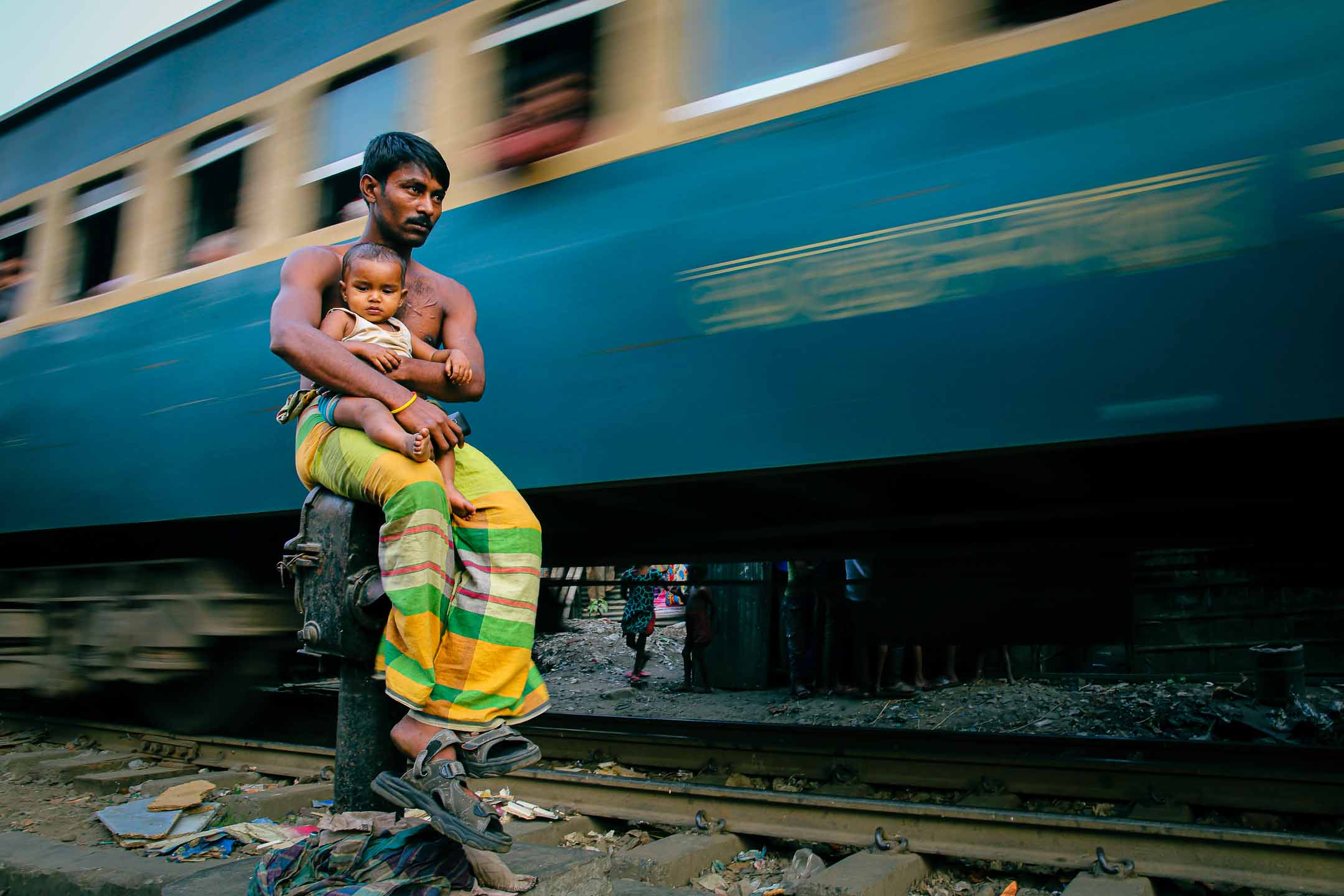

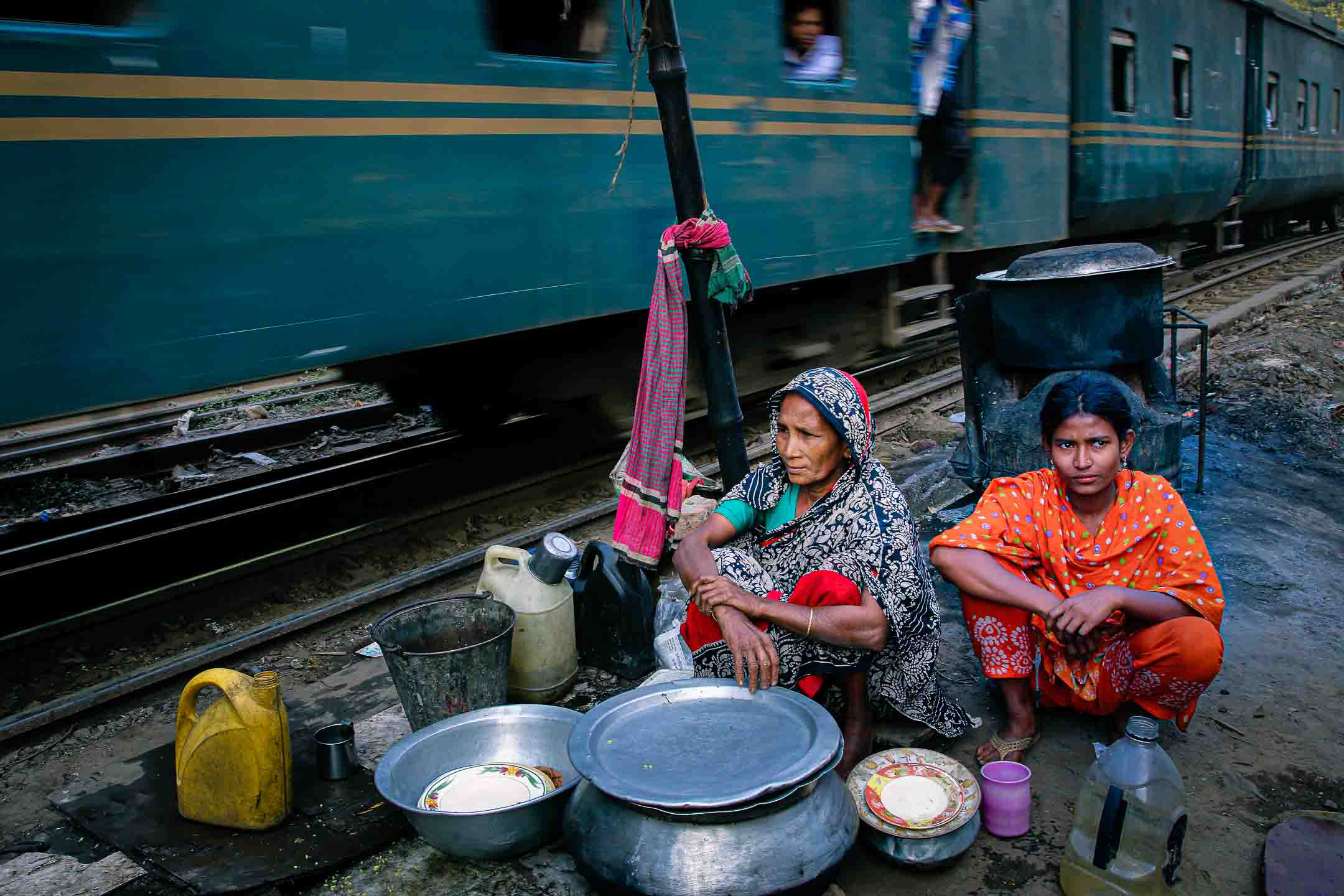
Suddenly the inter-city train appears rushing at them on the tracks with its deadly noise which is the only thing that alerts the people. The scene includes a train that seems to be traveling as if to arrive at the slum but then ruthlessly goes right through it. It watches and touches both sides of the slum’s tin-roofs.

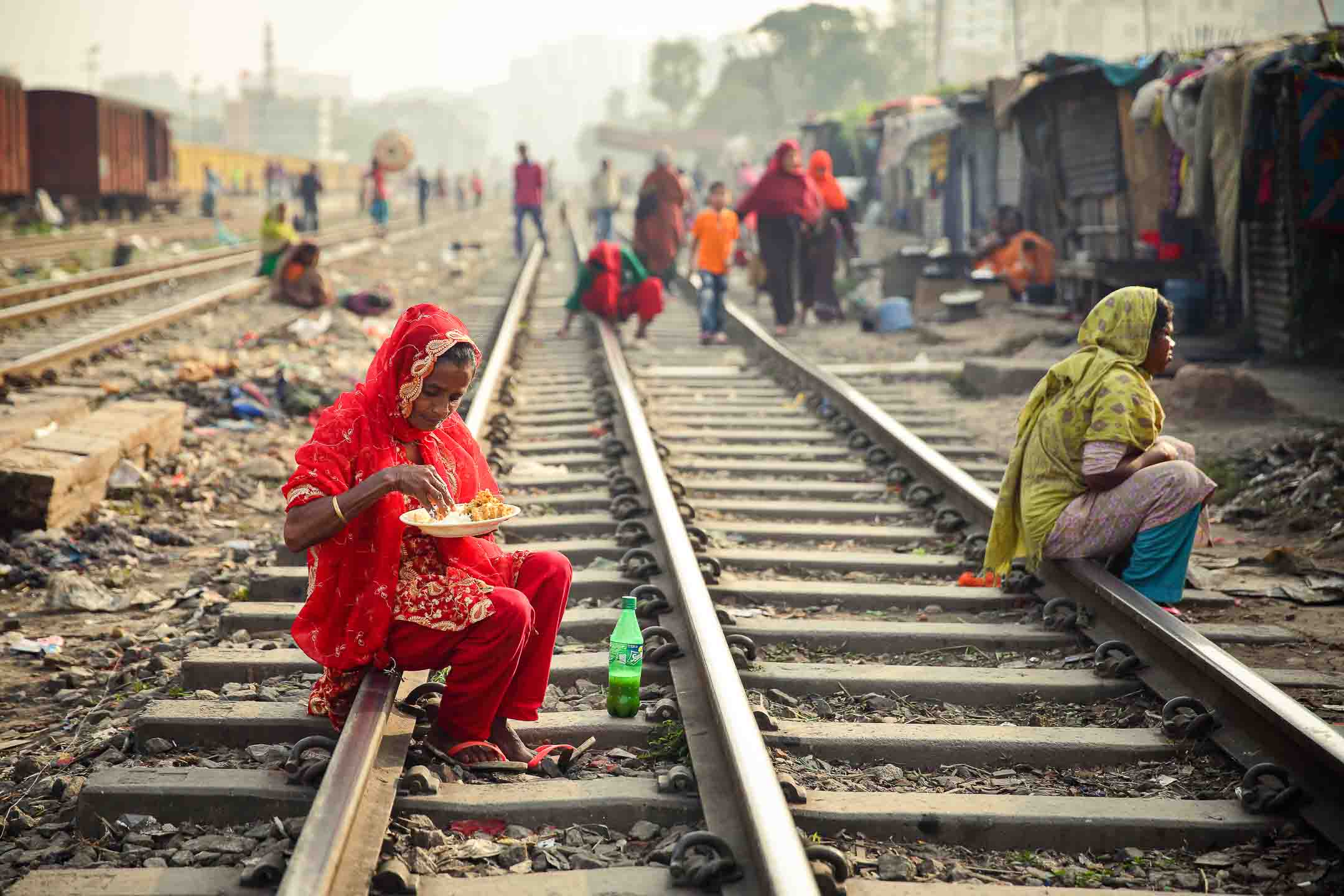
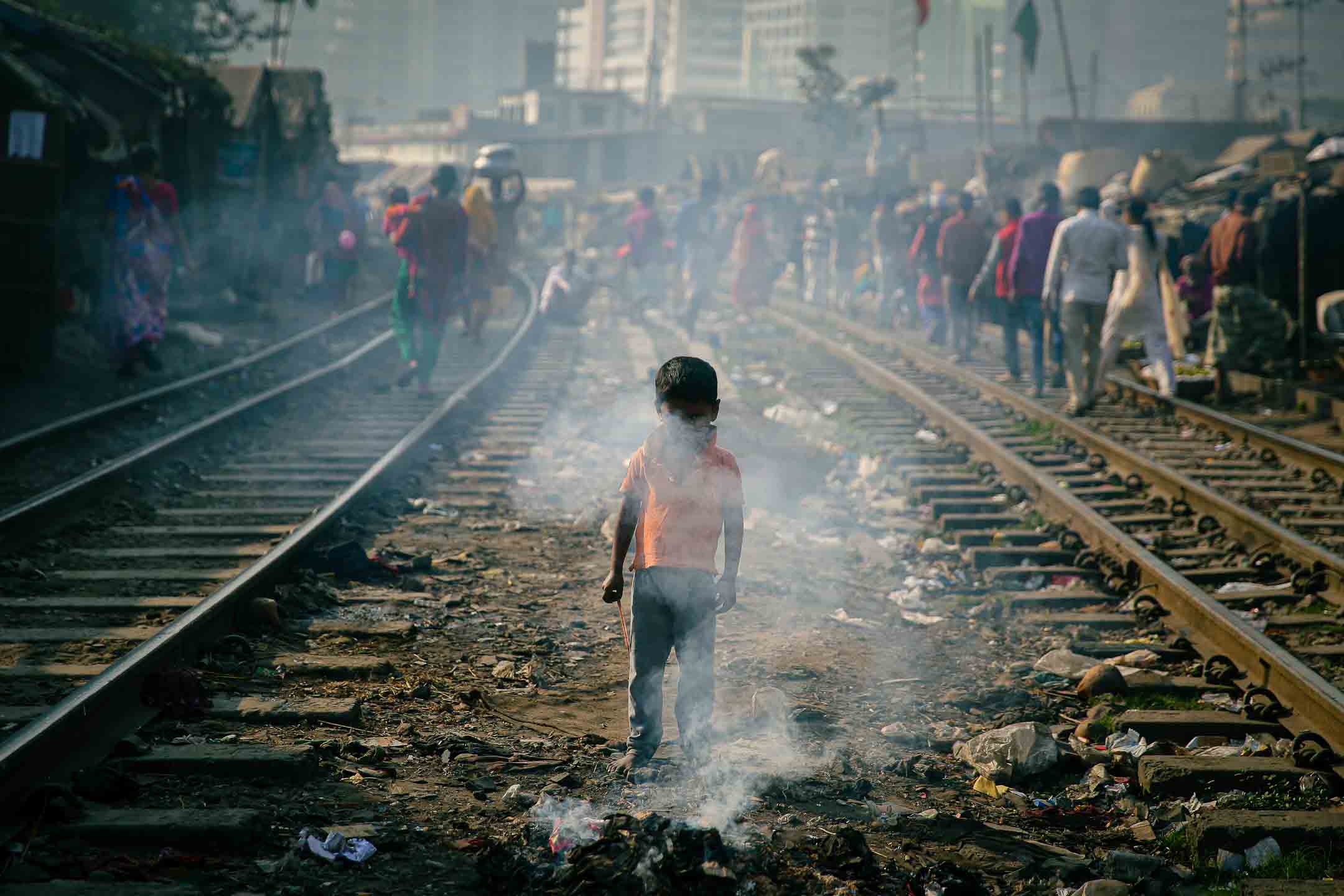
Who could have ignored such g-o-t-a-n-g, g-o-t-a-n-g sound that raises heartbeats of the inhabitants of the Karwan Bazaar train track Slum in Dhaka on a daily basis… at least fifty times a day? Speculated to have sprung up post-Liberation War of 1971, this slum, while not ancient, is home to residents who have lived here for more than thirty years.
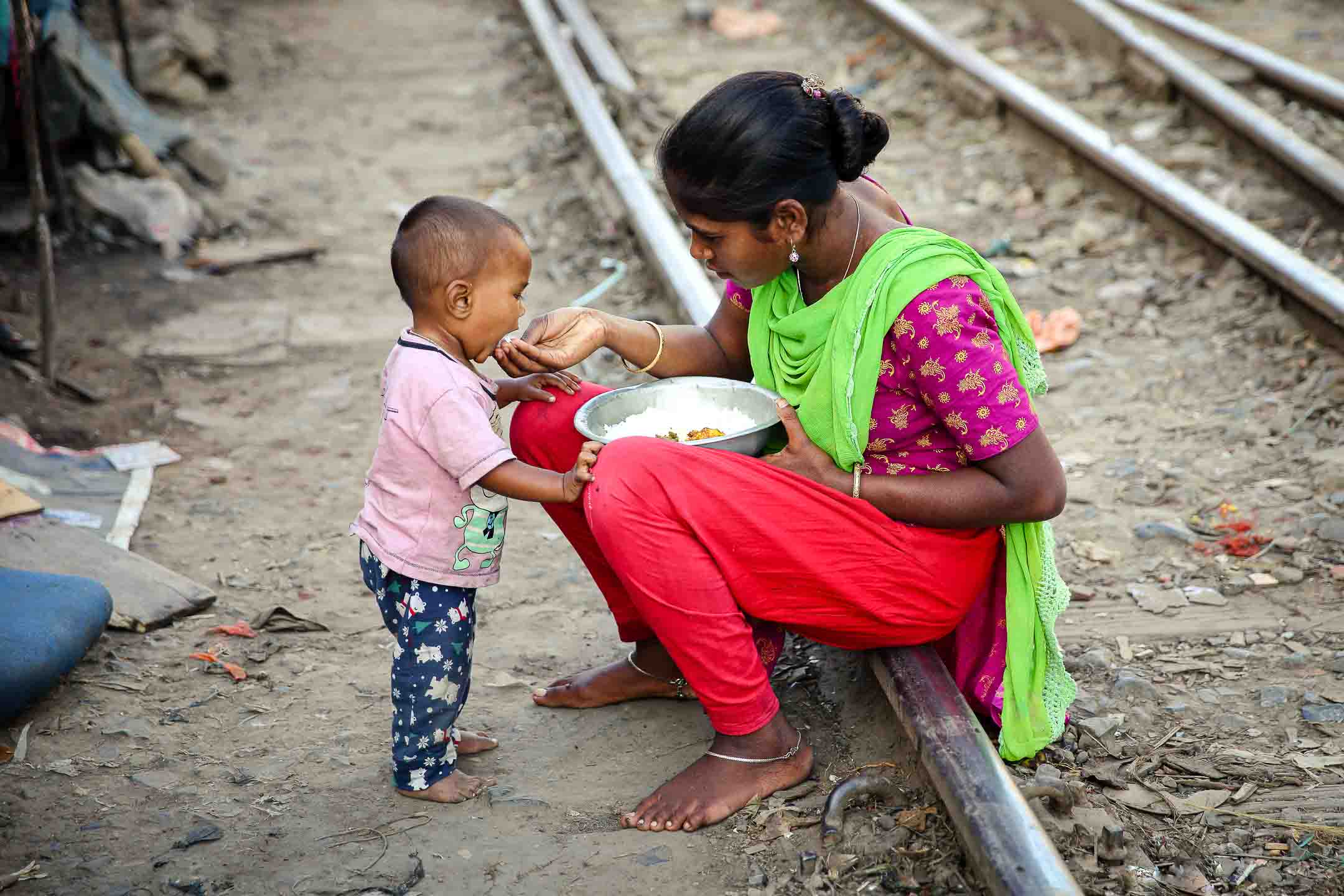
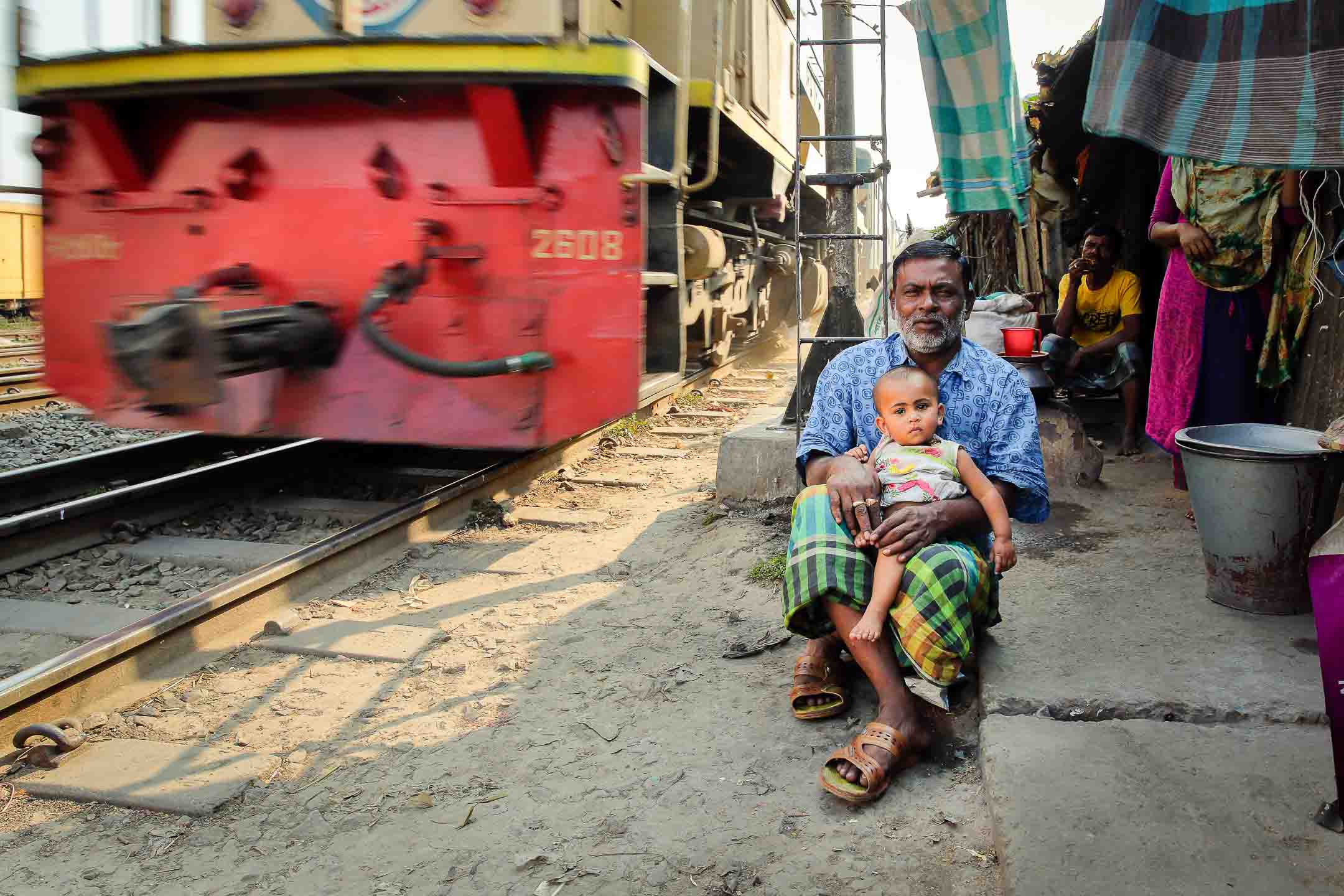
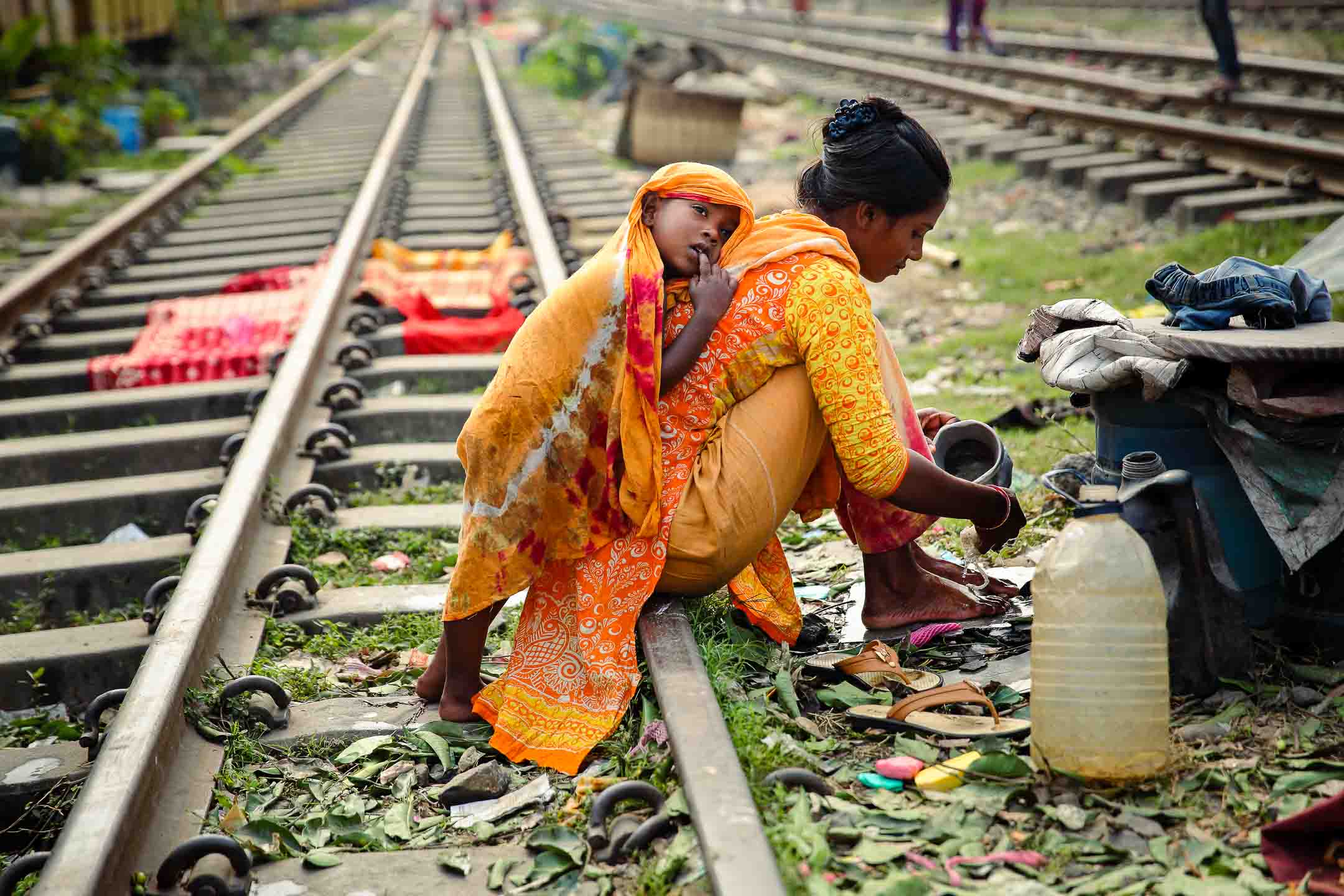
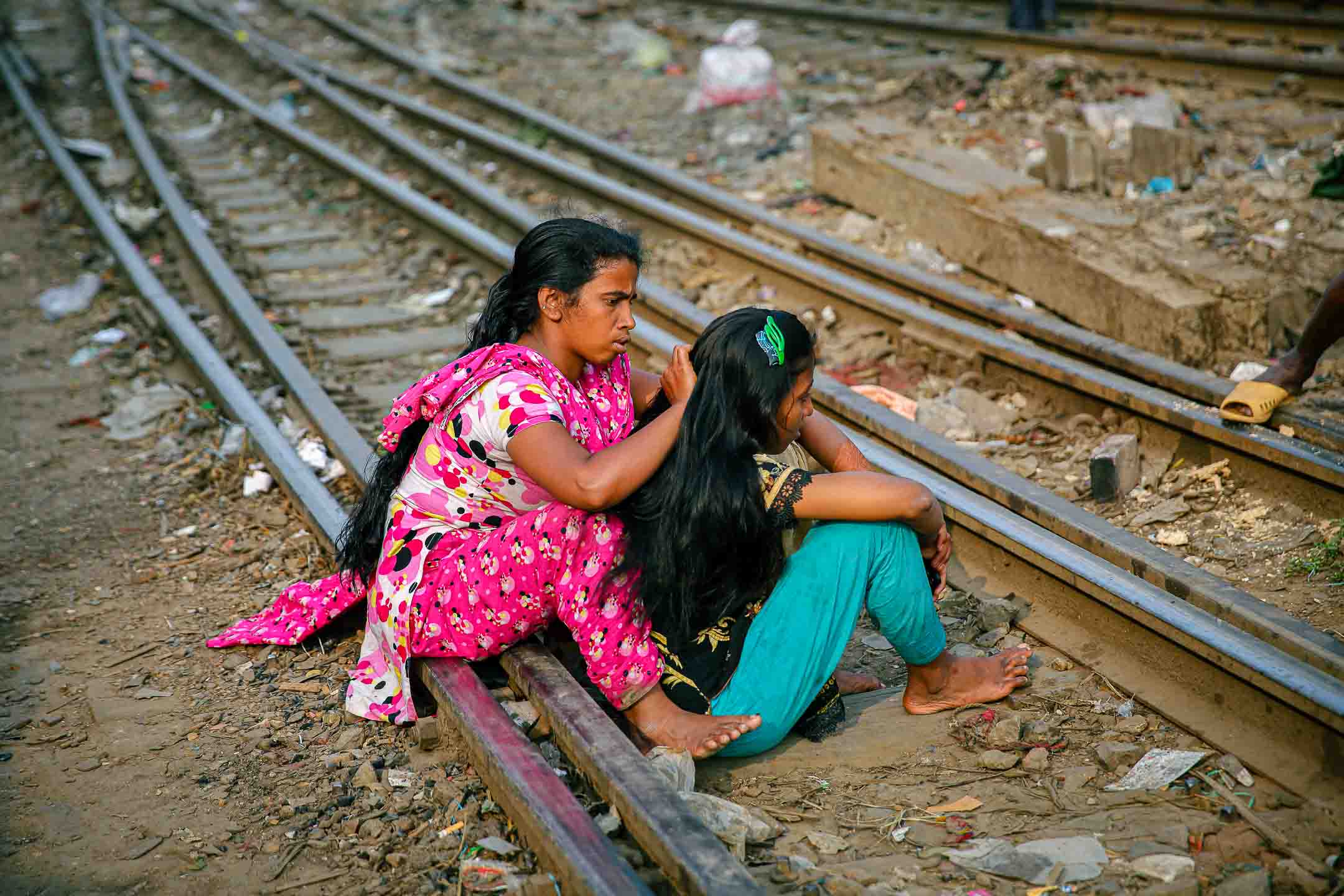
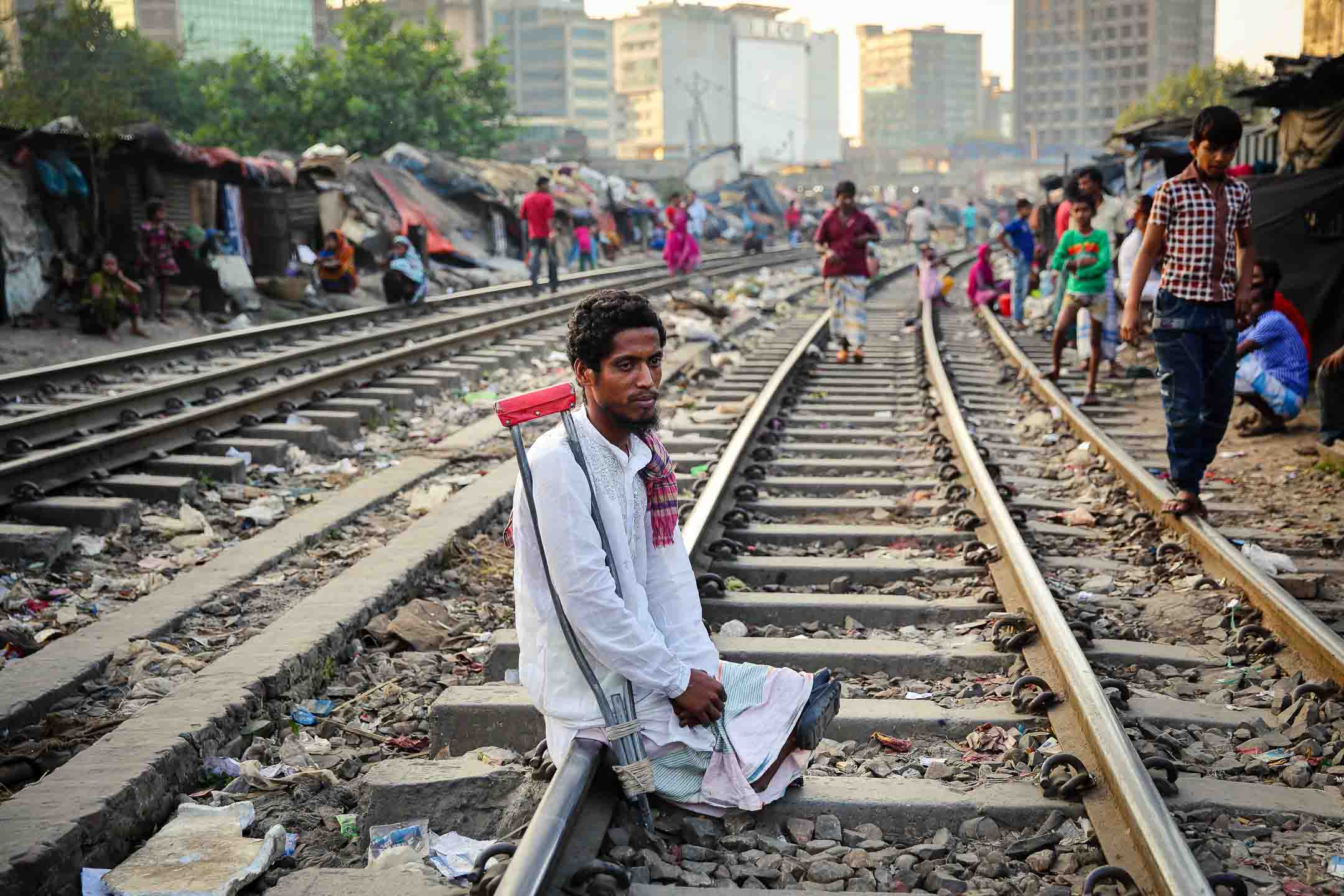
Thousands of shanties line the curvy train tracks. Some of the smallest huts with three-foot-high roofs rent for as much as 2000 taka (about $25), while newer, taller ones cost 3000 taka (about $39) per month. The muddy tracks are strewn with waste and rotten vegetables.

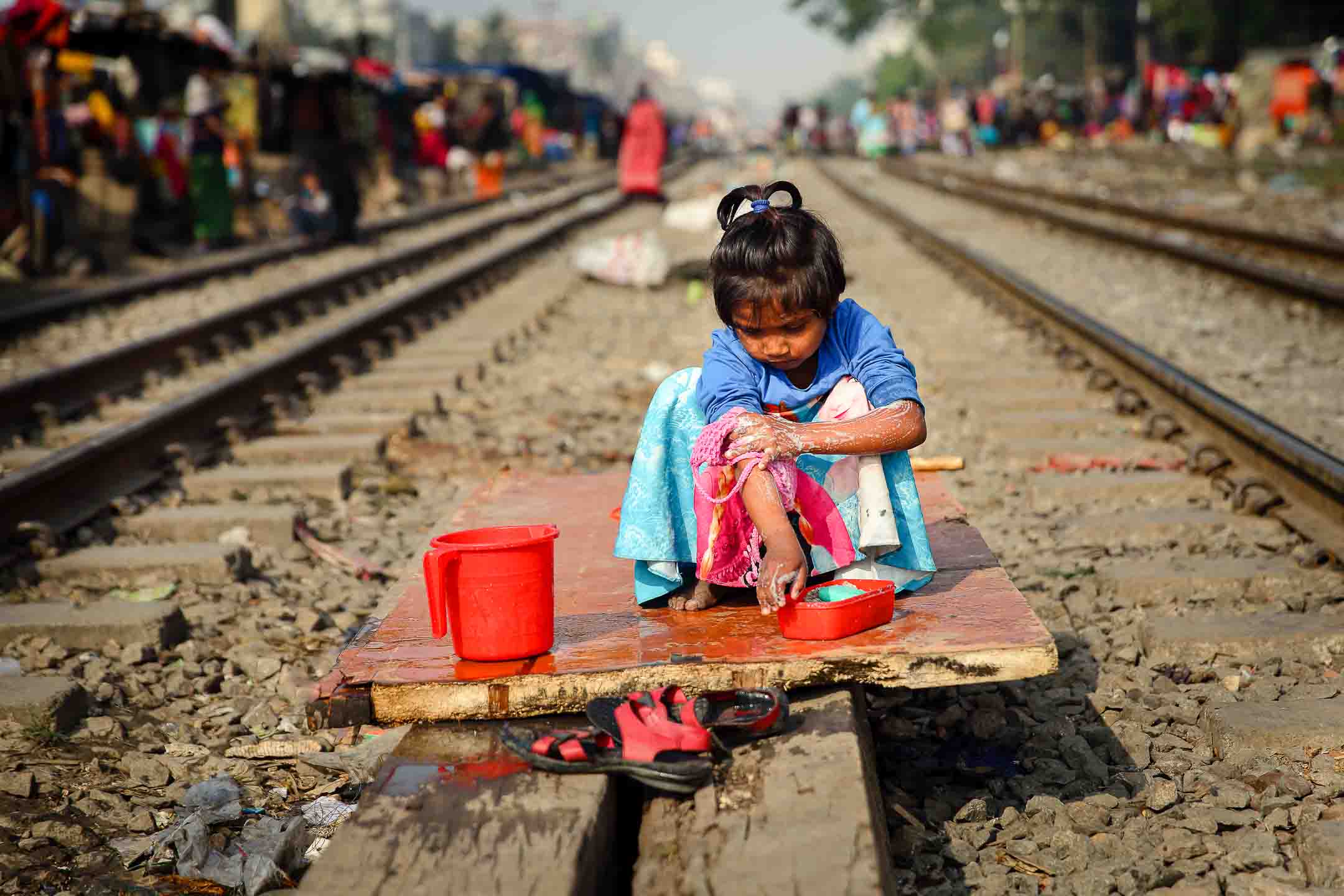
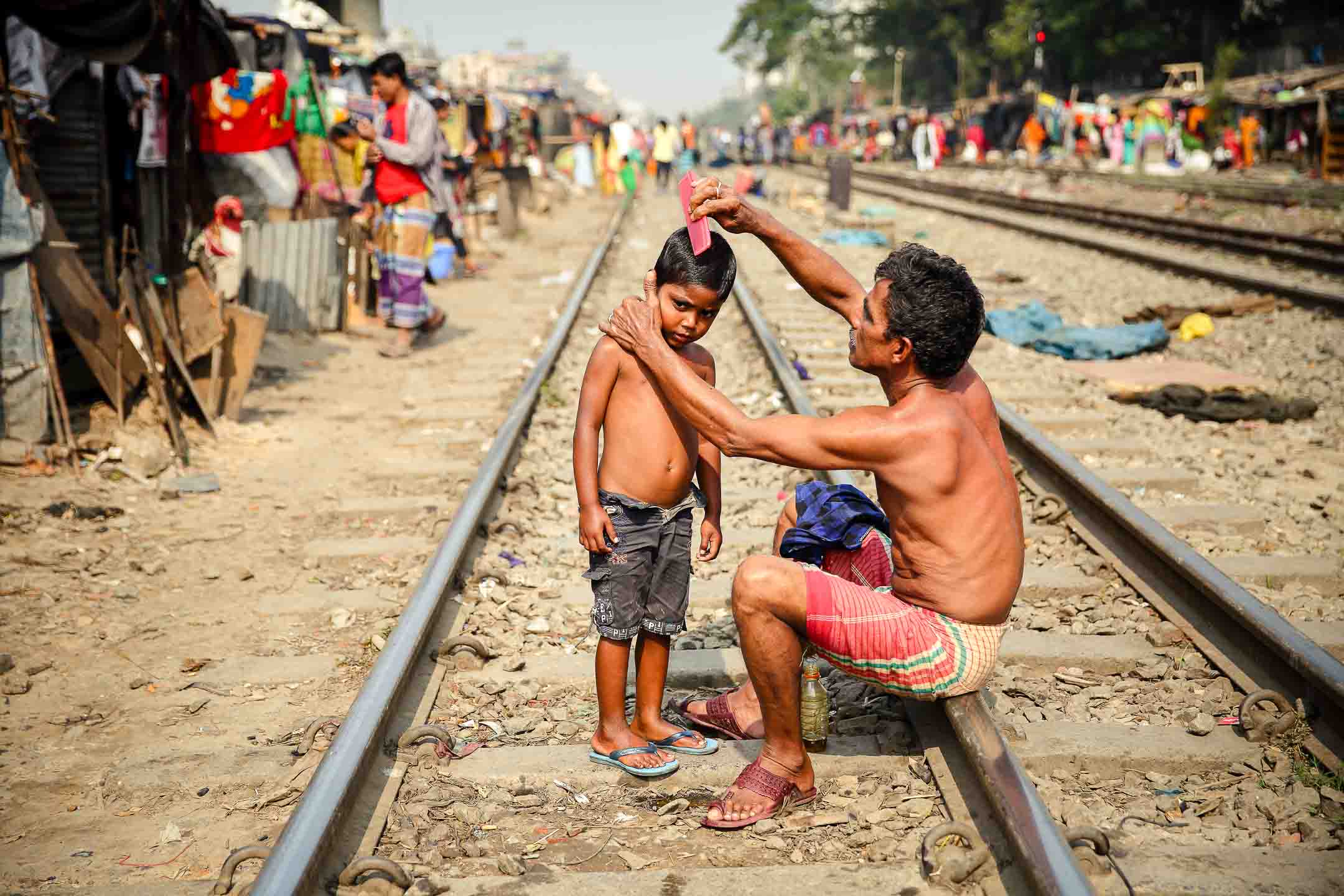
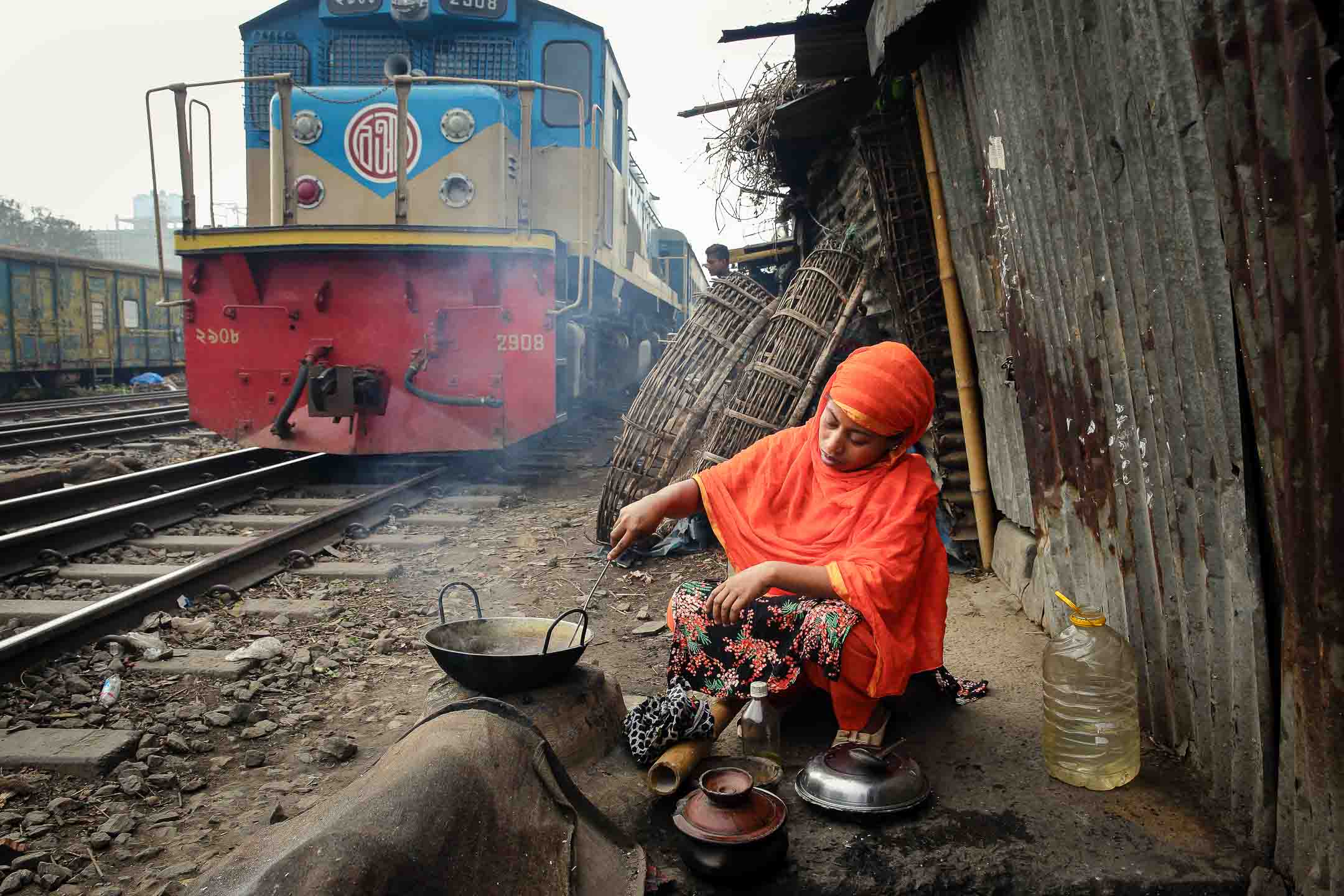
Amidst this, women like Marium Begum, 35, prepare lunch on mud clay ovens just a foot from the rails. A passing train could easily snatch the potatoes she fries in her pan. Marium recounts, “My eldest daughter is ten, and I’ve taught her how to save herself when the train rushes by.” Children here are adept at fleeing from oncoming trains, but the terror of simultaneous trains on both tracks is a frequent, heart-stopping event.
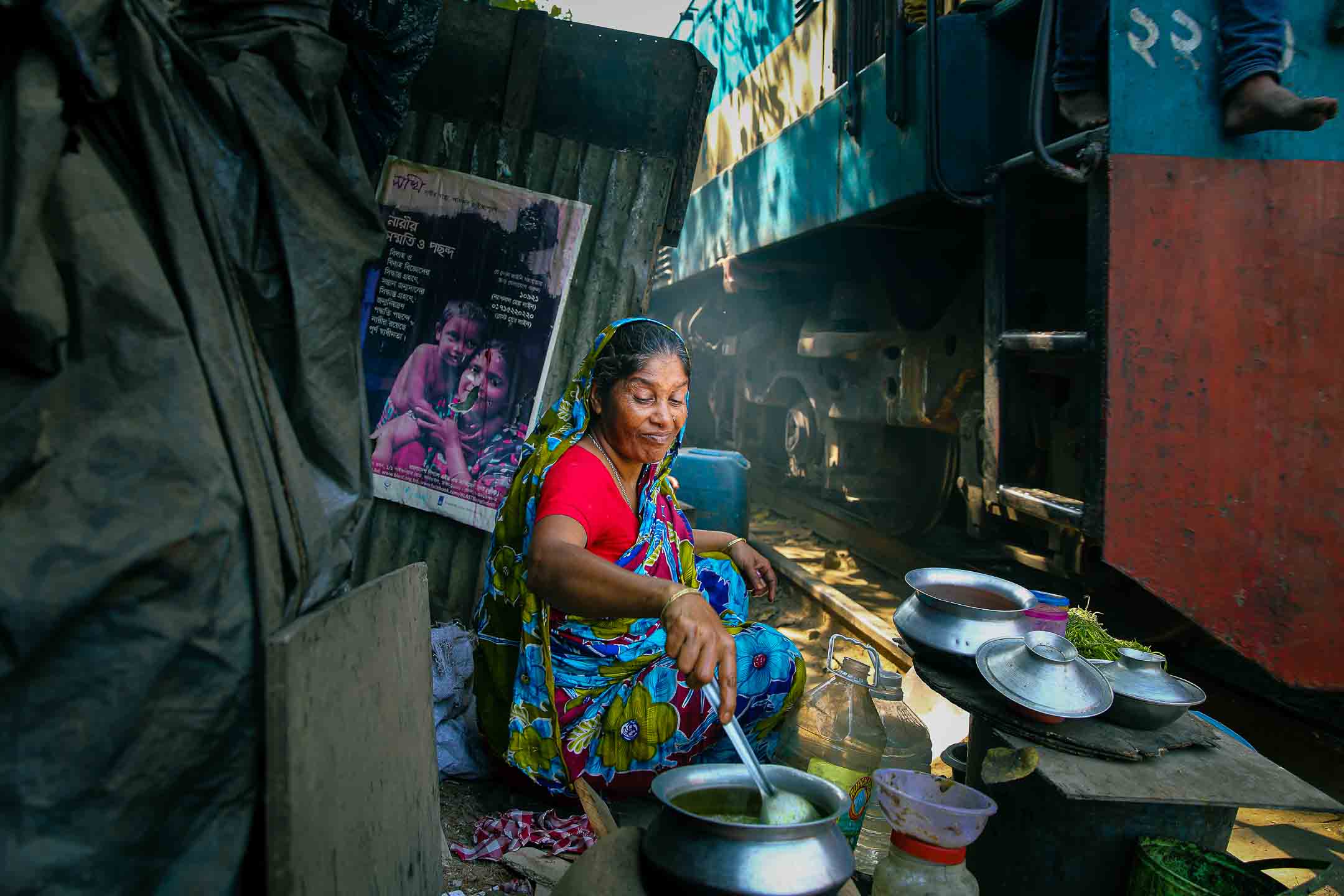


Accidents are common, with many children losing legs, hands, fingers in front of their helpless parents. Jaleha Kahtun reflects, “If we had anything in the village, we wouldn’t live here. The river overflowed and took everything. Now, everything we own is in this bazaar.” These residents are climate migrants, displaced by frequent floods. Despite the dangers, their move to the city allows them to feed their families better than they could back in their ravaged villages. Explore the stark realities and resilience of life on the edge in my photo album.

 GMB AKASH
It is hard to push a ‘like’ button with a photoseries like this. Terrible that people have to live in these circumstances, while others are billionaires. What I ‘like’ is that show us the truth about these things. Thanks!
LikeLike